
Formula details
Product Details
Overview
What Is a Lithium-Ion Battery Positive and Negative Plate Slitting Circular Knife?
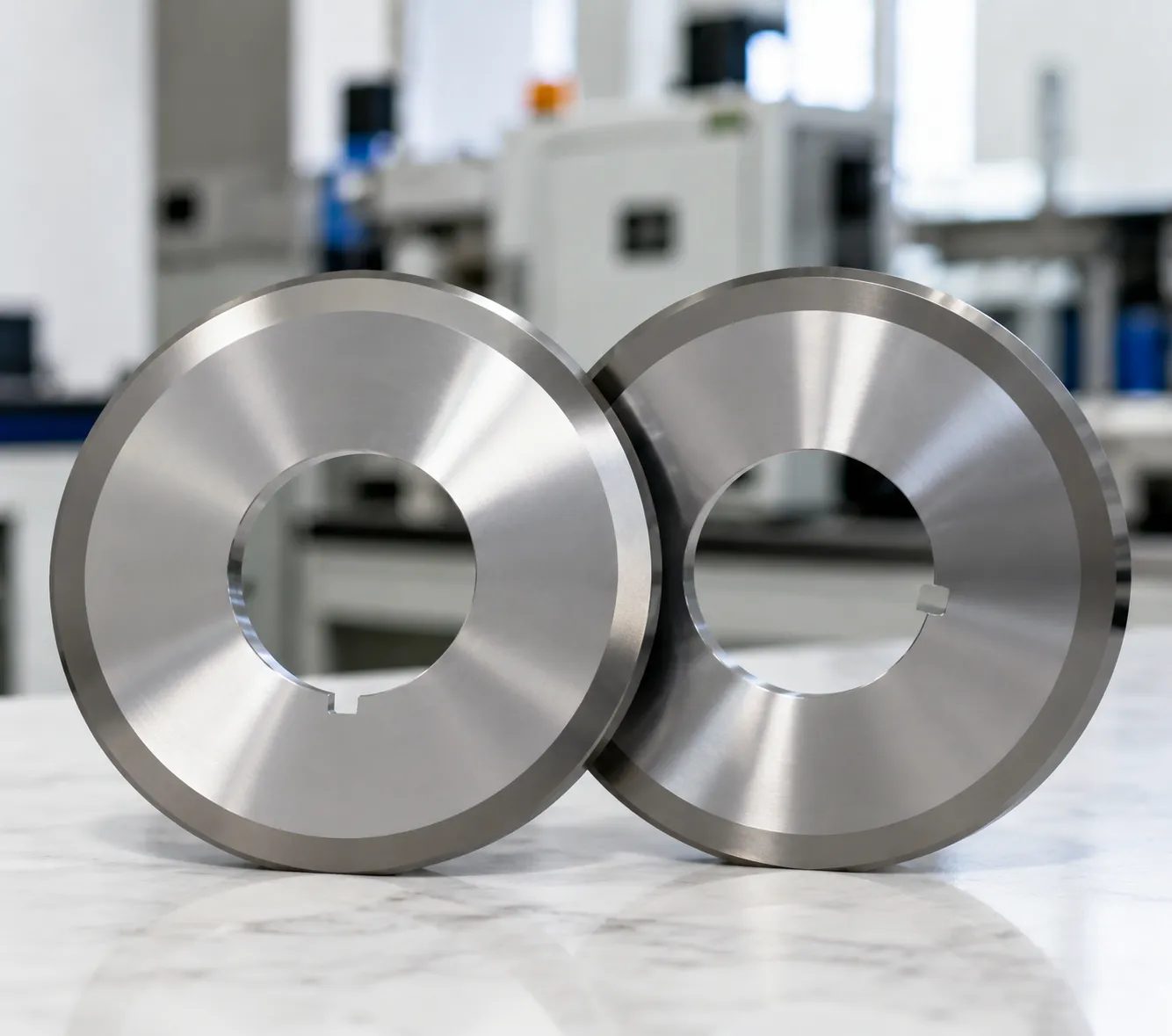
Are micro-burrs, active material flaking, or slitting dust compromising your battery cell yield and safety? In high-speed battery manufacturing, the slitting stage is a critical quality gate. A lithium-ion battery positive and negative plate slitting circular knife is a high-precision rotary cutting tool designed to continuously shear wide, coated electrode webs into precise, narrow strips.
Working in high-precision male-and-female shear knife pairs, our circular slitting knives maintain clean fracture lines across delicate metal current collectors and highly abrasive chemical coatings.
Precision Slitting Applications in Electrode Manufacturing
- Positive Electrode Plates (Cathodes): Slits aluminum foil webs coated with abrasive cathode materials like LFP, NMC, or LCO without tearing or edge waviness.
- Negative Electrode Plates (Anodes): Shears ductile copper foil webs coated with graphite or silicon-carbon active layers, preventing metal stretching and burr formation.
- Current Collector Foils: Cuts ultra-thin bare aluminum and copper foils prior to slurry coating with zero web distortion.
How Precision Cutting Impacts Battery Cell Safety
Sub-micron manufacturing tolerances are essential for battery safety, tool life, and yield optimization.
| Performance Metric | Critical Role in Slitting | Risk of Poor Knife Quality |
|---|---|---|
| Edge Quality & Burr Height | Delivers ultra-clean shear edges with minimal burr height (<3–5 μm). | Excessive edge burrs puncture separators, causing internal short circuits and thermal runaway. |
| Dust & Particle Control | Maintains sharp cutting geometry to cut cleanly through brittle coatings. | Coating spalling creates conductive metal dust that leads to high self-discharge rates. |
| Runout Tolerance | Sub-micron axial and radial runout eliminates edge tension variations. | Edge stretching causes web weaving, ruining downstream cell winding or stacking alignment. |
Key Features of Sharkcutting Lithium Battery Slitting Knives
| Feature | Technical Specification | Operational Advantage |
|---|---|---|
| Cutting Edge Precision | Mirror surface finish (Ra ≤ 0.05 µm) | Eliminates burrs, metal dust, and coating flaking |
| Runout & Tolerances | Axial & radial runout ≤ 0.001 mm | Maintains constant shear gap for clean foil separation |
| Wear Resistance | Sub-micron tungsten carbide (HRA 92–94) | Delivers extended service life on abrasive coatings |
| Anti-Sticking Surface | DLC / PVD low-friction coatings | Prevents slurry build-up and reduces blade cleaning cycles |
| Custom Support | Made-to-order diameters, bores, bevels | Perfect integration with major global slitting machines |
High-Precision Cutting Edge
We finish every battery electrode circular knife with specialized diamond grinding techniques. This ultra-smooth edge prevents edge curling, coating delamination, and micro-cracks on delicate aluminum and copper current collectors.
Ultra-Low Runout and Tight Tolerances
To ensure stable high-speed performance, we hold blade runout to strict sub-micron tolerances. Paired with proper slitter blade material selection, our precision grinding prevents knife vibration and maintains precise clearance during long continuous runs.
Excellent Wear Resistance
Our knives use ultra-fine tungsten carbide formulations engineered specifically for double-sided coated plates. This extreme wear resistance ensures stable edge retention when cutting highly abrasive materials like silicon-carbon anodes and nickel-rich cathodes.
Anti-Sticking and Low-Friction Performance
Sticky binders and active materials can cause blade friction and debris accumulation. We apply advanced surface treatments that dramatically reduce friction, keeping the blade clean and extending continuous operation time.
Custom Manufacturing Support
Every battery production line has distinct machinery parameters. We manufacture custom lithium-ion battery positive and negative plate slitting circular knives matching your exact outer diameter, bore size, keyway, and bevel profile requirements.
Applications in Lithium-Ion Battery Production
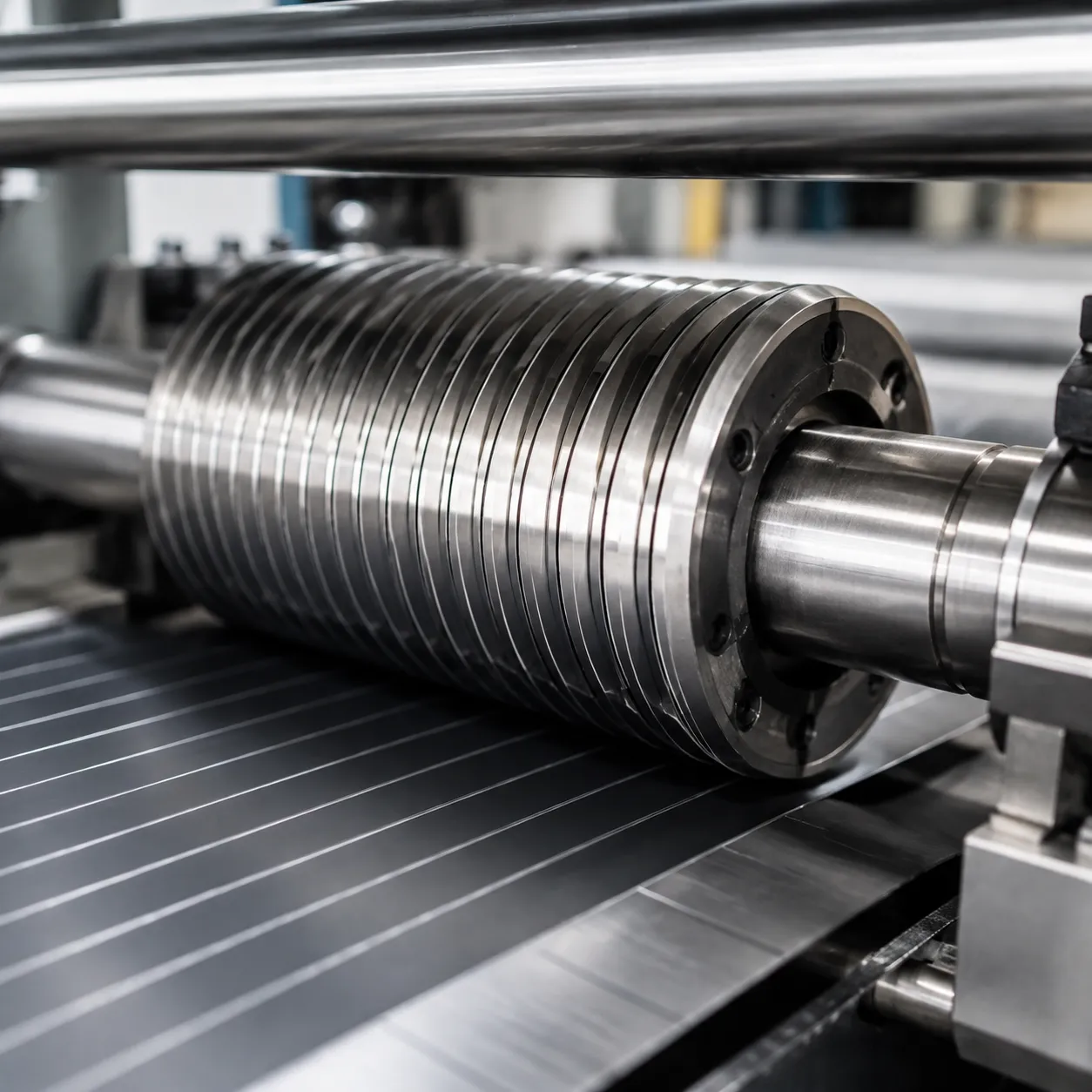
We design our lithium ion battery positive and negative plate slitting circular knife to deliver continuous, precision cutting across high-speed electrode manufacturing lines. Achieving burr-free edges on coated foils requires specialized tool geometries capable of handling abrasive slurries and thin metallic substrates.
Positive Plate Slitting
Cathode slitting involves shearing tough aluminum foil coated with highly abrasive active materials such as NCM, LFP, or LCO.
Wear-Resistant Cutting: Withstands aggressive slurry friction to maintain edge sharpness over millions of meters.
Burr-Free Aluminum Slitting: Eliminates micro-burrs on aluminum foil that could otherwise puncture separators and compromise cell safety.
Edge Integrity: Prevents coating flaking, edge curling, and micro-cracks along the slitted margin.
Negative Plate Slitting
Anode slitting requires extreme shear precision to cut delicate copper foil coated with graphite or silicon-based compounds without stretching the base metal.
Foil Protection: Prevents soft copper foil from stretching, tearing, or warping under high web tension.
Low Particle Generation: Keeps graphite dust shedding to an absolute minimum during continuous slitting.
Clean Stress Distribution: Delivers flat, uniform edges necessary for tight, high-density cell winding.
Separator and Auxiliary Material Cutting
Beyond metallic foils, specialized electrode slitting blade profiles cleanly slice non-metallic secondary materials without static build-up or edge deformation.
Polymer Separators: Cuts ceramic-coated PE/PP separators cleanly without thermal damage or material fraying.
Insulation & Protection Tapes: Easily slits PET adhesive tapes and margin films on multi-lane rewinding lines.
Integrated Converting: Works seamlessly alongside our full lineup of precision circular slitter knives for flexible material processing.
Suitable Production Processes
| Process Stage | Substrate Material | Critical Knife Requirement |
|---|---|---|
| Cathode Electrode Slitting | Aluminum foil + NCM/LFP | Ultra-hard tungsten carbide with extreme wear resistance |
| Anode Electrode Slitting | Copper foil + Graphite/Silicon | Mirror-finish edge polish to prevent copper burrs |
| Separator Slitting | Ceramic-coated PE/PP film | Razor-sharp geometry to eliminate static and fraying |
| Protective Tape Trimming | PET / Kapton adhesive tapes | Low-friction coating to avoid adhesive buildup |
Our high-performance slitting knives integrate into continuous roll-to-roll (R2R) slitter rewinders, automated electrode slitting machines, and high-speed rotary converting systems to maximize yield and cell consistency.
Technical Specifications
Material Options & Hardness
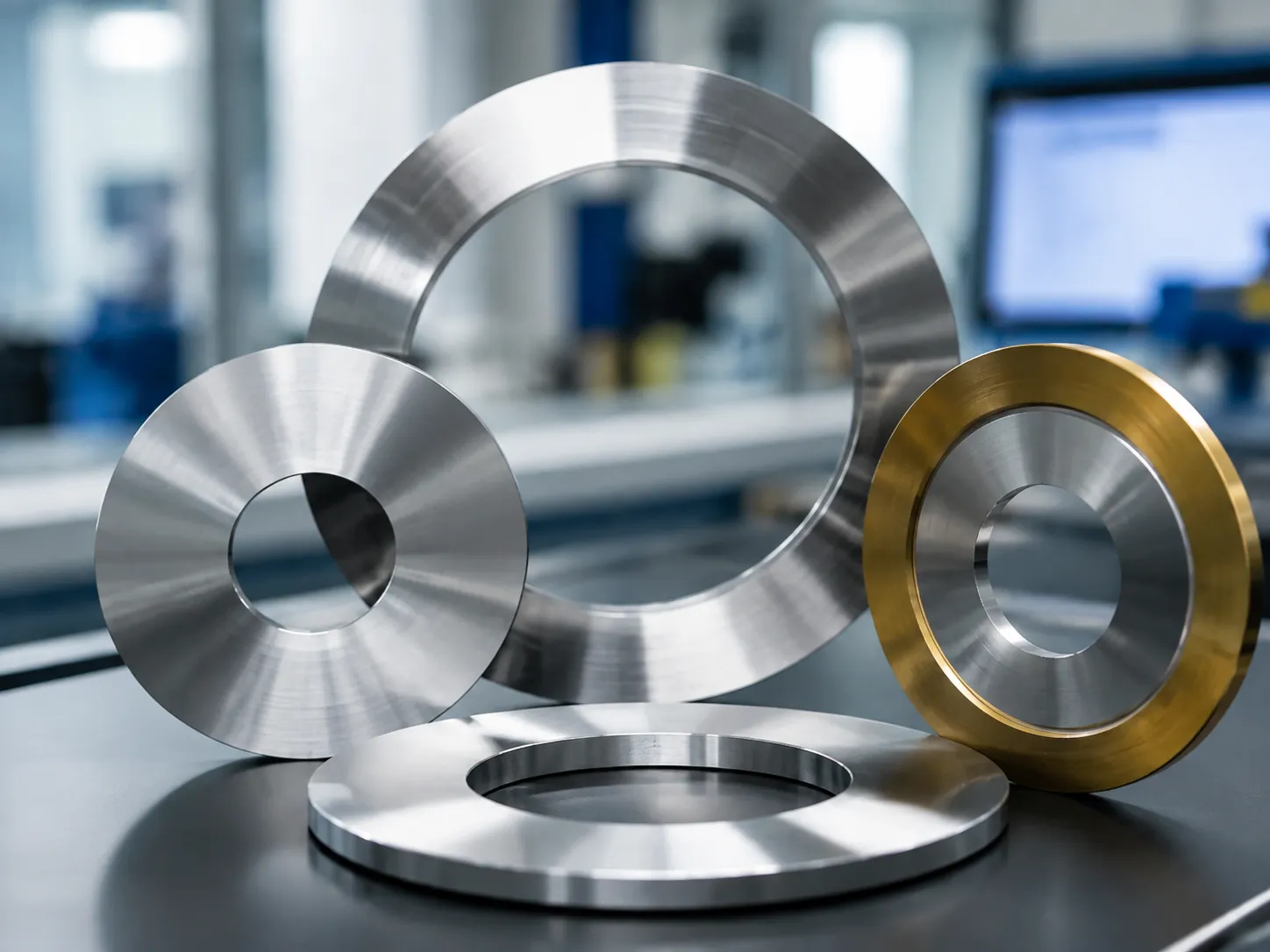
We select ultra-fine tungsten carbide and specialty tool steels designed to withstand abrasive cathode materials and delicate anode metal foils.
| Material Grade | Target Application | Hardness | Key Performance Feature |
|---|---|---|---|
| Fine Carbide (WC-Co) | Positive & Negative Electrode Plates | 90–92.5 HRA | High wear resistance against abrasive slurry coatings |
| Sub-Micron Carbide | Ultra-Thin Copper & Aluminum Foil | 92.5–94 HRA | Superior edge sharpness with zero micro-chipping |
| High-Speed Steel (HSS) | Auxiliary Foils & Separators | 62–65 HRC | High impact toughness and resistance to edge cracking |
For specific material pairings, explore our foil slitter blade carbide options engineered for precision foil conversion.
Dimensions & Tolerance Control
Our high precision circular slitters integrate seamlessly with automated battery production lines.
- Outer Diameter (OD): 60 mm – 150 mm
- Inner Diameter (ID): 20 mm – 100 mm (custom keyways and positioning holes available)
- Thickness Range: 0.5 mm – 3.0 mm
- Thickness Tolerance: Up to ±0.0005 mm
- Outer Diameter Tolerance: Up to ±0.005 mm
- Axial Runout (Wobble): ≤ 0.001 mm
- Radial Runout: ≤ 0.0015 mm
Surface Finish & Edge Geometry
To prevent metal particle contamination and edge burrs during slitting, we enforce strict quality control inspection standards on all finished surfaces:
- Surface Roughness (Ra): Ra 0.02 µm to Ra 0.05 µm mirror-finish polish to eliminate friction and material buildup.
- Edge Geometry: Single bevel, double bevel, micro-chamfer, and compound edge angles tailored to specific foil thicknesses.
- Cutting Edge Radius: Under 1 µm for burr-free cutting on both positive aluminum and negative copper collector foils.
Materials and Coating Options
Selecting the right substrate and surface treatment for a lithium ion battery positive and negative plate slitting circular knife directly impacts edge longevity, burr control, and maintenance frequency. We manufacture high-precision electrode slitting blades engineered to withstand the intense abrasive wear of active cathode materials and high-tensile metallic foil substrates.
Tungsten Carbide Slitting Knife
For continuous high-volume battery cell manufacturing, our fine-grain tungsten carbide slitter knife options deliver exceptional hardness and edge stability.
- Ultra-Fine Grain Structure: Prevents micro-chipping along the cutting edge when slitting abrasive cathode coatings.
- Maximum Wear Resistance: Extends blade life up to 10 times longer than standard tool steel blades.
- Burr-Free Edge Retaining: Maintains crisp shear geometry across thin copper and aluminum current collectors.
High-Speed Steel Slitting Knife
High-speed steel (HSS) tooling offers high toughness and impact resistance, making it suitable for flexible setups and specific foil-cutting operations.
- High Toughness: Resists chipping during line mechanical adjustments or unexpected shock loading.
- Cost-Effective Tooling: Ideal for shorter production runs, pilot lines, or auxiliary layer slitting.
- Precision Machinability: Achieves extremely sharp edge profiles for delicate foil processing.
Surface Coatings
Specialized surface coatings optimize the performance of the lithium-ion battery positive and negative plate slitting circular knife by minimizing friction and preventing slurry buildup.
| Coating Type | Key Properties | Primary Application |
|---|---|---|
| TiN (Titanium Nitride) | Increases surface hardness and wear resistance | General-purpose anode and cathode plate slitting |
| DLC (Diamond-Like Carbon) | Ultra-low friction; anti-sticking properties | High-speed aluminum and copper foil trimming |
| TiAlN / AlTiN | High thermal stability and extreme surface hardness | Highly abrasive, dense cathode slurry slitting |
Why Choose Sharkcutting for Battery Slitting Knives?
We engineer every lithium ion battery positive and negative plate slitting circular knife to eliminate edge burrs, mitigate short-circuit risks, and maximize operational uptime on high-speed electrode processing lines.
Sharkcutting Performance vs Standard Knives
| Feature / Metric | Standard Slitting Knives | Sharkcutting Battery Slitting Blades |
|---|---|---|
| Radial & Axial Runout | ±0.002 mm to ±0.005 mm | ±0.0005 mm to ±0.001 mm |
| Slitting Edge Quality | Micro-burrs, frequent dust generation | Burr-free (< 3 µm), ultra-clean cut |
| High-Speed Line Stability | Vibration prone > 80 m/min | Stably balanced up to 120+ m/min |
| Tool Material | Standard grade tungsten carbide | Sub-micron ultrafine tungsten carbide |
| Cost Efficiency | Frequent blade replacement required | 3x longer service life, lower cost per cut |
Core Performance Drivers
- Precision Manufacturing: Advanced multi-axis CNC grinding and mirror polishing maintain sub-micron runout tolerances, preventing tension irregularities when cutting delicate copper and aluminum foils.
- Stable Performance in High-Speed Lines: Superior dynamic balance ensures smooth rotational cutting without thermal distortion, maintaining strict clearance tolerances at maximum web speeds.
- Better Edge Quality: Sharp, highly polished cutting edges produce pristine, burr-free electrode margins, directly preventing separator puncture and dangerous battery cell degradation.
- Long Service Life and Lower Cost per Cut: High-density carbide grades and optimized surface coatings dramatically increase wear resistance, extending intervals between re-grinds and lowering total tooling expenditures.
- Custom Engineering Support: We design customized blade geometries, inner bores, keyways, and bevel profiles tailored to your specific slitter rewinder machinery and foil specifications.
Our specialized rotary slitting knives deliver consistent edge quality across demanding cathode and anode cutting operations. Discover how our precision manufacturing standards support global battery manufacturers by reviewing why Sharkcutting is a trusted industrial tooling partner.
Compatibility With Slitting Machines
We engineer every lithium ion battery positive and negative plate slitting circular knife to integrate seamlessly into high-speed battery production lines. Whether you operate Asian, European, or North American automated slitting equipment, our tooling matches exact mechanical specs to prevent runout, axial movement, and edge burrs.
Compatible Slitting Equipment
| Equipment Brand / Type | Typical Application | Key Setup Requirements |
|---|---|---|
| Lead Intelligence / Wuxi Yining | High-speed cathode & anode reel slitting | Ultra-precise inner bore tolerance (+/-0.002 mm) |
| Nishimura / Toray | Ultra-thin copper & aluminum foil shearing | Zero side-clearance matching & high rigidity |
| KAIDO / PNT | Continuous battery electrode roll slitting | Anti-stick coating & polished side faces |
| Custom OEM Slitter Lines | Retrofit & high-capacity upgrading | Tailored keyways, pin holes, and hub designs |
Custom Shaft Size, Mounting Structure, and Clearance
Achieving clean cuts on coated electrodes requires absolute precision at the arbor interface. We customize every lithium-ion battery positive and negative plate slitting circular knife based on your machine's exact mechanical layout:
- Inner Bore & Keyways: Machined to tight tolerances with custom single, double, or blind keyways to eliminate shaft play.
- Pin Hole & Drive Structures: Precision-drilled locating holes ensuring perfect torque transfer and chatter-free rotation.
- Side Clearance & Parallelism: Lapped side faces under 0.001 mm thickness variation to maintain strict blade-to-blade shearing gaps.
Replacement and Upgrade Guidance
Upgrading your line or replacing worn cutters requires minimal downtime. We support direct drop-in replacements, whether you are switching from tool steel to solid tungsten carbide or replacing specialized setups with an OEM slitter blade replacement engineered for your arbor specs.
- Dimensional Verification: Provide your arbor diameter, outer diameter, blade thickness, and bevel angles, or send an existing sample drawing.
- Material Retrofitting: Transitioning from tool steel to micro-grain carbide extends wear life by 5x to 10x while maintaining clean, razor-sharp edges.
- Gap Calibration: We supply matching precision spacers and offer setup clearance recommendations customized for your specific slurry coating thickness and foil substrate.
Quality Control and Inspection for Slitting Knives
Dimensional Inspection
Sub-micron stability is critical for high-speed electrode slitting lines. Utilizing advanced precision machining capabilities and high-resolution optical coordinate measuring machines (CMM), we audit every key dimension:
Thickness & Parallelism: Held within ±0.001 mm to guarantee uniform gap spacing and avoid foil pinching.
Axial & Radial Runout: Kept under 0.002 mm to eliminate high-speed blade wobble.
Inner Bore Tolerance: Precision-ground to ensure exact alignment on cutter shafts without clearance play.
Edge Quality Inspection
The cutting edge directly dictates slitting quality on current collectors. We inspect every lithium-ion battery positive and negative plate slitting circular knife under 500x magnification using 3D laser profilers.
Micro-Chipping Analysis: Zero tolerance for edge flaws, cracks, or microscopic notches.
Bevel Angle Consistency: Strict verification of edge bevel geometry to guarantee clean, burr-free cuts on both copper and aluminum foils.
Hardness and Balance Testing
To prevent premature wear and vibration during high-tension operation, every tungsten carbide circular knife undergoes rigorous physical testing:
Hardness Verification: Rockwell (HRC) and Vickers (HV) testing across multiple surface points to confirm uniform material hardness.
Dynamic Balancing: High-speed rotational balance testing to prevent chatter marks and wear on slitting machine arbors.
Pre-Shipment Inspection
Before final dispatch, each high precision circular slitter completes a final factory audit:
Demagnetization: Complete demagnetization treatment to prevent metallic dust and debris from clinging to the blade.
Protective Packaging: Anti-rust oil treatment followed by vacuum sealing in shockproof casing.
Full Traceability: Individual inspection reports packaged with every order for complete batch verification.
Customization Options for Lithium-Ion Battery Slitting Circular Knives
Standard off-the-shelf blades rarely meet the tight tolerances required by high-speed production lines. We design and build every lithium-ion battery positive and negative plate slitting circular knife to match your exact machinery requirements, foil thicknesses, and slurry characteristics.
Tailored Blade Specifications
We manufacture custom electrode slitting blades according to your operational parameters, ensuring flawless fitment and burr-free slitting:
| Customization Parameter | Available Options & Ranges |
|---|---|
| Outer Diameter (OD) | Custom sizes up to 300 mm |
| Inner Bore & Keyways | Precision-ground bore diameters, pin holes, and single/double keyways |
| Thickness & Tolerance | Ultra-thin options available; thickness tolerance controlled within ±0.001 mm |
| Bevel & Edge Profile | Single bevel, double bevel, compound angle, and custom radius edges |
| Coating Options | TiCN, DLC, CrN, or custom anti-stick surface treatments |
Reverse Engineering & OEM Branding Support
Whether you are scaling up a new cathode slitting line or upgrading existing machinery, we convert your specific challenges into ready-to-use cutting tools.
- Sample and Drawing-Based Production: Send us your CAD drawings or worn sample blades. Our technical team utilizes our custom engineering capabilities to evaluate edge wear and supply exact-fit replacements.
- Custom Edge Profiles: We optimize the bevel angle and edge sharpness specifically for cathode aluminum foils, anode copper foils, or ceramic-coated separators to eliminate edge burrs and dust generation.
- OEM Logo & Private Labeling: We provide clean laser marking for logos, part numbers, and batch codes, backed by our dedicated OEM/ODM services for equipment manufacturers and industrial suppliers.
How to Choose the Right Lithium-Ion Battery Positive and Negative Plate Slitting Circular Knife
Selecting the ideal lithium-ion battery positive and negative plate slitting circular knife requires matching blade geometry and chemistry to your specific foil substrates, processing speeds, and shear tolerances.
Selection by Substrate Material
Cathode and anode current collectors present unique physical demands during slitting:
- Positive Cathode Plates (Aluminum Foil + LFP/NMC): Highly abrasive ceramic coatings cause rapid blade erosion. Choose sub-micron tungsten carbide blades to maintain cutting edge sharpness and prevent chipping.
- Negative Anode Plates (Copper Foil + Graphite/Silicon): Ductile copper foil tends to deform under dull tooling. Opt for ultra-sharp, low-friction blades to ensure clean, burr-free edge shearing.
- Selecting suitable blade materials based on binder stiffness and slurry thickness prevents micro-cracks and delamination during high-volume production runs.
Selection by Production Line Speed
Operating speed directly impacts thermal friction, edge wear, and knife balance:
| Line Speed Range | Recommended Knife Material | Primary Engineering Focus |
|---|---|---|
| Standard Speed (< 50 m/min) | Fine-Grain Tungsten Carbide | Precision edge retention and standard burr control |
| High Speed (50 - 120+ m/min) | Ultra-Fine Carbide + DLC/TiCN Coating | Dynamic balance, heat dissipation, and anti-sticking performance |
Selection by Edge Quality Requirements
Preventing cell short-circuiting requires strict control over slitting edge defects:
- Bevel Profile: Use double-bevel geometries for thick double-sided coated plates to equalize cutting resistance; select compound single-bevel profiles for fragile foil edges.
- Surface Finish: Choose mirror-polished blade bevels (Ra ≤ 0.05 µm) to limit dust generation and slurry flaking on the electrode cut line.
Selection by Machine Compatibility
We build every lithium battery slitting knife to match your slitting and rewinding shafts with zero mounting play:
- Dimensional Accuracy: Ensure exact inner bore (ID), outer diameter (OD), thickness, and keyway alignment.
- Tight Tolerances: Maintain axial runout within ≤ 0.001 mm and strict parallel tolerances to prevent blade clash during high-overlap shearing.
- For non-standard cutter arbors, we engineer custom machine knives tailored directly to your OEM slitting shaft specifications.
Ordering Process for Battery Electrode Slitting Knives
| Step | Phase | Key Action |
|---|---|---|
| 01 | Inquiry & Drawing Submission | Send us your CAD drawings, specs, or sample measurements for your slitting circular knives. |
| 02 | Application Review | We confirm electrode materials (cathode aluminum foil, anode copper foil) or related film processing slitting solutions for separator cutting. |
| 03 | Quotation & Spec Approval | We provide a technical proposal detailing material choice (tungsten carbide/HSS), bevel geometry, tolerances, pricing, and lead time. |
| 04 | Sample Production | Trial sample production is conducted upon request to verify edge quality and burr control on your slitting equipment. |
| 05 | Mass Production & QC | Precision CNC grinding and 100% inspection for thickness, outer diameter, runout, edge sharpness, and surface finish. |
| 06 | Delivery & Support | Secure rust-proof and edge-protective packaging, global shipping, and long-term technical support for resharpening. |
Simple 6-Step Sourcing Workflow
- Submit Requirements: Share your target dimensions, bore size, keyway specs, and blade quantity.
- Define Materials: Choose tungsten carbide or high-speed steel tailored for cathode or anode slitting line speeds.
- Approve Drawing: Review our engineering production drawing to ensure 100% equipment compatibility.
- Precision Manufacturing: Knives undergo specialized heat treatment, mirror-finish surface grinding, and strict quality checks.
- Safe Delivery: Custom packaging prevents micro-chipping during international transport.
- Ongoing Service: Technical guidance provided for blade installation, clearance setting, and regrinding maintenance.
Frequently Asked Questions
What materials are used for lithium battery slitting circular knives?
We manufacture each lithium-ion battery positive and negative plate slitting circular knife using sub-micron ultra-fine tungsten carbide grades and high-speed steels (HSS). These materials provide the extreme hardness, toughness, and wear resistance required for processing abrasive battery foils.
Can you customize the knife dimensions based on our drawing?
Yes. We manufacture customized tooling according to your exact technical drawings or physical samples. You can explore our custom industrial knives capabilities to see how we tailor outer diameters, inner bores, thickness tolerances, and bevel angles to fit your specific production line.
Are these knives suitable for both positive and negative electrode plates?
Yes. We engineer distinct blade edge profiles and material grades specifically tailored for aluminum-coated positive plates (cathodes) and copper-coated negative plates (anodes) to prevent foil tearing, edge burrs, and cross-contamination.
How do you control burrs during slitting?
We keep edge burrs well within strict cell safety standards by maintaining sub-micron axial runout tolerances, achieving mirror-like surface finishes, and maintaining precise cutting-edge sharpness to guarantee accurate shear cutting.
Do you offer coatings for anti-sticking and longer tool life?
We offer specialized PVD coatings—including TiAlN and Diamond-Like Carbon (DLC)—to reduce surface friction, prevent slurry and coating buildup on the knife faces, and dramatically extend operational life between blade changes.
What is the typical service life of the knife?
While service life varies depending on substrate thickness, coating abrasiveness, and line speed, our tungsten carbide circular slitter blades typically deliver 3 to 5 times longer running hours compared to conventional tool steel knives.
Can the blade be re-sharpened or regrinded?
Yes. Our blades are engineered with ample grinding allowance, allowing them to undergo multiple precision re-sharpening cycles on specialized CNC grinding equipment while maintaining their original geometric profile.
Which slitting machines are compatible with your knives?
Through our production of high-precision OEM industrial knives, our circular blades are fully compatible with major global battery slitting platforms, including equipment from Nishimura, Kataoka, Toray, Lead Intelligence, and custom automated slitter-rewinder systems.
Related Sources
- https://www.sgknives.com/news/common-cutting-defects-in-lithium-battery-manufacturing-and-how
- https://www.sgknives.com/news/common-cutting-defects-in-lithium-battery-manufacturing-and-how-to-prevent-them/
- https://sureay.com/new-energy-industry
- https://www.leica-microsystems.com/science-lab/industrial/burr-detection-during-battery-manufacturing/
- https://eureka.patsnap.com/blog/scout-report/electrode-edge-burr-control-in-battery-slitting-short-circuit-risk-tool-wear-and-inspection-methods/