
Precision Industrial Machine Knives for High-Speed Processing Lines
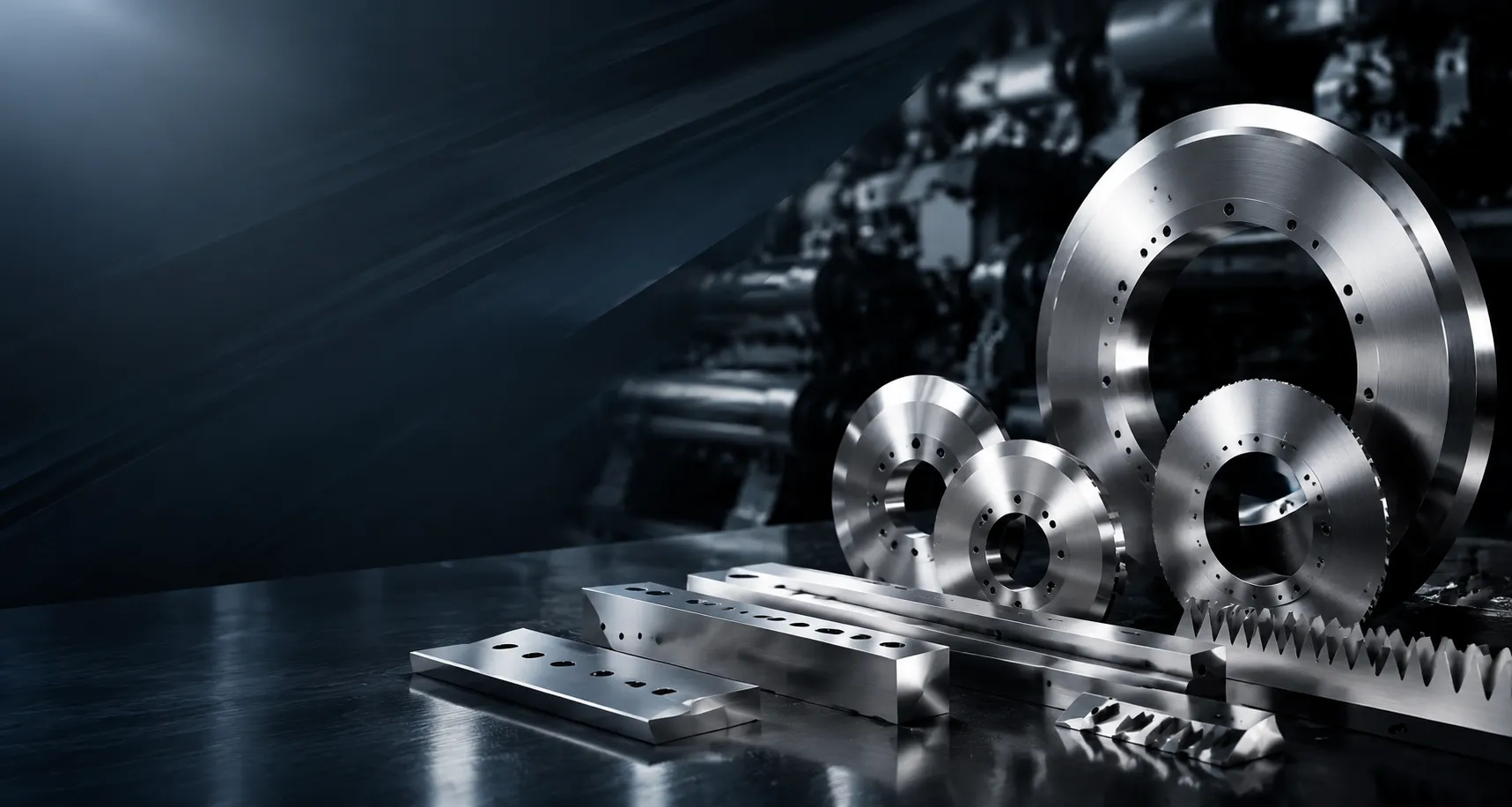
As a dedicated industrial machine knife manufacturer, Shark Cutting delivers precision-engineered industrial cutting tools, including heavy-duty shear blades, for paper, packaging, film, nonwoven, and rubber processing. Built with custom metallurgy and micro-inch tolerances to minimize downtime and maximize throughput.
Manufacturing Standard
Sub-Micron Edge Tolerance
30+ Years
Industrial Knife Manufacturing
±0.002mm
Grinding Tolerance Precision
50+ Countries
Global Manufacturing Supply
100%
In-House Quality Inspected
Industrial Machine Knife Categories & Custom Cutting Solutions
Sharkcutting manufactures high-performance industrial machine knives engineered for high-speed automated processing lines. Our engineering team works directly with equipment OEMs and manufacturers to build custom industrial blades that fit exact machine specifications, combining custom edge geometries and micron-level grinding tolerances to minimize web downtime, optimize shear quality, and maximize operational efficiency across our entire line of industrial products.
Select a specialized product line below to explore detailed technical specifications, metallurgical selections, and equipment compatibility for your converting machinery.
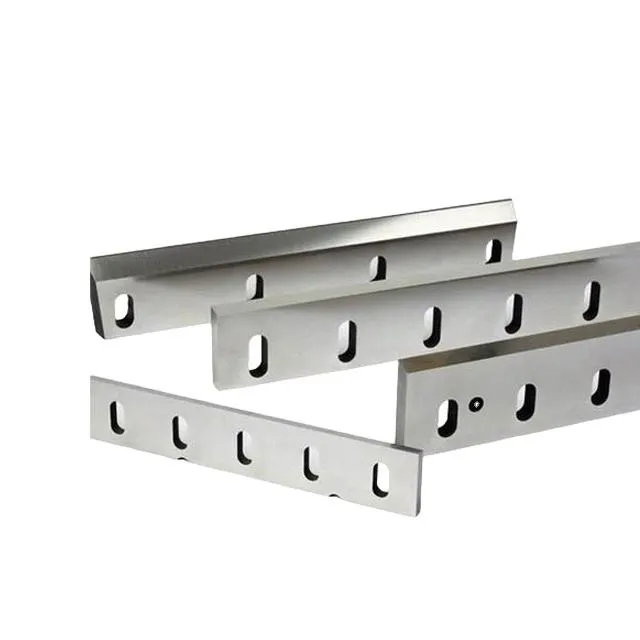
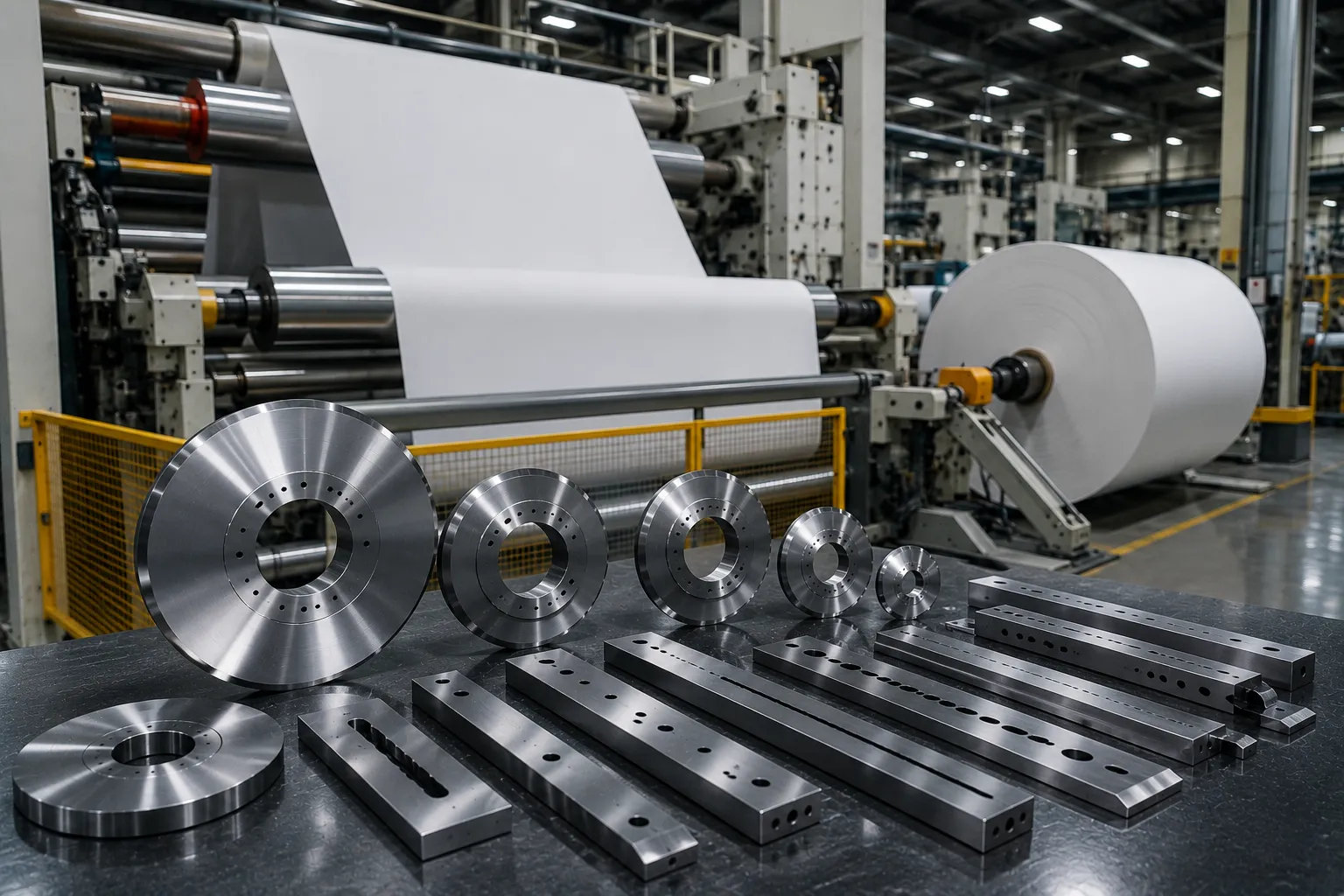
Paper Cutting Knives & Sheeter Blades
Engineered for paper mills, commercial printing plants, and high-speed rotary converting lines. Our paper cutting knives deliver clean, dust-free cut edges while significantly extending re-sharpening intervals.
- Guillotine & Sheeter Blades: Precision-matched for Polar, Wohlenberg, Lawson, ECH Will, and Seybold cutters.
- Premium Alloys: Premium D2 tool steel, high-speed steel (HSS), and solid tungsten carbide inlays.
- Operational Advantages: Eliminates paper dust, edge burrs, and web separation errors during continuous web production.
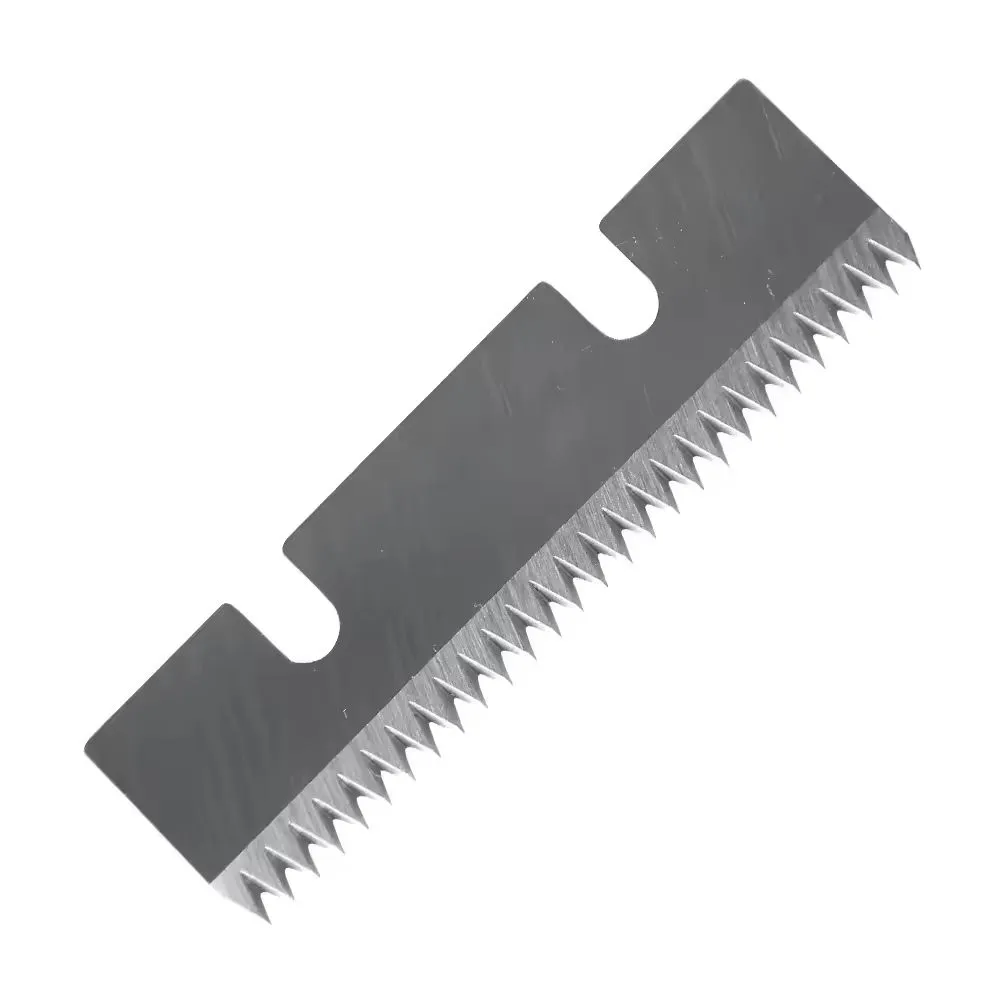
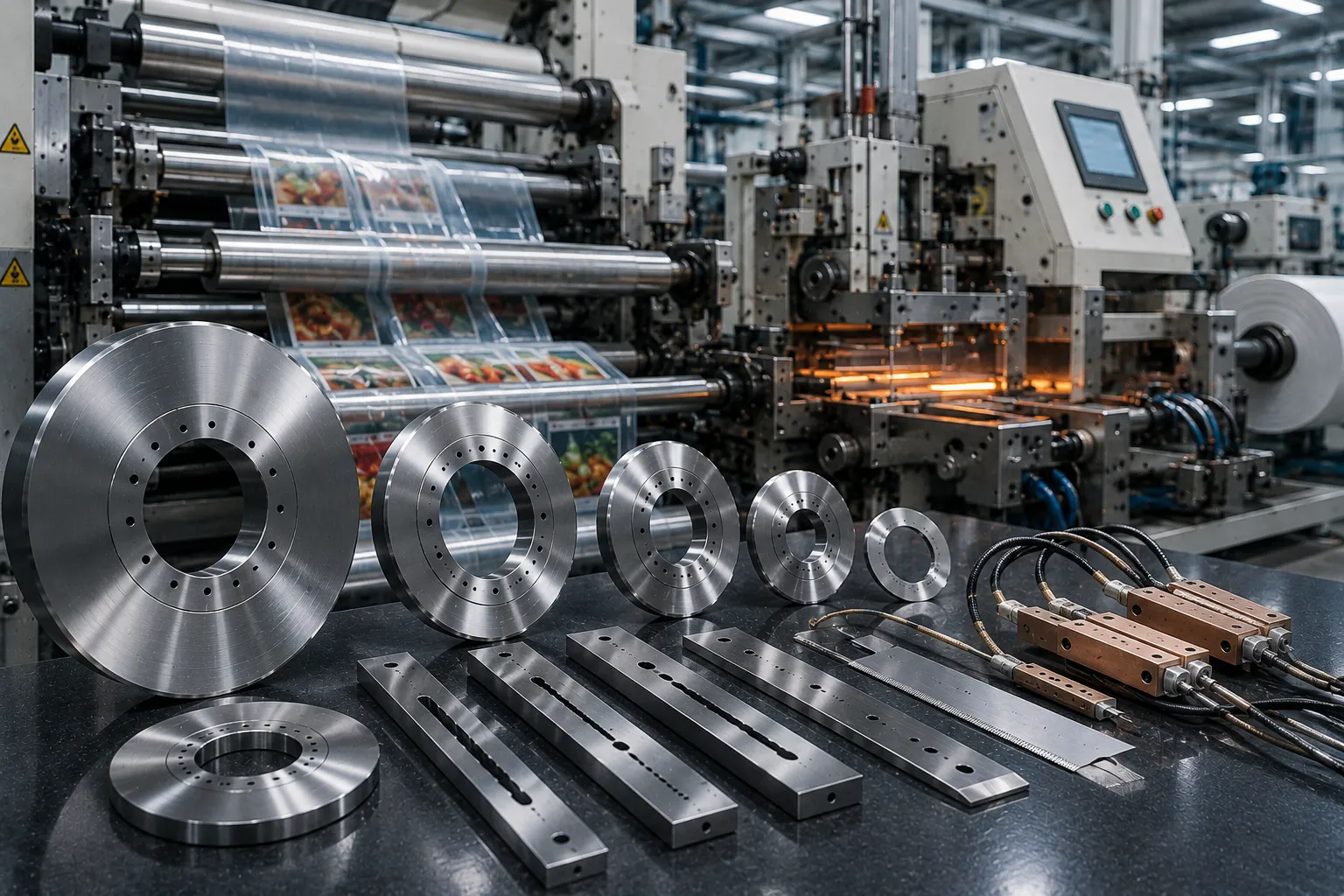
Packaging Machine Knives & Cutters
Tailored for vertical form-fill-seal (VFFS), pouch making, tray sealing, and high-speed flow wrapping lines demanding sharp, reliable film separation.
- Custom Geometries: Tooth-profile serrated blades, anvil knives, tear-notch cutters, and sealing jaw knives.
- Advanced Coatings: Food-grade stainless steel, TiN (Titanium Nitride), and Teflon non-stick surface treatments.
- Operational Advantages: Ensures clean film slitting and snag-free perforations under continuous heating cycles.
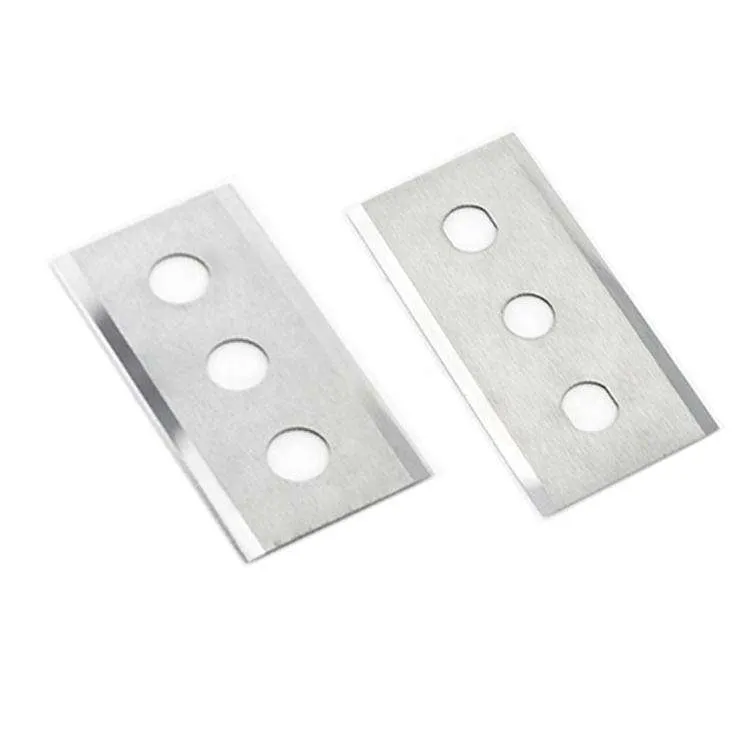
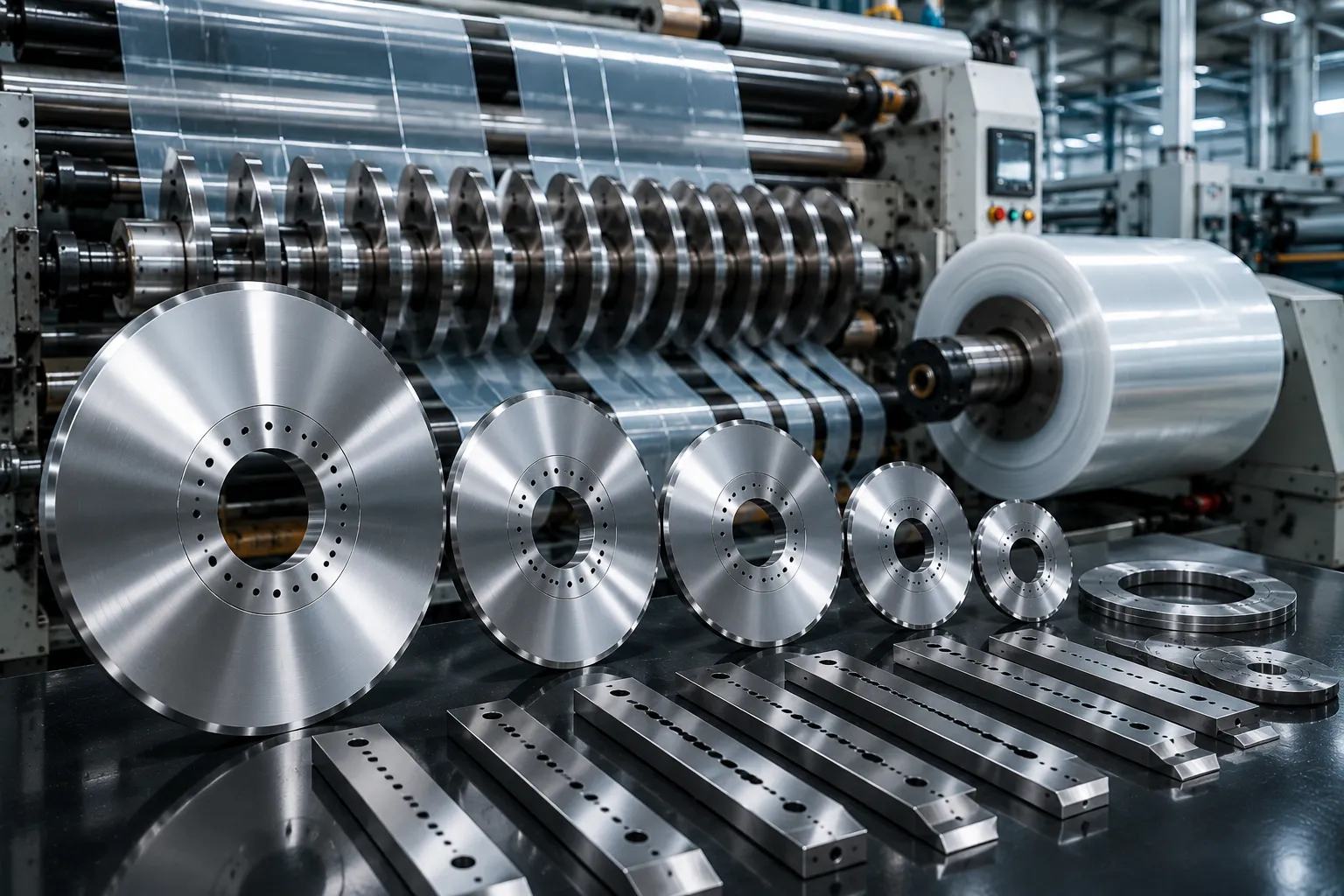
Film Cutting & Slitting Blades
Ultra-sharp film slitting knives designed for flexible packaging, plastic extrusion, optical foils, and multilayer laminate slitting-rewinding equipment.
- Versatile Formats: Industrial razor blades, circular rotary slitting knives, dish blades, and bottom rings.
- Wear Materials: Sub-micron fine-grain tungsten carbide, high-grade ceramic, and vacuum-treated M2 tool steel.
- Operational Advantages: Prevents edge fusion, film stretching, and burring on BOPP, PET, and stretch wrap films.
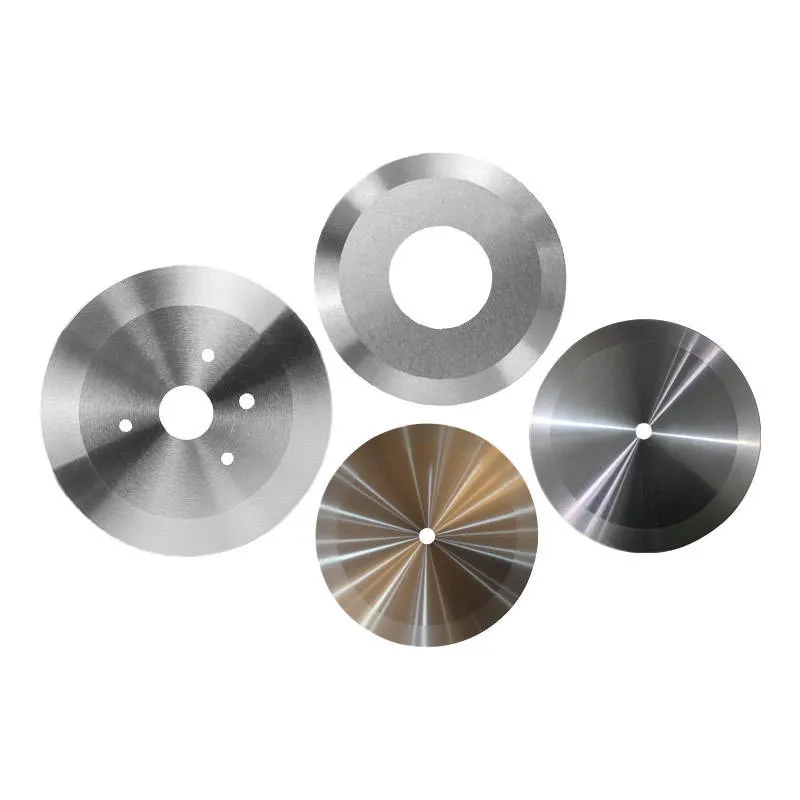
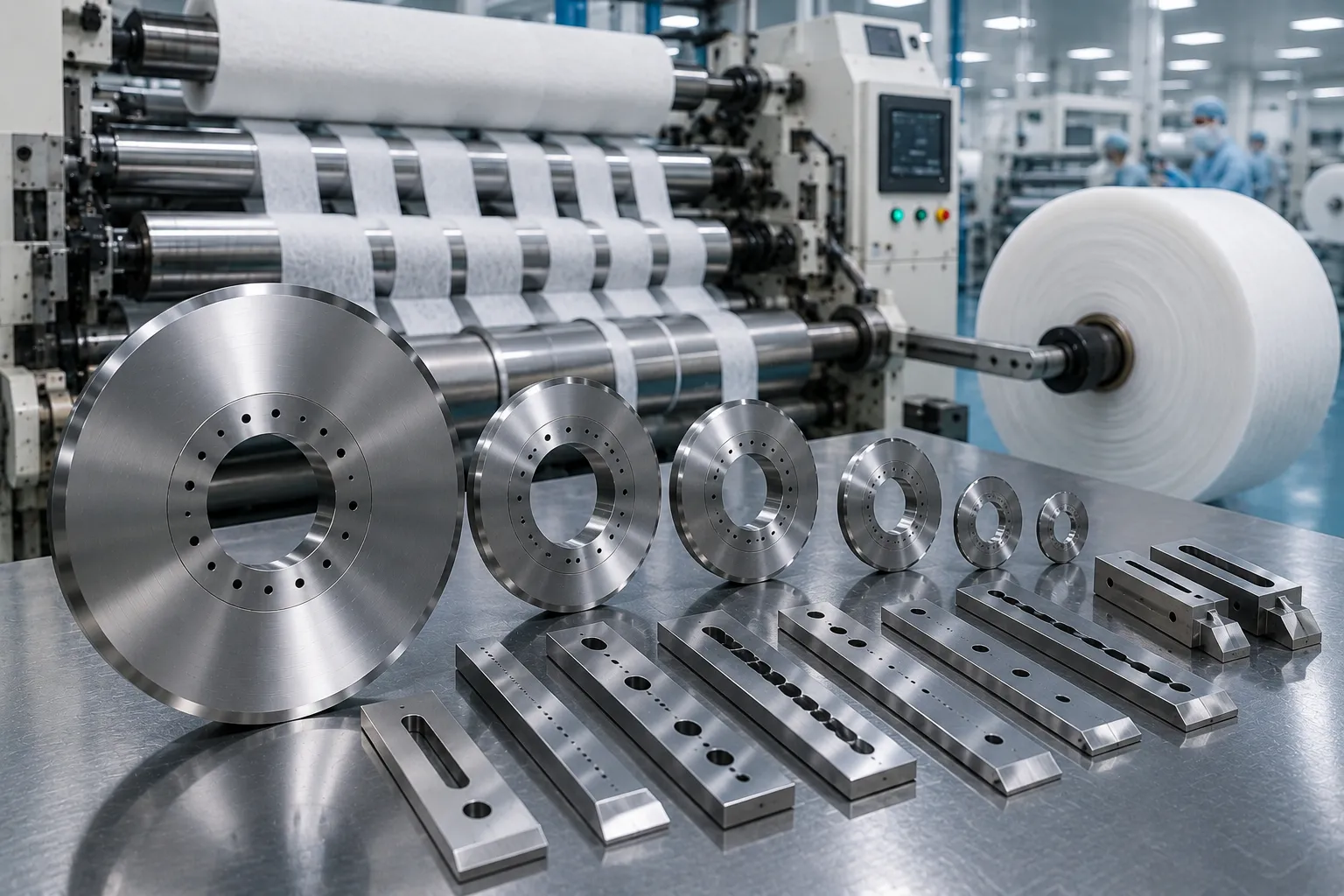
Nonwoven & Textile Industrial Blades
Precision-ground industrial blades tailored for medical nonwovens, hygiene product converting, spunbond fabrics, and continuous synthetic fiber processing lines.
- Cutting Methods: Shear slitting wheels, crush cutting blades, rotary die anvils, and ultrasonic slitting units.
- Engineering Details: Micro-polished bevel angles, extreme wear resistance, and minimal frictional heat build-up.
- Operational Advantages: Provides crisp edge separation without fiber fraying, thermal melting, or airborne lint generation.
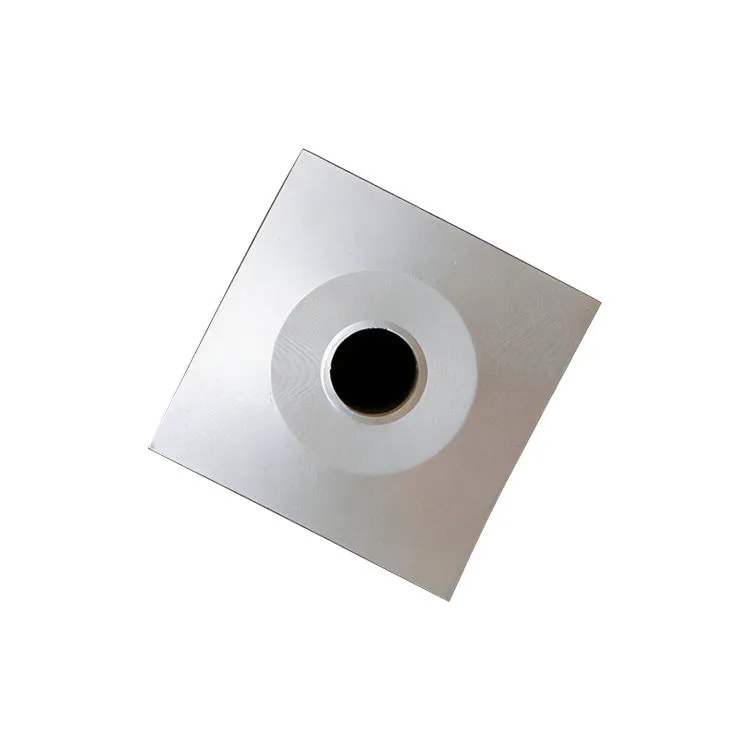
Rubber & Elastomer Processing Knives
Heavy-duty industrial knives engineered to slice through dense synthetic rubber compounds, tire treads, conveyor belt carcasses, and uncured elastomers.
- Industrial Profiles: Mill roll cutter knives, tread shear blades, skiving knives, and circular slitter knives.
- Heavy-Duty Steels: Vacuum heat-treated tool steels (D2, SKD-11, Cr12MoV) and shock-resistant tungsten carbide.
- Operational Advantages: Highly resistant to edge chipping, galling, and deflection under heavy frictional loads.
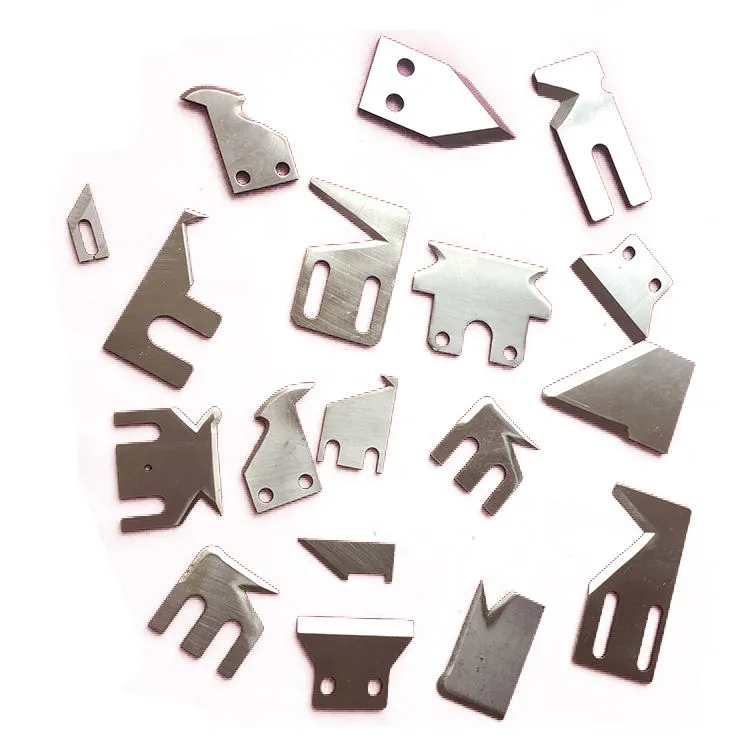
Custom Machine Knives & OEM Fabrication
Require specialized dimensions, unique mounting hole patterns, or non-standard edge bevels? Our engineering team works directly with equipment OEMs and manufacturers to build custom industrial blades that fit exact machine specifications.
- Micron Precision: Tight manufacturing tolerances down to ±0.002mm for exact drop-in fitment.
- 100% OEM Compatibility: Direct drop-in replacement blades for all major automated machinery.
- Rapid Prototyping: Fast turnaround times for technical drawing reviews, reverse-engineered samples, and trial production runs.
Technical Comparison Matrix Across Product Lines
Compare metallurgical options, grinding hardness ranges, machine cross-references, and core production benefits across our primary industrial machine knife offerings.
| Knife Category | Primary Steel / Metallurgy | Hardness Range (HRC) | Typical Machine Fit | Key Value Proposition |
|---|---|---|---|---|
| Paper Cutting Knives | D2 Tool Steel, High-Speed Steel (M2), Solid / Inlaid Tungsten Carbide | 60 – 65 HRC | Polar, Seybold, Wohlenberg, Bielomatik, ECH Will | Dust-free precision cut edges, extended sharpening cycles, high durability |
| Packaging Machine Knives | 440C Stainless Steel, D2 Tool Steel, TiN / Teflon Coated | 58 – 62 HRC | Multivac, Bosch / Syntegon, ULMA, Fuji Packaging, Hayssen | Thermal shock resistant, snag-free film tearing, clean pouch sealing |
| Film Cutting Knives | Solid Tungsten Carbide, Micro-Grain M2 HSS, High-Tech Ceramic | 64 – 70 HRC / Carbide | Kampf, Atlas Converting, Titan, Dusenbery, Goebel | Zero edge melt, mirror surface finish (Ra < 0.1 μm), ultra-thin slit widths |
| Nonwoven Knives | Sub-Micron Tungsten Carbide, SKD-11, High-Vanadium Alloy | 62 – 68 HRC | Spoerl, Curt G. Joa, Zuiko, Elsner, Bikoma | Prevents fiber fraying and thermal melting, lint-free edge profile |
| Rubber Cutting Knives | Cr12MoV, D2 Tool Steel, Shock-Resistant Alloy Steels | 56 – 60 HRC | Farrel, HF Mixing Group, NFM, Kobe Steel mills, VMI | Chipping-resistant edge geometry, withstands extreme friction and impact |
Metallurgical Integrity
Every batch undergoes controlled vacuum heat treatment and cryogenic tempering to achieve uniform grain structure, maximum toughness, and extended wear life.
CNC Micro-Grinding
Multi-axis CNC grinding machines deliver bevel angle tolerances within ±0.05° and dimensional accuracy down to ±0.002mm for flawless drop-in seating.
100% Quality Assurance
Equipped with laser interferometers, optical profile comparators, and CMM inspection systems to guarantee zero-defect machine knife shipments worldwide.
Engineered Machine Knives for High-Demand Industrial Processing
At Shark Cutting, we engineer precision industrial machine knives to withstand the extreme shear stresses, high line speeds, and abrasive material characteristics of modern manufacturing. Discover how our custom converting line blades and OEM replacement knives optimize slit quality, reduce edge wear, and eliminate unplanned downtime across major production environments.
High-Precision Blades for Paper Converting & Sheeting Lines
High-speed rewinding, sheeting, and tissue converting demand uncompromising blade sharpness, exact lateral rigidity, and minimal runout. Edge wear and paper dust accumulation can degrade print quality, cause web breaks, and force frequent blade changes. Shark Cutting paper cutting knives and circular slitting blades are precision micro-ground from premium D2, M2, and tungsten carbide alloys to deliver dust-free, razor-sharp edges over extended continuous production cycles.
- ✓ Minimal Dust Generation: Mirror-polished shear edges eliminate fiber tear and paper dust buildup, protecting optical registration sensors and downstream printing equipment.
- ✓ Extended Operational Lifespan: Vacuum heat-treated and cryogenically tempered tool steel grades provide up to 300% longer run times between sharpening intervals.
- ✓ Universal OEM Compatibility: Precision-machined to exact tolerances for seamless drop-in fitment on leading global slitter-rewinders and rotary sheeters.
Recommended Materials: D2 Tool Steel, M2 High-Speed Steel (HSS), Solid Tungsten Carbide Inserts, Powder Metallurgy (CPM).
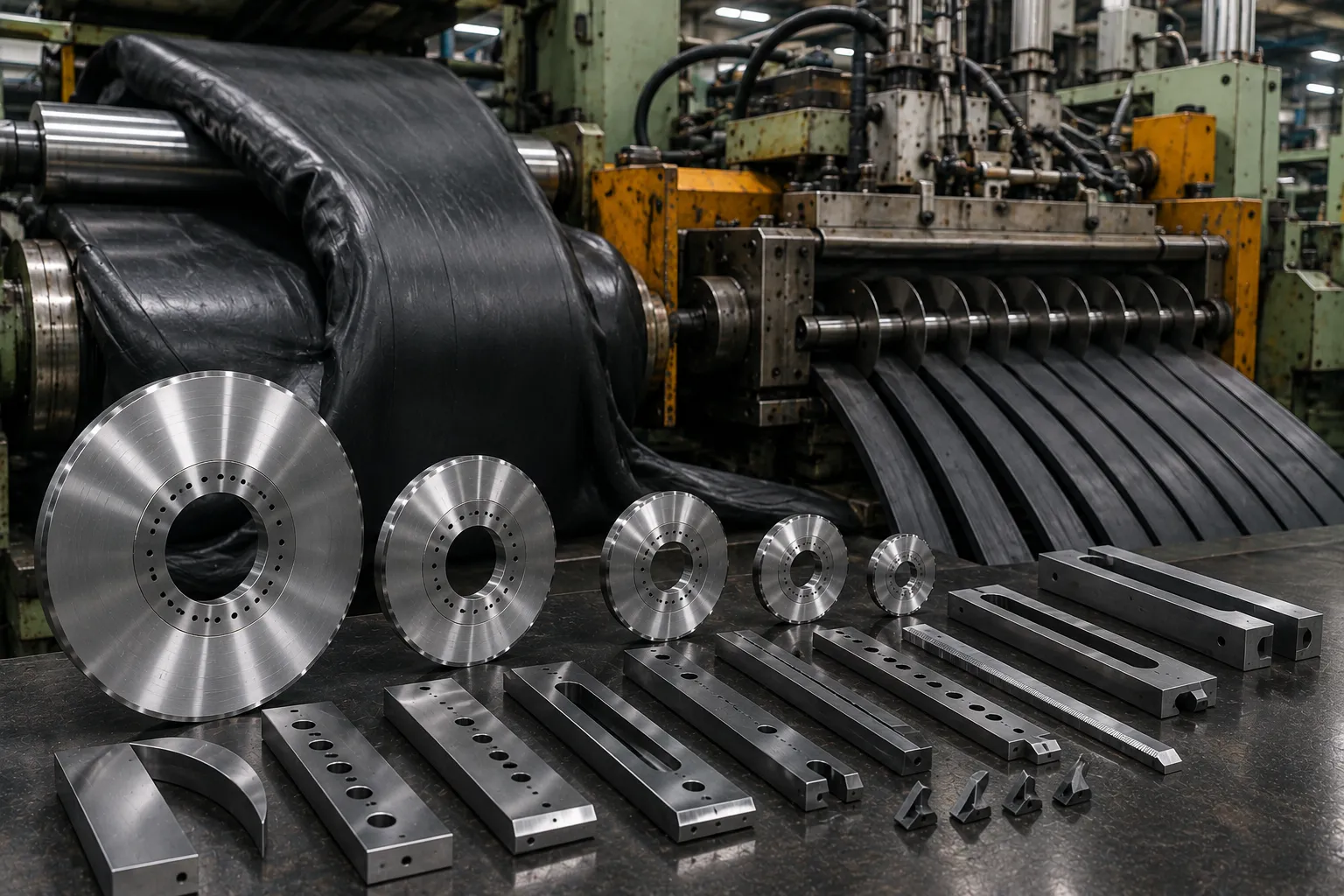
Premium Materials & Precision Machining Excellence
At Sharkcutting, our industrial machine knives are engineered to withstand extreme physical stresses, high-friction continuous processing, and demanding manufacturing environments. By pairing certified tool steel blades and tungsten carbide industrial knives with proprietary heat-treatment protocols and high-precision grinding, we deliver cutting components that maintain micro-edge integrity, eliminate material burrs, and minimize costly downtime across continuous production lines.
Premium Alloy & Carbide Selection
We source high-purity tool steel grades including D2, M2, SKD-11, and sub-micron Tungsten Carbide. Every raw batch undergoes strict metallurgical testing to verify grain density and chemical uniformity, providing maximum edge stability under intense operational loads.
- High-Carbon D2 Tool Steel
- High-Speed Steel (M2 / HSS)
- Sub-Micron Tungsten Carbide
Ultra-Precise CNC Grinding
Using advanced multi-axis CNC precision grinding machinery, Sharkcutting achieves tight tolerances down to ±0.002mm (0.00008 in). Our mirror-polished bevel surfaces reduce surface friction, heat generation, and material drag on high-speed slitting equipment.
- ±0.002mm Dimensional Tolerances
- Mirror Bevel Finish (Ra < 0.1µm)
- Zero-Burr Edge Geometry
Vacuum Heat Treatment
Computer-monitored vacuum thermal processing and deep cryogenic quenching transform raw alloy blanks into heat-treated machine blades with homogeneous microstructures. This process eliminates internal stress to prevent chipping under high shock loads.
- Computerized Vacuum Hardening
- Sub-Zero Cryogenic Processing
- Balanced Core & Edge Toughness
Strict Quality Inspection
Every production batch undergoes rigorous 100% quality verification using 3D coordinate measuring machines (CMM), Rockwell hardness testing, and high-magnification optical profile projectors prior to final packaging and delivery.
- 3D CMM Metrology Verification
- Rockwell HRC / HRA Hardness Testing
- Optical Edge Profile Analysis
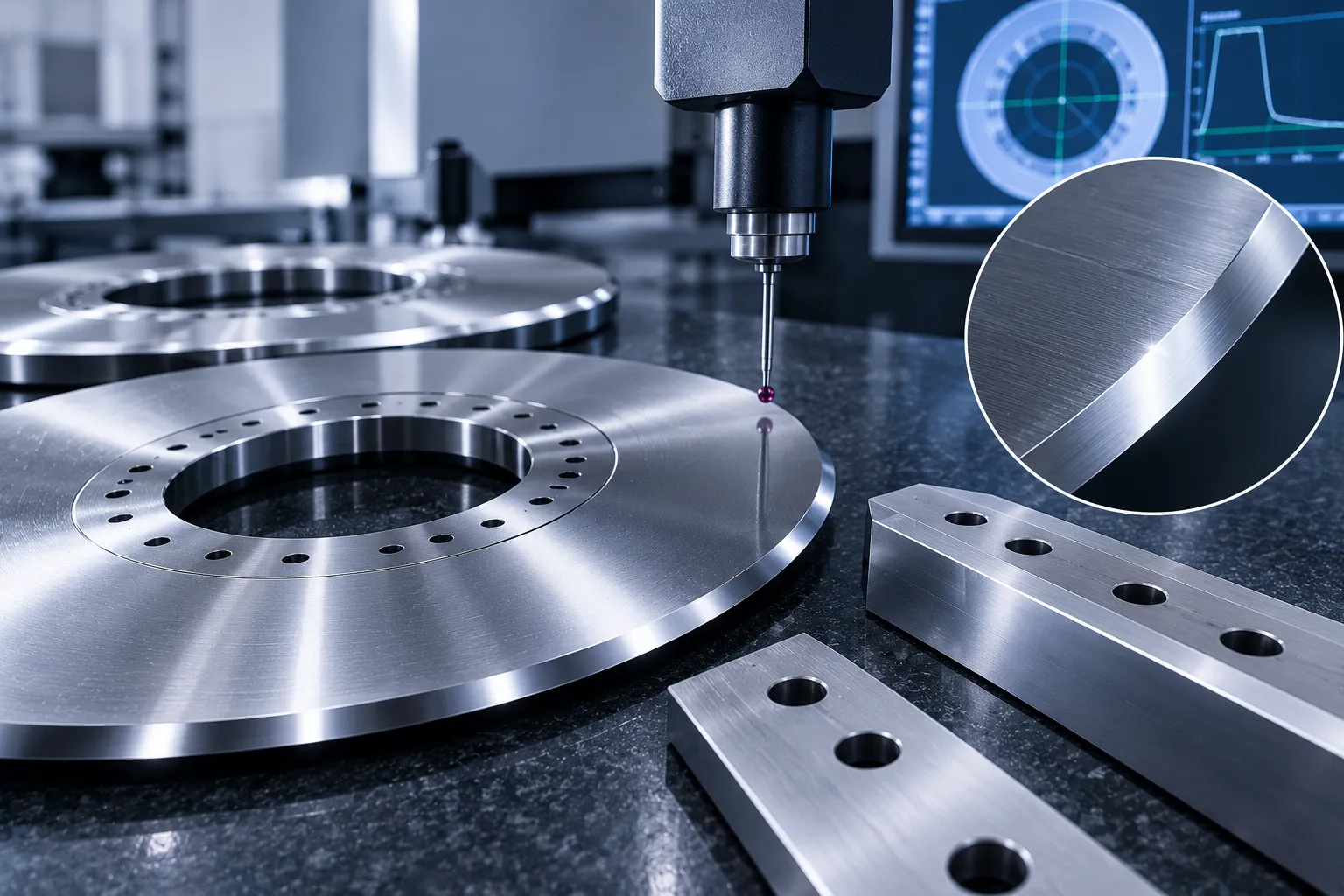
Micron-Level Tolerance & Flawless Edge Finishing
Advanced Metallurgy Designed for Extended Blade Service Life
Selecting the ideal alloy composition and hardness profile for high-wear operations requires thorough evaluation of shear dynamics, material elasticity, and thermal buildup. Sharkcutting collaborates directly with plant management and OEMs to analyze feed velocities and machine blade sharpening tolerances, tailoring blade geometries to exact operational requirements.
Our high wear resistance blades feature refined carbide distribution achieved through specialized tempering cycles. This structural reinforcement prevents micro-fractures during continuous rotary slitting, high-speed flexible packaging seals, or heavy-duty rubber recycling. By retaining razor-sharp cutting edges longer, processing plants achieve significantly extended operational runs and reduced sharpening frequencies.
Technical Advantage: Core Hardness & Resharpening
Our deep vacuum heat treatment ensures uniform hardness through the entire blade body, not merely on the outer surface. This structural integrity allows Sharkcutting industrial machine knives to undergo repeated resharpening cycles without compromising edge retention or dimensional accuracy.
Industrial Blade Material Specifications & Compatibility
Compare metallurgical properties to select the optimal tool steel or solid carbide alloy for your specific cutting application.
| Material Grade | Hardness Range | Primary Application Focus | Wear Resistance | Toughness Index |
|---|---|---|---|---|
| D2 / AISI D2 (1.2379) | 58 – 62 HRC | Paper converting, packaging film, general shear slitting | High | Very Good |
| M2 High-Speed Steel (1.3343) | 62 – 65 HRC | High-speed rotary slitting, nonwoven cutting, flexible films | Very High | High |
| Tungsten Carbide (Solid) | 75 – 82 HRA | Abrasive rubber, tire manufacturing, thin BOPP film, foils | Extreme | Moderate |
| 440C Stainless Steel (1.4125) | 54 – 58 HRC | Food packaging, sanitary nonwovens, corrosive environments | Moderate | Good (Corrosion Proof) |
Custom Machine Knives & OEM Manufacturing Process
Sharkcutting delivers tailored blade manufacturing with tight tolerance controls, expert material selection, and rapid global delivery for OEM equipment and specialty conversion lines.
Drawing & Spec Review
Submit your CAD blueprints, technical specs, or physical samples. Our engineering team evaluates edge geometries, bevel angles, and operating loads.
Material Selection
Select high-grade tool steels (D2, M2, SKD-11), tungsten carbide, or custom alloys engineered specifically for your cutting application.
Precision CNC Machining
Multi-axis CNC grinding and vacuum heat treatment ensure supreme edge sharpness, extreme wear resistance, and long service life.
Rigorous Quality QA
Optical coordinate measuring machines (CMM) and hardness testing verify 100% compliance with your exact technical drawings.
Secure Delivery
Blades are treated with protective anti-rust coatings, custom-packed, and shipped directly to your manufacturing facility worldwide.
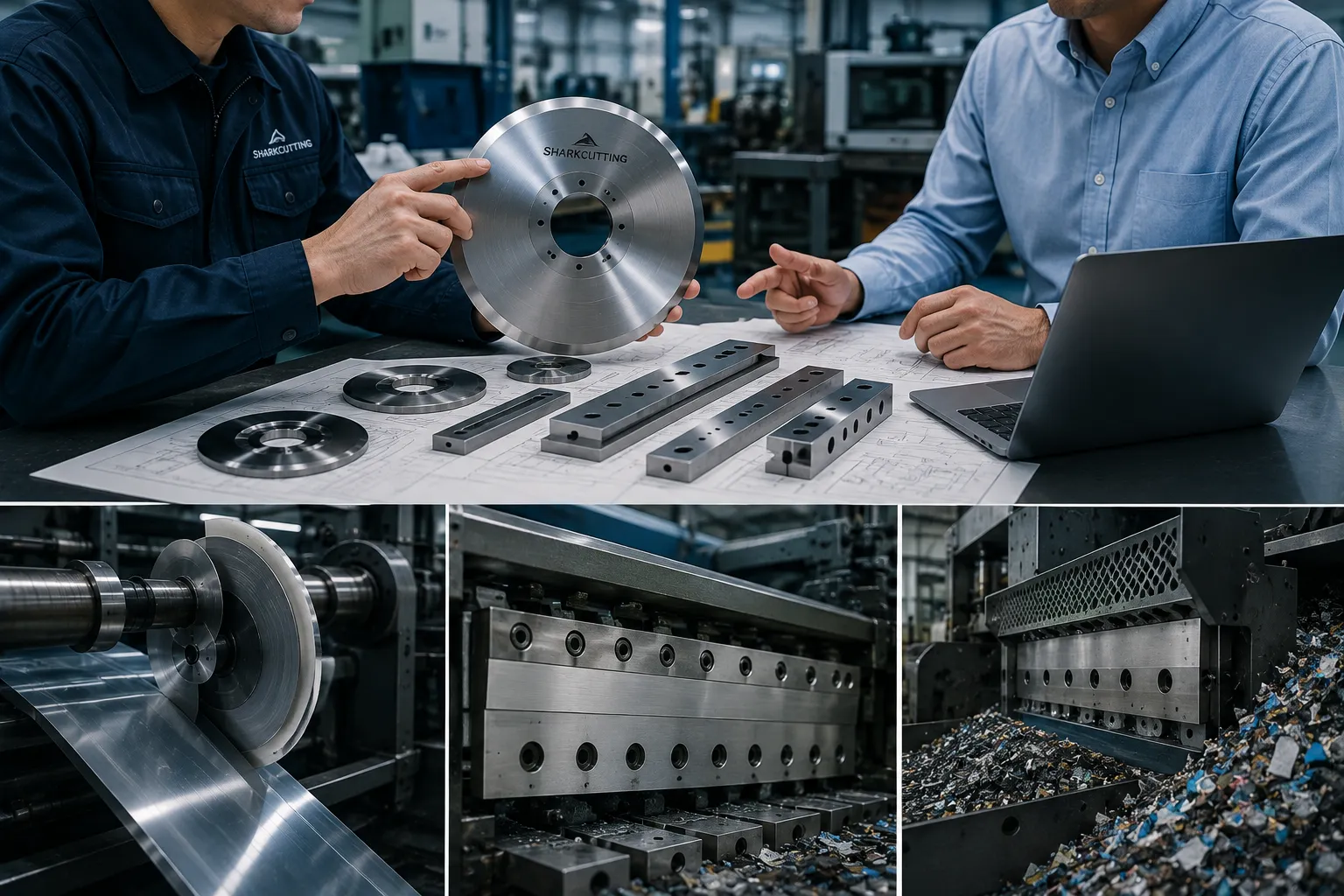
Why Partner with Sharkcutting for OEM Machine Knives?
Our engineering team works directly with equipment OEMs and industrial manufacturers to build custom industrial blades that fit exact machine specifications, extend tool life, and eliminate unscheduled production downtime. We also specialize in heavy-duty components such as recycling blades and heavy-capacity shear blades for processing applications.
Need Custom Industrial Machine Knives for Your Line?
Submit your CAD drawings or blade samples today. Our expert engineering team will review your specifications and send a detailed custom proposal within 24 hours.
Frequently Asked Questions About Industrial Machine Knives
Navigating material specification, custom manufacturing tolerances, and maintenance schedules for industrial machine knives requires clear engineering data. As a specialized industrial knife supplier, Sharkcutting produces high-precision industrial blades engineered to withstand relentless continuous production. Below are comprehensive answers to key technical questions regarding blade sharpening tolerance, metallurgy options, OEM replacement compatibility, and longevity optimization across paper, flexible packaging, film slitting, nonwoven, rubber processing, and heavy-duty recycling blades operations.
Industrial Machine Knife Material Selection Matrix
Selecting the correct tool steel or carbide grade is critical to prevent micro-chipping, rapid edge dulling, and unnecessary converting line downtime.
| Material Grade | Core Metallurgy | Wear Resistance | Toughness Rating | Primary Processing Applications |
|---|---|---|---|---|
| D2 / SKD-11 Tool Steel | High-Carbon, High-Chromium Cold Work Steel | High (58-62 HRC) | Moderate | Paper cutting knives, general packaging machine knives, corrugated board slitting |
| M2 High-Speed Steel (HSS) | Molybdenum-Tungsten High-Speed Steel | Very High (62-65 HRC) | High Impact Resistance | High-speed packaging lines, film cutting knives, nonwoven continuous shear slitting |
| Solid Tungsten Carbide | Fine-Grain Sintered Tungsten Carbide / Cobalt | Extreme (75-82 HRA) | Low (Requires Rigid Setup) | Abrasive rubber cutting knives, ultra-thin polymer film slitting, foil processing |
| Powder Metallurgy (PM) Steels | Particle-Engineered High-Alloy Tool Steel | Exceptional (60-64 HRC) | Very High | Heavy-duty rubber, thick converting line blades, high-wear synthetic nonwovens |
How do I select the optimal material grade for my specific processing line?
Material selection depends directly on the physical properties of the substrate being processed, equipment operating speeds, thermal generation, and mechanical shock exposure:
- Paper & Cardboard: Premium D2 or SKD-11 tool steel blades deliver outstanding edge retention against abrasive fillers present in recycled paper stocks and heavy corrugated fluting.
- Flexible Packaging & Plastic Films: M2 high-speed steel (HSS) or solid tungsten carbide blades are ideal for burr-free film cutting knives operating on BOPP, PET, CPP, and laminated barrier foils.
- Nonwovens & Hygiene Products: Powder metallurgy tool steel blades prevent fiber pulling and maintain severe micro-sharpness during continuous high-frequency shear cutting operations.
- Abrasive Rubber & Elastomers: Solid carbide industrial knives or custom-coated tool steel blades resist friction heating and surface abrasion in tire processing and extrusion lines.
Sharkcutting engineers perform complete material evaluations to analyze shear forces and recommend optimal metallurgy for maximum edge life and reduced blade changeover frequency.
Can Sharkcutting manufacture custom OEM replacement knives to exact equipment specifications?
Yes. Sharkcutting is an experienced OEM blade manufacturing partner. We produce precision direct-replacement machine knives compatible with major international machinery brands for slitting rewinders, cross-cutters, rotary die assemblies, and flow-wrapping units.
Clients can supply CAD drawings (2D/3D), STEP/DXF files, or physical sample blades. Our reverse engineering department verifies critical tolerances, including hole spacing, keyway dimensions, bevel profiles, and total blade thickness using optical comparators and Coordinate Measuring Machines (CMM).
Every custom machine knife manufactured by Sharkcutting is guaranteed to fit your equipment arbor, knife block, or pneumatic holder with exact drop-in precision.
What are the standard lead times for standard vs. custom industrial machine knives?
Production timelines depend on design complexity, alloy raw material sourcing, specialized thermal treatment cycles, and batch size:
In-stock circular slitter blades, standard paper cutting knives, and common packaging machine knives ship within 24 to 48 hours.
Tailored machine blades requiring custom CNC grinding, vacuum heat treatment, or carbide brazing typically dispatch within 2 to 4 weeks.
To support urgent line-down situations, Sharkcutting maintains emergency production slots to deliver critical industrial machine knives on expedited schedules.
What blade sharpening tolerances and regrinding protocols are recommended?
Adhering to tight blade sharpening tolerances is essential for preserving clean shear edges and maximizing total knife wear cycles. Sharkcutting manufactures and services blades with grinding tolerances controlled down to ±0.002 mm (±0.00008 in).
Key Maintenance Guidelines:
- Flood Coolant Precision Grinding: Always supply abundant synthetic coolant during re-grinding to prevent micro-cracking and localized metallurgical temper loss.
- Preserve Factory Bevel Geometry: Deviating from primary or secondary bevel angles by even 1° can increase web tension drag and accelerate edge breakdown.
- Super-Finishing & Lapping: Lapping blade edges with super-fine abrasive wheels removes microscopic burrs, extending initial edge retention by up to 30%.
We provide comprehensive regrinding parameters and allowable wear dimension charts with every custom order.
How does Sharkcutting ensure quality control and dimensional consistency?
As a ISO-aligned industrial knife supplier, quality control at Sharkcutting encompasses every stage from raw steel verification to final protective shipping:
- Spectrometric Alloy Verification: Every steel lot is analyzed to confirm chemical composition prior to initial machining.
- Vacuum & Cryogenic Treatment: Computerized vacuum heat treatment and sub-zero processing yield uniform grain refinement, stress relief, and precise Rockwell hardness (HRC).
- Sub-Micron Dimensional Inspection: Blades undergo 100% CMM measurement, surface roughness testing (Ra 0.1–0.2 µm mirror polish), and run-out testing for circular slitters.
Inspection certificates, material test reports (MTR), and hardness validation logs are available upon request for every production batch.
What surface coatings or treatments are available for high-wear environments?
To drastically reduce surface friction and extend operational life in severe processing setups, Sharkcutting applies advanced Physical Vapor Deposition (PVD) coatings and surface treatments:
Golden wear layer that minimizes friction and reduces polymer buildup on film cutting blades.
Extreme thermal protection barrier engineered for high-speed nonwoven and rubber slitting lines.
Fluoropolymer surface coating preventing adhesive accumulation on packaging machine knives.
Have a Specific Engineering or Knife Dimension Question?
Our technical engineers and metallurgists at Sharkcutting are available to evaluate your knife holder geometry, inspect wear patterns on used blades, and recommend optimized tool steel, carbide grade, or custom bevel profiles for your machine lines.