

Precision Industrial Paper Cutting Knives & Slitting Blades
Engineered for paper converting, commercial printing, and high-volume guillotine trimmers. As a trusted industrial blade manufacturer, Sharkcutting produces high-wear-resistant paper cutting knives and slitting knives designed for burr-free edges, dust-free cutting, and extended service lifespans.
- Premium tungsten carbide and high-speed steel (HSS) grades
- Micron-level tolerance control for precise OEM equipment fit
- Up to 80% reduction in paper dust and blade edge chipping
80%
Less Paper Dust
±0.002mm
Tight Tolerance
3x
Longer Service Life
Industrial Paper Cutting & Slitting Knives
Engineered for precision paper converting, high-speed web slitting, and heavy-duty print finishing. Explore our range of specialized industrial products for OEM equipment.
 Heavy-Duty Guillotine
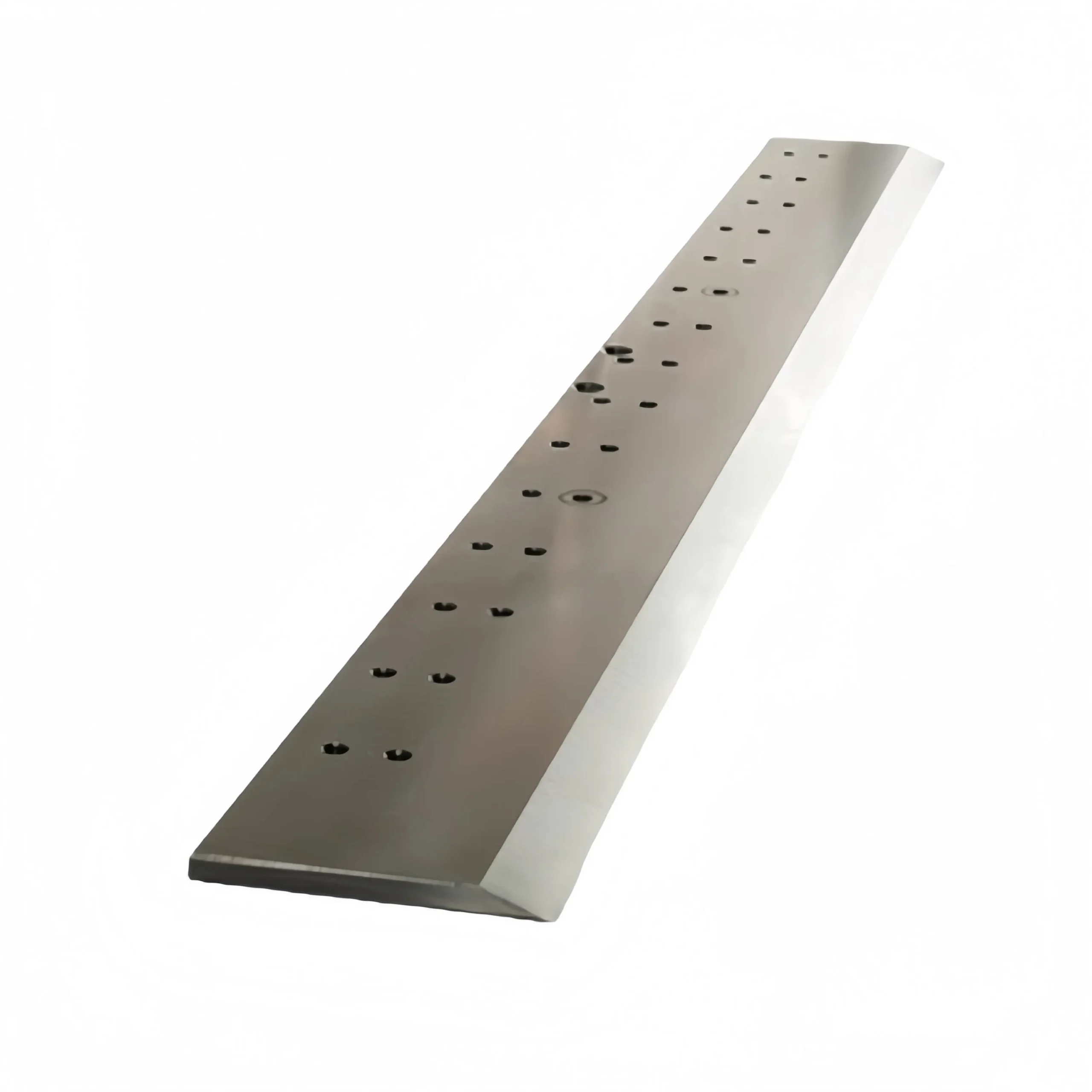
 Guillotine Paper Blades
Ultra-precision straight paper blades manufactured from high-speed steel and tungsten carbide for heavy stack trimming with dust-free performance.
 Roll-to-Roll Slitting
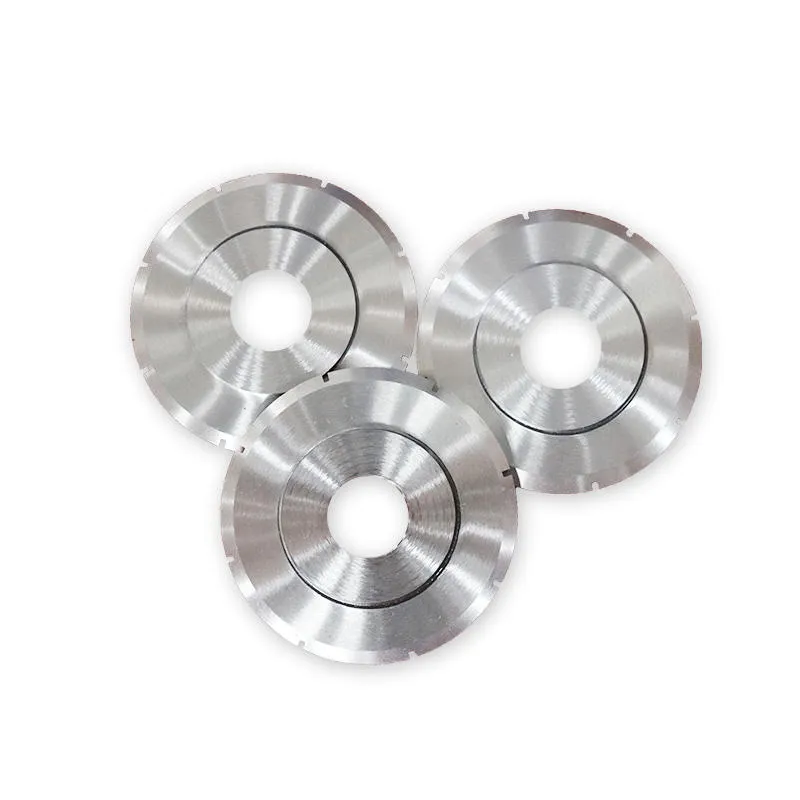
 Circular Paper Slitters
High-flatness and ultra-concentric dish and flat slitting knives designed for continuous paper roll-to-roll converting lines with virtually zero web dust.
 Automated Shearing
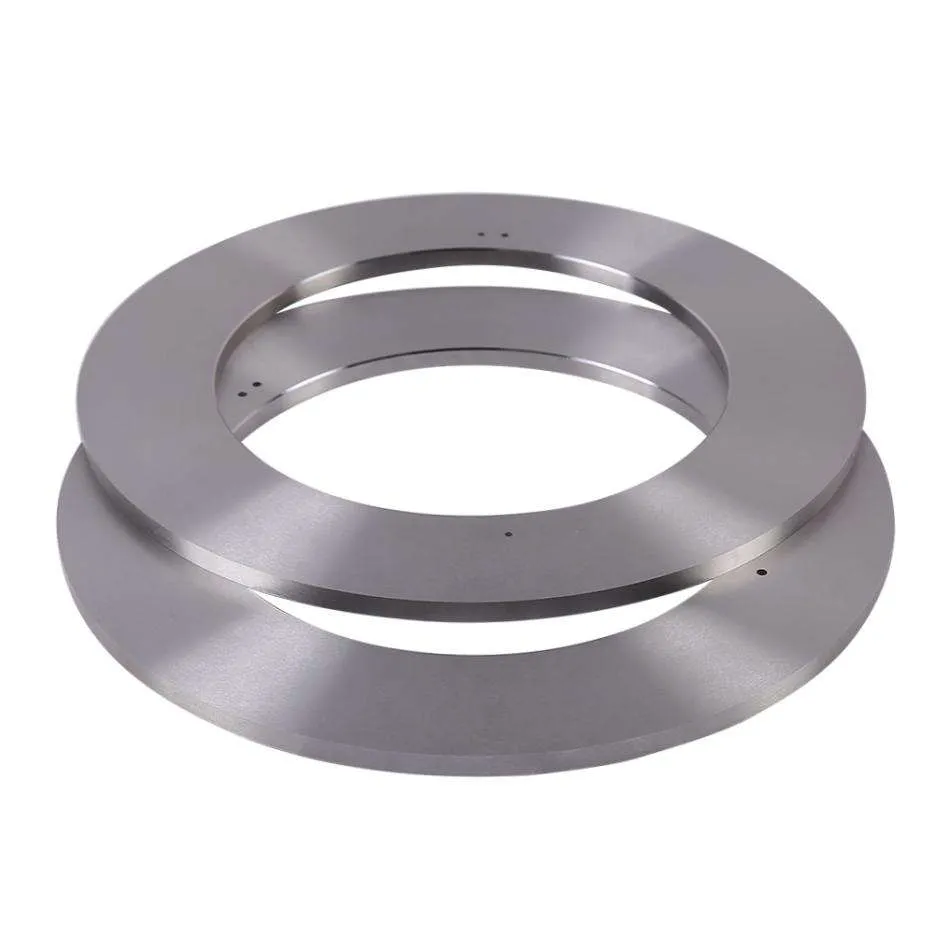
 Rotary Shear Slitters
Precision top and bottom knife sets engineered for high-speed automated paper processing lines, delivering exceptionally clean, debris-free sheet separation.
 Precision Edge Finishing
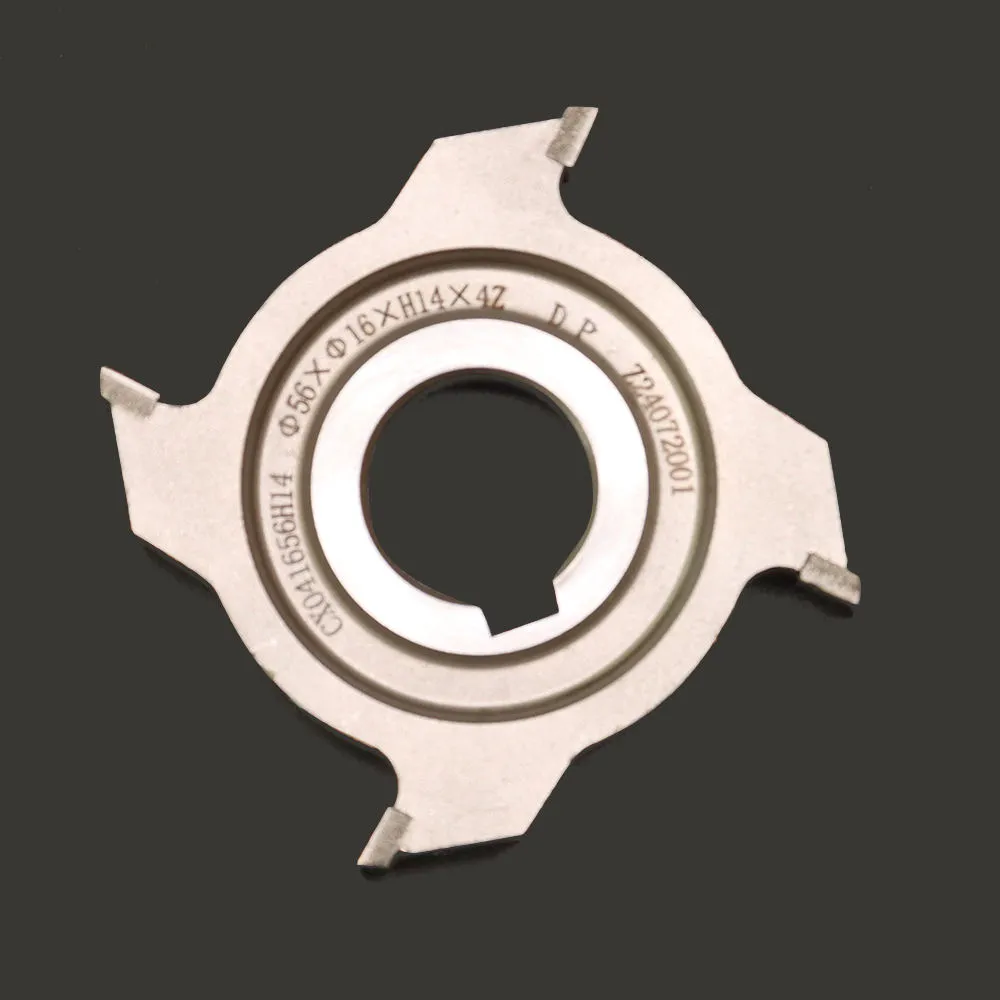
 Trimming Fine Cut Knives
Specialized blades designed for fine paper edge finishing, commercial bookbinding, and multi-ply paperboard trimming to maintain long-lasting edge sharpness.
Engineered Blade Geometries for OEM Paper Converting Equipment
Selecting the optimal paper cutting knives requires precise alignment between line operating speed, substrate abrasive properties, and blade metallurgical composition. At Sharkcutting, our engineering team manufactures replacement blades matched to exact OEM dimensional standards while upgrading wear resistance and edge toughness. Whether operating heavy-stack commercial paper cutters or continuous web slitting-knives equipment, our paper converting knives minimize micro-chipping, prevent paper fiber pull, and extend resharpening intervals.
Guillotine and Three-Knife Trimmer Compatibility
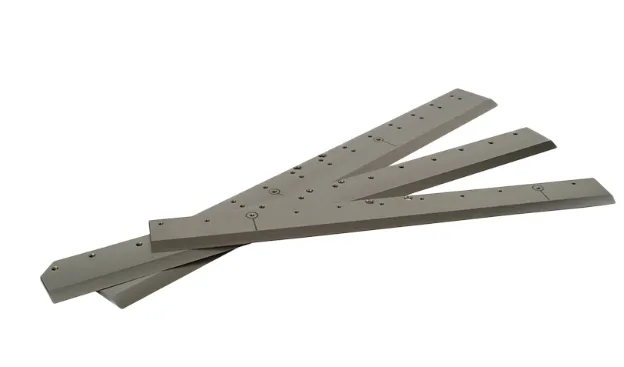
We supply precision straight guillotine paper blades and three-knife trimming sets fully compatible with leading European, American, and Asian paper processing machinery, including Polar Mohr, Wohlenberg, Lawson, Perfecta, and Schneider Senator.
- • Ultra-smooth mirror surface grinding (Ra < 0.1 µm) to minimize cutting friction
- • Custom dual-bevel and single-bevel configurations tailored to stock density
- • Available in 18% Tungsten High-Speed Steel and Solid Tungsten Carbide inlay grades
Web Slitting and Circular Knife Compatibility
Our circular-slitter-knives and rotary shear knives provide direct drop-in replacement tooling for high-speed paper machinery lines from Tidland, Dienes, Mario Cotta, ECH Will, Bielomatik, and Jagenberg.
- • Strict axial runout and lateral parallelism tolerances under 0.002 mm
- • Cryogenically treated powder metallurgy steel for continuous high-speed slitting
- • Reduces airborne paper dust generation by up to 80 percent
Paper Cutting Knife Materials and Wear Resistance Comparison
Selecting the correct alloy for paper cutting knife materials is essential for optimizing shearing precision, eliminating edge burrs, and extending operative blade lifespan. High-duty paper converting and commercial printing operations subject cutting edges to intense friction, severe mechanical shock, and highly abrasive mineral coatings like calcium carbonate and titanium dioxide. Matching specific metallurgical properties to your substrate density prevents premature edge dulling and costly equipment downtime.
Sharkcutting manufactures high-performance industrial blades from certified tool steel grades, high-speed steel alloys, and micro-grain carbide inlays. By combining advanced metallurgy with multi-stage vacuum heat treatment and precision micro-grinding, our engineered paper cutting knives maintain razor-sharp tolerances across heavy-duty guillotine trimmers, circular slitter knives, and automated high-speed converting lines.
Industrial Paper Blade Material Performance Matrix
Compare key engineering metrics across primary paper cutting knife materials to select the ideal option for your budget and material density.
| Material Grade | Hardness (HRC) | Wear Resistance | Toughness | Regrind Cycle | Cost-Efficiency Ratio |
|---|---|---|---|---|---|
| Standard Tool Steel Cr12MoV / D2 Alloy | 58 - 60 HRC | Standard | High | Short (Frequent) | Economical / Entry Level |
| High Speed Steel (HSS) M2 / SKH-51 Grade | 62 - 64 HRC | High | Balanced | Extended (2x Standard) | High Value Industrial Standard |
| Powder Metallurgy Steel PM Steel / ASP Series | 63 - 65 HRC | Very High | Exceptional | Ultra-Extended (3x Standard) | Premium High-Duty Production |
| Tungsten Carbide Micro-Grain Carbide Inlay | 88 - 92 HRA | Maximum | Moderate (Requires Rigidity) | Maximum (5x–10x Standard) | Lowest Cost-Per-Cut for High Volume |
Vacuum Heat Treatment and Deep Cryogenic Conditioning
Raw metallurgy delivers maximum hardness and wear resistance only when refined through rigorous thermal processing. Sharkcutting utilizes computer-controlled vacuum heat treatment coupled with sub-zero deep cryogenic conditioning.
- Austenite Transformation: Deep cryogenic quenching converts residual soft austenite into ultra-stable martensite, mitigating internal stresses and thermal distortion.
- Lifespan Boost: Edge retention improves by 30% to 50% compared to conventionally heat-treated industrial blade steel.
- Edge Uniformity: Consistent hardness along the full cutting edge prevents micro-chipping during continuous high-speed slitting.
Matching Metallurgy to Specific Paper Stocks
Selecting between HSS paper blades, powder metallurgy alloys, and tungsten carbide paper knives depends on paper stock abrasiveness, GSM thickness, and cutting line speeds.
- Coated Art & Glossy Stock: Mineral-rich coatings cause rapid friction wear; tungsten carbide paper knives or PM steel prevent edge dulling and drag.
- Heavy Kraft & Cardboard: High impact cutting demands extreme shock resistance; HSS paper blades prevent edge chipping under heavy loads.
- High-Speed Web Converting: Continuous roll slitting requires minimal maintenance downtime; micro-grain carbide inlays retain keen bevels over millions of cuts.
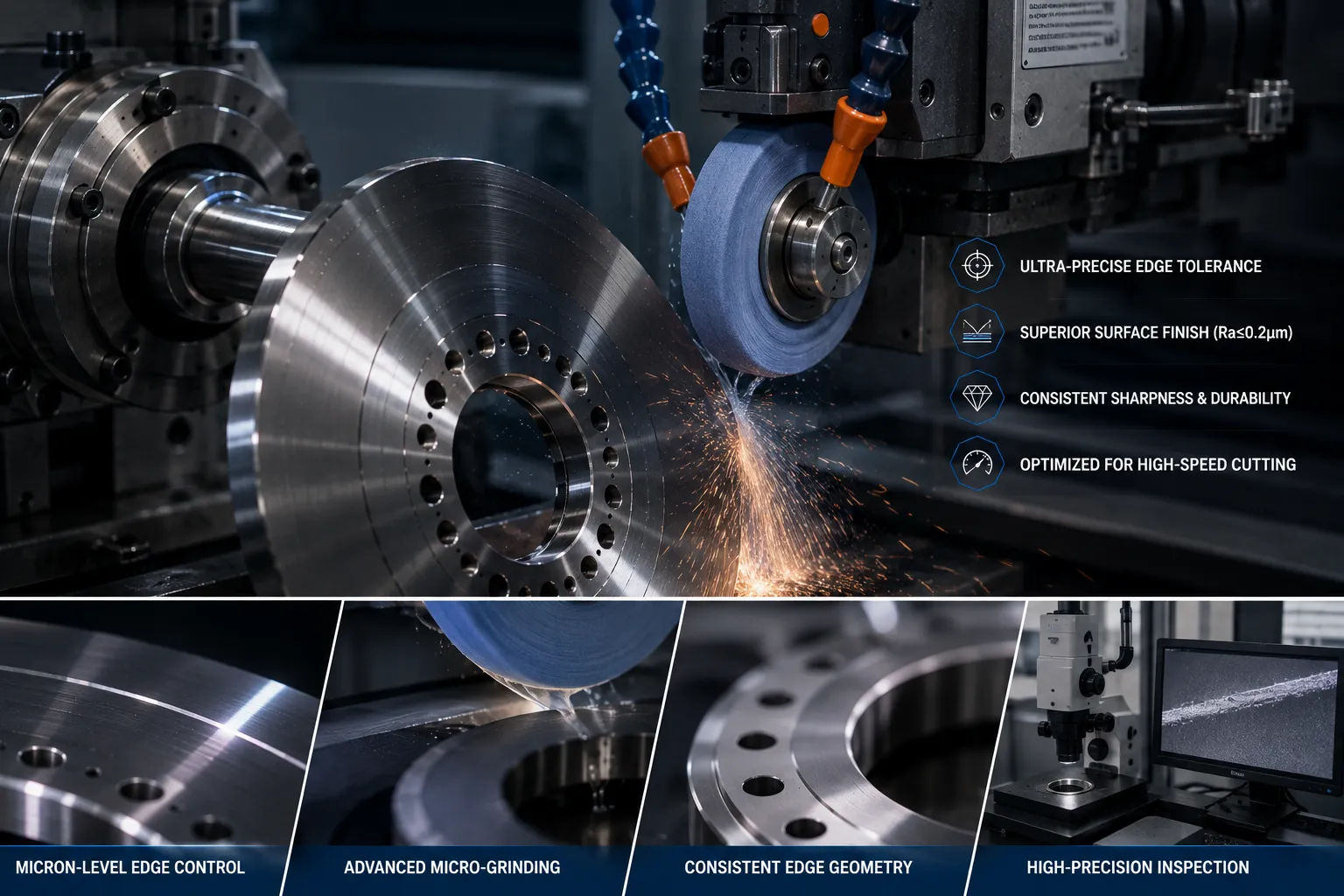
Precision Edge Finishing and Micro-Grinding Tech
Premium material selection is only part of the equation for long-term cutting consistency. Sharkcutting pairs high-grade tool alloys with CNC multi-axis mirror grinding and microscopic edge honing. Our super-finished cutting edges reduce friction during penetration, lowering paper dust generation by up to 80% while preserving burr-free stack faces.
Clean Edge Paper Cutting Performance Across High-Speed Converting Operations
Addressing strict edge quality demands across the paper converting industry, Sharkcutting optimizes micro-bevel angles and surface grinding polish to eliminate burrs, paper dust, and edge degradation. High-speed slitting machines and guillotine trimmers require stable tool geometry to maintain pristine cut faces over continuous production shifts. By combining precision knife grinding with certified high-alloy steel and tungsten carbide matrices, our paper cutting knives deliver reliable clean edge paper cutting and dust-free paper slitting for all major paper converting equipment. Explore our full range of industrial slitting knives designed to optimize your converting process.
Minimizes airborne particulate buildup on slitters and printing blankets
Extends operational service lifespan between continuous regrinding cycles
Precision optical verification guarantees pristine cut edge smoothness
Maintains consistent web tension during ultra-high-speed converting
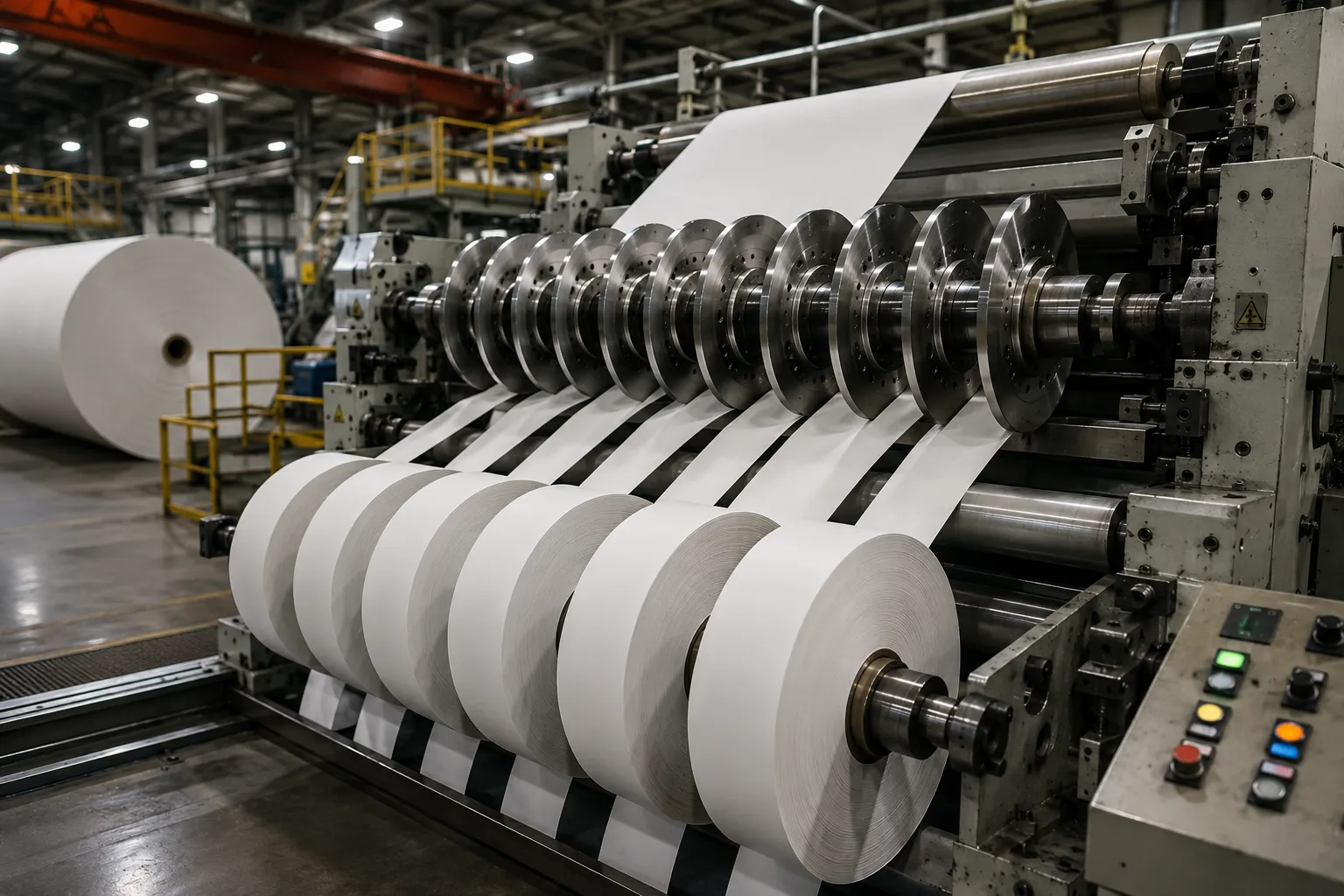
Paper Mills and Web Slitting
Continuous web slitting on high-speed paper rolls subjects cutting edges to extreme friction and thermal wear. Unoptimized slitting knives create edge burrs and slitting debris, forcing unscheduled line shutdowns and reel rejections.
- Speed range: Up to 3,000 meters per minute
- Primary benefit: Prevents web micro-tears under high tension
- Tool fit: Premium circular slitter knives and top shear blades
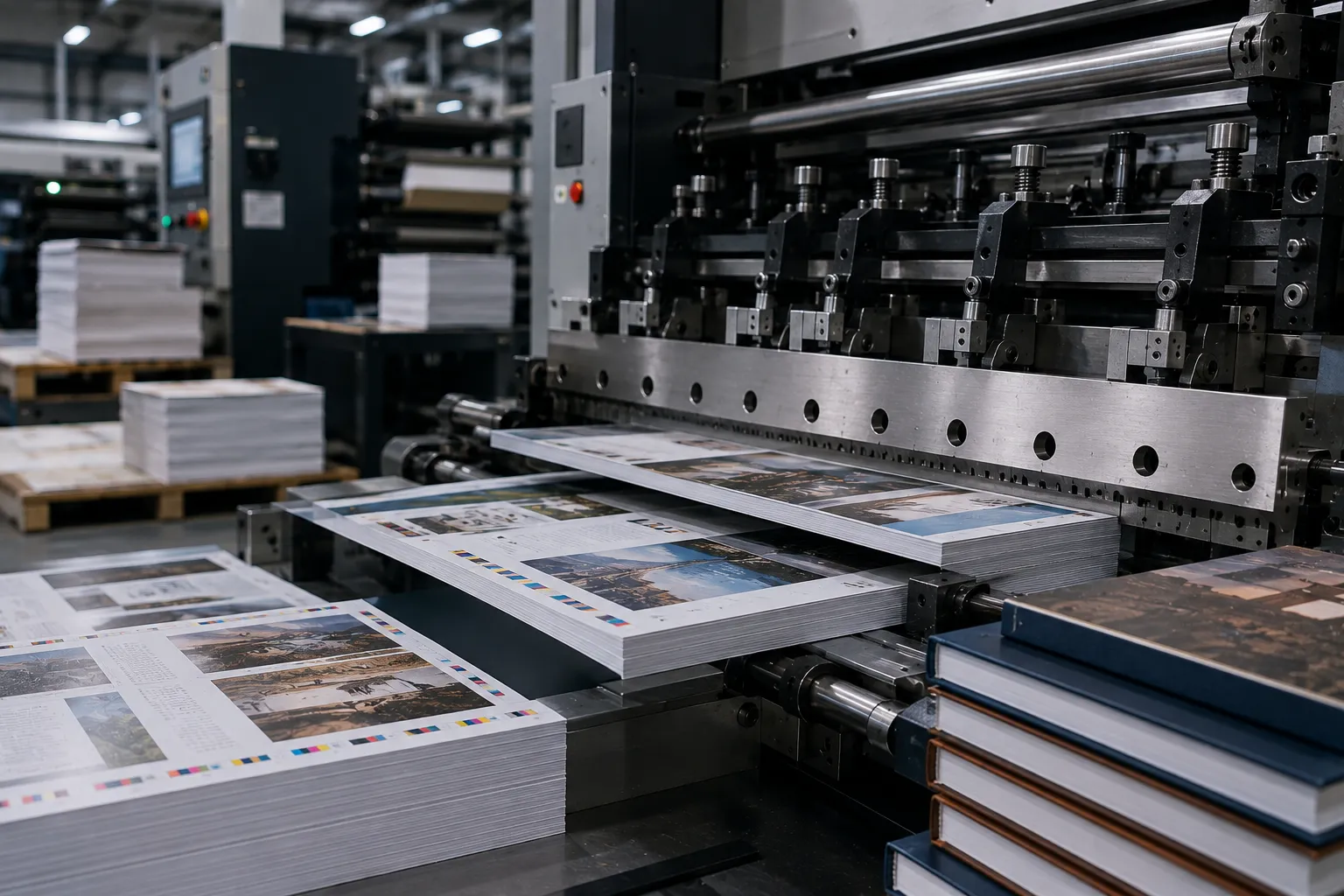
Commercial Printing and Bookbinding
Guillotine trimming of dense paper stacks requires razor-sharp micro-geometry to penetrate coated offset paper without edge drag. Dull blades deposit loose fibers that contaminate printing press blankets and binding equipment.
- Material focus: Coated, matte, and specialty paper stock
- Primary benefit: Glass-smooth stack faces ready for binding
- Tool fit: Heavy-duty guillotine paper blades
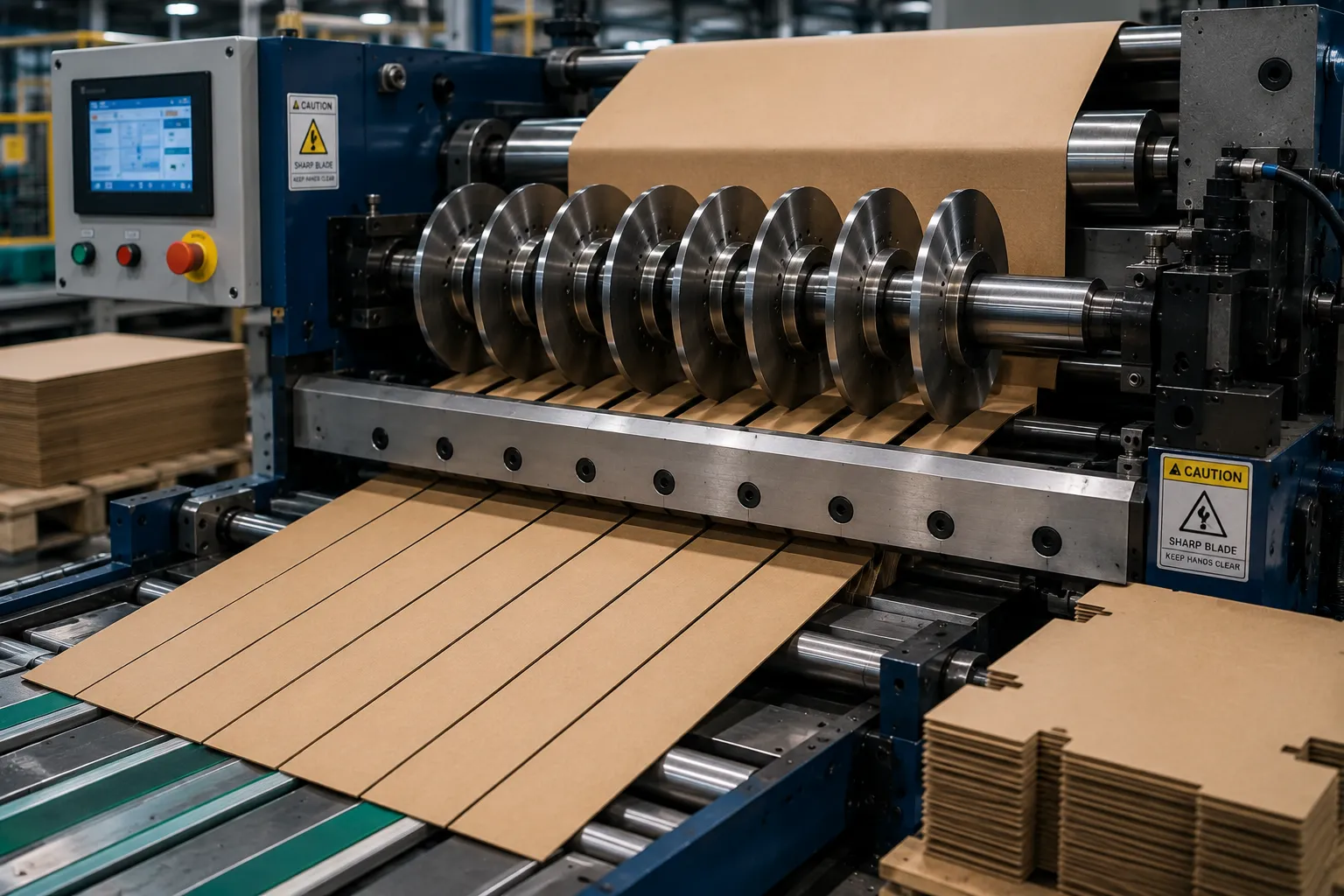
Packaging and Cardboard Converting
Processing heavy paperboard and multi-wall corrugated board imposes severe impact forces on cutting edges. Conventional blades chip quickly, resulting in rough cardboard edges, crushed fluting, and frequent blade changes.
- Stock depth: Multi-ply corrugated and rigid paperboard
- Primary benefit: High shock resistance prevents micro-chipping
- Tool fit: Robust rotary slitting knives and paper trimming blades
Why Surface Polish and Bevel Geometry Rule Cut Quality
In modern paper converting equipment, cutting performance relies heavily on blade surface roughness and micro-bevel symmetry. Sharkcutting utilizes multi-axis precision grinding systems that achieve mirror-like surface finishes. This reduces friction during deep penetration into paper stacks and stops paper fiber adhesion before it causes slitting debris.
Optimized Blade Capabilities
Mirror-polished bevel surfaces minimize fiber friction and debris shedding.
Vacuum cryogenic heat treatment ensures uniform carbide structure throughout the core.
Precision mounting dimensions engineered for major slitting and trimming equipment brands.
Paper Blade Manufacturing OEM Process & Rigorous Quality Control
Delivering high-performance paper cutting knives requires certified metallurgy, atmosphere-controlled heat treatment, and precision knife grinding. Sharkcutting executes a strict four-stage manufacturing protocol engineered to achieve tight industrial machine knives tolerances for high-speed paper converting and commercial printing operations worldwide.
Certified Metallurgical Sourcing
We source certified, high-purity alloy tool steel, high-speed steel (HSS SKH-51), and sub-micron tungsten carbide directly from audited ISO-certified steel mills.
- 100% Spectrometric alloy analysis
- Eliminates micro-inclusions & internal voids
CNC Machining & Vacuum Heat Treatment
Computerized vacuum heat treatment combined with multi-stage thermal stress relieving guarantees structural stability and uniform core-to-surface Rockwell hardness.
- Atmosphere-controlled vacuum quenching
- Deep cryogenic treatment for core stability
Ultra-Precision Grinding
Multi-axis CNC precision knife grinding achieves mirror surface finishes and micro-honed cutting bevels, reducing cutting resistance and preventing edge chipping.
- Mirror surface finish (Ra < 0.05 – 0.1 µm)
- Optimized bevel geometry for dust-free cuts
Optical & Laser Inspection
Automated optical projection systems evaluate dimensional tolerances, flatness, straightness, and edge micro-profiles before applying protective coating.
- High-magnification optical projection profiling
- Zero-defect dispatch inspection protocol
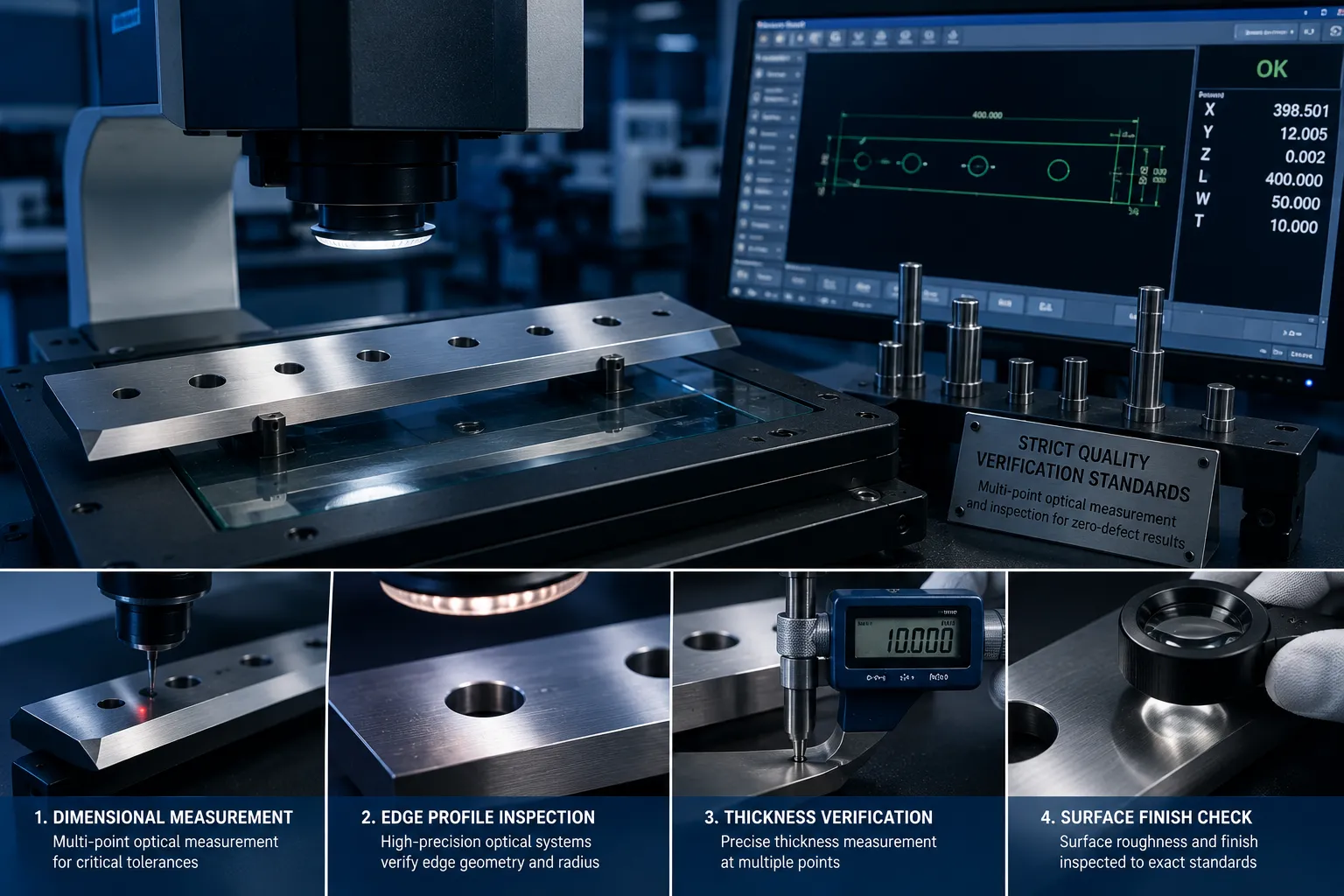
Strict Quality Verification Standards
Every guillotine knife, circular slitter, and paper trimmer blade undergoes multi-point optical measurement prior to anti-rust coating and shipment.
OEM Standards for Continuous Paper Converting Lines
In continuous web slitting, paper trimming, and commercial guillotine cutting, minor dimensional variations lead to paper dust accumulation, rough stack edges, and costly machine downtime. Beyond paper, our advanced engineering powers specialized tooling like packaging machine knives and film cutting knives. Our stringent manufacturing standards establish tight industrial blade tolerances for paper blade manufacturing OEM solutions.
| Quality Metric | Sharkcutting Standard | Standard Industry Baseline |
|---|---|---|
| Parallelism & Straightness | ±0.002 mm / meter | ±0.010 mm / meter |
| Surface Finish Polish (Ra) | Ra 0.05 – 0.1 µm (Mirror Polish) | Ra 0.4 – 0.8 µm |
| Hardness Uniformity | ±0.5 HRC across entire length | ±2.0 HRC variation |
| Concentricity (Circular Slitters) | Within 0.003 mm TIR | Within 0.015 mm TIR |
Repeatable Precision for Demanding Paper Cutting Applications
Advanced precision machining and grinding technology combined with strict dimensional accuracy testing ensure consistent out-of-the-box performance for every Sharkcutting paper knife.
Paper Cutting Knives Maintenance and Technical FAQs
Maintaining sharp paper trimmer blades is essential for eliminating cut-edge burrs, preventing paper dust generation, and reducing costly downtime in high-speed converting. The Sharkcutting technical support team provides comprehensive knife maintenance guidance, custom bevel recommendations, and material selection support to help you lower total operating costs and maximize operational life.
Precision Regrinding Intervals
Schedule regrinding maintenance before micro-chipping develops. Running dull paper cutting knives increases cut-force resistance by up to 40%, placing unnecessary wear on hydraulic systems and degrading cut stack quality.
- Monitor edge radius expansion beyond 15 microns
- Inspect cut stack profiles for sheet drag or fiber pull
Bevel Geometry & Dust Control
Align bevel geometry with substrate density. Soft coated paper requires acute double-bevel configurations, whereas heavy paperboard demands a rigid single-bevel blade with a mirror-ground surface.
- Maintain surface finish polish of Ra < 0.1 µm
- Select primary and secondary bevel angles by GSM
Torque & Mounting Protocols
Thoroughly clean knife seats and clamping bars prior to installation. Uneven bolt torque across the mounting beam introduces internal stress, leading to premature bowing and uneven blade wear.
- Utilize calibrated torque wrenches during installation
- Apply non-resinous protective oils during setup
How often do industrial paper cutting knives require regrinding maintenance?
The ideal regrinding schedule for paper cutting knives depends on paper abrasiveness, mineral coatings, daily throughput, and metallurgy selection. Standard high-carbon steel blades shearing abrasive offset paper typically require resharpening every 20 to 30 operating hours. In comparison, premium tungsten carbide paper knives maintain sharp paper trimmer edges for 150 to 300+ operating hours under continuous production conditions.
Key indicators that your knife requires regrinding maintenance include:
- Paper Dust Accumulation: Heavy debris buildup along the cutting line, clamp rail, or table top.
- Rough Edge Profiles: Visible drag marks, fuzzy paper stack sides, or edge bonding between sheets.
- Machine Strain: Elevated hydraulic power consumption or motor amp draw during blade penetration.
How do you eliminate paper dust and fiber buildup when cutting coated paper stock?
Paper dust and edge tearing during coated paper converting stem from improper bevel geometry or coarse surface grinding textures. When cutting clay-coated or high-gloss stock, friction generates localized heat that crushes coatings rather than producing a clean shear.
To achieve clean edge paper cutting and suppress dust generation by up to 80%, implement these corrective measures:
- Double-Bevel Geometry: Employ a compound double bevel (such as a 22° primary angle with a 24° secondary bevel) to decrease displacement resistance on dense paper stacks.
- Mirror Surface Polish: Select blades ground to a mirror finish (Ra < 0.1 µm) to eliminate micro-friction and prevent mineral coating buildup along the knife face.
- Clamp Pressure Calibration: Adjust hydraulic clamping force to match stock compressibility and prevent sheet movement during knife descent.
Does Sharkcutting manufacture custom OEM paper knives based on engineering drawings?
Yes. As a full-service OEM industrial knife supplier, Sharkcutting manufactures custom paper cutting knives, guillotine blades, circular slitter knives, and specialized trimming knives designed to meet precise engineering drawings, CAD files, or physical sample specifications.
Custom OEM Manufacturing & Consultation Process:
- Engineering Audit: Review of technical drawings, hole patterns, bevel angles, and machine mounting requirements.
- Metallurgy Selection: Specifying optimal steel grades (HSS, SKH-51, PM steel, or solid tungsten carbide) tailored to target paper grades.
- Precision Manufacturing: Multi-axis CNC milling, computer-controlled vacuum heat treatment, and sub-micron grinding.
- Quality Inspection: 100% optical projector verification for straightness, parallelism, and tight dimensional tolerances.
How do I choose between Tungsten Carbide and High-Speed Steel (HSS) paper blades?
Choosing between tungsten carbide paper knives and High-Speed Steel (HSS) blades involves evaluating your production line speed, machine rigidity, paper abrasiveness, and regrinding capabilities. For continuous web converting processes, explore our specialized slitting knives to optimize performance across all cutting operations.
| Feature | High-Speed Steel (HSS / SKH-51) | Tungsten Carbide (TCT) |
|---|---|---|
| Wear Resistance | Standard to High | Extreme (Up to 10x wear life) |
| Toughness & Impact Strength | High (Resists mechanical shock) | Moderate (Requires rigid machine setup) |
| Initial Investment | Economical upfront tool cost | Higher upfront cost, lowest cost per cut |
| Target Application | Short runs, recycled paper, general print shops | High-speed converting, continuous long runs, abrasive paper |
If your equipment is in peak mechanical condition and operating high-volume continuous production, Tungsten Carbide yields a significantly lower total cost per cut. For multi-product plants with frequent setup changes or equipment prone to vibration, HSS remains a cost-effective, dependable choice.
What is the proper procedure for storing and handling sharp paper trimmer blades?
Improper handling and storage cause over 30% of premature blade failures, including edge nicking and surface oxidation. Implementing standard handling procedures protects your investment in precision knife maintenance:
- Wooden Transport Cases: Always secure knives in custom fitted wooden sheaths with edge protectors attached until installation.
- Corrosion Protection: Coat ground steel surfaces with acid-free industrial protective lubricant prior to climate-controlled storage.
- Safe Lifting Practices: Use certified safety handles or overhead hoist assemblies when moving large guillotine blades over 1,000 mm in length.
Need Expert Guidance on Paper Knife Selection or Custom Grinding?
Our engineering team is available to evaluate your paper stock properties, machine speeds, and current blade wear patterns to deliver tailored paper cutting knives that maximize output and edge quality.