
Formula details
Product Details
Overview
Product Overview
What Are Single Shaft Shredder Blades?
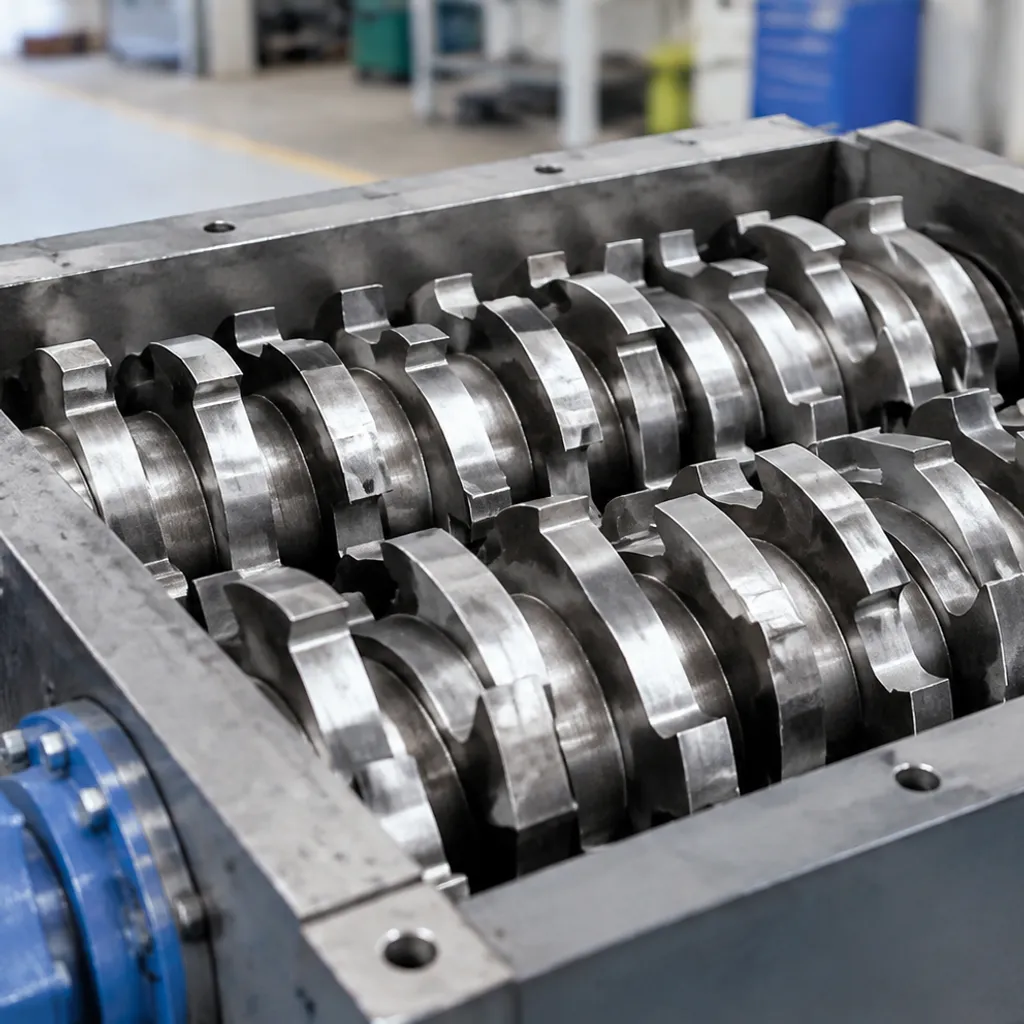
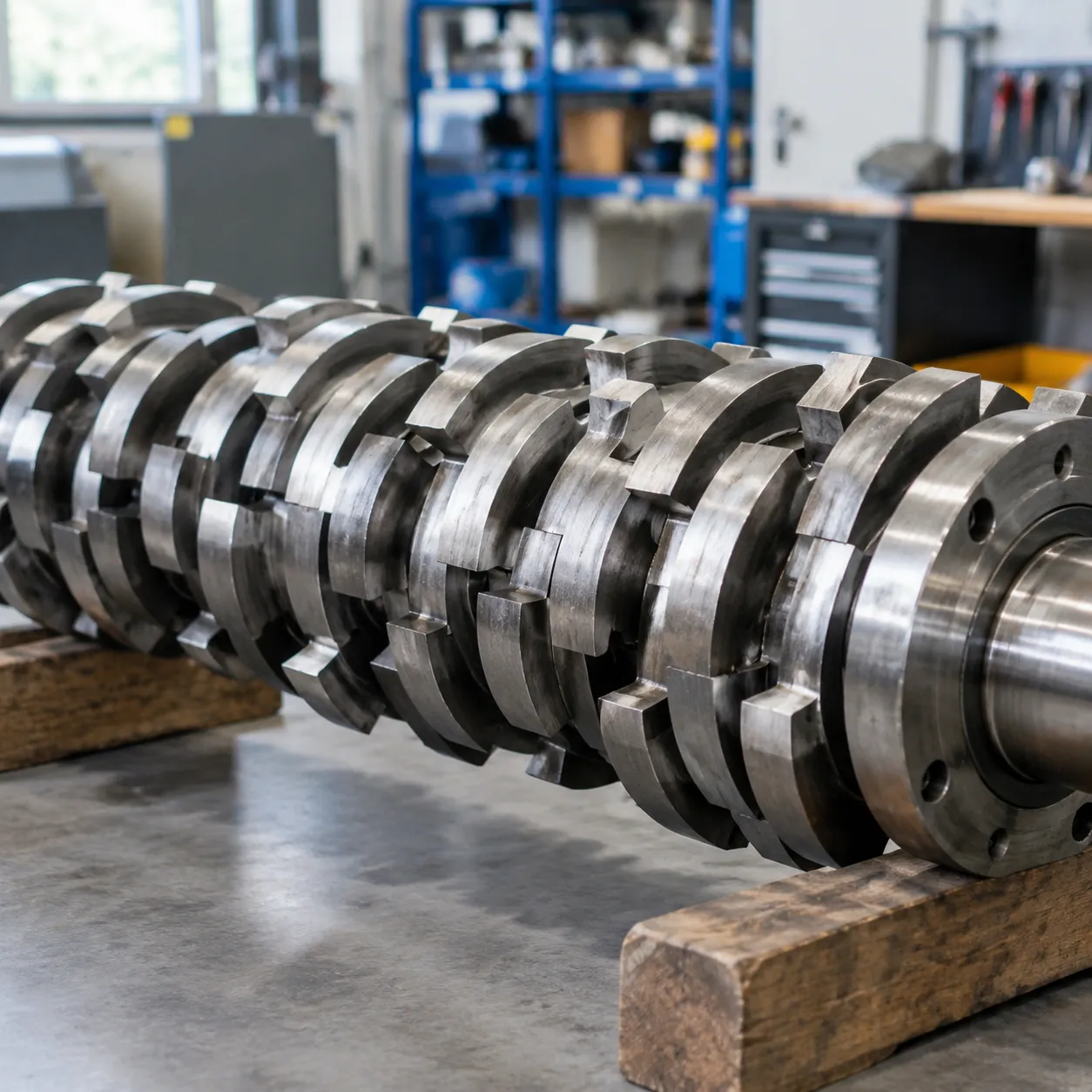
Single shaft shredder blades—also known as single rotor shredder blades or rotary shredder knives—are precision-ground cutting inserts bolted into machined tool holders on a single rotating shaft. These industrial shredder blades work in tandem with stationary counter knives to continuously cut, tear, and shear solid feedstocks down to a specified fraction size determined by an underlying screen mesh.
- Robust Geometry: Typically manufactured in square, concave, or hook profiles to match specific material behaviors.
- Multiple Cutting Edges: Many designs feature indexable, four-way reversible edges to maximize tool utilization before replacement.
- High-Load Resistance: Engineered to withstand severe impact, thermal stress, and continuous shock loads in slow-speed, high-torque shredders.
Single-Shaft Shredder Cutting Chamber
Hydraulic Ram
→ Pushes feed material toward the cutting rotor
↓
Rotor Shaft
↓
Rotary Shredder Knives
→ Cut material against the fixed counter knives
↓
Fixed Counter Knives
↓
Screen Mesh
→ Controls final particle size
↓
Sized Material Discharge
How Single Rotor Knives and Fixed Counter Knives Work
The single shaft shredding mechanism relies on a controlled cutting tolerance between rotating tools and stationary bed knives:
- Material Infeed: A hydraulic or electric ram pushes raw material against the turning rotor.
- Precision Shearing: As the shaft turns, the shredder rotor knives pass closely against the fixed shredder knives mounted on the machine frame.
- Clean Cutting Action: The scissor-like shearing action slices through dense solids rather than crushing them, minimizing dust, heat buildup, and power draw.
- Discharge Control: Sized pieces pass through the sizing screen beneath the rotor, while oversized fractions circulate for another pass.
Primary Industrial Shredding Applications
Our single shaft shredder knives support high-throughput processing across several key sectors:
- Plastics Recycling: Injection moldings, plastic purges, HDPE pipes, blow-molded drums, woven bags, and film bales.
- Wood Processing: Timber offcuts, hardwood logs, scrap pallets, MDF boards, and demolition wood.
- Paper and Packaging: Heavy paper rolls, high-volume cardboard scrap, packaging cores, and confidential document destruction.
- Waste-to-Energy: Processing municipal solid waste (MSW) into uniform Refuse Derived Fuel (RDF) and Solid Recovered Fuel (SRF).
- Textiles and Synthetics: Carpet waste, dense synthetic fabrics, ropes, and rubber scrap.
Key Features and Benefits of Single Shaft Shredder Blades
Precision-Machined Cutting Geometry
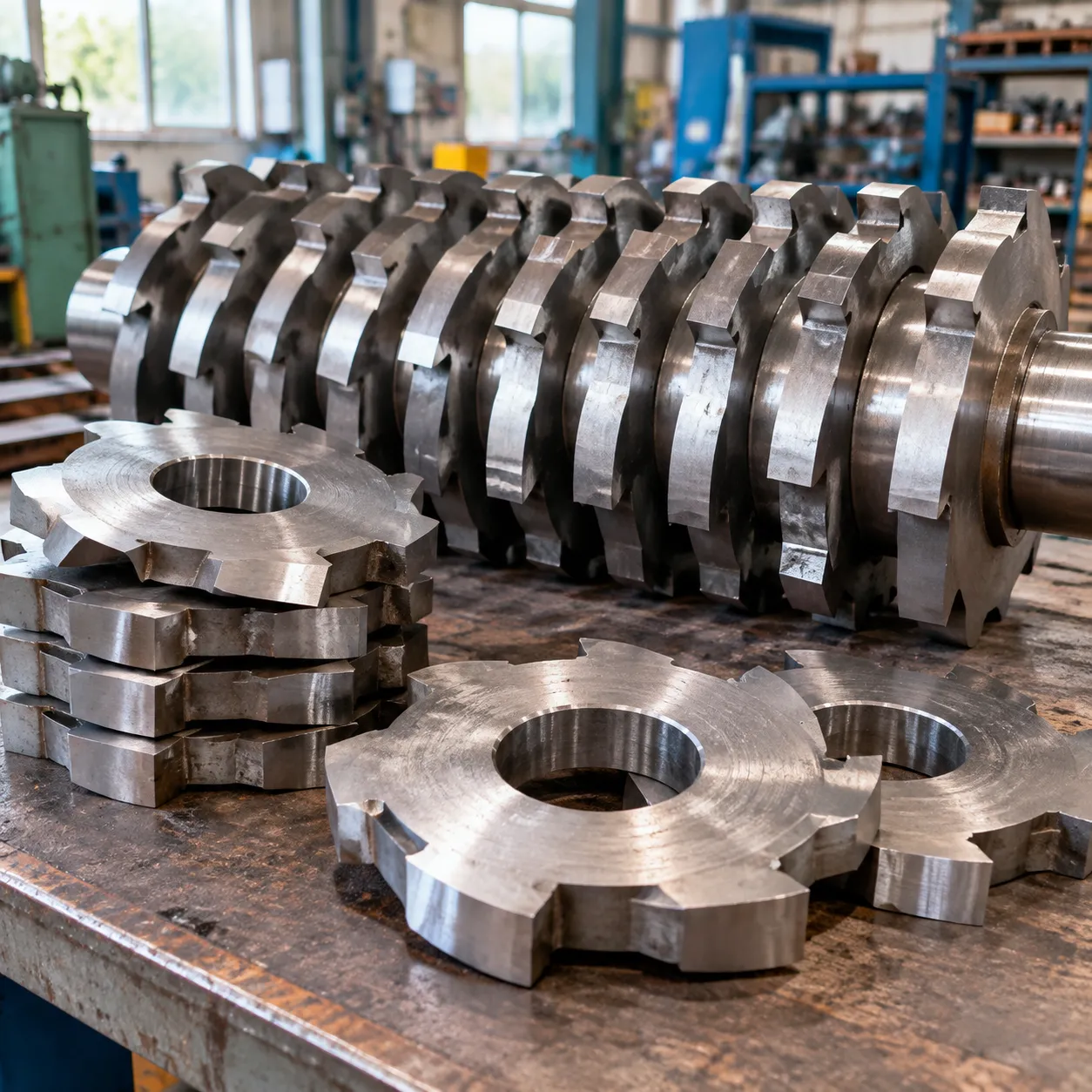
Every shredder rotor knife is CNC ground to exacting tolerances to maintain a uniform cutting gap against the bed knives. Clean shearing eliminates material pulling, prevents rotor jamming, and reduces power consumption by lowering motor amp draw during continuous runs.
Wear Resistance for Longer Service Life
We apply deep, controlled heat treatment across alloy tool steels to achieve uniform microstructural stability. This high surface hardness delivers slow, predictable edge wear when processing abrasive polymers, dense timber, or industrial scrap.
Strong Impact and Shock-Load Performance
Heavy-duty shredding often introduces unexpected tramp materials and high-density shock loads. Our single rotor shredder blades combine outer hardness with high core toughness to absorb sudden impacts without cracking or chipping at the cutting edge.
Custom Compatibility for Multiple Shredder Brands
We manufacture drop-in replacement shredder blades tailored to exact OEM specifications for major international machinery. Each blade is verified using strict industrial knife markings and traceability protocols to ensure precise bolt-hole alignment, thread integrity, and seat fitting.
Lower Maintenance Downtime and Reversible Edges
Our square and concave industrial shredder blades feature multi-edge indexable designs:
4-Way Rotatable Profiles: Rotate dull edges 90 degrees to expose a fresh cutting face directly on the rotor seat.
Rapid Changeover: Eliminate frequent blade sharpening cycles and cut scheduled downtime.
Stable Rotor Balance: Uniform knife weight distribution minimizes spindle vibration at operational speeds.
| Feature | Technical Execution | Operational Benefit |
|---|---|---|
| Precision CNC Grinding | Tight cutting clearance tolerances | Uniform particle size and lower motor load |
| Impact-Resistant Core | Through-hardened alloy matrix | Eliminates catastrophic blade fracture |
| Indexable Cutting Edges | 2-edge or 4-edge rotatable geometry | Multiplies blade working life per replacement |
| Direct-Fit Mounting | Exact OEM bolt spacing and countersinks | Fast, seamless installation without rotor modification |
Single Shaft Shredder Blade Types
Every material reduction process demands a specific cutting profile to maximize throughput and wear life. We manufacture a comprehensive range of industrial shredder blades designed for reliable fitment across standard single-rotor machines and heavy-duty recycling systems.
Square Shredder Blades
Square rotary knives are the industry standard for single rotor machines.
Four-way reversible edges: Rotate the blade 90 degrees when an edge dulls, delivering four full cutting cycles per knife.
Common applications: Rigid plastics, timber offcuts, paper bales, and solid production purgings.
Key benefit: Lowers overall tooling replacement costs and minimizes machine downtime.
Hook Shredder Blades
Hook-style blades feature an aggressive profile built to actively grab and pull low-density, high-tensile materials into the cutting zone.
Anti-wrapping design: Cuts cleanly through flexible materials without wrapping around the rotor shaft.
Common applications: Plastic film, woven bulk bags (FIBCs), carpet, synthetic fibers, and rubber scrap.
Key benefit: Prevents rotor jamming and maintains high feed rates on light, stretchy materials.
Concave and Convex Shredder Blades
Curved cutting profiles modify the shear angle between the rotor and counter knife for smoother slicing performance.
Concave profiles: Direct material toward the center of the cutting edge for clean shearing action.
Convex profiles: Disperse cutting pressure to handle high-shock loads with minimal chipping risk.
Key benefit: Reduces overall power draw on slow speed shredder blades while delivering uniform output particle sizes.
Custom Profile Shredder Knives
When standard off-the-shelf tooling cannot handle abrasive or contaminated materials, we engineer custom shredder knives tailored to your exact rotor configurations.
Tailored cutting geometry: Custom edge bevels, serrations, and stepped profiles built to solve specific feedstock challenges.
Flexible manufacturing: Machined directly from your CAD drawings, technical prints, or physical sample knives.
Fixed Counter Knives
Fixed shredder knives mount directly onto the stator frame, creating the precision shear point against the spinning rotary shredder knives. To understand how stator and rotor clearances work across different machine platforms, review our single shaft vs double shaft shredder blades guide.
Multiple cutting edges: Available in single-edge, reversible double-edge, and multi-segment configurations.
Adjustable clearance: Machined with precise mounting slots to fine-tune blade gap tolerances and prevent material bypass.
Key benefit: Protects the rotor assembly while ensuring sharp, consistent, high-volume sizing.
Materials and Heat Treatment for Single Shaft Shredder Blades
Blade Material Selection for Different Feedstocks
Different feedstocks generate distinct wear mechanisms. We match specific alloy tool steels to your processing requirements using proven industrial manufacturing materials to deliver predictable tool life.
| Steel Grade | Typical Hardness | Best Feedstock Applications | Key Material Advantages |
|---|---|---|---|
| D2 / 1.2379 / SKD11 | 58–60 HRC | Rigid plastics, films, paper, general packaging | High carbon/chromium content; exceptional abrasive wear resistance |
| DC53 | 60–62 HRC | Heavy plastic purgings, electronic scrap, engineering polymers | Improved toughness over standard D2; prevents edge chipping |
| H13 / 1.2344 | 52–56 HRC | Municipal solid waste (MSW), contaminated wood, RDF/SRF | High shock resistance and thermal stability under sudden impacts |
| Hardox / Spring Steel | 48–54 HRC | Bulky industrial waste, mixed scrap with metal foreign objects | Superior impact absorption; ideal for shredder counter knives |
- Plastic Shredder Blades: High-wear plastics with glass fibers or abrasive fillers require high-chromium steels like D2 or DC53 to prevent early rounding of cutting radii.
- Wood Shredder Knives: Processing timber and pallets with embedded nails calls for shock-resistant tool steels that withstand heavy shock-loads without fracturing.
- Secondary Waste & Tires: High-friction rubber and RDF lines benefit from tool steels that maintain core toughness even under high rotor operating temperatures.
Controlled Hardening, Tempering, and Stress Relief
Raw steel performance depends heavily on the heat treatment cycle. We utilize automated vacuum heat treatment furnaces to achieve consistent core-to-surface metallurgical structures for all single rotor shredder blades:
- Vacuum Hardening: Prevents surface decarburization and oxidation, ensuring uniform edge density across every batch.
- Triple Tempering: Neutralizes internal residual stresses formed during quenching, stabilizing blade dimensions and eliminating micro-fracture zones.
- Sub-Zero Cryogenic Treatment: Transforms retained austenite into durable martensite, increasing wear resistance and edge-holding capability.
- Controlled Stress Relief: Secondary tempering cycles applied before precision CNC grinding prevent warp or distortion during heavy shredding cycles.
Balancing Hardness and Toughness
The main challenge in slow-speed, high-torque industrial shredders is avoiding both brittle fracture (chipping) and soft edge deformation (dulling).
- Excessive Hardness (>62 HRC): Causes teeth and knife corners to snap when encountering uncrushable tramp metal or high-density polymers.
- Insufficient Hardness (<52 HRC): Leads to rapid edge mushrooming, increasing motor load, clearance gaps, and energy consumption.
- Our Target Window: We strictly maintain working hardness tolerances within ±1 HRC, calibrating the metallurgical balance to maximize service hours between blade rotations.
Technical Specifications
Standard and Custom Blade Dimensions
We supply standard industry sizes as well as tailor-made profiles for high-throughput recycling lines. Whether you run standard square inserts or require custom-machined replacement shredder blades, we match the exact pocket geometry of your machine.
- Standard Square Sizes: 30x30 mm, 34x34 mm, 40x40 mm, 43x43 mm, 50x50 mm, 60x60 mm, 80x80 mm
- Standard Thickness: 15 mm to 40 mm (custom thicknesses available upon request)
- Custom Geometries: Non-standard footprints, multi-tooth profiles, and specialized special cutting components machined to proprietary rotor pockets
- Counter Knife Lengths: Single-piece or segmented configurations up to 2,000 mm
Mounting Hole Patterns and Cutting Edge Designs
Proper blade seating prevents fastener loosening under continuous shock loads. We machine each mounting interface to fit OEM rotor blocks precisely:
- Mounting Hole Options: Single countersunk center hole, dual countersunk holes, threaded blind holes, and square-neck bolt recesses.
- Flat Edge (4-Way Indexable): Flat-faced square blades that rotate four times to maximize cutting edge utilization before replacement.
- Concave (Dish) Edge: Curved top profiles that reduce shearing resistance, lower energy consumption, and draw bulk plastics or wood into the rotor.
- Crown and Hook Profiles: Aggressive edge geometry engineered to tear high-tensile plastics, film bundles, and woven fabrics without wrapping.
Technical Parameters and Hardness Tolerances
We verify all technical parameters before dispatch to guarantee interchangeability and consistent wear resistance across every batch.
| Parameter | Specification / Tolerance | Notes |
|---|---|---|
| Material Hardness (D2/Cr12MoV) | 56 – 60 HRC | Optimized for abrasive plastics, wood, and general waste |
| Material Hardness (H13/4Cr5MoSiV1) | 52 – 55 HRC | High-toughness grade for shock and impact resistance |
| Dimensional Tolerance | ±0.02 mm | Ensures tight pocket fit and even rotor balance |
| Parallelism & Flatness | ≤ 0.03 mm | Prevents uneven seat wear and rotor vibration |
| Surface Finish (Ra) | Ra 0.8 – 1.6 µm | Smooth chip flow and reduced material buildup |
| Fastener Fitment | 90° / 60° Countersink or Custom | Machined for flush seating with standard grade fasteners |
How to Choose the Right Single Shaft Shredder Blades
Selecting the proper single shaft shredder blades prevents premature edge failure, reduces motor load, and eliminates unexpected downtime. We evaluate four critical operational factors to ensure your replacement shredder blades match your exact shredding environment.
Evaluating the Feed Material and Contamination Levels
Feedstock characteristics dictate the ideal blade geometry and steel composition:
- Soft & Elastic Materials (Films, Textiles, Rubber): Require sharp, aggressive cutting profiles with precise clearances to prevent material wrapping around the rotor.
- Rigid & Dense Polymers (Pipes, Purges, Thick Blocks): Require high-toughness tool steels that absorb heavy mechanical shocks without chipping.
- Abrasive & Contaminated Streams (Glass-Filled Plastics, MSW, Dirty Wood): Demand high-carbide, wear-resistant grades or specialized coatings to prevent rapid edge rounding. For comprehensive downstream size reduction lines, we also manufacture complementary industrial recycling blades and high-efficiency crusher blades.
Confirming Blade Dimensions and Hole Centers
A precise physical fit prevents blade loosening and rotor pocket wear. When specifying your single shaft shredder knives, verify:
- Outer Dimensions: Exact length, width, and thickness (within ±0.02 mm).
- Bolt Pattern: Center-to-center distance between mounting holes.
- Fastener Seat: Countersunk angle, counterbore depth, or threaded blind-hole specifications.
- Rotor Pocket Fit: Blade radius or base bevel to match the rotor seat contour.
Matching Blades to Rotor and Counter Knife Configurations
Rotor knives must function seamlessly with your fixed shredder counter knives to maintain uniform cutting gaps.
| Operating Condition | Primary Failure Risk | Recommended Blade Specification |
|---|---|---|
| High-Shock Feeds (Wood with Nails, Baler Wires) | Blade cracking, chipping | High-impact shock-resistant tool steel (tempered to 54–56 HRC) |
| High-Abrasion Feeds (Glass-Reinforced Plastic, MSW) | Rapid cutting edge erosion | Wear-resistant high-carbon, high-chromium tool steel (58–62 HRC) |
| Clean, High-Volume Sizing | Premature dulling | Four-way indexable concave square blades |
| Tough Fibers & Film Shredding | Material jamming / pulling | Hook-type or aggressive tooth profile knives |
Assessing Operating Torque and Rotor Speeds
Slow speed shredder blades handle extreme torque and intermittent shock loads. High-torque, low-RPM machines require blades with superior tensile strength and balanced core toughness to resist shearing stresses. For higher-velocity rotors, we focus on dynamic balance, heat dissipation, and tight weight tolerances across the entire blade set to maintain machine stability.
Custom Single Shaft Shredder Blade Manufacturing
Off-the-shelf knives do not always match the unique demands of specialized recycling lines. We engineer and manufacture custom single shaft shredder blades built to your exact operational requirements, whether you need modified cutting profiles, alternative alloy selections, or custom-drilled bolt patterns to extend wear life.
Custom Fabrication from Drawings, CAD Files, or Samples
We machine custom shredder knives directly from your engineering files or existing parts. Our production workflow easily handles:
- CAD & Engineering Files: Send us your 2D drawings (DWG, DXF, PDF) or 3D models (STEP, IGES) for precise CNC milling and EDM wire-cutting.
- Physical Blade Samples: Send a new or worn blade directly to our facility. We reverse-engineer the exact dimensions, mounting centers, thread pitches, and edge geometry.
- Metallurgical Matching: We analyze your sample's steel composition and hardness to replicate or upgrade the material grade for better wear performance.
OEM-Equivalent Blades for Discontinued Models
Sourcing reliable replacement shredder blades for legacy or discontinued shredder models can be difficult and costly. We produce OEM-equivalent single rotor shredder blades and shredder counter knives that fit seamlessly into your existing rotor pockets and knife bars.
Our custom rotary shredder knives deliver identical mounting fitment and equal or superior wear resistance compared to original equipment manufacturer parts, keeping your older machinery running without expensive rotor modifications.
Essential Details Required for a Custom Quote
To help our engineering team provide an accurate quote and fast turnaround for your single shaft shredder blades, please provide the following details:
| Technical Parameter | Information Needed |
|---|---|
| Dimensions | Overall length, width, thickness, and profile (square, hook, concave, or convex) |
| Mounting Specs | Hole count, bore diameter, countersink angles, thread size, and center-to-center pitch |
| Material / Hardness | Preferred tool steel grade (such as D2, Cr12MoV, DC53) and required HRC range |
| Feedstock Details | Material processed (e.g., rigid plastics, wood waste, film, cables) and contamination level |
| Order Volume | Initial prototype quantity or planned batch production volume |
Industrial Applications
Plastic Recycling and Size Reduction
Our single rotor shredder blades process dense and bulky polymers without bogging down the drive system:
Purges and Pipelining: Handles heavy lumps, start-up purgings, solid profiles, and thick-walled HDPE/PVC pipes.
Hollow Bodies: Efficiently shears blow-molded drums, automotive fuel tanks, IBC totes, and injection-molded crates.
Flexible Materials: Delivers clean scissor-action cuts on stretch wraps, agricultural films, and woven PP big bags, supporting continuous film processing lines without material wrapping or melting on the rotor.
Wood Waste and Pallet Processing
Demanding timber processing requires wood shredder knives with superior toughness to handle tramp metal:
Hardwood & Softwood Pallets: Cuts through solid pallets, skids, and timber offcuts containing embedded nails, screws, and staples without catastrophic edge chipping.
Engineered Wood: Resists abrasive glues and resins found in MDF, particle board, chipboard, and OSB offcuts.
Biomass & Green Waste: Reduces tree limbs, bark, and forestry residuals into uniform boiler feed or mulch.
Paper, Cardboard, and Packaging Shredding
High-volume paper and packaging reduction demands sharp shearing action to prevent fiber pulling and dust generation:
Corrugated Bales & Cardboard: Rapidly shears dense OCC bales, production scrap, and packaging boxes.
Paper Mill Cores & Reels: Cuts thick-walled winding tubes, butt rolls, and loose press scrap cleanly.
Secure Document Destruction: Delivers precise particle sizing required for certified document and media destruction standards.
Rubber, Tire, and Textile Scrap Processing
Processing high-friction and fibrous materials requires sharp edges and tight counter-knife clearances:
Tire & Rubber Scrap: Optimized industrial shredder blades for devulcanized rubber, tire treads, conveyor belts, and technical elastomeric components in high-friction rubber processing systems.
Textile & Fiber Scrap: Shears synthetic geotextiles, carpet remnants, filament yarns, and non-woven fabric rolls without pulling or jamming the rotor pockets.
Municipal Solid Waste and RDF/SRF Preparation
Alternative fuel preparation requires recycling shredder blades capable of continuous duty under abrasive, unpredictable conditions:
Mixed Commercial & Industrial (C&I) Waste: Coarse and fine reduction of mixed plastics, wood, and dry industrial fractions.
Refuse-Derived Fuel (RDF / SRF): Achieves uniform output sizing (down to 25–30 mm) for co-incineration in cement kilns and power plants.
High-Contamination Sorting Lines: High-shock alloy formulations resist breakage when unexpected stones or non-shreddable metal contaminants pass through the cutting chamber.
Quality Inspection and Packaging Standards for Single Shaft Shredder Blades
Dimensional and Mounting-Fit Quality Control
A precision fit against the rotor seat is vital for machine stability and safety. Every knife undergoes strict geometric checks through our comprehensive manufacturing quality control process:
- CNC Coordinate Verification: Coordinate measuring machines (CMM) verify length, width, thickness tolerances within ±0.02 mm.
- Mounting Hole Alignment: Precision go/no-go gauges verify bolt hole pitches, thread integrity, and counterbore depths to prevent bolt loosening under heavy shock loads.
- Seat Seating Check: Flatness and parallelism inspections eliminate gaps between the knife body and the rotor pocket, preventing feedstock ingress behind the blade.
Hardness Testing and Edge Integrity Checks
Proper heat treatment determines how well industrial shredder blades resist severe abrasion without fracturing. We inspect core and surface hardness on every heat-treated production run:
| Inspection Item | Testing Method | Acceptance Standard |
|---|---|---|
| Surface Hardness | Rockwell Hardness Tester (HRC) | Exact match to target material spec (e.g., 56–60 HRC) |
| Core Toughness | Metallographic Analysis | Uniform martensitic matrix free from retained austenite |
| Micro-Crack Detection | Magnetic Particle / Ultrasonic | Zero surface or subsurface micro-fractures |
| Cutting Edge Geometry | Optical Profile Projector | Uniform edge angle and consistent profile alignment |
Anti-Rust Treatment and Export Packaging
International freight and warehouse storage expose high-alloy steel to moisture and impact. We pack our replacement shredder blades to withstand long transit cycles and rough handling:
- Corrosion Protection: Blades are coated with heavy-duty industrial anti-rust oil and individually wrapped in volatile corrosion inhibitor (VCI) protective film.
- Edge Shielding: Cutting edges and multi-edge corners are fitted with reinforced edge guards to prevent chipping during transit.
- Crate Packaging: Packed into custom foam-lined, heavy-duty wooden crates and reinforced with steel strapping to prevent shifting during international shipping.
Installation and Maintenance Best Practices for Single Shaft Shredder Blades
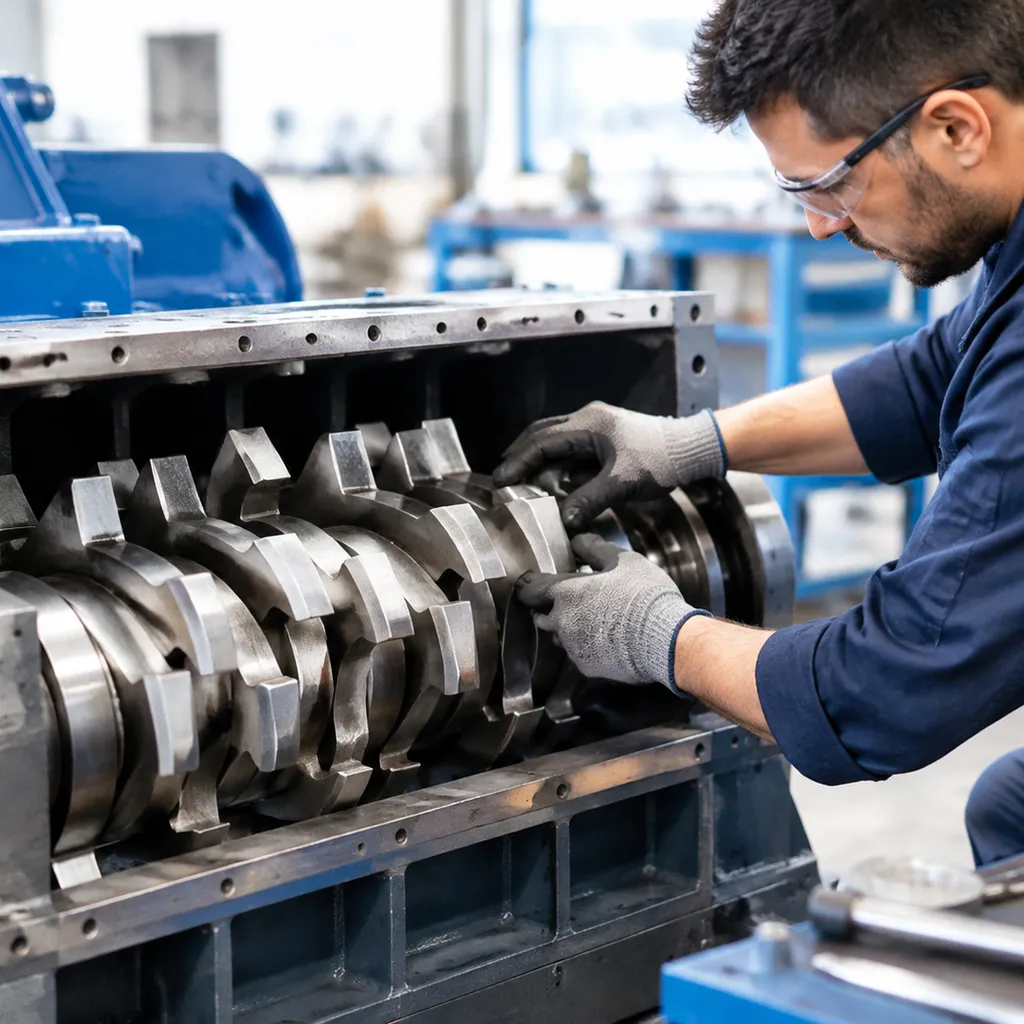
Improper installation and irregular maintenance drastically shorten tool life, elevate power draw, and risk severe rotor damage. Implementing proven knife maintenance best practices ensures your single shaft shredder blades deliver maximum cutting efficiency and consistent output sizing.
Pre-Installation Rotor Inspection and Cleaning
Before fitting replacement shredder blades, thoroughly prepare the rotor seats to ensure precise alignment:
- Clean Blade Pockets: Remove all packed material, fines, rust, and adhesive residues from the knife seats using a wire brush and scraper.
- Inspect Pocket Geometry: Check the rotor pocket walls and bases for burrs, wash-out, or deformation. Any unevenness will misalign the blade and cause premature cracking.
- Inspect Rotor Threads: Clean mounting hole threads with a tap and air blow out debris. Replace any stripped or damaged threaded inserts immediately.
- Check Counter Knife Bed: Clean the counter knife mounting rail to ensure the fixed shredder knives sit parallel to the rotor axis.
Setting Proper Cutting Clearance Between Blades
The gap between the rotary shredder knives and the fixed counter knives directly controls shredding throughput, power consumption, and thermal buildup. Set clearances using precision feeler gauges across the entire rotor length.
| Feedstock Material | Recommended Clearance Gap | Key Operational Focus |
|---|---|---|
| Thin Plastics, Film & Fiber | 0.5 mm – 1.0 mm | Prevents wrapping and material slippage |
| Rigid Plastics & Regrind | 1.0 mm – 1.5 mm | Balanced shear action and power draw |
| Wood Scrap & Pallets | 1.5 mm – 2.5 mm | Absorbs shock loads from dense knots and nails |
| Bulky MSW / Solid Waste | 2.0 mm – 3.0 mm | Prevents jamming on uncrushable contaminants |
Torque Requirements for Mounting Fasteners
Never rely on standard pneumatic impact wrenches for final torque. Uneven fastening leads to loose bolts, sheared fasteners, and catastrophic rotor collisions.
- Use High-Tensile Hardware: Always pair your single rotor shredder blades with Grade 10.9 or 12.9 high-tensile countersunk or socket-head screws.
- Apply Anti-Seize: Lightly coat fastener threads with high-temperature anti-seize paste to prevent galling and simplify future blade changes.
- Torque in Stages: Tighten bolts using a calibrated torque wrench in a cross-pattern to seat the knife evenly into the pocket.
- Verify After Initial Run: Re-torque all rotor fasteners after the first 4 to 8 hours of continuous operation under load.
Routine Wear Inspection and Rotation Schedules
Most square and concave shredder cutter blades feature multiple usable cutting edges. Rotating them on a structured schedule maximizes your wear investment before requiring a full set replacement.
- Daily Visual Checks: Inspect for chipped cutting corners, loose fasteners, and foreign tramp metal wedged in the cutting chamber.
- Edge Rounding Threshold: Rotate reversible single shaft shredder knives once the cutting edge develops a radius exceeding 1.5 mm to 2.0 mm. Running overly dull blades spikes motor amperage and damages drive gearboxes.
- Batch Rotation: Always rotate or replace entire rows simultaneously to maintain consistent cutting gaps along the complete length of the rotor shaft.
- Counter Knife Flipping: Flip or re-grind the fixed counter knives whenever rotating rotor knives to ensure clean, balanced shearing performance.
Frequently Asked Questions (FAQ)
What is the difference between a single shaft shredder blade and a fixed knife?
In a single-shaft cutting system, rotary single shaft shredder blades mount directly to the rotating drum to pull and shear material. The fixed counter knife (or bed blade) stays stationary on the frame base. Material sizing occurs cleanly as the rotating knife passes the counter knife with tight clearance.
| Feature | Rotary Shredder Knives | Fixed Counter Knives |
|---|---|---|
| Motion | Dynamic (rotates on rotor) | Stationary (bolted to machine body) |
| Edge Design | Multi-edge indexable (square/concave) or hook | Straight, serrated, or segmented flat bar |
| Primary Task | Grabs, cuts, and feeds material | Provides the rigid shearing counter-edge |
Can shredder blades be manufactured directly from a worn sample?
Yes. When technical drawings are unavailable, we reverse-engineer custom shredder knives directly from your physical sample. Our engineering team measures critical dimensions, uncompromised bolt hole spacing, and original profiles while compensating for worn-down cutting edges to restore exact OEM fitment.
How do I accurately measure my shredder blade size?
To guarantee exact compatibility for your replacement shredder blades, use a vernier caliper to record:
Overall Dimensions: Length, width, and thickness across flat surfaces.
Hole Geometry: Bolt hole diameter, thread pitch, and countersink depth/angle.
Hole Spacing: Center-to-center distance between adjacent mounting holes.
Edge Profile: Flat, concave radius, or hook bevel angles.
Which steel grade is best for abrasive plastic or wood shredding?
Tool steels like D2 (1.2379) and Cr12MoV provide an ideal balance of hardness and edge life for general plastic recycling and wood processing. For high-wear applications involving abrasive glass-filled polymers or dirty waste streams, specialized alloy selections or surfacing may be necessary. For deeper insight into tooling material trade-offs, explore our carbide vs steel knives guide to match toughness with wear resistance.
Are reversible multi-edge blades available for all shredder models?
Square, flat, and concave single rotor shredder blades typically feature 4-way rotatable cutting edges. Once one edge dulls, rotate the blade 90 degrees to expose a fresh cutting profile. Hook shredder blades and specialized heavy-duty scrap knives are limited to 1-edge or 2-edge configurations due to their directional profile.
Can rotor blades and fixed counter knives be ordered as a matched set?
Yes. Ordering rotor knives and fixed shredder counter knives together ensures identical steel metallurgy, uniform heat-treatment batches, and precise cutting edge clearances across the entire length of your rotor.
What technical details are needed to receive an accurate quotation?
To process your request quickly, provide:
Blade Specifications: Part drawings, CAD files, or key dimensional measurements.
Material Processed: Type of feedstock (plastic, wood waste, packaging, RDF).
Current Tooling: Preferred steel grade, existing hardness, or current wear challenges.
Order Volume: Required batch quantities for production runs.