

Industrial Knife Guides & Cutting Solution Resources
Master blade selection, material metallurgy, and preventive maintenance protocols engineered to optimize cutting precision and maximize blade operational life.
Sharkcutting leverages proprietary precision grinding, proprietary heat-treatment technology, and decades of engineering expertise to deliver actionable technical guidance and high-performance industrial cutting tools, including specialized slitting knives, globally.
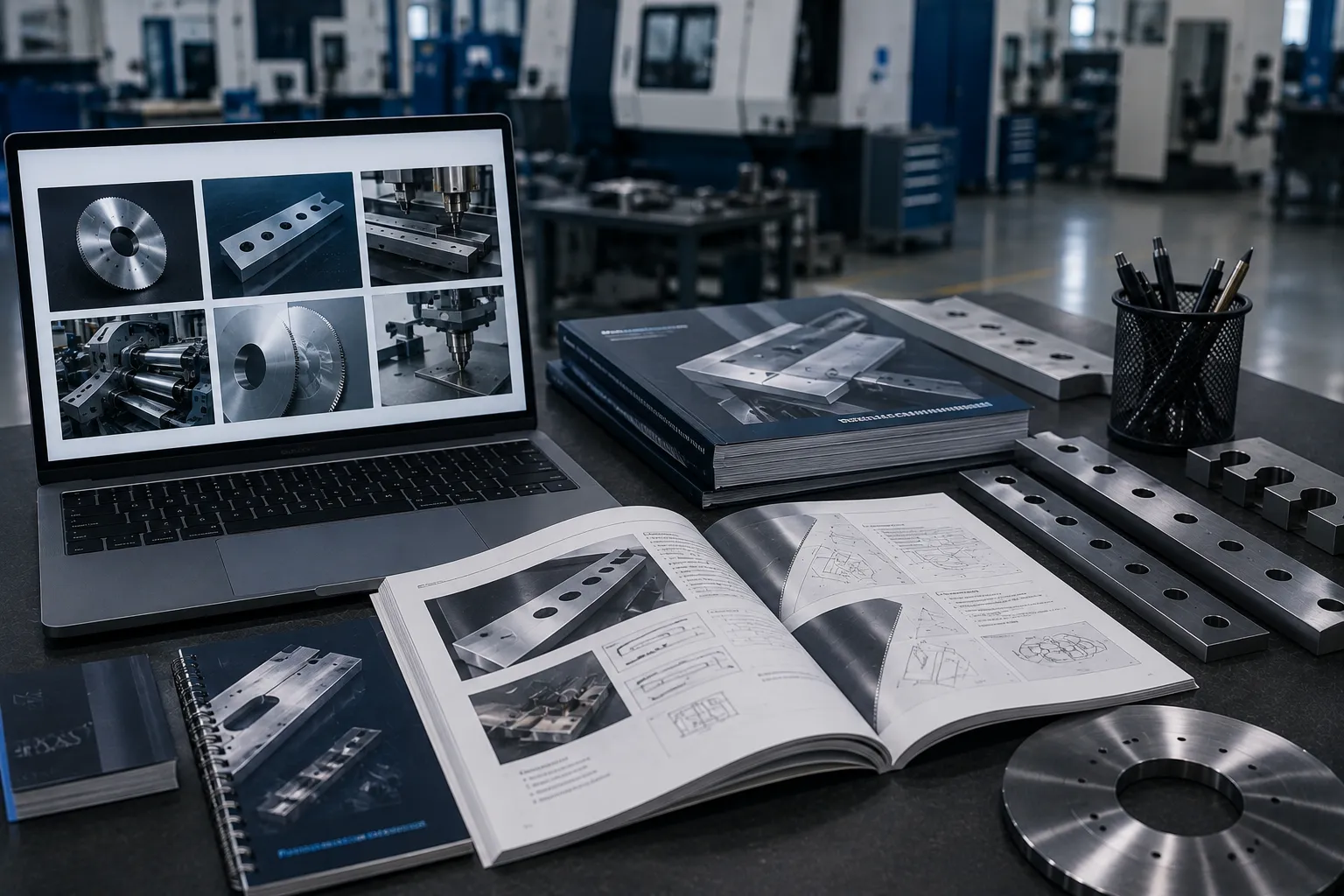
Slitting Knife Guide & Blade Selection Hub
Access comprehensive technical guides designed for converting engineers, plant managers, and equipment operators seeking maximum cut quality and edge longevity.
Sharkcutting provides precision-engineered slitting knives, including rotary, shear, and recycling blades tailored for seamless integration into high-speed converting lines.
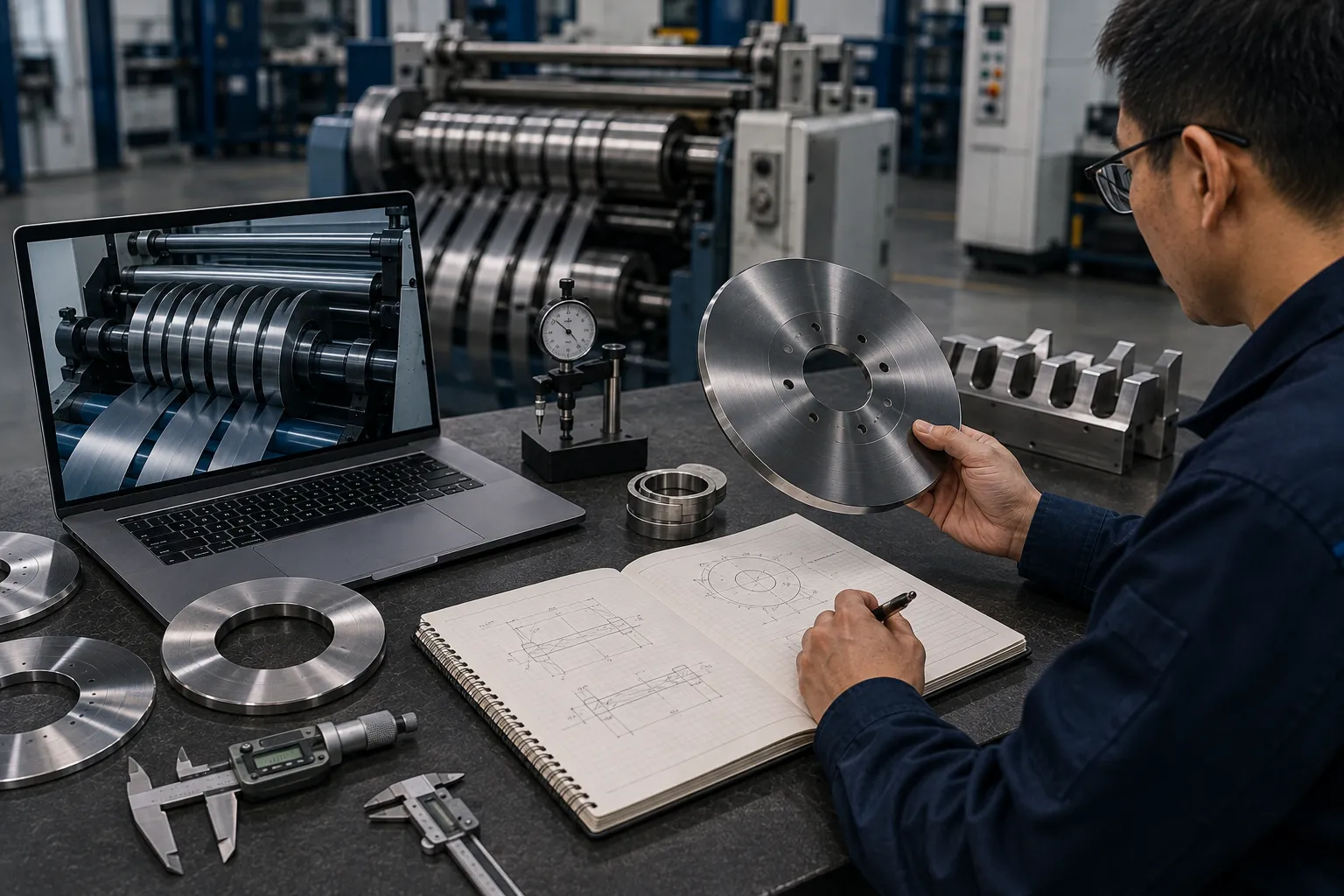
How To Choose Slitting Knives
Learn how to select circular, shear, and razor slitting knives according to substrate characteristics, cutting method, machine speed, blade geometry, and dimensional tolerance requirements.
- Circular, shear & razor configuration comparison
- Bevel angle, overlap & cutting clearance selection
- Blade geometry matched to web substrate properties
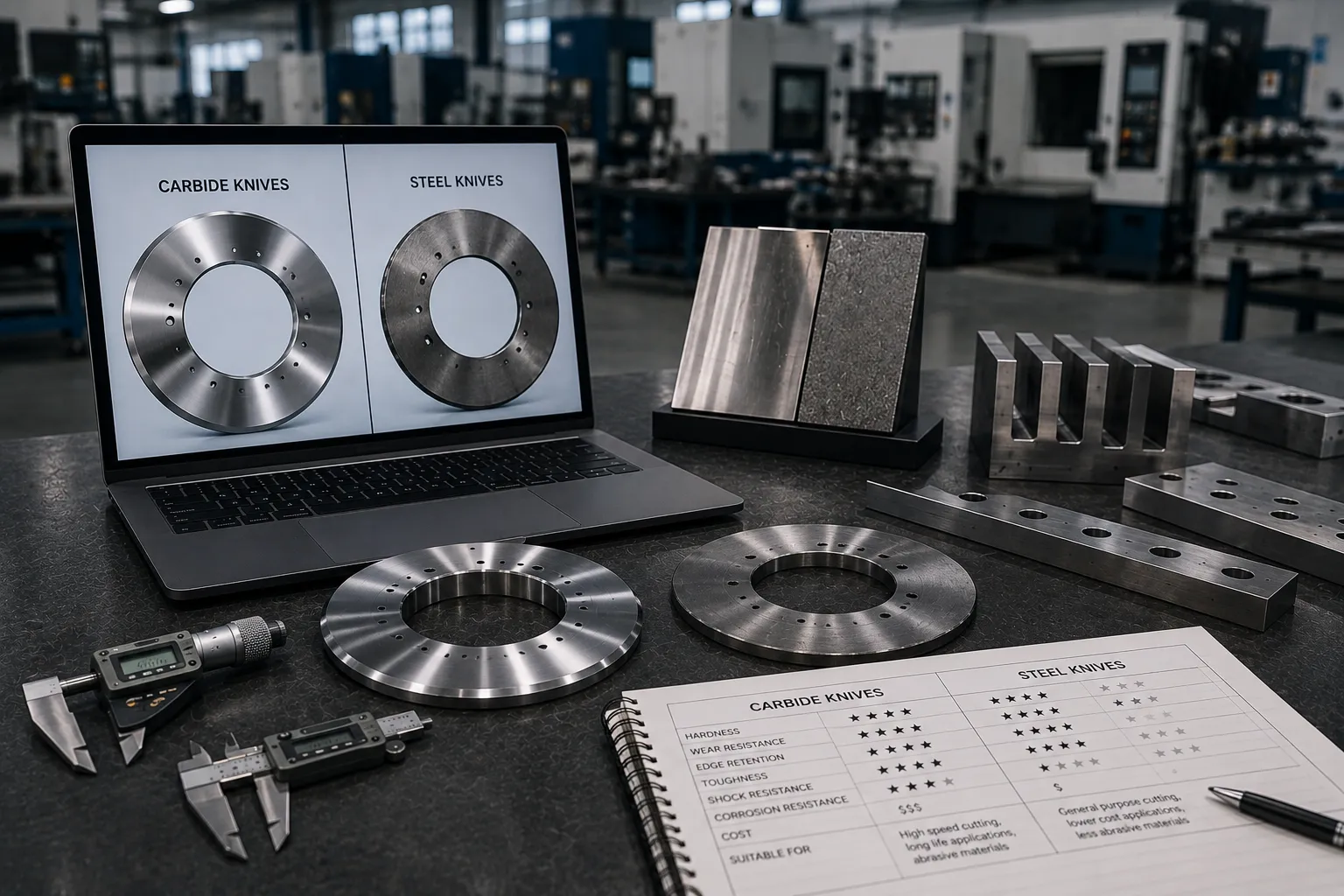
Carbide Vs Steel Knives
Compare tungsten carbide and industrial tool steels across wear resistance, toughness, edge retention, operating conditions, and total tooling cost to identify the right material for your application.
- Wear resistance & cutting edge longevity
- Impact toughness & resistance to blade chipping
- Service life versus total tooling cost analysis
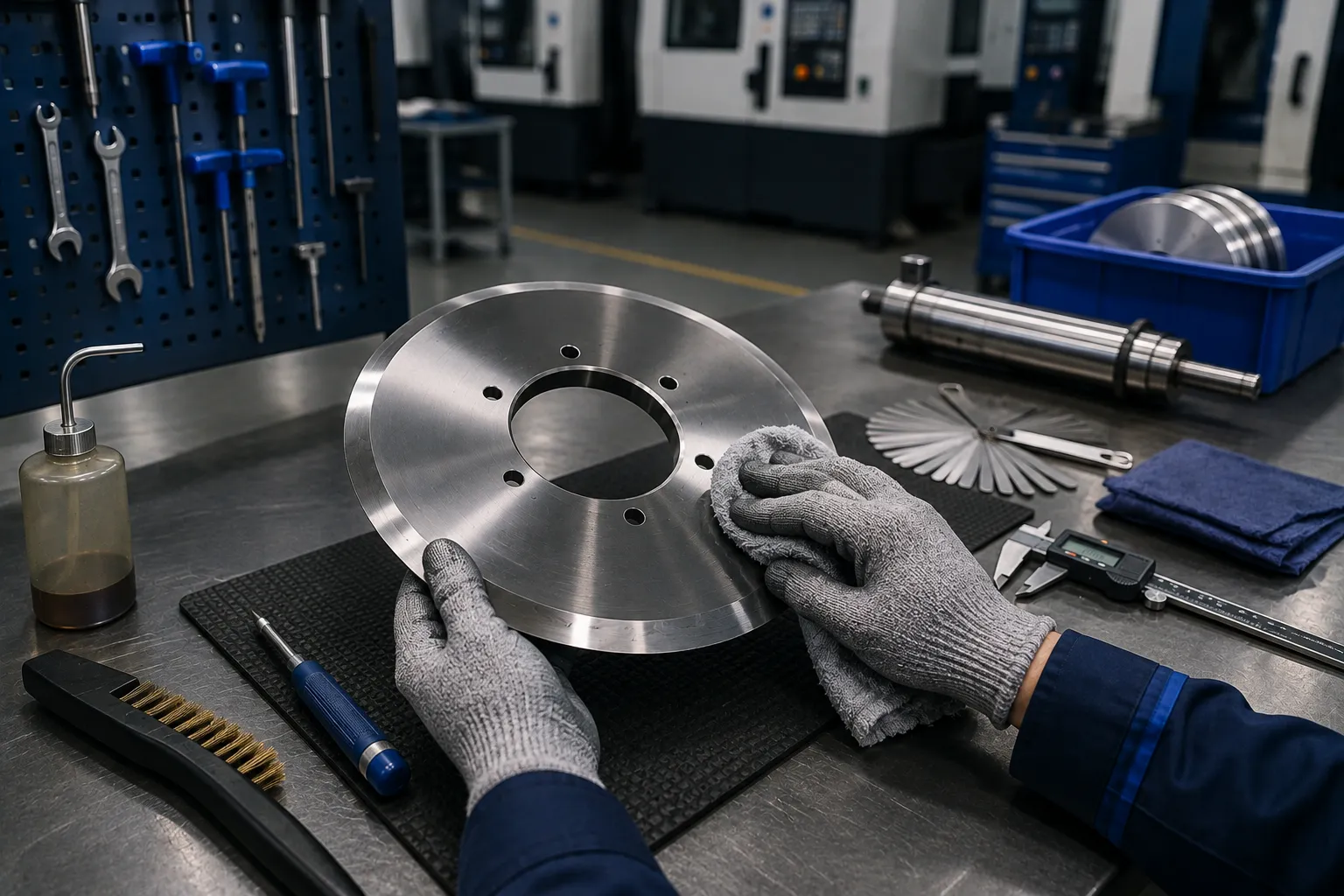
Knife Maintenance Best Practices
Establish preventive maintenance and regrinding procedures that protect blade geometry, identify wear before failure, and maintain consistent industrial cutting performance.
- Preventive grinding & sharpening intervals
- Blade wear threshold & edge defect inspection
- Machine setup, handling & safe blade storage
Carbide vs. Steel Knives: Blade Material Comparison Matrix
Selecting the ideal blade material requires balancing wear resistance, mechanical impact toughness, line velocity, and long-term lifecycle costs. At Sharkcutting, we formulate virgin tungsten carbide powders and precision vacuum heat-treated tool steels engineered to maintain extreme cutting accuracy and structural integrity across continuous industrial converting operations with our high-performance slitting knives.
Sub-Micron Micrograin Tungsten Carbide
Engineered for continuous, ultra-long production runs on highly abrasive substrates. Our sub-micron tungsten carbide grades deliver maximum edge retention, dramatically minimizing blade replacement frequency, edge micro-chipping, and costly machine downtime when using specialized razor slitting knives .
| Evaluation Criteria | Technical Specification |
|---|---|
| Hardness Rating | 89 to 93.5 HRA (~1400 to 1850 HV) |
| Impact Toughness | Moderate to High (Requires rigid shaft alignment & low vibration) |
| Wear Resistance Lifetime | 10x to 50x longer operational life compared to standard tool steel |
| Optimal Substrates | Abrasive polymer films, flexible packaging, magnetic tape, technical nonwovens |
| Relative Investment Cost | Higher initial investment offset by the lowest total cost per cut |
High-Speed Steels (D2, M2) & Powder Metallurgy Alloys
Formulated to withstand heavy mechanical shock, dynamic flexure, and severe vibration. Vacuum heat-treated D2, M2, and Powder Metallurgy (PM) steels strike a perfect balance between exceptional fracture toughness and reliable edge sharpness under heavy shear loads.
| Evaluation Criteria | Technical Specification |
|---|---|
| Hardness Rating | 58 to 65 HRC (Optimized per alloy grade and application) |
| Impact Toughness | Exceptional (Resists heavy mechanical shock, flexure, and misaligned loads) |
| Wear Resistance Lifetime | Standard to High baseline lifespan with superior regrindability |
| Optimal Substrates | Heavy paperboard, metal foils, corrugated board, rubber, dense textiles |
| Relative Investment Cost | Lower initial capital outlay with fast, economical re-sharpening cycles |
Engineering Selection Logic for Industrial Blade Alloys
Determining the optimal alloy for industrial slitting, shearing, and rewinding requires evaluating three foundational variables: web line velocity, substrate abrasiveness, and machinery frame rigidity. While solid tungsten carbide offers unparalleled wear resistance, its lower tensile strain tolerance requires rigid mounting shafts and minimal axial runout.
- • Web Line Speed: Continuous high-speed web slitting generates intense localized friction and thermal buildup. Tungsten carbide retains its microscopic edge profile and hardness at elevated operating temperatures without softening.
- • Substrate Abrasiveness: Converting materials with inorganic mineral fillers—such as calcium carbonate, silica, or titanium dioxide—rapidly dulls conventional steel. Fine-grained carbide prevents micro-erosion and ensures burr-free slitting.
- • Machine Frame Rigidity: Equipment prone to minor shaft deflection, severe mechanical shock, or high-vibration shear slitting benefits from Powder Metallurgy alloys (PM-M4, PM-10V) or M2 tool steel used in durable shear slitting knives, which absorb impact without catastrophic edge chipping.
Sharkcutting manufactures every industrial knife batch using certified virgin powders and computer-controlled vacuum heat-treatment processes. This precise metallurgical control ensures dense grain structure, uniform carbide dispersion, and unyielding thermal stability under demanding high-output converting conditions.
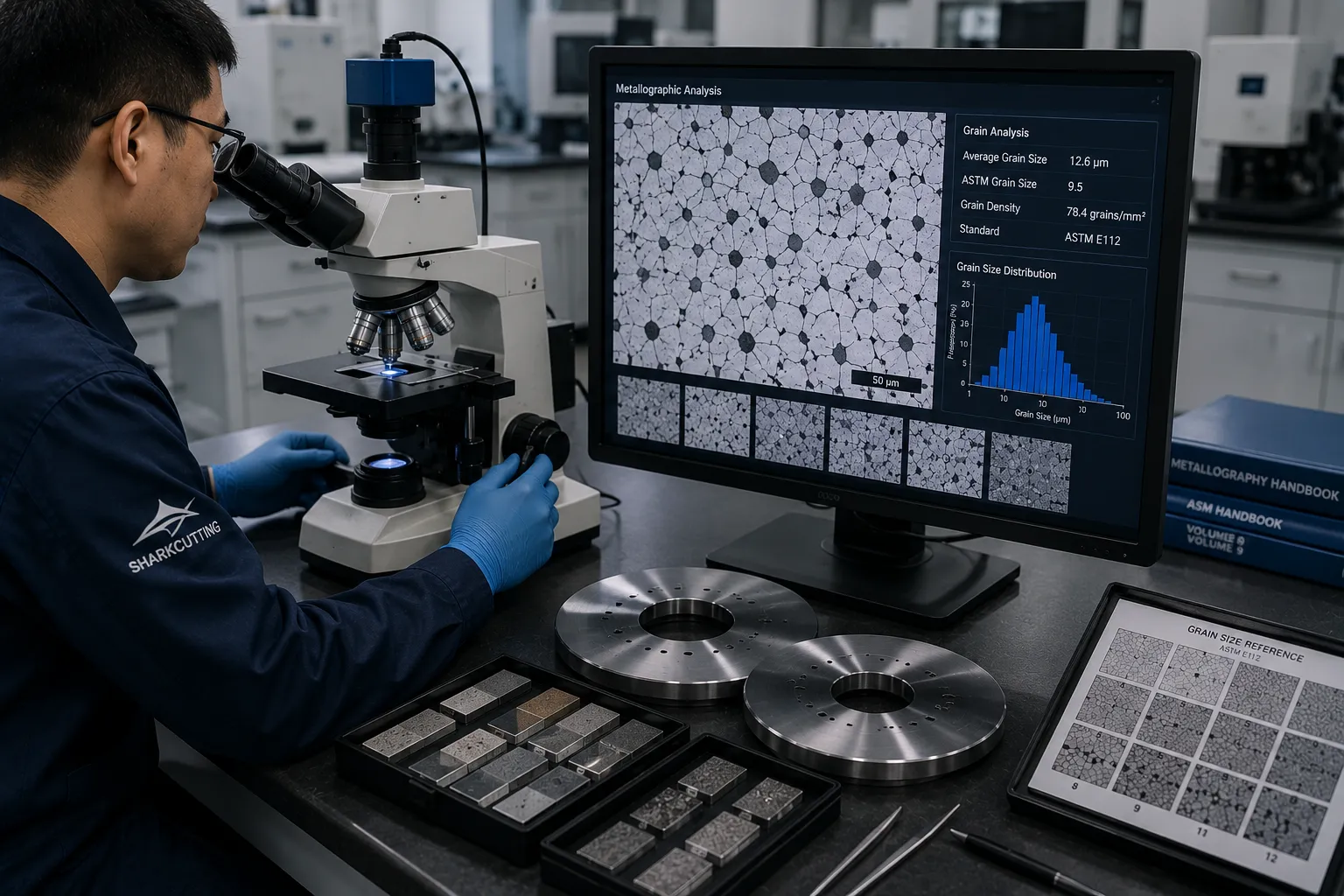
Microstructure Analysis & Grain Density
High-magnification SEM analysis demonstrating the ultra-dense grain distribution in Sharkcutting premium virgin carbide compared to standard tool steel. Uniform binder dispersion prevents micro-pitting, edge spalling, and early blade wear during continuous high-speed converting.
Get Material Advice
Not sure which blade substrate fits your production line speed, shear pressure, or substrate density? Our application engineers analyze your exact operational parameters to recommend the most cost-effective alloy.
Key Performance Trade-Offs
Superior Hardness
Requires Rigid Mounts
Flexible Application Range
Economical Regrinding
Industrial Knife Maintenance Best Practices and Lifetime Optimization Guide
Precision industrial machine knives represent a mission-critical investment for continuous slitting, converting, and manufacturing operations. Implementing structured knife maintenance best practices prevents unplanned machine downtime, eliminates edge deflection, preserves tight cutting tolerances, and significantly lowers overall tooling replacement costs across demanding multi-shift production schedules.
Standardizing maintenance protocols empowers plant managers and maintenance engineers to maximize line throughput while maintaining clean, burr-free slitting results. Sharkcutting delivers deep manufacturing expertise and technical procedures designed to keep your rotary slitters, shear knives, and specialized packaging machine knives performing at peak efficiency throughout their entire service life.
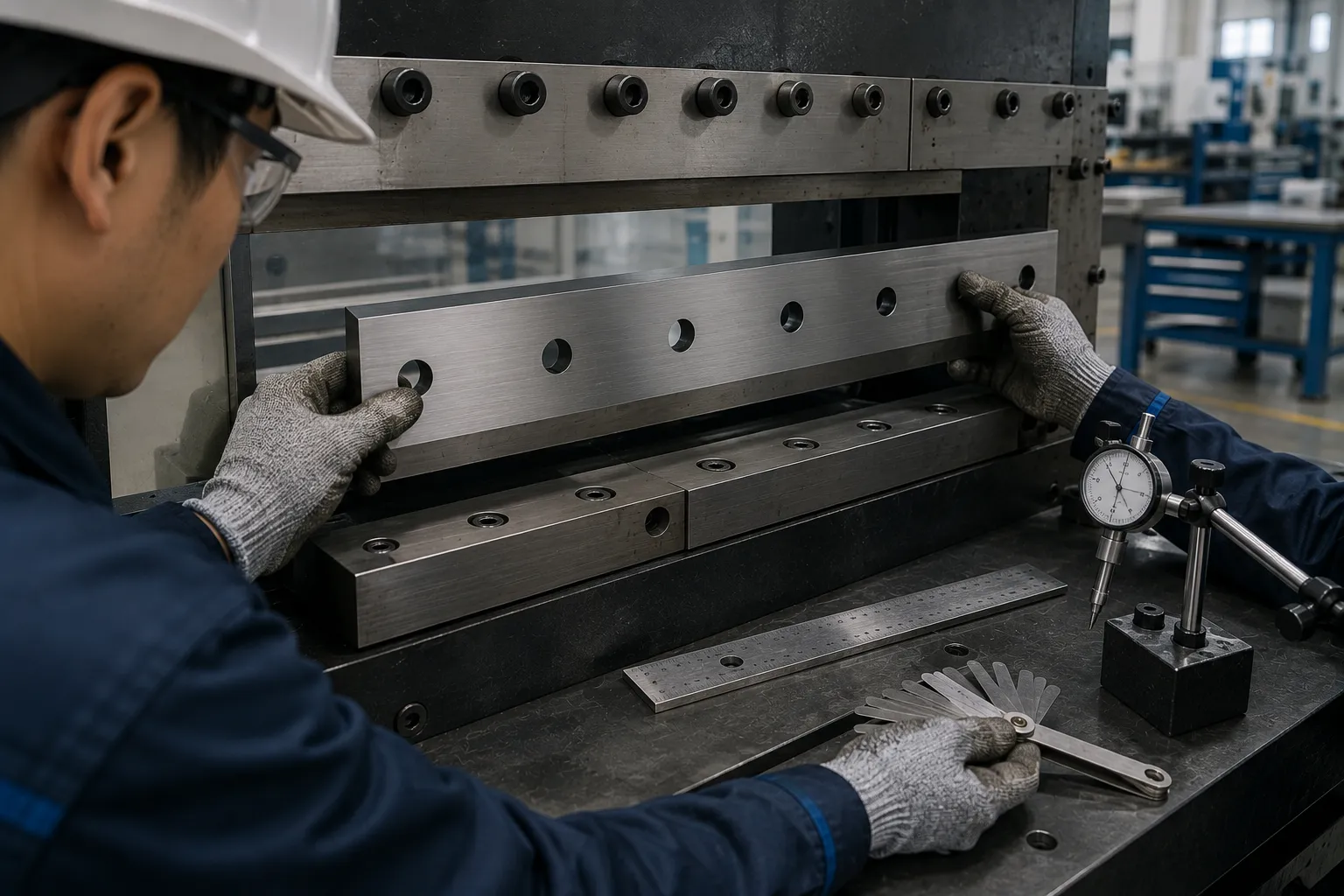
Step 1: Precision Installation and Clearance Gap Alignment
Improper mechanical installation is the primary driver of premature edge chipping, blade deflection, and rapid wear. When mounting circular slitter knives or straight shear blades, technicians must verify total indicator reading (TIR) and precisely calibrate horizontal and vertical clearances to prevent excessive friction under high web tension.
- Calibrate Side-Load Pressure: Set pneumatic or mechanical side pressure precisely to maintain shear contact without generating excessive frictional heat.
- Verify Shaft & Arbor Parallelism: Ensure arbors, locking collars, and spacers are clean, true, and free of debris to eliminate axial wobble and runout.
- Set Material-Specific Overlap: Adjust horizontal gap and vertical blade penetration strictly according to substrate thickness, density, and tensile strength.
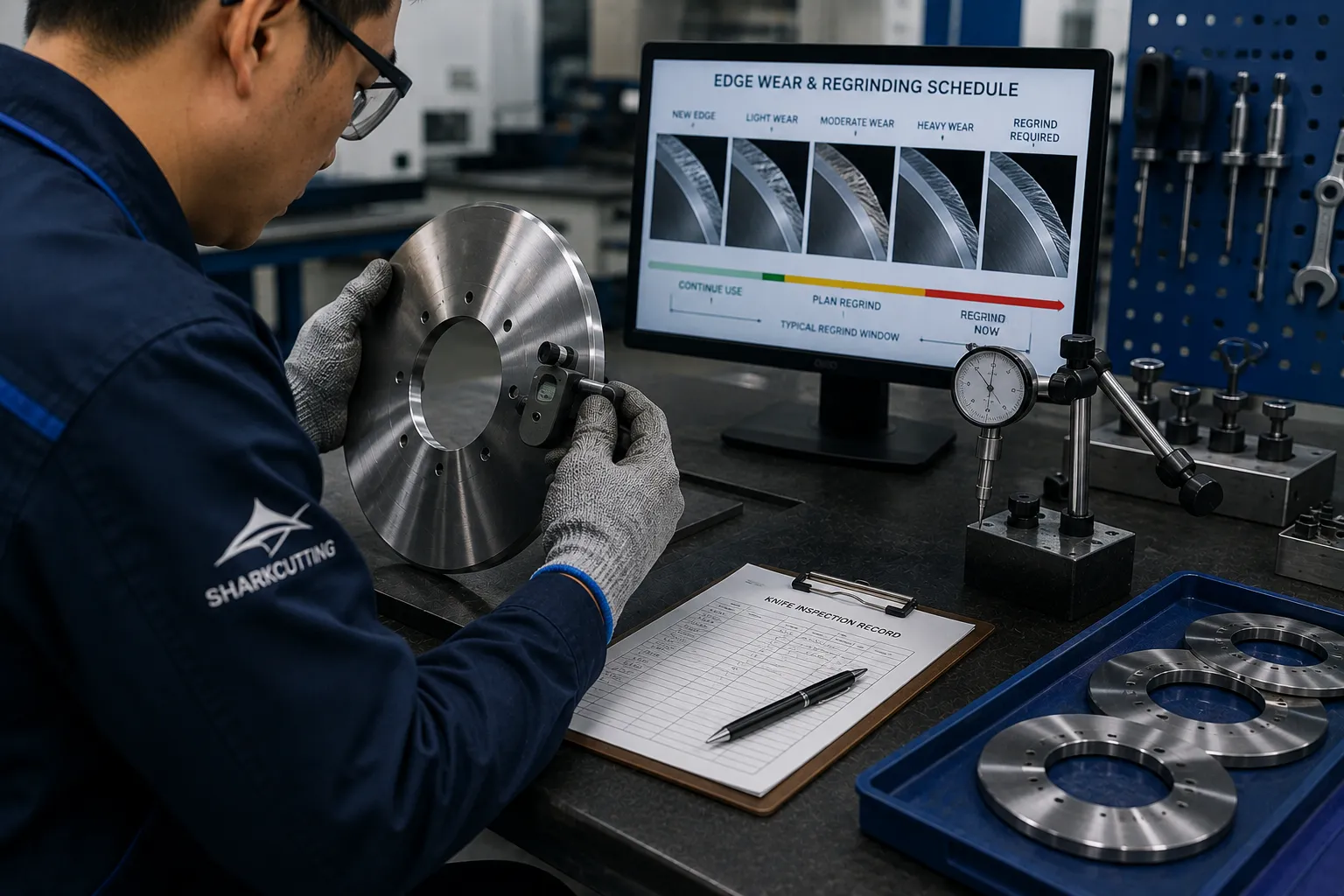
Step 2: Scheduled Edge Inspection and Timely Regrinding Windows
Running industrial knives past their optimal wear limits causes micro-fractures to propagate into deep structural chips. This forces grinding technicians to remove substantial blade material during reconditioning, prematurely reducing overall tool diameter and shortening the blade's usable operating life.
- Perform Optical Magnification Audits: Inspect primary cutting bevels under 20x–50x magnification each shift to catch micro-wear before catastrophic dulling occurs.
- Track Linear Yardage & Tonnage Schedules: Establish strict regrinding intervals based on actual production volume rather than waiting for visible edge breakdown.
- Minimize Regrind Stock Removal: Light, preventive sharpening passes remove only minimal stock while preserving original factory bevel angles and hardness.
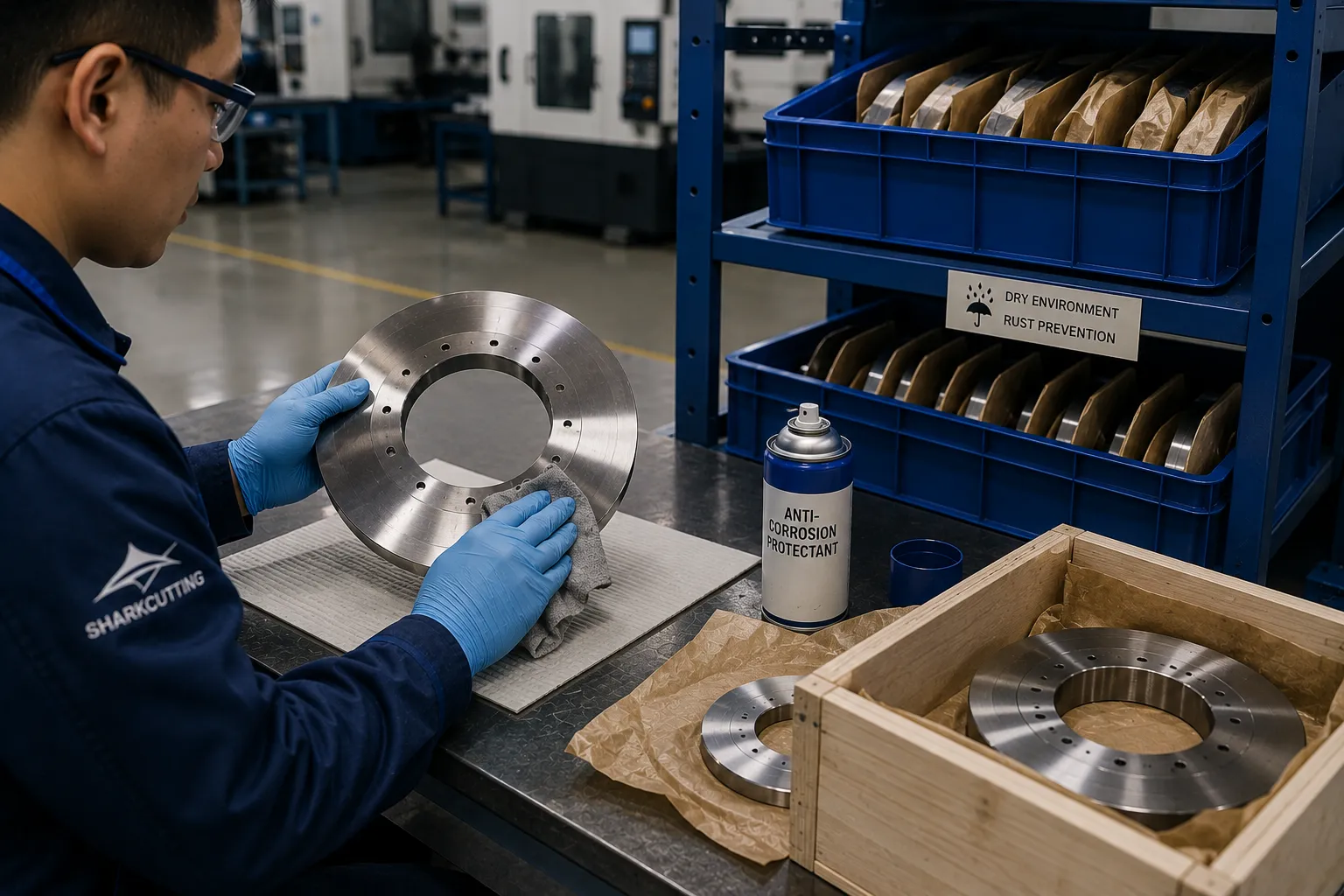
Step 3: Anti-Corrosion Surface Treatment and Secure Storage
Atmospheric moisture and improper handling during changeovers are leading causes of off-line blade damage. High-grade alloy tool steels (such as D2, M2) and tungsten carbide tools require systematic cleaning, high-performance rust inhibitors, and dedicated protective guarding to safeguard precision edge geometry.
- Apply Rust Inhibitor Formulations: Thoroughly clean blade surfaces of polymer and adhesive residue, then apply specialized synthetic anti-corrosion oils.
- Utilize Dedicated Edge Protectors: Always install fitted polymer or magnetic edge guards before moving, staging, or transporting sharpened blades.
- Maintain Climate-Controlled Storage: Keep spare and reconditioned knives in low-humidity, temperature-regulated cabinets with non-abrasive dividers.
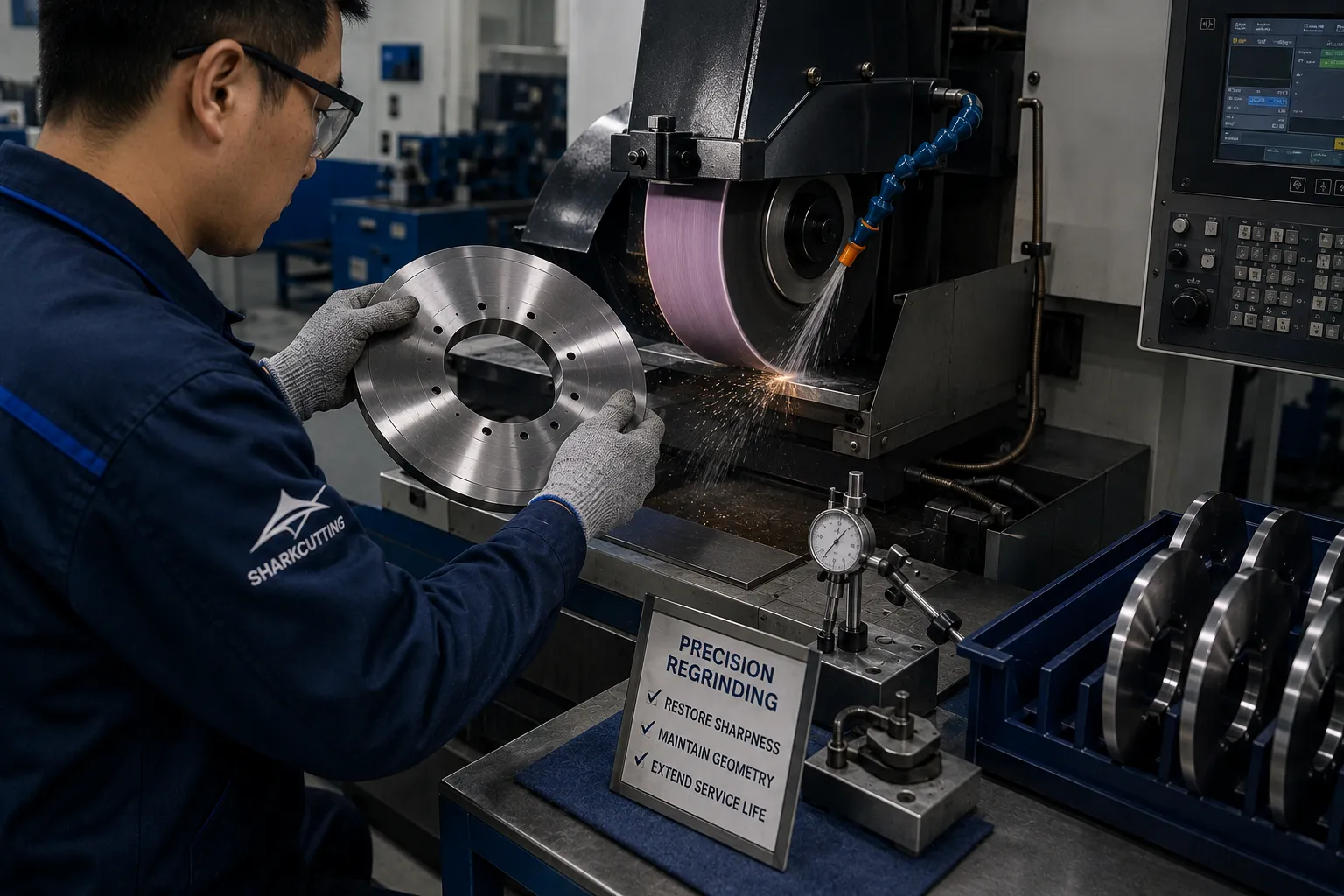
Step 4: Precision Industrial Blade Sharpening and Reconditioning
Professional industrial blade sharpening requires high-precision multi-axis CNC grinding systems, appropriate diamond or CBN abrasive wheels, and flood coolant delivery. Precision reconditioning restores original cutting edge geometry without inducing thermal stress, micro-cracking, or temper softening in the core steel.
- Deliver High-Volume Flood Coolant: Eliminate heat concentration during grinding passes to protect heat treatment integrity and prevent thermal checking.
- Restore Mirror Surface Finishes: Superfinish blade bevels to ultra-low surface roughness values to minimize material adhesion and friction during slitting.
- Verify Post-Grind Tolerances: Measure concentricity, edge radius, and dimensional parallelism with laser or optical gauging before returning knives to the line.
Common Cutting Defects Diagnostic Matrix
When edge quality deteriorates, rapid diagnosis isolates mechanical issues from tooling fatigue. Use this diagnostic matrix to identify common cutting defects, assess root causes across slitting and shear lines, and execute immediate corrective maintenance.
| Cutting Defect / Symptom | Probable Mechanical or Tooling Cause | Recommended Corrective Maintenance Action |
|---|---|---|
| Excessive Edge Burr Formation | Excessive horizontal knife clearance or rounded cutting edge radius from prolonged use | Recalibrate side clearance using feeler gauges and schedule blades for precision re-sharpening |
| Edge Chipping & Micro-Fractures | Excessive side-load pressure, shaft runout vibration, or improper carbide/steel grade selection | Reduce side-load pressure, inspect arbor bearings for axial play, and evaluate tougher alloy grades |
| Slit Edge Fraying & Tearing | Incorrect bevel angle geometry, blade deflection, or polymer buildup on knife side faces | Clean blade surfaces, optimize bevel profile for substrate density, and increase blade rigidity |
| Thermal Checking & Temper Loss | Inadequate cooling during high-speed friction or excessive infeed speed during dry grinding | Increase flood coolant volume at slitting contact zones and enforce strict wet-grinding reconditioning |
Need Custom Cutting Solutions or Engineering Advice?
Send us your blade drawings, machinery specifications, target substrates, or current cutting challenges. Sharkcutting engineers will evaluate blade geometry, material grade, tolerances, and manufacturing feasibility to provide a tailored technical recommendation and quotation.