
Tailored Specialty Cutting Geometries & Custom Assemblies
Modern automated converting, packaging, and material-processing lines frequently demand non-standard cutting geometries that extend far beyond off-the-shelf catalog blades. At Sharkcutting, we engineer high-performance special cutting components designed specifically to integrate into complex OEM machine architectures. From intricate multi-axis blade profiles to fully assembled cutting modules, our engineered solutions deliver extraordinary dimensional stability, extreme wear resistance, and reliable performance in continuous high-speed production environments.
Whether you require precision replacement parts for proprietary machinery or custom-engineered components for new machine builds, our advanced manufacturing infrastructure guarantees strict compliance with your technical drawings and operational specifications.
Complex Profile Knives
Custom-machined with multi-axis curved surfaces, intricate tooth geometries, and 3D micro-cutting edges. Designed for specialized tearing features, non-linear contour cutting, and precise substrate slitting, expanding our comprehensive range of industrial slitting knives.
- • Multi-Axis CNC Grinding: Maintains exact profile tolerances across complex 3D radii and compound bevels.
- • Custom Tooth Geometries: Variable pitch, wave, scalloped, and continuous perforation tooth profiles.
- • Burr-Free Edge Finishing: Precision edge honing eliminates substrate drag, tearing, and edge degradation.
Punch & Anvil Sets
High-precision matched die sets, rotary punch blocks, and hardened anvil backing plates engineered for zero-gap shearing operations. Built to endure rapid cycle rates without edge deflection or premature fatigue.
- • Matched Clearance Control: Hand-lapped tolerances ensure clean, repeatable shearing and perforation.
- • Hardened Anvil Surfaces: Backing plates treated up to 64–68 HRC for maximum fatigue resistance.
- • Zero-Gap Shear Design: Eliminates continuous material fraying and extends tool longevity.
Rotary & Oscillating Cutting Modules
Integrated modular assemblies incorporating precision bearing housings, balanced drive shafts, and quick-change cutter blocks. Engineered for direct integration into high-speed continuous manufacturing machinery.
- • Modular Block Architecture: Enables fast, effortless blade block replacement during scheduled maintenance.
- • Precision Bearing Integration: Smooth, low-friction rotation under high continuous radial and axial loads.
- • Dynamic Balance Calibration: Eliminates high-speed vibration and prevents uneven shaft wear.
Carbide-Tipped Special Inserts
Wear-resistant composite cutting components featuring tungsten carbide inserts brazed or mechanically locked to high-strength alloy steel bodies. Formulated specifically for cutting highly abrasive films, foils, and composite substrates.
- • Vacuum Brazing Technology: High-integrity metallurgical bonds resist extreme thermal and mechanical shock.
- • Micro-Grain Carbide Grades: Formulated for maximum edge retention against abrasive material wear.
- • Composite Body Construction: Combines shock-absorbing alloy steel cores with ultra-hard cutting edges.
Engineered for Rigorous Production Standards
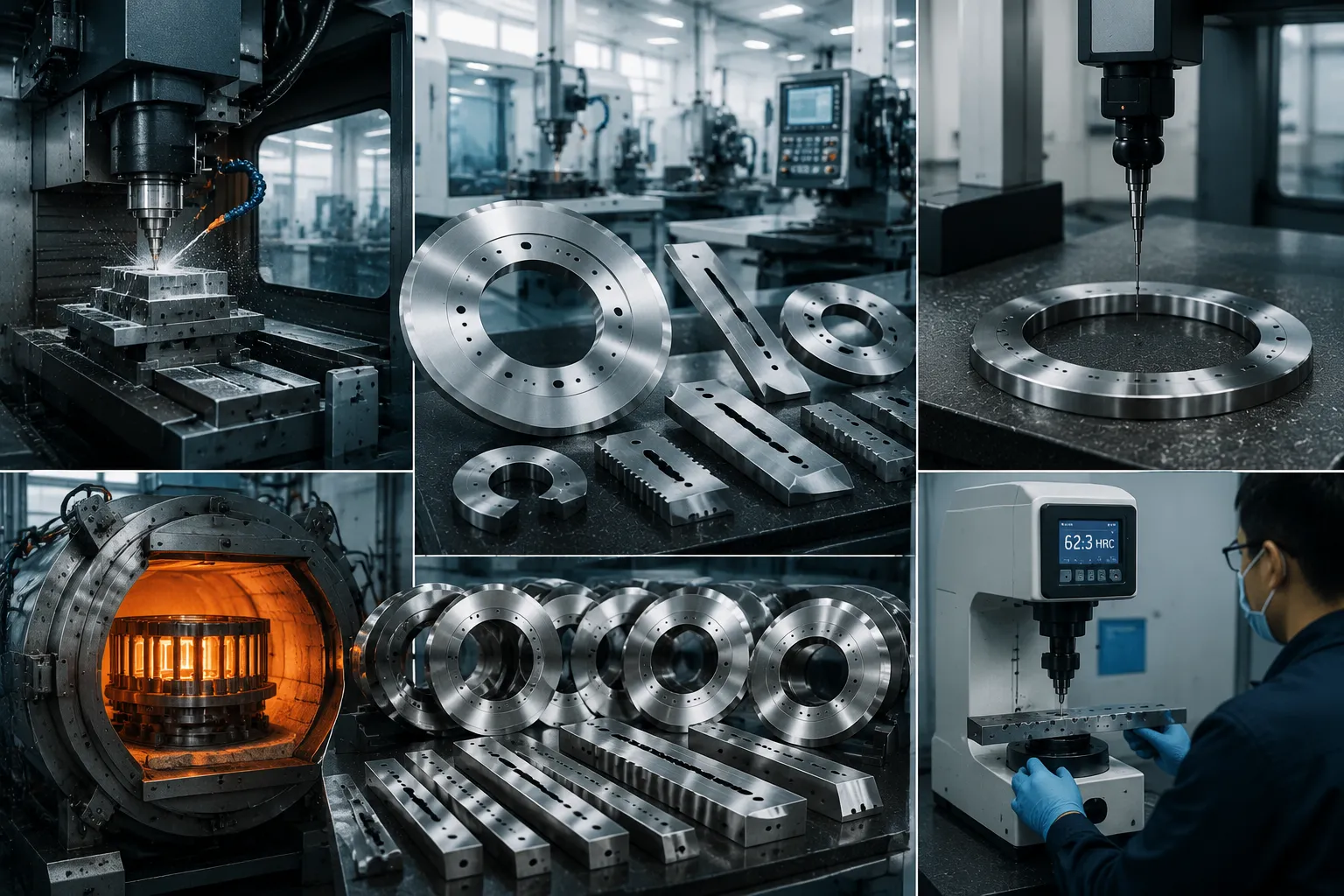
Every non-standard cutting component manufactured by Sharkcutting undergoes stringent quality verification to validate material structure, geometric tolerances, and surface integrity. By matching premium tool steel and carbide grades with computer-controlled vacuum heat treatments, we maximize edge life and structural integrity under demanding operating conditions.
Specialty Cutting Component Specifications
Review technical engineering parameters across our primary non-standard cutting component categories. All dimensions, metallurgy, and tolerances can be tailored to meet your exact OEM machinery requirements.
| Component Category | Substrates & Materials | Machining Tolerance | Hardness Range | Surface Treatments |
|---|---|---|---|---|
| Complex Profile Knives | D2, M2, CPM 10V, Tungsten Carbide | ±0.002 mm (±0.00008 in) | 58 – 68 HRC | TiN, TiAlN, DLC Coating |
| Punch & Anvil Sets | High-Cr Tool Steels, Carbide Inserts | ±0.001 mm (Matched Fit) | 60 – 72 HRC / HRA | Teflon Non-Stick, Chrome Plating |
| Rotary Cutting Modules | Alloy Steel Body, HSS/Carbide Cartridges | ±0.003 mm Dynamic Runout | 56 – 64 HRC | Black Oxide, Anti-Corrosion Polish |
| Carbide Special Inserts | Micro-Grain Tungsten Carbide Tips | ±0.002 mm Profile Precision | 88 – 92 HRA | PVD Thin-Film Armor, PVD TiN |
Custom Machining Capabilities
State-of-the-art 5-axis CNC grinding, slow-feed wire EDM, and optical profile shaping ensure exact compliance with complex, multi-contour knife geometries.
Specialized Thermal Processing
Computer-controlled vacuum hardening and sub-zero cryogenic treatments eliminate internal residual stresses, preventing deformation and extending edge wear life.
Reverse Engineering & Design Support
Send us your worn or legacy components. Our CMM and 3D optical scanning tools extract precise geometric data to recreate complete, ready-to-manufacture CAD blueprints.
Advanced Metallurgy & High-Precision Manufacturing
Engineering resilient, long-lasting special cutting components demands strict alignment between raw material science, computer-controlled thermal processing, and sub-micron CNC machining tolerances. Shark Cutting combines high-grade tooling alloys with advanced finish grinding to deliver unmatched operational reliability across complex industrial machine knives applications.
Strategic Substrate Selection Logic
Selecting the ideal cutting alloy dictates component lifespan, edge retention, and structural integrity under intense dynamic shear loads. Our engineering team evaluates your specific cutting media, processing speeds, and substrate friction to select optimal raw materials and carbide grades.
- High Carbon Chromium Steels (D2 / D3): High abrasion resistance, exceptional core strength, and deep-hardening stability for severe shear wear and high-impact operations.
- High-Speed Steels (HSS - M2 / M35): Superior red-hardness and elevated thermal stability, preventing cutting edge softening during continuous, high-speed friction cutting.
- Powder Metallurgy Steels (CPM Series): Uniform micro-carbide distribution eliminates micro-chipping and delivers superior impact toughness for complex blade geometries.
- Solid Tungsten Carbide Parts: Ultra-fine grain structures providing maximum hardness and extreme wear resistance when slitting abrasive or synthetic web substrates.
Computer-Controlled Thermal Processing
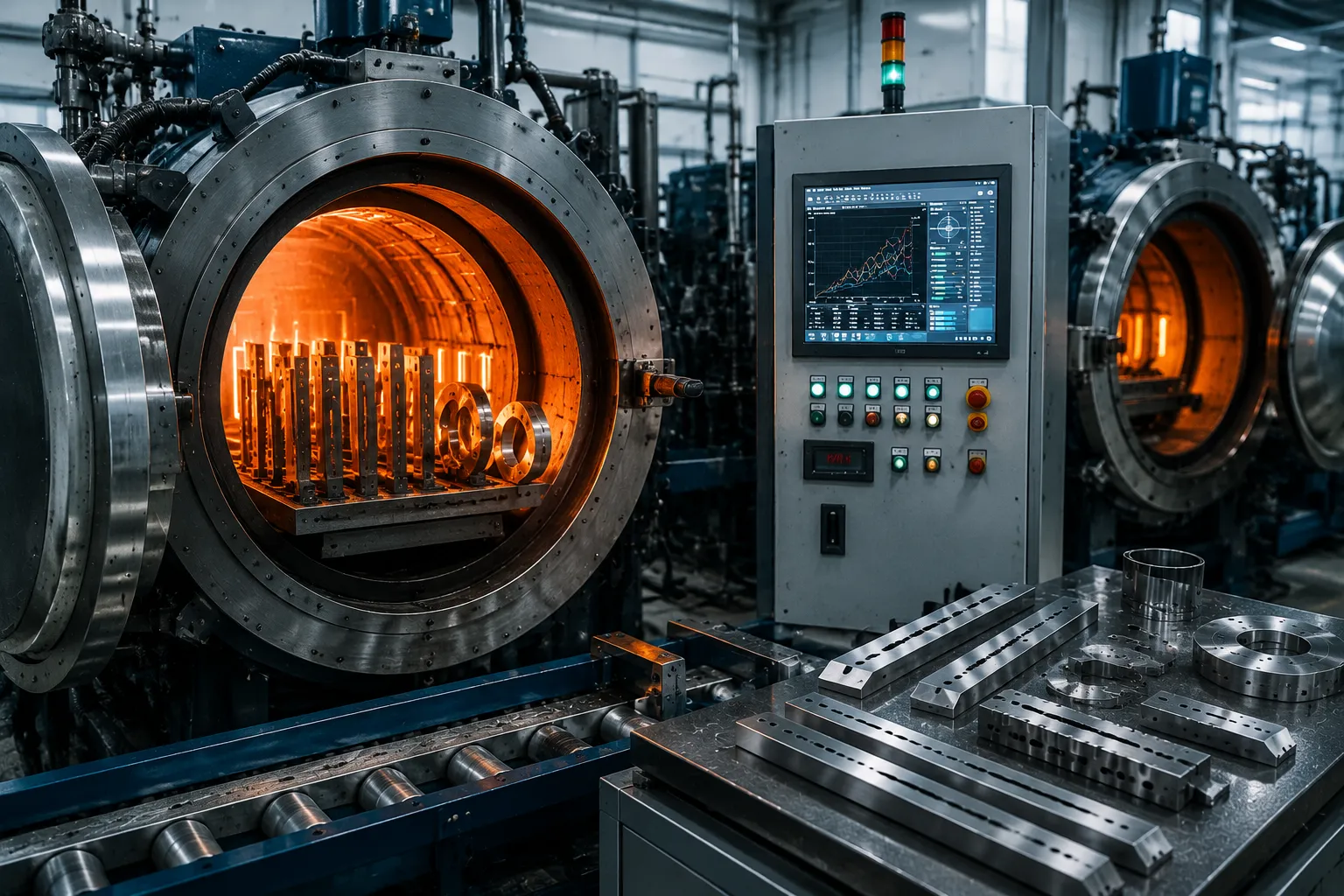
Raw alloy capability is fully realized through multi-stage heat treating. Shark Cutting utilizes multi-bar computer-controlled vacuum furnace quenching to prevent surface decarburization, oxidation, and internal material distortion.
Following quenching, components undergo deep cryogenic treatment at sub-zero temperatures (-300°F / -184°C). This process transforms retained austenite into stabilized, stress-relieved martensite—refining the micro-grain structure and extending cutting edge lifespan by up to 300%.
Steel Grade Performance Profile
Comparative breakdown of physical traits, wear factors, and primary industrial applications.
| Material Grade | Impact Resistance | Wear Resistance | Corrosion Defense |
|---|---|---|---|
| D2 Tool Steel | High | Very High | Moderate |
| M2 High-Speed Steel | Very High | High | Moderate |
| CPM Powder Steel | Maximum | Extremely High | High |
| Solid Carbide | Moderate | Maximum | High |
Ultra-Tight Machining Tolerances
Advanced grinding techniques and EDM execution ensuring extreme dimensional repeatability.
CNC Form Grinding
±0.002 mm (±0.00008 in)Sub-micron diamond wheel profiling enables intricate three-dimensional blade profiles, tight micro-radii, and pristine edge geometry.
Slow-Feed Wire EDM
±0.002 mm (±0.00008 in)Multi-pass spark erosion machining for tight tolerance cutting components, complex keyways, punch and anvil sets, and zero-clearance tooling.
Optical Profile Grinding
Ra 0.05 µm FinishReal-time optical projection measurement for precise micro-serrated edges, intricate relief angles, and mirror-finish cutting surfaces.
Every custom cutting component manufactured by Shark Cutting is verified using automated Coordinate Measuring Machines (CMM) and laser micro-interferometers prior to shipment, delivering complete dimensional inspection reports with every order.
Engineered for Complex Application Environments
Shark Cutting provides high-precision custom cutting components and integration modules engineered to ensure exceptional accuracy and reliability on continuous automated production lines.
Packaging & Converting Machinery
Precision tooling assemblies designed for seamless integration into high-speed packaging equipment and continuous converting machinery.
- Custom tear-notch & punch cutters
- Shaped pouch sealing and cutting jaws
- Continuous rotary perforation modules
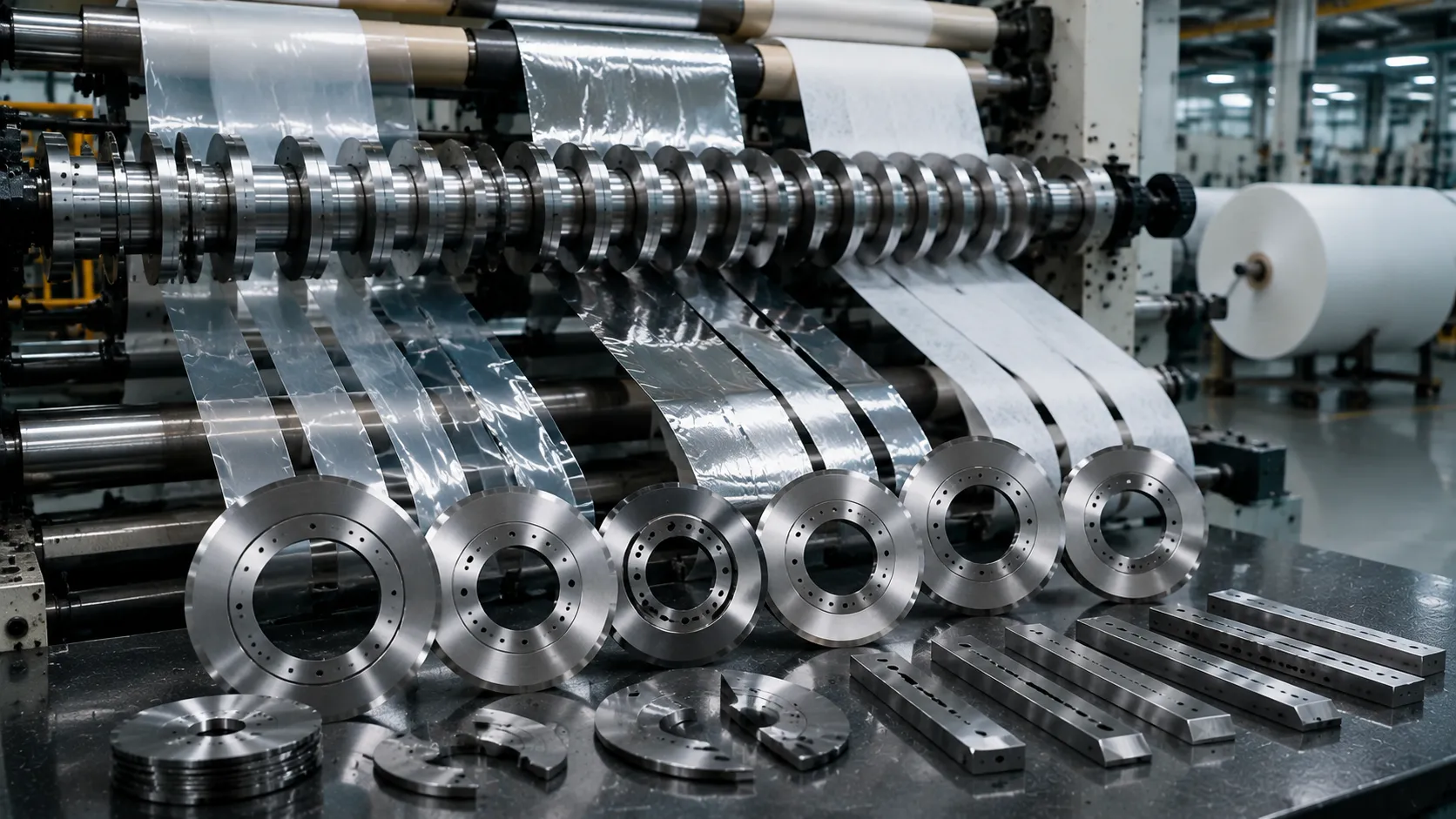
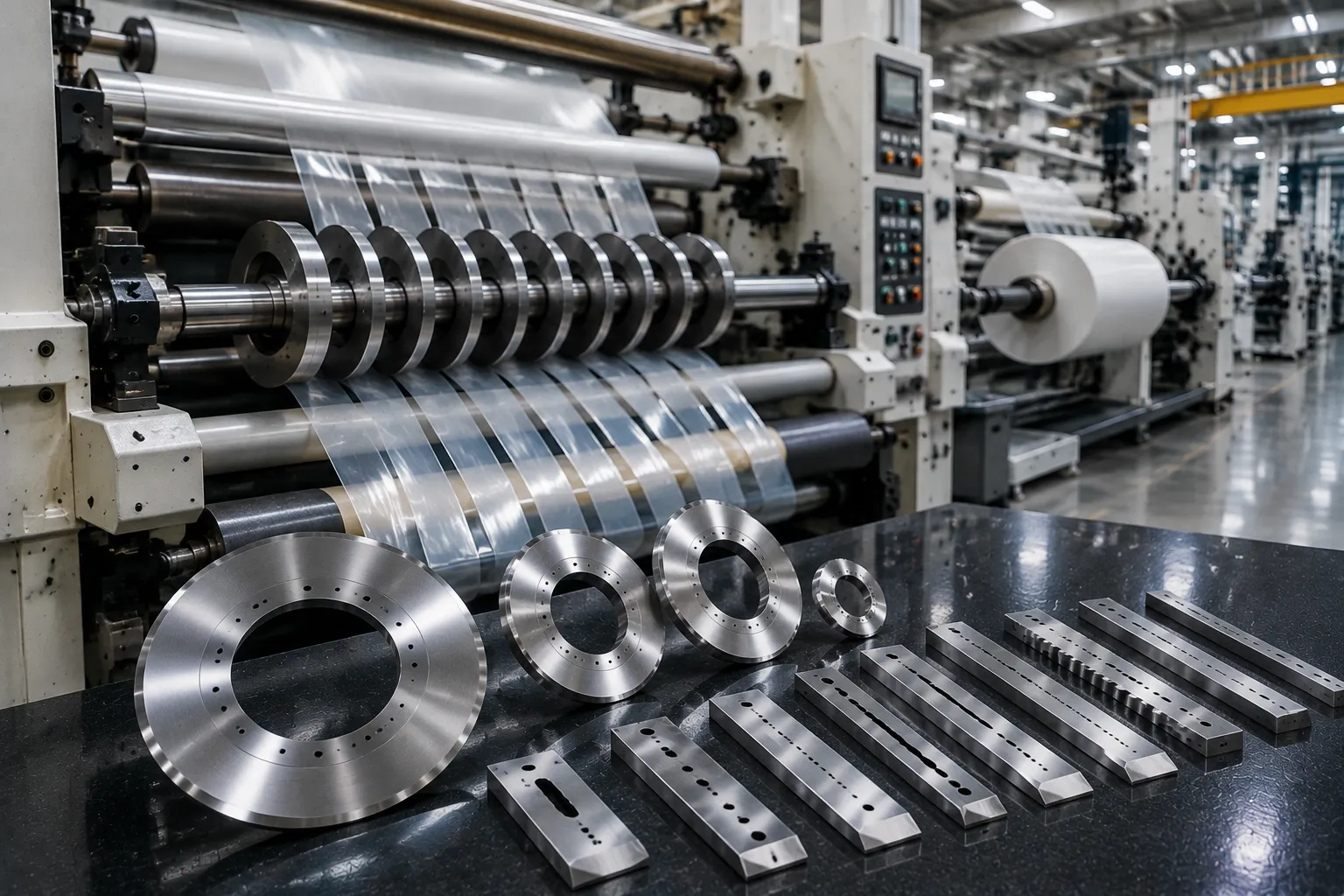
Film, Foil & Non-Woven Slitting
Tight-tolerance slitting and cutting components engineered for burr-free edges and high-speed shear operations across flexible substrates.
- Ultra-thin precision circular slitter knives and components
- Ultrasonic cutting horns & anvil rolls
- High-speed shear slitting knives and perforation dies
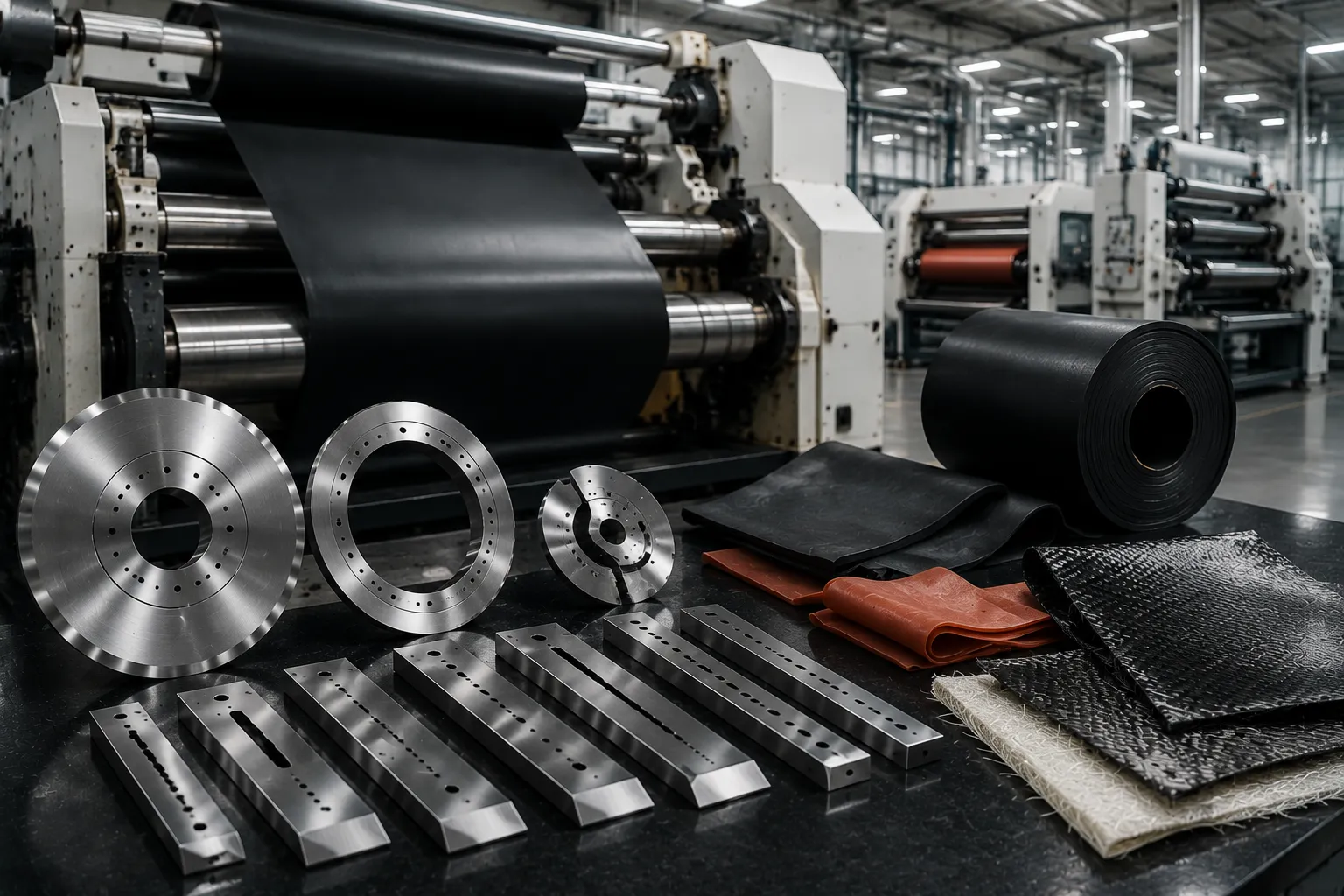
Rubber, Elastomer & Composites
Robust specialized tools optimized to manage thermal build-up, prevent material adhesion, and deliver clean cuts on sticky substrates.
- Heated blades with internal fluid channels
- Non-stick coated knives for adhesive materials
- Fiber-reinforced composite trimmers
Streamlined Customization Process from Drawing to Delivery
At Shark Cutting, our engineered custom blade manufacturing process transforms complex client blueprints, CAD models, and reverse-engineered physical samples into high-precision, non-standard cutting components. By pairing advanced metallurgical optimization with multi-axis CNC machining, wire EDM, and rigorous heat treatment, we deliver tight-tolerance cutting tools tailored for seamless machine integration and extended service life.
Drawing & Blueprint Feasibility Review
Submit your 2D engineering prints, 3D CAD files (STEP, IGES, DXF, DWG, PDF), or physical worn samples. Our application engineers conduct a thorough Design for Manufacturability (DFM) and tolerance stack-up analysis within 24 hours.
- Rapid Blueprint Assessment: Comprehensive evaluation of critical dimensions, edge radii, and mounting clearances for complex machine integration.
- Reverse Engineering Services: High-precision 3D optical scanning and CMM mapping to recreate obsolete or legacy components without original drawings.
- Strict IP & NDA Protection: Proprietary client tooling specifications and OEM cutting component designs are handled under strict confidentiality agreements.
Material Selection & Engineering Optimization
Matching cutting media and mechanical duty cycles to the proper substrate chemistry is essential for preventing premature wear, chipping, and thermal deformation in demanding industrial environments.
- Premium Tool Steels & Alloys: D2, M2 HSS, CPM powder metallurgy steels, and solid tungsten carbide inserts engineered for high-impact slitting-knives applications.
- Advanced Surface Coatings: Specialized PVD/CVD surface treatments including tin, TiAlN, DLC (Diamond-Like Carbon), and non-stick PTFE coatings.
- Targeted Hardness Profiling: Precision vacuum heat treatment calibrated between 58 and 68 HRC to balance wear resistance and fracture toughness.
Precision Machining & Heat Treatment
Our full-process manufacturing utilizes high-precision CNC machinery and multi-stage thermal processing to guarantee zero residual stress, superior surface finishes, and razor-sharp edge profiles.
- Multi-Axis CNC Machining: 5-axis CNC milling, slow-feed wire EDM, and CNC optical profile grinding for intricate cutting geometries and complex profiles.
- Vacuum Heat Treatment: Computerized vacuum quenching combined with sub-zero cryogenic conditioning to eliminate retained austenite.
- Stress Relieving & Tempering: Multi-stage tempering cycles prevent post-machining distortion in long slitting knives and thin blade assemblies.
100% Quality Inspection & Secure Shipping
Every custom special cutting component undergoes rigorous dimensional and surface inspection before dispatch. Finished parts receive protective anti-corrosion treatments and custom cushioned packaging for global transit.
- CMM Dimensional Verification: Automated 3D coordinate measuring machine inspection confirming all critical blueprint tolerances and geometric callouts.
- Surface Roughness Testing: Optical surface profiling guaranteeing sub-micron finishes (Ra < 0.2 µm) for smooth material flow and reduced friction.
- Export-Grade Protection: Heavy-duty anti-rust oil coating, VCI vapor-corrosion-inhibitor packaging, and custom shock-absorbing wooden crates.
Technical Breakdown of Our Customization Engineering Workflow
Shark Cutting integrates structured quality checkpoints across every phase of the custom blade manufacturing process. The breakdown below details how our engineering team maintains exact geometric fidelity, metallurgical integrity, and repeatable performance for specialty industrial blades and OEM cutting components.
| Workflow Phase | Primary Equipment & Tools | Critical Tolerances & Specs | Key Quality Deliverables |
|---|---|---|---|
| 1. Feasibility & Modeling | 3D Optical Scanners, CMM, CAD/CAM Software (SolidWorks, Mastercam) | Direct import of STEP/IGES/DXF/DWG; Reverse engineering accuracy to ±0.005 mm | 24-hour DFM feasibility report, tolerance stack-up clearance, approved production prints |
| 2. Material & Metallurgy | Computer-Controlled Vacuum Furnaces, Sub-Zero Cryogenic Freezers | Hardness control within ±1 HRC (58 to 68 HRC depending on alloy selection) | Material Test Report (MTR), certified heat treatment logs, microstructural grain analysis |
| 3. Precision Machining | 5-Axis CNC Milling, Slow-Feed Wire EDM, CNC Optical Profile Grinder | Positional accuracy to ±0.002 mm, cutting edge radius down to micron tolerances | In-process optical measurement, zero thermal distortion validation, edge profile check |
| 4. Surface Finishing & Coating | PVD Vacuum Coating Chambers, Precision Lapping & Honing Machines | Surface roughness Ra < 0.2 µm, thin-film coating thickness 2–4 µm | Coating adhesion certification, friction coefficient testing, enhanced wear resistance |
| 5. Inspection & Packing | High-Accuracy CMM, Optical Profile Comparators, Digital Hardness Testers | 100% critical dimension inspection, zero burr tolerance under 50x magnification | Full dimensional inspection certificate, VCI anti-corrosion sealed export packaging |
Why Leading Machine Builders Choose Shark Cutting for Specialty Tooling
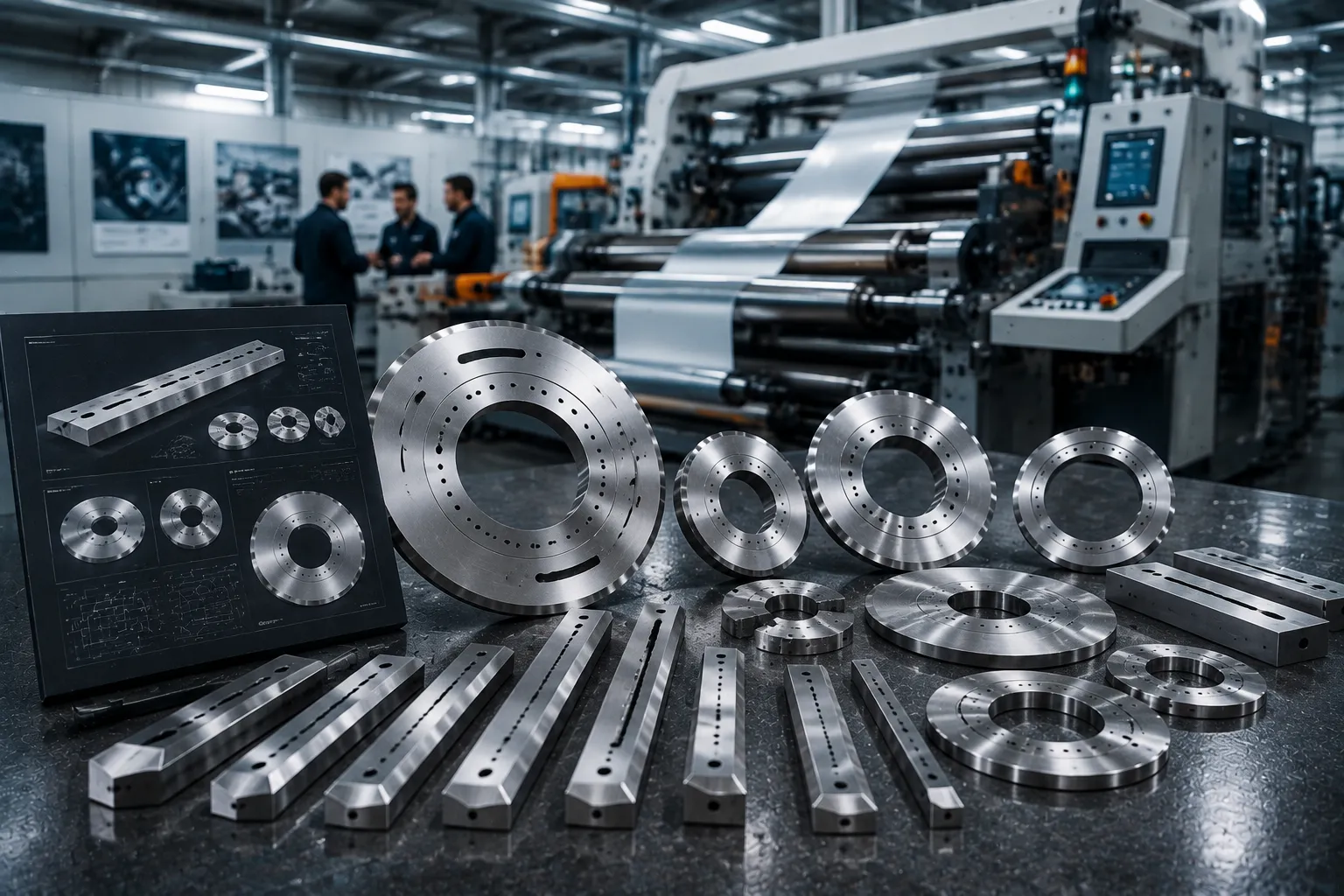
Standard off-the-shelf blades often fail when processing complex packaging geometries, thin polymer films, abrasive non-wovens, or tough composite materials. Shark Cutting delivers custom engineered cutting solutions that bridge the gap between initial mechanical design and flawless, continuous line production.
99.8% First-Time Fit Rate
Rigorous CAD modeling and clearance simulation eliminate assembly interference and installation delays.
30%+ Longer Service Life
Cryogenic thermal processing and optimized carbide selection minimize micro-chipping and edge wear.
Frequently Asked Questions About Special Cutting Components
Transitioning from standard industrial-machine-knives to engineered special cutting components requires strict dimensional control, precise metallurgical selection, and proactive technical collaboration. Whether you need to reverse-engineer a worn legacy knife, develop complex profile dies, or extend component life in high-wear converting operations, Sharkcutting delivers direct engineering support from initial CAD evaluation to final quality control. Below are detailed technical and operational answers regarding our custom non-standard manufacturing process.
Q1 Can you manufacture custom cutting components if we only have a worn or damaged sample and no CAD drawings?
Yes. Sharkcutting maintains an in-house engineering department equipped with high-resolution 3D optical laser scanners and Coordinate Measuring Machines (CMM). Even if your legacy knife, punch die, or anvil backing component is fractured, chipped, or severely worn, our technical team accurately reconstructs the part's original geometry, edge bevels, and mounting registers.
We generate precise 3D CAD models in STEP or IGES formats alongside fully dimensioned 2D engineering schematics. These digital assets are submitted directly to your technical team for formal review and written approval before precision manufacturing begins.
Q2 What is your Minimum Order Quantity (MOQ) for non-standard or specialty components?
We accommodate low-volume R&D prototyping as well as full-scale specialty cutting parts OEM production. Sharkcutting does not impose high volume barriers on complex custom cutting assemblies or non-standard blade geometries.
We routinely fabricate single-unit prototype runs for engineering validation on active packaging-machine-knives, nonwoven-knives, or rubber processing lines. Every individual prototype undergoes the same rigorous raw material verification, 5-axis CNC grinding, wire EDM machining, and CMM dimensional testing as our high-volume batch runs.
Q3 What are the typical lead times for custom component manufacturing?
Standard manufacturing lead times range from 2 to 3 weeks following final technical drawing approval. Lead times vary depending on substrate availability (such as standard high-carbon steels versus CPM powder metallurgy grades or solid tungsten carbide) and required thermal heat treatment cycles.
For urgent, machine-down scenarios on critical processing lines, Sharkcutting provides an expedited fast-track service. This includes priority raw material allocation, dedicated 5-axis CNC grinding slots, and accelerated vacuum heat treating to minimize plant downtime.
Q4 How do you protect our proprietary machinery designs and intellectual property?
We maintain strict IP protection protocols across every phase of engineering and fabrication. Protecting customer machinery innovation, custom tool profiles, and OEM component schematics is fundamental to our enterprise manufacturing partnerships.
We execute comprehensive Non-Disclosure Agreements (NDAs) prior to receiving customer CAD files, STEP models, or physical reference samples. All customer design assets are stored inside isolated CAD network environments with restricted access controls, and proprietary specs are never cataloged or repurposed.
Q5 What tolerances can Sharkcutting maintain on tight tolerance cutting components?
Utilizing slow-feed wire EDM, optical profile grinding, and 5-axis CNC form grinding, Sharkcutting consistently achieves machining tolerances down to ±0.002 mm (±0.00008 in) on functional cutting edges, mounting locating pins, and punch-and-anvil clearance surfaces.
Every manufactured component undergoes 100% CMM inspection and surface roughness verification (achieving Ra values down to 0.2 µm) to guarantee direct drop-in fitment and zero-gap operational accuracy.
Engineering Drawing Requirements
To accelerate feasibility evaluation for non-standard cutting parts, please ensure your technical submission includes these core specifications:
- ✓ Supported Formats: .STEP, .IGS, .DXF, .DWG, or dimensioned PDF.
- ✓ Substrate Material: Specified alloy grade (e.g., D2, M2, CPM-10V, Tungsten Carbide) or target cutting medium.
- ✓ Critical Fits: Explicit dimensional bounds for mounting interfaces, hole centers, and cutting radii.
- ✓ Coatings & Finishes: Specify required surface treatments (TiN, DLC, Teflon) and target roughness (Ra).
NDA Protection Guaranteed
Require an executed mutual Non-Disclosure Agreement before submitting technical blueprints or sending physical samples? Contact our engineering team for immediate processing.
Custom Component Engineering Capability Matrix
A structured breakdown of Sharkcutting's technical limits, metallurgical controls, and inspection standards for specialty industrial components.
| Parameter | Engineering Standard | Quality Inspection Method |
|---|---|---|
| Machining Tolerances | Up to ±0.002 mm (±0.00008 in) | Coordinate Measuring Machine (CMM) & Optical Profilometer |
| Surface Finish (Ra) | Down to Ra 0.2 µm (Mirror Surface Polish) | Contact & Non-Contact Surface Profilometers |
| Metallurgical Options | D2, M2, HSS, CPM Powder Steels, Solid Tungsten Carbide | Optical Emission Spectrometry & Material Analysis |
| Thermal Processing | Computer-Controlled Vacuum Heat Treatment & Deep Cryogenics | Rockwell (HRC) & Micro-Vickers Hardness Testing |
| Reverse Engineering | Damaged sample conversion to 3D CAD model (.STEP/.IGES) | 3D Laser Optical Scanning & Surface Reconstruction |
Ready to Develop Your Custom Industrial Cutting Solution?
Submit your CAD drawings, technical specifications, or worn blade samples. Sharkcutting engineers will evaluate your application requirements, recommend suitable materials, and provide professional custom cutting component solutions with fast technical feedback.