

Measuring the Operational Impact of Preventive Blade Care
Transitioning from reactive blade replacement to systematic maintenance directly boosts plant profitability and cutting quality across all industrial-machine-knives.
Extended Blade Lifespan
Scheduled inspections and timely regrinding prevent catastrophic failure and maximize total wear depth.
Scrap & Burr Reduction
Consistently sharp cutting edges eliminate edge deformation on specialized packaging-machine-knives and drastically cut raw material waste.
Grinding Tolerance Control
Precision CNC regrinding restores exact original factory bevel profiles and dimensional tolerances.
Technical Field Support
Round-the-clock expert engineering guidance keeps high-throughput automated slitting lines operating smoothly.
Protect Capital Assets & Maintain OEM Specifications
Operating dull industrial knives accelerates drive-train wear, causes material dragging, and creates unacceptable edge burrs on critical tooling like paper-cutting-knives. Partnering with Shark Cutting for standardized regrinding and preventive inspection restores exact factory geometry, protects equipment assets, and stabilizes high-speed production.
Analyze micro-wear patterns to schedule re-sharpening before cutting quality degrades.
Re-establish original rake angles, side clearances, and surface micro-finishes reliably.
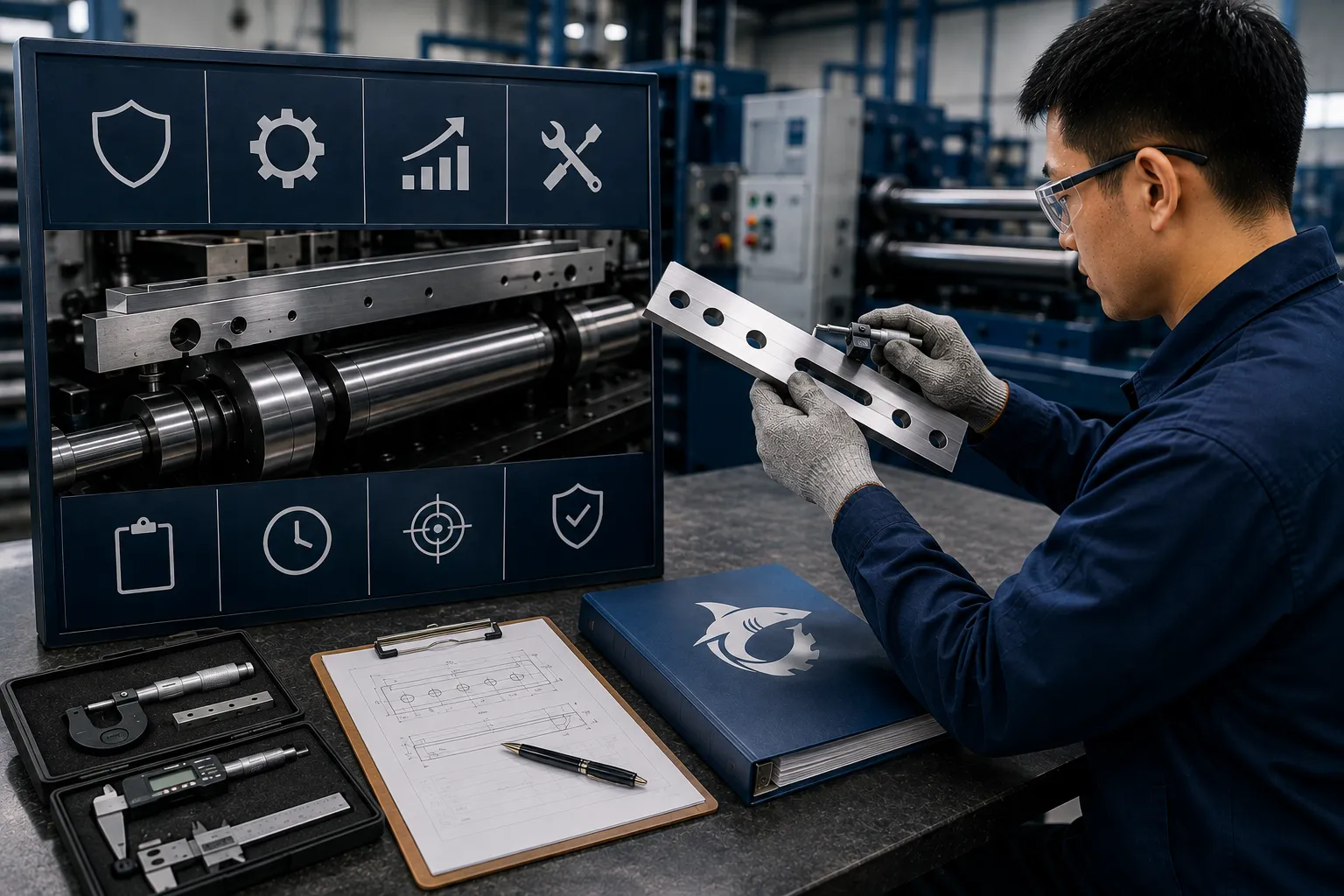
Daily Inspection and Blade Cleaning Protocol
Establishing a disciplined end-of-shift maintenance protocol is essential for protecting precision industrial knife investments. Systematic cleaning, optical micro-edge evaluation, and surface passivation preserve precise edge geometry, eliminate blade-to-material drag, and extend total blade service life across continuous high-speed slitting, shearing, and recycling lines.
Residue Removal & Blade Cleaning Protocol
High-speed web slitting, converting, and plastic recycling operations rapidly accumulate paper dust, hot-melt adhesive buildup, tacky resin deposits, and synthetic polymer residues. Accumulated material increases frictional drag, causes localized thermal expansion, and creates lateral deflection that degrades slit-edge quality.
- Chemical Selection: Apply non-corrosive industrial degreasers or aliphatic hydrocarbon solvents formulated to dissolve adhesive matrices without pitting precision tool steel or tungsten carbide substrates.
- Wiping Technique: Thoroughly wipe surfaces using lint-free microfiber wipes, moving strictly parallel along the blade body and working gently outward toward the primary cutting bevel.
Optical Industrial Knife Inspection
Executing a structured industrial knife inspection at the end of every operational shift catches minor edge degradation before catastrophic blade failure occurs. Early detection of wear zones protects machine arbors and minimizes expensive scrap rates.
- Magnification Protocol: Inspect active shear edges and circular slitter knives bevels under 10x to 50x optical magnification or handheld illuminated inspection loupes.
- Defect Mapping: Audit systematically for micro-chipping, thermal oxidation discoloration, edge radius rolling, or side-face galling marks.
Surface Passivation & Anti-Rust Defense
Ambient plant humidity and airborne chemical vapors rapidly attack exposed steel micro-pores during idle shifts. A dedicated rust protection procedure prevents flash oxidation, preserving razor-sharp bevels between active production runs.
- Protective Application: Coat all exposed metal surfaces with a uniform layer of industrial-grade ISO VG 32 protective oil or a hydrophobic rust inhibitor film.
- Bore & Contact Surface Care: Apply light anti-corrosion oil inside mounting bores and clamping faces to prevent fretting corrosion and maintain keyway accuracy.
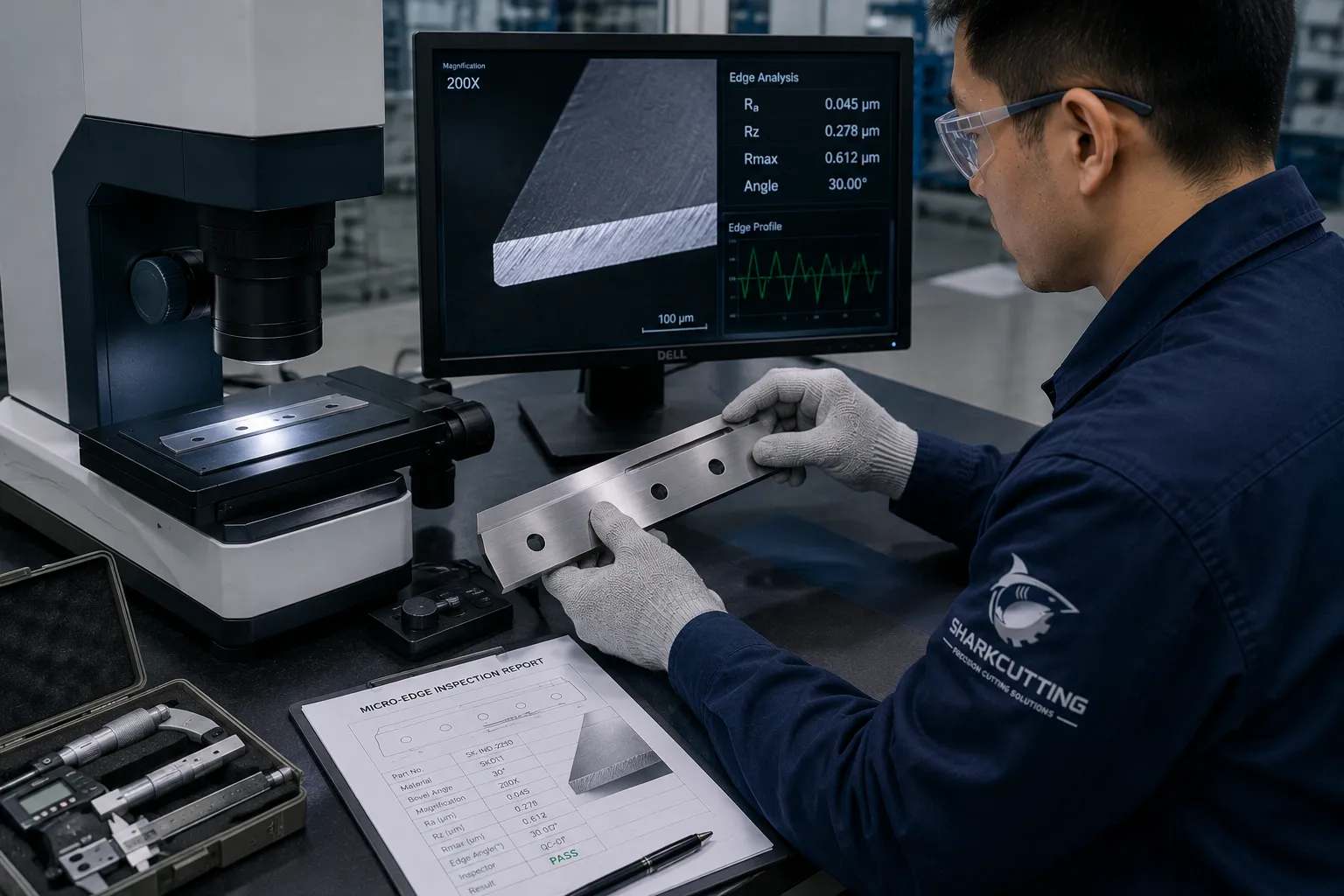
Optical Micro-Edge Evaluation
Standardized optical checking routines verify that ground bevels remain within original operating tolerances before circular slitters or shear blades return to active production tooling assemblies.
Shark Cutting Material Care Standards
Different steel formulations and carbide grades require specific cleaning compounds and protective coatings. Follow our engineered guidelines to protect core tool integrity:
High-Grade Tool Steels (D2, M2, CPM-10V)
Vulnerable to atmospheric humidity. Require neutral pH solvent cleaning followed by continuous hydrophobic oil film protection (ISO VG 32 or equivalent).
Solid Tungsten Carbide Grades
Extremely wear-resistant but vulnerable to binder leaching. Use anhydrous isopropyl alcohol solvents only. Avoid acidic cleaners that erode the cobalt binding matrix.
End-of-Shift Operator Checklist 5 Steps
- Strip adhesive, polymer resin, and fibrous residue from blade surfaces
- Clean bevel surfaces with approved non-corrosive industrial solvent
- Inspect cutting edge under minimum 10x optical magnification
- Apply uniform layer of rust-inhibiting protective oil film
- Secure blades in protective edge sheaths or dedicated storage racks
Preventive Cleaning Specification Matrix
Match daily blade cleaning protocols to specific tooling configurations to avoid micro-chipping, cross-contamination, and atmospheric surface oxidation.
| Tool Configuration | Primary Contaminant | Recommended Solvent | Inspection Focus | Corrosion Defense |
|---|---|---|---|---|
| Circular Slitting Knives | Adhesive slurry, film residue, paper dust | Citrus hydrocarbon or isopropyl alcohol | Lateral wear, side-face scoring, axial runout | Light mineral oil spray (ISO VG 22) |
| Straight Shear Blades | Metal fines, heavy grease, mill scale | Aliphatic industrial degreaser | Micro-chipping along primary shear bevel | Medium protective oil film (ISO VG 46) |
| Rotary Granulator Cutters | Polymer melt, resin buildup, fiber dust | High-purity acetone or polymer stripper | Impact fatigue lines, corner tip rounding | Heavy rust inhibitor barrier coat |
Circular Slitter Knife Regrinding Specifications
High-speed circular slitters in flexible packaging, paper converting, and foil processing require absolute concentricity and strict lateral runout control. For detailed equipment matching, explore our circular slitter knives. Excessive stock removal during industrial blade sharpening reduces overall blade diameter prematurely, while improper wheel dressing creates surface micro-fractures. Precision regrinding must balance minimal stock removal with full restoration of original edge geometry.
- Lateral Runout Limit: Maximum permissible axial/lateral runout post-grind is ≤ 0.005 mm. Exceeding this boundary triggers web weave, edge burring, and severe friction-induced heat.
- Maximum Regrind Allowance: Total stock removal across the knife's service lifecycle must strictly conform to OEM limits—typically 0.3–0.5 mm per face based on outer diameter and metallurgical core depth.
- Bevel Angle Preservation: Grinding angle tolerance must be locked within ±0.5° of factory specification (typically 30°–45° single or double bevel). Dress grinding wheels with a diamond nib prior to initial passes.
- Surface Finish: Slitter bevel and side faces require a polished ground finish of Ra ≤ 0.4 µm. Coarse grind lines act as stress concentration points that foster premature micro-chipping under high shearing loads.
Critical Safety Note: Never utilize glazed or loaded grinding wheels on tungsten carbide or tool steel circular slitters. Localized thermal spikes exceeding 750°C induce severe micro-cracking and catastrophic edge breakdown upon reinstallation.
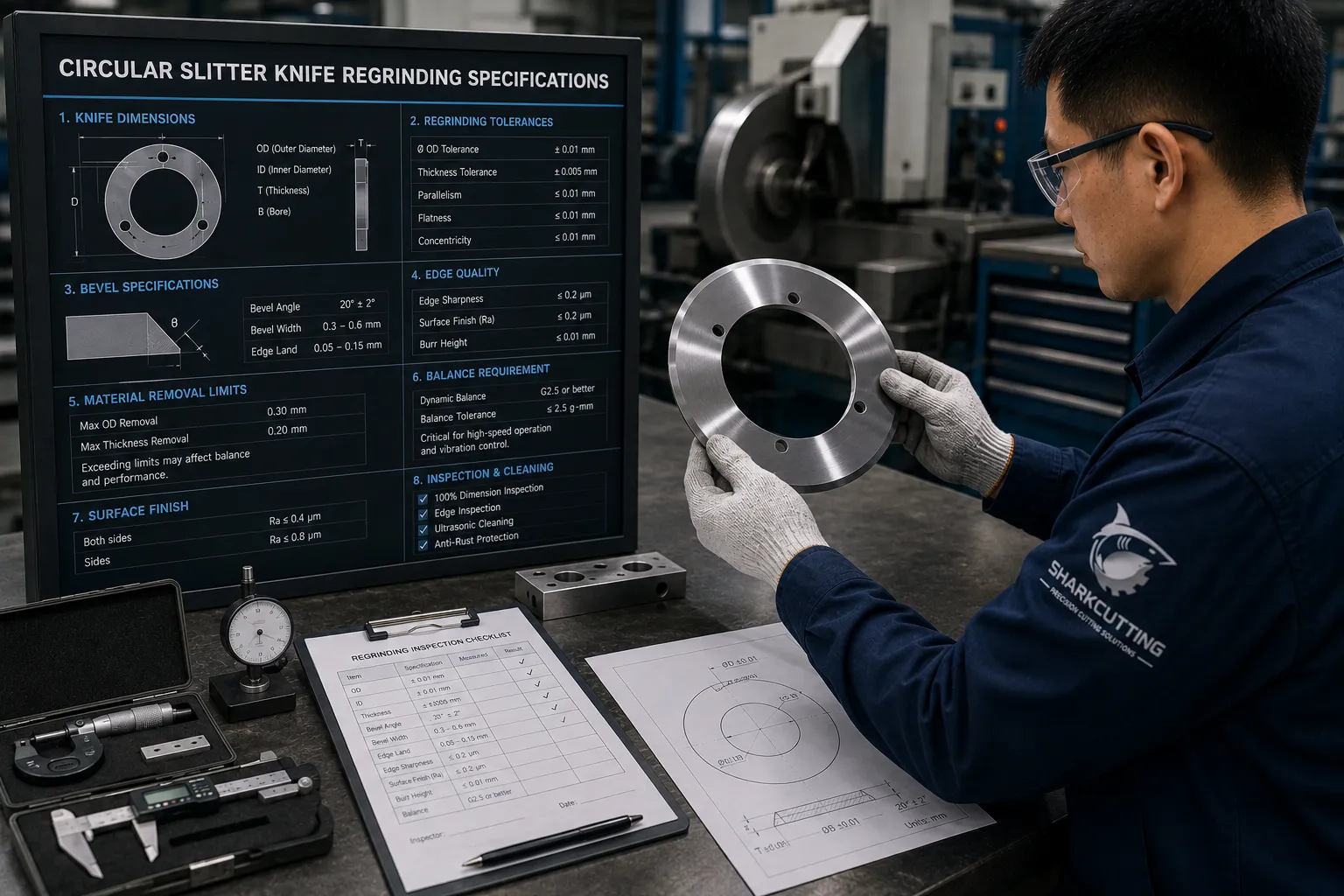
Circular Slitter Tolerance Reference Table
| Parameter | Acceptable Range | Action if Exceeded |
|---|---|---|
| Lateral Runout | ≤ 0.005 mm | Re-dress wheel; recalibrate spindle arbor & regrind side face |
| Grinding Angle Tolerance | ±0.5° from OEM spec | Reset grinding head fixture; verify bevel with optical protractor |
| Ground Face Roughness | Ra ≤ 0.4 µm | Execute final finish pass with fine-grit CBN or diamond wheel |
| Cumulative Regrind Depth | ≤ OEM max (typ. 0.3–0.5 mm/face) | Retire blade; replace with OEM Sharkcutting replacement knife |
Why Grinding Angle Tolerance Matters
A variance of just 1° in grinding angle tolerance can diminish operational blade lifespan by up to 30% in high-speed converted film and foil lines. Maintaining tight angular precision prevents localized edge stress, friction buildup, and inconsistent cut geometries.
Industrial Blade Sharpening Frequency Guidelines
Sharpening cycles vary based on substrate toughness, line speed, and steel grade. Typical baseline intervals: flexible film slitters every 500–800 operating hours; metal shearing blades every 200–400 hours; recycling granulator knives every 100–200 operational hours.
Sharkcutting Quality Inspection Standards
Sharkcutting produces precision industrial knives engineered to tight dimensional tolerances of ≤ 0.002 mm across critical features. Leveraging these internal manufacturing standards provides plant operators with a proven technical foundation for systematic knife maintenance.
Blade Wear Diagnostics and Replacement Timelines
Detecting early cutting failure signs and establishing precise blade replacement timing prevents unscheduled machinery downtime, reduces material scrap, and protects precision arbor tooling across industrial slitting and converting operations.
Standardizing Failure Diagnostics to Maximize Industrial Blade Lifespan
Industrial machine knives operate under extreme friction, mechanical stress, and thermal variation. Over prolonged production runs, micro-wear patterns evolve into systemic cutting defects that degrade finished product tolerances, create heavy material burrs, and jeopardize equipment stability. Differentiating between natural, uniform edge dulling and accelerated premature damage is crucial for maintaining an efficient production environment.
By implementing structured visual inspections and quantitative wear measurements, plant operators can accurately evaluate whether a blade requires simple gap clearance recalibration, precision optical regrinding, or immediate scrap replacement. Sharkcutting supports technical teams with field-tested diagnostic criteria to maximize tooling lifespan without compromising cut quality across specialized setups using paper cutting knives and converting systems.
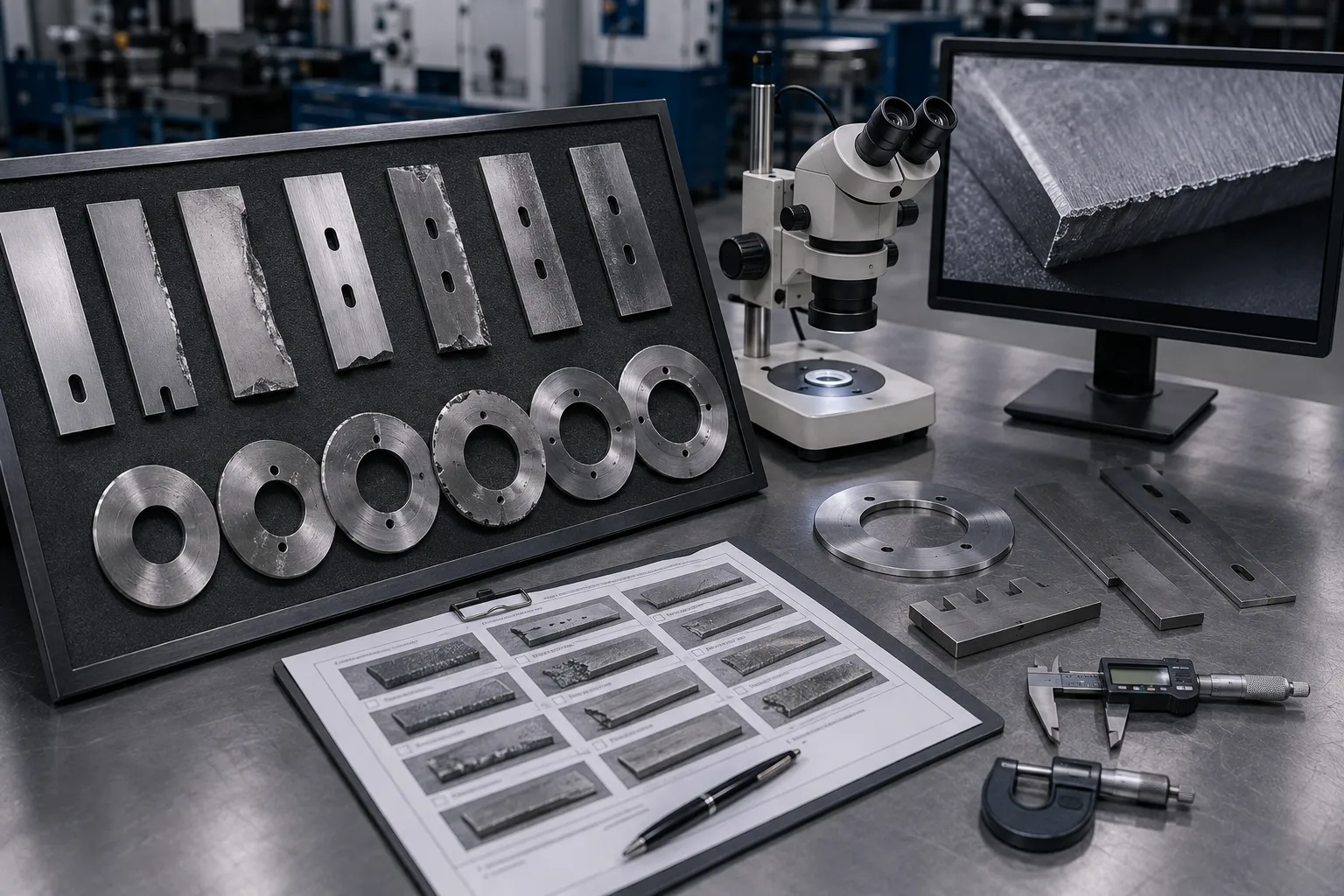
Primary Failure Modes and Corrective Actions
Recognize key operational symptoms on the shop floor and take targeted corrective measures before severe damage occurs.
Excessive Material Burrs or Stringing
Slit edges display rough ridges, fiber fraying, or plastic stringing instead of clean, crisp shear separation.
Micro-Chipping Along Edge
Small notch breakouts or micro-spalling along the keen cutting bevel visible under optical magnification.
Longitudinal Cut Streaks
Continuous parallel score lines or shiny drag marks visible along the web travel direction or blade side faces.
Problem-Cause-Solution Diagnostic Matrix
Use this standardized matrix to troubleshoot cutting failure signs and decide between resharpening and complete tool replacement.
| Observed Defect | Diagnostic Failure Mode | Probable Root Cause | Recommended Action | Lifecycle Decision |
|---|---|---|---|---|
| Edge Roll / Heavy Burr | Radius rounding on cutting edge | Normal abrasive wear or soft tool grade | Verify gap tolerance; schedule standard edge regrind | Regrind |
| Deep Edge Chipping (> 0.5mm) | Fracture along primary bevel | Heavy shock loading or tramp material impact | Measure crack depth against maximum regrind limit | Scrap / Replace |
| Web Dust Accumulation | Micro-flaking & friction heat | Incorrect shear angle or rough bevel finish | Polish bevel face and recalibrate shear angle setting | Recalibrate |
| Unstable Slit Width | Lateral blade deflection | Worn arbor bearings or side face unevenness | Inspect spindle runout; regrind knife mounting faces | Regrind Side |
| Thermal Discoloration | Heat tempering / Blueing | Insufficient coolant or excessive friction drag | Perform hardness test; discard if core hardness drops | Hardness Test |
Operating industrial blades beyond critical dimensional wear thresholds risks structural fracture, arbor damage, and severe equipment failure. When outer diameter loss exceeds 10% of OEM specifications or micro-cracks extend past the designated regrind allowance, immediate replacement is mandatory. Never attempt to regrind structurally compromised tooling.
Tailored Lifecycle Replacement Schedules by Sharkcutting
Every converting and slitting application involves distinct material toughness, production speeds, and web tensions. One-size-fits-all maintenance schedules often cause premature tool retirement or unexpected cut failures.
Sharkcutting engineers collaborate with production facilities to establish customized cutting solutions, tailored maintenance schedules, and optimal tool steel selection for high-demand lines including specialized packaging machine knives. Reduce your total cost of ownership while maintaining tight dimensional tolerances shift after shift.
- Custom Tooling & Carbide Selection
- Precision Resharpening Standards
- Lifecycle Cost Optimization
- Technical Application Support
Need Diagnostic Guidance?
Consult with Sharkcutting technical specialists to evaluate wear patterns and optimize blade lifecycle schedules.
Safe Storage and Logistics Protocol for Physical Asset Protection
Improper warehouse storage and unshielded transit represent two of the most frequent causes of premature industrial blade degradation. Micro-chipping along keen cutting edges, surface oxidation, and axial warping can turn high-precision tooling into costly scrap before it ever mounts a machine arbor. Establishing a disciplined safe blade storage protocol and implementing rigorous corrosion prevention measures safeguards original manufacturing tolerances and extends overall machine knife utility. Sharkcutting integrates military-grade packaging engineering with strict facility storage standards to guarantee every cutting tool maintains factory-fresh precision from production floor to installation. For specialized applications, our full range of high-performance slitting knives provides the exact geometry and tolerances needed for demanding production lines.
Edge Shielding and Mechanical Protection
Industrial cutting edges honed to micron-level accuracy are extremely fragile when left exposed. Minor contacts with steel racking, adjacent tooling, or transport containers instantly cause micro-chipping and edge dulling.
- HDPE Perimeter Channels: Snap high-density polyethylene edge guards onto circular slitter knives prior to any transport or storage.
- Hardwood Sheath Enclosures: Store long shear blades inside custom-fitted hardwood sheaths lined with non-abrasive felt padding.
- Zero-Touch Clamping Systems: Secure tooling bodies with mechanical fixtures that keep functional bevels entirely untouched.
Prevents edge micro-chipping and eliminates unnecessary early regrinding cycles.
Environmental Control and Corrosion Prevention
Uncontrolled humidity and ambient temperature swings rapidly trigger iron oxidation on high-alloy tool steels. Surface pitting destroys cutting edge geometry and weakens the structural integrity of precision blades.
- Climate Thresholds: Maintain warehouse temperatures between 15–25°C (59–77°F) with relative humidity strictly held below 50%.
- VCI Vapor Inhibitors: Wrap idle knives in Vapor Corrosion Inhibitor paper to establish an active molecular barrier against oxidation.
- Chemical Isolation Protocol: Store cutting tools far from airborne acids, damp wash bays, and industrial processing vapors.
Stops atmospheric rust formation and preserves original steel chemical integrity.
Stacking Orientation and Storage Racking
Stacking heavy industrial knives directly face-to-face leads to deep surface scuffing, uneven stress distribution, and severe axial runout distortion. Correct spatial alignment is critical to maintaining blade parallelism.
- Vertical Arbor Suspension: Hang circular slitters vertically on padded arbor posts to prevent lateral sagging and dishing.
- Partitioned Wooden Crates: Store large straight blades and heavy-duty shear slitting knives in dedicated wooden crates using rubber or polyurethane dividers.
- Strict No-Flat Stacking Directive: Never place unseparated heavy knife faces directly on top of one another.
Eliminates axial runout warping and ensures sub-micron slitting parallelism.
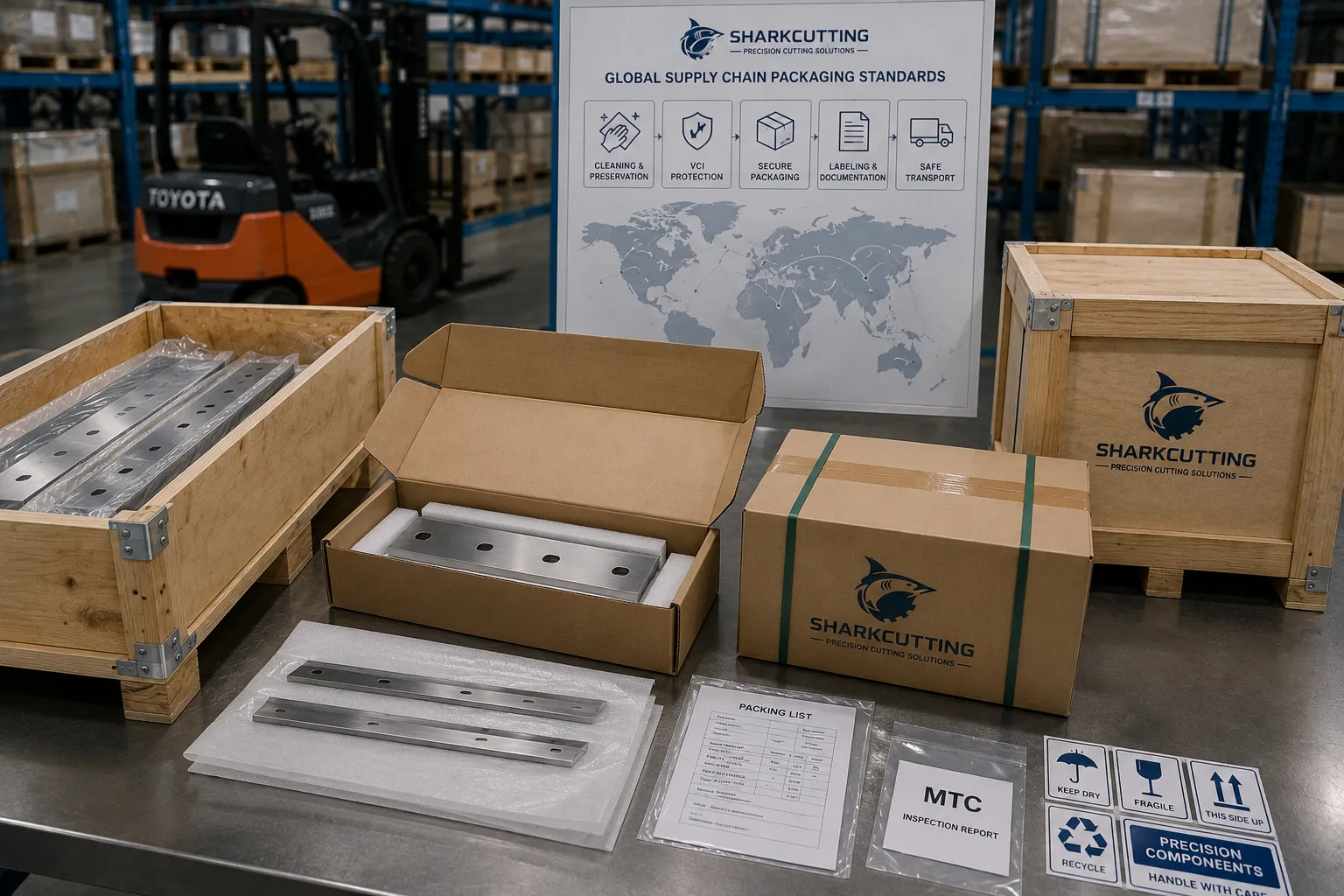
Sharkcutting Global Supply Chain Packaging Standards
Every precision tool leaving Sharkcutting manufacturing facilities undergoes a comprehensive export-grade preservation protocol. We combine micro-thin rust-preventative oil coatings, VCI vacuum-sealed moisture barrier bags, and custom-engineered ISPM 15 heat-treated wooden crates. Whether shipping domestically or across oceans, our multi-layer packaging ensures your industrial blades arrive in pristine, factory-fresh condition.
ISPM 15 Certified Crates
Heat-treated export packaging approved for international freight
VCI Vacuum Sealed Bagging
Hermetic moisture barrier preventing humidity exposure
Warehouse Environmental Specifications & Maintenance Schedule
Follow this technical storage matrix to ensure compliant climate control, surface preservation, and inspection frequencies for various tool steel and carbide material grades.
| Tooling Material Class | Target Temperature | Max Relative Humidity | Required Surface Coating | Inspection Interval |
|---|---|---|---|---|
| High-Speed Steel (HSS / D2 / M2) | 18°C – 24°C (64°F – 75°F) | < 45% RH | Industrial Anti-Rust Oil + VCI Film Wrap | Bi-Weekly |
| Solid Tungsten Carbide | 15°C – 25°C (59°F – 77°F) | < 55% RH | Light Hydrocarbon Spray + HDPE Guard | Monthly |
| Stainless & High-Chromium Alloys | 15°C – 28°C (59°F – 82°F) | < 50% RH | Synthetic Protective Lubricant Layer | Monthly |
| TiN / DLC Coated Tooling | 18°C – 24°C (64°F – 75°F) | < 40% RH | Non-Acidic Precision Instrument Oil | Bi-Weekly |
Safety Alert: Handling Personnel PPE & Transport Protocol
Industrial machine knives present acute laceration and crush hazards during unpacking, inspection, and rack transfer. Facility personnel and maintenance technicians handling exposed blades must wear ANSI/ISEA Level A5 (or higher) cut-resistant gloves, protective arm sleeves, and steel-toe footwear. For circular slitter blades exceeding 15 kg (33 lbs) or straight shear knives over 1 meter (3.3 ft) in length, mandatory mechanical hoist slings and two-person tandem lifting procedures must be strictly enforced.
Interactive Industrial Blade Maintenance ROI Calculator
Quantify your operational yield improvements and tooling cost reductions across high-performance industrial machine knives. Use our interactive ROI calculator to estimate annual blade savings, downtime reductions, and overall cost-per-cut optimization achieved through structured maintenance protocols.
Facility Operational Inputs
Adjust the parameters below to estimate potential annual tooling savings, downtime reduction, and blade-life improvement.
Estimates are based on Sharkcutting's Total Cost of Ownership (TCO) Framework . Actual savings depend on substrate abrasiveness, machine condition, cutting speed, blade geometry, and maintenance practices.
Estimated reduction in emergency blade changes, premature dulling, and unplanned maintenance events.
Includes blade wear analysis and personalized TCO recommendations.

Enterprise Total Cost of Ownership Audits
Fixed replacement schedules often ignore actual blade wear patterns, leading to premature knife disposal and unnecessary capital expenses. Sharkcutting equips high-volume manufacturers with wear diagnostics, precision regrinding, and custom alloy selection—whether optimizing converting operations with heavy-duty paper cutting knives or custom slitting systems—to minimize your total cost per cut.
Expert Industrial Knife Maintenance FAQ
Field-tested answers to critical blade maintenance, precision resharpening, and material care questions — backed by Sharkcutting's industrial knife manufacturing expertise.
Solid Tungsten Carbide (TC) and High-Speed Steel (HSS) machine knives demand distinct blade maintenance tips and sharpening procedures due to their divergent hardness, grain structure, and thermal sensitivity.
Solid Tungsten Carbide Blades
- •Grinding Media: Exclusively requires diamond grinding wheels (resin-bond, 220–400 grit). Standard abrasives cause micro-fractures along the cutting bevel.
- •Cleaning Solvents: Use pH-neutral degreasers. Strongly alkaline chemical cleaners leach the cobalt binder matrix, causing micro-pitting and edge failure.
- •Inspection Protocol: Inspect under 40× optical magnification for micro-chipping. Carbide lacks ductility and fractures under sudden impact or misalignment.
- •Regrind Limit: Typically allows 5–8 precision resharpening cycles before dimensional specs require complete blade replacement.
High-Speed Steel (HSS) Blades
- •Grinding Media: Ideal for CBN (Cubic Boron Nitride) or aluminum oxide wheels. Requires flood coolant to prevent temper softening above 550°C (1022°F).
- •Cleaning Solvents: Compatible with industrial degreasers. Apply a light rust-inhibiting oil coat immediately after cleaning to prevent surface oxidation.
- •Inspection Protocol: Check for thermal discoloration (blue or straw tinting) along the edge, which signals permanent hardness loss.
- •Regrind Limit: Tolerates 10–15 regrind cycles due to higher impact toughness and fracture resistance compared to solid carbide.
Critical Maintenance Tip: Never share grinding wheels between carbide and steel knives. Cross-contamination of abrasive particles embeds steel debris into carbide or dulls diamond wheels prematurely.
Building a Sustainable Blade Maintenance Program
Resolving immediate technical questions is only the foundation of operational efficiency. Industrial processing plants achieve peak productivity by transitioning from reactive knife replacement to a structured, predictive blade maintenance framework.
Operating industrial slitting equipment, shears, or granulators until noticeable edge degradation occurs leads to costly secondary damage. Worn knives increase burr formation, strain drive motors, cause web breaks, and rapidly degrade mating components like anvil rolls and counter-knives.
A standardized maintenance protocol — combining scheduled inspection logs, microscopic wear tracking, precise resharpening allowances, and rust-inhibiting storage — extends blade lifespan by up to 35% while keeping slitting tolerances consistently within ±0.002 mm.
Whether operating circular slitter blades in flexible packaging, straight shear knives in steel service centers, or heavy-duty granulator blades in plastics recycling, adhering to proven industrial knife maintenance practices minimizes total cost of ownership (TCO) and protects your bottom line.
Need Application-Specific Guidance?
Sharkcutting's industrial blade specialists provide direct engineering support for custom maintenance protocols, resharpening specifications, and substrate matching.
- 24-hour technical response rate
- Customized regrind specifications
- Global supply and field support
Experiencing Accelerated Tool Wear? Request an Expert Blade Diagnostic
Send us details or images of your worn cutting edges on any industrial machine knives. Sharkcutting application engineers will analyze your failure modes and deliver a customized maintenance strategy within 24 hours.
Dedicated technical blade support tailored for high-wear, high-precision industrial applications.
Data-driven custom knife maintenance protocols designed to extend blade lifespan and lower operational costs.
Metallurgical guidance and regrinding parameter optimization from seasoned toolmaking specialists.
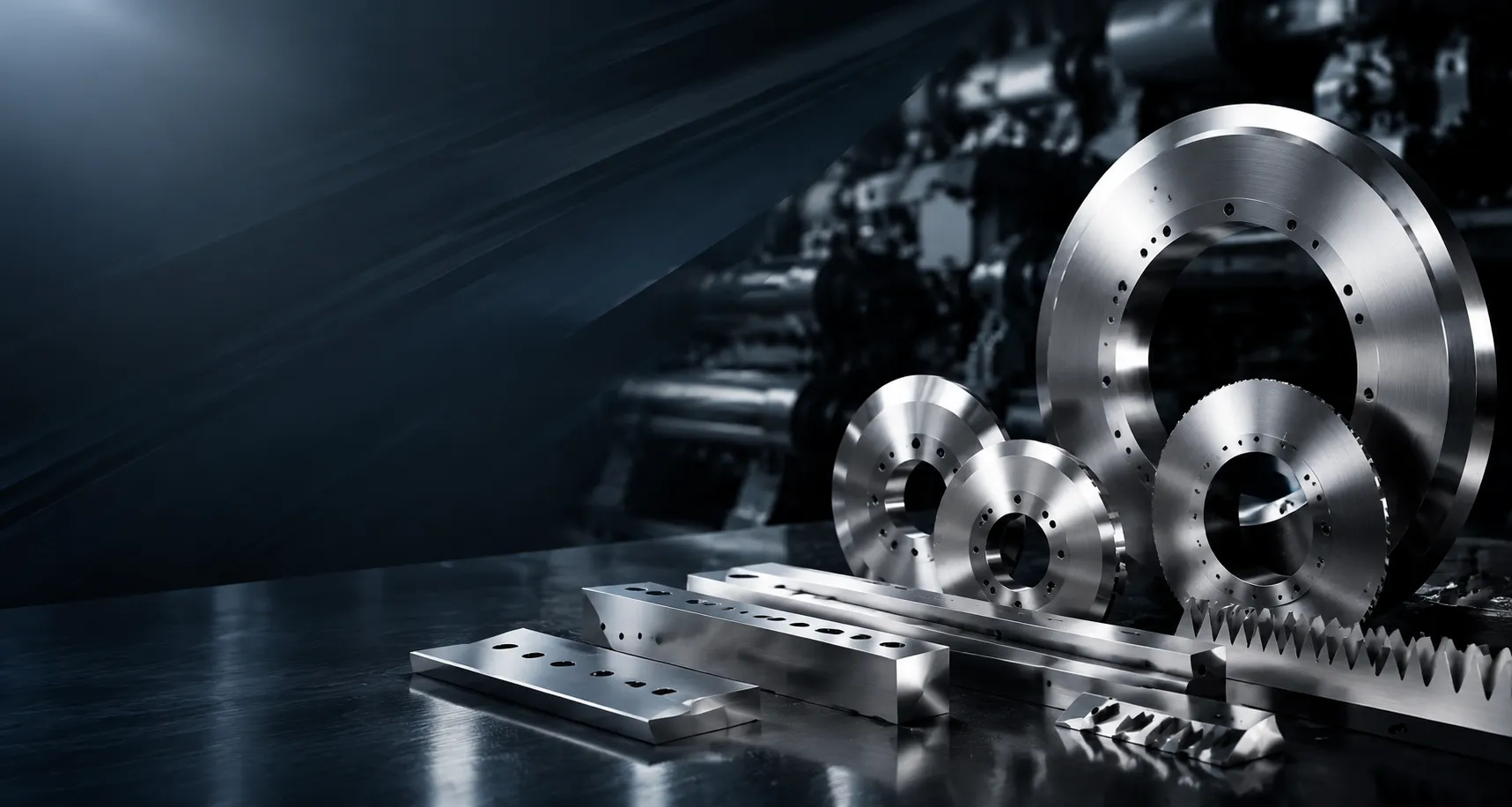
Comprehensive Industrial Blade Maintenance Whitepaper covering packaging machine knives included with every request.
Request Technical Consultation
Receive a custom diagnostic evaluation from our engineering team within 24 hours.
Submitting triggers an instant download link to our Maintenance Whitepaper.
We value your privacy. All technical specifications and parameters remain strictly confidential.