
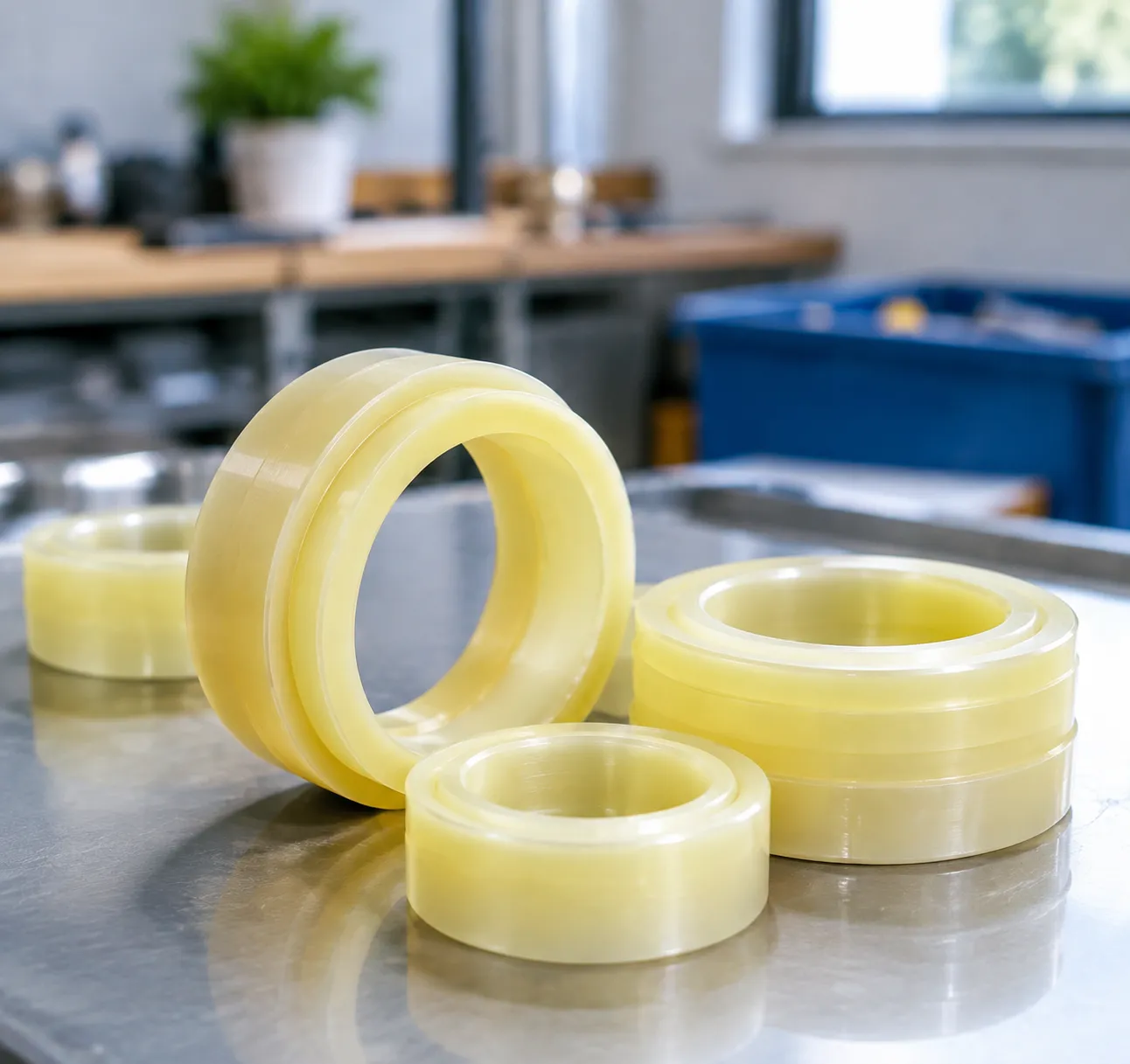
Formula details
Product Details
Overview
Precision Slitter Ejector Rings: Overview & Operating Principle
In high-speed coil slitting lines, precision cutting performance depends not only on the sharpness of the rotary knives but also on continuous dynamic strip management. We engineer our slitter ejector rings (also known as stripper rings) to work in direct synergy with rotary slitter knives and spacers, delivering positive material ejection, stable pass-line control, and total surface protection across all metal slitting operations.
The Critical Role of Ejector Rings in Rotary Slitting
Mounted on the slitter arbor directly alongside the rotary blades, ejector rings execute vital mechanical functions during continuous slitting:
- Strip Ejection Mechanics: As rotary knives overlap to shear incoming coil stock, our elastomeric ejector rings compress under cutting pressure and dynamically rebound. This continuous push forces slit strands instantly clear of the knife overlap zone, preventing material from wedging between adjacent blades.
- Pass-Line Control & Coil Support: By providing uniform support underneath and above the strip directly at the point of shear, the rings maintain a flat, stable pass line across the entire arbor width.
- Eliminating Edge Deformities & Entanglement: Controlled ejection prevents narrow strips from twisting, bowing, or climbing the knife face, eliminating strip tear-offs and catastrophic arbor jams at elevated line speeds.
Surface Protection & Defect Prevention
Surface critical metals require zero-defect handling through the entire slitter head. Our stripper tooling is specifically formulated to safeguard sensitive materials:
- Non-Marking Contact Surfaces: Specially compounded elastomers ensure clean contact on automotive exposed panels, architectural alloys, painted metals, and bright polished finishes without scuffing, oil transfer, or optical marking.
- Cushioning Against Localized Pressure Spikes: Controlled elastomeric deflection absorbs mechanical shock at the strip edge, distributing clamping forces evenly and preventing burr transfer or edge pinch marks.
Product Types & Structural Configurations of Slitter Ejector Rings
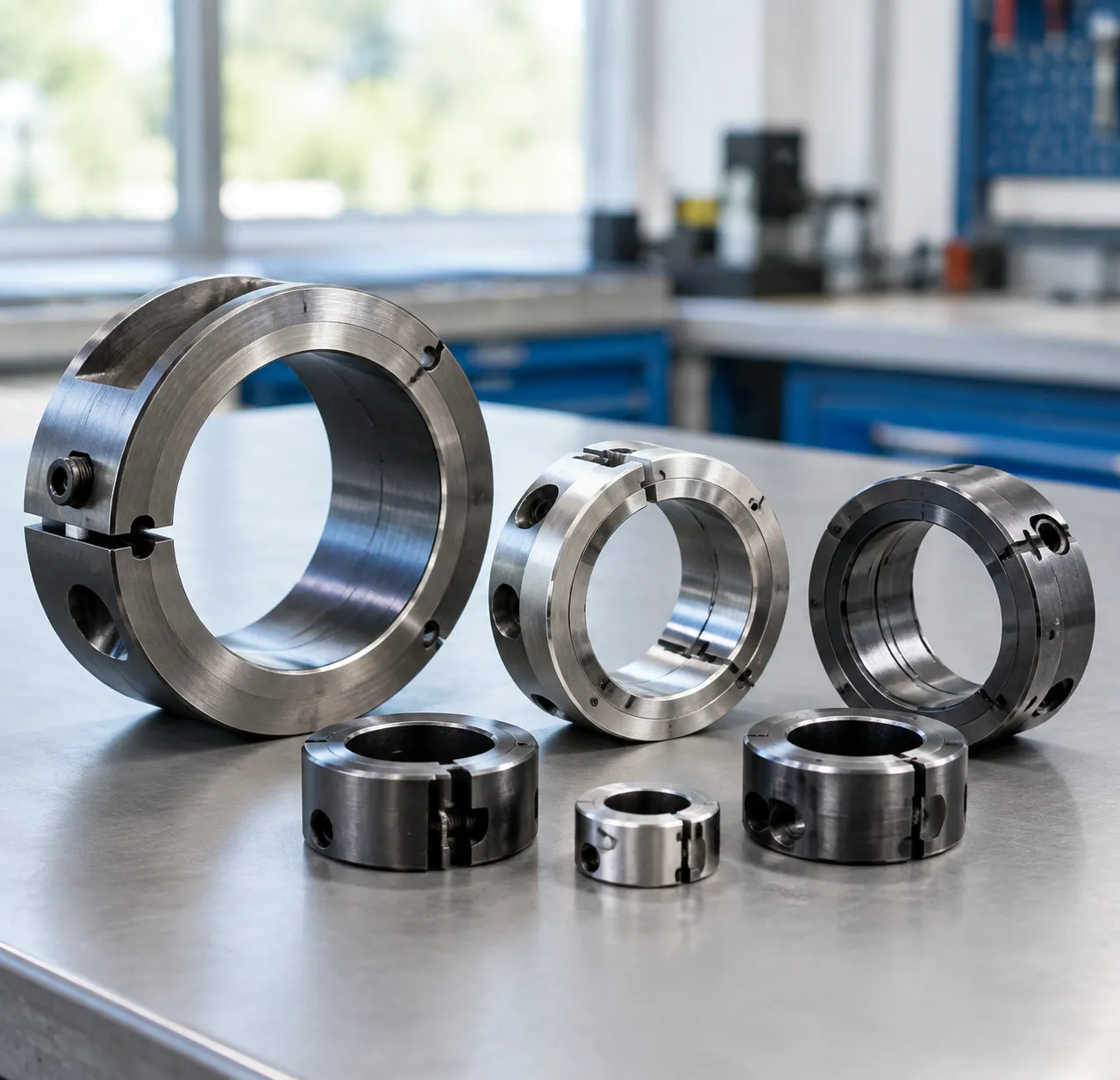
Steel-Core Bonded Ejector Rings
- Construction: High-tensile alloy steel core with vulcanized elastomer permanently bonded directly to the outer diameter.
- Key Advantages:
- Maximum Lateral Stability: Resists axial deflection under heavy side-load cutting forces.
- Zero Axial Slip: Eliminates slippage and bore wear on high-speed slitting arbors.
- Tight Concentricity Tolerances: Precision-ground outer diameters ensure vibration-free rotation at high line speeds.
- Extended Service Life: Durable vulcanization prevents delamination under heavy continuous loads.
- Recommended Applications: Heavy-gauge coil slitting, high-speed processing lines, and precision narrow-strip jobs working alongside our coil slitter knife for precise metal cutting.
Single-Piece Loose Rubber Ejector Rings
- Construction: Solid molded elastomeric ring designed for fast, direct slip-on arbor mounting.
- Key Advantages:
- Cost-Effective Tooling: Economical baseline option for standard slitting lines.
- Quick Setup Flexibility: Simple installation and rapid repositioning across arbor setups.
- Dynamic Deflection: High radial elasticity provides gentle support across varying strip thicknesses.
- Recommended Applications: Light-to-medium gauge coil processing, secondary arbor support setups, and operations requiring frequent width adjustments.
Dual-Durometer & Grooved Specialty Rings
- Dual-Layer Design: Combines a high-durometer rigid base for arbor stability with a softer outer contact lip to cushion delicate strip finishes and eliminate surface marking.
- Functional Groove Patterns: Engineered with directional surface grooves that channel away flood coolants, slitting oils, and metal fines, preventing hydroplaning and strip slippage during wet cutting runs.
Material Formulations & Durometer Selection Guide
Matching the right elastomer compound and hardness to your coil specifications prevents strip marking, premature ring wear, and edge defects. We engineer our slitter ejector rings from application-specific polymers formulated to handle distinct mechanical loads, lubrication environments, and coil surface requirements alongside our slitter blade material options.
High-Performance Elastomer Formulations
- Polyurethane (PU): Offers maximum load-bearing capacity, high cut and tear resistance, and outstanding abrasion resistance. It is the preferred choice for dry or lightly lubricated slitting lines requiring extended tooling life under high continuous pressure.
- Nitrile Butadiene Rubber (NBR / Perbunan): Delivers superior resistance to synthetic oils, rolling lubricants, and aggressive flood coolants. NBR provides rapid, consistent rebound dynamics, preventing strip drag during high-speed wet processing.
- Specialty Compounds (EPDM / Neoprene / Silicone): Formulated for thermal stability and non-marking strip contact. These compounds prevent surface contamination on sensitive electrical silicon steels and non-ferrous metals.
Shore A Hardness & Color-Coding Standardization
We standardize hardness ranges using color-coded durometers to streamline tooling setups, eliminate arbor assembly errors, and ensure uniform knife-to-ring pressure distribution across every run.
| Shore Hardness | Color Code | Target Metal & Gauge | Primary Operating Characteristics |
|---|---|---|---|
| 50–60 Shore A | Yellow / Green | Thin foil, soft aluminum, light-gauge strip | Ultra-soft contact, zero-scuff surface protection, high elasticity |
| 70–80 Shore A | Red / Blue | Standard cold-rolled steel, stainless steel, medium copper/brass | Balanced rebound resilience, cut resistance, all-around line stability |
| 85–95 Shore A | Black / Brown | Heavy-gauge structural steel, high-strength alloys | Maximum compression resistance, positive strip ejection, minimal deflection |
Engineering Specifications & Manufacturing Tolerances
Tight tolerance control is essential for maintaining dynamic balance, uniform strip clearance, and vibration-free rotation across the slitter arbor. We manufacture our slitter ejector rings to micrometer-level precision, ensuring seamless stacking alongside precision top and bottom slitter knives and tooling setups.
Dimensional Capability Matrix
| Parameter | Standard Range / Specification | Manufacturing Precision |
|---|---|---|
| Arbor Bore Diameter (ID) | 50 mm to 400 mm+ (2" to 16"+) | Precision bore fit for secure arbor mounting |
| Outer Diameter (OD) | Engineered per knife OD and penetration depth | Machined concentric for smooth strip ejection |
| Width Parallelism | Matched to tooling arbor stackup | Ground parallel within ±0.002 mm (±0.00008") |
| Total Indicated Runout (TIR) | Full radial & axial concentricity control | < 0.01 mm to eliminate high-speed chatter |
Our precision ground side faces ensure perfect axial alignment when stacked against hardened slitter knife spacers, preventing localized pressure peaks and strip tracking drift.
Steel Core Quality & Vulcanization Standards
- Heat-Treated Alloy Steel Cores: Machined from high-tensile alloy tool steel to withstand repeated arbor clamping cycles, preventing bore expansion, keyway distortion, and premature core fatigue.
- High-Shear Chemical Bonding: Steel-core bonded stripper rings utilize high-grade vulcanization bonding agents, ensuring the elastomer will not peel, slip, or delaminate under aggressive edge-trimming forces or high continuous line speeds.
Material Processing Compatibility for Slitter Ejector Rings
- Carbon Steel & Galvanized Sheet:
- Operational challenge: Zinc buildup, coating rub-off, and heavy surface friction.
- Our solution: Specially compounded polyurethane and nitrile stripper rings prevent zinc pickup and resist oil absorption, eliminating surface tracking and coating disruption across long production runs.
- Stainless Steel & High-Strength Alloys:
- Operational challenge: Extreme cut forces, severe edge burrs, and high mechanical deflection.
- Our solution: High-durometer steel-core bonded ejector rings that provide rigid strip ejection. When running alongside heavy-duty sheet metal slitter knives, these rings withstand localized compression spikes without chunking, tearing, or permanent plastic deformation.
- Aluminum & Copper Non-Ferrous Alloys:
- Operational challenge: Surface scratching, gouging, and cosmetic marring on mirror, bright, or pre-painted finishes.
- Our solution: Softer, anti-marking rubber ejector rings with ultra-smooth contact faces that deliver gentle, uniform support with zero scuffing or color transfer.
- Silicon Steel & Electrical Sheets:
- Operational challenge: Edge deformation, magnetic property loss, and micro-stress along the slit edge.
- Our solution: Precision-ground arbor stripper rings providing consistent pass-line tension and vibration-free strip guidance, maintaining exact slit geometry and magnetic integrity.
Manufacturing Advantages & Custom Tooling Integration
Our engineering approach focuses on eliminating arbor vibration, tooling misalignment, and surface defects through tight production control and full tooling compatibility.
- Batch-to-Batch Durometer Consistency: We enforce strict curing and vulcanization parameters, ensuring exact Shore A hardness consistency across single rings and complete multi-ring sets with zero durometer drift.
- Mirror-Finished Side Faces: Contact faces are ground to ultra-tight parallelism and mirror finishes. This guarantees true axial clamping and zero wobble when stacked tight against precision rotary slitter knives and spacers.
- Full Slitting Assembly Synergy: Our slitter ejector rings are engineered to integrate seamlessly into complete arbor setups alongside precision rotary blades, lightweight spacers, and specialized custom machine knives to optimize strip guidance.
- Rapid Custom Turnaround: We provide fast prototype-to-production turnaround for non-standard arbor bores, customized outer diameters, and specialized core configurations to minimize production downtime.
Custom RFQ Guide: Ordering Slitter Ejector Rings
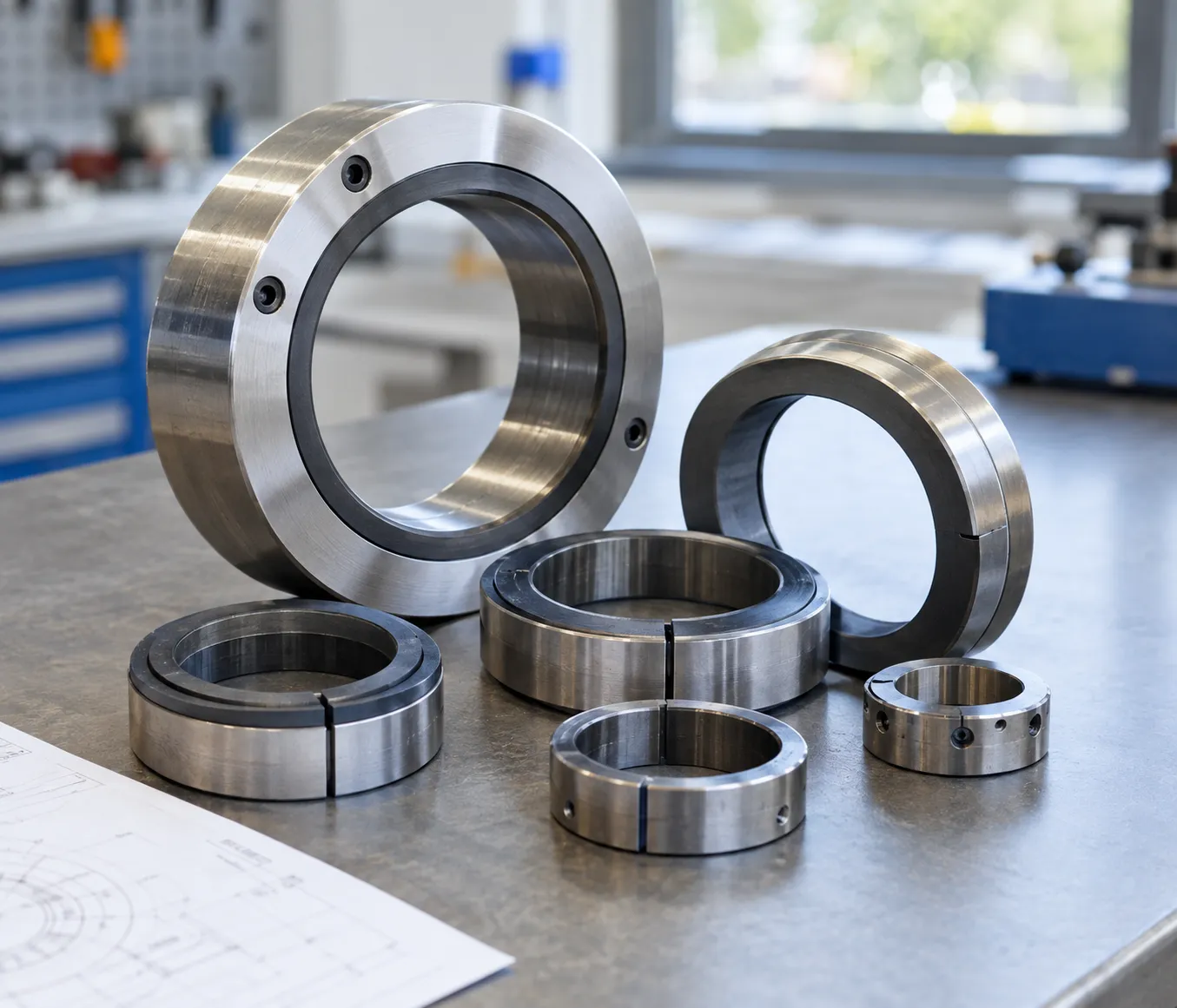
Ordering the right slitter ejector rings requires accurate line data to prevent strip twist, surface marking, and unplanned downtime. When requesting a quote, our engineering team uses your exact arbor dimensions, strip properties, and operating setup to configure both single-piece loose rubber rings and steel core bonded stripper rings.
Essential RFQ Technical Parameters
| Specification Category | Required Input Data | Engineering Impact |
|---|---|---|
| Bore Dimensions (ID) | Exact arbor diameter (+ tolerance) | Ensures a snug, concentric slide fit without axial wobble or shaft slippage. |
| Outer Diameter (OD) | Finished ring OD relative to knife diameter | Controls strip deflection, penetration clearance, and positive strip ejection. |
| Width Profile | Total width and steel core width | Guarantees side-face parallelism and seamless stacking alongside precision spacers. |
| Durometer (Shore A) | 50A to 95A (or target color code) | Matches required strip ejection force without localized pressure marks on delicate coils. |
| Elastomer Type | Polyurethane (PU), NBR, EPDM, Neoprene | Dictates cut/tear strength, chemical resistance, and rebound behavior under load. |
| Coil Material & Gauge | Metal type, tensile strength, thickness range | Defines the required ring compression resistance and anti-marking formulation. |
| Operating Speed | Target line speed (m/min or FPM) | Affects dynamic heat buildup and bonding integrity under high-speed cycling. |
| Lubrication Conditions | Dry, light mist, flood coolant, or stamping oils | Determines elastomer compound selection to prevent oil swelling or premature softening. |
Technical Checklist for Custom Tooling Inquiries
- Dimensional drawings or sample specs: Provide exact ID, OD, and face thickness tolerances for loose or bonded rings.
- Core condition (for bonded styles): Specify whether you require complete new steel-core assemblies or need relining on existing tool steel cores.
- Special ring features: Indicate if your slitting line requires dual-durometer constructions, specialized oil-drainage grooves, or non-marking compounds for automotive-grade surfaces.
- Arbor setup verification: For non-standard line configurations or specialized strip alloys, our team provides custom prototype testing to validate durometer performance and dimensional tolerances prior to full production runs.
Frequently Asked Questions: Slitter Ejector Rings & Stripper Tooling
How do I calculate the correct OD for slitter ejector rings relative to the slitter knife diameter?
The outer diameter (OD) of a slitter ejector ring must correspond to the knife diameter, material gauge, and knife penetration (overlap). As a general rule:
Operating Height: The ring OD should sit flush with or slightly above the cutting pass-line when under compression to ensure clean strip discharge without pinching.
Knife Regrind Compensation: As slitter knives are reground, you must step down ejector ring diameters accordingly. Pairing your setup with a high-precision tungsten carbide slitter knife minimizes regrind frequency and keeps your ejector ring height calculations stable over longer production runs.
When should I specify bonded stripper rings over loose rubber rings?
Choose your ring structure based on line speed, material gauge, and arbor stability requirements:
| Operational Parameter | Steel-Core Bonded Stripper Rings | Single-Piece Loose Rubber Rings |
|---|---|---|
| Line Speed | High speed (> 300 m/min) | Low to medium speed |
| Material Gauge | Heavy gauge & high-tensile alloys | Light to medium gauge & foil |
| Arbor Grip | Zero axial slip; high lateral stability | Relies on friction fit; faster swap |
| Tolerances | Tightest concentricity (< 0.01 mm TIR) | Standard elastomer tolerance |
| Changeover Time | Standard tooling setup | Rapid manual installation |
How does oil and coolant exposure affect polyurethane vs. NBR ejector rings?
- Polyurethane (PU): Delivers superior cut resistance, high load-bearing capacity, and exceptional wear life in dry slitting or light oil-mist environments. However, direct exposure to aggressive flood coolants or high-pH water-based fluids can cause hydrolytic degradation over time.
- Nitrile (NBR / Perbunan): Engineered specifically for flood-lubricated and heavy-oil slitting lines. NBR maintains its Shore A durometer and dimensional stability without swelling, softening, or chemically degrading when saturated with cutting fluids.
What are the signs of ejector ring fatigue that indicate replacement is needed?
Inspect slitter ejector rings during regular arbor teardowns. Replace rings immediately if you notice:
Compression Set: The elastomer fails to return to its original outer diameter, resulting in improper pass-line lift and material jamming.
Edge Chipping & Grooving: Deep cuts or missing chunks along the contact face from sharp metal edges.
Surface Glazing or Hardening: Loss of elastic compliance leading to scuffing, pressure marks, or scratch defects on sensitive coil surfaces.
Core Delamination: Any separation along the vulcanized seam between the rubber and the inner steel core.
Can existing steel cores be re-rubbered or recovered to reduce tooling costs?
Yes. If your steel cores meet our dimensional runout, parallelism, and arbor bore tolerance specifications, we can strip the degraded elastomer, clean and prepare the core surface, and re-vulcanize fresh NBR or polyurethane coatings to original factory tolerances. This significantly lowers ongoing rotary slitting tooling replacement costs.