
Formula details
Product Details
Overview
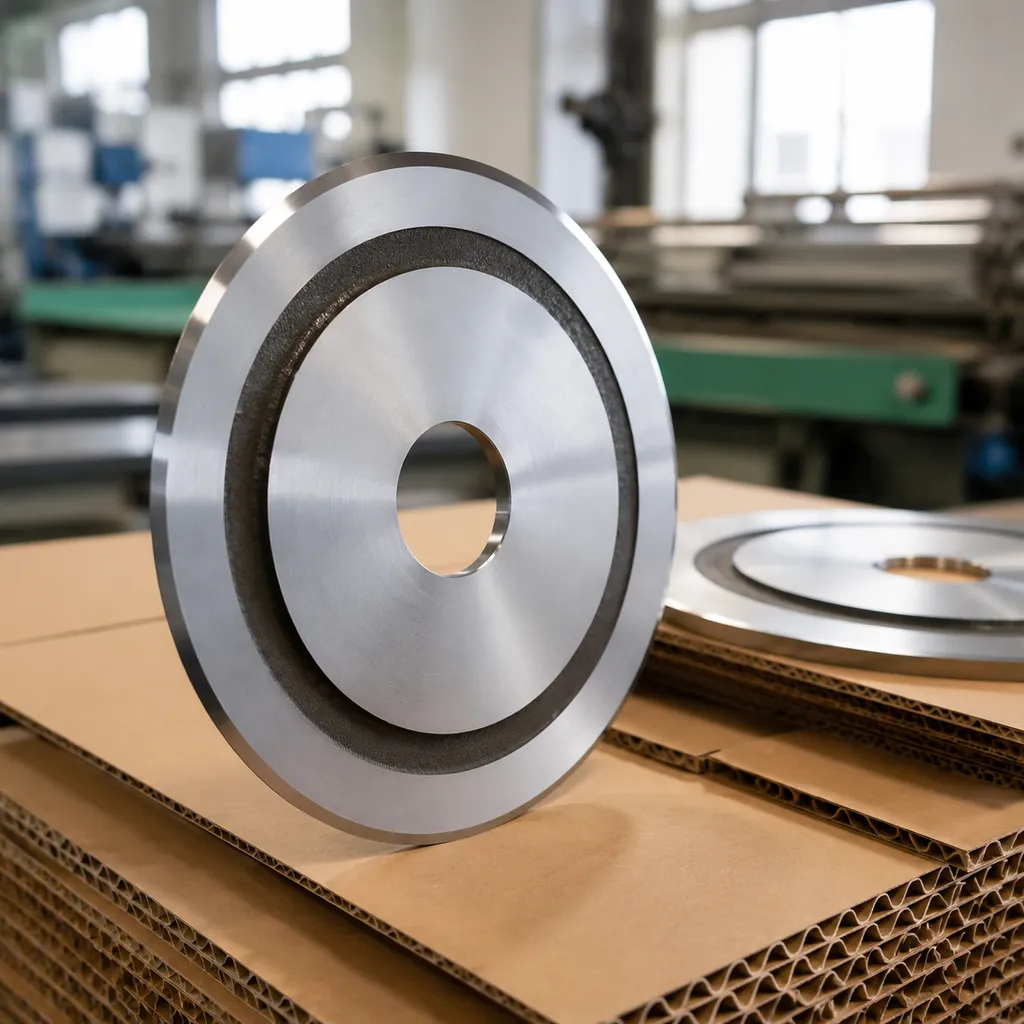
Corrugated Slitting Knife Machine Compatibility & Specs
OEM Compatibility Matrix
Our corrugated paper slitting knife solutions fully integrate across all major original equipment manufacturing platforms:
- BHS Corrugated (Direct BHS slitting blade replacement units)
- Fosber (High-speed Fosber corrugator knife series)
- MarquipWardUnited
- Mitsubishi Heavy Industries
- Agnati
- TCY & Isowa
- Peters & Langston
Dimensional Specifications
| Technical Parameter | Specification Range | Mounting Characteristics |
|---|---|---|
| Outer Diameter (OD) | 200 mm to 350 mm | Precision-ground cutting edge |
| Inner Diameter (ID) | Custom engineered | Keyed, multi-pinhole, or straight bores |
| Blade Thickness | 1.1 mm to 1.5 mm | Ultra-thin profile for burr-free cuts |
Standard OEM Cross-Reference
| Target OEM Line | Standard Dimensions (OD x ID x Thickness) | Primary Application |
|---|---|---|
| BHS | 240 mm x 32 mm x 1.2 mm | Continuous thin-blade slitter scorer |
| Fosber | 230 mm x 110 mm x 1.1 mm | Automatic order-change slitter |
| Marquip | 260 mm x 114.3 mm x 1.2 mm | High-speed paper converting |
| Mitsubishi | 280 mm x 160 mm x 1.4 mm | Rotary corrugated carton cutting knives |
| Custom / Universal | 200 mm–350 mm (Custom Bore) | Made-to-order cardboard slitting blades |
High-Performance Material Selection & Metallurgy
Selecting the optimal alloy for your corrugated board slitter knife directly determines tool longevity, cut precision, and edge quality. We engineer our corrugated paper slitting knife solutions across three core material grades to match specific line speeds, abrasive paper grades, and board densities. Review our comprehensive slitter knife material guide for deeper technical specifications on alloy compositions.
Solid Tungsten Carbide (88–92 HRA)
- Grain Microstructure: Formulated with sub-micron tungsten carbide grain size for high abrasion resistance and razor-edge retention.
- Target Board Grades: Engineered for heavy-duty, high-speed continuous processing of 3-ply, 5-ply, and 7-ply corrugated paperboard.
- Service Life: Delivers up to 10x longer operational life compared to standard tool steel, making a solid tungsten carbide slitting blade the superior choice for minimizing line downtime.
M2 High-Speed Steel / SKH51 (62–66 HRC)
- Thermal Stability: High tungsten-molybdenum matrix providing exceptional red hardness under heavy friction.
- Target Operations: Friction-heavy, medium-to-high speed paper converting and dynamic slitter scorer units.
- Edge Integrity: Prevents thermal deformation and edge degradation during continuous, high-rpm runs. Evaluate performance parameters in our carbide vs steel knives guide.
D2 / SKD11 Tool Steel (58–62 HRC)
- Core Toughness: High-carbon, high-chromium deep-hardening steel offering reliable resistance to mechanical shock and chipping.
- Target Operations: Standard corrugated slitting knife applications, slotter units, and medium-speed production lines.
- Cost Efficiency: Delivers dependable performance and clean cuts for standard paperboard weights at a lower upfront cost.
Precision Engineering for Burr-Free Cardboard Cutting
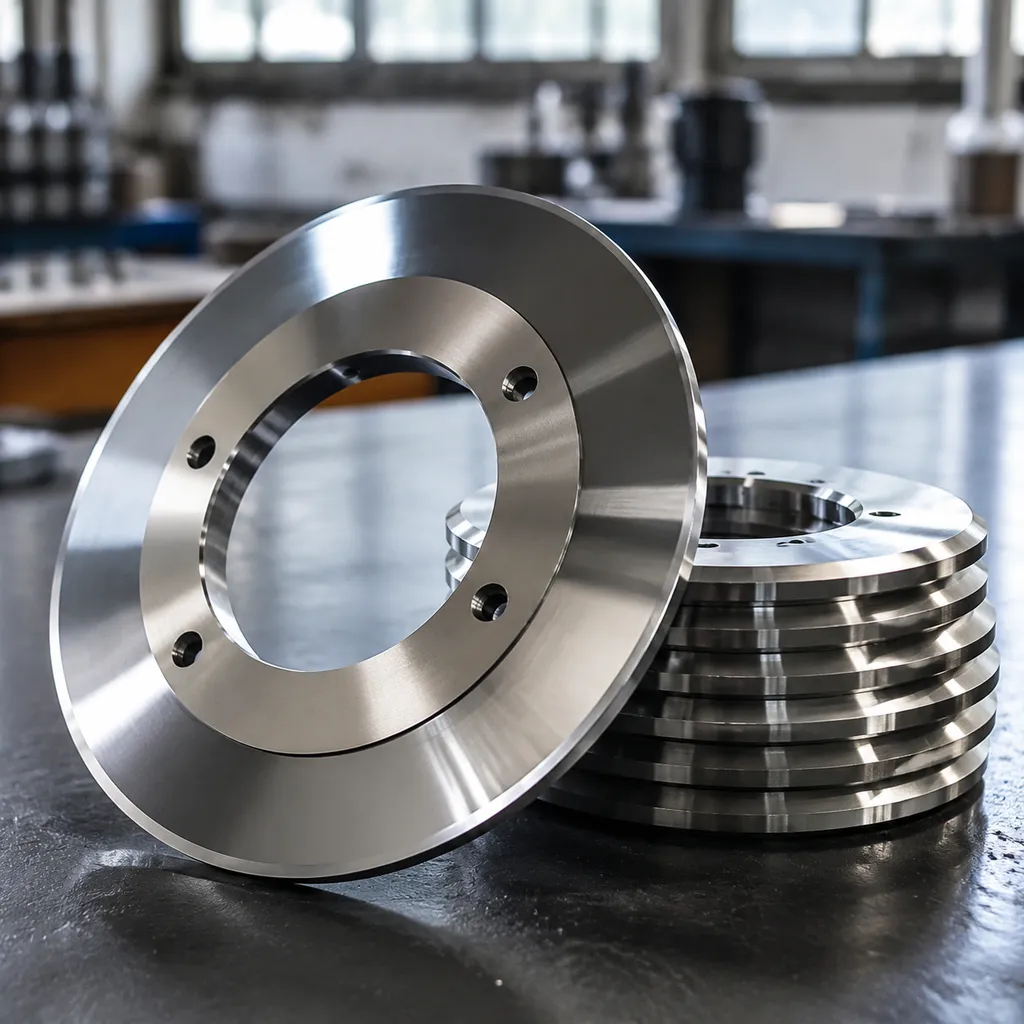
Burr-Free Edge Profile & Clean Cut Geometry
Our corrugated paper slitting knife utilizes advanced double-bevel and razor-sharp edge profiles engineered for clean penetration across all board grades:
- Zero Flute Collapse: Ultra-thin blade geometry slices cleanly through 3-ply, 5-ply, and 7-ply board without crushing delicate paper flutes.
- Dust Elimination: Precision ground edges slice fibers cleanly, preventing paper dust accumulation that clogs sensors and degrades print quality.
- Fray-Free Edges: Sharp edge retention guarantees clean linerboard cuts, eliminating ragged, feathered edges on finished corrugated blanks.
Mirror Polish Surface (Ra < 0.1 µm)
Tacky starch adhesives and friction build up heat quickly during high-speed runs. We finish every corrugated slitting knife with a mirror-polished face engineered to a surface roughness of Ra < 0.1 µm.
- Minimized Drag: The micro-smooth finish dramatically reduces frictional resistance at high line speeds.
- Adhesive Resistance: Prevents warm starch glue, synthetic adhesives, and paper coatings from sticking to blade sidewalls.
- Simplified Maintenance: Ultra-smooth surfaces reduce manual scraping and automated cycle wear; review our detailed slitter blade cleaning tips to maintain peak surface performance.
Dynamic Balance & Concentricity Specifications
High-speed paper converting requires exact rotational symmetry. Every circular paper knife undergoes dynamic balancing and CMM inspection to protect your machine arbors and bearings from premature wear.
| Performance Metric | Manufacturing Standard | Operational Benefit |
|---|---|---|
| Concentricity / Radial Runout | Within ±0.005 mm | Prevents blade bounce and uneven edge wear |
| Thickness Parallelism | Held to ±0.002 mm | Ensures precise side-clearance setup in dual-shaft systems |
| Dynamic Balance | Rated up to 400 m/min | Eliminates high-speed machine vibration and shaft strain |
Pairing these strict manufacturing tolerances with our precision special cutting components guarantees clean cuts and long tool life on demanding corrugator runs.
Custom Corrugated Slitting Knife OEM/ODM Engineering
We manufacture custom corrugated board slitter knife solutions tailored to your exact converting speeds, paperboard densities, and equipment requirements. Through our specialized OEM/ODM services, we reverse-engineer, modify, or enhance standard production blades to improve cut quality and extend service life on demanding corrugator lines.
Precision Engineering Capabilities
| Customization Option | Technical Capability | Operational Benefit |
|---|---|---|
| CMM Reverse Engineering | High-precision 3D laser scanning (±0.002 mm tolerance) | Exact reproduction and blueprinting from sample or worn parts |
| Custom Bevel Profiles | Single bevel, double bevel, hollow ground, compound angles | Clean edge geometry tailored to 3-ply, 5-ply, and 7-ply paperboards |
| Protective Coatings | TiN, TiAlN, DLC, and anti-friction surface treatments | Prevents glue/starch buildup and dramatically reduces frictional wear |
Customized Manufacturing Details
- CMM Reverse Engineering: Provide us with a worn or sample corrugated paper slitting knife, and our technicians use high-accuracy Coordinate Measuring Machine (CMM) scanning to create precise CAD blueprints. We compensate for edge wear during CAD generation to deliver exact-fit replacements.
- Tailored Bevel Geometry: Edge geometry is customized based on your specific linear machine speeds and corrugated board weight. Whether running lightweight flutes or heavy-duty triple-wall board, custom single, double, or compound bevel angles prevent flute crushing and edge fraying.
- Surface Coating Technologies: Our advanced surface treatments prevent friction and starch accumulation. Anti-friction and non-stick ceramic or carbide thin-film coatings keep the blade face clean, minimizing dynamic drag and heat build-up. Utilize our advanced custom engineering capabilities to optimize blade longevity and maintain clean, burr-free cuts across every production run.
Diamond Grinding Wheels & Maintenance Accessories
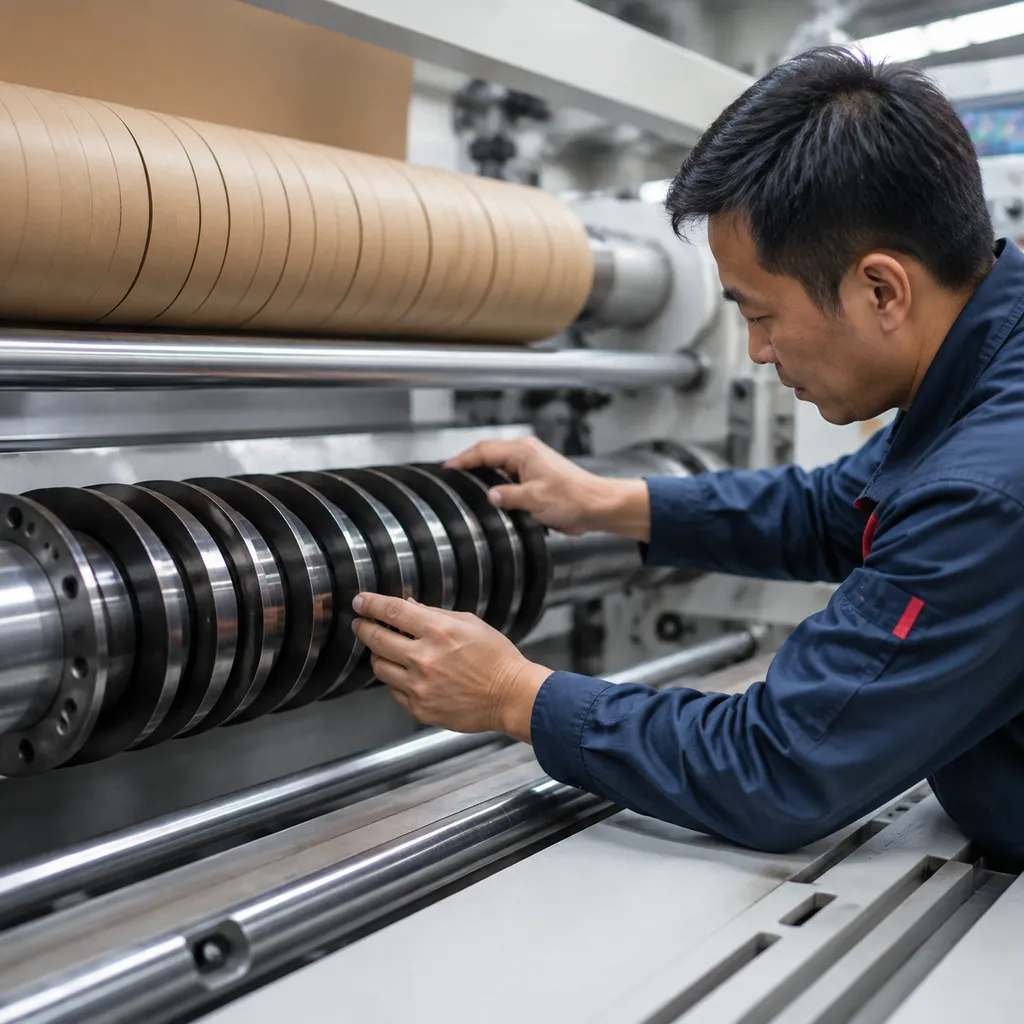
Keeping a corrugated board slitter knife performing at peak precision requires exact grinding pairing. We manufacture engineered resin and metal-bonded diamond sharpening wheels specifically matched to our solid tungsten carbide circular paper knife line.
OEM Matching Diamond Sharpening Wheels
Standard abrasive media breaks down rapidly and risks thermal shock on carbide. We engineer diamond grinding wheel for corrugator units customized for continuous online automatic sharpening across BHS, Fosber, Marquip, and Mitsubishi lines.
- Resin-Bonded Diamond Wheels: Deliver soft, cool-cutting action for light, frequent micro-sharpening passes without chipping ultra-thin edge profiles.
- Metal-Bonded Diamond Wheels: Provide maximum wear resistance and long-term profile retention under heavy duty cycles.
Sharpening Guidelines to Prevent Edge Chipping
Maintaining a clean, burr-free cut on every corrugated paper slitting knife depends on controlled online sharpening cycles. Follow these core parameters or reference our full guide on knife maintenance best practices:
- Minimize Pneumatic Pressure: Keep grinding pressure ultra-light to avoid micro-fracturing delicate razor-edge bevels on carbide slitter scorer knives.
- Frequent Short Passes: Program automated cycles for frequent light touches rather than prolonged, high-pressure grinding runs.
- Targeted Lubrication: Ensure pneumatic mist or coolant hits the direct contact point to suppress heat spikes and micro-cracking.
- Wheel Dressing: Regularly clean diamond wheel faces to clear compressed starch and paper dust for consistent cutting geometry.
Corrugated Slitting Knife FAQ & Operational Troubleshooting
How do I choose between Tungsten Carbide and M2 HSS slitting knives?
Selection depends on line speed, board grade, and continuous operating hours.
| Feature | Solid Tungsten Carbide | M2 High-Speed Steel (HSS) |
|---|---|---|
| Best For | High-speed continuous lines, abrasive 3-ply/5-ply/7-ply board | Medium speeds, short production runs, frequent setup changes |
| Service Life | Up to 10x longer wear life between sharpenings | Standard service life |
| Edge Retention | Extreme hardness (88–92 HRA), sub-micron grain | High toughness (62–66 HRC), high thermal stability |
| Shock Resistance | Requires stable arbors and controlled grinding | Highly resistant to mechanical shock and arbor vibration |
Review our technical breakdown on how to choose slitting knives to match your specific corrugator line.
What causes edge chipping on thin carbide slitter knives, and how do I prevent it?
Edge micro-chipping on a corrugated paper slitting knife stems from thermal shock during grinding, improper wheel grit, or mechanical deflection. Prevent premature edge damage with these adjustments:
- Use Diamond Wheels: Sharpen exclusively with resin-bonded or metal-bonded diamond sharpening wheels matched to carbide grades.
- Optimize Auto-Sharpening: Avoid overly aggressive grinding pressure. Light, frequent touch cycles maintain the edge radius without micro-fracturing.
- Eliminate Arbor Runout: Inspect spindle bearings and clean mounting flanges to remove debris that causes axial play.
- Control Web Tension: Ensure proper lateral board alignment to prevent heavy sideways force against the blade face.
Can Sharkcutting manufacture custom blades from CAD files or sample parts?
Yes. As a specialized tungsten carbide slitter knife manufacturer, we produce custom precision blades built to exact operational specs. You can submit 2D or 3D CAD files (STEP, DXF, DWG) or send physical samples. We utilize CMM scanning to reverse-engineer worn parts, accurately duplicating keyways, pinhole configurations, compound bevel profiles, and mounting geometries.
What are the exact mounting tolerances guaranteed on Sharkcutting blades?
Every corrugated board slitter knife leaving our facility undergoes strict CMM inspection to guarantee tight tolerances for high-speed stability:
- Bore Diameter Fit: H6 precision fit
- Blade Thickness Tolerance: ±0.005 mm
- Axial & Radial Runout: ≤ 0.015 mm
- Parallelism: ≤ 0.005 mm
- Surface Polish: Ra < 0.1 µm mirror finish to eliminate glue and starch buildup