
Formula details
Product Details
Overview
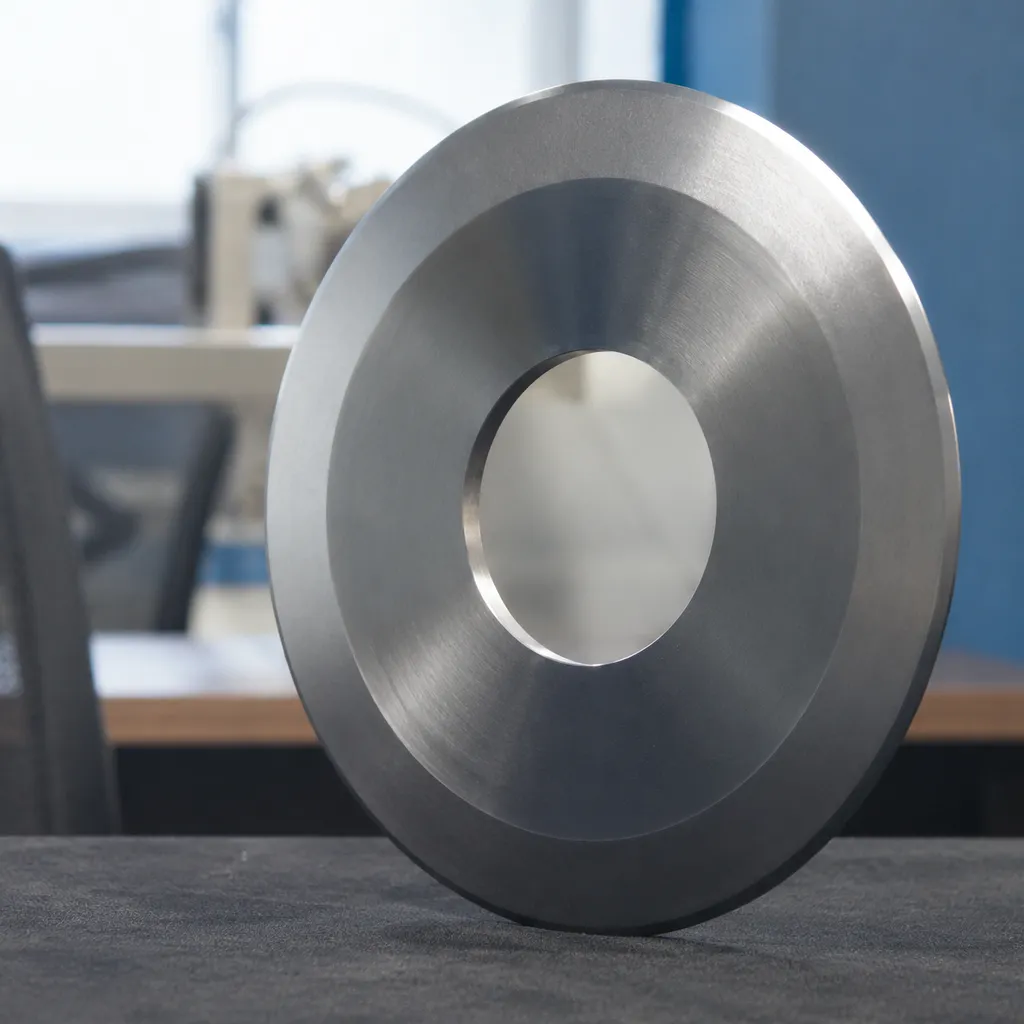
Textile Bottom Slitter Blade: Precision Female Counter-Blades
Our engine-grade female counter-blades are built specifically for high-speed shear cut bottom blade setups. By pairing micro-precision grinding with advanced metallurgy, we ensure every rotary slitter blade holder runs smoothly without axial runout or edge rounding.
Technical Capabilities & Performance Metrics
| Specification | Standard Rating | Operational Impact |
|---|---|---|
| Grinding Tolerance | Micro-ground to ±0.001mm | Eliminates blade wobble and ensures precise shearing alignment |
| Surface Finish | Mirror Polish (Ra < 0.1μm) | Prevents melted synthetic fibers, glues, and sizing buildup |
| Material Upgrade | Solid Tungsten Carbide | Extends continuous edge lifespan up to 10x over standard steel |
| Machine Integration | High-Speed Slitter Rewinders | Delivers clean, burr-free slitting across woven and nonwoven webs |
Why Upgrade Your Female Slitter Knives
- Maximum Wear Resistance: Choose solid tungsten carbide options to slash blade changeovers and keep continuous lines running longer.
- Frictionless Web Passing: Ultra-smooth side faces reduce friction, keeping synthetic fibers like polyester and polypropylene from sticking to the knife.
- Flawless Edge Quality: Micro-ground tolerances guarantee clean scissor-cut performance without tearing fragile nonwoven webs.
Get Custom Blades Built to Your Exact Specs
Need exact OEM replacements or custom modifications? Request a 24-Hour Factory Quote or Upload CAD Blueprints today to start your order.
Metallurgy & Technical Specifications for Textile Bottom Slitter Blades
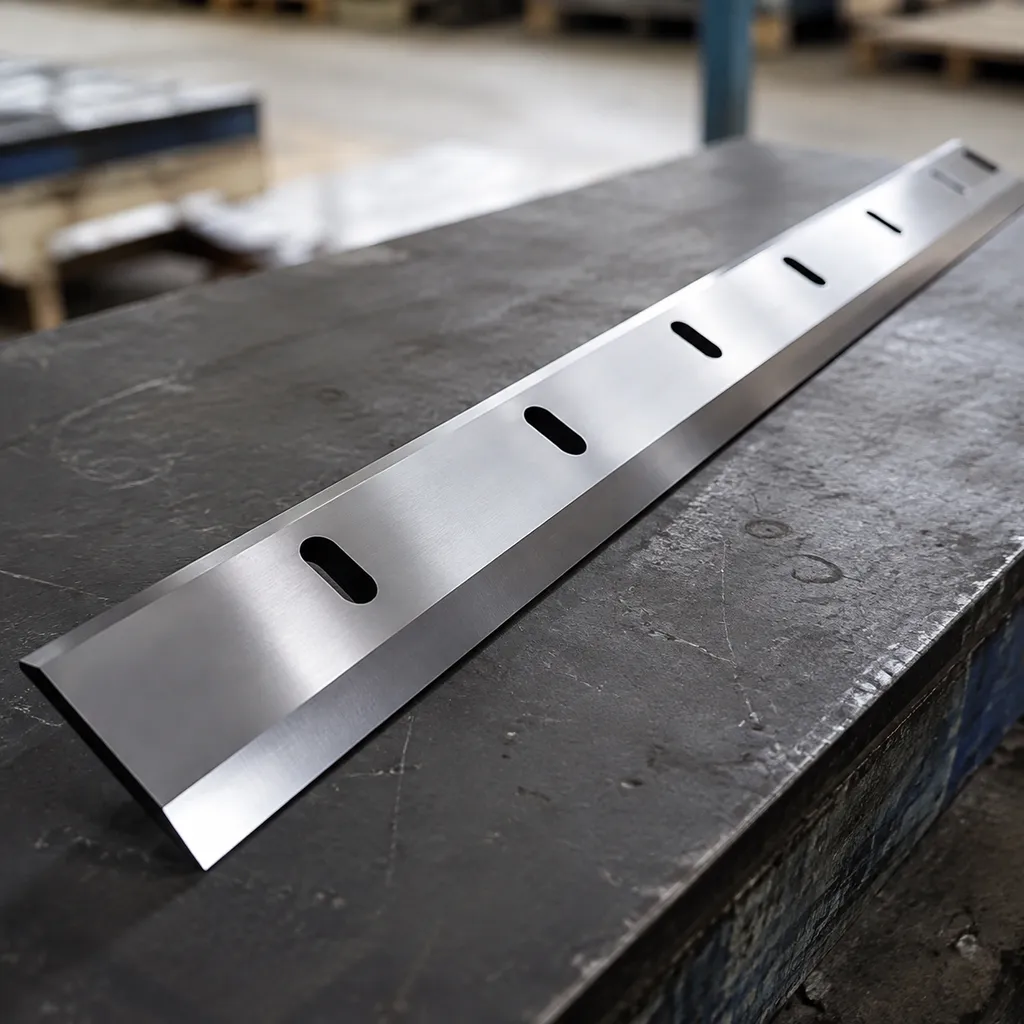
We manufacture every textile bottom slitter blade to withstand intense continuous shear converting without thermal deflection or premature edge degradation. Matching the correct metallurgy to your specific fiber or nonwoven substrate is critical for maximizing cutting performance and machine uptime. Review our detailed slitter knife material guide or reference our core production matrix below.
Material Grade & Hardness Matrix
| Material Grade | Standard Equivalent | Hardness Rating | Recommended Application |
|---|---|---|---|
| M2 High-Speed Steel | AISI M2 / SKH51 | 62–66 HRC | High-speed synthetic fabric & continuous web slitting |
| D2 Tool Steel | AISI D2 / SKD11 | 58–62 HRC | Heavy-duty nonwovens, cotton, and general woven textiles |
| Tungsten Carbide | Solid & Inlaid | 88–92 HRA | Highly abrasive materials like Kevlar, fiberglass, and geotextiles |
| 440C Stainless Steel | AISI 440C | 56–60 HRC | Washdown zones, wet-laid nonwovens, and humid environments |
For high-friction lines where standard tool steel wears quickly, our solid and inlaid tungsten carbide slitter knife options extend edge wear life up to 10x longer.
Precision Engineering & Capability Parameters
Maintaining strict mechanical tolerances guarantees smooth running on your rotary slitter blade holder and prevents material snagging during shear cutting.
- Outer Diameter Range: 28mm to 500mm (Standard stock range: Ø80mm to Ø350mm)
- Thickness Range: 2.0mm to 6.0mm custom ground
- Micro-Grinding Tolerance: Down to ±0.001mm / ±0.002mm for wobble-free rotation
- Surface Finish: Ultra-smooth mirror surface of Ra < 0.1μm to prevent fiber melt and adhesive buildup
- Hardness Differential: Engineered +2 to +4 HRC higher than top mating male knives to prevent edge rounding and micro-burrs
- Quality Assurance: 100% optical CMM dimensional inspection and Rockwell hardness verification on every batch
Bore Configurations & Bevel Geometries
We customize every female slitter blade to drop directly onto your existing rewinder arbors or OEM shaft mounts:
- Bore Types: Plain bore, single or double keyway slots, self-locking arbors, and pneumatic block mounts.
- Bevel Configurations: Single-bevel, double-bevel bottom female knife profiles, compound angles, and reversible T-form double-edge geometries for double the cutting life per blade.
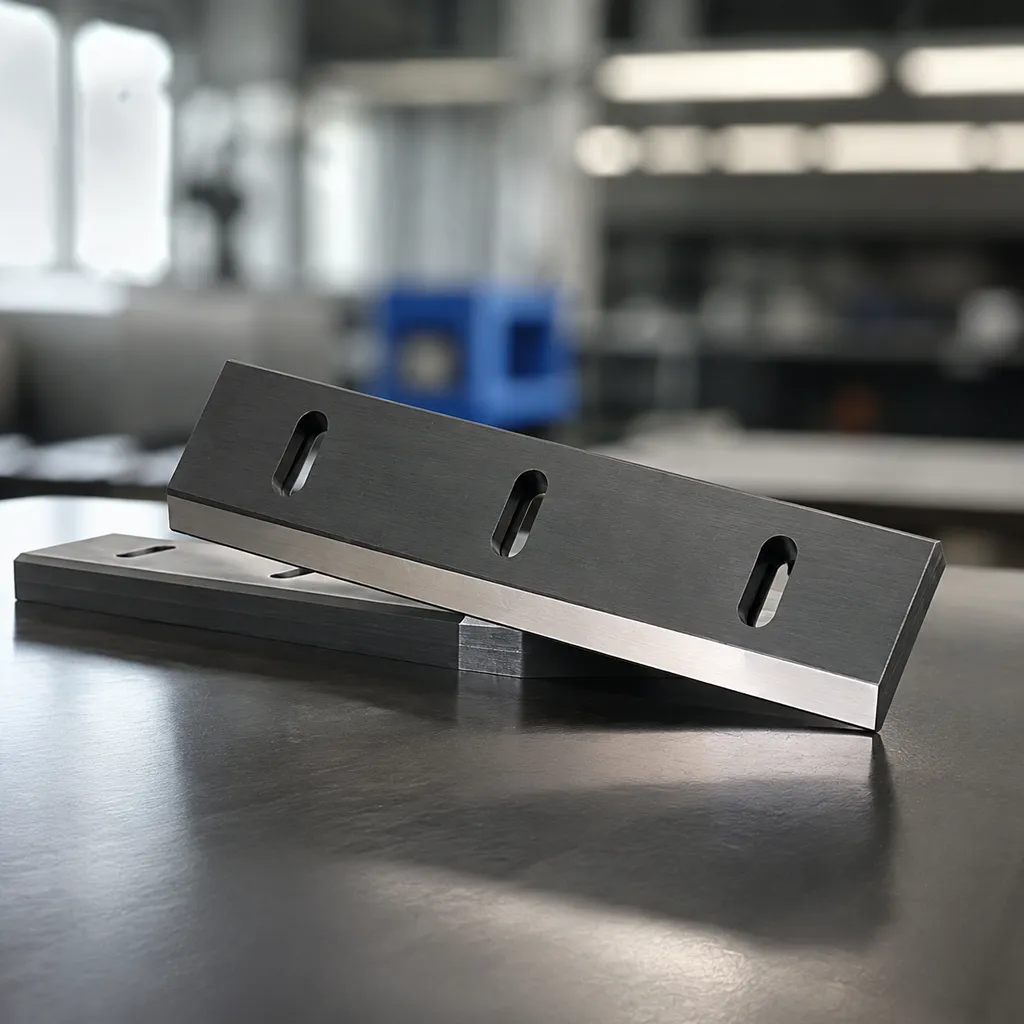
Engineering Advantages of the Textile Bottom Slitter Blade
| Key Performance Driver | Technical Specification | Operational Impact |
|---|---|---|
| Hardness Differential | +2 to +4 HRC higher than top male knife | Eliminates micro-burrs and stops premature edge rounding |
| Clean Cut Performance | Precision-ground shearing geometry | Stops web dust, strand pulling, and edge deformation |
| Friction Control | Mirror-polished side faces (Ra < 0.1µm) | Prevents adhesive, sizing agents, and synthetics from sticking |
| Surface Wear Coating | Optional TiN, DLC, or CrN PVD treatments | Dramatically lowers friction and multiplies edge life |
Built for High-Speed Shear Cutting
- Optimized Hardness Differential: We maintain a strictly controlled +2 to +4 HRC higher hardness on our bottom blades relative to the top mating knives. This differential prevents micro-burrs and edge rounding, keeping your shear setup sharp far longer.
- Flawless Edge Execution: Designed to pair with high-precision shear slitting knives, our shear cut bottom blade designs maintain tight web contact to eliminate fiber dust, material distortion, and strand pulling.
- Friction & Buildup Reduction: Ultra-smooth, mirror-polished side faces prevent melt-adhesion when running synthetic nonwovens, sizing agents, or sticky laminates at high speeds.
- Advanced PVD Coatings: For abrasive technical fabrics, we apply specialized TiN, DLC, or CrN surface coatings to minimize friction coefficients and maximize wear resistance during long production runs.
Custom OEM/ODM Fabrication & Reverse Engineering
We engineer every textile bottom slitter blade to meet exact machine specifications, whether working from digital blueprints or worn physical parts. Through our dedicated OEM/ODM services, we convert complex dimensional requirements into high-performance shear cut female blades.
Precise Manufacturing from Blueprints or Samples
- CAD File Compatibility: Direct manufacturing support for DWG, STEP, DXF, and 3D CAD models.
- CMM Reverse Engineering: High-accuracy optical CMM inspection to reconstruct worn, obsolete, or undocumented OEM sample blades through our custom engineering processes.
- Scalable Production Runs: Flexible manufacturing workflows from initial low-volume prototyping to continuous mass OEM production.
- Batch-to-Batch Repeatability: Strict quality verification guarantees identical tolerances and hardness profiles across every production run.
Substrate & Machine Compatibility for Textile Bottom Slitter Blades
Compatible Substrates & Equipment Matrix
| Processing Category | Target Substrates | Machine Integration |
|---|---|---|
| Woven & Synthetic Fabrics | Woven cotton, synthetic polyester, technical textiles, Kevlar, fiberglass | Textile roll slitting equipment, continuous web slitters |
| Nonwovens & Technical Media | Spunbond polypropylene, meltblown, geotextiles | Specialized nonwoven cutting knives setups, slitter-rewinders |
| Flexible Packaging & Composites | Flexible packaging laminates, barrier films, coated foils | Automated converting lines using custom packaging machine knives |
Direct Machine Drop-In Capability
Our circular female slitter units feature universal bore designs for seamless integration into existing processing lines:
- Slitter-Rewinders: Precise arbor fits for high-speed continuous web slitting.
- Roll Cutters: Heavy-duty shaft mounting compatibility to prevent runout during thick-roll processing.
- Automated Converting Lines: Standardized dimensions for fast set changes with minimal line downtime.
- Rotary Slitter Blade Holder Units: Precision-fit mounting for both pneumatic and rigid lock systems.
Frequently Asked Questions About Textile Bottom Slitter Blades
How do I select the right metallurgy grade for high-wear synthetic fabric converting?
Selecting the optimal material grade depends directly on the abrasiveness and density of your web substrate. A carbide bottom slitter blade offers maximum wear resistance for severe friction, while high-speed steels deliver high toughness for high-speed continuous runs.
| Material Grade | Hardness | Target Application | Key Advantage |
|---|---|---|---|
| Solid / Inlaid Tungsten Carbide | 88–92 HRA | Kevlar, fiberglass, technical textiles | Up to 10x edge lifespan |
| M2 / SKH51 High-Speed Steel | 62–66 HRC | High-speed polyester, woven cotton | High toughness & thermal stability |
| D2 / SKD11 Tool Steel | 58–62 HRC | Standard synthetics, geotextiles | Cost-effective edge retention |
| 440C Stainless Steel | 58–60 HRC | Wet-laid nonwovens, high moisture | Superior corrosion resistance |
Why should the female bottom blade be 2 to 4 HRC harder than the male top knife?
Maintaining a +2 to +4 HRC differential on the female shear cut bottom blade is critical for clean cutting performance. The bottom female blade acts as the primary shear reference point. If the top knife is harder than the bottom knife, it will micro-gouge the bottom cutting edge, causing edge rounding, thread pulling, and excessive slitting dust. Keeping the female knife harder forces sacrificial wear onto the top male blade, which is much easier and cheaper to resharpen or replace. Regular maintenance and following standard slitter blade cleaning tips further prevent resin build-up and preserve edge integrity.
What standard dimensional tolerances and keyway options are available for custom orders?
We manufacture custom textile slitting machine blades to exact OEM specifications to ensure zero runout on high-speed rewinder shafts:
- Precision Tolerances: Micro-ground tolerances down to ±0.001mm with a mirror surface finish of Ra < 0.1μm to eliminate friction.
- Dimensions: Standard outer diameters range from Ø80mm to Ø350mm (custom fabrication available from 28mm to 500mm), with thickness choices from 2.0mm to 6.0mm.
- Bore Configurations: Plain bore, single or double keyway slots, self-locking arbors, and pneumatic block mounts.
- Bevel Geometries: Single-bevel, double-bevel, compound angle, and reversible T-form double-edge designs.
Can bottom slitter blades be custom manufactured from worn OEM physical samples without CAD drawings?
Yes. If CAD blueprints are unavailable for obsolete or specialized converting lines, you can ship worn physical samples directly to us. We utilize 3D optical CMM reverse-engineering to extract accurate dimensional data, compensate for operational wear, and generate precise DWG/STEP models. This guarantees complete batch-to-batch repeatability and OEM-level drop-in replacement.