
Precision Slitter Knife Edge Profiles & Bevel Geometry Options
The cutting edge profile of a circular slitter knife directly dictates shearing force, web tension stability, slit-edge quality, and blade longevity. Sharkcutting manufactures precision-ground bevel options engineered for high-speed automated slitting and rewinding equipment—delivering burr-free cuts, minimal dust generation, and extended operational lifespans across diverse web converting applications.
Single Bevel Geometry
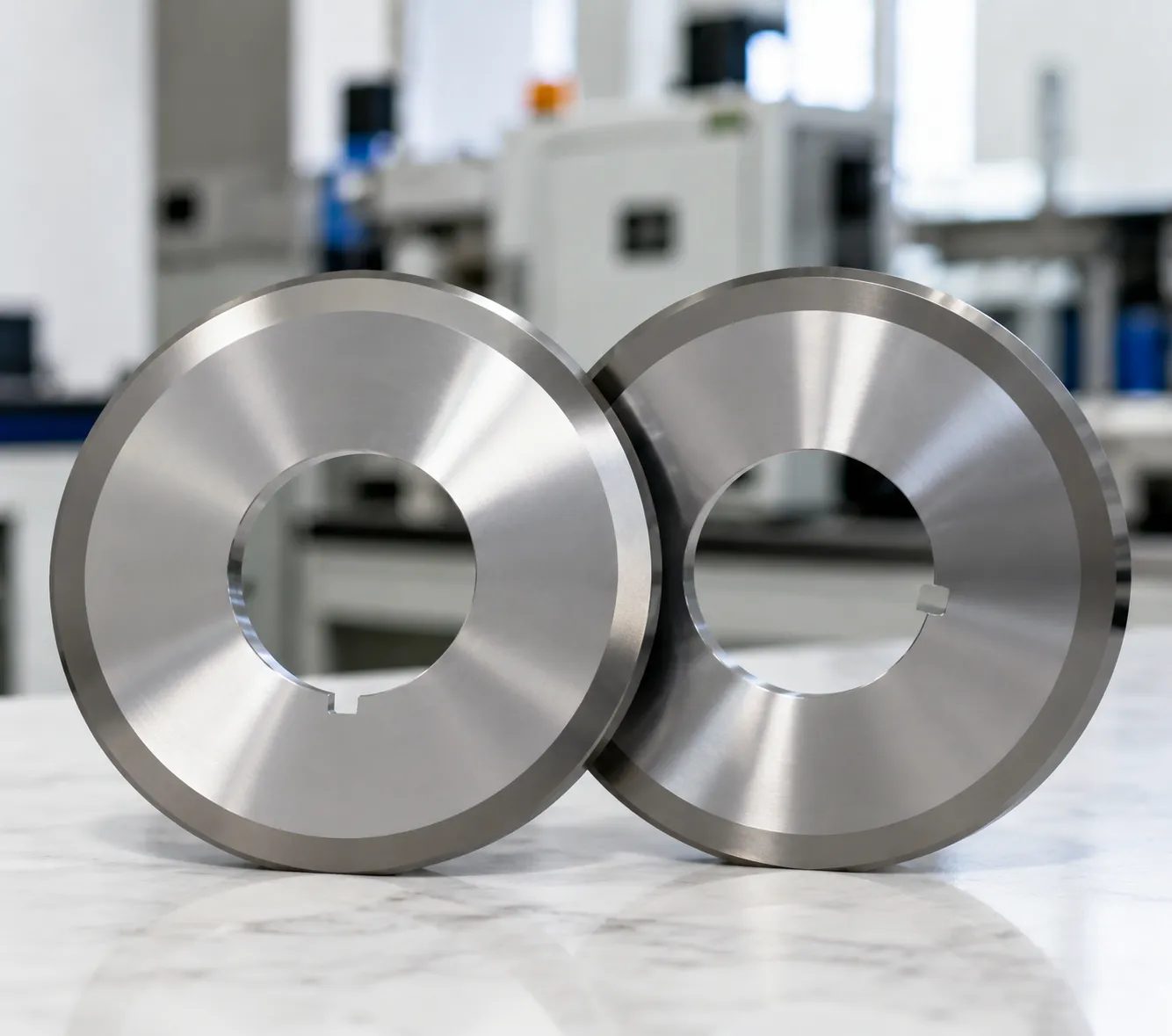
Single bevel circular slitter knives feature a flat ground face paired with a precision-angled cut bevel. This asymmetrical design minimizes lateral web deflection along the flat edge, making it ideal for razor-sharp micro-shearing on sensitive thin films and flexible substrates without material distortion.
- Primary Bevel Angle: 15° to 30° customizable options
- Key Advantage: Minimal cutting friction, crisp edge lines, zero margin tear
- Target Substrates: BOPP, PET films, tissue paper, flexible packaging, foil
Double Bevel Geometry
Double bevel rotary slitting knives feature ground angles centered symmetrically on both sides of the blade body. This structural geometry reinforces the blade tip against high mechanical stress and shock loads, effectively preventing edge micro-chipping during demanding continuous conversion.
- Primary Bevel Angle: Symmetrical 30° to 45° included angle
- Key Advantage: Superior load distribution, chip resistance, extended run life
- Target Substrates: Heavy paperboard, corrugated paper, rubber, thick foils
Compound & Multi-Bevel
Compound multi-bevel configurations combine a shallow primary bevel for low material resistance with a precision secondary micro-bevel right at the extreme cutting tip. This dual-stage geometry balances extreme tip strength with low wedge friction for ultra-clean shearing.
- Compound Structure: 12°–15° primary + 30°–38° secondary micro-edge
- Key Advantage: Zero burr formation, zero micro-cracking, maximum wear endurance
- Target Substrates: Battery separators, nonwovens, copper foil, technical films
Substrate Material & Bevel Geometry Matching Guide
| Substrate Material | Recommended Edge Profile | Primary Bevel Angle | Surface Finish (Roughness) | Slitting Performance Benefit |
|---|---|---|---|---|
| BOPP, PET & Flexible Packaging Films | Single Bevel (Ultra-Sharp) | 18° – 22° | Ra 0.1 Mirror Polish | Burr-Free Edge Cut |
| Coated & Specialty Papers | Single Bevel with Side Relief | 22° – 28° | Ra 0.1–0.2 Precision Ground | Minimized Dust Generation |
| Heavy Corrugated & Board Stock | Double Bevel (Heavy-Duty) | 30° – 40° Symmetrical | Ra 0.2 Precision Ground | Superior Edge Toughness |
| Medical & Hygiene Nonwovens | Compound Double Bevel | 15° Primary / 32° Secondary | Ra 0.1 Super Finish | Clean Fiber Separation |
| Battery Separator & Metal Foils | Compound Multi-Bevel (Carbide) | 20° Primary / 38° Micro-Edge | Ra 0.05 Ultra-Mirror Polish | Zero Delamination & Burr |
Engineering Principles of Slitter Knife Bevel Selection
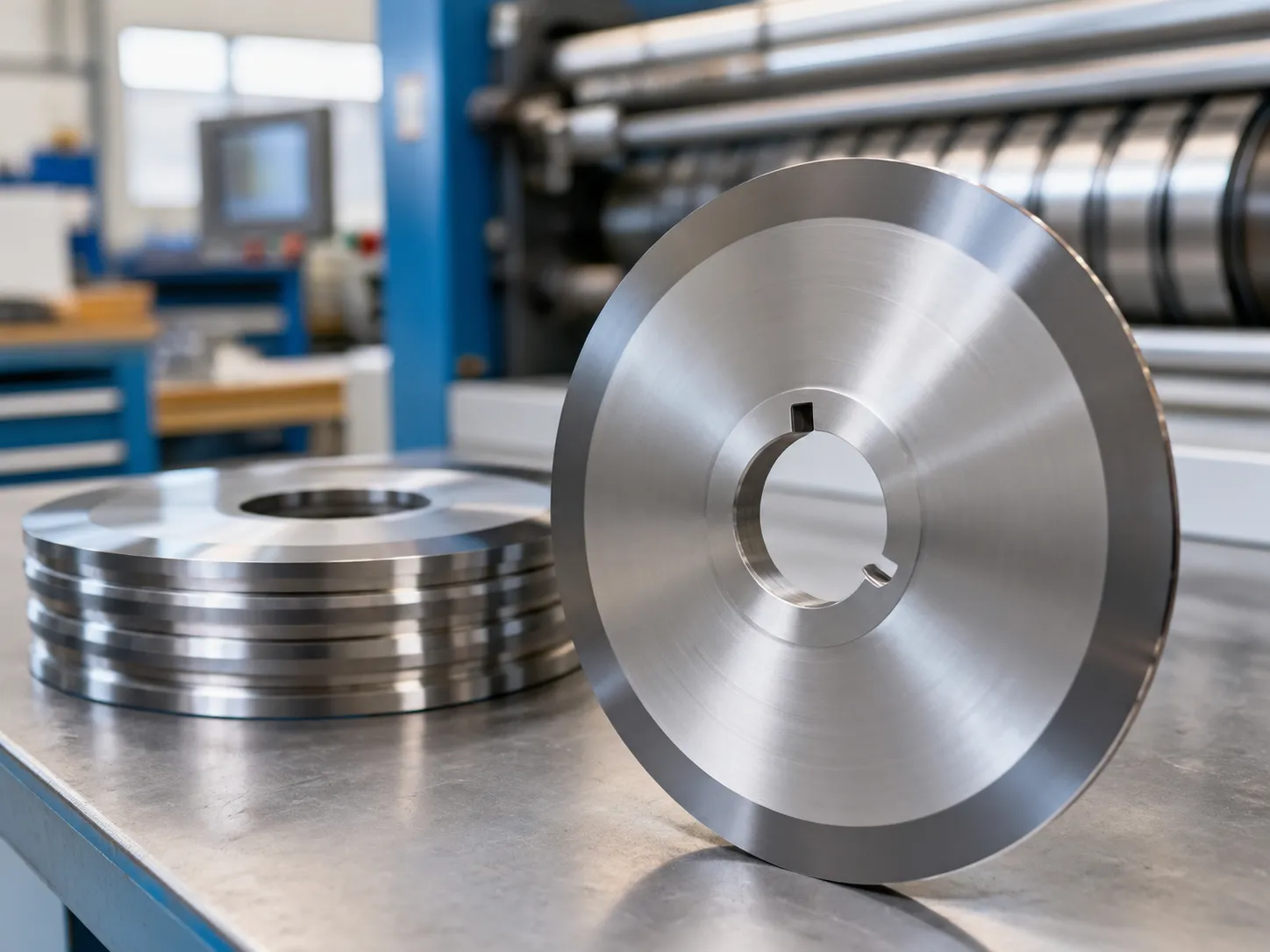
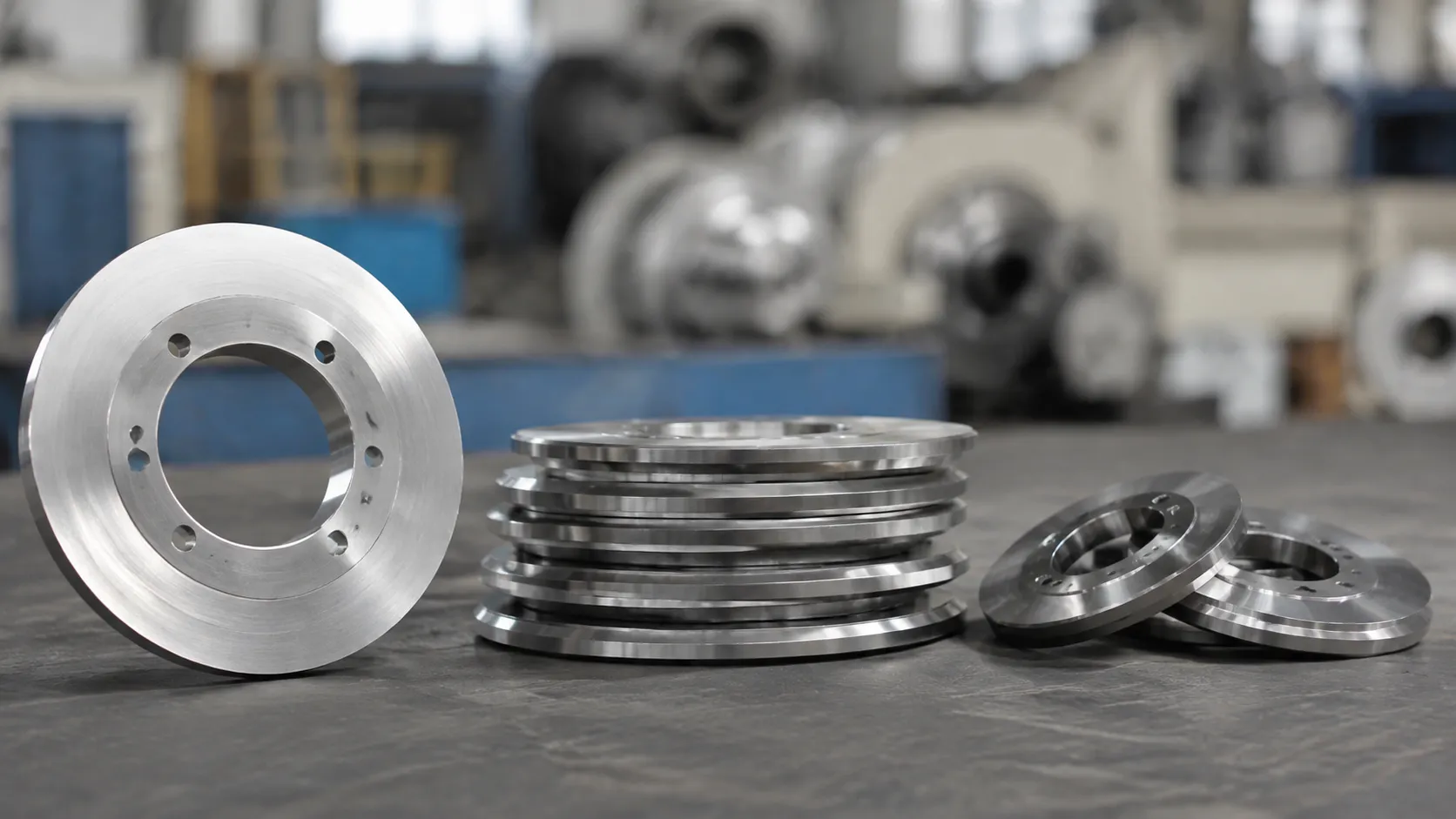
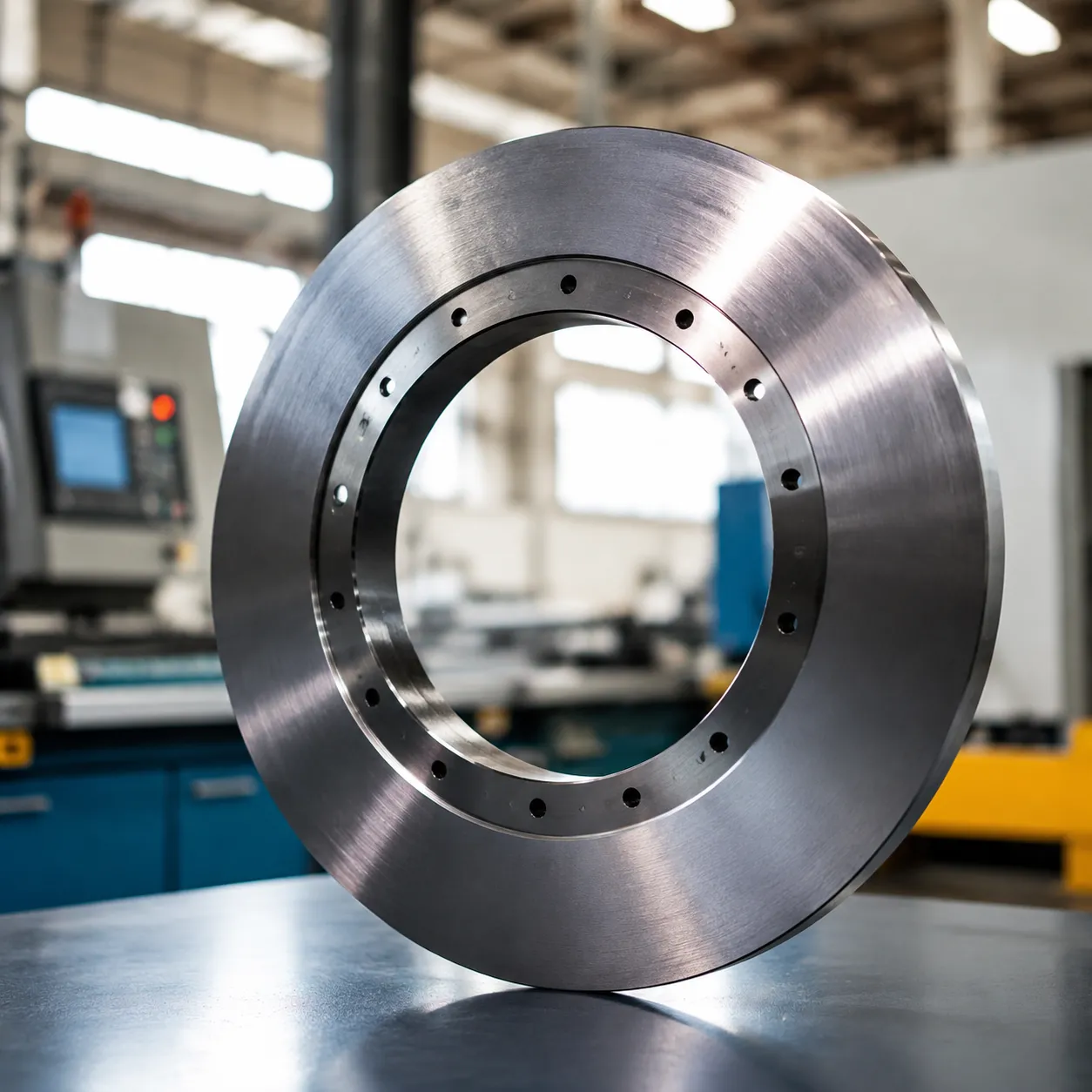
Selecting the correct slitter knife edge profiles and bevel options is a critical engineering decision in flexible material converting, paper slitting, and high-speed web processing. The cutting edge geometry determines the wedge mechanics during shear cutting, razor slitting, or crush cutting operations. An incorrect bevel profile increases cutting friction, accelerates blade wear, creates edge dust, and leads to expensive machine downtime.
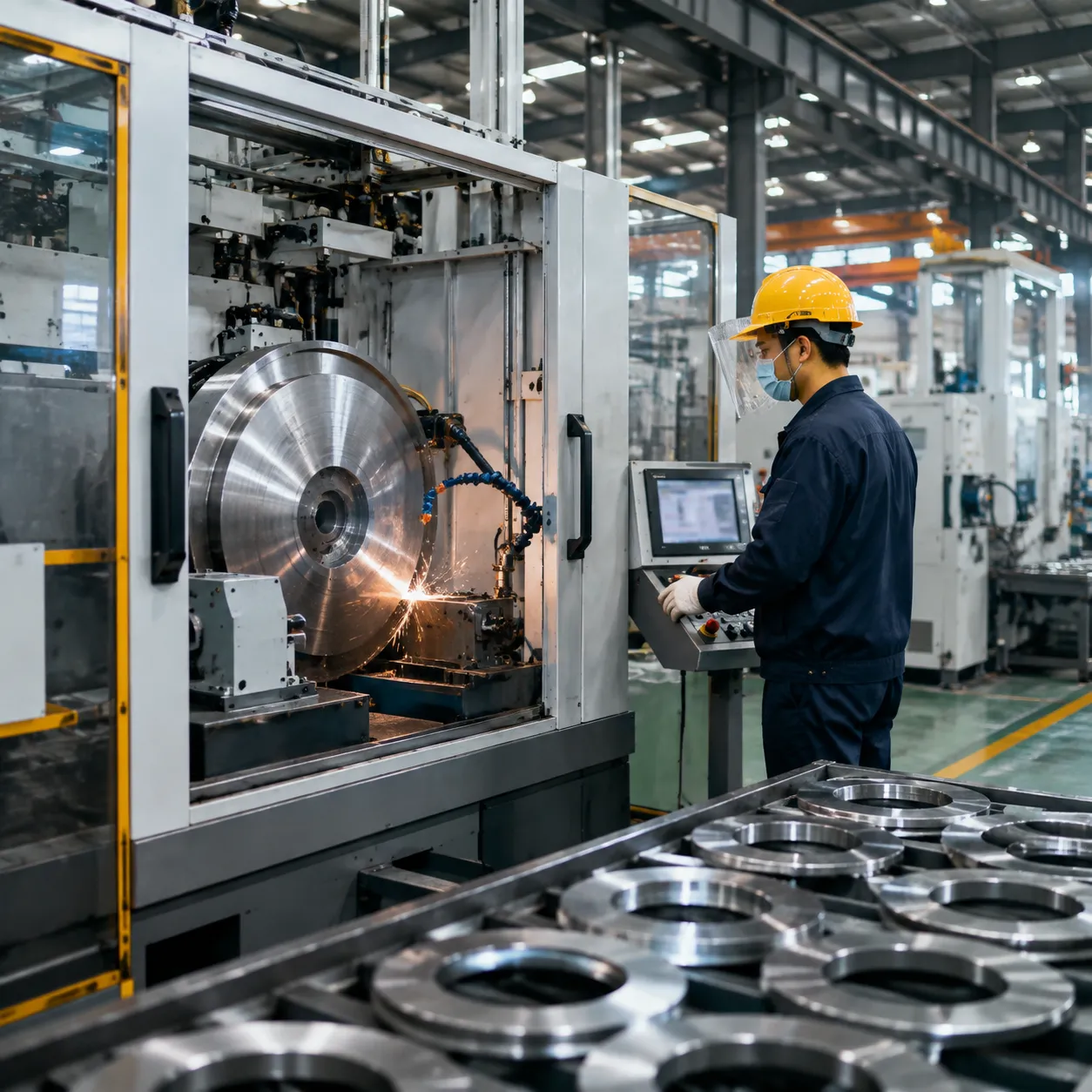
At Sharkcutting, our industrial blade manufacturing process combines specialized heat treatment with multi-axis CNC grinding and super-finishing mirror polish technology. By maintaining tight tolerances on bevel angles, lateral runout, and surface roughness (down to Ra 0.05), our high speed slitter blades provide clean, repeatable shear cuts that extend blade life between regrinding cycles.
Key Variables in Custom Bevel Geometry Optimization:
- Wedge Angle Friction Reduction: Sharper primary bevel angles (12° to 18°) lower penetration resistance but require high-grade tool steel (D2, M2) or tungsten carbide to prevent edge tip rolling under high web tension.
- Balanced Lateral Shearing Force: Double bevel and compound geometry options distribute shear forces symmetrically across the blade core, suppressing axial blade deflection and preventing edge wave or margin burrs.
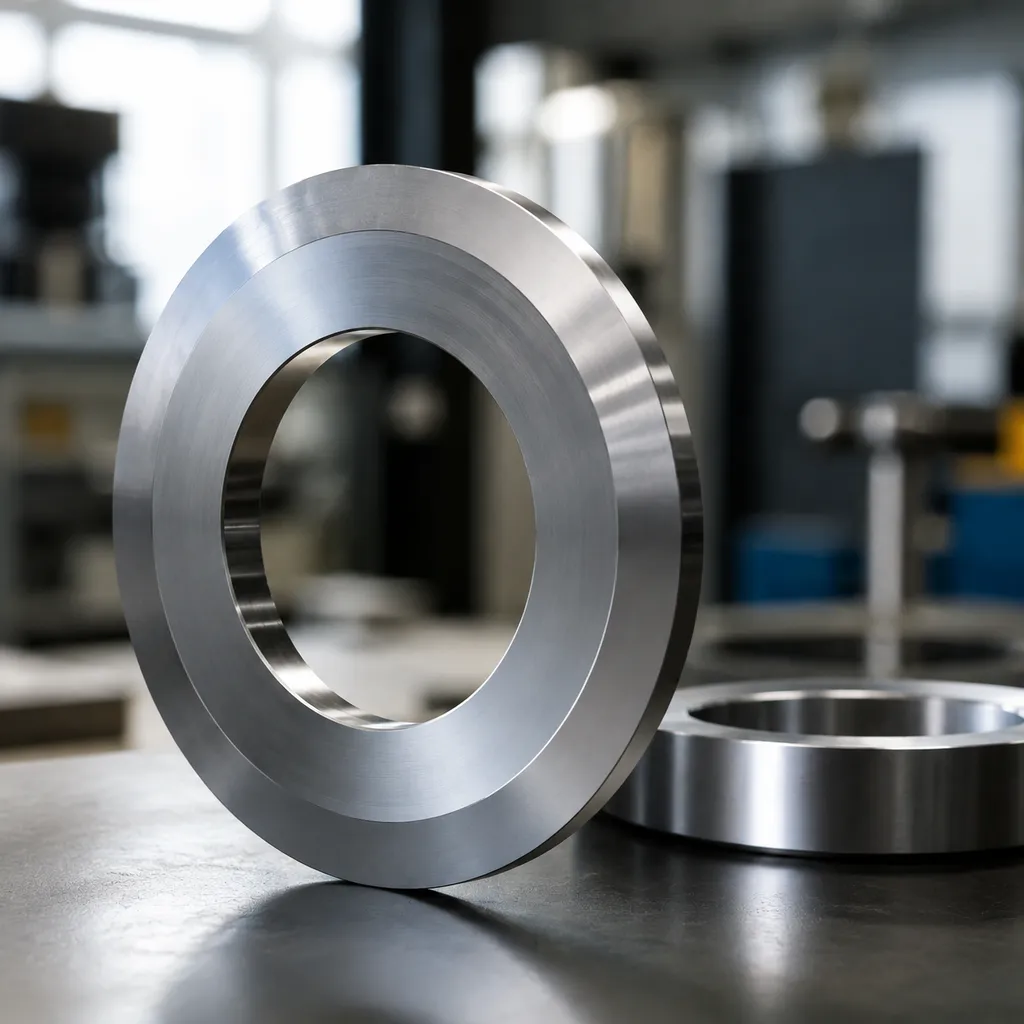
- Surface Micro-Roughness Control: Precision grinding to Ra 0.1 or Ra 0.05 mirror finish removes micro-serrations from the cutting edge, reducing material build-up, heat friction, and dust formation during continuous slitting.
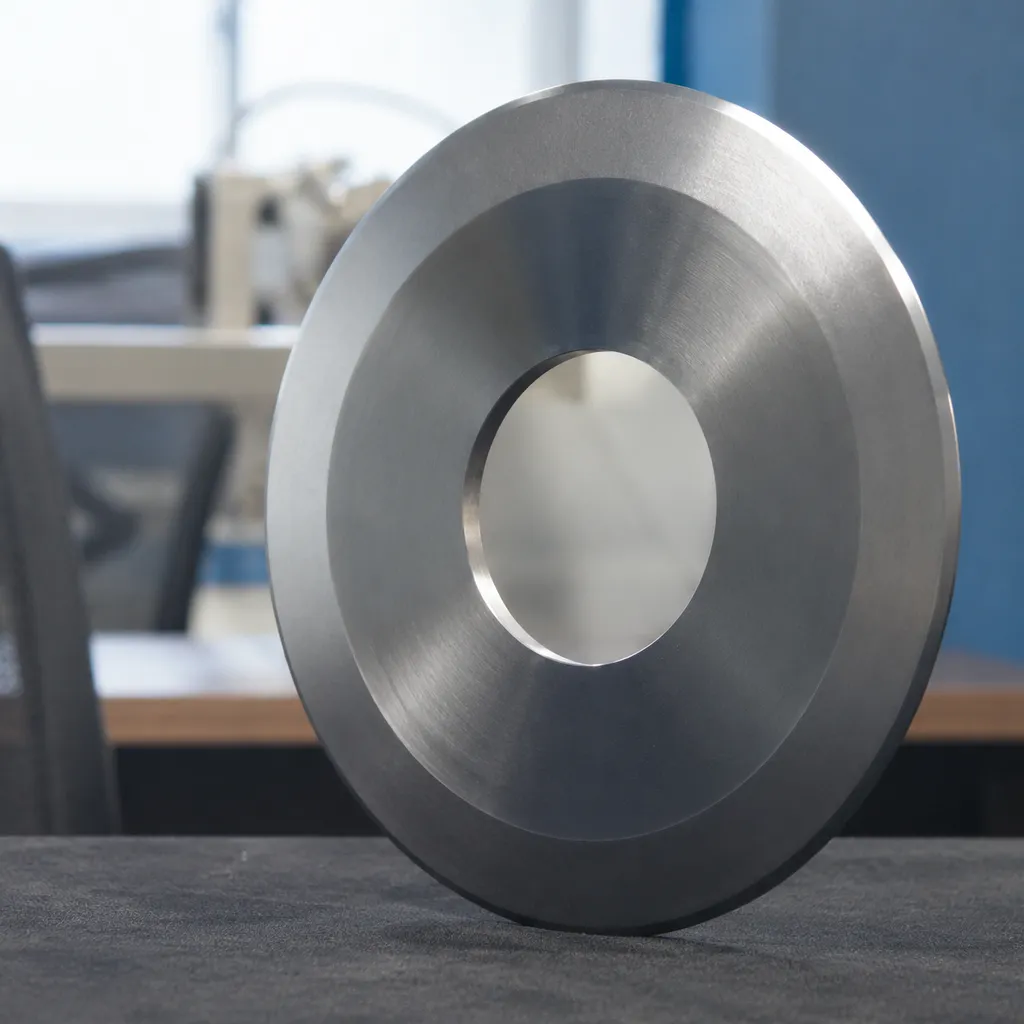
Material Grades and Wear Performance Analysis
Selecting the optimal metallurgy for circular slitter knives directly influences edge sharpness, line speed, and total cost per shift. At Shark Cutting, we manufacture high speed slitting knives and rotary slitting knives using premium cold-work tool steel, high-speed steel, and submicron tungsten carbide to maximize edge retention and eliminate unscheduled downtime.
Tool Steel Grade D2 / SKD11
Engineered for versatile industrial converting where high fracture toughness and cost efficiency are paramount. D2 M2 steel blades in cold-work tool steel feature elevated carbon and chromium content for dependable impact resistance.
- Hardness Range: 58 to 62 HRC
- Impact Strength: Superior fracture toughness
- Primary Applications: Standard paper converting, corrugated packaging, thick films, heavy nonwovens
High-Speed Steel Grade M2 / SKH51
Formulated for high-speed continuous slitting operations where friction-induced thermal buildup degrades standard blade edges. M2 high-speed steel delivers outstanding hot hardness and sharp edge retention.
- Hardness Range: 62 to 65 HRC
- Thermal Stability: Resists temper softening
- Primary Applications: BOPP and PET flexible packaging, aluminum foil laminates, technical films, specialty papers
Submicron Tungsten Carbide Grade
Engineered for severe wear environments and highly abrasive substrates requiring mirror-smooth, burr-free edge cuts over millions of continuous rotation cycles. Carbide slitter knives provide maximum longevity.
- Hardness Range: 89 to 92 HRA
- Surface Finish: Ra 0.1 mirror polish
- Primary Applications: Lithium-ion battery separators, copper and aluminum foils, abrasive nonwovens, composite materials
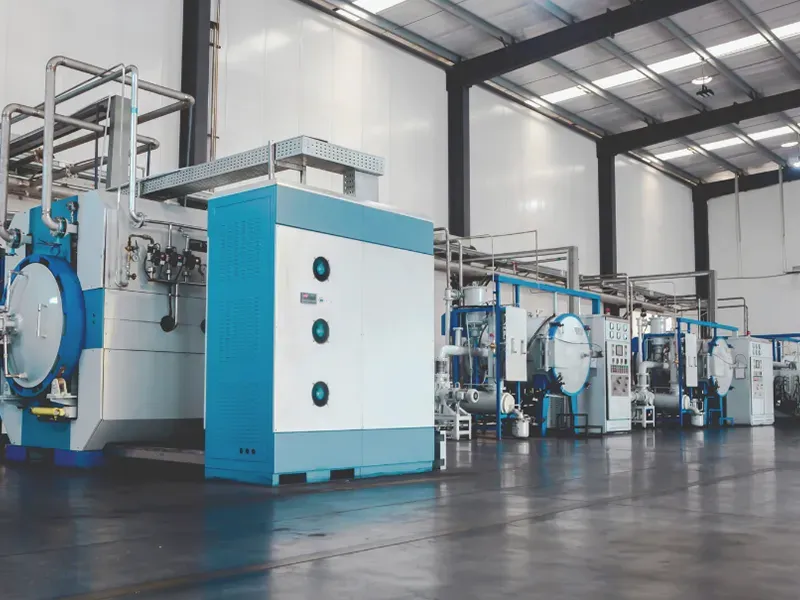
Precision Heat Treatment and Metallurgical Control
The operational lifespan of a circular slitter knife depends as much on thermal processing as raw alloy chemistry. Shark Cutting Subjects all D2 M2 steel blades and carbide tools to computer-controlled vacuum heat treatment coupled with sub-zero cryogenic stabilization.
This advanced process eliminates retained austenite, refines grain structure, and ensures uniform core-to-surface hardness. Consequently, our rotary slitting blades maintain tight axial runout and razor-sharp cutting edges even during high-friction continuous converting.
Slitter Knife Material Performance Comparison Matrix
Compare key mechanical properties and operational parameters to select the precise circular slitter knife alloy for your converting lines.
| Material Grade | Hardness Rating | Wear Resistance | Toughness | Max Web Speed | Relative Service Life |
|---|---|---|---|---|---|
| D2 and SKD11 Tool Steel | 58 to 62 HRC | Moderate | Very High | Up to 400 m/min | 1x Baseline |
| M2 and SKH51 High-Speed Steel | 62 to 65 HRC | High | High | Up to 800 m/min | 3x to 5x |
| Submicron Tungsten Carbide | 89 to 92 HRA | Ultra High | Moderate | 1,200+ m/min | 15x to 30x Plus |
Key Factors Influencing Slitter Blade Wear in Production
Selecting the correct material for industrial slitting knives requires matching blade metallurgy with actual production variables. An alloy that performs exceptionally in flexible film slitting may chip or fail prematurely when subjected to heavy lateral shear loads in paperboard converting.
Substrate Abrasiveness
Materials containing inorganic mineral fillers, titanium dioxide, or ceramic/metallic coatings accelerate bevel wear. For high-abrasion web slitting, carbide slitter knives eliminate frequent blade changes and extend blade life dramatically.
Frictional Thermal Load
High line speeds generate intense localized friction at the cut point. Standard carbon steel blades soften rapidly above 200°C, whereas M2 high-speed steel retains its structural hardness and sharp edge under severe thermal loads.
Mechanical Shock and Arbor Deflection
Axial runout or arbor vibration introduces severe shock loads during shear cutting. In operations with mechanical deflection or variable tension, shock-resistant D2 steel blades prevent premature edge micro-chipping.
Regrinding and Maintenance Cycles
Proper material selection maximizes uptime between sharpening intervals. Shark Cutting offers precision regrinding services that restore factory Ra 0.1 surface polish and exact bevel angles for consistent performance.
Optimize Your Slitting Line with Custom Alloy Selection
Need technical guidance evaluating material wear or determining the ideal alloy grade for challenging substrates? Learn more about our advanced manufacturing materials to see how our engineering specialists evaluate web speeds and cut profiles to deliver optimized circular slitter knives.
Precision Circular Slitter Knives for Industrial Converting Environments
High-speed web converting operations demand industrial slitting knives engineered for specific substrate dynamics. Sharkcutting manufactures high-precision circular slitter knives tailored to withstand severe friction, thermal stress, and abrasive web wear across film, paper, nonwoven, and energy storage manufacturing lines.
Film & Flexible Packaging Slitting
High-speed flexible packaging lines require smooth, dust-free slit edges to prevent web tension breaks during subsequent printing and laminating processes. Sharkcutting circular slitter knives deliver ultra-clean shear cuts on demanding barrier films.
Target Substrates: BOPP, PET, PE, CPP, metallized films, and multilayer barrier packaging.
Key Performance Need: Zero blade deflection at slitting speeds exceeding 1,200 meters per minute.
Recommended Metallurgy: Mirror-polished Ra 0.1 solid tungsten carbide or M2 high-speed steel.
Paper Converting & Packaging
Abrasive mineral fillers and natural paper fibers cause rapid wear on standard industrial blades. Our high speed slitter blades resist severe abrasion while drastically reducing dust generation across high-output winders, slitters, and paper converting lines.
Target Substrates: Coated fine paper, specialty tissue, heavy kraft board, and corrugated substrates.
Key Performance Need: High impact toughness and wear resistance against inorganic fillers and clays.
Recommended Metallurgy: Vacuum heat-treated D2 tool steel (SKD-11) or high-vanadium M2 alloy.
Nonwovens & Hygiene Substrates
Converting synthetic nonwoven rolls requires razor-sharp cutting edges to prevent fiber pulling, edge fusion, or material fraying. Sharkcutting provides high-precision rotary slitting blades designed for medical and hygiene converters.
Target Substrates: Spunbond, meltblown, SMS composites, medical gowns, and hygiene nonwovens.
Key Performance Need: Crisp edge separation without thermal welding or filament dragging.
Recommended Metallurgy: Fine-grain solid tungsten carbide with compound multi-bevel geometries.
Energy Storage & Technical Materials
Lithium battery manufacturing demands extreme cutting precision. Slitting lithium separator films and current collector foils requires zero micro-burrs and strict particle emission controls to guarantee battery safety.
Target Substrates: Lithium-ion battery PE/PP separator films, thin copper foils, and aluminum battery foils.
Key Performance Need: Edge burr height under 2 microns with zero metallic contamination or particle shedding.
Recommended Metallurgy: Sub-micron grain carbide with DLC or PVD specialty surface coatings.
Engineering Web Slitting Precision Across High-Speed Production Lines
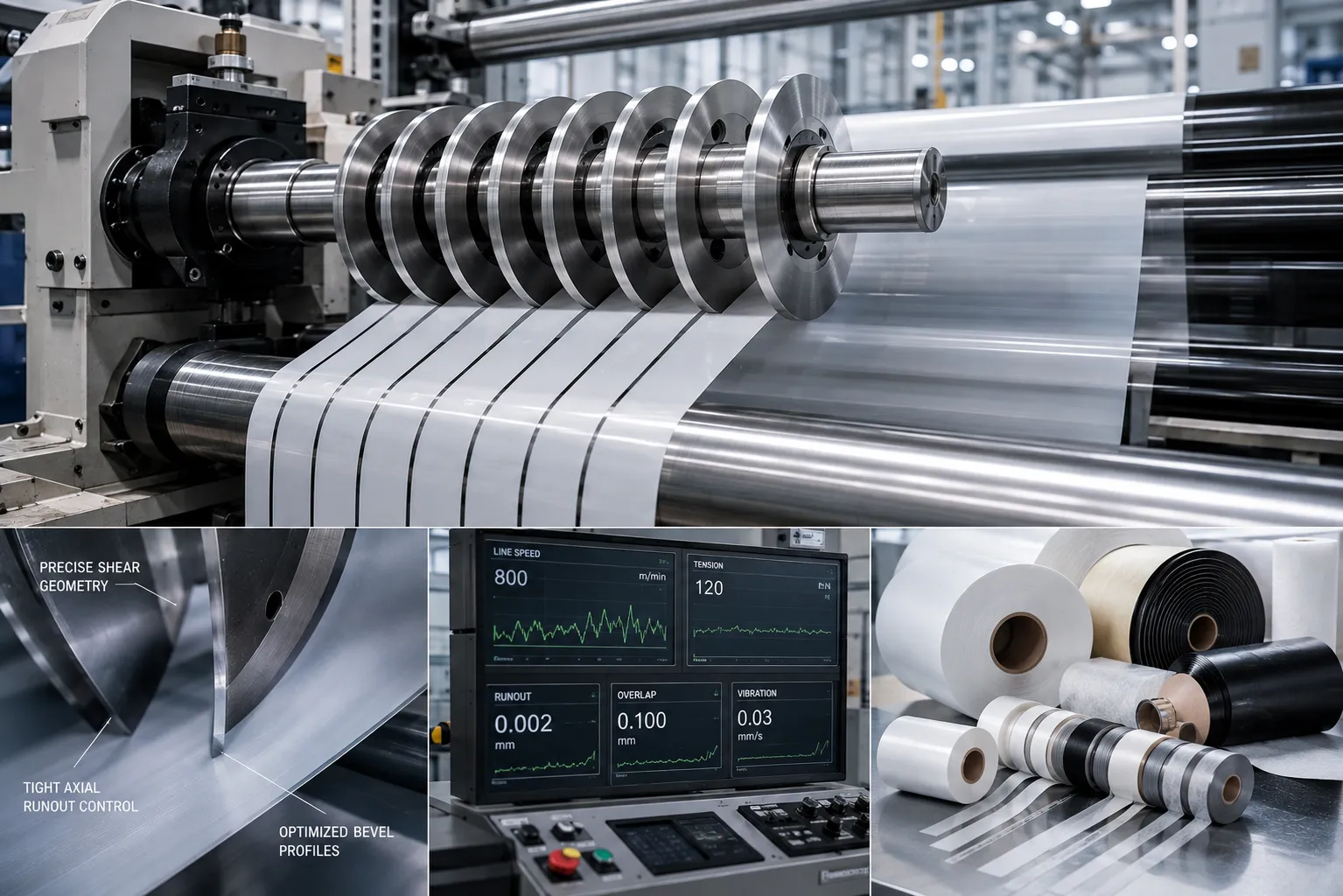
Optimizing paper film nonwoven slitting performance requires balancing web line speeds, shear geometry, axial overlap, and substrate tension. Superior axial runout control and tight dimensional tolerances are vital to eliminate blade chipping, edge burrs, and costly web tears.
Sharkcutting engineers evaluate your exact machine configuration and material characteristics to specify optimal blade hardness, bevel profiles, and surface finishes. Whether slitting abrasive paperboard or delicate lithium battery separators, our industrial slitting knives maximize continuous uptime and lower your total cost of ownership.
Converting Substrate & Slitting Knife Selection Matrix
Compare recommended blade material grades, bevel configurations, and expected wear characteristics across primary slitting environments.
| Converting Sector | Primary Substrate | Recommended Steel/Alloy | Bevel Geometry | Primary Slitting Advantage |
|---|---|---|---|---|
| Flexible Packaging | BOPP, PET, PE, Barrier Film | Tungsten Carbide / M2 HSS | Single Bevel (Ultra-Sharp) | Prevents polymer dust, stretch marks, and edge deformation |
| Paper Converting | Kraft, Specialty Board, Tissue | D2 Tool Steel / M2 Steel | Double Bevel (Heavy-Duty) | High fracture toughness against abrasive mineral fillers |
| Nonwovens & Hygiene | Spunbond, Meltblown Fabric | Solid Carbide / High-Vanadium M2 | Compound Multi-Bevel | Eliminates filament dragging, crimping, and thermal fusion |
| Energy & Battery Materials | PE Separator, Cu/Al Foils | Sub-Micron Carbide + PVD | Precision Micro-Bevel | Guarantees burr height < 2µm and zero particulate shed |
Slitting Knife Dimensional Tolerances & Precision Specs
Engineered to stringent manufacturing standards, delivering sub-micron accuracy, dynamic rotational stability, and consistent shear performance across automated converting lines.
Custom slitter blade sizes up to Ø600mm+ available for specialized machinery and industrial applications.
Ultra-tight parallel tolerances prevent blade binding, wear unevenness, and slitting width variations.
Precision runout control eliminates blade wobble to maintain clean, burr-free material edge quality.
Balanced precision grinding eliminates high-speed spindle vibration and chatter at maximum operational RPMs.
Slitting Knife Tolerance Matrix
Metric Specifications| Parameter | Standard Spec | Ultra-Precision Option |
|---|---|---|
| Outer Diameter (OD) | Ø20mm to Ø500mm | Custom sizes up to Ø600mm+ |
| Thickness Tolerance | ±0.005mm | Down to ±0.001mm |
| Axial Runout Control | ≤ 0.003mm | ≤ 0.001mm |
| Radial Runout Control | ≤ 0.003mm | ≤ 0.001mm |
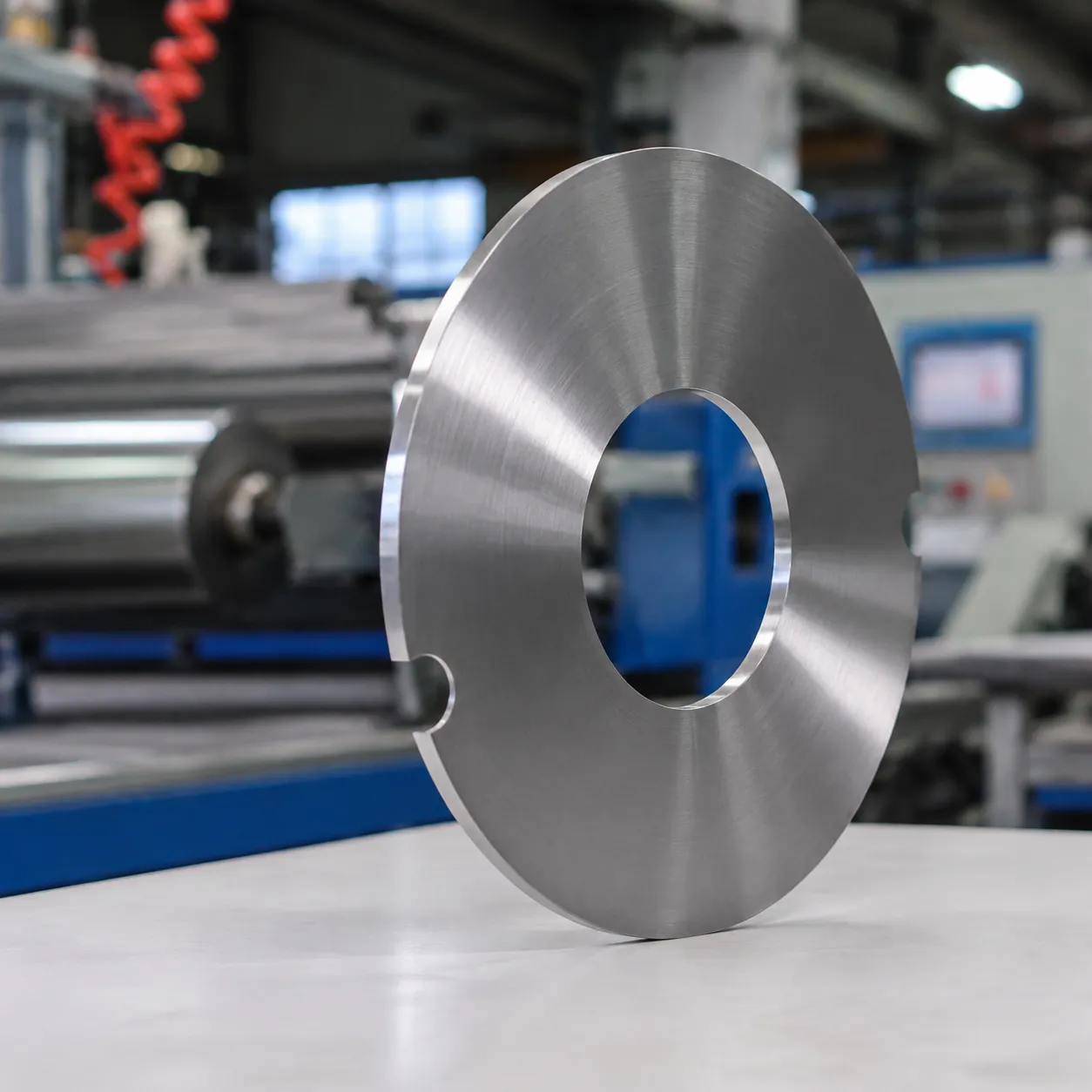
| Bore Diameter Range | Ø10mm to Ø100mm | Custom keyways, pin holes & splines |
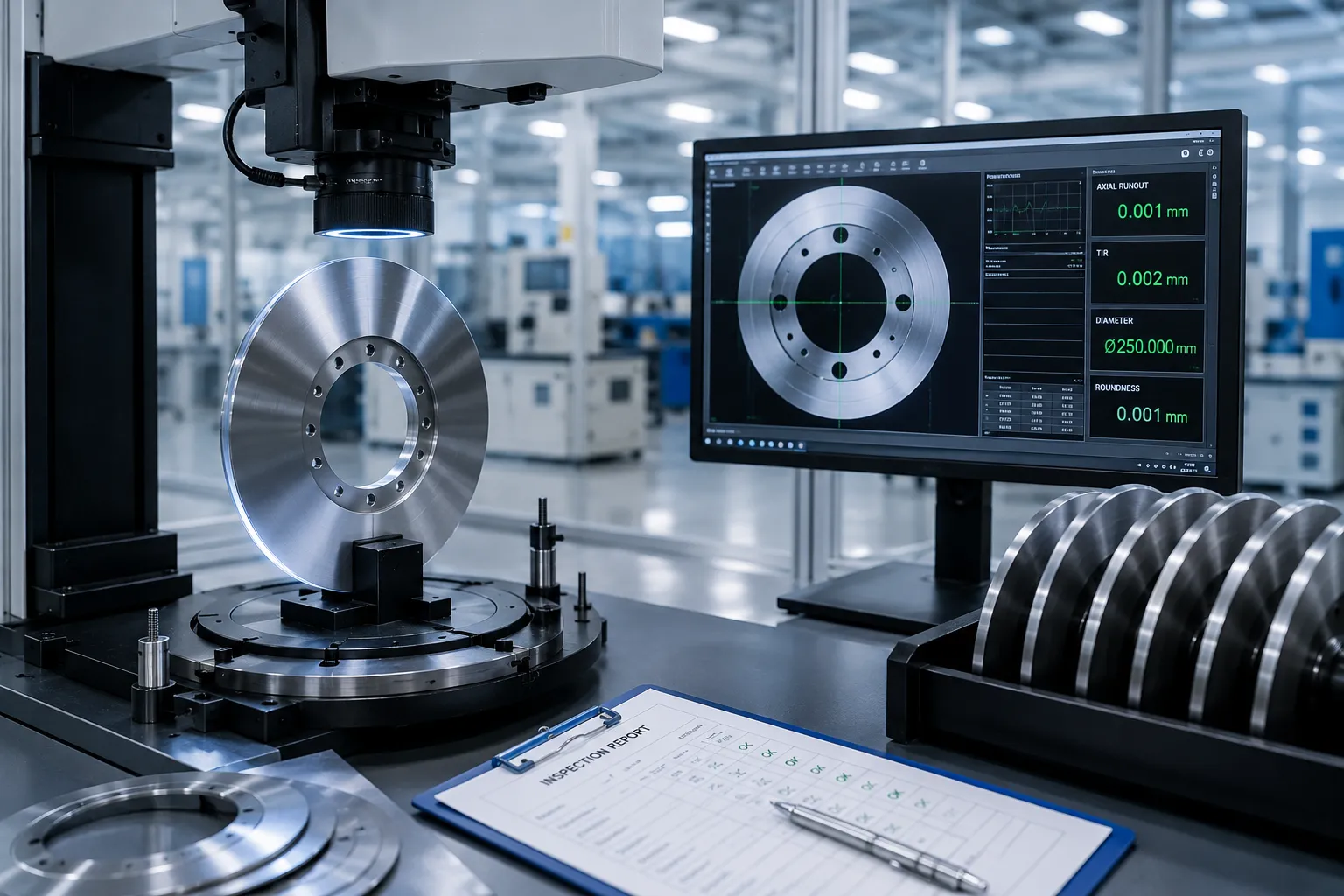
High-Speed Slitting Performance Assurance
Every Sharkcutting circular slitter blade undergoes 100% optical dimensional inspection and axial testing to guarantee zero-defect operational stability.
Technical Specification Catalog
Download our comprehensive engineering catalog featuring detailed dimensional charts, material performance data, and operating tolerances.
Custom Slitter Blade Engineering
Need tailored dimensions or non-standard mounting configurations? Explore our solutions for custom industrial knives or submit your parameters to request custom 2D/3D CAD models and fast factory quotes.
Industrial Knife Manufacturing Quality & Precision Grinding Standards
At Sharkcutting, every circular slitter knife undergoes a rigorous multi-stage manufacturing and inspection pipeline engineered to meet the extreme demands of high-speed converting. From raw alloy spectrographic validation to sub-micron optical metrology, our advanced production protocols eliminate axial deflection, prevent premature blade wear, and ensure micron-level dimensional repeatability across high speed slitter blades.
Raw Alloy Inspection & Metallurgical Verification
Uncompromised cutting performance starts with verified material purity. Sharkcutting conducts strict spectrographic elemental analysis and ultrasonic flaw detection on all incoming tool steel (D2, SKD-11), high-speed steel (M2, SKH-51), and solid tungsten carbide stock.
- Optical Emission Spectroscopy: Verifies precise chemical composition to guarantee optimal toughness and wear resistance.
- Ultrasonic Flaw Detection: Screens internal alloy billets for micro-voids, inclusions, or structural cracks prior to machining.
- Metallographic Microstructure Audit: Confirms uniform carbide distribution for long-lasting carbide slitter knives and D2 M2 steel blades.
Vacuum Heat Treatment & Uniform Hardening
To withstand continuous high-speed rotation and abrasive substrate contact, circular slitter knives require uniform core-to-surface hardness without internal stresses or atmospheric oxidation.
- Computerized Vacuum Furnaces: Eliminates surface decarburization while enforcing precisely controlled heating ramps.
- Sub-Zero Cryogenic Tempering: Converts retained austenite into stable tempered martensite for superior dimensional stability.
- Targeted Hardness Calibration: Achieves precise 60–65 HRC for steel grades and optimal binder density for solid carbide blades.
CNC Precision Grinding & Ra 0.1 Mirror Polishing
The cutting edge profile determines shear slitting quality. Our multi-axis CNC grinding centers deliver laser-calibrated bevel geometry and ultra-smooth surface finishes that drastically reduce slitting friction and dust accumulation.
- Multi-Axis CNC Edge Profiling: Precision-grinds single bevel, double bevel, and compound bevel geometries with zero edge burrs.
- Ra 0.1 Mirror Surface Finishing: Polishes side faces to a mirror surface, minimizing web drag, adhesive buildup, and heat generation.
- Coolant Temperature Control: Prevents thermal micro-fissures and maintains steel structural integrity during aggressive grinding.
100% Quality Inspection via CMM & Optical Sensors
No rotary slitting knife leaves our facility without 100% dynamic metrology verification. Sharkcutting utilizes automated coordinate measuring machines and optical laser sensors to measure key dimensional parameters.
- CMM Dimensional Audit: Validates inner bore diameter, outer diameter, and keyway dimensions to exact host machine specifications.
- Optical Runout Measurement: Ensures axial and radial runout stays under ≤ 0.002mm to eliminate blade wobble at high RPM.
- Thickness Tolerance Control: Holds strict axial slitting knife dimensional tolerances down to ±0.001mm for gang-slitting alignment.
E-E-A-T Technical Inspection Benchmarks
Compare Sharkcutting industrial knife manufacturing quality control standards against general market practices. Our commitment to metallurgical precision and sub-micron tolerance control directly translates to extended blade lifespan and superior web slitting cleanliness.
| Inspection Parameter | Industry Standard Baseline | Sharkcutting E-E-A-T Standard | Verification Instrument | Converting Line Benefit |
|---|---|---|---|---|
| Axial & Radial Runout | ≤ 0.010 mm | ≤ 0.002 mm | High-Precision Laser Interferometer | Eliminates blade vibration, flutter, and web edge tearing at high speed |
| Side Surface Roughness | Ra 0.4 - 0.8 μm | Ra 0.1 μm Mirror Finish | Optical Profilometer / Contact Stylus | Prevents adhesive residue, dust buildup, and web drag |
| Blade Thickness Tolerance | ± 0.005 mm | ± 0.001 mm | Non-Contact Optical Thickness Gauge | Ensures accurate gang knife setup and consistent slit widths |
| Hardness Consistency | ± 2.0 HRC | ± 0.5 HRC | Digital Micro-Vickers / Rockwell Tester | Eliminates soft spots, preventing premature dulling and chipping |
| Bore Diameter Precision | H7 Tolerance | H5 / H6 Precision Tolerance | Air Gauge Bore Micrometer & CMM | Ensures perfect arbor fit, reducing shaft wear and setup time |
Why Metallurgical Precision Matters for Slitter Blade Lifespan
In high-speed flexible packaging, paper converting, lithium battery foil processing, and nonwoven-manufacturing substrate production, even minor blade imperfections cause severe downstream operational issues. Blade runout above 0.005mm creates microscopic axial wobble, leading to edge burrs, slitting dust, and accelerated cutting edge breakdown.
Sharkcutting addresses these challenges through total process traceability. Every lot of circular slitter knives is manufactured from vacuum-melted tool steels or ultra-fine grain tungsten carbide powders. By pairing vacuum heat treatment with cryogenic stress relief and multi-pass precision grinding, we deliver rotary slitter blades that sustain sharp shear edges significantly longer than standard alternatives. Learn more about-us and our dedication to precision engineering.
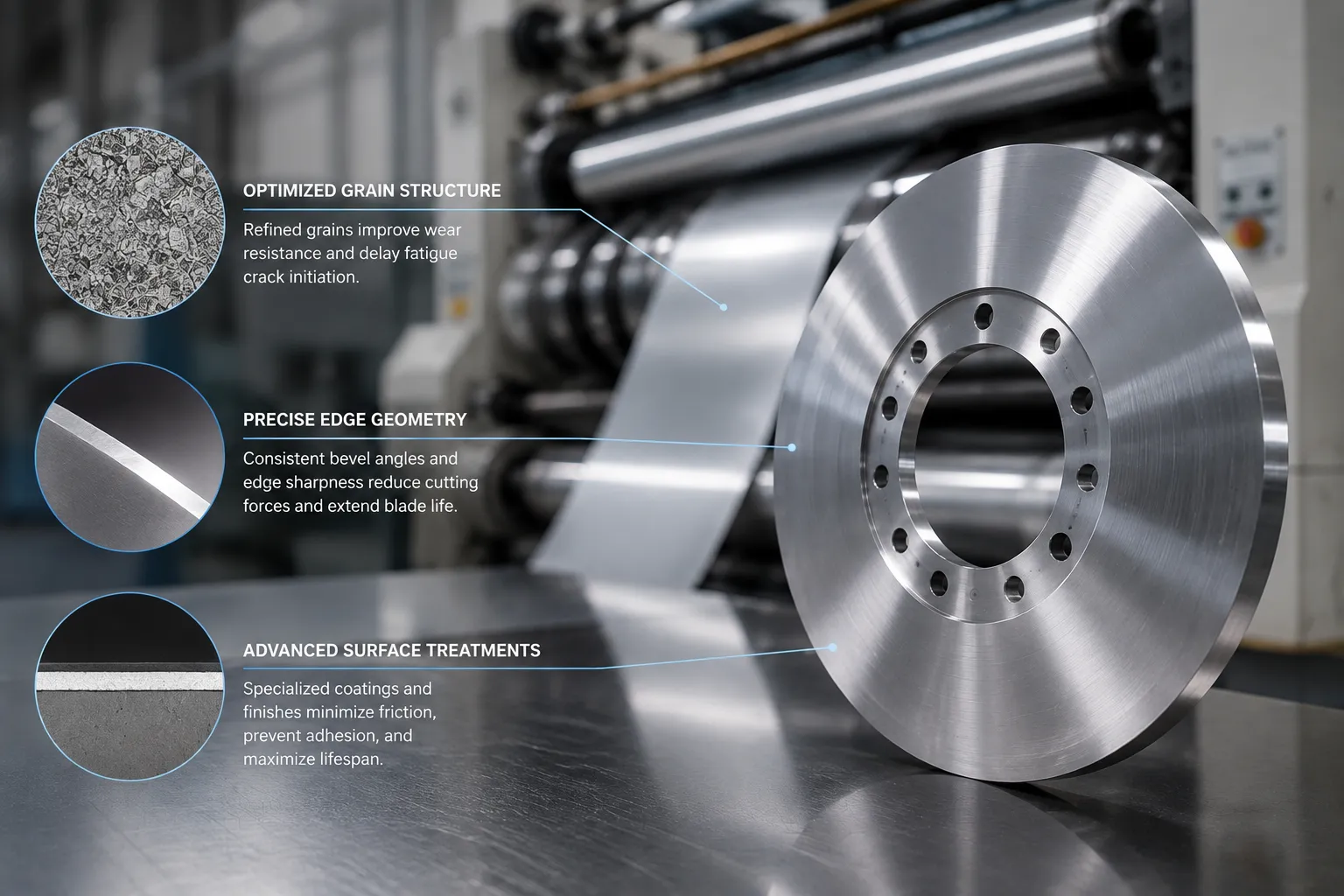
Certified Factory Quality Inspection
Every individual slitter blade shipped from Sharkcutting is accompanied by a full metallurgical inspection report, dimensional verification certificate, and surface roughness audit log.
Request Material Test Certificates & CAD Drawing Verification
Need specialized tolerances, custom bevel angles, or custom alloy selection for abrasive film and foil slitting? Consult with Sharkcutting metallurgical engineers to receive verified technical recommendations and full CAD verification within 24 hours.
Circular Slitter Knife FAQ & Slitting Blade Troubleshooting
Resolve complex converting issues, optimize edge bevel geometries, and maximize blade lifespan with practical engineering protocols from Sharkcutting slitting blade specialists.
Slitting Defect Root Cause & Diagnostic Matrix
Diagnose edge defects on flexible film, paper, nonwoven, and foil converting lines and execute precise corrective maintenance protocols.
| Observed Slitting Defect | Primary Root Cause | Corrective Maintenance Protocol | Recommended Material / Bevel |
|---|---|---|---|
| Substrate Edge Burrs & Dusty Cuts | Excessive clearance between upper and lower knives, incorrect overlap, or a dull blade edge. | Recalibrate horizontal blade engagement; regrind edge geometry to an Ra 0.1 mirror surface finish. | Single bevel (15°–20°) in M2 High-Speed Steel |
| Micro-Chipping Along Cutting Edge | Arbor shaft vibration, excessive side loading pressure, or mismatched bevel geometry for tough web media. | Reduce side engagement pressure; verify arbor axial runout to maintain a tolerance ≤ 0.002mm. | D2 Tool Steel or Compound Bevel Geometry |
| Rapid Wear & Frequent Blade Changes | High thermal friction caused by abrasive converting materials (silica coatings, TiO2, metallic foils). | Upgrade metallurgy to withstand high abrasive web wear and extreme rotational heat buildup. | Solid Tungsten Carbide for up to 10x service life |
| Wavy Cut Line & Web Wobble | Excessive axial runout, uneven knife spacer parallelism, or worn arbor bearing assemblies. | Inspect spacer parallel accuracy, re-torque knife locking collars, and check arbor shaft integrity. | Precision Ground Knives (Thickness Tol. ±0.001mm) |
Circular Slitter Knife FAQ
Expert solutions on material selection, edge bevel profiles, slitting blade troubleshooting, and regrinding services.
How do I select the right circular slitter knife material and bevel angle for my converting substrate?
Substrate properties directly dictate optimal knife metallurgy and edge profile. Flexible packaging films (BOPP, PET, PE) require ultra-sharp single bevel edges (15°–22°) in M2 High-Speed Steel or Tungsten Carbide to deliver clean shear-blades performance without edge stretching or lip formation.
Heavy corrugated board, thick specialty papers, and dense nonwovens perform best with D2 Tool Steel or double bevel profiles (30°–45°). Double bevel geometries reinforce the cutting edge against severe impact loads while maintaining clean, continuous shear slitting.
What causes premature blade wear, micro-chipping, and edge burrs on high-speed slitter blades?
Premature blade failure generally stems from three key operational issues: improper side engagement pressure, axial shaft runout exceeding 0.002mm, or thermal shock during high-speed production runs. In recycling operations, robust shredder-blades are also essential to withstand severe mechanical impacts.
- Micro-chipping: Triggered by excessive lateral pressure, inappropriate bevel angles, or machine arbor chatter.
- Edge burrs: Caused by enlarged blade-to-blade clearance, dull cutting radii, or insufficient shear overlap.
- Accelerated wear: Indicates high abrasive web friction, requiring a material upgrade to Solid Tungsten Carbide grades.
What resharpening, regrinding, and knife maintenance services does Sharkcutting provide?
Sharkcutting provides comprehensive OEM-spec regrinding and resharpening services for rotary slitting knives. Our multi-axis CNC grinding process restores exact original bevel geometries, surface roughness down to Ra 0.1 mirror finish, and ultra-tight dimensional tolerances.
Every reconditioned knife undergoes full CMM dimensional inspection, crack testing, and dynamic balancing to guarantee cutting performance identical to a brand-new factory blade upon installation.
What are the production lead times for custom slitter blade prototypes and volume orders?
Standard catalog dimensions (Ø20mm to Ø500mm outer diameter) are maintained in inventory for fast dispatch within 24 to 48 hours.
Custom dimension samples, prototype alloy formulations, or specialized bevel profiles are engineered and shipped within 7 to 10 business days. High-volume OEM production orders adhere strictly to scheduled batch delivery timelines and SLA commitments.
How do dimensional tolerances and axial runout controls impact slitter knife performance?
At web line speeds exceeding 500 meters per minute, even microscopic runout produces severe rotational imbalance, knife chatter, and inconsistent shear edge quality across the web.
Sharkcutting enforces strict manufacturing standards: thickness tolerances down to ±0.001mm and axial/radial runout ≤ 0.002mm. This precision guarantees stable high-speed rotation, prevents web deviation, and extends arbor bearing service life.
Comprehensive Resharpening & Maintenance Workflow
Restore worn circular slitter knives to original factory tolerances with our 4-stage precision maintenance protocol.
Metallurgical Inspection
Comprehensive ultrasonic flaw detection and optical micro-crack evaluation to assess structural integrity before grinding.
CNC Precision Grinding
Multi-axis CNC wet grinding restores exact single, double, or compound bevel angles without inducing thermal stress.
Mirror Edge Polishing
Super-finishing process achieves Ra 0.1 surface smoothness, minimizing friction coefficient and web dust buildup.
CMM Quality Audit
100% verification of runout tolerances (≤ 0.002mm) and thickness accuracy before protective coating and packaging.