
Formula details
Product Details
Overview
Single Shaft Shredder Blade Technical Specifications & Dimension Matrix
| Specification Parameter | Standard Range / Specification | Engineering Function |
|---|---|---|
| Insert Dimensions (L × W) | 30 × 30 mm to 80 × 80 mm | Sized to match specific rotor knife pocket configurations |
| Blade Thickness | 15 mm to 35 mm | High cross-sectional thickness prevents fracture under shock loads |
| Mounting Seat Geometry | Flat-back or radius-back (curved) | Ensures flush, zero-play contact against the rotor tool holder |
| Bore & Bolt Configuration | Single or twin countersunk / counterbore | M12 to M24 high-tensile fasteners (Class 10.9 / 12.9) |
| Hardness Range | HRC 56–62 (Application-specific) | Balanced wear resistance versus impact shatter resistance |
| Machining Tolerance | Within ±0.01 mm | Preserves uniform cutting clearance across the entire rotor length |
Metallurgy and Core Hardness Balancing
Selecting the proper steel grade prevents catastrophic edge chipping while extending operating hours between rotations:
- D2 / 1.2379 & SKD11 (HRC 58–60): The industrial benchmark for dry, semi-abrasive plastic recycling, wood, and paper. High chromium content delivers exceptional sliding wear resistance.
- DC53 (HRC 60–62): Features double the toughness of conventional D2. Eliminates micro-chipping on higher-impact feeds, such as plastic purges and heavy-gauge extrusions.
- Caldie (HRC 58–61): Premium chromium-molybdenum-vanadium alloy specifically formulated for severe chipping environments and heavy-gauge industrial waste.
- Hardox 450 / 500: Utilized primarily for counter knives and sacrificial bed blades requiring extreme bulk yield strength and structural ductility.
- Tungsten Carbide Tipped / Solid Inserts: Brazed or clamped inserts engineered for extreme abrasive streams (glass-filled plastics, electronic scrap, and tire shredding).
Precision Surface Treatments & Edge Geometries
We apply dedicated thermal and finishing processes to stabilize the crystalline structure and maximize the tonnage throughput per cutting edge:
- Sub-Zero Deep Cryogenic Treatment (-196°C): Converts residual austenite into fine-grained martensite, precipitating secondary eta-carbides to boost abrasive wear resistance by up to 200%.
- Black Oxide & Anti-Corrosive Chemical Coatings: Shields cutting surfaces from oxidation during wet grinding operations and corrosive post-consumer plastic washes.
- Precision CNC Ground Finishes: Ra 0.4–0.8 µm surface finishes reduce cutting friction, operating temperatures, and polymer adhesion.
- 4-Way Indexable Square Inserts: Symmetrical square geometry enables four 90-degree rotations before replacement, directly cutting tooling costs per processed ton.
- Concave Face Profiling: The dished front face creates an aggressive biting angle that pulls bulk materials inward, reducing motor amperage draw and heat generation.
- Flat Face & Crown-Cut Geometries: Flat profiles deliver maximum edge strength for unyielding bulky solids; crown-cut geometries concentrate hydraulic ram force on high-density feedstocks.
Rotary Shredder Blades and Counter Knife Configurations
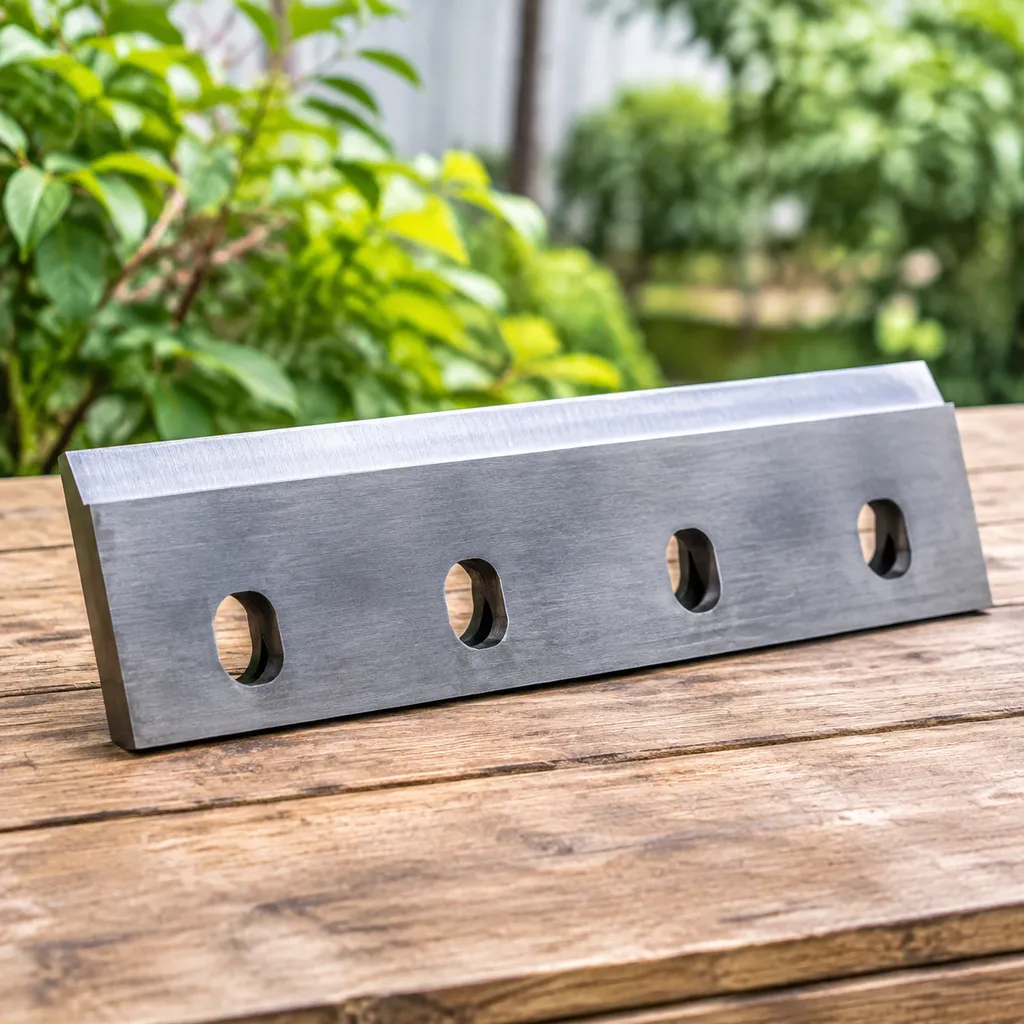
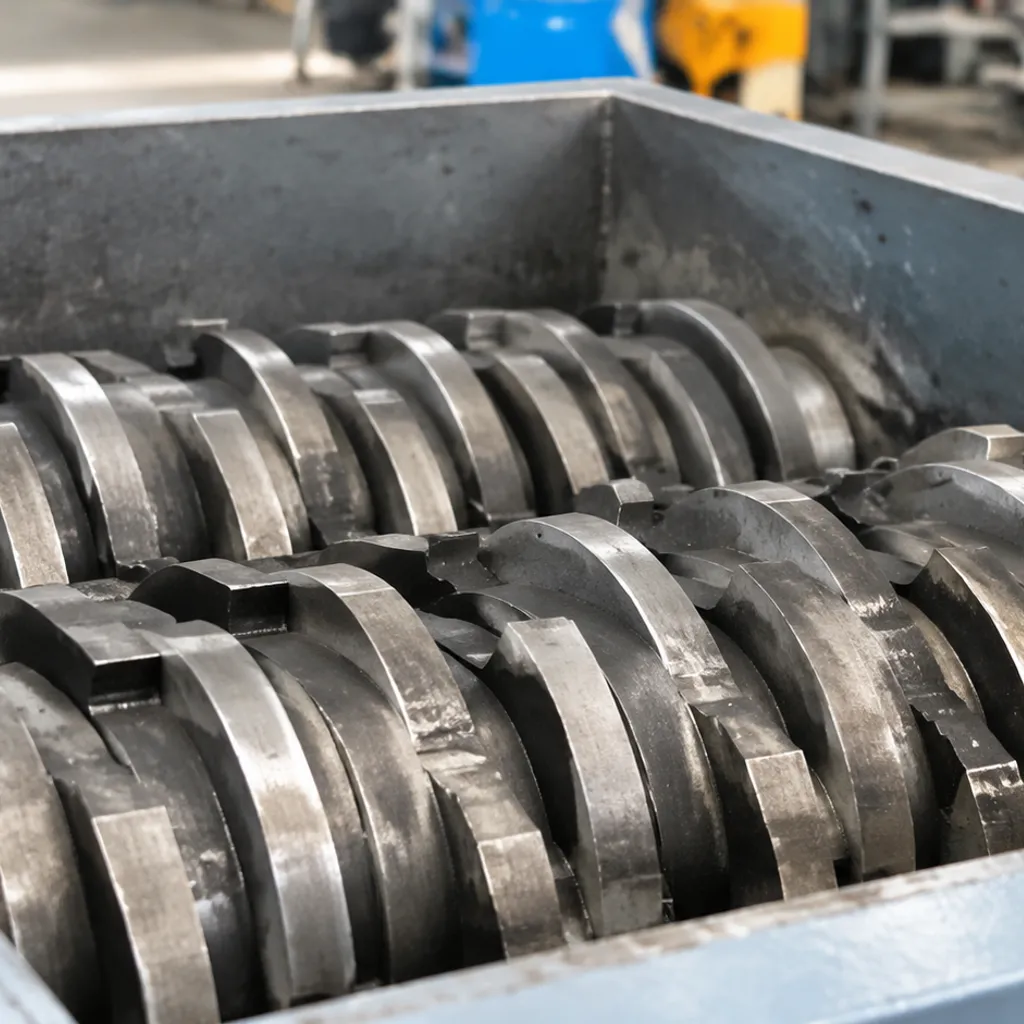
Our single shaft shredder blade designs prioritize cutting efficiency and maximum machine uptime. We manufacture rotary shredder blades as 4-edge reversible square blocks, typically ranging from 30x30mm to 80x80mm. These feature precision-engineered concave radius profiling, which optimizes cutting force by effectively pulling material into the rotor.
For the static side of the cutting chamber, we supply both single-piece and multi-segmented stator knives for shredder systems. This modularity allows for the efficient replacement of individual segments rather than swapping the entire bed knife, significantly reducing maintenance labor.
Shearing Profiles and Operational Life
We tailor shear profiles based on the specific material stream to ensure optimal throughput:
- Serrated Tooth Configurations: Best suited for aggressive shredding of bulky, high-tensile materials, providing enhanced grip and tear.
- Continuous Straight Shear Edges: Ideal for clean, uniform cuts in thin-film or consistent plastic streams, reducing power draw.
- Reversible Bed Knives: Our counter knife single shaft designs utilize reversible double-edge geometries, effectively doubling the service life before regrinding is necessary.
By utilizing high-performance square shredder inserts and properly aligned bed knives, we ensure consistent throughput and minimize mechanical stress on your machine's drivetrain.
Single Shaft Shredder Blade Metallurgy & Vacuum Heat Treatment
Getting maximum service life out of every single shaft shredder blade comes down to thermal processing control. Without strict atmospheric regulation, even premium D2, DC53, or modified tool steels suffer from brittle fractures or premature edge dulling.
Controlled Atmosphere Vacuum Hardening
Surface decarburization is the main reason industrial shredder knives lose their cutting edge prematurely. When steel loses carbon at high temperatures, it forms a soft outer skin that dulls rapidly during initial run-in.
We run automated vacuum hardening furnaces equipped with high-pressure nitrogen gas quenching:
Zero Decarburization: High-vacuum chambers preserve complete surface carbon content, eliminating soft spots and ensuring factory-edge sharpness right out of the box.
Uniform Core Hardness: Controlled multi-stage preheating and rapid uniform quenching produce an even martensitic microstructure across thick blade cross-sections (up to 80 mm).
Minimal Thermal Distortion: Low-distortion vacuum processing maintains precise hole pitch and blade seat geometry, eliminating internal stress concentrations before finish grinding.
Our specialized D2 steel heat treatment protocols stabilize the alloy matrix to ensure consistent cutting efficiency across demanding recycling runs.
Sub-Zero Deep Cryogenic Treatment (-196°C)
Standard quenching leaves behind unstable retained austenite, which leads to dimensional distortion and uneven wear over long production cycles. Directly following quenching, our single rotor cutters undergo deep cryogenic processing.
- Martensite Transformation: Chilling the steel to -196°C in liquid nitrogen converts virtually all retained austenite into stable, hard martensite.
- Secondary Carbide Precipitation: Deep freezing triggers the formation of fine sub-microscopic eta-carbides throughout the steel matrix, boosting abrasive wear resistance when processing glass-filled polymers, sandy agricultural film, and electronic scrap.
- Stress Relieving & Dimensional Stability: Cryogenic stabilization locks in blade dimensions, ensuring indexable square inserts maintain exact seating alignment under heavy mechanical shock loads.
Engineered Tempering Curves: Hardness vs. Shatter Resistance
Single-shaft rotors frequently hit tramp metal, uncrushable purges, and structural steel contaminants. Running blades that are excessively hard causes catastrophic fractures that destroy counter knives and damage rotor pockets.
We apply targeted triple-tempering cycles calibrated to balance surface hardness with core fracture toughness:
| Heat Treatment Phase | Operational Parameters | Metallurgical Transformation | Rotor Performance Result |
|---|---|---|---|
| Vacuum Austenitizing | 1020°C – 1040°C in high vacuum | Uniform carbon and alloy dissolution | Total elimination of scale and surface decarburization |
| High-Pressure Gas Quench | 6–10 bar pure N₂ quenching | Rapid transformation to martensite | Consistent hardness penetration across thick blade sections |
| Deep Cryogenics | -196°C liquid nitrogen soak (24+ hrs) | Retained austenite reduced below 1% | Maximized edge retention and complete dimensional stability |
| Multi-Stage Tempering | Triple cycles (500°C – 540°C) | Matrix stress relief & secondary hardening | Calibrated to 56–60 HRC to prevent shattering on metal impacts |
By tailoring the final temper to your specific input material, we optimize knife wear life and cut unexpected plant downtime, keeping operational overhead predictable as outlined in our shredder blade cost and lifespan guide.
Waste Material Application Matrix for Single Shaft Shredder Knives
The operational efficiency of a single shaft shredder blade depends on aligning the blade’s metallurgy and edge geometry with your specific material stream. We categorize our blade performance across common industrial waste applications to ensure optimal throughput and extended service life. Selecting the correct steel grade—whether D2, SKD11, or tungsten carbide—is critical for managing the abrasive characteristics of different input materials. For a deeper technical breakdown of how these alloys perform under specific loads, consult our crusher blade materials guide.
Material Processing Profiles
- Plastics and Polymers
- Targets: Purges, film bales, injection sprues, HDPE pipes, and PET bottles.
- Processing Note: Requires sharp, high-precision cutting edges to minimize friction-induced heat, which prevents material melting and ensuring clean shear separation.
- E-Waste and Non-Ferrous Metals
- Targets: PCBs, wire scrap, and copper/aluminum radiators.
- Processing Note: Demands high impact toughness to resist chipping or cracking when the rotor encounters rigid metal inclusions.
- Wood Waste and Biomass
- Targets: Hardwood pallets, demolition timber, and bulky green waste.
- Processing Note: Blades must withstand significant shock loads and the presence of occasional abrasive contaminants like nails, staples, or soil.
- Municipal Solid Waste (MSW) and RDF/SRF
- Targets: High-abrasion heterogeneous waste streams.
- Processing Note: Focuses on superior wear resistance to maintain cutting profile integrity against the constant abrasion typical of mixed municipal feedstocks.
- Rubber and Heavy Industrial Textiles
- Targets: High-tensile synthetic fibers, carpet backing, and conveyor belts.
- Processing Note: Requires extreme shearing force and specific gap clearance to slice through elastic and fiber-dense materials without causing "wrapping" around the rotor.
OEM Compatibility and Precision Replacement
We specialize in manufacturing high-performance shredder blade dimensions and custom OEM replacement blades designed to match or exceed factory specifications. Our engineering team prioritizes exact mechanical fitment, ensuring that our rotary and stator knives function seamlessly within your existing shredding infrastructure to eliminate unnecessary downtime.
Compatible Shredder Brands and Platforms
We offer drop-in replacement solutions for major industrial shredder systems, ensuring perfect integration without the need for expensive machine modifications:
- Vecoplan: Complete rotary and stator knife sets for VAZ and VECO-DYNO series.
- Weima: Precision-engineered components for WL, Beaver, and Spider series.
- Lindner: Heavy-duty replacement cutters optimized for Micromat and Polaris platforms.
- Zerma, Untha, Genox, & SSI: Full tooling compatibility for ZSS, ZXS, and other high-capacity shredder models.
Cross-Reference and Verification
To guarantee peak operational performance, our production process relies on rigorous cross-reference engineering. We verify OEM part numbers and exact mechanical profiles to ensure our waste shredder replacement blades provide a precise fit. Whether you are operating a single rotor shredder or a complex recycling line, our technical team confirms all tolerances before shipment to maintain the structural integrity and longevity of your cutting chamber.
Quality Control and Precision Manufacturing Standards
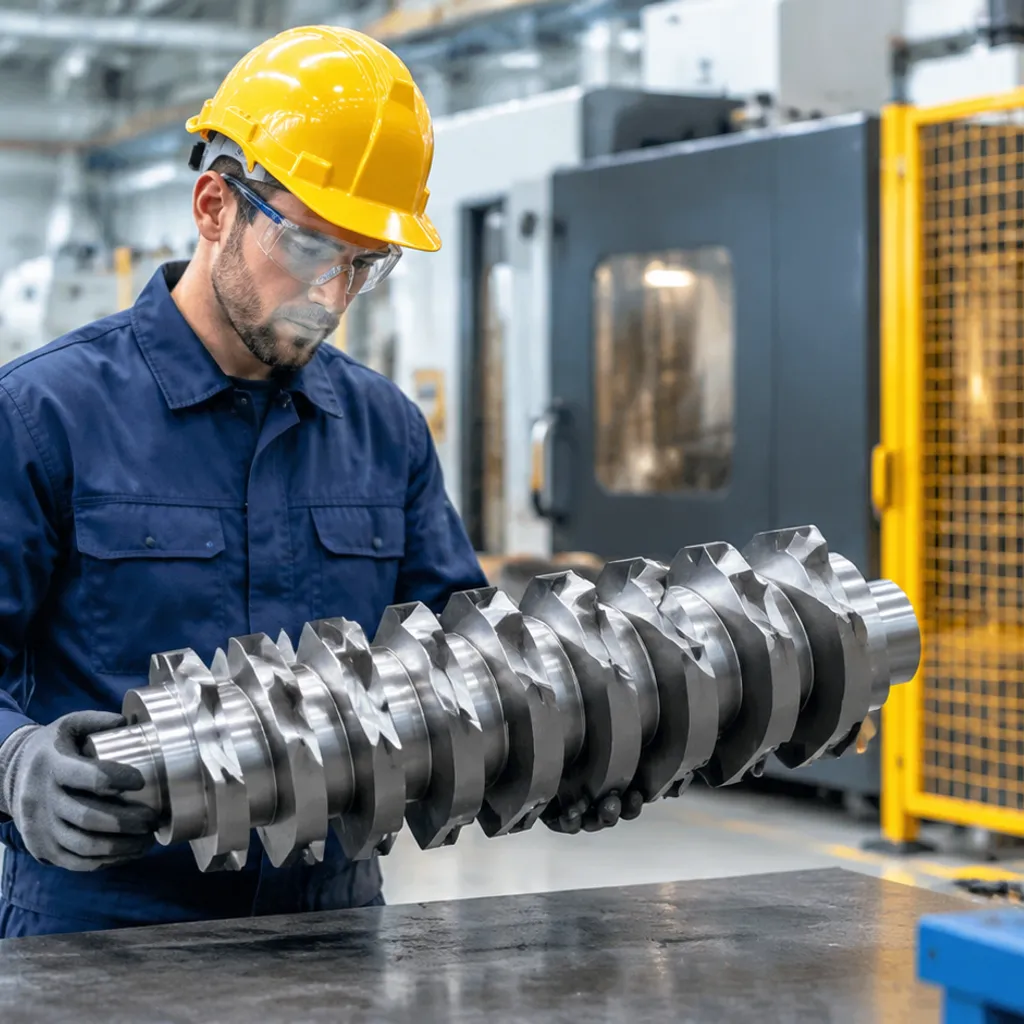
CNC Surface and Profile Grinding Held Within ±0.01 mm
Consistent cutting geometry depends on tight dimensional control. Through multi-axis precision machining and wet grinding, we hold our square inserts, counter knives, and single rotor shredder teeth to ±0.01 mm tolerances.
- Flat-bed seating: Eliminates micro-movement inside the knife holder under load.
- Precise bolt centers: Ensures direct interchangeability during scheduled blade rotations.
- Uniform cutting edges: Prevents uneven gaps against the bed knife, reducing material drag and heat buildup.
Dynamic Weight Balancing for Extended Bearing Life
A shredder rotor spinning off-balance destroys main bearings, tears up drive couplings, and wastes motor power. When you install industrial shredder knives across a multi-row drum, weight variation between individual blocks must remain negligible.
| Inspection Metric | Standard Tolerance | Operational Impact |
|---|---|---|
| Weight Variance per Set | < 1.5 grams | Eliminates high-speed shaft vibration |
| Edge Thickness Variation | ±0.01 mm | Maintains uniform shear clearance |
| Bore & Counterbore Depth | ±0.02 mm | Ensures proper bolt clamping force |
100% Raw Forging Verification via UT and MTC
Long service life starts with clean, solid core steel. Before machining any D2, DC53, or tool steel shredder knives, our raw forged billets undergo thorough verification under our plant-wide quality control system:
- Mill Test Certificates (MTC): Full traceability verifying the exact chemical composition of chromium, molybdenum, and vanadium.
- Ultrasonic Testing (UT): 100% volumetric inspection to spot internal voids, slag inclusions, or internal porosity before the cutting stage begins.
Micro-Crack Screening and Magnetic Particle Inspection
Heat treatment stresses can cause invisible micro-fissures that trigger catastrophic blade breakage during metal tramp impacts. We put our rotary shredder blades and stator knives through non-destructive testing:
- Magnetic Particle Inspection (MPI): Detects sub-surface stress fractures around bolt holes, concave edges, and sharp radii.
- Eddy Current Testing: Verifies surface integrity on ground faces to ensure zero grinding burns or localized re-hardening cracks.
Installation, Shear Clearance, and Wear Maintenance
Proper installation of your single shaft shredder blade is the primary factor in preventing premature fatigue and maximizing machine uptime. Maintaining strict adherence to clearance and torque specifications ensures efficient shredding and protects your drivetrain. For best practices in maintaining alignment, refer to our slitter knife setup guide for precise cutting control.
Recommended Shear Clearance Matrix
| Material Type | Recommended Clearance (mm) |
|---|---|
| Plastic Film & Light Textiles | 0.2 – 0.5 mm |
| Hard Plastics, HDPE, & Rubber | 0.5 – 1.0 mm |
| Wood, Biomass, & General Waste | 1.0 – 1.5 mm |
Critical Maintenance Procedures
- Torque Specifications: Always clean bolt threads and contact surfaces thoroughly before installation. Apply OEM-specified torque settings to prevent blade shift or vibration, which can lead to catastrophic cracking.
- 4-Way Indexing: Utilize the 4-way 90-degree capability of indexable shredder cutter blocks. Rotate or flip blades as soon as the edge exhibits rounding to preserve cutting geometry.
- Sharpening Thresholds: Adhere to strict regrinding limits. Removing excessive material from industrial shredder knives changes the effective diameter, negatively impacting rotor balance and shear efficiency.
- Inspection: Conduct periodic checks for micro-cracks or chipped edges during each rotation cycle. Replace damaged segments immediately to avoid secondary damage to the counter knife or screen.
Custom Engineering & Ordering Workflow
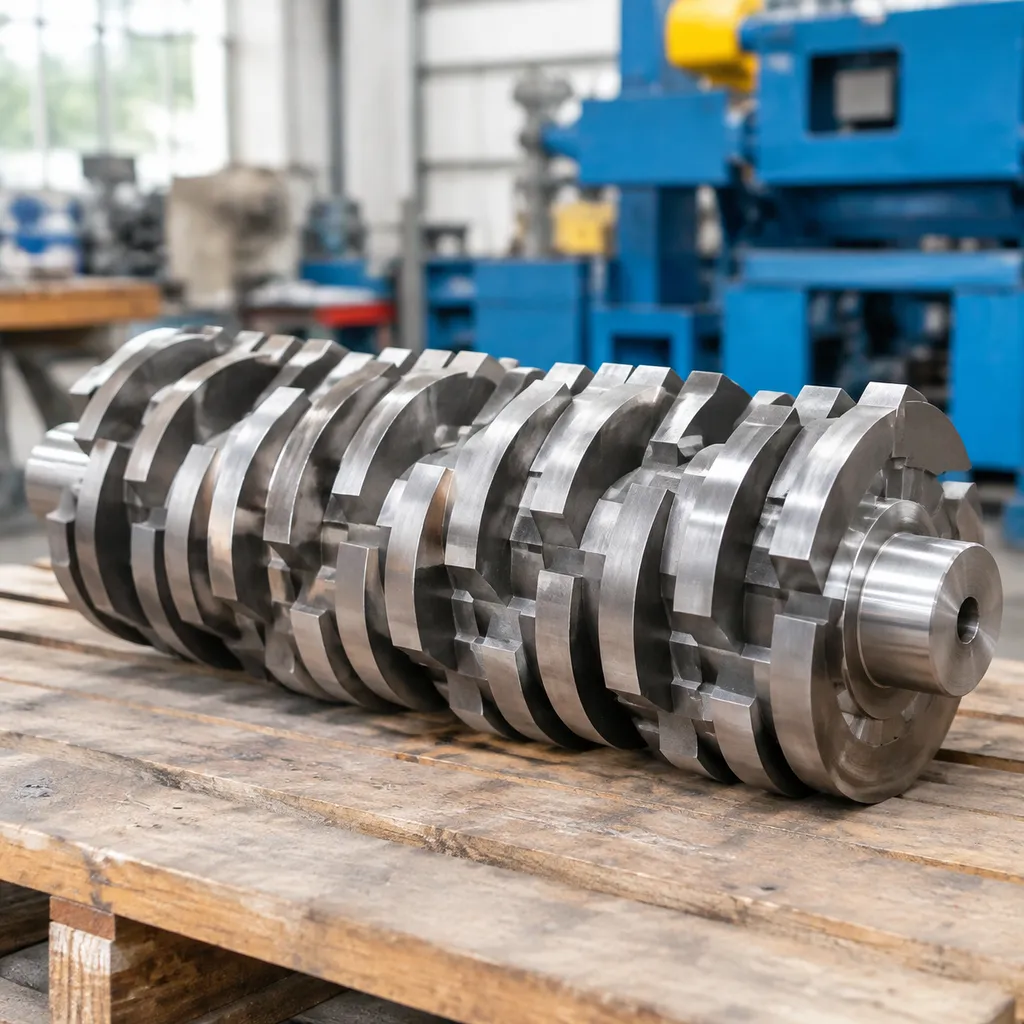
We streamline the procurement process to ensure you receive the exact single shaft shredder blade needed for your specific operational requirements. Whether you are seeking a drop-in replacement or a specialized blade design, our team handles the complete technical specifications to minimize downtime.
- Rapid Quoting & Analysis: Submit your OEM part numbers, 2D or 3D CAD files (STEP/DWG/PDF), or physical samples for a prompt, accurate quotation.
- Tailored Technical Solutions: Leverage our custom engineering services to define precise tooth profiling, metallurgy, and heat treatment profiles optimized for your specific waste stream.
- Global Logistics: We maintain rigorous packaging standards to ensure safe transit, offer flexible minimum order quantities (MOQ), and provide consistent, reliable global palletized lead times to maintain your plant's throughput.
Frequently Asked Questions About Single Shaft Shredder Blades
What is the best steel grade for processing contaminated plastic scrap?
For plastics carrying sand, dirt, glass fiber, or occasional light tramp metal, standard tool steel often chips or dulls prematurely.
- DC53 & Caldie Tool Steels: We recommend these cold-work grades tempered to HRC 58–60. They provide twice the impact toughness of conventional D2 while retaining high abrasive wear resistance.
- D2 / 1.2379 / SKD11: Best suited for high-abrasion, low-impact plastic scrap, such as post-consumer PET bottles and washed agricultural films.
- Tungsten Carbide Inserts: Applied in brazed or bolt-on setups for severe, clean abrasive streams without heavy uncrushables.
For general recycling lines running unsorted polymers, choosing optimized single shaft shredder blades with deep cryogenic treatment prevents catastrophic brittle failure while maintaining sharp cutting edges.
How often should 4-way indexable single shaft shredder blades be rotated?
Rotation intervals depend directly on material abrasiveness, contamination levels, and daily throughput:
- Clean Plastics (PE, PP, Sprues): Rotate every 600 to 1,000 operational hours per cutting edge.
- Abrasive & Filled Scrap (Glass-filled nylon, contaminated film bales): Rotate every 250 to 500 operational hours.
- Visual Inspection Benchmarks: Index the blade immediately when the cutting radius rounds past 1.0 mm to 1.5 mm, when the main drive motor shows a steady 15–20% rise in running amperage, or when shredded material begins wrapping around the rotor shaft.
Each square insert indexes 90 degrees to deploy a fresh concave shear edge, delivering four complete operational cycles before replacement.
Can custom counter knives be fabricated with non-standard tooth pitches?
Yes. We regularly engineer custom counter bed knives to match specialized rotor tooling, proprietary shredder brands, and non-standard screen sizes:
- Custom Pitch & Tooth Profiles: Manufactured via high-precision 5-axis CNC machining and wire EDM to guarantee exact shearing geometry with rotary teeth.
- Segmented Modular Stators: Available in individual, easily replaceable blocks to reduce maintenance downtime when local wear concentrates in high-impact rotor zones.
- Double-Edge Reversible Designs: Symmetric tooth profiles engineered to flip 180 degrees, doubling total service life.
We supply fully interchangeable stator tooling and standard shredder blades engineered to OEM tolerances or modified to solve severe wear patterns.
What causes premature chipping on single shaft shredder blades, and how do we resolve it?
Premature blade chipping stems from mechanical misalignment, incorrect metallurgy, or contamination:
- Tramp Metal & Uncrushables: Heavy ferrous strikes break brittle edges.
- Resolution: Lower the hardness curve by 2–3 HRC or switch from D2 to high-toughness DC53 or Caldie alloys. Ensure magnetic separators and metal detectors are operational upstream.
- Improper Cutting Clearance: Running a blade-to-counter clearance below 0.5 mm leads to micro-contact and tooth deflection under load, while clearances exceeding 1.5 mm cause material pulling, pinching, and shock deflection.
- Resolution: Reset cutting gaps using precision feeler gauges across the entire bed length.
- Uneven Mounting Torque: Dirty bolt counterbores or improperly torqued fasteners allow cutters to rock in their rotor seats, inducing rapid fatigue cracking across the bolt hole.
- Resolution: Clean blade pockets with solvent, wire-brush threads, apply high-temperature anti-seize, and torque grade 12.9 bolts to the machine manufacturer’s exact torque specifications.