
Formula details
Product Details
Overview
Industrial-Grade Grass Shredder Knife Blades Overview
Wet, fibrous clippings, soil contamination, and high-impact loading quickly expose weak cutting edges. When standard blades dull prematurely or chip on dense organic debris, rotors bog down, discharge chutes clog, and maintenance downtime surges. We build our industrial grass shredder knife blades to resolve these mechanical bottlenecks, delivering clean shearing action, smooth material throughput, and extended operating life.
Core Engineering Specifications
| Parameter | Specification Details | Operational Advantage |
|---|---|---|
| Metallurgy Selection | D2 Tool Steel, 65Mn Spring Steel, SK5, High-Carbon Steel | Exceptional wear resistance with high impact resilience |
| Hardness Range | 54–58 HRC | Maximum edge retention without brittle micro-chipping |
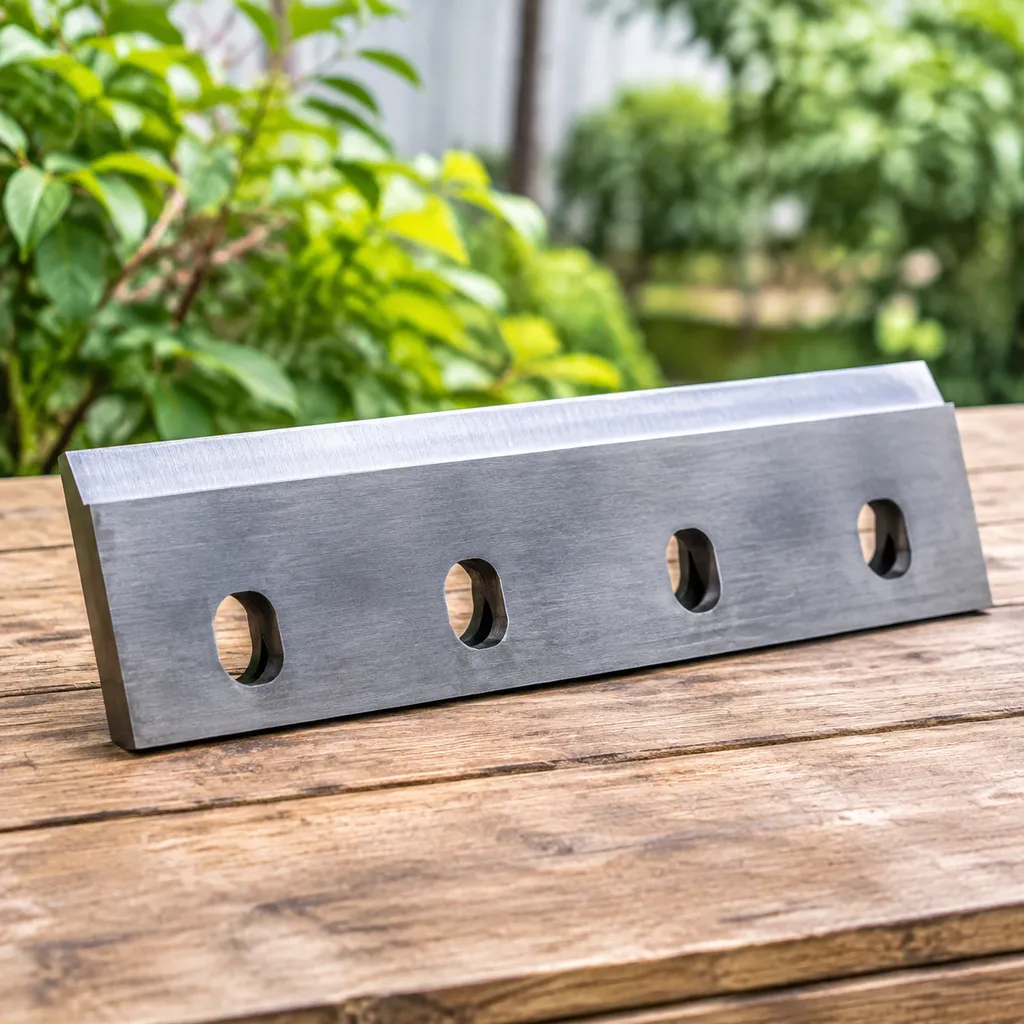
| Cutting Profile | Reversible dual-edge geometry | 180-degree rotation to double active blade life |
| Fitment Type | Precision-machined drop-in standard & OEM custom specs | Zero rotor balance disruption and fast replacement |
Metallurgy and Reversible Design Advantages
- Optimized Hardness (54–58 HRC): Through precision heat treatment, our hardened steel shredder knives maintain high razor retention along the edge while retaining the structural toughness needed to withstand grit and small stones without catastrophic cracking.
- Specialized Alloy Selection: We produce our knives using D2 tool steel cutting blades for heavy commercial processing, alongside 65Mn and SK5 high-carbon formulations designed for flexible, high-speed rotary cutting.
- Dual-Edge Reversible Geometry: Designed to cut blade replacement costs in half. Once the primary cutting edge dulls from extended runtime, simply unbolt the blade, flip it to the fresh secondary edge, and resume operations at full cutting efficiency.
Engineered for Clean Cuts, Maximum Throughput, and Zero Jamming
Common Blade Failure Points in the Field
Standard commercial knives often succumb to three primary mechanical issues:
- Rapid Edge Dulling: Abrasive dirt, silica, and wet turf strip standard edges within hours, turning clean slicing actions into ragged tearing.
- Micro-Chipping and Fractures: Overly brittle metal snaps along the cutting bevel when striking hidden stones, twigs, or roots.
- Chute Clogging: Blunt blades fail to accelerate organic matter through the discharge chute, resulting in dense clumps that stall the engine or trip electric motors.
Multi-Stage Heat Treatment for Impact-Absorbing Toughness
To survive abrasive grit and heavy organic material, our hardened steel shredder knives undergo vacuum-controlled multi-stage heat treatment. Rather than hardening the blade into a uniform, brittle block, our thermal cycling delivers differential hardness:
- Beveled Edge (54–58 HRC): Holds an ultra-sharp cutting geometry through continuous, high-volume mulching runs.
- Shock-Absorbing Core: Retains ductile toughness to flex under unexpected impacts from hidden garden debris without snapping or micro-cracking.
- Thermal Stability: As detailed in our crusher blade materials guide, proper hardening and deep cryogenic tempering prevent edge roll even under elevated frictional heat.
Dynamic Balance Profiling to Protect Bearings
Rotor vibration is the number one cause of premature bearing failure and drive-shaft distortion in heavy-duty chippers and shredders. We mill every blade to exact weight tolerances:
- Matched Weight Profiling: Blades are matched down to the gram, ensuring the rotor maintains uniform balance at full operational RPM.
- Reduced Bearing Wear: Eliminating eccentric mass prevents excessive radial load on motor bearings and structural housing welds.
- Smooth High-Throughput Operation: Smooth spinning allows our replacement mulching knives to maintain constant cutting clearance, providing maximum flow through the chute without bogging down.
Technical Data & Dimensional Specifications for Grass Shredder Knives
Precision fitment prevents catastrophic rotor failure. When grass shredder knife blades vary by even a fraction of a millimeter, high-speed rotors develop destructive vibrations that destroy bearings and crack cutter housings. We manufacture our cutting tools to strict dimensional standards to guarantee true drop-in compatibility across commercial and municipal equipment.
Core Dimensional Parameters
We machine replacement blades to standard and custom footprints to match high-speed drum and disc rotors:
- Length: 60 mm to 350 mm (overall cutting edge span)
- Width: 35 mm to 100 mm (designed for structural back-support)
- Thickness: 3 mm to 12 mm (matched to horsepower and impact loads)
- Mounting Hole Pitch: Precision center-to-center hole spacing (countersunk, slotted, or round) matching OEM drum hubs exactly
- Edge Bevels: 30° to 45° single or double compound bevels for clean slicing through fibrous stalk
Metallurgy Selection Guide
Selecting the right alloy dictates whether your hardened steel shredder knives maintain an edge or chip against hidden garden debris. We work primarily with three proven metallurgical grades depending on operational wear:
| Steel Grade | Typical Hardness | Primary Advantage | Best Operating Conditions |
|---|---|---|---|
| 65Mn Spring Steel | 52–55 HRC | High impact toughness, resists snapping under stone strikes | General yard waste, rough turf, rocky topsoil clearing |
| D2 Tool Steel | 56–60 HRC | Extreme wear resistance, exceptional edge retention | High-volume green waste, commercial lawn mulching |
| Modified High-Alloy / Stainless | 54–58 HRC | Acid and sap corrosion resistance, prevents micro-pitting | Wet, acidic organic waste, silage, and high-moisture greens |
For processing acidic plant clippings and wet organic mulch where standard tool steels corrode prematurely, our stainless steel shredder knife durable cutting blade selection provides the necessary balance between edge retention and rust resistance.
Precision ±0.05 mm Tolerance Standards
Imprecise mounting slots cause blade shift under load, leading to sheared mounting bolts and uneven counter-blade clearance.
- CNC Thickness Milling: Surface-ground across the entire blade flat to maintain a consistent clearance gap against the counter-knife.
- ±0.05 mm Mounting Tolerances: Center-to-center hole pitch and bolt hole diameters are held to ±0.05 mm, eliminating rotor slip and vibration.
- Weight-Matched Balancing: Every set is balanced to within ±1.5 grams to protect high-RPM bearings from harmonic resonance during operation.
Universal & OEM Fitment Guide for Garden and Commercial Shredders
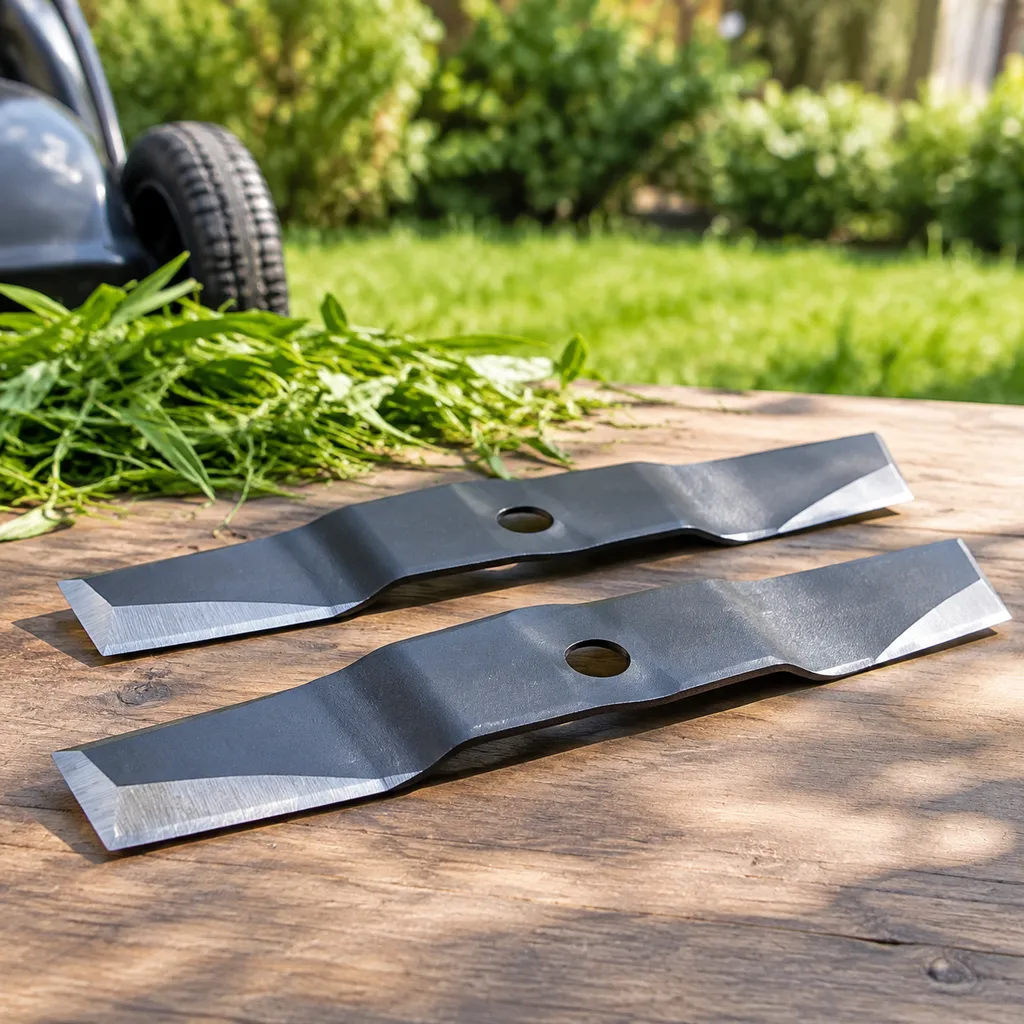
Mismatched bolt patterns and unbalanced aftermarket blades cause immediate rotor vibration, uneven shred sizes, and ruined spindle bearings. We engineer direct-fit grass shredder knife blades and counter-knives built to factory tolerances, ensuring your equipment runs smoothly with zero chute modification.
OEM Cross-Reference for Leading Chipper-Shredders
Whether you operate compact residential yard shredders, commercial tow-behind mulchers, or high-volume organic waste reducers, we supply drop-in replacements configured for direct mounting.
- Direct Compatibility: Direct-replacement mulching knives and flails engineered for major commercial and agricultural equipment brands.
- Traceable Part Sizing: Every blade batch is stamped with clear part numbers to eliminate guesswork during field changes. Check our industrial knife markings and traceability guide to cross-reference worn-down factory part numbers.
- Balanced Pairs: All grass chipper shredder replacement blades ship in weight-matched sets to protect high-RPM drive shafts from eccentric loads.
Rotor Knife vs. Counter-Knife Configurations
A clean cut requires synchronized action between your spinning rotor and the stationary anvil. Installing an aggressive rotor knife against a worn counter-knife causes wet, fibrous greens to wedge between the gaps rather than shearing cleanly.
| Component | Primary Function | Typical Edge Profile | Replacement Strategy |
|---|---|---|---|
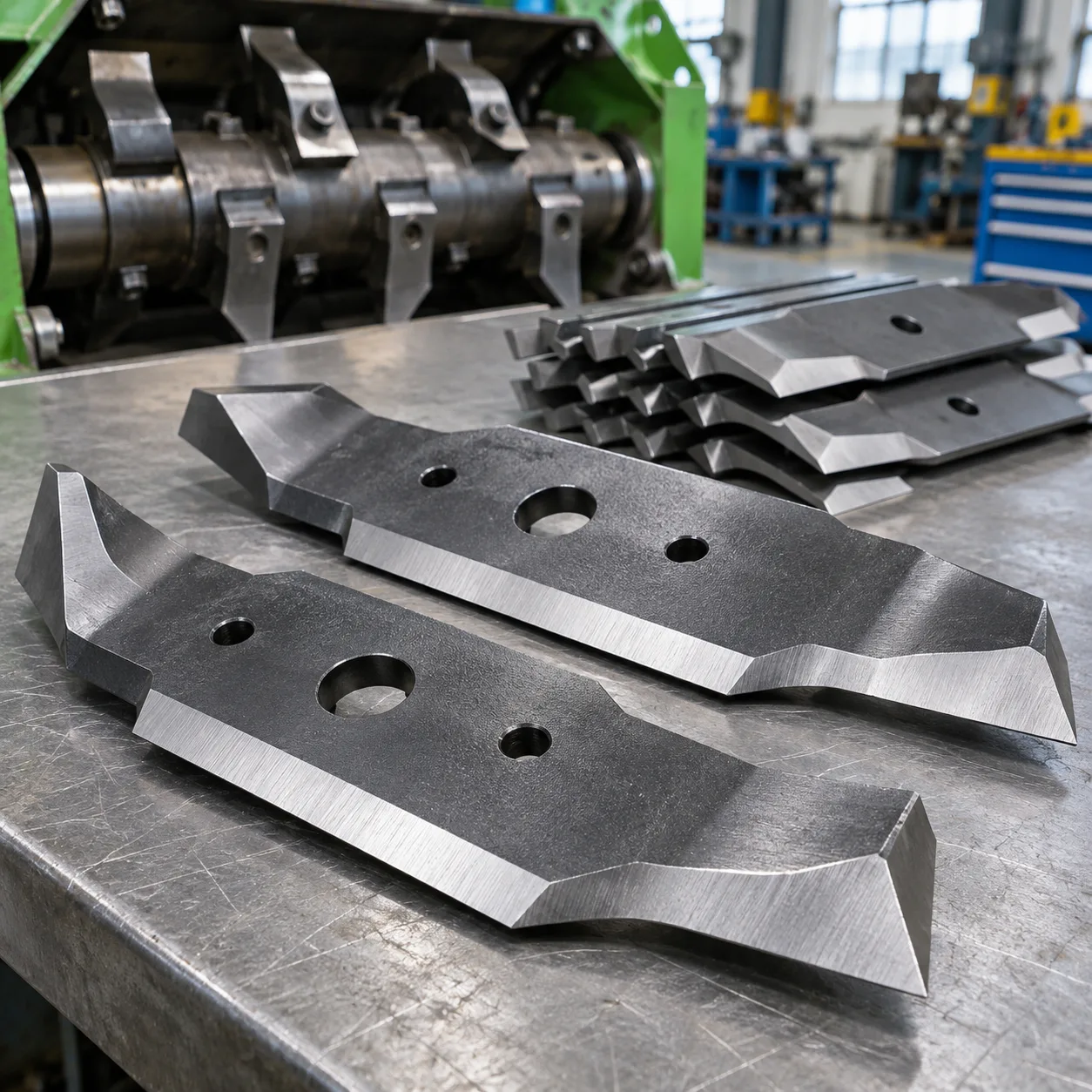
| Rotor Knife | High-speed initial impact, cutting, and slicing fibrous debris | Single or double-bevel sharpened cutting edge | Replace or reverse in balanced sets when dull |
| Counter-Knife (Bed Blade) | Provides the stationary shear edge for clean material reduction | Square-ground 90° edge or stepped anvil profile | Flip to unworn edge or replace during rotor servicing |
Maintaining an exact 1.0 mm to 1.5 mm clearance between the rotor blade and the bed knife stops wet turf and stringy vines from wrapping around the drum.
Custom OEM and ODM Blade Fabrication
If you run discontinued machinery, proprietary shredder drums, or custom green-waste recycling platforms, we manufacture custom universal grass shredder blades directly to your requirements:
- From CAD Files: Send DXF, DWG, or STEP files for rapid CNC milling and laser profiling.
- From Physical Samples: Ship worn or broken sample blades to our facility; we map exact dimensions, bevel angles, and bolt pitch.
- Tailored Hardness: We adjust heat treatment profiles based on whether you process soft, abrasive turf or heavy wood trimmings.
Recommended Applications & Organic Material Processing
High-Moisture Turf and Fibrous Wet Grass Shredding
Wet green grass is a primary cause of shredder clogs. Dull edges rip and smash saturated blades, releasing sticky sap that plasters discharge chutes and stalls the rotor. Our knives use precision-ground bevels that slice clean through high-moisture turf, keeping grass moving smoothly through the discharge screen without bogging down the rotor.
Hedge Trimmings, Woody Garden Waste, and Vine Reduction
Stringy vines and flexible green wood frequently twist around flail pins and rotor shafts. We build heavy-duty mulcher knives with reinforced cutting edges to cleanly chop through resilient branches and stringy vines, eliminating wrap-around jams and reducing woody garden waste down to manageable fragments in a single pass.
Agricultural Crop Residue and Silage Processing
Clearing crop residue, corn stalks, and silage requires sustained impact resistance against abrasive soil and tough stalks. When running high-volume reduction lines, equipping a durable blade crusher for efficient material processing with our hardened cutting knives ensures consistent feeding rates and high wear resistance through heavy harvest cycles.
Compost Preparation and Fine Mulch Production
Rapid compost decomposition requires uniform aeration and maximized surface area. Our replacement mulching knives deliver consistent particulate sizing across all feedstock:
- Uniform Sizing: Generates fine, clean-cut mulch that packs well and accelerates microbial heat buildup in compost piles.
- Minimal Fraying: Slices wood and green waste cleanly rather than smashing it, preventing spongy, uneven clumps in your finished mulch.
- Consistent Output: Retains razor sharpness over long processing shifts, ensuring the screening size remains uniform from the first load to the last.
Installation Protocols & Maintenance for Grass Shredder Knife Blades
Loose hardware, uneven gaps against the anvil, and thermal damage during regrinding cause the vast majority of field failures. Following precise installation steps and scheduled upkeep keeps your machinery operating at peak efficiency.
Step-by-Step Mounting, Feeler Gauge Calibration, and Torque Specs
Improper torque or incorrect clearance causes severe jamming, blade fracture, or structural damage to the rotor drum. We engineer our grass shredder knife blades for exact drop-in fitment, but the mounting procedure requires strict adherence to mechanical tolerances:
- Seat Preparation: Clean the rotor pocket thoroughly with a wire brush. Remove all built-up plant sap, rust, and grit. Even a 0.1 mm layer of debris behind the knife creates dangerous runout.
- Hardware Inspection: Always use high-tensile Grade 10.9 or 12.9 bolts. Replace mounting bolts every two to three blade rotations; stretched threads lose clamping force under heavy shock loads. Apply medium-strength thread locker to clean bolt threads.
- Torque Sequence: Torque mounting bolts down evenly from the center outward. Use a calibrated torque wrench set to machine manufacturer specifications (typically 65–85 Nm for M10 hardware; 110–130 Nm for M12 bolts).
- Feeler Gauge Calibration: Check the clearance gap between the spinning rotor blade edge and the stationary counter-knife across the entire rotor length. Set the gap to 0.5 mm to 1.0 mm for wet, fibrous grass, or 1.0 mm to 1.5 mm for mixed woody garden debris. Rotate the rotor by hand for a full 360-degree cycle to ensure zero metal-to-metal contact. Following established knife maintenance best practices eliminates premature edge dulling and protects your drive train.
Why Blades Must Always Be Replaced in Weight-Matched Sets
Never replace a single damaged blade while leaving worn knives on the opposite side of the rotor. High-speed shredder drums run between 1,800 and 3,200 RPM; even a minor weight discrepancy generates severe centrifugal imbalance.
- Vibration and Fatigue: A 5-gram difference between opposing knives translates into dozens of kilograms of dynamic radial force at full operating speed. This force transfers directly to the main rotor bearings and weld seams, causing rapid bearing failure and drum cracking.
- Matched Pairs: We weigh and match our grass chipper shredder replacement blades in balanced sets within ±1.5 grams. If one blade suffers catastrophic damage from hidden wire or stones, replace the entire opposing set simultaneously.
- Flipping Dual-Edge Knives: When running reversible blades, rotate all knives on the rotor at the same time to maintain identical weight distribution and cutting geometry across the whole cutter drum.
Sharpening Protocols: Wet Grinding Guidelines vs. Heat Damage Risks
Operators often ruin hardened steel shredder knives by using a high-speed dry bench grinder or angle grinder. Dry grinding concentrates intense friction heat on the thin cutting tip, easily exceeding the 200°C (392°F) tempering threshold. This ruins the metallurgical heat treatment, annealing the edge and dropping hardness from 56 HRC down to below 40 HRC. The blade then dulls within minutes of hitting wet grass.
| Regrinding Factor | Wet Flood Grinding (Recommended) | Dry Angle Grinding (Avoid) |
|---|---|---|
| Coolant Application | Continuous liquid coolant flood directly on the contact patch | None; air cooling only |
| Edge Hardness Retention | Maintains factory 54–58 HRC across the entire bevel | Anneals the cutting tip; drops hardness to soft core levels |
| Micro-Structure Impact | Zero thermal stress; prevents micro-cracking | Causes structural micro-fractures along the cutting edge |
| Material Removal Rate | Controlled, light passes (0.02 mm–0.05 mm per stroke) | Aggressive, uneven material gouging |
| Factory Bevel Angle | Consistently holds OEM profile (typically 30° to 35°) | Distorts original cutting angle and ruins throughput |
To restore dull garden shredder blade replacements without thermal damage, use a slow-speed wet stone grinder or professional surface grinder with constant water or emulsion flow. Match the original factory bevel angle exactly. After grinding, remove the wire burr on the flat back of the blade using an oil-wetted fine-grit whetstone, leaving a razor-sharp, burr-free edge ready for maximum cutting uptime.
Direct-from-Manufacturer Quality Assurance
We manufacture our grass shredder knife blades in-house to maintain direct control over dimensional fit, metallurgy, and cutting durability. Sourcing directly from our production floor eliminates distributor markups and guarantees industrial-grade consistency across every batch.
CNC Machining and Vacuum Heat Treatment
Every stage of manufacturing focuses on eliminating common failure points such as micro-chipping, rotor unbalance, and premature dulling:
- High-Precision Laser Cutting & CNC Milling: Clean mounting holes, uniform bevel angles, and flat blade bodies ensure seamless drop-in fitment on factory rotors.
- Atmosphere-Controlled Vacuum Heat Treatment: Deep, uniform hardening prevents surface decarburization, giving our hardened steel shredder knives a ductile, impact-absorbing core paired with long-lasting edge retention.
- Precision Surface Grinding: Wet-finish grinding delivers clean cutting edges without heat tinting or metallurgical softening.
Multi-Stage Quality Control Protocols
| Quality Check | Inspection Standard | Operational Advantage |
|---|---|---|
| Rockwell Hardness (HRC) | Multi-point surface and core indentation | Verifies optimal wear resistance without brittle edge chipping |
| Flaw & Micro-Crack Detection | Non-destructive magnetic particle/optical testing | Prevents catastrophic blade fractures during heavy load impacts |
| Weight Matching & Dynamic Profiling | Precision gram-scale pairing | Eliminates high-speed rotor vibration and extends machine bearing life |
For specialized cutting setups or custom commercial equipment, we apply comprehensive prototype testing to verify fit, dynamic balance, and material performance before launching full-scale runs.
Bulk Commercial Ordering and Protective Packaging
We supply landscape operations, municipal yards, and machinery rebuilders with flexible procurement terms:
- Tiered Wholesale Pricing: Volume-based discounts designed to lower recurring blade replacement costs across commercial fleets.
- Rust-Inhibited Packaging: Blades arrive coated in heavy-duty corrosion-preventative oil with secure edge protectors.
- Custom OEM Kitting: Pre-packaged matched sets with optional counter-blades and replacement mounting hardware for fast field changes.
Grass Shredder Blades Technical FAQ
How often should grass shredder blades be sharpened or flipped?
We recommend inspecting your cutting edges every 20 to 40 operating hours, depending on the feed material. Processing clean turf or leafy greens causes minimal abrasive wear, while dirt-caked roots, sandy sod, and dry canes dull edges much faster.
When cutting edges begin rounding over, efficiency drops and fuel consumption spikes. If your machine runs reversible shredder blades, unbolt the knife, clean the seat thoroughly, and flip it to expose the factory-fresh second edge. Once both edges show visible rounding past a 0.5 mm radius, sharpen them using a wet grinding method to preserve core temper.
| Processing Material | Inspection Interval | Action Threshold |
|---|---|---|
| Clean lawn clippings & soft green waste | Every 40 operating hours | Flip or hone when edge radius exceeds 0.5 mm |
| Mixed hedge trimmings & woody mulch | Every 25–30 operating hours | Hone minor burrs; grind out small notches |
| Sandy sod, roots, & soil-heavy brush | Every 10–15 operating hours | Immediate regrind or blade flip |
Can these blades cut wet, fibrous grass without jamming the machine?
Yes, our grass shredder knife blades are engineered with aggressive shear angles and polished discharge faces to process high-moisture green waste without clogging the chute. Wet, stringy grass jams equipment when dull knives mash and tear fibers instead of cleanly shearing them. This tearing action wraps long fibers around the rotor shaft.
To eliminate jamming on wet clippings:
Keep cutting edges sharp to cleanly slice moist cellulose walls.
Maintain strict bed-knife clearances so material cannot wedge between parts.
For heavy processing facilities utilizing high-capacity rotors, our heavy-duty single-shaft shredder blades provide continuous material flow without binding or stalling.
What is the ideal clearance distance between the rotor blade and counter-knife?
The standard working clearance across most rotary grass shredders ranges between 0.5 mm and 1.2 mm (0.020 in to 0.047 in).
- Clearance too tight (< 0.4 mm): Thermal expansion during continuous operation or minor rotor flex can cause metal-on-metal collision, destroying both the blade and the counter-knife.
- Clearance too wide (> 1.5 mm): Thin grass blades bypass the shear point. Fibers fold over the anvil, bog down the motor, and build heat inside the cutting chamber.
Always set clearances using a brass feeler gauge across the entire knife length while rotating the rotor drum by hand.
What causes shredder blades to chip or crack instead of wearing down smoothly?
Edge chipping and structural fractures stem from three primary mechanical issues:
- Tramp material impact: Stones, gravel, metal fence wire, or thick hardware entering the hopper deliver severe point-impact shocks that exceed steel yield limits.
- Improper grinding temperatures: Dry bench-grinding heats the cutting edge past critical tempering temperatures. Quenching red-hot edges in water causes micro-fractures that chip out under load.
- Over-torquing and mounting stress: Uneven torque or debris trapped behind the blade base creates localized bending stress, snapping the blade across bolt holes.
We manufacture our knives using vacuum heat treatment to balance extreme edge hardness with a ductile, shock-absorbing core to prevent catastrophic fractures.
How do I order custom replacement blades for obsolete equipment?
When original manufacturer parts are discontinued or out of stock, we manufacture precision direct-fit replacements to order. We produce custom knives matching obsolete garden mulchers, commercial flail systems, and setups requiring specialized square shredder blades or customized flat profiles.
To produce your custom run, provide:
Physical sample or worn blade: Send us a sample blade (even worn or cracked) for complete CMM dimensional mapping.
CAD drawings or sketches: Provide a 2D DXF or hand drawing showing overall length, width, thickness, bevel angles, and center-to-center bolt hole pitch.
Application details: Tell us what materials you shred so we can recommend the ideal steel grade, such as 65Mn spring steel, SK5, or high-wear D2 tool steel.