
Formula details
Product Details
Overview
What Are Square Shredder Blades and How Do They Work?
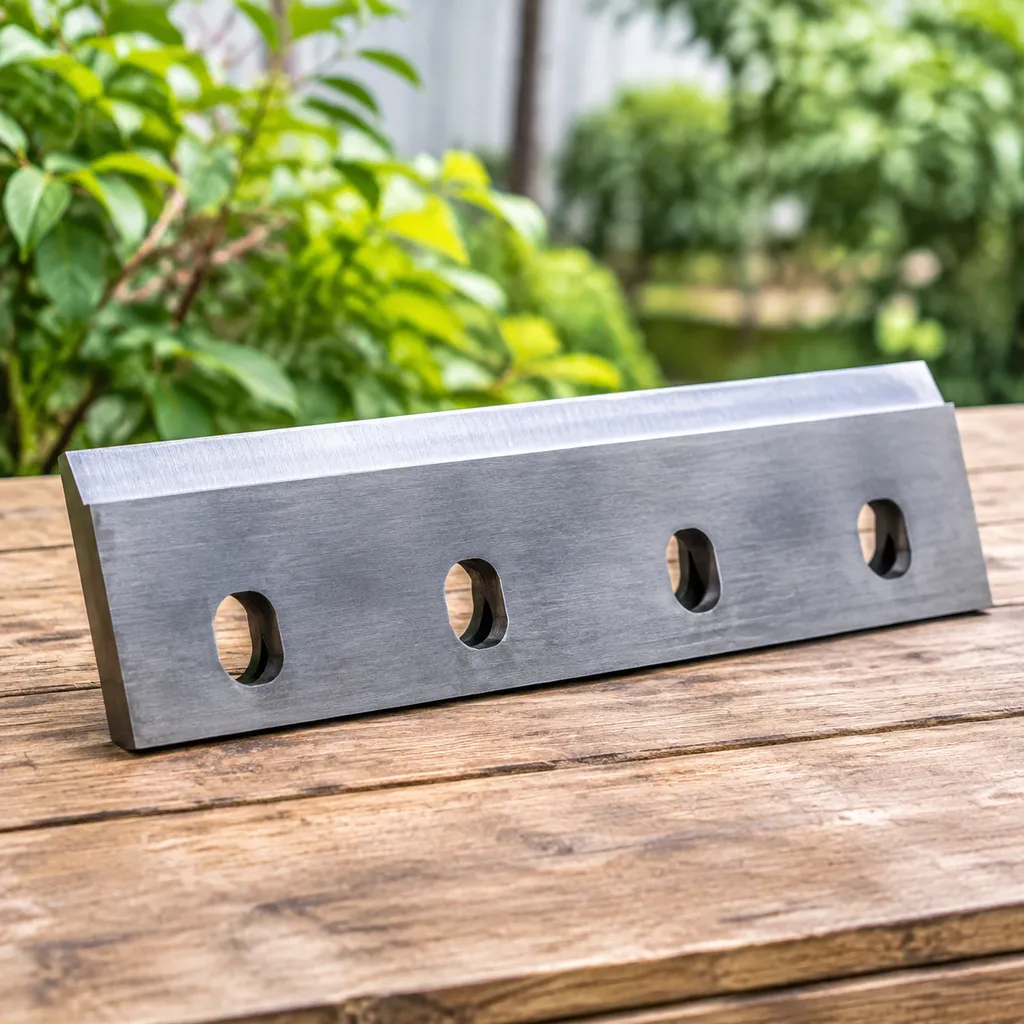
Square shredder blades—often called rotary shredder inserts or square shredder knives—serve as the primary cutting edge inside modern single-shaft shredders. We build these compact, high-yield cutting tools to tackle heavy-duty reduction tasks across plastic, wood, e-waste, and municipal solid waste lines.
Square Shredder Blade Overview
| Feature | Technical Specification |
|---|---|
| Blade Geometry | Symmetrical 4-edge square profile |
| Cutting Indexing | 4-way indexable (90° rotations) |
| Face Profiles | Flat-face or concave-face |
| Rotor Mounting | Machined pocket with countersunk bolt |
| Cutting Action | High-shear scissor cut against bed |
Design Mechanics of Four-Way Indexable Square Knives
The core strength of 4-way indexable shredder knives lies in their square geometry. Each blade provides four identical, precision-machined cutting edges.
- Four-Sided Service Life: When edge one dulls under heavy processing, rotate the blade 90 degrees to edge two. Repeat the process for edges three and four before replacing the tool.
- Maximized Machine Uptime: Rotating an insert takes minutes directly on the rotor, eliminating lengthy line shutdowns for sharpening.
- Balanced Weight Distribution: Precision-ground dimensions maintain uniform rotor weight distribution, preventing vibration and bearing wear at high RPMs.
Mounting Square Inserts on Single-Shaft Shredder Rotors
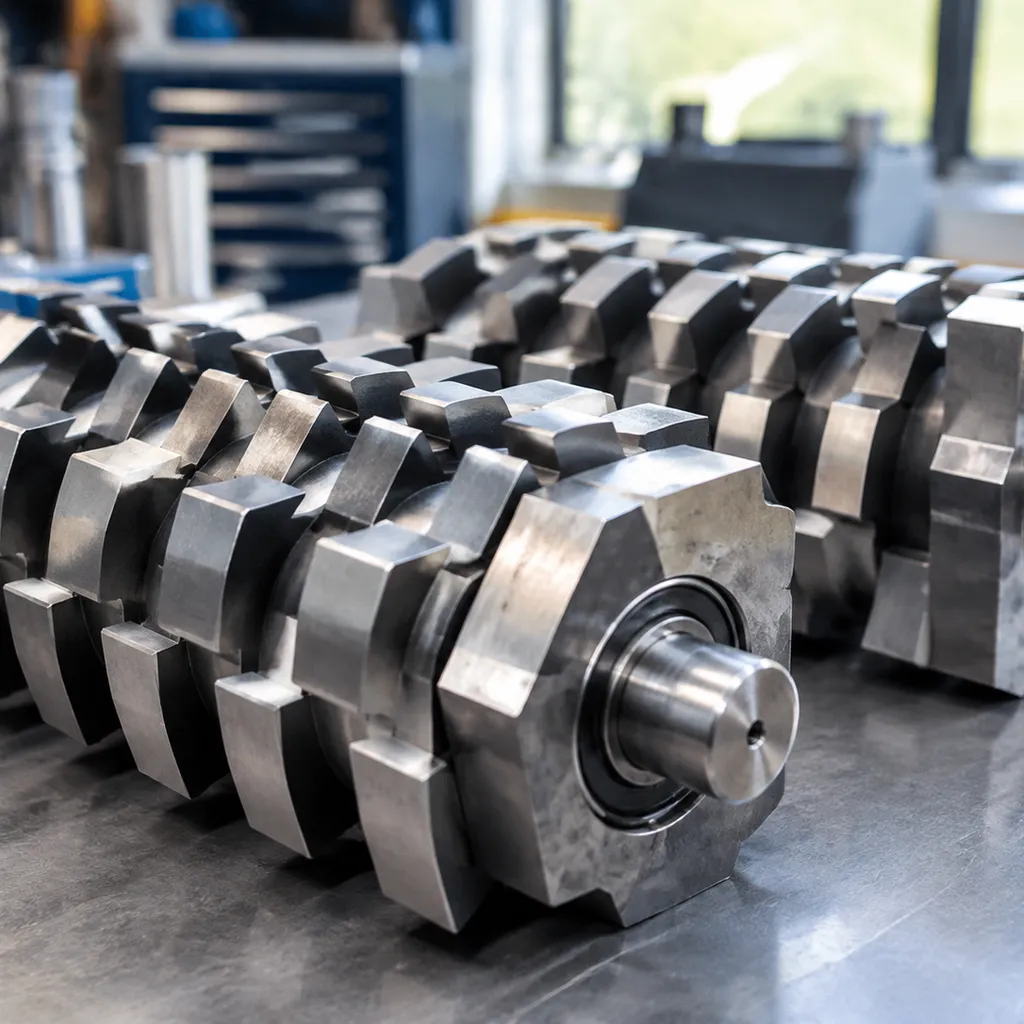
We seat each square blade directly into precision-milled shredder knife holder pockets welded or machined onto the single-shaft rotor.
- Direct-Fit Pocket Seating: The solid walls of the rotor pocket support the blade from behind, absorbing severe lateral shearing forces.
- Countersunk Fasteners: Heavy-duty, high-tensile bolts drop into countersunk center holes, pulling the insert flush against the base of the pocket.
- Impact Distribution: Keeping the bolt head recessed below the cutting edge protects the fastener threads from direct material impact and abrasive wear.
Flat-Face vs. Concave-Face Square Cutting Edges
Selecting the correct face geometry directly dictates cutting efficiency, power draw, and throughput rates based on your specific feedstock.
FLAT-FACE PROFILE
[ Flat Cutting Face ]
↓
Countersunk Hole
CONCAVE-FACE PROFILE
[ Concave Cutting Face ]
↓
Countersunk Hole
High-Impact / Bulky Scrap Clean Shear / Low Energy Draw
- Flat-Face Blades:
- Feature flat, reinforced outer surfaces.
- Deliver maximum structural mass behind the cutting corner.
- Best suited for dense purgings, contaminated scrap, and high-impact feeds where shock resistance is paramount.
- Concave-Face Blades (Concave Shredder Teeth):
- Feature a dished, hollow-ground center that creates aggressive, forward-angled cutting corners.
- Pierce elastic and ductile polymers quickly with significantly lower motor load.
- Ideal for film rolls, synthetic fibers, woven bags, and rigid hollow plastics.
The Role of Counter Knives and Bed Blades in Clean Shearing
Square shredder blades do not operate in isolation; they work against static bed blades and counter knives mounted along the shredder chamber frame.
- Scissor-Action Shearing: The rotating square insert passes the stationary bed blade with a tight, calibrated tolerance, slicing scrap cleanly rather than ripping or tearing it.
- Tight Bed Blade Alignment: Maintaining a consistent rotor gap prevents thin materials (like film and paper) from wrapping around the shaft or jamming the cutting chamber.
- Sizing Control: Working in tandem with the sizing screen beneath the rotor, the counter knife arrangement ensures continuous regrinding until processed materials fall within the targeted output dimensions.
Key Material Grades and Heat Treatment for Square Shredder Blades
| Material Grade | Hardness Range | Best For | Key Advantage |
|---|---|---|---|
| D2 / SKD-11 | 58–60 HRC | Plastics, wood, standard waste | Balanced wear resistance and edge holding |
| DC53 / Modified | 56–58 HRC | E-waste, thick purgings, baled scrap | Exceptional toughness and high impact strength |
| Carbide Tipped (TCT) | 88–92 HRA (Tip) | Glass-filled nylon, tire wire, abrasives | Maximum wear life against severe abrasion |
D2 / SKD-11 Tool Steel: The Industry Workhorse
For standard single-shaft shredding lines, D2 tool steel shredder cutters deliver the ideal balance between hardness and wear resistance. With its high carbon and chromium composition, D2 holds up well against continuous abrasive contact when processing clean polymers, regrind, and standard timber scrap.
DC53 and High-Impact Tool Steels
When your feedstock contains unpredictable contaminants or dense metal inclusions, standard tool steels can crack at the corners. We use DC53 and modified cold-work tool steels to double the toughness of D2. These grades resist chipping and cracking under heavy shock loads, making them the top choice for electronic scrap, rigid purgings, and bulky municipal waste.
Tungsten Carbide Tipped (TCT) Square Inserts
For highly abrasive materials like glass-fiber reinforced plastics, sand-contaminated agricultural film, or tire shredding, standard steel edges dull rapidly. Carbide tipped shredder blades feature brazed tungsten carbide faces that run up to five times longer than standard alloys in strictly abrasive environments.
Hardness Ratings and Vacuum Heat Treatment
Consistent blade performance comes down to controlled heat treatment. We process our square shredder blades through specialized vacuum hardening and multi-stage tempering cycles:
Controlled Hardness (56–62 HRC): Custom-tempered to match your specific balance of wear life and impact toughness.
Vacuum Furnace Processing: Eliminates surface decarburization, ensuring uniform core-to-surface structural density. To see how precise thermal cycles prevent edge failure, explore our practical overview of D2 steel heat treatment.
Deep Cryogenic Treatment: Transforms retained austenite into stable martensite to maximize dimensional stability and resist corner micro-fractures.
Primary Industrial Applications and Material Suitability for Square Shredder Blades
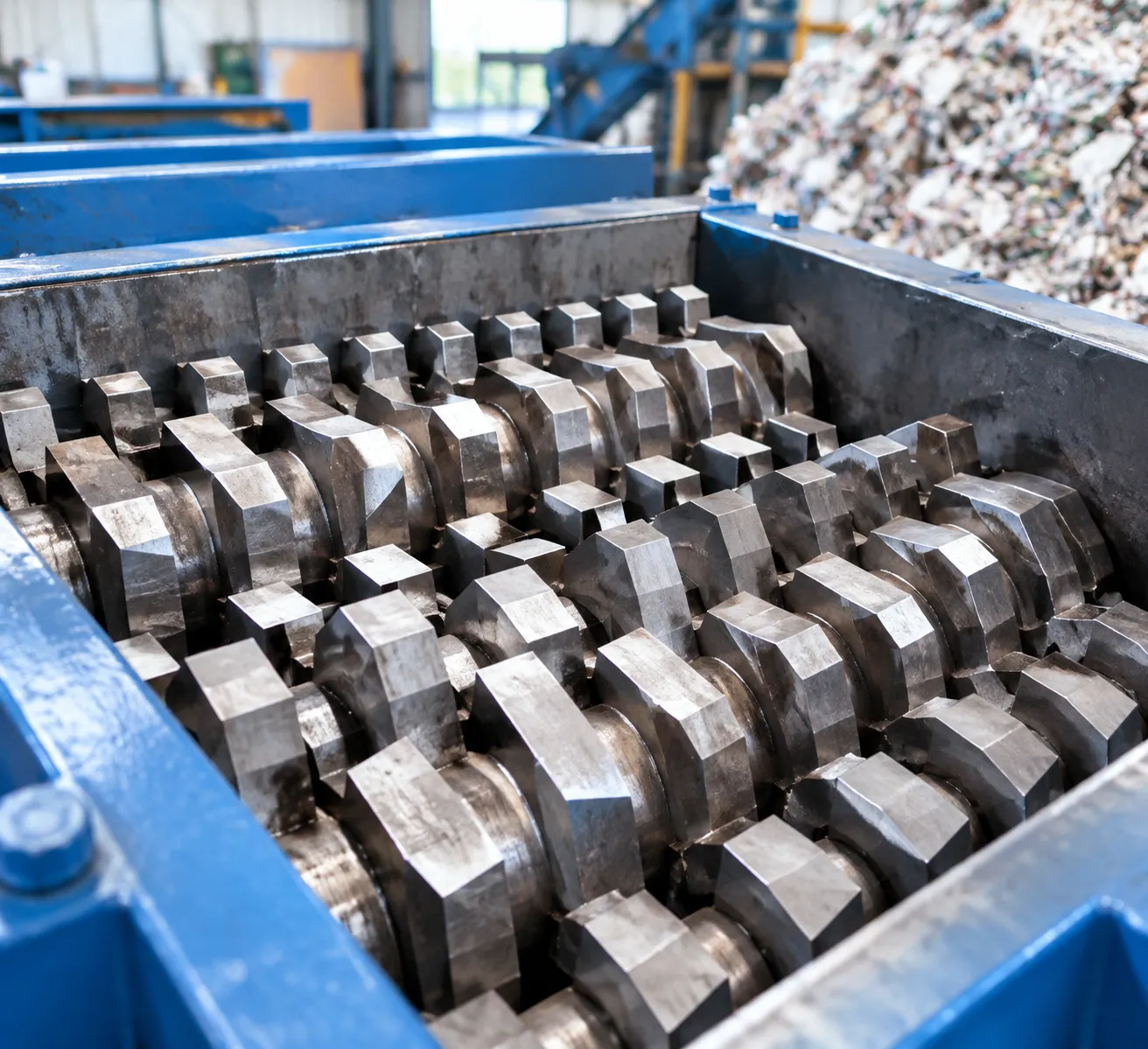
Plastic Recycling: Purges, Film Rolls, and Rigids
Processing polymers demands sharp, wear-resistant rotary shredder inserts to prevent heat generation and material wrapping.
Heavy Purge & Lumps: Handles thick HDPE, PP, and engineering plastic purge blocks without fracture.
Baled Film & Sheet: Delivers clean shearing for high-tensile stretch film and agricultural plastics without binding on film processing systems.
PET Bottles & Hollow Bodies: Prevents material slippage, ensuring consistent sizing for granulator feeds in demanding plastic recycling setups.
Rigid Scrap: Efficiently grinds pipe, crates, and automotive scrap into uniform flakes.
Wood Processing: Pallets, Timber Offcuts, and MDF
In timber reduction, our square shredder cutter blades slice through dense fibers while resisting incidental grit.
Pallet Shredding: Cuts clean through hard and soft woods, handling embedded fasteners and framing nails.
Sawmill & Joinery Offcuts: Rapidly breaks down dimensional lumber, logs, and edge trimmings.
MDF & Particleboard: Withstands the abrasive binder resins found in manufactured boards.
E-Waste and Cable Scrap
Electronic waste demands high edge retention to shear both tough casings and non-ferrous metals.
Circuit Boards (PCBs): Resists the abrasive fiberglass substrate to maintain a reliable cutting edge.
Copper & Aluminum Cables: Cleanly chops wire bundles without crushing or jamming the rotor pockets.
Appliance Housings: Easily fractures ABS and PC electrical enclosures.
Municipal Solid Waste (MSW) and Light Metals
For high-volume waste reduction and Refuse-Derived Fuel (RDF) production, durability against mixed contaminants is critical.
Bulky & Household Waste: Reduces mixed packaging, carpets, textiles, and domestic discards.
Light Gauge Scrap: Chops light-gauge aluminum cans, profiles, and thin sheet scrap smoothly when paired with the proper counter knife clearance.
Standard Sizes, Mounting Styles, and Specifications
Getting the right fit on your rotor comes down to exact dimensions and mounting hardware. We machine square shredder blades to direct-fit tolerances so they seat firmly into your rotor pockets without shifting under heavy loads. While single-shaft machines rely on these four-sided rotary inserts, we also supply setups like double shaft shredder blades for multi-stage processing systems.
Common Square Blade Dimensions
We supply standard industry sizes as well as custom configurations built directly from your machine drawings:
| Blade Size (mm) | Standard Thickness | Typical Center Hole | Common Application |
|---|---|---|---|
| 30 x 30 mm | 15 mm – 20 mm | M10 / M12 Countersunk | Small square shredder blades for light plastic scrap & lab units |
| 35 x 35 mm | 20 mm – 25 mm | M12 Countersunk | Film lines, light purgings, and PET bottle granulators |
| 40 x 40 mm | 20 mm – 30 mm | M14 / M16 Countersunk | Standard heavy-duty plastic, cable, and wood shredding |
| 43 x 43 mm / 50 x 50 mm | 25 mm – 35 mm | M16 / M20 Countersunk | High-throughput industrial waste, solid rubber, and timber |
| Custom Profiles | Made to spec | Threaded / Stepped / Custom | Specialized rotor holder designs and high-abrasion applications |
Hole Profiles and Fastener Sizing
- Countersunk Holes: Standard flat or angled bevels that allow high-tensile (Grade 10.9 or 12.9) socket screws to sit completely flush with the blade face, preventing material snagging.
- Pass-Through vs. Threaded Base:
- Pass-through holes use a standard bolt secured directly into the rotor knife holder pocket.
- Threaded base inserts bolt from the back or underside of the rotor holder, keeping the cutting face clean of bolt-head cavities.
- Heavy-Duty Rotor Knife Replacement Bolts: High-vibration jobs demand precision-machined bolts paired with rated torque values to keep square shredder cutter blades from working loose.
Matching Blade Geometry to Rotor Pockets
A tight fit inside your shredder knife holder pockets is essential. Any debris, pocket deformation, or dimensional variance will cause movement during operation, leading directly to sheared bolts or cracked blade edges. We CNC-grind every edge to ensure zero play between the knife base and the pocket seat, giving you reliable stability across all 4 indexable cutting cycles.
How to Rotate and Maintain Square Shredder Blades for Max Life
Step-by-Step 4-Edge Rotation Schedule
Do not wait until a cutting edge is completely worn down to index your knives. We recommend rotating rotary shredder inserts as soon as you notice an edge radius rounding beyond 1.0 mm to 1.5 mm, or when the machine’s energy consumption begins to climb.
- Lockout and inspect: Shut down and tag out the machine completely before opening the cutting chamber.
- Clear the rotor: Blast out fine dust, plastic melt, and loose debris around the cutter seats using compressed air or a wire brush.
- Loosen and rotate: Remove the center fastener, lift the square blade out slightly, rotate it 90 degrees clockwise to expose a fresh cutting edge, and seat it back down.
- Track the cycle: Mark or log rotated positions to ensure all four edges are used evenly before discarding or replacing the knife set.
Proper Torque Specs and Bolt Replacement Guidelines
Fastener integrity is critical for holding 4-way indexable shredder knives in position under heavy impact loads. Loose bolts cause blade chatter, while over-tightening leads to stripped threads and broken fasteners.
- Always use high-tensile hardware: Pair your knives with hardened rotor knife replacement bolts (Class 10.9 or 12.9).
- Apply anti-seize lubricant: Coat fastener threads with a high-temp anti-seize paste to prevent galling and ensure accurate torque delivery.
- Follow strict torque ratings: Use a calibrated torque wrench to set fasteners to OEM specifications (commonly 90 to 180 Nm depending on bolt diameter, such as M14, M16, or M20).
- Replace hardware regularly: Never reinstall stretched, stripped, or bent bolts. We recommend replacing mounting bolts every two to three blade rotations to prevent catastrophic bolt failure inside the cutting chamber.
Rotor Gap Calibration Between Rotary Knives and Static Bed Knives
Maintaining an accurate industrial shredder cutting clearance between your spinning square cutters and the stationary counter knives prevents uncut material from wrapping around the shaft.
- Check clearance with feeler gauges: Set the gap across the full rotor width according to your material profile—typically between 0.5 mm and 1.5 mm for plastics and general waste. For more details on setup differences between machine layouts, check out our single-shaft vs. double-shaft shredder blades guide.
- Verify bed blade alignment: Ensure the stationary counter knife is parallel along the entire length of the rotor so every individual square knife passes with identical clearance.
- Rotate bed knives simultaneously: Bed blades wear along their shearing edges at a similar rate to the rotor cutters; rotate or adjust counter knives alongside your main rotor knife indexing.
Cleaning Resin Buildup and Preventing Rotor Pocket Deformation
A secure fit between the cutter and the pocket prevents stress fractures and keeps the blade firmly seated.
- Scrape the holder pocket base: Even a tiny layer of compacted plastic fines or metal dust behind a blade acts as a fulcrum, tilting the knife and placing uneven shear stress on the center bolt.
- Deburr pocket corners: Check the shredder knife holder pockets for mushrooming or burrs caused by impact shocks, and stone them flat before dropping in a rotated insert.
- Inspect pocket wear walls: If pocket sidewalls show excessive play, replace or build up the seat immediately to stop square shredder blades from shifting during heavy processing.
Troubleshooting Common Square Shredder Blade Wear and Damage
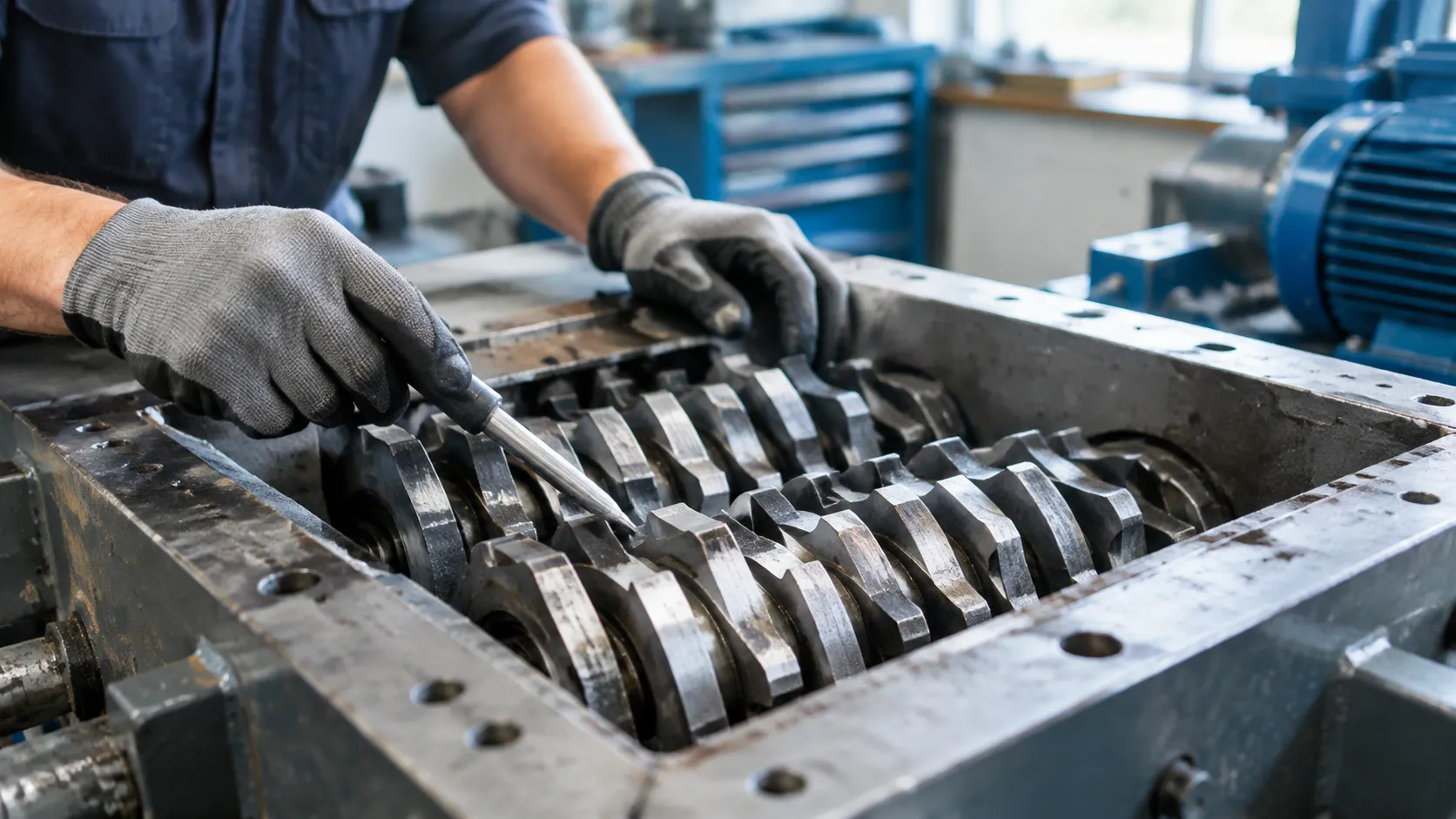
When production slows down, worn or damaged cutters are usually the culprit. Catching wear patterns early keeps your machine running clean and saves the rotor from costly damage. Here is how we diagnose and fix the most common cutting edge failures in the shop.
Chipped or Cracked Cutting Corners
Corner chipping happens when uncrushable tramp metal, heavy stones, or oversized alloy scrap enters the cutting chamber. The sudden shock load fractures the hardened cutting edges of your square shredder blades.
- Root Cause: Foreign contaminants hitting tool steel beyond its yield strength.
- The Fix: Screen inbound feedstock with upstream magnetic separators. If minor chipping occurs, index the cutter 90 degrees to an unused edge. If the insert has cracked across the bolt hole, replace it immediately to prevent pocket failure.
Uneven Wear Patterns and Improper Clearance
If your rotary cutters are wearing out faster on one side of the rotor, your industrial shredder cutting clearance is out of alignment.
- Root Cause: Uneven gap between the rotary knives and the static bed blade across the rotor length.
- The Fix: Re-shim and recalibrate your counter knife. Maintaining an even 1.0 mm to 1.5 mm cutting gap prevents excessive friction on tight spots and stops material bypass on loose spots. For balanced rotor performance, we recommend checking our heavy-duty single shaft shredder blades to maintain tight manufacturing tolerances across all cutting stations.
| Problem | Primary Cause | Corrective Action |
|---|---|---|
| Chipped Edge Corners | Tramp metal / shock impact | Index blade, add metal separation |
| Asymmetrical Edge Wear | Uneven bed blade gap | Recalibrate rotor knife clearance |
| Loose Mounting Bolts | Under-torquing / pocket dirt | Clean seats, use calibrated torque |
| Material Melting & Smear | Dull cutting edge friction | Index / replace dull cutting edges |
Bolt Loosening and Stripped Threads
High-vibration shredding cycles can shake mounting hardware loose if seats and threads are neglected.
- Debris in the Pocket: Fine dust or plastic buildup under the insert prevents flush seating, leaving the bolt to take direct shear forces.
- Bolt Fatigue: Reusing stretched or worn rotor knife replacement bolts leads to stripped rotor threads or sheared bolt heads.
- Action: Wire-brush all shredder knife holder pockets clean before mounting. Always use recommended torque specs and apply high-strength anti-seize or threadlocker as specified by your machine manual.
Overheating and Material Smearing
When polymers start wrapping, melting, or glazing around your cutting edges, friction has overtaken shearing action.
- Root Cause: Running dull square shredder cutter blades past their service life. Instead of slicing, the radius rubs against the plastic, generating extreme heat.
- The Fix: Rotate your square inserts to fresh cutting edges before the edge radius exceeds 1.5 mm. Keeping sharp shearing faces lowers rotor motor amperage, reduces heat buildup, and stops melted resin from packing into the rotor body.
Buying Guide: Selecting the Right Square Shredder Blades
Choosing the right square shredder blades comes down to understanding your specific scrap stream and machine setup. We help recycling plants and plant managers optimize cutter selection every day to eliminate premature tool failure and keep production lines moving.
Assess Feedstock Abrasiveness and Shock Loads
Every material places different mechanical stresses on your rotary shredder inserts. You need to match the blade profile to what actually hits the rotor:
- Abrasive plastics and glass-filled polymers: Require maximum edge-retention metallurgy to prevent rapid rounding.
- Heavy purge chunks and solid logs: Demand high-impact fracture resistance rather than extreme hardness to prevent blade shattering.
- Mixed MSW and electronic scrap: Need tough, shock-absorbing alloys that can survive occasional tramp metal contaminants.
Balance Carbide Longevity Against Tool Steel Toughness
Material selection directly affects runtime between rotor turns. While standard D2 tool steel shredder cutters offer excellent all-around shock absorption and affordability, highly abrasive materials quickly wear down standard steel edges. For pure abrasive wear without catastrophic impact, carbide tipped shredder blades can run significantly longer. Review our carbide vs steel knives comparison guide to determine which metallurgy fits your material throughput.
OEM Replacement Knives vs. Custom Cutter Profiles
Off-the-shelf standard square shredder knives work well for standard single-shaft shredder setups. However, challenging materials often benefit from modified geometry:
- Standard OEM inserts: Direct drop-in fit, predictable performance, and readily available for common machine models.
- Custom-engineered profiles: Optimized cutting angles, countersunk bolt depths, or custom face concavity to boost intake speed. When stock tooling fails under unique loads, integrating tailored special cutting components prevents premature pocket wear and improves cutting clearance.
Calculate Cost-Per-Ton Cutting Efficiency
Do not evaluate square shredder cutter blades on purchase price alone. True cutting economy is measured by your operational cost per ton of processed material:
$Cost Per Ton = frac{Blade Purchase Cost + Downtime Labor Costs}{Total Tons Processed Across All 4 Cutting Edges}$
Investing in premium 4-way indexable shredder knives reduces unscheduled maintenance stops, lowers motor amp draws, and provides four full cutting cycles per insert before replacement is required.
Frequently Asked Questions About Square Shredder Blades
Can you resharpen square shredder blades or should you replace them?
In most recycling setups, you replace square shredder blades once all cutting edges wear out rather than resharpen them. Because these inserts rely on strict dimensional tolerances to fit securely inside the rotor pockets, grinding the sides down changes the cutting geometry and increases the gap between the rotor and bed knives. Grinding also reduces the structural mass around the mounting bolt hole, which raises the risk of blade cracking under heavy loads. Swapping in fresh, precision-ground shredder blades delivers consistent cutting clearance, protects your rotor holders, and keeps throughput high without wasting shop hours on custom regrinding.
| Maintenance Choice | Pros | Cons | Recommendation |
|---|---|---|---|
| Full Replacement | Restores factory cutting tolerances, eliminates pocket play, zero downtime on grinding | Higher purchase volume over time | Standard practice for all 4-way indexable knives |
| Surface Regrinding | Extends base metal usage | Alters cutting gap, thins bolt pockets, risks cracking | Not recommended for high-impact single-shaft rotors |
How many times can you rotate a square shredder insert before swapping?
You can index a standard square insert a total of three times, giving you four active cutting edges per blade:
- Initial Install: Edge 1 handles primary shredding until worn or rounded.
- First Rotation (90°): Edge 2 enters the cutting zone with factory-level sharpness.
- Second Rotation (90°): Edge 3 takes over to restore clean shearing.
- Third Rotation (90°): Edge 4 provides the final production run.
- Full Swap: Once edge 4 dulls or if a corner suffers severe foreign-object impact, toss the insert and install a new unit.
Always clean the rotor seat thoroughly during every 90-degree turn so debris doesn't tilt the blade.
What causes square shredder blade bolts to snap during operation?
Bolt shearing almost always traces back to mechanical play, improper torque, or severe impact shocks. Here is what we see most on the plant floor:
- Improper Torque: Under-torquing allows the insert to vibrate loose, shifting cutting loads directly onto the bolt shank instead of the rotor pocket walls. Over-torquing stretches the fastener past its yield strength.
- Pocket Contamination: Trapped dust or melted plastic beneath the insert keeps the blade from seating flat, creating bending stress on the bolt during every rotation.
- Tramp Metal Impact: Uncrushable scrap striking the insert at high speed generates sudden shear loads that exceed Grade 12.9 bolt limits.
- Reusing Stretched Fasteners: Reusing worn rotor bolts after multiple blade rotations leads to fatigue failure. Always replace the hardware whenever you install new industrial recycling blades.
Why choose concave square blades over flat square blades?
Concave square blades feature a hollow-ground, dished face that creates a sharper, more aggressive biting edge compared to standard flat-face knives.
- Lower Energy Draw: The scooped geometry pierces tough materials immediately rather than crushing them against the counter knife, lowering rotor motor amperage.
- Better Bite on Plastics: Concave profiles grab smooth, bulky plastics—such as blow-molded drums, film rolls, and thick purgings—preventing material from sliding across the rotor face.
- Reduced Heat Buildup: Faster shearing minimizes friction along the knife face, keeping sticky polymers below their melting points during high-volume single-shaft reduction.