
Formula details
Product Details
Overview
Rubber Shredder Blade Overview
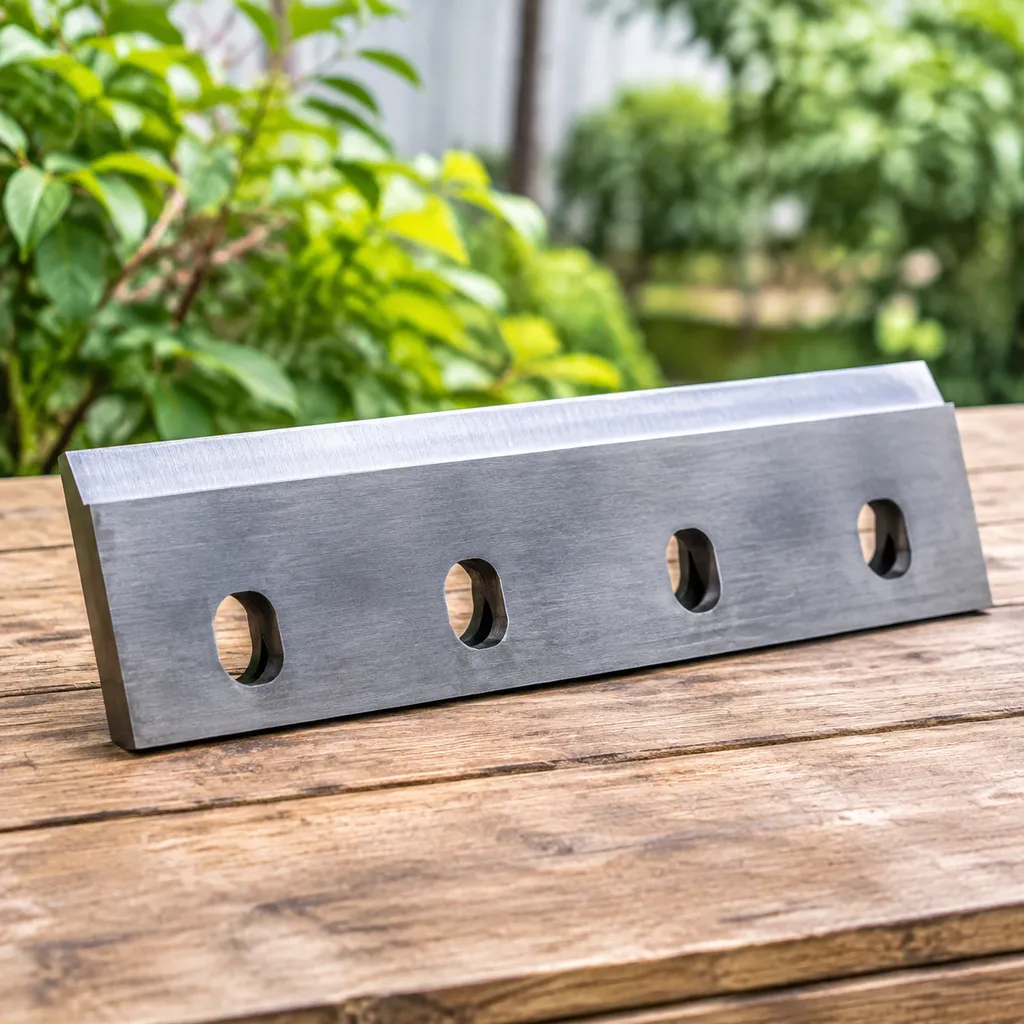
A dependable rubber shredder blade is the foundation of any high-volume size-reduction line. We manufacture our cutting tools to bite cleanly into tough, elastic scrap without binding, overheating, or causing unnecessary strain on your drive system.
Core Function in Scrap Size Reduction
The primary role of an industrial rubber shredder knife is straightforward: deliver precise shearing and tearing forces to break down bulk elastomers into uniform fractions. Clean, consistent cuts prevent material wrapping, reduce motor amperage draw, and protect your shredder shafts from extreme shock loads.
Processed Materials
Our blades are engineered to withstand the friction and heat generated by dense, abrasive polymers:
Vulcanized Rubber: Cured mechanical goods, conveyor belting, and commercial tire compounds.
Synthetic Polymers: EPDM, neoprene, nitrile, silicone scrap, and industrial seals.
Scrap Compounds: Production overflow, uncured batch slab trimmings, injection runners, and flash.
Direct OEM Replacements vs. Custom-Machined Knives
We supply cutting solutions tailored to your operational setup:
Direct OEM Replacement Blades: Precision-machined to match the exact dimensions, bolt patterns, and bore profiles of standard recycling equipment for direct drop-in installation.
Custom-Machined Knives: Fabricated to solve recurring wear issues, adapt to modified rotor configurations, or optimize hook geometry for specific compound densities.
Target Applications and Material Processing
Scrap Tire Shredding and Recycling
Tires represent the toughest test for cutting knives due to internal steel belts and bead wire:
Passenger Car Radials (PCR): Require sharp hook profiles and high edge retention to slice synthetic tread and light steel wire cleanly.
Truck and Bus Radials (TBR): Heavy steel cords cause rapid edge blunting; they demand thicker tire shredder blades with shock-resistant tool steel profiles.
Off-the-Road (OTR) Tires: Gigantic cross-sections and heavy bead bundles need high-torque rotary shredding with massive, shatter-proof waste tire recycling blades.
Industrial Rubber Belting, Hoses, and Seals
Reinforced elastomers create unique cutting challenges:
Fabric and Steel-Cord Conveyor Belts: Need clean shear action to cut through heavy polyester, nylon, or internal wire plies without wrapping around the rotor.
Hydraulic and Industrial Hoses: Require tough tire shredder knives capable of slicing through multiple braids of high-tensile steel wire without chipping the edge.
Extruded and Reinforced Seals: Fiber-reinforced profiles must be sheared cleanly to prevent binding in the cutting chamber.
Post-Industrial Scrap and Factory Reclaim
- Molding Overflow and Flash: High-elasticity compounds that tend to deflect away from dull edges rather than cut cleanly.
- Injection Runners and Cured Bales: Dense solid rubber blocks requiring high-bite blade geometry to penetrate and shred efficiently.
- Off-Spec Extrusions and Cured Batches: Synthetic mixes loaded with carbon black, silica, and vulcanizing agents that accelerate abrasive wear.
Contaminant Impact on Blade Metallurgy Selection
| Scrap Material Type | Primary Failure Risk | Recommended Focus |
|---|---|---|
| Clean Post-Industrial Rubber | Edge rounding from abrasive silica/carbon black | High hardness, superior wear resistance |
| Passenger & Commercial Tires | Chipping and edge deformation from wire belts | Balanced toughness and wear resistance |
| Heavy OTR / Steel Belt Belts | Catastrophic blade fracture under shock loads | High impact toughness, modified alloy profiles |
Internal reinforcement dictates knife longevity. High concentrations of embedded steel wire cause severe mechanical shock, leading to micro-chipping if a blade is too brittle. Conversely, shredding non-reinforced rubber loaded with silica or carbon black wears down knife faces through abrasion. Choosing the proper alloy based on our crusher blade materials guide prevents premature edge rollback and protects your cutting shafts from unbalanced impact forces.
Matching Rubber Shredder Blade Configurations to Machine Shafts
Getting the right rubber shredder blade configuration is critical to avoid shaft binding, rotor balance issues, and premature edge failure. We manufacture and supply blades configured for all standard rotor platforms:
- Single-Shaft Rotors: Use square, concave, or flat face indexable cutters bolted directly to tool holders, common in secondary reduction and finish sizing. For high-speed applications, review our single-shaft shredder blades built for continuous shearing.
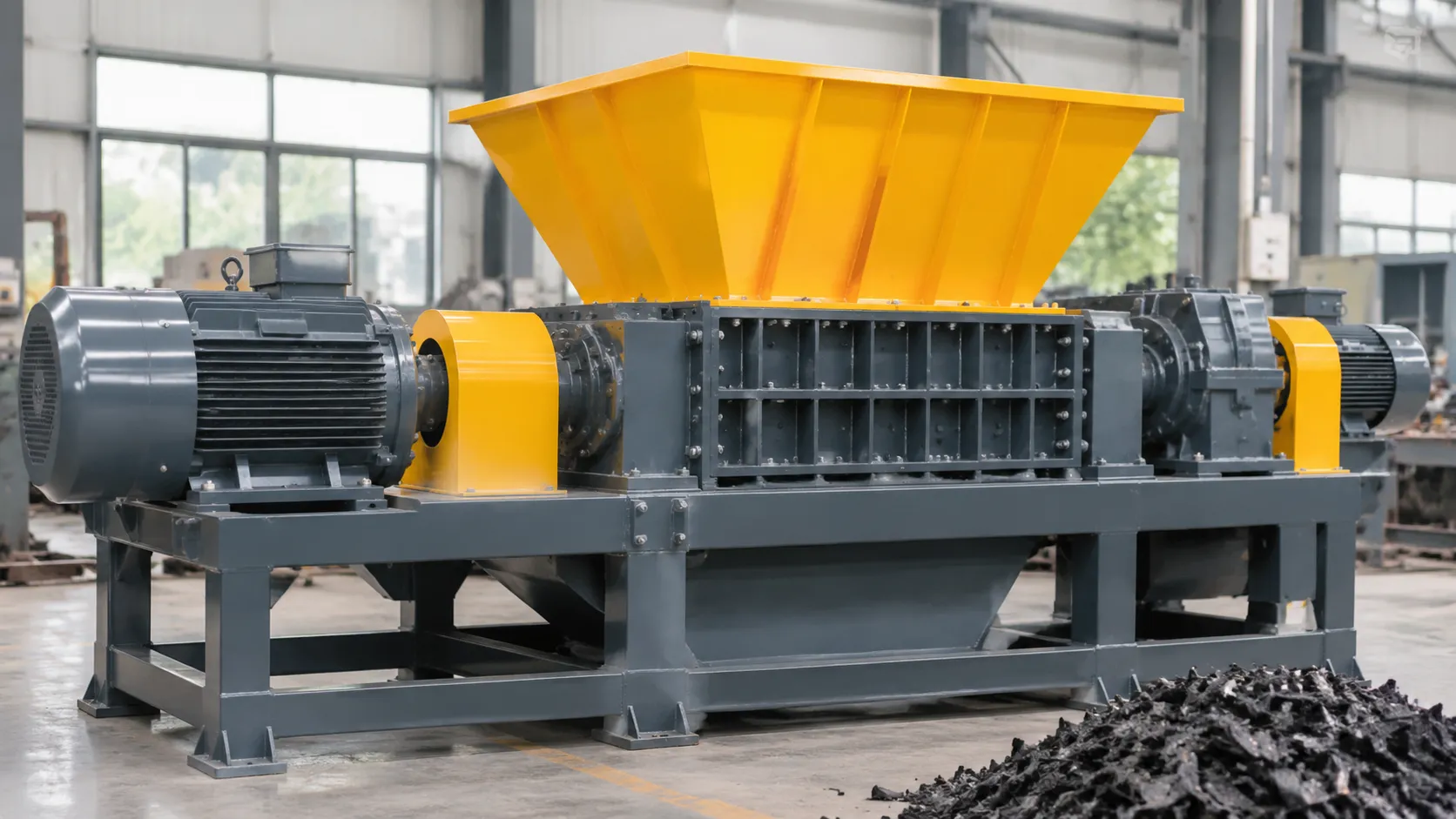
- Twin-Shaft Rotors: Feature interlocking rotary shredder blades designed with multi-hook profiles to grab, pull, and tear heavy rubber scrap at lower speeds and higher torque. Learn more about our heavy-duty double-shaft shredder blades engineered for primary scrap tire processing.
- Quad-Shaft Rotors: Utilize stacked rotary knives with integrated screen sizing to process dense rubber into controlled output dimensions in a single pass.
Mounting Configurations and Drive Profiles
Fitment tolerances on the shaft directly determine how well your blades hold up under shock loads. We precision-machine all primary mounting styles:
| Mount Type | Common Shaft Fitment | Operational Purpose |
|---|---|---|
| Hexagonal Bore | 6-point hex drive shafts | Eliminates drive keys; distributes high-torque load evenly across the shaft |
| Keyed Round Bore | Single or double broached keyways | Standard locking mechanism for high-impact industrial shredder knives |
| Multi-Spline Bore | Involute or straight splines | Delivers maximum contact area to prevent shaft slippage under sudden jams |
| Countersunk Bolt-On | Threaded inserts or counter-bored thru-holes | Secures replaceable insert knives on single-shaft rotor drums |
How to Confirm Compatibility
To ensure exact drop-in shredder blade replacement without unexpected downtime, we match replacement parts using three simple identifiers:
- Machine Make and Model: Provide the original shredder manufacturer name and model series.
- OEM Part Number: Cross-reference directly with OEM knife and spacer codes.
- Physical Measurements: If part numbers are missing, verify outer diameter (OD), inner bore size (ID), blade thickness, hook count, and bolt-hole spacing.
Technical Specifications and Tolerances for Rubber Shredder Blades
Standard Dimensions and Machining Parameters
We machine rubber shredder knives to match standard shafts or custom shredder assemblies:
| Parameter | Standard Range | Production Tolerances |
|---|---|---|
| Outer Diameter (OD) | 150 mm to 650 mm (6" to 25.5") | ±0.05 mm (±0.002") |
| Blade Thickness | 15 mm to 100 mm (0.6" to 4.0") | ±0.02 mm (±0.0008") |
| Bore Sizing | Hexagonal, Splined, Keyed round (40 mm to 250 mm) | H7 to H8 precision fit |
| Surface Flatness | Parallel ground face-to-face | Within 0.03 mm (0.0012") |
| Hook Clearance | Custom offset per shaft array | Matched to spacer sets |
Tool Steel Grades and Vacuum Heat Treatment
Processing vulcanized rubber filled with abrasive carbon black, bead wire, and synthetic cord demands specific tool steel chemistry. We balance edge retention against impact toughness to prevent catastrophic body fractures under heavy shock loads:
- D2 / SKD-11: High-carbon, high-chromium tool steel. Delivers exceptional abrasion resistance for standard rubber processing and scrap shredding. Our precision D2 steel heat treatment process ensures uniform core hardness and minimal distortion.
- Hardness: 58–60 HRC (maximum edge life, high abrasion resistance)
- DC53: Cold-work die steel offering twice the toughness of D2. Ideal for high-shock applications like whole tire pre-shredding where steel belting risks chipping brittle edges.
- Hardness: 56–58 HRC (high fatigue resistance, prevents cracked hooks)
- Modified High-Wear Alloys (H13 / Hardox equivalents): Built specifically for multi-shaft primary shredders dealing with extreme impact, tramp metal, and heavy OTR tire scrap.
- Hardness: 52–55 HRC (maximum ductility, absorbs heavy shaft stalling forces)
Cutting Edge Geometries and Grinding Standards
- Hook Profiles: Single-claw, multi-hook (3, 5, or 7 hooks), and aggressive sickle shapes optimized to grab rubber stock without letting it bounce in the cutting chamber.
- Edge Bevels: Precision-ground cutting angles designed to shear cord cleanly rather than pinch it between rotor passes.
- Parallelism and Gap Control: Blade faces are double-disc ground to maintain strict axial clearance against stationary anvil counter-knives, preventing rubber wrap-around and high motor amp spikes.
Manufacturing Standards and Quality Control
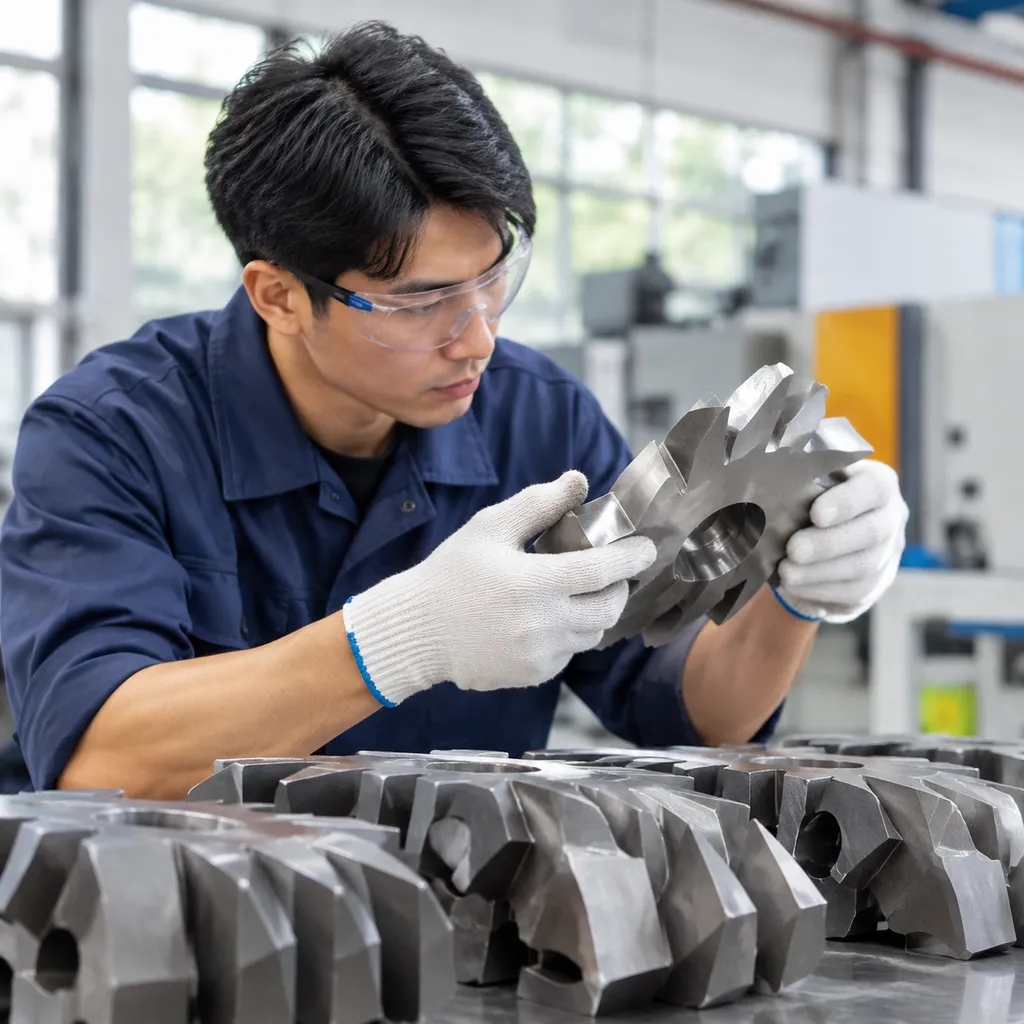
Producing a dependable rubber shredder blade comes down to shop-floor discipline. A shredder knife operating in high-torque recycling environments faces extreme shear stress and thermal cycles. We machine and inspect every blade through strict processing stages so that each part fits the rotor cleanly and holds its edge under continuous load.
CNC Machining and Precision Grinding
Consistency across multiple knives on a single rotor shaft prevents uneven wear and machine vibration. We run strict standards through our precision machining operations to ensure parallel faces and exact mounting dimensions:
- CNC Profile Milling: Hook angles, side bevels, and bolt holes are cut in rigid fixtures to eliminate dimensional creep across production runs.
- Precision Surface Grinding: Blade thickness and face parallelism are ground to tight tolerances, ensuring proper clearance against stationary counter-knives.
- Bore and Keyway Accuracy: Hex bores, round bores, and internal keyways are machined true to eliminate shaft play and seat tightly during assembly.
Vacuum Heat Treatment for Toughness and Edge Life
Toughness and hardness must balance out when shredding steel-belted tires or dense scrap rubber. A blade that is too hard will crack when it hits wire; a blade that is too soft will dull prematurely.
- Atmosphere-Controlled Furnaces: Vacuum heat treatment prevents surface decarburization and maintains uniform metallurgical structure from core to cutting edge.
- Targeted Tempering Cycles: Multiple draw and temper stages relieve internal stress, yielding high impact toughness alongside durable Rockwell hardness.
Inspection Protocols and Hardness Testing
Every industrial shredder knife goes through structured quality control verification before shipping out to your plant floor:
| Inspection Stage | Method & Tooling | Target Parameter |
|---|---|---|
| Hardness Verification | Benchtop Rockwell (HRC) testing | Uniform surface and core hardness |
| Dimensional Check | Micrometers, height gauges, and CMM | Bore sizing, thickness, and hole centers |
| Edge & Surface Inspection | Optical comparators | Clean bevel angles free of micro-burrs |
| Integrity Testing | Non-destructive flaw detection (NDT) | Zero sub-surface fissures or heat stress cracks |
How to Choose the Right Rubber Shredder Blade
Matching Blade Geometry to Speed and Torque
Different rotor setups require specific hook profiles and cutting angles to grab and shear rubber efficiently:
- Low-Speed, High-Torque Shredders: Require aggressive hook profiles and thicker knife bodies to handle dense truck tires and solid rubber blocks without snapping under peak loads. For multi-rotor systems, pairing the right four-shaft shredder blade geometry ensures consistent grab and sizing.
- High-Speed Secondary Shredders: Benefit from multi-tooth rotary shredder blades with shallower cutting bevels, maximizing cutting frequency and clean material release.
| Shredder Type | Shaft Speed | Common Blade Profile | Primary Scrap Type |
|---|---|---|---|
| Primary Twin-Shaft | 15–40 RPM | Single/Double Claw Hook | Whole tires, large conveyor belts |
| Secondary Quad-Shaft | 20–60 RPM | Multi-Tooth Rotary Disc | Pre-shredded rubber, wire-free scrap |
| Fine Granulators | 300–600 RPM | Flat/Beveled Shear Bar | Rubber crumb, molding sprues |
Balancing Wear Resistance vs. Shock Load
The biggest trade-off in processing steel-belted tires and reinforced rubber is hardness versus toughness:
- High Shock Loads (Tire Bead & Thick Steel Belts): We recommend shock-resistant tool steels tempered to 54–56 HRC. This prevents edge chipping when teeth strike heavy steel wire.
- High Abrasive Wear (Clean or Pre-Screened Rubber): We utilize high-wear alloys heat-treated to 58–60 HRC, maximizing edge retention and stretching cycles between sharpenings.
Standard Shredder Blade Replacement vs. Custom Re-Engineering
When it is time for a shredder blade replacement, you have two options depending on plant goals:
- Standard Replacement Knives: Direct drop-in replacements matching original OEM dimensions, thickness, and bolt patterns. Best for fast maintenance cycles and predictable wear life.
- Custom Re-Engineered Profiles: Modifying blade thickness, hook count, or cutting angles to eliminate bottlenecking. Re-engineering blade hook depth pulls large casings through faster, delivering higher tons-per-hour without upgrading the drive motor.
Installation, Maintenance, and Replacement Guidelines
Step-by-Step Mounting and Clearance Calibration
Setting up your cutter shaft requires clean contact surfaces and accurate gap measurement:
- Clean Shaft and Seats: Remove all shredded rubber dust, hardened oils, and metal grit from the rotor shaft, keyways, and spacers. Any debris behind the knife creates runout.
- Mount the Knives and Spacers: Slide each blade into position according to your shaft layout. If you run a pre-assembled cassette, verify our shredder knife box precision replacement blades seat flat against the housing stops without binding.
- Torque Fasteners in Stages: Tighten bolts in a cross-pattern to 50%, then 80%, and finally 100% of the manufacturer’s specified torque value. Always use anti-seize on heavy-duty fasteners.
- Calibrate Cutting Clearance: Use feeler gauges to check the gap between rotary shredder blades and stationary counter-knives across the entire shaft. For processing passenger and truck tires, maintain a uniform cutting gap between 0.5 mm and 1.0 mm (0.020" to 0.040") to prevent binding or rubber jamming.
- Dry Run Rotation: Turn the rotor manually or jog the drive motor unloaded to confirm zero blade-to-blade interference before introducing rubber scrap.
Daily and Weekly Inspection Checklist
Catching wear early prevents costly downtime and keeps energy consumption predictable:
- Edge Rounding: Check the primary cutting hook. Once the cutting radius rounds beyond 1.5 mm to 2.0 mm, the blade begins tearing and pulling vulcanized scrap rather than cleanly shearing it, driving up motor amperage.
- Micro-Chipping: Inspect hook tips for chipping caused by high-tensile bead wire or foreign tramp metal. Small micro-chips can be dressed down; widespread flaking requires knife rotation or replacement.
- Stress Fractures: Examine keyways, bolt holes, and base transitions with a flashlight or dye penetrant during scheduled overhauls to detect radial fatigue cracks.
- Axial Play: Check that individual knives haven't developed side-to-side play on the shaft, which indicates spacer wear or loose tie rods.
Resharpening Limits and When to Replace
| Wear Indicator | Maintenance Action | Operational Threshold |
|---|---|---|
| Hook Edge Wear | Wet precision surface grinding | Regrind if wear is under 3.0 mm |
| Side Face Scoring | Face grind / deburr | Maximum 0.5 mm removal per face |
| Cumulative Grind Allowance | Total dimensional reduction | Scrap blade once OD reduces by >8–10% |
| Deep Fractures / Crack Lines | Immediate replacement | Zero tolerance (do not weld or run) |
When resharpening tool steel blades, always use flood coolant. Dry grinding overheats hardened alloy steel, causing localized annealing, loss of hardness (HRC), and immediate edge failure under shock loads. Replace the blade entirely once the hook profile cannot maintain full engagement depth with the anvil.
Ordering Process and Quote Information
We keep our quoting and ordering process direct to minimize downtime in your recycling plant. Whether you need an exact OEM replacement or a custom-machined profile, getting the right rubber shredder blade starts with the exact operating specs of your line.
Required Details for a Fast Quote
To give you an accurate price and lead time, we evaluate the mechanical fit and the exact wear conditions of your cutting chamber:
- Machine Make & Model: Shredder manufacturer, rotor model, shaft type (single, dual, or quad-shaft), and current part numbers.
- Physical Dimensions: Outer diameter, blade thickness, hook count, bore shape (hex, square, splined, or keyed), and bolt-hole spacing.
- Material Processed: Type of feedstock (e.g., steel-belted passenger car tires, thick OTR tire treads, high-tensile rubber conveyor belts, or uncured rubber runners).
- Operating Volume: Expected tons-per-hour and batch quantities needed per run.
| Information Needed | Options / File Formats Accepted |
|---|---|
| Design Specifications | 2D/3D CAD files (STEP, DXF, DWG, PDF drawings) or worn physical samples |
| Material Requirements | Tool steel grades (D2, SKD-11, DC53) or custom hardness targets |
| Order Volume | Single replacement sets to annual scheduled production orders |
| Complementary Tooling | Associated spacers, counter knives, or downstream rubber cutting knives |
Ordering from Drawings or Samples
If you lack manufacturer blueprints, you can send us a physical sample. We measure worn or intact knives using optical measuring tools to map out precise hook geometries, bore clearances, and counter-bore depths. For custom projects, our team works directly from your CAD files to machine blades tailored to handle high-abrasion or high-shock applications.
Lead Times, Packaging, and Terms
- Lead Times: Standard tooling profiles ship quickly from our stock, while custom-machined knives typically run on a 3- to 5-week production schedule depending on tool steel availability and batch size.
- Industrial Packaging: Every blade edge is coated with rust-preventive oil, sealed in protective wrap, and packed in reinforced, palletized wooden crates to prevent transit damage to cutting bevels.
- Commercial Terms: We support standard international commercial terms (including FOB, CIF, and EXW) with transparent bulk-quantity pricing and scheduled blanket orders to secure your scheduled plant maintenance windows.
Frequently Asked Questions About Rubber Shredder Blades
How do I confirm a rubber shredder blade will fit my machine?
To guarantee exact fitment, we verify five core dimensions: outer diameter, thickness, bore profile (hexagonal, keyed round, or splined), cutting hook count, and bolt pattern spacing. If you operate standard recycling equipment, simply provide the machine make, model, or OEM part number. We cross-reference your specs against our catalog of replacement industrial shredder blades to match the exact shaft profile and rotor clearance.
What technical information is required to get a blade quote?
To receive a fast, accurate quotation, provide us with:
Dimensions: Outer diameter, blade thickness, bore size, and keyway details.
Steel Grade: Preferred alloy (e.g., D2, SKD-11, DC53) or your target hardness range.
Application Details: Specific material scrap (clean rubber runners, steel-belted passenger tires, or reinforced conveyor belts).
Order Quantity: Total pieces required per rotor set or scheduled batch.
Can rubber shredder knives be manufactured from a worn sample or CAD drawing?
Yes. We regularly machine custom rubber shredder knives directly from customer CAD files (DXF, DWG, STEP) or 2D technical prints. If drawings are unavailable, you can send a worn physical sample to our facility. Our technicians reverse-engineer the original dimensions, calculate edge clearances, reconstruct worn hook angles, and confirm the metallurgy using hardness and material testing.
Which tool steel grades work best for abrasive tire and wire-reinforced rubber shredding?
Tool steel selection depends entirely on the presence of steel wire, bead wire, and abrasive contamination:
| Tool Steel Grade | Typical Hardness | Key Strength | Recommended Scrap Application |
|---|---|---|---|
| D2 / SKD-11 | 58–60 HRC | High abrasion resistance | Clean rubber, cured polymers, and post-industrial trim |
| DC53 | 60–62 HRC | Superior edge toughness | Wire-reinforced passenger tires and vulcanized scrap |
| H13 / Modified | 52–56 HRC | Extreme shock resistance | Heavy truck tires, OTR scrap, and high-impact sorting |
How often should rubber shredder blades be inspected, sharpened, or replaced?
- Daily to Weekly Inspections: Check cutting edges every 40 to 80 operating hours. Look for edge rounding exceeding 1.5 mm, hook deformation, or widening blade-to-counter-knife clearances.
- Sharpening Intervals: Regrind the side profiles and hook faces once edge wear causes cutting inefficiency or motor amp spikes.
- Replacement Triggers: Replace the blade once the material removed by regrinding exceeds the OEM clearance allowance, or if deep fatigue cracks appear around the bore or bolt mounts.
What is the difference between primary rubber shredder knives and granulator blades?
Primary shredder blades operate at low speeds (20–60 RPM) and high torque. They feature thick, hooked geometries designed to shear, rip, and pull whole tires and thick rubber slabs down to 2- to 4-inch rough chunks.
Rubber granulator knives operate at high speeds (400–800 RPM) using a precision scissor-shear action. Granulator knives are flat, straight-edged blades set to tight tolerances (0.1–0.3 mm) to cut primary shred down into consistent crumb rubber and fine powders.