
Formula details
Product Details
Overview
Tire Shredder Blade Overview and Applications
High-Torque Shearing for Demanding Rubber and Steel Feedstock
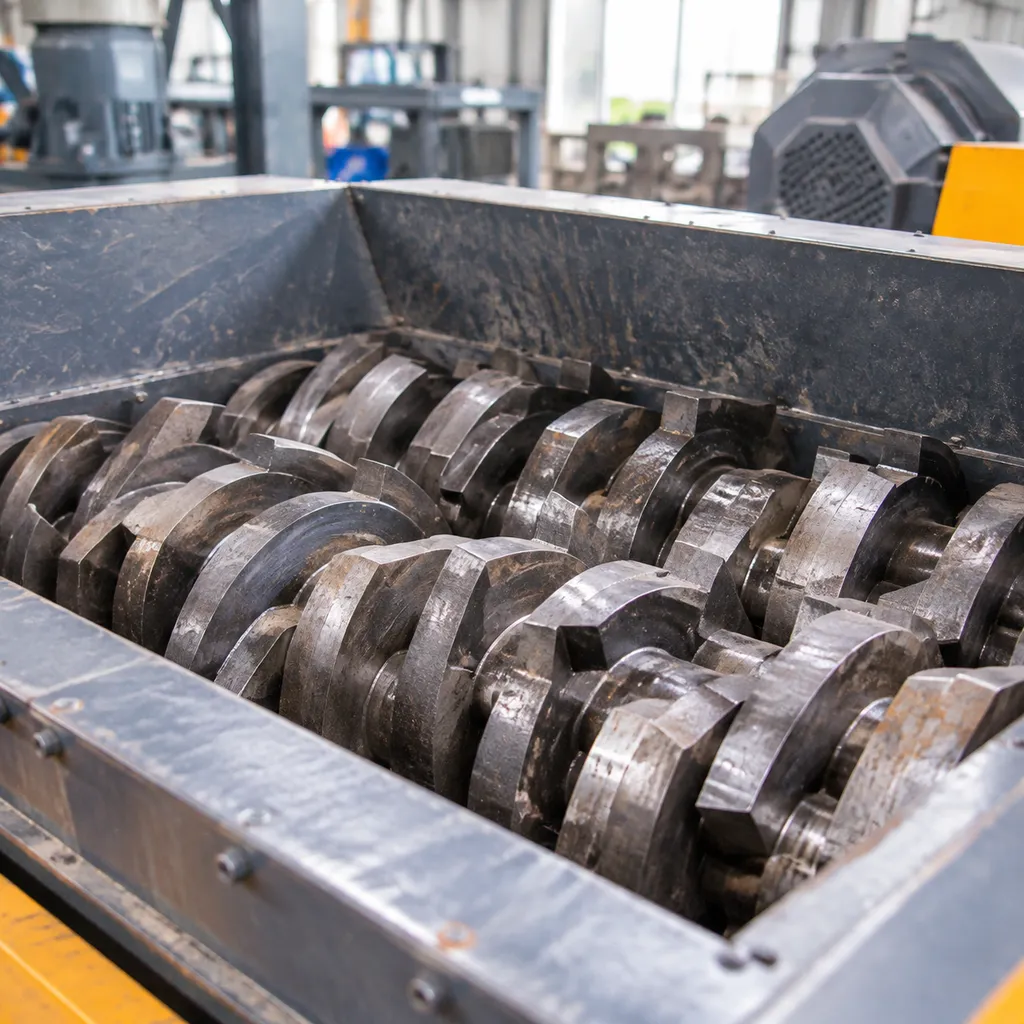
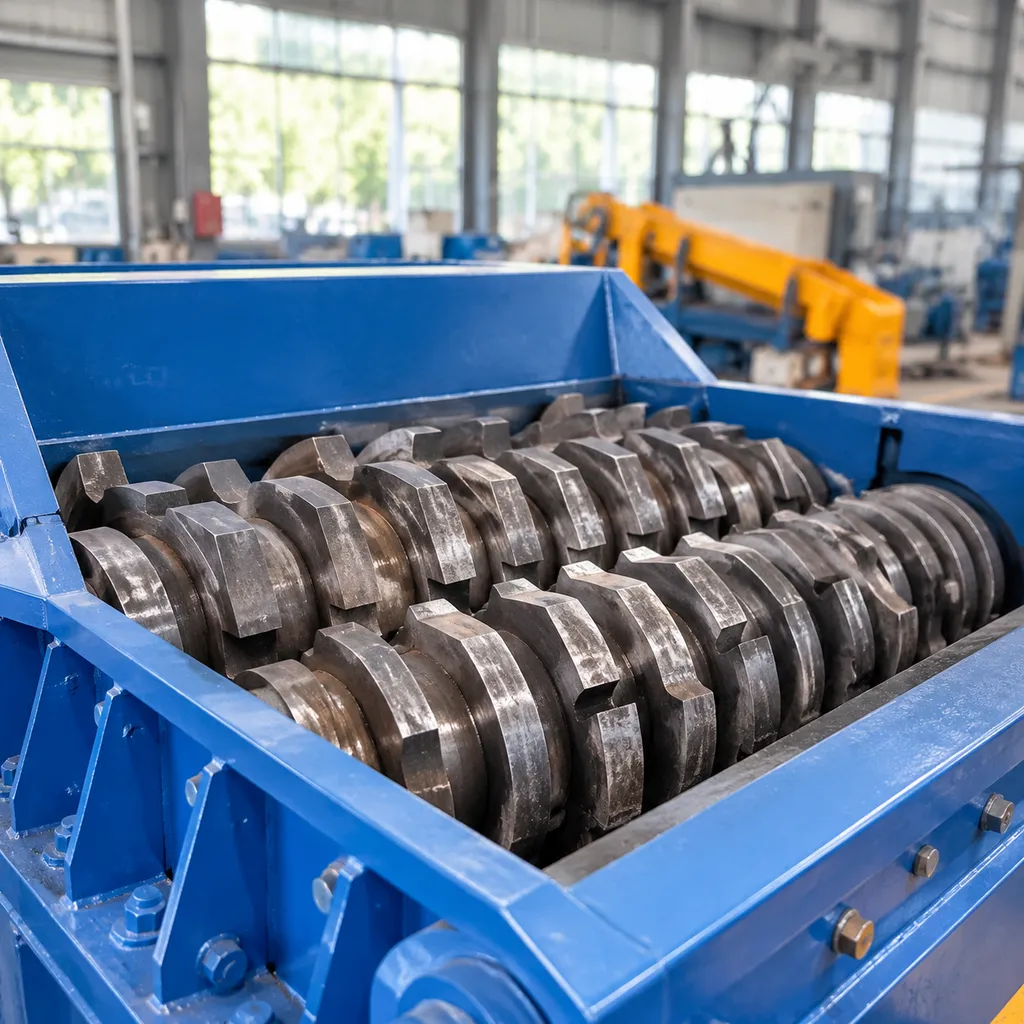
Tire shredder blades operate under extreme mechanical stress. Unlike standard industrial cutting tools, our blades must slice through vulcanized synthetic rubber while simultaneously shearing high-tensile steel bead wire and radial belts. When the counter-rotating shafts draw in whole tires, the cutting hooks bite into the tread, pull the tire into the cutting chamber, and execute a clean shear against adjacent rotor blades or stationary counter-knives.
Without exact hook clearance and proper edge geometry, rubber wraps around the shaft, steel belts fray instead of cutting cleanly, and drive motors experience severe torque spikes. We engineer our industrial tire shredder knives to deliver continuous shearing action that minimizes machine downtime, reduces heat buildup, and maintains consistent target chip sizes.
Application Spectrum Across Rubber Recycling Streams
Processing different tire types requires distinct cutting approaches due to wire thickness, rubber density, and overall tire mass.
- Passenger Car Radial (PCR) Tires: High throughput lines demand sharp, multi-hook blade profiles. While tread rubber cuts easily, continuous exposure to fine brass-coated steel belts causes rapid abrasive wear across the blade face.
- Commercial Truck and Bus (TBR) Tires: Heavy-duty truck processing exposes blades to thick, high-tensile bead bundles. Our heavy-duty shredder blades handle these concentrated shock loads without edge spalling or blade fracture.
- Off-the-Road (OTR) Heavy Equipment Tires: Mining, agriculture, and construction tires require multi-stage breakdown. Primary stages use thick-body, aggressive single- or two-hook blades to rip apart multi-ply casings before secondary granulating knives reduce the material further.
- Tire-Derived Fuel (TDF) Production: Rough shredding requires aggressive, high-tonnage size reduction. Our blades produce uniform nominal 2-inch to 4-inch chips with clean cuts, keeping steel wire exposed properly for downstream magnetic separation.
Dedicated Tire Cutters vs. General Waste Shredder Knives
Running standard municipal solid waste (MSW) blades on a tire shredding line guarantees premature tool failure. Dedicated waste tire recycling blades must balance extreme abrasion resistance with core impact toughness to survive continuous metal-on-metal shearing.
| Performance Parameter | Dedicated Tire Shredder Blades | General Waste Shredder Knives |
|---|---|---|
| Primary Failure Mode Addressed | Abrasive steel wire wear and impact shock | General plastic wear and low-level contaminants |
| Core Material Base | High-alloy shock-resisting tool steels | Standard carbon or medium-alloy tool steels |
| Hook & Edge Design | Reinforced cutting hooks; optimized shear angles | Thinner profiles; aggressive tearing hooks |
| Steel Cord Reaction | Clean cut with low burr formation | Wire smearing, blade binding, and wedging |
| Shock Load Tolerance | High yield strength against bead wire impact | Moderate; prone to cracking under high-impact metal |
Tire Shredder Blade Types and Configurations
Choosing the right blade configuration is the most important factor in balancing throughput and material quality. Our dual-shaft shredder blades are engineered specifically for the high-torque shearing required to pull apart heavy truck tires and stubborn bead wire. These blades provide the necessary bite to rip through thick rubber while maintaining the structural integrity of the rotor.
For secondary processing and finer output requirements, we utilize precision rotary shredder knives designed for granulation. Depending on your target particle size, we offer various cutting profiles:
- Hook Profiles: Optimized for grabbing and pulling tires into the cutting chamber with minimal slippage.
- Multi-Tooth Designs: Engineered for high-frequency cutting to reduce material into consistent, smaller strips.
- Custom Profiles: Tailored tooth geometries designed for specific feedstock, such as OTR tires or clean rubber streams.
We provide both OEM-equivalent replacements and custom-engineered knives. While OEM parts offer a guaranteed fit for standard machines, our custom-engineered blades allow for modifications in tooth geometry or material composition, helping you overcome recurring jamming or excessive wear issues unique to your specific recycling environment.
Tire Shredder Blade Material Selection and Wear-Resistant Options
Premature edge rounding, chipping, and catastrophic cracking usually point back to a mismatch between steel grade and feedstock. Scrap tires pack high-tensile steel bead wire, radial cords, and road grit, all working to abrade knife surfaces. We balance steel chemistry and thermal processing to match the specific stress profile of your cutting chamber.
For plants balancing wear life across varying scrap streams, reviewing our crusher blade materials guide to compare D2, SKD11, and more helps identify how different alloy chemistries respond to heavy impact and abrasion.
Tool Steels and Heat Treatment Standards
We manufacture industrial tire shredder knives primarily from forged alloy tool steels, heat-treated through precise vacuum hardening and multi-stage tempering cycles:
- D2 / SKD11 / 1.2379: High-carbon, high-chromium tool steel offering high wear resistance against radial wire abrasion. Standard working hardness sits at 58–60 HRC.
- H13 / 1.2344 / SKD61: Hot-work alloy engineered for severe shock loads. With a working hardness of 52–56 HRC, it resists shock failure when chewing through thick truck bead bundles.
- Modified Alloys (55NiCrMoV7 / Hardox / Weldox bases): Heavy-duty shredder blades that prioritize core ductility, preventing full-body snapping under extreme torque jams.
Carbide Inlays for Severe Wire Abrasion
Standard tool steel blades can wear down quickly when running clean tire steel wire or high-density radial casings. For high-volume secondary granulation and high-wear zones, we supply carbide tire shredder knives featuring brazed or mechanically fastened tungsten carbide inserts.
- Carbide inserts maintain sharp cutting edges significantly longer than bare steel in continuous abrasive environments.
- Tough tool steel backings support the brittle carbide segments, absorbing machine deflection without shattering.
Steel Grade Selection by Feedstock Type
| Feedstock Condition | Dominant Wear Factor | Recommended Blade Material | Typical Target Hardness |
|---|---|---|---|
| Passenger Car Radial (PCR) | Surface wire wear & cord pull | D2 / SKD11 / 1.2379 | 58–60 HRC |
| Heavy Commercial Truck Tires | Massive bead wire impact | H13 / Modified Tool Steel | 54–56 HRC |
| Off-the-Road (OTR) Thick Section | High-torque shock loads | 55NiCrMoV7 / High-Toughness Shock Steel | 52–55 HRC |
| Pre-Shredded Wire-Free Rubber | Fine abrasive friction | Carbide-tipped / D2 | 60–62 HRC (Steel) / 88–91 HRA (Carbide) |
Impact Toughness vs. Edge Retention Trade-Offs
Choosing the right tire processing blades involves balancing two opposing mechanical traits:
- Higher Hardness (High Edge Retention): Extends blade run time and delays edge rounding caused by fine wire friction. However, hard knives become brittle and risk catastrophic tooth breakage if an oversized rim fragment passes through.
- Lower Hardness (Higher Impact Toughness): Deforms slightly rather than fracturing when hitting solid un-debeaded truck beads or tramp iron. The trade-off is more frequent resharpening cycles due to accelerated edge wear.
We assess your incoming scrap stream, primary reduction sizing, and rotor speeds to lock in the proper hardness and alloy grade for your cutting setup.
Custom Tire Shredder Blade Engineering
When standard replacement parts fall short, we provide custom-engineered tire shredder blades tailored to your specific rotor geometry. Precise fitment is essential for preventing shaft damage and ensuring consistent throughput. We work from your provided CAD files, existing part drawings, or worn samples to match your unique machine specifications.
Key Customization Parameters
| Feature | Engineering Focus |
|---|---|
| Bore Geometry | Precision fit for hexagonal, splined, or keyed rotor shafts. |
| Tooth Profile | Custom hook angles optimized for specific tire bead density. |
| Blade Thickness | Adjusted to meet target output size and processing force. |
| Tolerances | Machining held to strict limits for optimal inter-blade clearance. |
Engineering for Performance
We focus on the interface between the rotor and the knife to maximize energy efficiency. Beyond standard configurations, we offer specialized tooth geometries designed to grab and shear thick steel-wire bundles without premature edge chipping. Every custom blade is subjected to targeted surface hardening, ensuring the heat-treatment depth balances core toughness with a durable working edge. Whether you require adjusted outer diameters for wear compensation or specific keyway modifications to stabilize your current rotor assembly, our custom process ensures your industrial shredder cutters meet the demands of high-volume tire recycling.
Technical Specifications and Parameters
Standard Dimensions and Shaft Mounting
We manufacture dual shaft shredder blades and secondary cutter knives to fit all standard rotor dimensions, hex drives, and keyed drive shafts.
| Parameter | Standard Industrial Range | Common Custom Configurations |
|---|---|---|
| Outer Diameter (OD) | 300 mm – 800 mm (12" – 31.5") | Up to 1,000 mm for primary OTR reducers |
| Blade Thickness | 25 mm – 100 mm (1" – 4") | Matched to spacer width tolerances (±0.02 mm) |
| Bore Profile | Hexagonal, Splined, Round with Keyways | Custom broached multi-key patterns |
| Bore Diameter | 100 mm – 300 mm (4" – 12") | Ground to direct-fit shaft tolerances (H7/h6) |
| Side Face Runout | Within 0.03 mm to 0.05 mm | Precision flat-ground to eliminate stack play |
Tooth Geometries and Cutting Profiles
Hook geometry dictates how the shredder grabs tires, pulls them into the chamber, and cuts through structural steel belts:
- Single-Hook Profiles: Deliver maximum penetration and aggressive feeding for high-volume primary shredding of whole truck and car tires.
- Multi-Tooth Profiles (3 to 12 Hooks): Designed for secondary shredding to yield uniform 2-inch chips or tire-derived fuel (TDF). Similar to cutting principles outlined in our PET bottle crusher blade design guide for efficient cutting, hook clearance and pitch determine aggregate sizing and minimize recirculating fines.
- Bolt-On Replaceable Inserts: Segmented cutting tips bolted to alloy bodies to minimize downtime and reduce changeout costs on heavy wear zones.
Hardness Ratings and Heat Treatment
Balanced heat treatment keeps the blade from cracking on bead wire while preventing rapid edge rounding. We run all our heavy duty shredder blades through computer-controlled vacuum furnaces followed by multi-stage tempering cycles:
- Core Hardness: 52 to 55 HRC for superior core toughness and resistance to sudden shock fracturing.
- Cutting Edge Hardness: 56 to 60 HRC (depending on steel grades such as D2, tool steel alloys, or specialized modified chemistries) for long edge retention against abrasive radial wires.
- Microstructure Control: Deep cryo-treating options available to eliminate retained austenite, maximizing fatigue resistance under continuous 24/7 operating cycles.
Anti-Corrosion, Surface Finishes, and Packaging
Industrial shredder cutters face high friction heat and outdoor yard moisture. We prep every knife for immediate installation or extended storage:
- Surface Finishing: Precision surface-ground faces with edge-deburred corners; optional black oxide, phosphate coating, or nitriding for added corrosion resistance.
- Corrosion Protection: Dipped in heavy industrial anti-rust oil and sealed in vapor-corrosion-inhibiting (VCI) plastic film.
- Packaging: Packed in reinforced, foam-lined wooden crates with labeled rotor-position indexing to prevent edge-to-edge transit damage and speed up stack-assembly onto your machine shaft.
Machine Compatibility and Fit Verification
A replacement cutter that looks right by eye can still wreck a rotor assembly on day one. We verify every fitment against factory equipment specifications to make sure each knife drops into your cutting chamber without binding or running loose.
How to Confirm Machine Fit
We cross-reference OEM part numbers and machine nameplates across all major dual-shaft and quad-shaft brands. When original documentation is missing, physical verification prevents costly installation delays:
- OEM Machine Data: Share your shredder make, model, serial number, and original part numbers.
- Factory Drawings: Provide original machine schematics or rotor layout diagrams when available.
- On-Site Physical Check: Measure mating shafts and existing knives directly off your machine.
Critical Dimensions for Replacement Knives
Precision fitment comes down to four critical dimensions. Even a half-millimeter discrepancy in thickness or bore geometry will distort the entire knife stack.
| Measurement Point | Inspection Focus | Risk of Improper Tolerance |
|---|---|---|
| Bore Geometry | Hexagonal, splined, keyed round, or double-D | Shaft slippage, rotor fretting, stripped drive keys |
| Blade Thickness | Parallel ground faces within ±0.02 mm | Axial runout, gap widening, cut binding |
| Outer Diameter (OD) | Tip-to-tip cutting diameter | Loss of overlap, uncut bead wire, housing collision |
| Cutting Clearance | Side-to-side gap between passing hooks | Steel-wire wedging, excessive motor amp spikes |
Rotor Blade Arrangement, Spacing, and Hook Overlap
Dual-shaft shredding demands exact hook timing and tight axial spacing. Our dual shaft shredder blades work in tandem with matched spacers and cleaning fingers.
- Hook Timing: Multi-tooth patterns must maintain factory phase angles to balance cutting torque across the gearbox.
- Side Clearance: Knife-to-knife gaps must stay uniform across the entire shaft length to slice through radial steel belts cleanly. Much like our precision engineering for plastic shredder blade design for high performance, maintaining tight side-to-side tolerances prevents wire from packing between cutters.
- Spacer Thickness: Ground spacers must match blade faces perfectly to prevent the shaft assembly from loosening under severe shock loads.
Why Visual Similarity Fails
Two tire shredder knives can share the same outer profile and tooth count while carrying completely incompatible drive geometries. A standard round bore cannot seat on an indexed hex shaft, and a standard metric keyway will fail on an imperial broached cut.
Worn tires apply violent torsional spikes to the shredder rotor. If your recycling equipment spare parts rely on approximate fits rather than tight, ground tolerances, the knives shift under load, destroying both the cutter edges and the rotor shaft itself. We build replacement cutters to match your machine's exact mechanical tolerances every single time.
Operating Factors Influencing Tire Shredder Blade Wear
Premature edge dulling and cracked hooks are rarely random. In our experience working with recycling plants, blade life depends heavily on your daily operating conditions, feedstock mix, and chamber setup. Managing these four operational factors keeps your tire shredder blade edges cutting clean and extends rebuild intervals.
Feedstock Grit, Bead Wire, and Rubber Mix
Tire construction dictates the wear pattern on your cutting edges:
Truck and Heavy Commercial Tires: High concentrations of thick steel bead wire generate intense localized friction, grooving the cutter face quickly.
Passenger Car Tires (PCR): While lower in wire mass, high-volume PCR processing causes rapid fine-edge abrasive wear across the entire hook profile.
Road Dirt and Embedded Grit: Scrap tires stored outdoors collect gravel, sand, and glass. This debris acts like a continuous grinding compound, eroding blade faces and side clearance zones faster than clean rubber ever could.
Rotor Speed, Torque Balance, and Throughput
Overloading the hopper causes shaft stalling, severe heat buildup, and micro-fractures along cutting edges.
| Operating Condition | Impact on Blade Assembly | Recommended Shop Practice |
|---|---|---|
| Overfeeding / Jamming | High-torque shock loads that crack blade roots and strip shaft keys | Run consistent metered feeding; match feed rate to rated motor amps |
| Excessive Rotor RPM | Rapid thermal expansion, softening heat-treated cutting profiles | Keep speeds within OEM parameters to prevent edge temper loss |
| Unbalanced Dual Shafts | Uneven wear distribution, causing one shaft to dull prematurely | Calibrate hydraulic or electric drive outputs to equalize hook engagement |
Cutting Clearances, Spacing, and Rotor Alignment
Precision spacing between counter-rotating knives determines whether a tire is cleanly sheared or torn apart. Setting axial gaps correctly mirrors the precision required when aligning industrial square shredder blades:
Gaps Set Too Wide: Steel radial wires slip into the gaps instead of shearing. Wire wrapping wedged between knives pushes blades outward, bending shafts and scoring spacer collars.
Gaps Set Too Tight: Thermal expansion causes side-face contact, resulting in severe friction galling, high motor drag, and instant catastrophic edge chipping.
Rotor Misalignment: Loose tie rods or worn shaft bearings allow the rotors to drift under load, ruining consistent hook overlap.
Foreign Metal Hazards and Infeed Management
Tire processing blades are engineered to shear vulcanized rubber and flexible steel belt cord, not solid structural steel. While a dedicated metal shredder blade is built to withstand massive solid scrap, stray wheel rims, wheel weights, leaf springs, and broken bead hooks dropped into a tire shredder can snap cutter teeth instantly. We always recommend maintaining strict pre-shred sorting, using vibratory infeed screens, and keeping overhead cross-belt magnets clean to catch tramp iron before it enters the cutting chamber.
Manufacturing Standards and Quality Control for Tire Shredder Blades
Premature chipping, shaft binding, and cracked hooks almost always trace back to poor steel chemistry or loose shop tolerances. When processing steel-belted passenger and heavy truck tires, high-torque dual shaft shredders put massive cyclic stress on every cut edge. We maintain strict manufacturing and inspection protocols across every stage of production to ensure our industrial tire shredder knives stand up to severe shock loads without unexpected failures.
Raw Material Testing and Metallurgical Traceability
Every batch of tool steel starts with verifiable chemistry. Using unverified scrap metal or inconsistent alloy blends causes unpredictable soft spots and brittle zones that fail under bead-wire impact.
- Spectrographic Analysis: We run chemical verification on incoming alloy billets to verify exact percentages of chromium, molybdenum, vanadium, and carbon before cutting a single blank.
- Mill Test Certificates (MTC): Every heat lot carries full traceability back to the forging mill, matching raw stock to international ASTM or DIN standard specifications.
- Ultrasonic Flaw Detection: Ingot cores undergo non-destructive testing (NDT) to identify internal voids, porosity, or inclusions before our materials selection and cutting processes begin.
Precision CNC Machining and Grinding Tolerances
Consistent blade spacing on the rotor shaft determines whether a shredder cleanly cuts radial tire wire or binds up and trips the motor drive.
- Hook Geometry Profiling: Multi-axis CNC milling machines shape cutting hooks, relief angles, and throat radiuses to match OEM shred profiles.
- Face Grinding for Parallelism: Both side faces of each tire shredder blade undergo precision surface grinding to control thickness down to ±0.015 mm, preventing cumulative stack-up errors along the shaft.
- Clearance Consistency: Tight tolerances ensure matched engagement with adjacent cutters and counter-knives, eliminating uneven side-load friction.
| Inspection Stage | Target Dimension / Spec | Measurement Tool | Acceptance Threshold |
|---|---|---|---|
| Blade Thickness | Ground contact faces | Digital micrometer | ±0.015 mm |
| Bore Geometry | Hex, round, or splined bore | Internal bore gauge / CMM | +0.025 mm / -0.000 mm |
| Face Parallelism | Across total outer diameter | Dial indicator fixture | ≤ 0.020 mm |
| Radial Runout | Tooth tip to bore centerline | Rotary inspection arbor | ≤ 0.030 mm |
Vacuum Heat-Treatment and Hardness Testing
Heat treatment dictates whether a blade chips under bead-wire impact or rolls its cutting edge prematurely. We process our heavy duty shredder blades through computer-controlled vacuum furnaces with pressurized gas quenching.
- Deep Core Hardening: Vacuum cycles prevent surface decarburization, ensuring uniform hardness from the outer cutting tip down to the inner mounting bore.
- Multi-Stage Tempering: Controlled double and triple tempering cycles relieve internal residual stresses, delivering maximum impact toughness while maintaining an edge-retaining working hardness of 54 to 58 HRC depending on the alloy.
- Direct Rockwell Testing: We verify hardness directly on the cutting hook and core body of every production lot via calibrated benchtop Rockwell hardness testers.
Final Mounting-Feature Inspection and Runout Checks
A blade must seat cleanly on the rotor without binding or wobbling. Every finished tire shredder blade passes through a documented quality control inspection protocol prior to oil coating and crating:
- Bore Fit Verification: Hexagonal, square, or keyway-driven bores are checked against precision plug gauges to guarantee slide-fit installation onto the machine shaft without excessive rotational lash.
- Total Radial and Axial Runout: Blades are mounted to a test arbor to measure rotational wobble; excessive runout leads to direct counter-knife strikes during machine operation.
- Visual Crack and Defect Checks: Finished surfaces undergo dry magnetic particle testing on critical stress corners to catch any micro-fractures before parts leave our facility.
Installation, Maintenance, and Reconditioning of Tire Shredder Blades
Proper upkeep of tire shredder blades is the most effective way to minimize machine downtime and protect your capital investment. Installing new knives requires strict adherence to manufacturer bolt torque sequences to ensure the rotors remain balanced and prevent premature vibration damage. We emphasize that maintenance isn't just about replacement; it’s about rigorous, daily oversight.
Best Practices for Long-Term Blade Performance
- Torque Protocols: Always follow the specific torque specs for your rotor assembly to prevent bolt fatigue and potential rotor damage.
- Gap Adjustments: Regularly monitor the cutting clearance between blades; tight gaps are vital for clean shearing of steel-belted tires.
- Daily Inspections: Check for signs of chipping or uneven contact, which often indicate foreign metal contamination or misaligned spacers.
- Hardware Security: Inspect all fasteners daily, as vibration from heavy-duty processing can cause hardware to loosen over time.
Resharpening and Reconditioning
Not every worn set of industrial shredder cutters needs to be discarded. We recommend regular inspections for hairline cracks or structural fatigue before deciding to resharpen. Professional durable rubber shredder blades that are maintained through precision grinding can significantly extend the total service life of your equipment. When assessing blades for reconditioning, ensure the remaining tooth geometry can still provide the necessary hook to grab and pull tire feedstock effectively. If the base material has been compromised by heat damage or severe impact, it is safer to replace the unit to avoid catastrophic failure in the shredding chamber.
Ordering and Custom Quote Workflow for Tire Shredder Blades
Step 1: Machine Identification and Part Numbers
To begin the quotation process, we identify your equipment baseline. Provide our technical team with the following details:
Machine Make and Model: The primary shredder manufacturer (such as SSI, Eldan, CM, Granutech, Vecoplan, or Untha) and model size.
OEM Part Numbers: Existing part or reference numbers stamped on the blade or listed in your equipment manual.
Current Application: Specify if you are running passenger tires, heavy truck tires with heavy bead wire, or whole OTR casings.
Step 2: Drawings, Blade Impressions, or Worn Samples
When OEM part numbers are unavailable or when ordering custom shredder replacement blades, we reverse-engineer the required profile:
CAD Files or Technical Prints: Provide 2D (.dwg, .dxf, .pdf) or 3D CAD files showing outer diameter, blade thickness, hook count, and bore configuration.
Physical Samples: Ship a worn sample blade to our facility. We compensate for edge wear to accurately map the original tooth height, hook radius, and face angles.
Shaft Impressions & Rubbings: For custom shafts with wear, provide physical rubbings or precise caliper measurements of the hex, spline, or keyway bore.
If your plant needs non-standard geometries or specialized cutting angles, our team develops tailored custom machine knives built specifically for extreme tire recycling environments.
Step 3: Confirming Quantities, Tolerances, and Lead Times
Before cutting steel, we verify your exact operational and logistical requirements:
Volume Requirements: We support individual rotor rebuild sets (typically 20 to 60+ blades depending on shaft length) as well as recurring batch orders for continuous plant maintenance.
Machining & Thickness Tolerances: We establish side-grinding tolerances (typically within ±0.01 mm to ±0.02 mm) to prevent axial rotor drift and maintain precise scissor clearances between counter-knives.
Steel Grade & Hardness: We finalize the alloy selection (D2, modified tool steel, or carbide-tipped inserts) and the specified HRC rating based on your feed contamination levels.
Delivery Schedules: Standard manufacturing runs generally require 3 to 5 weeks from print approval, with emergency rush runs and scheduled blanket-order stocking programs available to minimize facility downtime.
Frequently Asked Questions About Tire Shredder Blades
We often receive technical inquiries from facility operators looking to optimize their tire recycling blades inventory. Below are the standard answers to common operational concerns regarding blade selection, compatibility, and maintenance.
Quick Reference Guide for Shredder Blade Operations
| Question | Answer Summary |
|---|---|
| Required Order Details | OD, bore size, thickness, keyway dimensions, and tooth count. |
| Cross-Brand Compatibility | Rare; shafts and hook clearances are usually proprietary to OEM designs. |
| Sample-Based Production | Yes; we can reverse-engineer from your worn samples or detailed CAD drawings. |
| Steel vs. Carbide | Tool steel offers high impact resistance; carbide excels in abrasive environments. |
| Typical Lifespan | Highly variable (500–2,000+ hours) based on wire content and feed purity. |
| Resharpening Potential | Possible for minor chipping; reconditioning depends on remaining core integrity. |
| Choosing Profiles | Hook counts are selected based on your primary versus secondary shredding stage. |
Technical Clarifications
- Manufacturing Lead Time: Factors influencing timelines include raw material availability, custom heat-treatment specifications, and the complexity of the tooth profile.
- Alloy Tool Steel vs. Carbide: Tool steel is our standard for most heavy duty shredder blades because it handles the shock of embedded bead wire without shattering. Carbide is reserved for high-abrasion applications where long-term edge retention outweighs the risk of impact-induced brittle failure.
- Determining Tooth Profiles: For primary shredding, use fewer hooks for aggressive tearing. For secondary granulating, increase tooth count to reach specific output size requirements.
- Sample-Based Manufacturing: If original OEM drawings are unavailable, sending a representative worn blade allows our team to measure exact tolerances and verify the mounting geometry required for your rotor assembly.