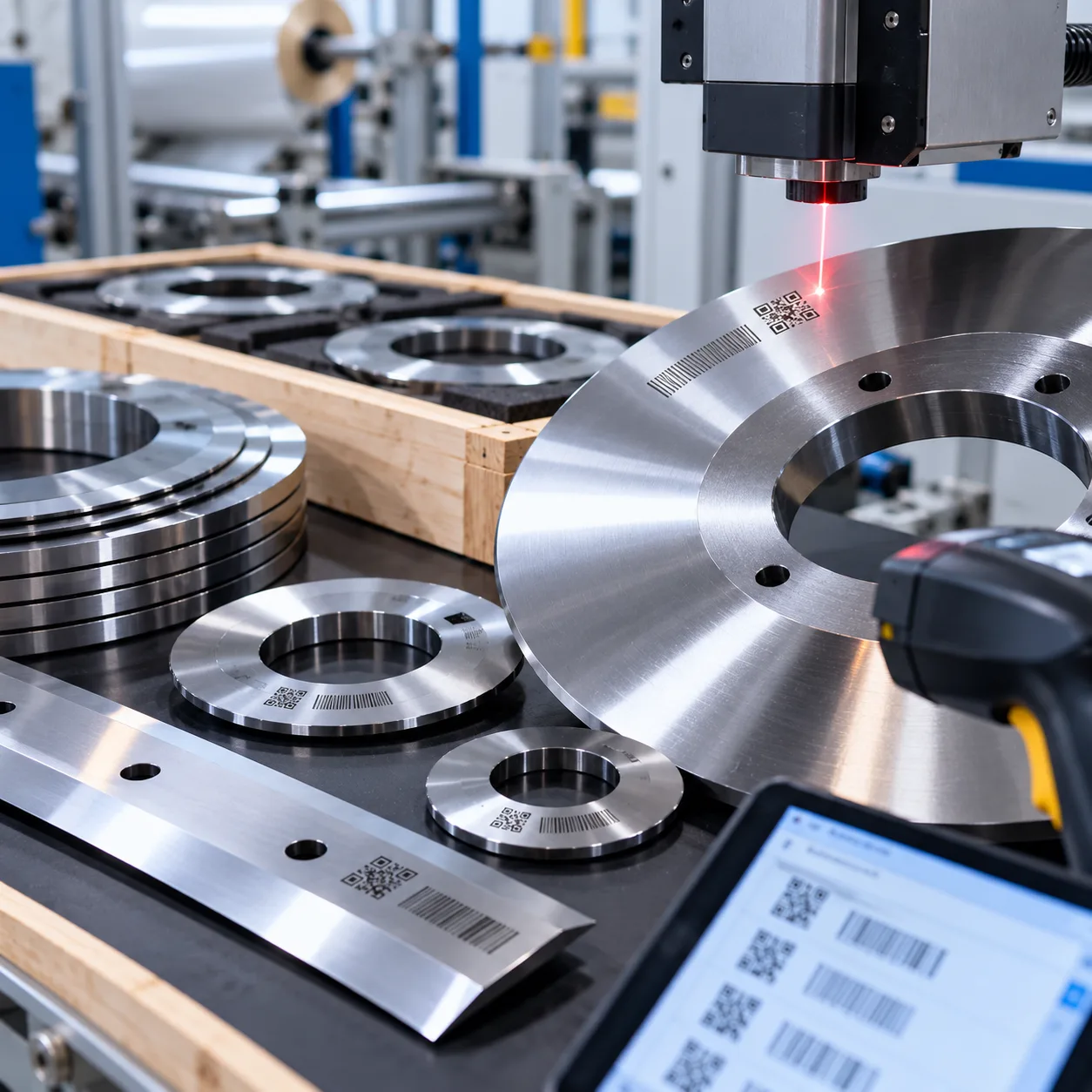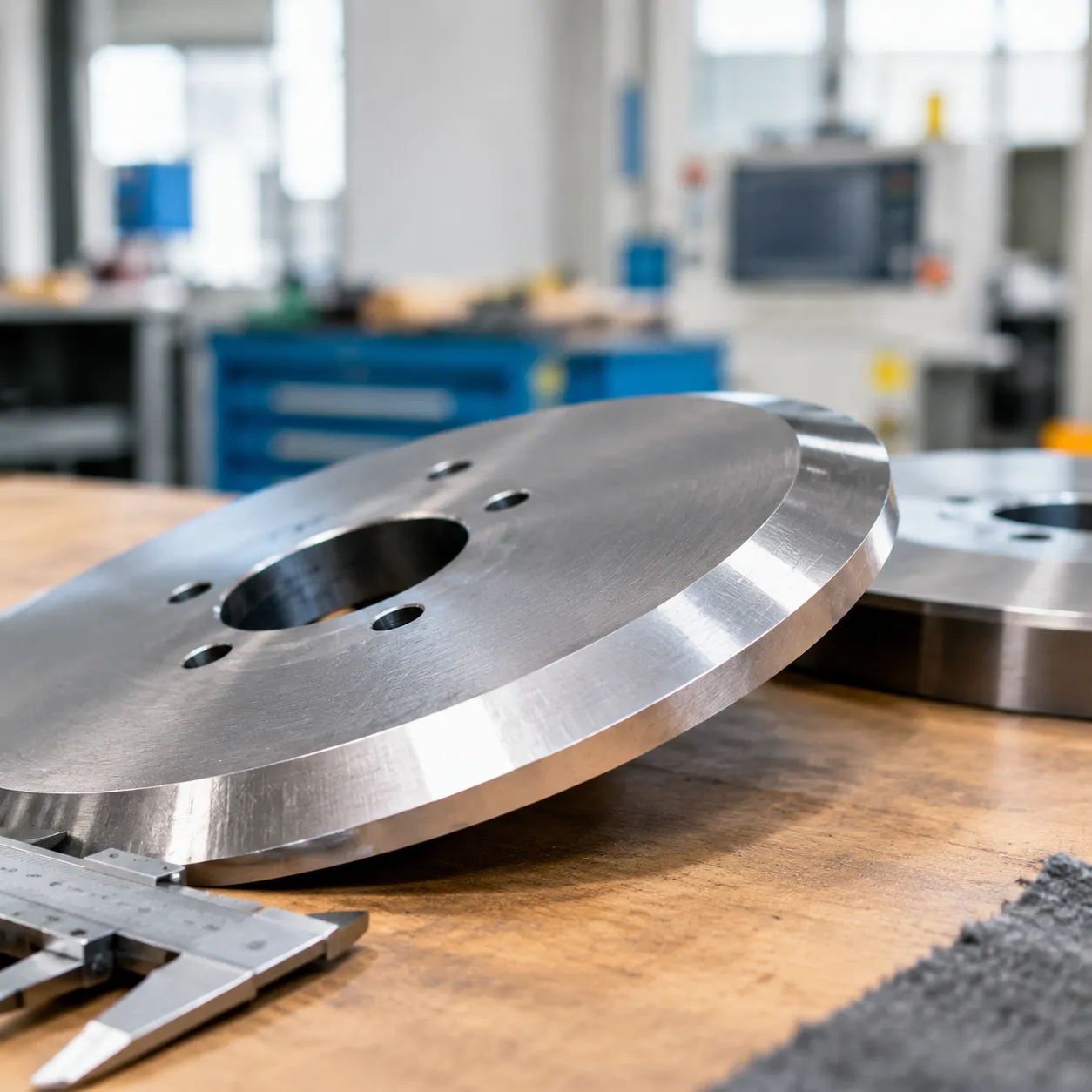

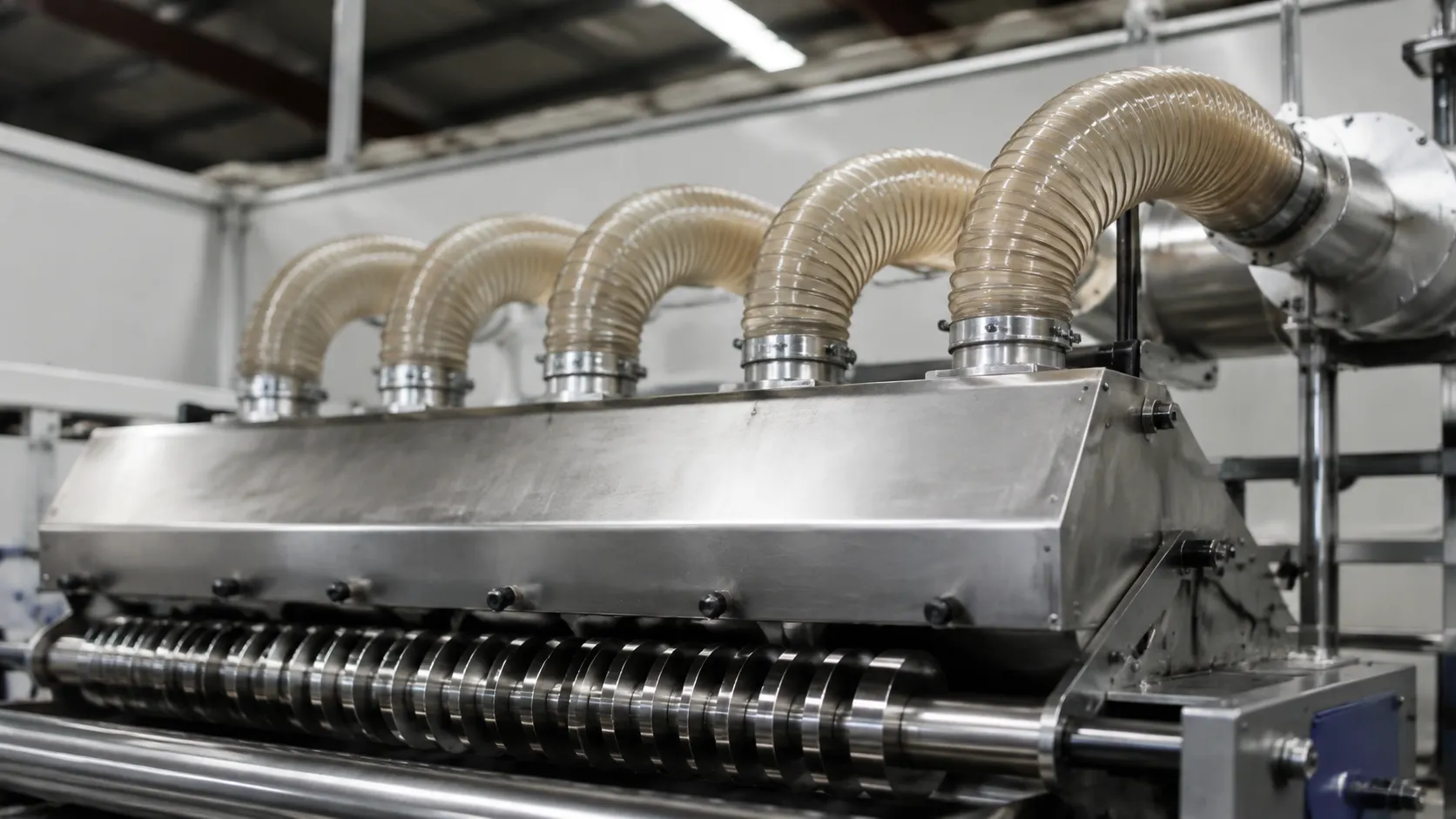
Why Slitting Knife Dust Becomes a Production Problem
In continuous converting operations, airborne and surface debris generated at the cutting zone directly degrades finished product quality and slitter-rewinder efficiency. Achieving reliable slitting knife dust removal begins with understanding how this debris originates and how it impacts overall line stability.
What Slitting Dust Is and Where It Comes From
Slitting dust consists of fine particulates, micro-fibers, and sheared edge fragments generated during shear, razor, or crush slitting. It occurs when mechanical stresses exceed the substrate's structural yield point at the blade nip point:
Paper and Board: Mechanical shearing pulls out cellulose fibers, surface coatings, and filler materials.
Films and Laminates: Micro-fracturing and frictional heating yield tiny polymeric fines and shavings.
Foils and Battery Electrodes: Brittle edge fractures release conductive metal particles into the air and onto the web.
PSA Tapes and Tacky Substrates: Shearing forces cause adhesive bleed, stringing, and sticky residue buildup on the blade edge.
Process Impact: Cut Quality, Rewinding, and Downstream Defect Rates
Debris generated at the knife nip does not stay isolated. Uncontrolled slitting debris severely impacts every downstream step:
Cut Edge Quality: Loose debris re-attaches to slit edges, causing rough profiles, ragged appearances, and customer rejections.
Rewind Performance: Fine particles trapped between web layers reduce inter-layer friction, causing roll dishing, telescoping, and uneven wound roll density.
Downstream Processing: Dust migrates to printing, coating, or laminating units, creating print voids, coating pinholes, and adhesive bonding failures.
Common Symptoms of Dust Problems on Converting Lines
| Symptom | Direct Cause | Operational Impact |
|---|---|---|
| Edge Contamination | Free particulates clinging via static charge | Off-spec rolls and cleanroom violations |
| Fiber Pullout & Burrs | Dull knife edges or improper blade geometry | Rough edge profiles and fiber loss |
| Web Tracking Issues | Debris buildup on guide rollers and slitter anvils | Slit width variance and web offset |
| Adhesive Buildup | Friction and tack drag at the cutting zone | Blade gumming, heat buildup, and web tearing |
| Frequent Maintenance | Abrasive dust accelerating knife wear | High tooling costs and constant cleaning stops |
Integrating target-focused slitter knife dust extraction stops localized cutting debris from turning into costly scrap and unplanned downtime.
Main Causes of Dust Generation at the Slitting Knife
Dull or Worn Knife Edges
A rounded blade edge loses its ability to slice cleanly through the substrate. Instead of a precise shearing action, a worn blade pulverizes fibers or stretches polymers until they tear, sending loose particulate flying into the air. Sticking to proven knife maintenance best practices prevents premature dulling and stops severe dust buildup on slitting knives before it disrupts production.
Incorrect Alignment and Blade Overlap
Improper knife-to-anvil alignment, incorrect cant angles, or excessive blade overlap create destructive lateral forces across the cutting edge.
Excessive overlap: Increases side pressure, causing metal-on-metal friction and microscopic web fracturing.
Insufficient overlap: Leads to web slippage, double-cutting, burrs, and incomplete shear.
Inconsistent cant angle: Causes blade binding, uneven edge wear, and continuous fine particle generation.
Excessive Friction, Heat, and Blade Drag
High-speed converting creates intense micro-friction at the knife nip point. Thermal buildup softens synthetic coatings, melts film edges, or breaks down adhesives, producing gummy residues that grab loose dust and clog converting line dust extraction hoods. Matching your blade specs to your substrate using a comprehensive slitter blade material guide drastically reduces drag and friction-induced debris.
Unstable Web Tension and Feeding
Web flutter and tension spikes force the substrate to shift dynamically at the moment of cut. When tension drops, material bunches up against the blade edge, forcing the knife to push through excess thickness and creating huge volumes of slitting debris.
Substrate-Specific Dust Mechanics
| Material | Primary Mechanism of Dust Generation |
|---|---|
| Paper & Board | Fiber pullout, edge sloughing, and binder disintegration under shear compression. |
| Films & Laminates | Micro-flaking, dynamic static charge, and polymer burr shedding. |
| Foils & Battery Materials | Brittle oxide particulate, metallic slivers, and flake detachment. |
| PSA Tapes & Tacky Substrates | Adhesive bleed mixing with airborne dust to form heavy blade buildup. |
| Nonwovens | Unbound synthetic fiber shedding and thermal bond fracturing. |
The Most Effective Slitting Knife Dust Removal Methods
Source-Capture Vacuum Hoods at the Knife Nip Point
Installing a custom blade dust removal hood directly around the cutting edge captures airborne particles right as shear cutting occurs. Positioning a high-velocity knife nip point vacuum hood within millimeters of the blade tip stops fine particles from escaping into the machine environment.
Dedicated Slitter Dust Extraction Systems
Connecting localized suction units to a centralized slitter rewinder dust collector ensures continuous negative pressure across every slit channel. For high-volume paper converting operations, pairing localized paper slitting dust collection with precision-engineered paper cutting knives minimizes fiber fracturing while maintaining high throughput.
High-Velocity Local Airflow for Fine Particle Pickup
Fine slitting debris often clings tightly to moving webs due to boundary layer air movement. High-velocity air knives break up this boundary air layer, scrubbing micro-particles off the material so the converting line dust extraction system can draw them away completely.
Static Elimination to Prevent Dust Reattachment
High-speed friction generates electrostatic charges that pull floating particles back onto the substrate. Placing an active static elimination bar immediately after the slitting station neutralizes the web, allowing your web cleaning system to pull debris away without static interference.
Enclosure Sealing and Containment Around the Cutting Zone
Enclosing the slitting station creates a localized negative-pressure zone that prevents fine debris from migrating to downstream rollers or optical sensors. When processing sensitive flexible packaging materials, combining localized containment with specialized film cutting knives keeps web edges sharp and particle-free.
Off-Line Cleaning and Scheduled Debris Removal
Automated shear cutting dust suction must be backed up by routine physical maintenance. Setting up a strict slitter knife maintenance schedule to clear vacuum ducts, clean collection filters, and wipe down blade holders prevents accumulated dust from dislodging back onto the moving material.
Choosing the Right Slitting Knife Dust Removal Solution
Finding the right approach to slitting knife dust removal depends on your material behavior, line speed, and machine space. We evaluate converting lines based on specific operational stages to determine whether mechanical tweaks, air extraction, static intervention, or blade material upgrades yield the best production stability.
Diagnostic Matrix: Matching Solution to Root Cause
| Operational Scenario | Immediate Fix | Long-Term Solution |
|---|---|---|
| Coarse debris from minor wear | Shear angle, depth, and cant alignment adjustment | Re-establish regular knife sharpening schedules |
| Fine airborne particles during high-speed runs | Retrofit slitter knife dust extraction system | Vacuum hoods matched to knife nip points |
| Particles re-attaching to web downstream | Localized high-velocity air nozzles | Integrated static elimination bars and web cleaning systems |
| Rapid edge dulling causing continuous fiber pulling | Machine setup re-calibration | Metallurgy upgrade using optimized D2 steel heat-treated slitter blades |
When to Upgrade Tooling vs. Adding Extraction
- Knife Adjustment: Resetting cant angles, overlap depth, and side pressure fixes basic burr problems without capital expenditure. If debris persists after recalibration, mechanical tuning alone is insufficient.
- Retrofit Extraction Systems: Necessary when slitting abrasive papers, board, or films at high web speeds where local airborne particles pose edge contamination risks.
- Combined Extraction and Static Control: Crucial for synthetic films, laminates, and nonwovens. Static charges lock micro-dust onto the web; vacuum extraction fails unless static bars neutralize the surface charge first.
- Blade Metallurgy Upgrades: Installing premium tool steels or engineered edge geometries solves dust generation at the source. For delicate materials, specialized nonwoven knives deliver cleaner shear cuts, reducing edge breakdown and fine debris altogether.
Key Selection Factors for Converting Line Dust Extraction
- Web Speed & Boundary Air: Higher line speeds create boundary layer air movement that requires targeted, high-velocity suction hoods to capture fine debris.
- Material & Particle Characteristics: Paper yields large cellulose fibers, while film generates micro-fines. Each requires specific duct sizing and filter media.
- Space & Maintenance Access: Slitter blocks often have tight clearances. Extraction hoods must provide quick-release mechanisms for fast blade changes and cleaning access.
- Existing Infrastructure: Verify whether your current plant dust collection system maintains sufficient static pressure and airflow to support additional knife nip hoods.
Knife Design Factors That Help Reduce Slitting Dust
Edge Sharpness and Cutting Geometry
A dull blade crushes material instead of shearing it, generating fine debris, edge burrs, and fiber pullout. We design specific bevel profiles to ensure a clean shear line without compressing the substrate.
- Bevel Angles: Custom single or double bevel configurations match your web thickness to eliminate edge crushing.
- Shear Angle Optimization: Precise rake and cant angles prevent lateral blade drag, keeping particle generation to a minimum.
Surface Finish and Friction Control
Micro-roughness on the blade face grabs fine fibers and coating particles, causing material drag and localized heat build-up.
- Mirror Polishing: Ultra-smooth blade surfaces stop web coatings and adhesives from adhering to the knife edge.
- Reduced Friction: Lower friction minimizes static charge generation, allowing fines to drop cleanly into collection chutes instead of clinging to the cutting zone.
Concentricity and Vibration Control
Mechanical instability causes the blade edge to slap or hammer the web, creating localized dust clouds and erratic edge quality.
- Tight Tolerances: Maintaining sub-micron axial and radial runout prevents blade wobble during high-speed runs.
- Vibration Dampening: Rigid tool mounts and balanced assemblies eliminate micro-chatter, ensuring a stable cut across the entire web width.
Tool Material Selection and Edge Life
Standard tool steels break down quickly on abrasive substrates. Upgrading blade material maintains critical sharpness longer, preserving a dust-free slitting process over extended shifts.
| Material Type | Key Properties | Ideal Substrates |
|---|---|---|
| High-Speed Steel (M2/D2) | High toughness, good impact resistance | Standard paper, board, soft films |
| Tungsten Carbide | Exceptional hardness, ultra-long wear life | Abrasive papers, foils, battery electrodes |
| Powder Metallurgy (PM Steel) | Uniform grain structure, high edge toughness | Flexible laminates, nonwovens, high-speed lines |
Selecting the right alloy is essential for long-term edge integrity. Explore our full range of engineered circular slitter knives designed for minimal wear and clean cutting performance.
Performance Coatings for Heat and Adhesive Control
Specialized surface coatings lower thermal buildup, prevent adhesive transfers, and extend intervals between scheduled knife cleanings.
- Diamond-Like Carbon (DLC): Delivers an extremely low friction coefficient and high hardness, perfect for abrasive film and battery material slitting.
- Titanium Nitride (TiN / TiCN): Protects against severe edge wear when processing mineral-filled paper or abrasive coatings.
- PTFE Anti-Stick Surfaces: Stops adhesive accumulation when slitting pressure-sensitive tapes and tacky substrates.
To evaluate which blade geometry and coating combination fits your line setup, review our technical guide on how to choose slitting knives for your specific converting application.
How to Troubleshoot Dust Problems Step by Step
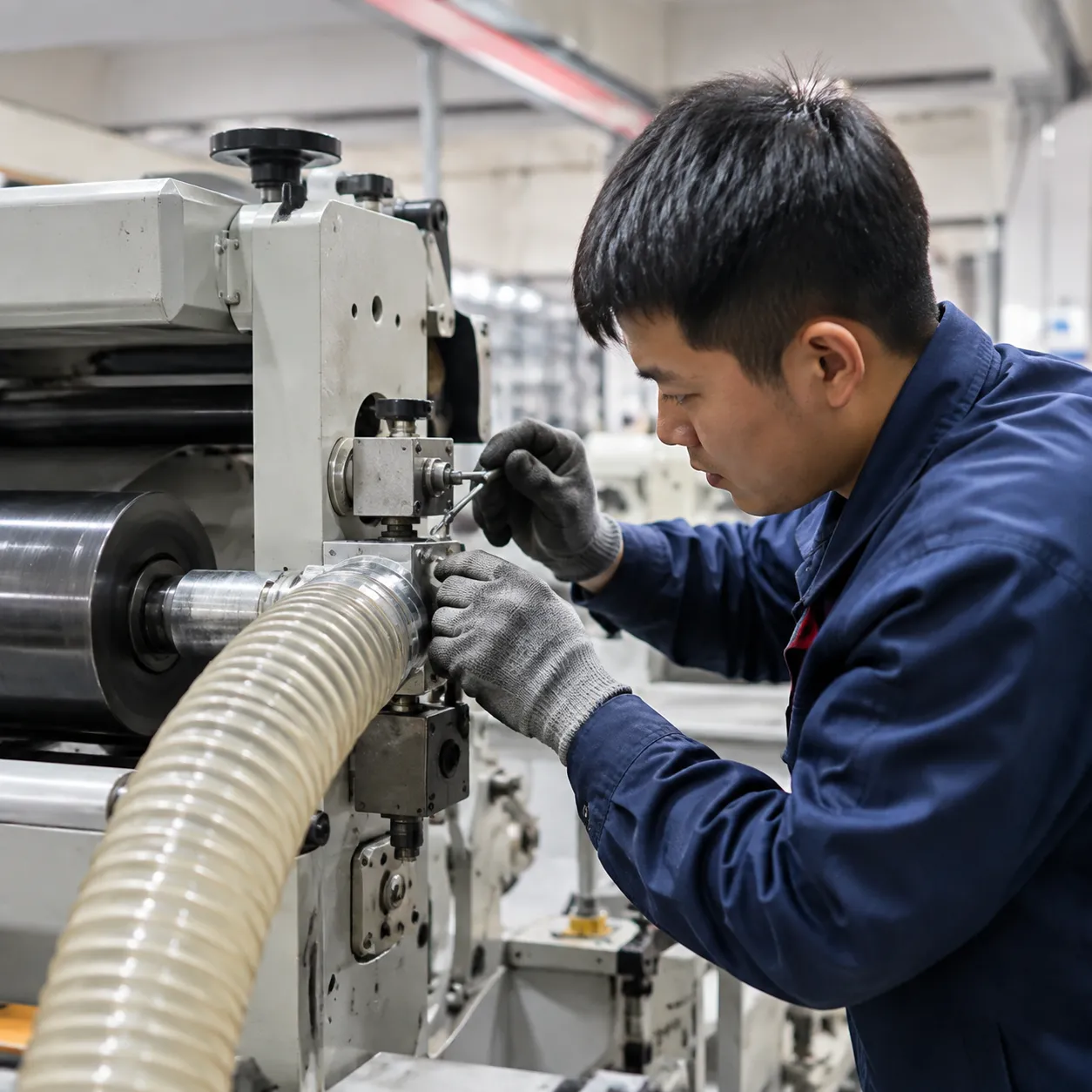
When we evaluate slitting knife dust removal performance on active converting lines, we follow a systematic troubleshooting process to locate the exact cause of particle generation and contamination.
Step-by-Step Slitter Dust Diagnostics
- Check the Blade Condition First
Inspect the cutting edge under magnification for micro-chipping, rounding, or adhesive build-up. A dull blade fractures material instead of shearing it, generating massive amounts of fine debris. Reviewing standard slitter blade cleaning tips helps ensure dirty blades are properly sanitized before evaluating edge wear. - Verify Alignment, Pressure, and Tension Settings
Check the knife cant angle, overlap depth, and side-load pressure. Excessive blade pressure creates severe friction and dust, while insufficient web tension causes web flutter at the knife nip point. - Inspect the Web Path for Static and Debris Accumulation
Scan the converting line with a static meter. Uncontrolled static charges act like a magnet, pulling slitting debris back onto the web surface right after the cut zone. - Test Extraction Efficiency at the Knife Location
Check static pressure and airflow velocity directly at the vacuum hood inlet. Ensure the capture hood is positioned as close to the knife nip point as possible without touching the moving web. - Review Material Behavior at Current Line Speed
Monitor how the substrate behaves at full production speed. Speed increases can introduce micro-vibrations, thermal softening in films, or edge tearing in paper stock. - Confirm Cutting-Related vs. Collection-Related Root Causes
Determine whether your slitter is generating excessive dust due to improper cutting geometry, or if normal cutting debris simply isn't being evacuated. If physical debris accumulation is leading to mechanical failures, refer to our guide on slitter blade jam troubleshooting to resolve line stops.
- Check the Blade Condition First
Cutting vs. Collection Diagnostics
| Symptom observed | Primary Root Cause | Recommended Action |
|---|---|---|
| Heavy debris buildup around blade holders | Insufficient vacuum airflow | Upgrade local extraction hoods or increase duct suction velocity |
| Fraying, burrs, or jagged slitting edges | Blade wear or misaligned shear angle | Re-align knife overlap or replace worn slitting blades |
| Dust re-attaching to web downstream | High static electricity | Install static elimination bars directly after the knife nip point |
| Intermittent edge cracking at high speed | Web tension instability | Calibrate unwind tension control and check roll concentricity |
Best Practices for Slitting Knife Dust Control in Daily Production
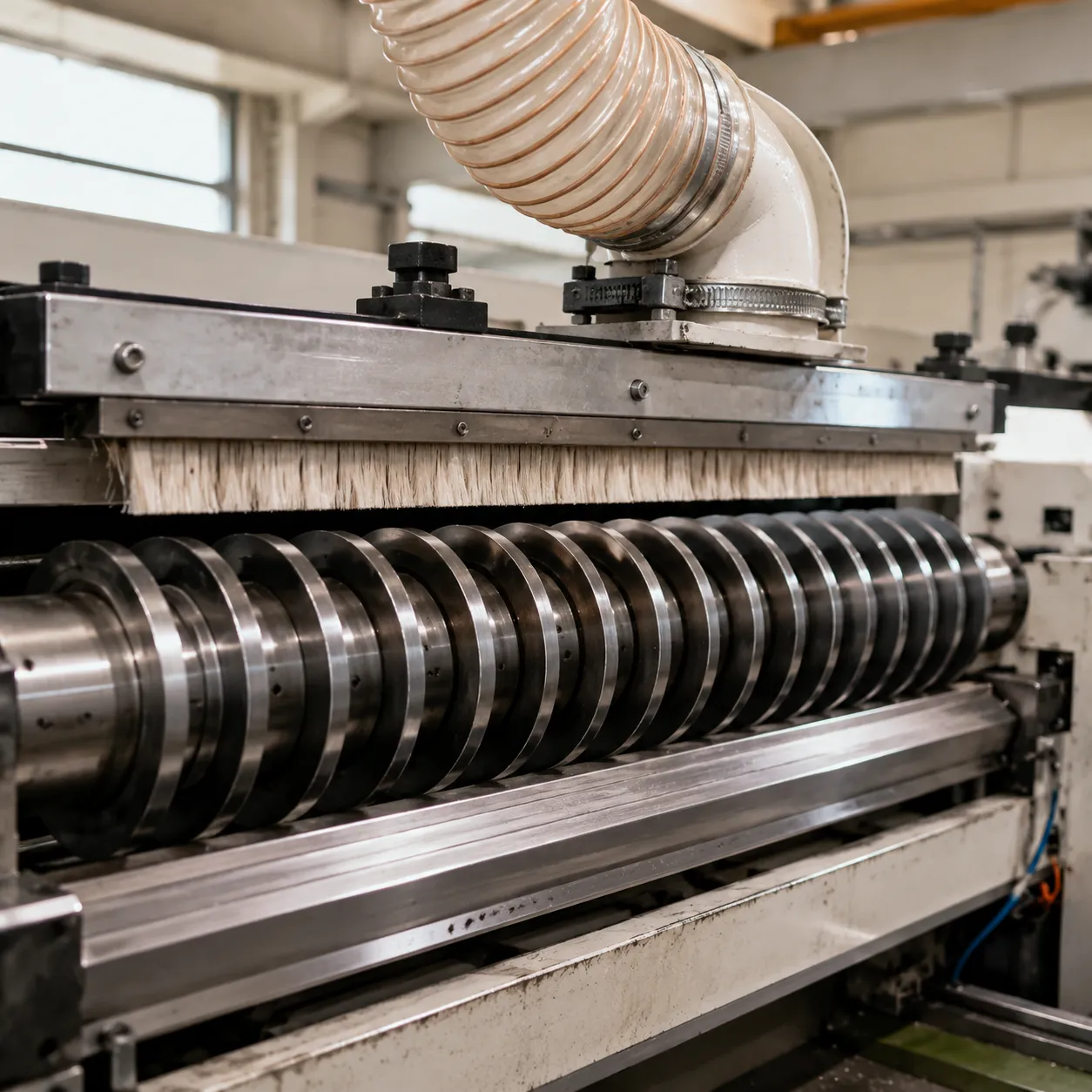
Keeping slitting knife dust removal efficient requires routine preventative care on your converting line. By combining proper slitter knife maintenance with optimized airflow, we keep web contamination low and operating speeds high.
- Set a strict blade inspection schedule: Dull edges tear material instead of shearing it, generating fine debris instantly. Inspect blades every shift and replace worn tooling with high-precision industrial machine knives before edge wear causes fiber pullout.
- Keep the slitting zone clean and accessible: Dust buildup on slitting knives and blade holders chokes suction airflow. Wipe down mountings, guards, and knife holders daily so loose particles do not re-attach to the web.
- Monitor static charge and grounding: Static electricity binds fine debris to moving webs. Ensure your static elimination bar is functioning and properly grounded at the cut station so your slitter rewinder dust collector pulls particles away effortlessly.
- Maintain consistent web tension and cut depth: Web flutter creates blade chatter and excessive shear friction. Lock in ideal knife penetration and web tension to minimize physical material fracture during slitting.
- Clean extraction ducts and filters regularly: Clogged filters drop suction velocity across your converting line dust extraction system. Inspect duct elbows, vacuum hoods, and collection bins on a set schedule to ensure maximum capture speed at the knife nip point.
- Train operators to spot early dust warnings: Teach machine operators to recognize initial signs of edge haze, minor burrs, or blade dragging so they can correct tension or blade settings before bad rolls force unscheduled downtime.
Benefits of Effective Slitting Knife Dust Removal
Implementing proactive slitting knife dust removal delivers immediate, measurable gains in slitting accuracy, roll appearance, and converting line efficiency.
| Operational Area | Impact of Dust Control | Direct Production Benefit |
|---|---|---|
| Edge & Roll Quality | Eliminates fine debris and fiber buildup at the knife nip point | Clean, crisp roll edges and zero edge contamination |
| Downstream Yield | Prevents loose particles from transferring to downstream processes | Fewer customer rejects, void spots, and coating or print defects |
| Tooling Lifespan | Reduces abrasive dust drag and heat friction along the cut edge | Extended edge retention on custom machine knives and lower tooling costs |
| Line Availability | Stops particulate accumulation on rolls, sensors, and slitter assemblies | Drastically reduced cleaning downtime and faster roll changeovers |
| Safety & Housekeeping | Captures airborne debris directly at the point of generation | Cleaner work areas and safer operator environments |
| Process Stability | Maintains consistent web tracking and steady winding tension | Predictable, continuous high-speed production runs |
Key Operational Advantages
- Sharper Roll Edge Aesthetics: Proper slitting debris removal ensures tight, dust-free roll profiles without fiber pullout, burrs, or inter-layer contamination.
- Lower Maintenance Overhead: Combining localized extraction with routine slitter knife maintenance stops abrasive dust from accelerating blade wear and bearing degradation.
- Maximum Machine Uptime: Targeted converting line dust extraction captures fine particles instantly, keeping web path sensors clean and preventing costly unscheduled stops.
How Sharkcutting Helps Solve Slitting Dust Problems
Engineering Precision for Dust-Free Slitting
- Friction-Reducing Geometries: We craft custom blade profiles and bevel angles matched to your web line, eliminating micro-tearing and fiber pullout.
- Wear-Resistant Substrates: By utilizing advanced wear-resistant knife materials, our blades maintain sharp edges longer, preventing the edge dulling that drives dust generation.
- Advanced Surface Coatings: Specialized DLC, TiN, and anti-stick coatings reduce surface friction, heat buildup, and adhesive drag.
- Targeted Application Support: Specialized knife configurations engineered specifically for paper, film, foil, PSA tape, and nonwovens.
Substrate-Specific Slitting Solutions
| Substrate | Main Dust Cause | Sharkcutting Tooling Solution |
|---|---|---|
| Paper & Board | Fiber fracturing & edge burst | Mirror-polished carbide edges to cleanly slice fibers |
| Films & Laminates | Angel hair & static micro-particles | Controlled bevel angles and friction-reducing coatings |
| Foil & Battery Material | Metallic flakes & edge burrs | High-density tool steels with ultra-tight concentricity |
| Tacky Tapes (PSA) | Adhesive transfer & blade dragging | Anti-stick surface treatments with optimized shear angles |
| Nonwovens | Filament fraying & web linting | Razor-sharp shear blade pairs with tuned nip engagement |
Tailored Engineering and Sampling
Every converting line presents unique mechanical challenges. Through our custom engineering support, we evaluate your web speed, shear angles, and particle profile to build custom slitting blades designed to maximize product quality and integrate into your slitting knife dust removal strategy.
Slitting Knife Dust Removal FAQ
Why does dust appear even when the blade is new?
New blades produce fine debris if mechanical slitting parameters are off. Brand-new knife edges cannot compensate for improper machine setups:
- Excessive Overlap & Depth: Deep knife overlap crushes material fibers rather than shearing them cleanly.
- Incorrect Side Pressure: Over-pressuring shear blades creates excessive friction, wearing the edge prematurely and shedding metal micro-particles.
- Unstable Web Tension: Web flutter at the knife nip point leads to inconsistent edge tearing and fine fiber pullout.
Is a vacuum hood enough to solve the problem?
No. A blade dust removal hood only captures airborne debris after generation. If static charges force particles back onto the web or poor shear geometry creates constant debris, vacuum suction alone cannot deliver dust-free slitting. Complete slitting knife dust removal requires combining knife tuning, source extraction, and active static neutralization.
Can blade coating reduce dust generation?
Yes. Surface coatings reduce edge friction, heat buildup, and material dragging at the cut point:
- TiN / TiCN Coatings: Increase surface hardness to maintain razor-sharp edges longer on abrasive substrates.
- DLC (Diamond-Like Carbon): Provides an ultra-low friction coefficient, preventing drag on sensitive films and nonwovens.
- PTFE Anti-Stick Coatings: Stop adhesive buildup when slitting PSA tapes and tacky materials, preventing gummed-up blades from tearing material.
What is the best solution for paper slitting dust?
Effective paper slitting dust collection requires a three-part source-control strategy:
- Precision Shear Geometry: Install a high-grade OEM slitter blade replacement with tailored bevel angles to slice fibers cleanly without crushing.
- Nip-Point Extraction: Position a high-velocity shear cutting dust suction hood immediately at the cutting point to capture debris before it settles.
- Static Elimination: Neutralize static charges right after the cut zone so fine paper dust drops into the extraction stream instead of clinging to the web.
How often should slitter knives be cleaned or replaced?
Cleaning and replacement intervals depend on substrate abrasiveness, blade geometry, and operating speed:
| Substrate Type | Inspection Schedule | Maintenance Trigger |
|---|---|---|
| Paper & Board | Every shift | Edge slitter debris accumulation or visible fiber burrs |
| Films & Laminates | Daily | Micro-nicks, high blade drag, or roll edge stretching |
| Nonwovens & Textiles | Per job change | Fiber wrapping around shafts or incomplete slit separation |
Upgrading to hardened tooling like a custom D2 bottom slitter blade extends edge life between sharpening cycles on high-speed lines.
What is the difference between dust removal and static elimination?
While both keep converting lines clean, they address distinct physical phenomena:
| Parameter | Dust Extraction System | Static Elimination |
|---|---|---|
| Primary Function | Extracts airborne slitting debris | Neutralizes surface electrostatic charges |
| Operating Mechanism | High-velocity vacuum airflow and capture hoods | Ionizing bars creating balanced ions |
| Target Problem | Loose slitter dust, web particles, and burrs | Particles magnetically bonding to the moving web |