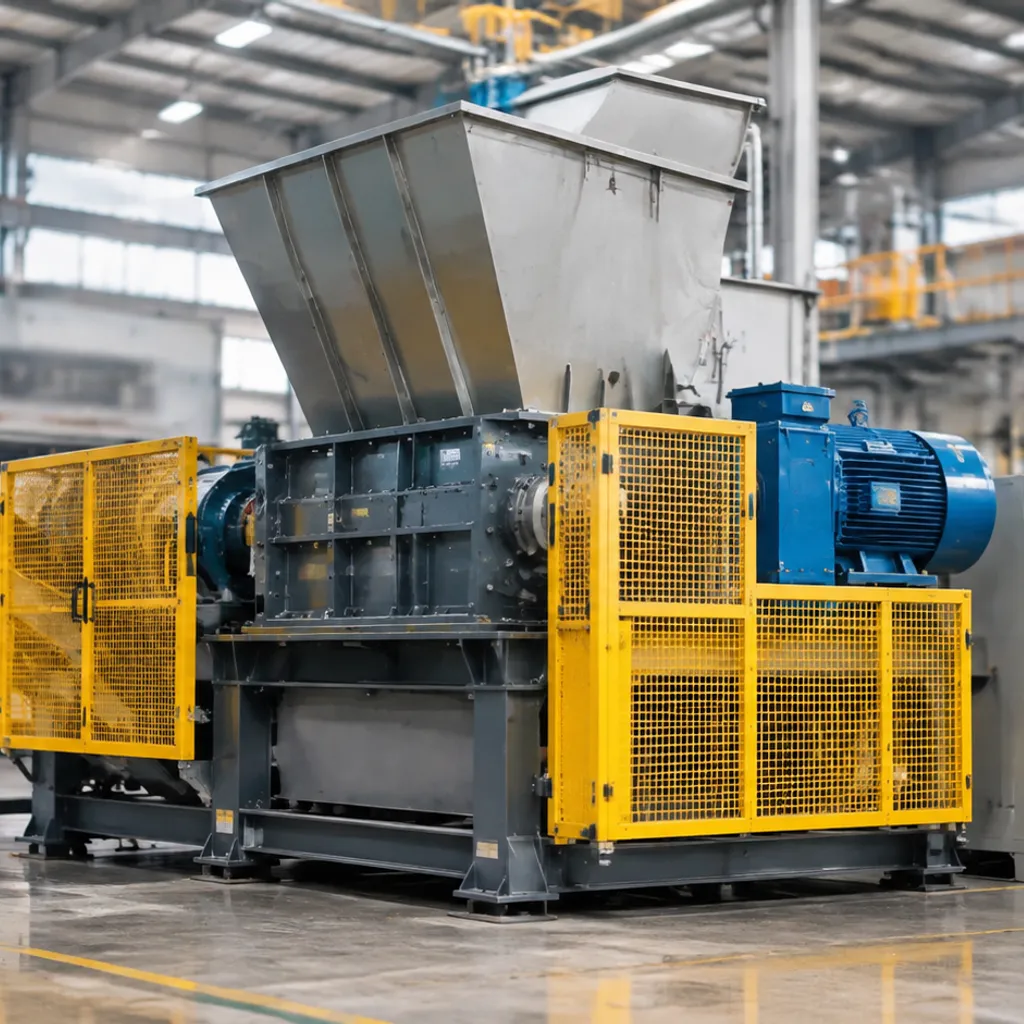

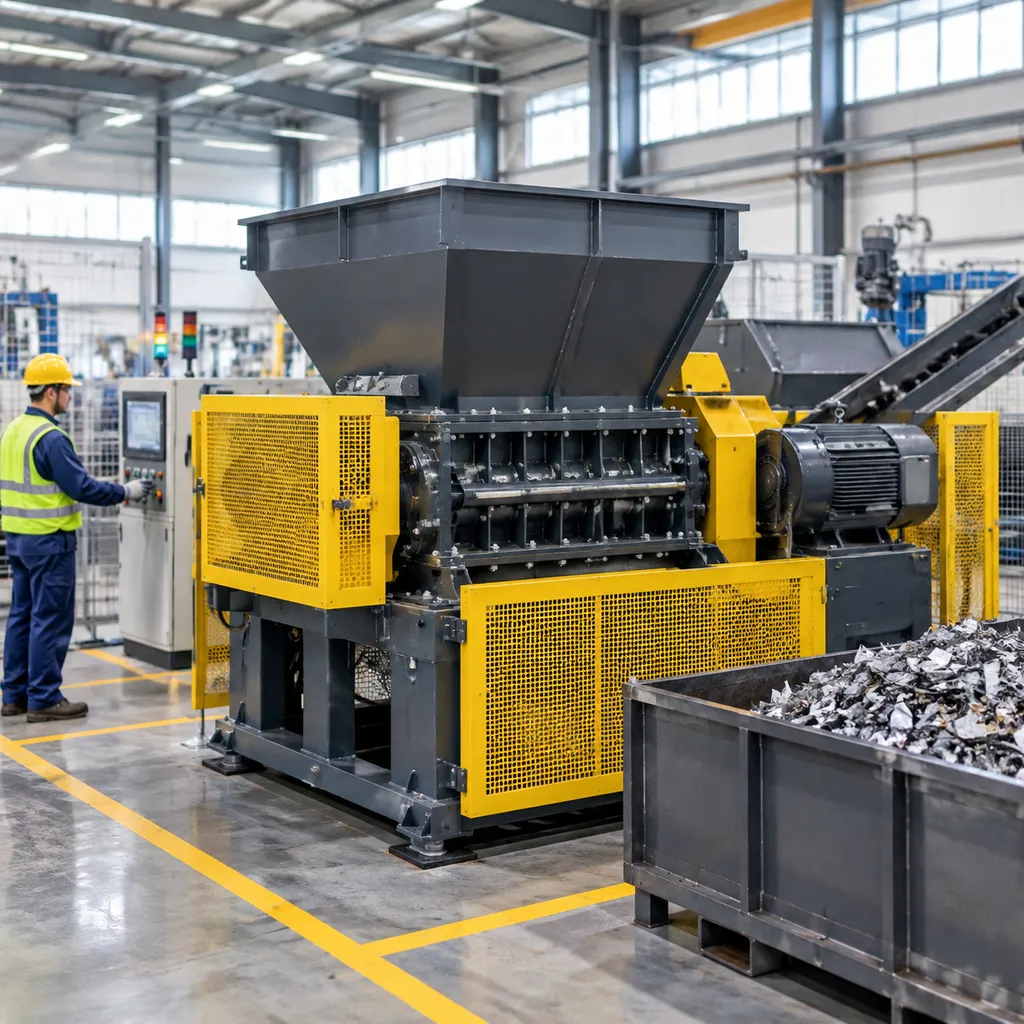
Choosing the wrong equipment can completely derail your recycling operations.
From inconsistent particle sizes to costly blade wear, your overall efficiency comes down to one critical factor: matching your material to the right cutting mechanism.
In this guide, you’ll discover the most reliable blade crusher machine types, how each blade configuration performs under heavy loads, and exactly which one fits your production needs.
Let’s dive right in.
Primary Blade Crusher Machine Types by Knife Geometry
We categorize industrial blade crusher machine types by their primary knife layouts to match specific material behaviors.
Cutting Chamber Geometries
| Blade Geometry | Primary Feedstock | Core Cutting Mechanism |
|---|---|---|
| Claw-Type Knives | Solid purgings, thick ingots | High-pressure point penetration |
| Flat Paddle Blades | Bottles, crates, thin walls | Sweeping shear, high airflow |
| Flake Step-Type Blades | Profiles, sprues, sheets | Staggered progressive impact |
| Chevron V-Shaped Blades | Thin films, woven fibers | Centered scissor-cut action |
Claw-Type Crushers for Dense Lumps and Solid Purgings
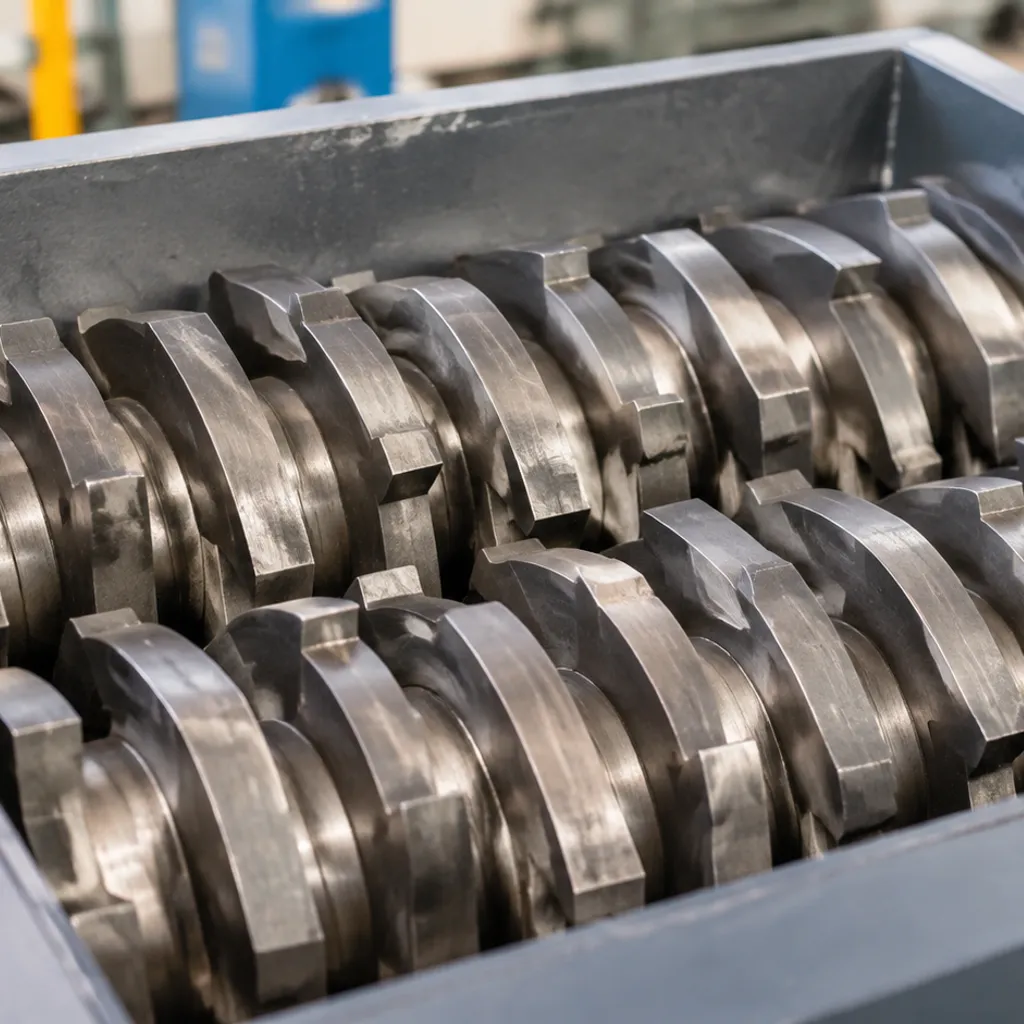
Dense polymer purgings, thick sprues, and solid head waste require immense force concentrated on minimal surface area. Claw blade configurations feature staggered, multi-tooth knives that grip and fracture material rather than slicing it in a single pass.
- Point-load penetration: Disperses total cutting resistance across alternating teeth, allowing the rotary knife granulator to penetrate dense blocks without stalling the drive motor.
- Anti-jamming bite: The aggressive claw hook draws massive parts down into the cutting chamber geometry, preventing solid lumps from bouncing endlessly on top of the rotor.
- Thermal control: Stepwise fracturing minimizes friction dwell time, reducing plastic melting on the stationary counter knife.
Flat Paddle Blade Crushers for Thin-Walled Hollow Parts
Hollow mouldings, thermoformed trays, blow-molded bottles, and automotive containers tend to bounce away from high-angle knives. Flat paddle blade crushers utilize wide, horizontal knife faces that maximize contact with lightweight volumes.
- Sweeping volume displacement: Broad paddles create a sweeping motion that gathers expansive hollow pieces into the primary shear gap.
- Airflow generation: The wide blade profiles function like impeller fans, accelerating airflow through the chamber to push lightweight scrap out through the screen discharge.
- Uniform granulate: Produces clean edges on low-gauge plastics without folding or tearing the material.
Flake Step-Type Crushers for Extruded Profiles and General Scrap
Flake step-type configurations position flat-faced knives in a staggered helical formation around the rotor axis. This layout bridges the gap between high-force point cutting and high-volume surface shearing.
- Progressive cutting action: Distributes shear load sequentially across the rotor width, smoothing out mechanical load spikes during operation.
- Versatile scrap handling: Ideal for rigid pipe offcuts, extruded profiles, injection molding runners, and edge trim.
- Balanced energy consumption: Maintains stable rotor inertia, reducing kilowatt draw during continuous-feed operations.
Chevron V-Shaped Scissor-Cut Crushers for Flexible Films and Fibers
Flexible feedstocks like low-density polyethylene film, polypropylene woven bags, filaments, and textiles quickly wrap around standard straight shafts. Chevron V-shaped rotors arrange angled rotor knives that slice against stationary bed knives using true scissor-cut size reduction.
- Material centering: Opposing blade angles draw flexible webs toward the center of the cutting chamber, eliminating side-wall friction and edge wrapping.
- True scissor shearing: The progressive tip-to-root scissor cut provides clean division without pulling, ripping, or generating stringy angel-hair contaminants.
- Minimized knife wear: Uniform cutting gaps along the entire V-edge prevent local blade overheating and maintain sharp tolerances across continuous production runs.
Blade Crusher Classifications by Rotor Design and Drive Setup
Rotor & Drive Classifications
| Rotor Style / Drive | Best Suited Feedstock & Core Advantage |
|---|---|
| Open Rotor (High Airflow) | Film, sheet, light moldings; prevents heat buildup |
| Solid Closed Rotor (High Inertia) | Thick purgings, pipe, solid blocks; absorbs shock |
| Single-Shaft Granulator | Regrind sizing, sprues, runners; tight tolerance |
| Double-Shaft Low-Speed Shredder | Bales, car bumpers, drums; high-torque shearing |
Open Rotor Systems for High Airflow and Heat Dissipation
Open rotor designs mount the rotary knives on open spider arms rather than a solid steel core.
- Enhanced thermal management: As the rotor spins, it functions like a fan wheel. The high air exchange keeps heat-sensitive polymers like low-density polyethylene (LDPE) and polypropylene (PP) below their glass transition points.
- Reduced screen clogging: Constant air velocity pushes cut flakes through the discharge screen instantly instead of letting them bounce and heat up in the chamber.
- Ideal applications: Thin films, thermoforming skeletons, blown film trim, and light hollow containers.
Solid Closed Rotor Systems for Heavy-Duty Shock Absorption
For thick-walled parts and dense structural scrap, we rely on a high-inertia solid rotor built from a machined steel forging.
- Kinetic energy storage: The heavy mass acts as a flywheel. When the cutting edge hits a solid chunk of resin, the stored inertia drives the knife through the cut without transferring catastrophic shock loads to the motor or gearbox.
- Rotor body protection: A solid core eliminates open pockets where thick plastic can wedge and cause sudden rotor seizure. Deploying a durable blade crusher for efficient material processing with a solid rotor ensures structural integrity under continuous peak amperage.
- Ideal applications: Heavy extrusion purgings, solid polymer billets, thick automotive runners, and rigid pipe sections.
Single-Shaft Granulators for Precision Regrind Sizing
Single-shaft granulators operate at moderate to high speeds (typically 400 to 600 RPM) to deliver clean scissor cuts against fixed counter knives.
- Tight knife clearances: We set rotor knife gaps down to 0.2 mm–0.3 mm, ensuring precise shearing action rather than blunt impact tearing.
- Uniform granule output: Combined with interchangeable classification screens, this setup produces scrap plastic flakes with minimal dust and uniform geometry ready for direct re-injection.
- Drive setup: Direct V-belt drive systems isolate the electric motor from normal cutting chatter while allowing quick speed tuning.
Double-Shaft Low-Speed Blade Shredders for Bulky Waste
Bulky, un-sorted scrap requires raw torque rather than rotor speed. Double-shaft industrial crusher systems run two counter-rotating shafts equipped with hooked rotor blades at low speeds (15 to 40 RPM).
- High-torque hook shearing: The hooked knives grab large items—such as drums, crates, and baled materials—and draw them down through counter-rotating cutting discs without bouncing.
- Jam mitigation: Planetary gearboxes paired with automated reversing controls prevent overload. If the knives hit an uncrushable object, the drive reverses instantly to reposition the feed.
- Ideal applications: Bulky industrial waste, whole plastic barrels, contaminated post-consumer plastic collections, and rubber scrap.
Dry vs Wet Blade Crusher Machine Types
Choosing between dry and wet cutting environments fundamentally alters how cutting chambers handle friction, heat, and material contamination. Both setups solve specific processing bottlenecks on the plant floor, but using the wrong machine configuration quickly leads to melted polymer chains or ruined knives.
Dry Granulation Systems with Integrated Dust Evacuation
In standard clean-room and in-house recycling loops, dry granulation is our go-to setup for clean sprues, runners, and rigid edge trims. Because friction in a dry cutting chamber generates immediate thermal buildup, keeping material moving is critical to prevent polymer melting and rotor smearing.
- Air-assisted discharge: Integrated blower fans pull regrind through the screen instantly, clearing the cutting zone and minimizing thermal soak.
- Dust and fines separation: Cyclone collectors and de-dusting units filter out airborne fines before regrind hits the storage gaylord, delivering clean feedstock directly back to the molding line.
- Thermal management: Dry units rely heavily on chamber airflow and high-speed extraction to manage temperatures when processing low-melt-point plastics like LDPE or PP.
Wet Wash Blade Crushers for Simultaneous Grinding and Cleaning
For heavily contaminated post-consumer scrap, agricultural film, or dirty bottles, a wet granulation machine is the standard choice. We pipe water directly into the cutting chamber during active operation, transforming the size reduction stage into an aggressive pre-wash cycle.
- Continuous knife lubrication: Water acts as a constant cooling medium, drastically reducing friction between the rotary knife and stationary counter knife.
- Abrasive shock absorption: The fluid layer floats grit, sand, and dirt away from the cutting edges, significantly prolonging the service life of our heavy-duty plastic crusher machine blade sets under harsh contaminated feeds.
- Density separation prep: Aggressive turbulence inside the chamber breaks surface dirt loose from the plastic flakes before the slurry discharges into downstream friction washers.
Water Cooling Mechanics and Anti-Corrosion Metallurgy Standards
Running water inside a high-impact chamber creates harsh metallurgical demands. Standard carbon steels rust and pit rapidly in wet conditions, creating micro-cracks along the cutting edge that lead to catastrophic chipping.
| Operational Feature | Dry Blade Crusher Systems | Wet Wash Blade Crushers |
|---|---|---|
| Primary Feedstock | Clean factory scrap, purgings, runners | Contaminated post-consumer bottles, films, ag scrap |
| Chamber Environment | Ambient air with vacuum/cyclone assist | Continuous injected water spray (slurry discharge) |
| Heat Dissipation | Airflow and blower evacuation | Direct water-quench cooling |
| Wear Factors | High friction heat, fines generation | Slurry abrasion, water corrosion, mineral friction |
| Housing Protection | Standard structural carbon steel | Stainless steel cladding or nickel-treated chambers |
To maintain edge geometry in wet environments, we specify corrosion-resistant treatments or high-chromium grades outlined in our crusher blade materials guide. Machine bearing assemblies on wet blade crusher machine types also utilize external, labyrinth-sealed housing blocks mounted away from the chamber walls to prevent water intrusion and bearing failure.
Knife Metallurgy and Blade Material Selection for Blade Crusher Machine Types
High-Carbon D2 and SKD-11 Tool Steels for Abrasive Wear
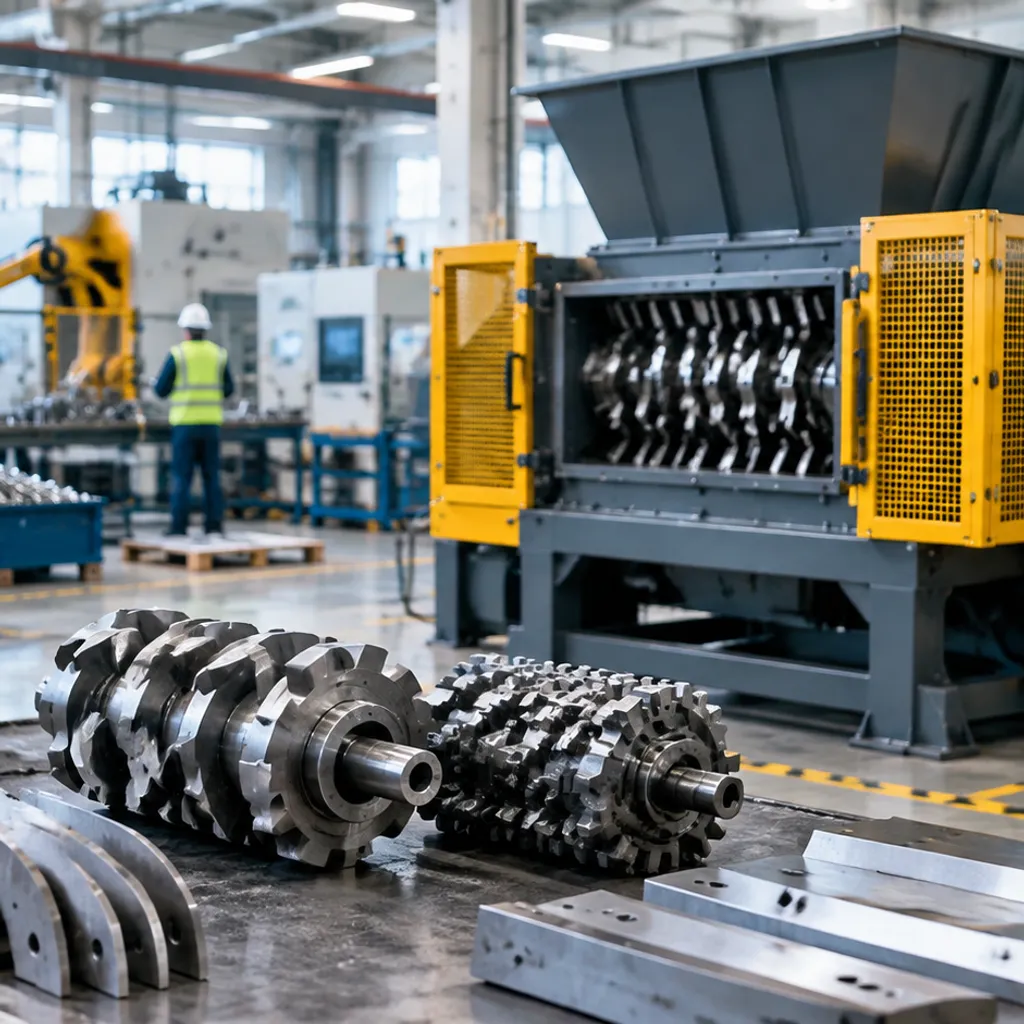
For standard scrap plastic granulator blades processing unreinforced resins (such as PE, PP, and PET), high-carbon, high-chromium tool steels are our baseline:
- D2 / SKD-11: Provides strong resistance to abrasive wear, holding a sharp cutting profile during long production runs.
- Failure mode to watch: High carbide segregation makes these grades brittle under severe shock loads. If metal contamination or heavy solid chunks enter the cutting chamber, standard D2 edges can chip rather than roll.
Shock-Resistant DC53 Tool Steels for Heavy Impact
When configuring heavy-duty single-shaft crushers or claw-type rotors for solid purge blocks and thick pipe sections, we switch to DC53:
- Superior toughness: DC53 doubles the toughness of D2, virtually eliminating edge cracking under cyclical shock loads.
- Secondary hardening properties: Retains structural stability when cutting friction raises chamber temperatures.
- Less chipping risk: Absorbs blunt impacts from thick wall cross-sections without catastrophic knife breakage.
Tungsten Carbide Inserts and High-Speed Steels (HSS) for Glass-Filled Polymers
Polymers reinforced with 15% to 50% glass fiber or mineral fillers wear out standard tool steels within hours.
- Carbide-tipped edges: Solid tungsten carbide inserts brazed or bolted onto the rotary knife granulator edge resist the severe scoring caused by abrasive fibers.
- HSS (M2 / SKH-51): Delivers a balance of red-hardness and wear resistance for moderately abrasive, warm post-industrial scrap.
- Quality control: Verifying tool steel grades with an industrial knife markings and traceability guide prevents mixing standard alloys with specialized wear-grade knives during changeovers.
Optimal Rockwell Hardness (HRC) Ranges: Wear vs. Chipping
Running a blade that is too hard causes catastrophic blade fracture. Running one that is too soft leads to rapid rounding, pinched plastic, melted fines, and jammed screens.
| Tool Steel Grade | Primary Target Scrap | Target Hardness | Impact Toughness | Wear Resistance |
|---|---|---|---|---|
| D2 / SKD-11 | General plastics, bottles, thin film | 58–60 HRC | Moderate | High |
| DC53 | Heavy purgings, thick sprues, solid blocks | 56–58 HRC | Very High | High |
| HSS (M2) | Engineering resins, light glass fill | 60–62 HRC | Moderate | Very High |
| Tungsten Carbide | 30%+ glass-filled nylon, PBT, composites | 88–92 HRA | Low | Maximum |
In most rotary blade crusher configurations, we heat-treat the stationary counter knife 2 to 3 points HRC lower than the moving rotor blades. If a mechanical crash occurs, the stationary knife yields first, protecting the drive motor, bearings, and rotor assembly from expensive structural damage.
Matching Blade Crusher Machine Types to Feedstock: Selection Matrix
Choosing between different blade crusher machine types comes down to polymer density, wall thickness, and part shape. Mismatching the knife profile to your scrap leads to rotor wrapping, melted resin, high fines, or unexpected motor stalls. We use this direct selection matrix on our plant floor to pair incoming materials with the right cutting configuration.
Feedstock Compatibility Matrix
| Scrap Category | Material Examples | Optimal Blade Crusher Machine Types | Rotor Configuration | Key Benefit |
|---|---|---|---|---|
| Thin Films & Fibers | PE/PP film, woven bags, filament | Chevron V-shaped rotary blade crusher | Open scissor-cut rotor | Prevents wrapping and reduces thermal stress |
| Thin-Walled Hollow | Bottles, thermoformed trays, small blow-molds | Flat paddle blade crusher | Semi-open rotor | Max airflow, stops bounce-back in cutting chamber |
| Solid Purgings & Lumps | Start-up purgings, pipe heads, dense blocks | Claw-type heavy-duty shredder / granulator | High-inertia solid rotor | Distributes shock loads; step-bites into hard masses |
| Profiles & Skeletons | PVC pipes, window profiles, thick sheets | Flake step-type or single-shaft knife crusher | High-tensile staggered rotor | Progressive cutting action prevents rotor binding |
Motor Power and Chamber Intake Sizing Guidelines
Proper cutting chamber geometry prevents material bridging and keeps hourly throughput stable. We determine feed capacity and motor power using three physical rules:
- Chamber Throat Clearance: The chamber intake dimensions should exceed the largest part profile by at least 20% to 30% to prevent scrap from bridging above the blades.
- Motor Load per Application: Thin hollow parts typically require 1.5 to 2.2 kW per 100 kg/hr of throughput. Solid thick purgings or engineering polymers with glass fill require 4.0 to 5.5 kW per 100 kg/hr to handle shear resistance without stalling.
- Flywheel Momentum: For purgings and thick profiles, prioritize high-inertia flywheels paired with solid rotors to absorb peak impact torque, cutting down motor amp spikes.
Screen Discharge Mesh Selection for Regrind Quality Control
Screen hole size determines final regrind particle geometry and overall processing temperatures. A smaller screen yields uniform plastic pellet size reduction but keeps resin in the cutting chamber longer, increasing frictional heat and dust generation.
- 5 mm to 6 mm Hole Diameter: Best for direct injection molding feed. Delivers tight particle size distribution but requires regular checking of stationary counter knife edges to minimize fines.
- 8 mm to 10 mm Hole Diameter: Standard for general blow molding and extrusion scrap recovery. Balances high throughput with low dust generation.
- 12 mm+ Hole Diameter: Recommended for initial pre-crushing stages or heat-sensitive polymers prone to rapid degradation.
Following consistent manufacturing quality control routines ensures your screen plates, rotor knife gap tolerance, and evacuation airflows remain aligned to protect regrind quality across every production shift.
Blade Maintenance and Clearance Calibration

Keeping any industrial size-reduction system operating at peak throughput requires proactive gap management and sharp edges. Across different blade crusher machine types, precision calibration directly dictates energy efficiency, granulate consistency, and machine lifespan.
Recognizing Knife Dulling Through Motor Load and Regrind Fines
When scrap plastic granulator blades lose their sharp cutting edges, the cutting chamber shifts from a scissor-cut action to a blunt tearing action. We routinely watch for two immediate operational warning signs:
- Motor Amp Draw Spikes: Dull knives create severe frictional resistance rather than shearing cleanly through feedstocks. If your ammeter consistently registers 15% to 30% above baseline during steady feeding, the blades are compressing material instead of cutting it, driving motor temperatures up.
- Surge in Fines and Dust: A sharp rotor knife slices clean pellets. When blades dull, material is crushed and pulverized against the stationary counter knife, generating excessive fines, strings, and melted "angel hair" that clog screen perforations.
- Chamber Heat Buildup: High cutting resistance turns rotational kinetic energy into heat. If low-melt polymers begin agglomerating or smearing inside the chamber, dull cutting edges are almost always the root cause.
Following structured knife maintenance best practices prevents unnecessary motor strain and maintains regrind quality across every production shift.
Step-by-Step Bed Knife Clearance Adjustment Protocols
Accurate bed knife clearance adjustment ensures a clean scissor action without risking knife-to-knife contact. We recommend maintaining a precise rotor knife gap tolerance between 0.15 mm and 0.30 mm (0.006" to 0.012") for rigid plastics, and tighter gaps down to 0.10 mm (0.004") for thin, flexible films.
- Lockout/Tagout (LOTO): Disconnect and lock out main electrical power to eliminate any risk of rotor startup.
- Clean Knife Seats Thoroughly: Open the cutting chamber and remove all regrind, degraded polymer, and resin fines from the knife mounting pockets using brass scrapers and industrial solvent.
- Mount and Snug Stationary Knives: Install the bed knives with mounting bolts hand-tight, backed out slightly to allow adjustment screw travel.
- Insert Feeler Gauges: Place precision feeler gauges at both outer ends and the center point of the stationary counter knife.
- Adjust Jack Screws: Turn the rear push bolts incrementally until you feel a firm, uniform drag on the feeler gauge across the entire blade length.
- Torque Bolts in Sequence: Tighten knife clamp bolts to manufacturer-specified torque values working from the center outward to prevent blade warping.
- Manual Rotor Turn Verification: Rotate the rotor slowly by hand for a full 360-degree cycle to verify zero interference across all cutting passes before closing the cutting chamber.
Tramp Metal Detection and Chamber Protection Methods
Unchecked tramp metal is the fastest way to shatter high-alloy cutting knives and warp heavy-duty rotors. We protect our machines by layering mechanical and electronic safety measures:
- Overhead Magnetic Separators: Cross-belt permanent or electromagnets positioned over the infeed conveyor pull out ferrous wire, screws, and broken tools before scrap enters the chute.
- Tunnel-Style Metal Detectors: Integrated search coils on the feed belt detect non-ferrous metals such as copper inserts, brass fittings, and aluminum caps, instantly halting the feed conveyor.
- Mechanical Drive Protection: Heavy-duty blade crusher machine types utilize torque-limiting friction clutches or replaceable shear pins on the flywheel to disengage drive inertia instantly if an uncrushable object wedges in the cutting chamber.
Frequently Asked Questions About Blade Crusher Machine Types
Running scrap reduction lines daily gives our team a clear look at common processing snags. When selecting between different blade crusher machine types, operators frequently run into specific hurdles around feedstock behavior, knife maintenance, and granulator settings. Here are direct answers to the questions we encounter most often on the shop floor.
Which blade crusher type is best for thick plastic purgings?
For high-density, thick-walled materials like purgings, pipe heads, and heavy injection molded blocks, a claw-type blade crusher or a heavy-duty single-shaft shredder-granulator combination is the best choice.
Standard flat blades strike the material across their entire edge simultaneously. When hitting a solid purgation block, this flat impact spikes motor amperage, strains the rotor shaft, and frequently stalls the machine.
- Pointed distribution: Claw-type knives stagger the impact points across the rotor, piercing the block rather than slapping against it.
- Progressive bite: The claw tip shears off small chunks layer by layer, keeping the motor load stable.
- Alternative approach: If the purgings exceed typical granulator feed limits, pre-shredding with low-speed, high-torque industrial machinery is required. We often advise checking our single-shaft vs double-shaft shredder blades guide to determine whether a primary shred step is needed before feeding material to the final blade crusher.
How do I stop thin film from wrapping around the rotor?
Film wrapping happens when flexible scrap slips between the rotor knives and bed knives without being cleanly severed, catching on open rotor spokes or shaft ends. Resolving this issue requires the right rotor configuration and sharp knife geometry.
- Use a chevron V-shaped rotor: A double-angle scissor-cut or chevron knife design draws the film inward toward the center of the cutting chamber instead of allowing it to migrate toward the rotor bearing walls.
- Close the rotor knife gap: Flexible PE, PP, and stretch films require extremely tight knife clearances. If the gap exceeds 0.15 mm to 0.20 mm, the film folds over the stationary counter knife instead of cutting, creating ribbons that wrap the shaft.
- Install rotor anti-wrap shields: Enclosed or solid rotors with integrated side-wall covers prevent loose film ends from winding into bearing housings.
- Keep the cutting edge keen: Denser tool steels ground with a clean, acute cutting edge deliver a crisp shear before the material stretches.
What is the ideal knife clearance gap for plastic granulation?
The ideal rotor-to-bed knife clearance gap generally sits between 0.15 mm and 0.35 mm (0.006" to 0.014"), depending directly on the thickness and rigidity of the material being processed:
| Feedstock Material Type | Recommended Clearance Gap | Primary Risk if Gap Is Incorrect |
|---|---|---|
| Thin flexible films & fibers (PE, PP) | 0.15 mm – 0.20 mm (0.006" – 0.008") | Film pulling, stretching, and shaft wrapping |
| Standard rigid parts & runners (ABS, PS, PC) | 0.25 mm – 0.30 mm (0.010" – 0.012") | Excessive thermal buildup and dulling impact |
| Thick purgings & solid profiles | 0.30 mm – 0.35 mm (0.012" – 0.014") | High shock load and mechanical blade binding |
We always set and verify gaps cold across the entire width of the cutter chamber using feeler gauges. Setting the gap tighter than 0.15 mm risks blade clash due to thermal expansion under continuous run cycles, while gaps wider than 0.40 mm cause high percentages of dust, stringy tails, and high motor draw.
When should I sharpen crusher blades instead of replacing them?
Crusher knives are designed for multiple regrinds, but running them past their mechanical safety limits causes catastrophic chamber damage. We inspect knives according to dimensional tolerances, surface wear, and wear-land depth.
- When to sharpen: Sharpen the knives when the cutting edge rounds off beyond a 0.5 mm radius, or when you notice a sustained 15–20% rise in motor amps alongside high fines in your regrind. Most industrial crusher blades can be reground multiple times as long as the counterbore slot depth allows full bolt engagement.
- When to replace: Replace the set immediately if the blade has lost more than its manufacturer-specified sharpening allowance—typically 15% to 20% of its original height.
- Critical discard conditions: Discard knives showing deep thermal stress cracks, notch cracks originating from bolt holes, chipped edges deeper than 3 mm, or uneven warpage along the bed face that prevents parallel gap calibration.