
What Is Crush Slitting?
Definition of Crush or Score Slitting
Crush slitting—frequently referred to as score slitting—is a continuous mechanical slitting method where a circular blade with a radiused edge presses directly against a hardened anvil roll. Driven by a pneumatic knife holder, the blade pinches the moving substrate against the rigid anvil surface, parting the web cleanly without using an opposing scissor action.
How the Process Separates the Web
Instead of slicing through fibers with overlapping blades, the crush slitting process separates the moving substrate using localized compression:
- Controlled Air Pressure: Pneumatic force drives the crush cut slitter blade toward the underlying anvil.
- Force Concentration: The precise radius on the blade tip focuses mechanical force onto a micro-thin zone across the web.
- Material Parting: Extreme pressure crushes and fractures the substrate fibers or matrix at the exact contact point, parting the material instantaneously as it passes over the hardened anvil sleeve.
Crush Slitting Versus Cutting Through the Entire Web
Traditional shear slitting slices through the web using overlapping male and female blades. Crush slitting alters this cutting dynamic entirely:
- Zero Blade Overlap: A single radiused blade works directly against the flat surface of an anvil roll rather than fitting into a matching blade groove.
- Compression vs. Shearing: Substrates are parted via controlled compressive yield rather than a double-edge scissor shearing force.
- Simplified Line Setups: Because you do not need to align male and female blade pairings, positioning individual crush slitting knives takes a fraction of the time, dramatically lowering changeover downtime.
How Does a Crush Slitting System Work?
Crush slitting operates on a straightforward mechanical principle: controlled compression. Instead of shearing material with interlocking blades, a radiused circular blade presses directly against a glass-hard rotating shaft, severing the web through localized pressure.
Main Components
- Crush Cut Slitter Blades: Radiused circular knives engineered to withstand continuous impact against hard metal.
- Pneumatic Knife Holder: Air-actuated modules that deliver precise downward loading onto individual blades.
- Anvil Roll or Hardened Anvil Sleeve: A smooth, ultra-hard counter-surface supporting the moving web.
- Dovetail Rail Assembly: A rigid mounting track ensuring accurate cross-machine knife positioning.
The Role of Pneumatic Loading
Pneumatic pressure is the engine behind reliable crush slitting. By using a specialized pneumatic knife holder, we deliver consistent, micro-adjustable downward force directly to the blade.
- Force Consistency: Compensates for slight runout in the anvil roll or thickness variations across the web.
- Setup Speed: Allows operators to engage or disengage individual slitting stations instantly with air controls.
- Blade Protection: Absorbs shocks to prevent premature chipping when running tough substrates. Matching force to web thickness is critical—explore our slitting knife selection guide for precise geometry recommendations.
The Role of the Anvil Roll
In anvil roll slitting, the counter-roll acts as the solid foundation against which the cut occurs. The anvil must always maintain higher hardness than the cutting knife—typically 62 to 65 HRC or higher—to prevent premature grooving and edge failure.
- Solid vs. Sleeved Anvils: Solid hardened steel rolls handle heavy industrial runs, while a hardened anvil sleeve allows fast, cost-effective replacement on high-wear sections.
- Surface Finish: Micro-polished surfaces minimize friction and prevent material dragging, yielding clean separations across specialized web converting equipment. Pairing high-grade anvils with top-tier circular slitter knives maximizes edge stability and extends overall system life.
What Materials Are Suitable for Crush Slitting?
Nonwoven Materials and Technical Textiles
Crush slitting excels in high-speed nonwoven slitting applications where traditional shear blades tend to snag loose fibers or pull the web.
- Spunbond & Meltblown: Cleanly parts web structures in hygiene and filtration products without unraveling edge threads.
- Needle-Punched Felts & Batting: Heavy compressive loads pinch and sever dense textile mats without dragging.
- Technical Fabrics: Effectively handles glass fiber mats and reinforced synthetic weaves.
Paper, Board, and Abrasive Fiber-Based Webs
From standard packaging paper to highly abrasive substrates, radiused crush cut slitter blades offer outstanding edge stability and fast positioning.
- Kraft & Linerboard: Scores and splits heavy-grammage paper webs cleanly.
- Abrasive Papers & Sandpaper: Grit causes extreme wear on shear setups, whereas radiused crush edges handle abrasive coatings with minimal tool breakdown.
- Fiberboard & Asphalt Paper: Dense, fiber-heavy materials separate cleanly under direct pneumatic load.
For harsh, abrasive webs, choosing the right tool steel or carbide grade is critical. You can review optimal alloy selections in our detailed slitter blade material guide.
Rubber and Elastomeric Materials
Elastic materials tend to stretch under scissor-like shear forces, resulting in wavy cut lines. Crush slitting pinches the substrate directly against the anvil roll, preventing lateral web elongation.
- Uncured & Cured Rubber Sheeting: Separates rubber compounds without edge drag or frictional heat buildup.
- Foam Tapes & Gasket Stock: Compresses and severs closed-cell and open-cell elastomeric foams in a single pass.
Adhesive and Laminated Materials
Pressure-sensitive adhesives (PSA) and complex laminates benefit from score slitting because the radiused blade parts the material rather than shearing through sticky layers.
- PSA Tapes & Labels: The rounded blade geometry separates backing materials without dragging adhesive onto the knife faces.
- Barrier Films & Foil Laminates: Separates multi-layer webs in flexible packaging converting operations efficiently.
We engineer high-durability slitting knives optimized for high-pressure pneumatic knife holder systems running these sensitive substrates.
Materials That May Require Another Slitting Method
Crush slitting is highly versatile, but thin, rigid, or extremely brittle materials usually require alternative converting methods to prevent fracturing or edge roll.
| Material Type | Crush Slitting Suitability | Recommended Alternative | Primary Limitation |
|---|---|---|---|
| Thin Plastic Films (BOPP, PET < 12µm) | Poor | Razor Slitting / Shear Slitting | High pressure causes film stretch, distortion, or edge stretching |
| High-Tensile Metal Foils | Poor | Shear Slitting | Extreme material hardness damages both blade edge and anvil sleeve |
| Rigid Brittle Plastics | Unsuitable | Sawing / Shear Slitting | Direct impact shatters or cracks the edge along the cut line |
| Fine Dust-Sensitive Papers | Moderate | Shear Slitting | Scoring pressure produces microscopic fiber dust at the edge |
Crush Slitting vs. Shear Slitting vs. Razor Slitting
Choosing the right web converting method determines your production speed, cut quality, and overall tooling longevity. We routinely evaluate these three primary slitting techniques to help converters match their specific substrate with the ideal setup.
Crush Slitting
Also known as score slitting, crush slitting uses a radiused blade mounted in a pneumatic knife holder. The blade presses directly against a hardened anvil roll, parting the moving web through localized compression. We recommend this method for high-speed lines, nonwovens, and pressure-sensitive materials because positioning individual blades takes only seconds.
Shear Slitting
Shear slitting relies on a scissor-like cutting action created by two overlapping circular blades—a top blade and a driven bottom anvil ring. Utilizing high-precision shear slitting knives provides exceptionally clean, burr-free edges on paper, foil, and heavy films, though precise blade overlap and side-load calibration are required during setup.
Razor Slitting
Razor slitting draws a stationary blade through a moving flexible web, either suspended in mid-air or positioned within a grooved roll. Operating with low-cost razor slitting knives offers low initial setup costs, but blades wear rapidly on abrasive substrates, making this technique best suited for thin, non-abrasive plastic films.
Method Comparison
| Feature | Crush Slitting | Shear Slitting | Razor Slitting |
|---|---|---|---|
| Cutting Action | Compression against hardened anvil | Dual-blade scissor cut | Stationary blade slitting |
| Setup Speed | Fast (independent knife positioning) | Moderate (requires top/bottom alignment) | Fast (simple holder positioning) |
| Edge Quality | Slightly radiused edge; dust-free on nonwovens | Crisp, flat, burr-free edge | Clean on thin film; poor on heavy webs |
| Substrate Compatibility | Nonwovens, tapes, rubber, thick foams | Paper, aluminum foil, heavy laminates | Thin plastic films (PE, PP, PET) |
| Tooling Wear | Anvil sleeve and blade bevel surface | Shear overlap edge and profile wear | Rapid blade tip dulling |
When Should You Choose Crush Slitting?
We advise selecting crush cut slitter blades and pneumatic holders under the following operational conditions:
- Frequent web width changes: Operators can slide individual holders along the mounting bar without adjusting a matching bottom shaft.
- Fibrous and nonwoven substrates: High contact pressure cleanly severs tough synthetic or natural fibers without pulling or bunching the web.
- Adhesive and laminated stock: The narrow contact zone prevents pressure-sensitive adhesives from building up on blade faces.
- Simplified machine operation: Blade replacement takes minimal downtime compared to re-aligning dual-shaft shear assemblies across broad web converting equipment.
Advantages and Limitations of Crush Slitting
We regularly evaluate web converting processes to determine whether crush slitting is the right mechanical choice for a production line. Balancing operational efficiency against finished edge specifications helps determine when score slitting delivers the highest return on investment.
Key Advantages
- Rapid Setup and Repositioning: Unlike shear slitting, which requires precise alignment between paired male and female knives, crush slitting relies on individual pneumatic knife holder units mounted on a single bar. We can adjust slit widths in minutes simply by sliding the holders along the support beam.
- Cost-Effective Tooling: Crush cut slitter blades feature straightforward radiused edge profiles that are significantly less expensive to manufacture and maintain than multi-piece shear knife assemblies.
- High Tolerance to Web Misalignment: Because the circular blade impacts a continuous hardened anvil sleeve directly, minor web shifts or vibrations do not cause blade-to-blade collisions or catastrophic rim chipping.
- Exceptional Material Range: This method excels at separating heavy nonwovens, pressure-sensitive tapes, thick gasketing, and elastomeric webs. When working with flexible polymers or dense compounds, utilizing specialized rubber cutting knives inside a pneumatic score system maximizes throughput without tearing the material.
Important Limitations
- Edge Compression and Bulging: Because the process relies on localized hydraulic or air force to fracture the web, soft or compressible substrates can suffer from crushed slitting borders, burrs, or slight edge rollover.
- Generation of Dust and Fibers: Fracturing fibrous substrates like paper or high-loft nonwovens generates more slitting dust than a clean shear cut, requiring dedicated dust extraction units to prevent contamination.
- Accelerated Tooling Wear: Constant knife-to-anvil roll slitting contact means both the blade radius and the anvil sleeve experience continuous friction, requiring routine slitter blade sharpening and surface grinding to maintain peak separation performance.
- Unsuitable for Delicate Films: Ultra-thin extensible films, high-clarity optical plastics, and brittle foils usually crack or stretch under score slitting pressure, making shear or razor slitting a better alternative for those applications.
How to Select Crush Slitting Knives
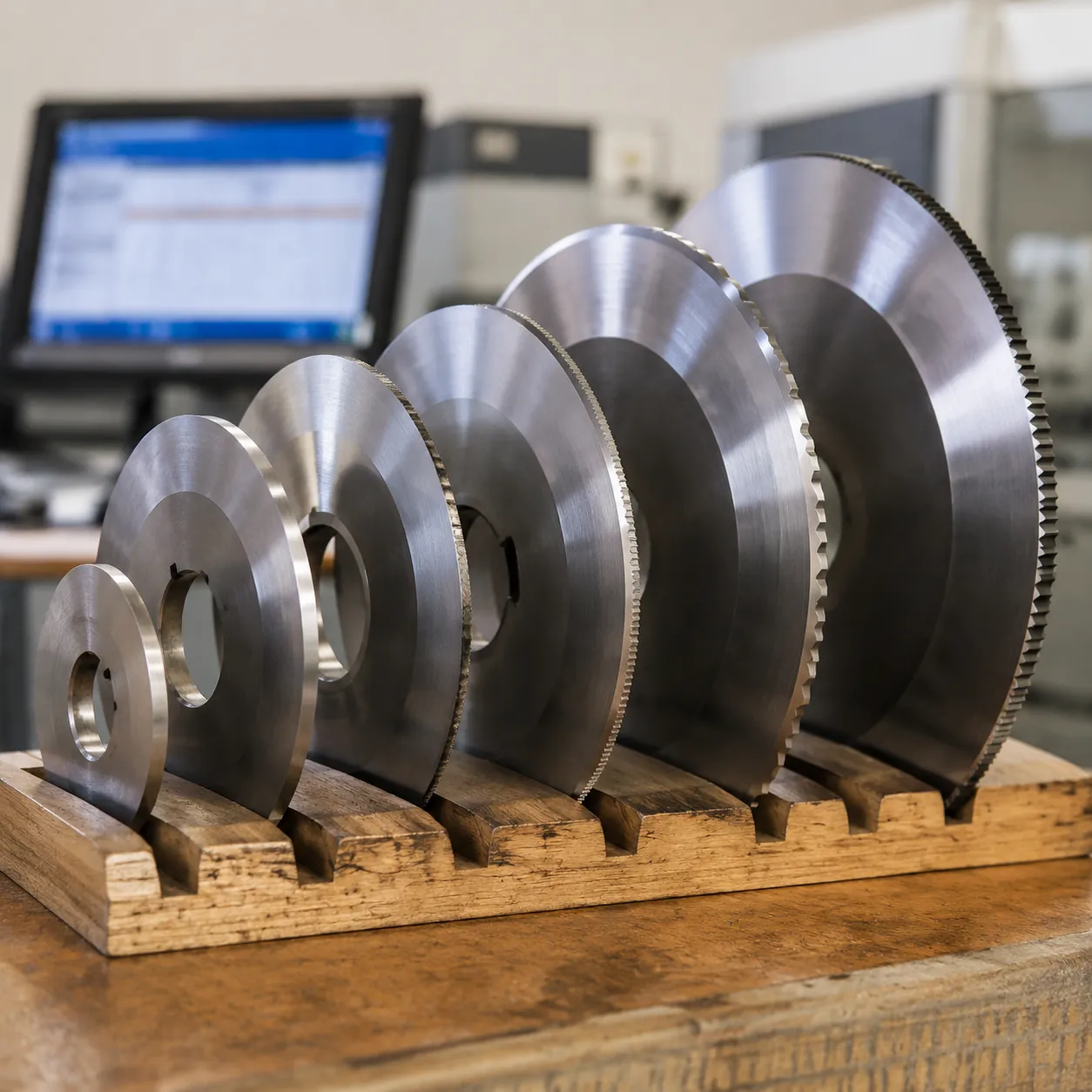
Choose the Correct Blade Geometry
Blade profile determines how cutting force distributes across the substrate. Radiused circular blades require specific bevel configurations based on material density:
- Single Bevel: Best for thicker or rigid substrates, directing material cleanly away from the cut line.
- Double Bevel: Standard choice for nonwovens, paper, and flexible films; distributes pneumatic force evenly.
- Tip Radius: A narrow tip radius (0.002 to 0.005 in) ensures precise separation on light webs, while a wider tip radius withstands heavy, abrasive webs.
Select the Blade Material
Material choice balances toughness against abrasion resistance:
| Material Grade | Key Advantage | Recommended Application |
|---|---|---|
| 52100 Chrome Steel | High toughness, budget-friendly | General paper, non-abrasive films |
| D2 / M2 Tool Steel | Superior wear resistance | Paperboard, technical textiles, packaging webs |
| Tungsten Carbide | Extreme hardness and edge retention | Highly abrasive fibers, heavy rubber, high-speed lines |
Consider Surface Treatments and Coatings
Coatings minimize friction, prevent material build-up, and prolong blade life:
- Titanium Nitride (TiN): Increases surface hardness and reduces mechanical sliding wear.
- Teflon / Non-Stick: Prevents pressure-sensitive adhesives from sticking to the knife tip.
- Chrome Plating: Protects blades from corrosion in moist or chemical converting environments.
Match the Knife to the Anvil
A crush slitting blade must press against a properly hardened surface. Pairing slitter knife replacement blades with a hardened anvil sleeve (typically 62–64 HRC) prevents premature grooving and ensures uniform web separation across the pneumatic knife holder assembly.
Specify the Required Manufacturing Tolerances
Tight manufacturing tolerances prevent chatter and uneven blade wear on high-speed web converting equipment:
- Outer Diameter (OD) Runout: Keep within ±0.0005 in (±0.012 mm) for consistent force distribution.
- Thickness Tolerance: Maintain within ±0.0002 in (±0.005 mm) for precise gang-slitting setup.
- Parallelism and Flatness: Eliminate side-to-side wobble to protect the knife tip from chipping.
Crush Slitting Setup: A Practical Starting Procedure
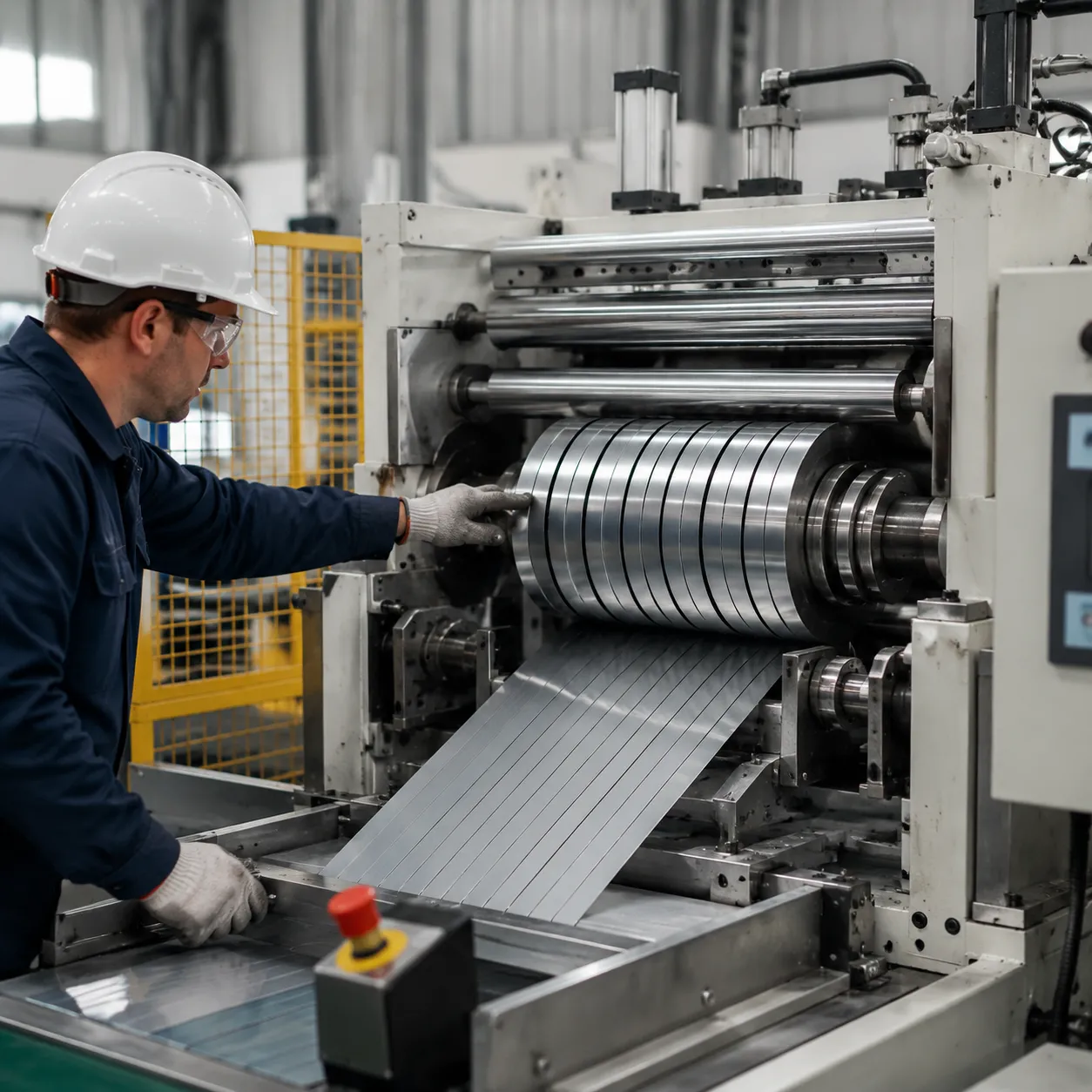
Setting up a crush slitting system requires exact alignment and pressure control to prevent edge roll, minimize dust, and protect your tooling from premature wear. Follow this step-by-step starting procedure on your web converting equipment to establish a reliable baseline every time.
Inspect the Machine Before Installation
- Anvil Surface: Thoroughly clean the hardened anvil sleeve. Check for grooving, rust, or debris buildup that could ruin blade concentricity.
- Blade Edge: Examine your radiused circular blades for dullness, micro-nicks, or side wear before mounting.
- Holder Mechanics: Confirm that each pneumatic knife holder slides smoothly along the guide rail and that air lines are free of leaks or moisture.
Position the Knives
- Lateral Spacing: Move the holders into position according to your required slit widths and secure them firmly to the mounting rail.
- Perpendicular Alignment: Ensure the knife body is perfectly square to the anvil roll to avoid side-loading or uneven contact pressure.
- Bearing Rotation: Spin each knife by hand while unpressurized to verify smooth, unhindered rotation.
Set Initial Air Pressure
- Start Low: Set the air regulator to a minimal baseline pressure—typically 1.5 to 2.0 bar (20–30 PSI).
- Gradual Adjustments: Increase pressure in small increments only until the material cleanly separates across all web lanes.
- Avoid Over-Pressurizing: Excessive pneumatic force flattens the blade radius, generates unnecessary heat, and grooves the anvil sleeve.
Establish Correct Penetration
- Set Mechanical Stops: Adjust the depth limiter on the knife holder to control maximum downward travel.
- Light Anvil Contact: The blade edge should make minimal contact with the anvil roll—just enough to crush through the substrate matrix.
- Account for Tension: Factor in web tension during dynamic operation, as web lift can affect effective penetration depth.
Validate the Finished Edge
- Run a Test Strip: Jog the machine or perform a slow-speed test run with your target substrate.
- Check Edge Quality: Examine the slit edges under magnification for edge roll, uncut fibers, trim dust, or web pinching.
- Fine-Tune Parameters: Micro-adjust air pressure or penetration depth per lane until every slit edge is crisp and uniform.
Common Crush Slitting Problems and Solutions
Troubleshooting crush slitting setup issues quickly keeps downtime low and productivity high. Here is how we diagnose and fix the most common score slitting failures on the factory floor.
Incomplete Separation
When the web fails to part cleanly or leaves connected strands, the issue usually stems from inadequate force or blade wear.
- Check Pneumatic Pressure: Increase the air pressure on your pneumatic knife holder in small increments until the cut is complete.
- Inspect Blade Penetration: Ensure the blade properly contacts the hardened anvil sleeve without bottoming out.
- Examine the Knife Edge: A dull or chipped blade cannot crush through the web; replace or regrind worn knives immediately.
Excessive Dust or Fiber Generation
High dust creation in paper, abrasive, or nonwoven applications indicates the web is being smashed excessively rather than cleanly severed.
- Reduce Operating Pressure: Back off the pneumatic load to the minimum pressure required to separate the material.
- Adjust Blade Geometry: Use a sharper radius angle on your circular blade to cut fibers cleanly.
- Clean the Anvil Roll: Remove debris buildup on the anvil surface that prevents smooth contact.
Web Deformation or Crushed Edges
Frayed, thick, or warped slit edges usually signal excessive force or degraded tooling components.
- Audit Pneumatic Force: Over-pressurizing distorts soft or sensitive substrates like films and laminates.
- Check Anvil Condition: Grooved or worn anvil sleeves cause uneven edge deformation; regrind or replace damaged sleeves.
- Upgrade Blade Material: Swap out worn steel for high-performance custom machine knives engineered to maintain a clean edge under load.
Chatter, Vibration, or Uneven Slits
Vibration creates wavy slit lines and accelerates tool damage across web converting equipment.
- Tighten Knife Mounting: Verify that pneumatic knife holders are clamped securely to the guide rail.
- Inspect Bearings and Runout: Check anvil roll and knife holder bearings for play or mechanical wear.
- Align Setup: Confirm vertical alignment between the knife radius center and the anvil axis.
Adhesive or Rubber Build-Up
Sticky substrates like tapes, laminates, or raw rubber can transfer adhesive to the sides of the blade, causing drag and improper cuts.
- Apply Surface Coatings: Use non-stick treatments (such as PTFE or specialty coatings) available on our custom industrial knives to minimize friction.
- Install Felt Wipers: Add lubricated felt pads or wipers to continuously clean the blade flanks during operation.
- Use Solvent Cleaners: Schedule regular wipe-downs of the blades with compatible cleaning agents during shift changes.
Short Blade Life
When crush cut slitter blades wear out prematurely, tool geometry or operating parameters are typically off-target.
- Lower Contact Load: Excessive pneumatic pressure causes metal-to-metal fatigue between the blade and the anvil roll.
- Match Hardness Levels: Ensure your anvil sleeve is slightly harder than your knife to control where wear occurs.
- Upgrade Materials: Switch from standard tool steel to tungsten carbide crush blades for abrasive or continuous high-speed runs.
Maintenance and Regrinding of Crush Slitting Blades
Proper blade care directly dictates the life of your crush slitting tooling and the quality of your finished web edges. Because crush cutting relies on continuous metal-to-metal contact against a hardened anvil roll, routine inspection and precision regrinding are non-negotiable.
Daily and Shift-Based Checks
In corporate converting operations, catching wear early prevents costly downtime and keeps edge separation crisp. By following established knife maintenance best practices, we recommend conducting these checks at every shift change:
- Clean Blade and Holder: Wipe away adhesive residue, fiber buildup, and dust using recommended solvents.
- Inspect Edge Geometry: Look for visible micro-chipping, flat spots, or rolled edges along the radiused blade tip.
- Check Pneumatic Pressure: Verify that the pneumatic knife holder maintains consistent pressure without air leaks or sticky pistons.
- Monitor Anvil Condition: Inspect the hardened anvil sleeve for excessive grooving or uneven wear tracks.
When to Regrind a Crush Slitting Knife
Running dull crush cut slitter blades damages your machinery and degrades web edge quality. Pull the blade for precision regrinding when you notice any of the following indicators:
- Elevated Pressure Requirements: You must increase pneumatic air pressure beyond baseline settings to achieve complete web separation.
- Frayed Edges or Excessive Dust: Slit edges show poor edge integrity, tearing, or increased particulate generation.
- Visible Radius Wear: The controlled radius on the cutting edge flattens, changing from a smooth curve to a flat profile under low magnification.
- Inconsistent Slit Quality: Edge quality fluctuates across the width of the web converting equipment.
What a Quality Regrinding Service Should Restore
Subpar sharpening destroys blade geometry and shortens tool life. Professional slitter blade sharpening must restore the original engineering specs of the knife:
- Exact Tip Radius: Precision grinding to recreate the exact factory radius without narrowing or altering the bevel angle.
- Tight Concentricity: Restoring outer diameter runout to under 0.005 mm to prevent chatter and bounce during high-speed production.
- Smooth Surface Finish: Lapping the bevel faces to eliminate grind lines where adhesives or fibers can accumulate.
Regrinding Considerations
- Diameter Loss: Grinding reduces the overall outer diameter of the blade. Adjust your pneumatic holder stroke depth after reinstalling ground knives to maintain correct penetration depth.
- Material Specifics: High-speed steel (HSS) blades allow multiple regrinds, while solid tungsten carbide crush knives require diamond wheels and specialized grinding equipment to avoid stress micro-cracks.
- Replacement Threshold: Every blade has a minimum operating diameter. Retire knives once regrinding reduces the diameter past the pneumatic stroke limit to avoid damaging the holder assembly.
How Sharkcutting Supports Crush Slitting Applications
We provide high-precision tooling and technical solutions built specifically for demanding crush slitting applications. Whether running nonwovens, film, rubber, or paper, our engineered components minimize edge deformation and maximize blade longevity on your web converting equipment.
Custom Crush Slitting Knives
Standard off-the-shelf blades rarely meet specialized production tolerances. We manufacture custom crush slitting knives designed around your exact geometry, bevel angles, and radius requirements.
- Exact Fitment: Manufactured to tight tolerances to ensure runout-free rotation.
- Tailored Bevels: Optimized tip radii engineered for clean separation without crushing fibers.
- OEM Compatibility: Seamless replacement blades designed for all major pneumatic knife holder assemblies.
Materials and Performance Options
Tool life depends directly on substrate characteristics and knife metallurgical structure. We assist you in selecting the proper material grade based on your specific wear patterns. Understanding the differences in carbide vs steel knives allows converters to balance toughness against abrasive wear.
| Blade Material | Key Characteristics | Best Substrate Application |
|---|---|---|
| D2 / M2 Tool Steel | High toughness, shock-resistant | General paper converting, light textiles |
| Powder Metallurgy Steel (CPM) | Superior edge retention, uniform wear | Heavy paper board, abrasive composites |
| Tungsten Carbide | Maximum hardness, extreme wear resistance | Highly abrasive webs, technical nonwovens |
Technical Inspection and Quality Control
Every crush cut slitter blade undergoes rigorous quality control checks before shipping. We inspect each component for concentricity, hardness, surface finish, and edge integrity to guarantee consistent field performance.
- Optical Profile Verification: Precision testing of tip radius and bevel symmetry.
- Hardness Testing: Verified Rockwell hardness tailored to match hardened anvil sleeve specifications.
- Micro-Finish Polishing: Smooth blade surfaces to prevent material drag and adhesive build-up.
Engineering and Diagnostic Support
Blade failure or edge breakdown is often a symptom of underlying setup issues. Our engineering team assists with root-cause diagnostics, evaluating air pressure, penetration depth, and anvil roll alignment. We also offer precision slitter blade sharpening and regrinding services to restore factory-original geometry.
Upgrade Your Web Converting Equipment
Upgrade your web converting operations with custom-manufactured tooling designed for maximum production efficiency. Contact our engineering team today to review your blade specifications, request a custom quote, or analyze sample blades for your line.
Crush Slitting Selection Checklist
Before setting up your web converting equipment, run through this practical checklist. Matching your substrate properties with the right tooling parameters eliminates edge deformation, minimizes dust, and prevents premature tool wear.
Substrate and Material Specifications
Understanding your material's physical behavior dictates blade geometry and pneumatic pressure requirements.
- Material Type: Identify whether you are processing nonwovens, paper, film, elastomeric rubber, or laminates.
- Web Thickness & Density: Denser or thicker webs demand higher penetration force and reinforced blade profiles.
- Abrasiveness: Highly abrasive materials require tungsten carbide crush cut slitter blades or specialized surface coatings to maintain cutting performance.
Required Edge Quality and Operating Speed
Balancing edge quality and line speed is essential when optimizing setups for flexible packaging converting and technical textile operations.
- Edge Cleanliness: Define whether your application permits minor fiber displacement or requires a clean, sealed edge.
- Line Speed: Ensure air pressure inside the pneumatic knife holder remains stable at higher operating speeds to prevent blade chatter.
- Minimum Slit Width: Verify that your knife holder dimensions allow for your target narrow-width slitting requirements.
Blade, Anvil, and Pneumatic Pressure Parameters
Use this standard parameter matrix to guide your score slitting setups:
| Parameter | Selection Criteria | Recommended Focus |
|---|---|---|
| Blade Profile | Radiused circular blades | Select tip radiuses and bevel angles based on material tensile strength. |
| Anvil Condition | Anvil roll slitting sleeves | Verify the sleeve hardness exceeds 62–64 HRC to prevent groove wear. |
| Pneumatic Load | Air pressure settings | Start at minimal pressure and increase incrementally until complete separation occurs. |
| Penetration Depth | Blade-to-anvil contact | Set minimal depth to prevent blade dulling while maintaining full web separation. |
Refer to our engineering-backed converting equipment guides and explore our complete library of slitting technical resources to optimize your setup parameters.
Frequently Asked Questions About Crush Slitting
Is crush slitting the same as score slitting?
Yes. Crush slitting and score slitting refer to the exact same web converting process. In this operation, a radiused circular blade is pressed directly against a hardened anvil sleeve using a pneumatic knife holder to pinch and sever the moving substrate.
What is the best blade for crush slitting?
The ideal knife material depends on your substrate and operating speed. Standard D2 tool steel works well for nonwovens and general paper converting. For high-speed runs or abrasive web materials, upgrading to carbide options for precision slitting provides superior wear resistance and maintains edge integrity significantly longer.
Does crush slitting create more dust than shear slitting?
Generally, yes. Because crush slitting severs materials via compression force rather than a scissor-like shearing action, it can generate more localized dust on fibrous paper or nonwoven webs. Maintaining optimal pneumatic pressure and replacing worn crush cut slitter blades promptly reduces fiber fracture and dust accumulation.
Can crush slitting be used for rubber?
Yes. Crush slitting works extremely well on uncured rubber, elastomeric sheets, and pressure-sensitive adhesive tapes. The clean compression stroke splits elastomeric materials cleanly without the web binding or pinching risks associated with close-tolerance shear slitting setups.
How do I reduce blade wear?
- Minimize pneumatic pressure: Set the air force to the lowest point that achieves complete web separation.
- Verify anvil hardness: Ensure your anvil roll slitting surface maintains a higher hardness rating (typically 62–64 HRC) than the knife.
- Check concentricity: Run balanced holders to eliminate runout and uneven blade striking.
- Schedule regrinding: Send dull blades for professional slitter blade sharpening before edge chipping occurs.
When should I use shear slitting instead?
Select shear slitting when processing thin plastic films, metal foils, or rigid laminates that demand zero edge distortion, zero dust, and razor-sharp border precision. A quick shear slitting comparison shows that shear methods excel on delicate films, whereas crush slitting wins on fast setup times and thick, flexible, or sticky materials.
Can Sharkcutting make replacement blades from a sample?
Yes. We engineer precision replacement blades directly from physical samples, worn parts, or CAD drawings. Learn more about why Sharkcutting is trusted by converters worldwide to deliver exact-fit OEM replacement knives built to your exact web converting equipment specifications.