
Precision Solutions Across Core Paper Converting Scenarios
Paper converting operations demand specific blade metallurgy, bevel geometries, and surface finishes tailored to web tension, line speeds, and substrate characteristics. Sharkcutting manufactures high-performance paper converting knives and industrial paper cutting blades engineered to maximize production uptime, preserve edge integrity, and virtually eliminate costly dust and tear defects.
Whether executing high-speed roll slitting, heavy paperboard shearing, or delicate tissue converting, choosing the correct blade profile is critical for maintaining sharp edge retention, clean cut borders, and tight dimensional tolerances across long, continuous production cycles.
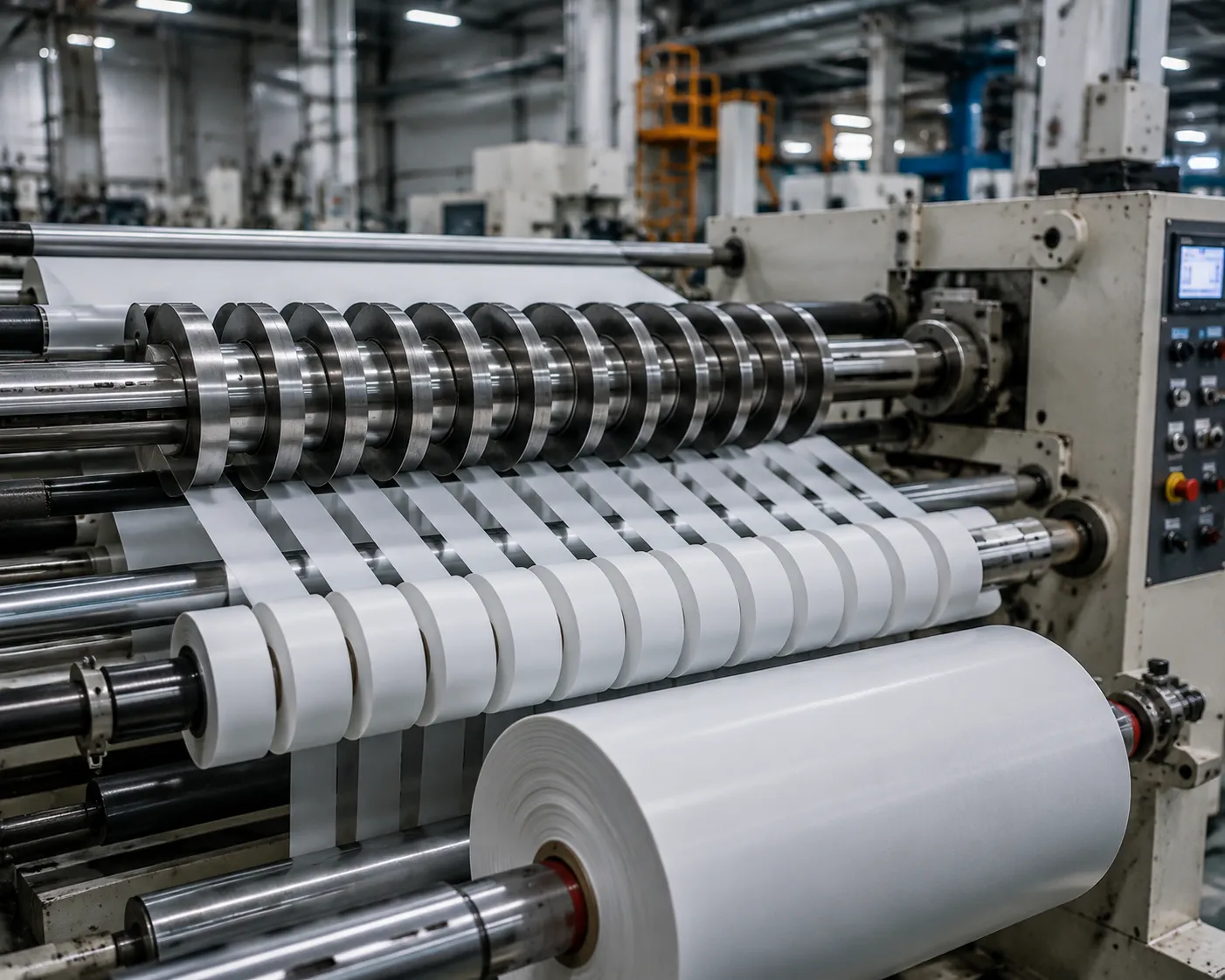
Web & Roll Slitting
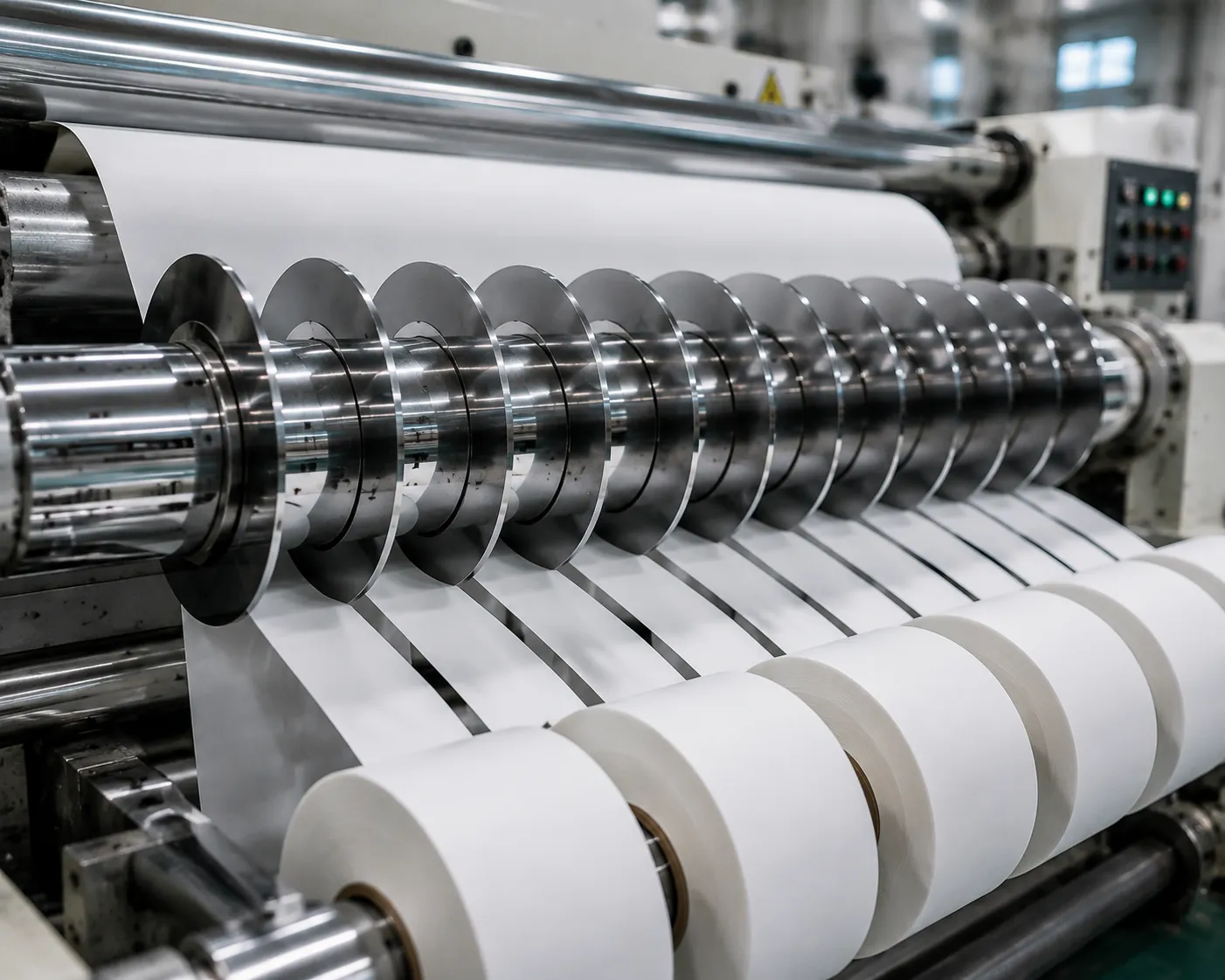
Designed for continuous, high-speed longitudinal roll slitting of graphic papers, offset printing stock, flexible packaging, and heavy kraft rolls. Utilizing micro-finished circular slitter knives and matched top-and-bottom shear slitting sets, this configuration guarantees burr-free roll edges and pristine slitting lines under high-tension production conditions.
Key Performance Factors
- Micro-Finished Cutting Edges: Ultra-smooth surface roughness down to Ra 0.1 µm minimizes friction build-up, heat generation, and substrate dragging.
- Sub-Micron Runout Precision: Axial and radial runout held within ±0.002 mm for wobble-free rotation at web speeds exceeding 1,200 m/min.
- Versatile Substrate Capability: Excels on coated art paper, newsprint, release liners, kraft rolls, and laminated paper foils.
Circular Slitter Knives, Shear Slitting Blades, Dish Blades, Bottom Anvil Rings
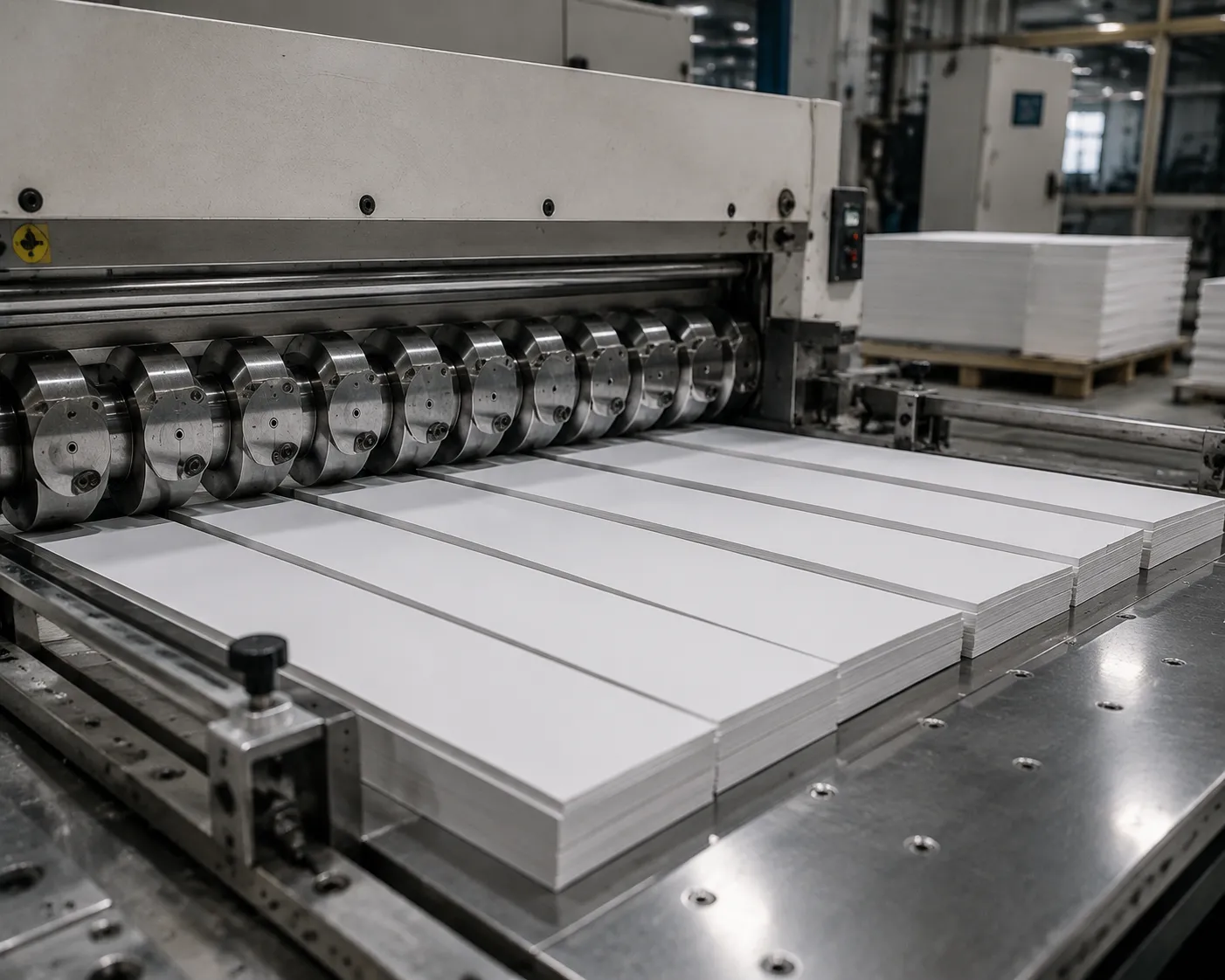
Sheet & Board Cutting
Engineered specifically for heavy-duty edge-trimming, cross-cutting, and multi-ply stack trimming of folding boxboard, solid bleached sulfate (SBS), chipboard, and corrugated containerboard. Built with high-impact tool steel to absorb massive shearing forces without micro-chipping or blade deformation.
Key Performance Factors
- High Impact Toughness: Advanced metallurgy engineered to withstand heavy shock loads during dense paperboard stack shearing.
- Chipping-Resistant Bevels: Optimized double-bevel angle profiles maintain acute sharpness under thick caliper and abrasive clay-coat loads.
- Square-Cut Dimensional Accuracy: Ensures perfectly clean, straight edges and square sheet dimensions for downstream printing and packaging machinery.
Guillotine Paper Knives, Cross-Cut Fly Blades, Sheater Knives, Trimmer Blades
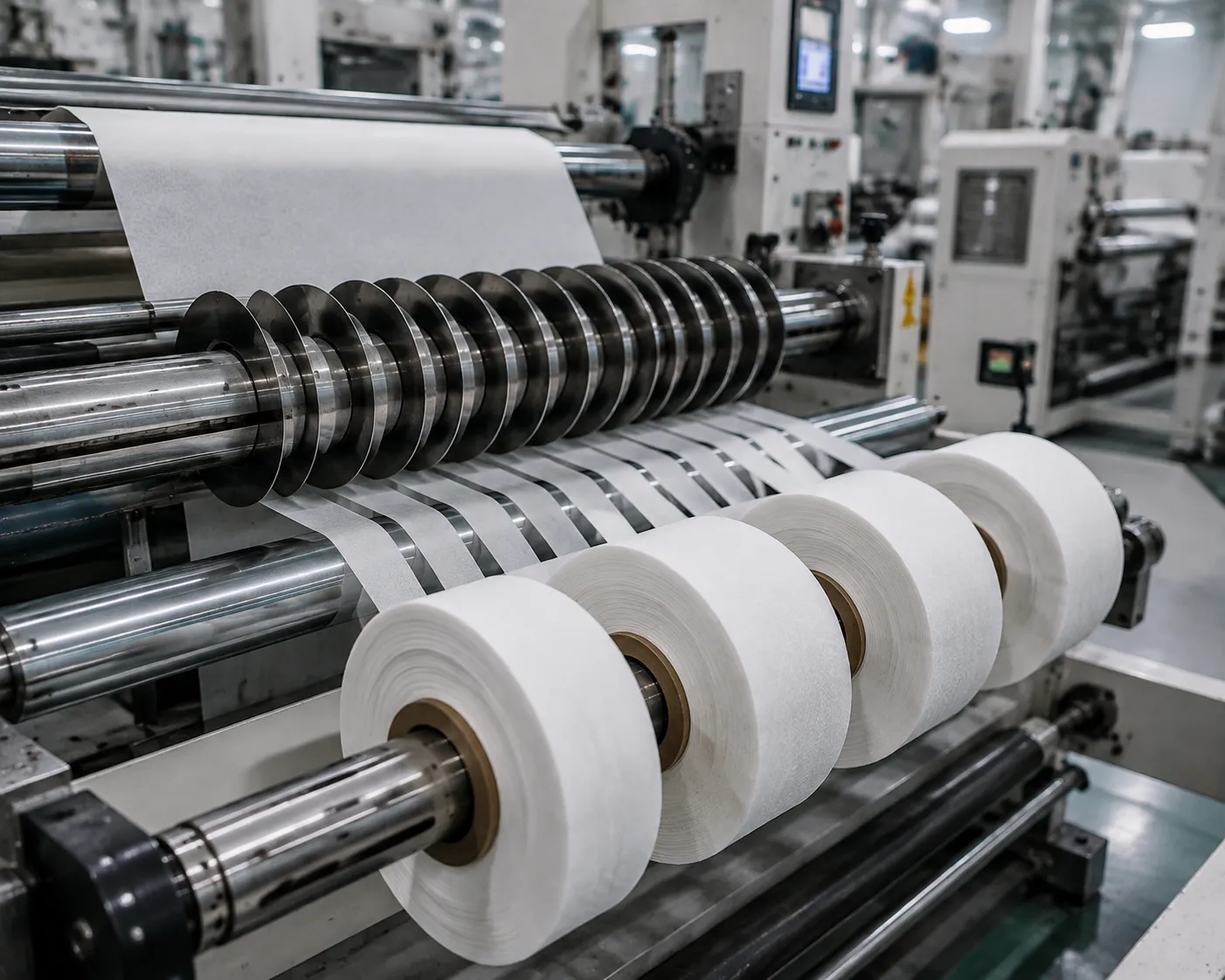
Specialty & Tissue Converting
Tailored for delicate bath tissue, facial wipes, paper towels, airlaid non-wovens, and high-density technical papers. Featuring razor-sharp bevel geometries and custom-ground tooth profiles, our blades eliminate fiber pulling to achieve clean, dust-free paper slitting in hygienic production environments.
Key Performance Factors
- Advanced Dust Suppression: Cut-edge refinement reduces ambient paper dust generation by up to 80%, protecting sensors and pneumatic equipment.
- Custom Tooth & Perforation Profiles: Precision-ground micro-perforation tooth geometries tailored for soft, multi-ply webs.
- Ultra-Acute Razor Edges: Edge angles from 18° to 22° engineered to slice cleanly without crushing or tearing soft cellulose fibers.
Carbide Paper Knives, Log Saw Blades, Perforating Discs, Razor Slitting Blades
Application Matrix: Blade Geometry & Material Selection
Selecting the ideal tool steel or tungsten carbide grade depends on substrate caliper, machine speed, and material abrasiveness. Reference this engineering guide to match your paper converting process with optimal blade specs.
| Converting Scenario | Target Substrates | Recommended Material | Primary Knife Geometry | Operational Advantage |
|---|---|---|---|---|
| Web & Roll Slitting | Newsprint, Coated Fine Paper, Kraft Paper, Release Liners | High Speed Steel (HSS M2) / Solid Tungsten Carbide | Double Bevel / Micro-Honed Circular Slitter | Eliminates burrs and edge rollover; maintains continuous line speeds up to 1,200 m/min |
| Sheet & Board Cutting | Folding Boxboard, Cardboard, Corrugated Liners, SBS Board | High-Chromium Tool Steel (D2) / Inlaid HSS | Single Bevel Guillotine / Heavy Shear Pair | Resists edge chipping under heavy impact; ensures square, clean stack cutting |
| Specialty & Tissue Converting | Facial Tissue, Toweling, Airlaid Non-Wovens, Filter Paper | Micro-Grain Tungsten Carbide / Premium HSS | Ultra-Acute Razor Bevel (18°-22°) / Micro-Toothed | Suppresses paper dust by up to 80%; extends continuous blade wear life up to 5x |
Custom Knife Engineering & OEM Equipment Compatibility
Requiring custom tooth profiles, specialized bevel angles, or exact OEM replacement blades for equipment from makers like Jagenberg, Pasaban, or Bielomatik? Sharkcutting manufactures custom paper converting knives precisely to your CAD specifications, maintaining strict grinding tolerances down to ±0.002 mm for seamless drop-in fitment.
Eliminate Downtime and Yield Loss with Precision Paper Cutting Engineering
High-speed paper converting demands uncompromising cutting accuracy and blade endurance. Sharkcutting pairs proprietary metallurgical formulations with ultra-precise grinding tolerances to eliminate critical production bottlenecks, including paper dust buildup, rapid blade wear, and edge burrs.
Outperforms standard tool steel in continuous shear runs
Mirror-ground bevels reduce airborne fiber shear dust
Strict axial runout control for true wobble-free rotation
Achieved with premium solid tungsten carbide formulations
Dust Mitigation: Surface Mirror Finishing for Dust-Free Paper Slitting
Excessive paper dust is a primary root cause of unplanned machine downtime, poor web tensioning, and sensor false-alarms in continuous converting lines. Microscopic surface roughness on knife bevels tears paper fibers rather than shearing them cleanly, creating persistent particulate contamination.
Sharkcutting addresses fiber shedding at the microscopic level with proprietary mirror-finish surface grinding. By polishing blade flanks and cutting edges to a mirror surface, friction between the high-speed paper web and blade edge is drastically minimized across our entire line of industrial machine knives.
- Up to 80% dust reduction: Keeps slitting heads, anvil shafts, and optical inspection cameras clean for continuous dust-free paper slitting.
- Thermal friction suppression: Lower friction prevents heat buildup, protecting synthetic web coatings, adhesives, and binder resins.
- Filter and exhaust protection: Extends the working life of dust extraction systems and pneumatic filter cartridges.
Extended Wear Resistance: Premium Tool Steels & Solid Tungsten Carbide
Abrasive paper substrates, mineral fillers like titanium dioxide and calcium carbonate, and recycled fiber furnish quickly dull standard steel blades. Frequent knife re-sharpening lowers overall equipment effectiveness (OEE) and drives up maintenance labor hours.
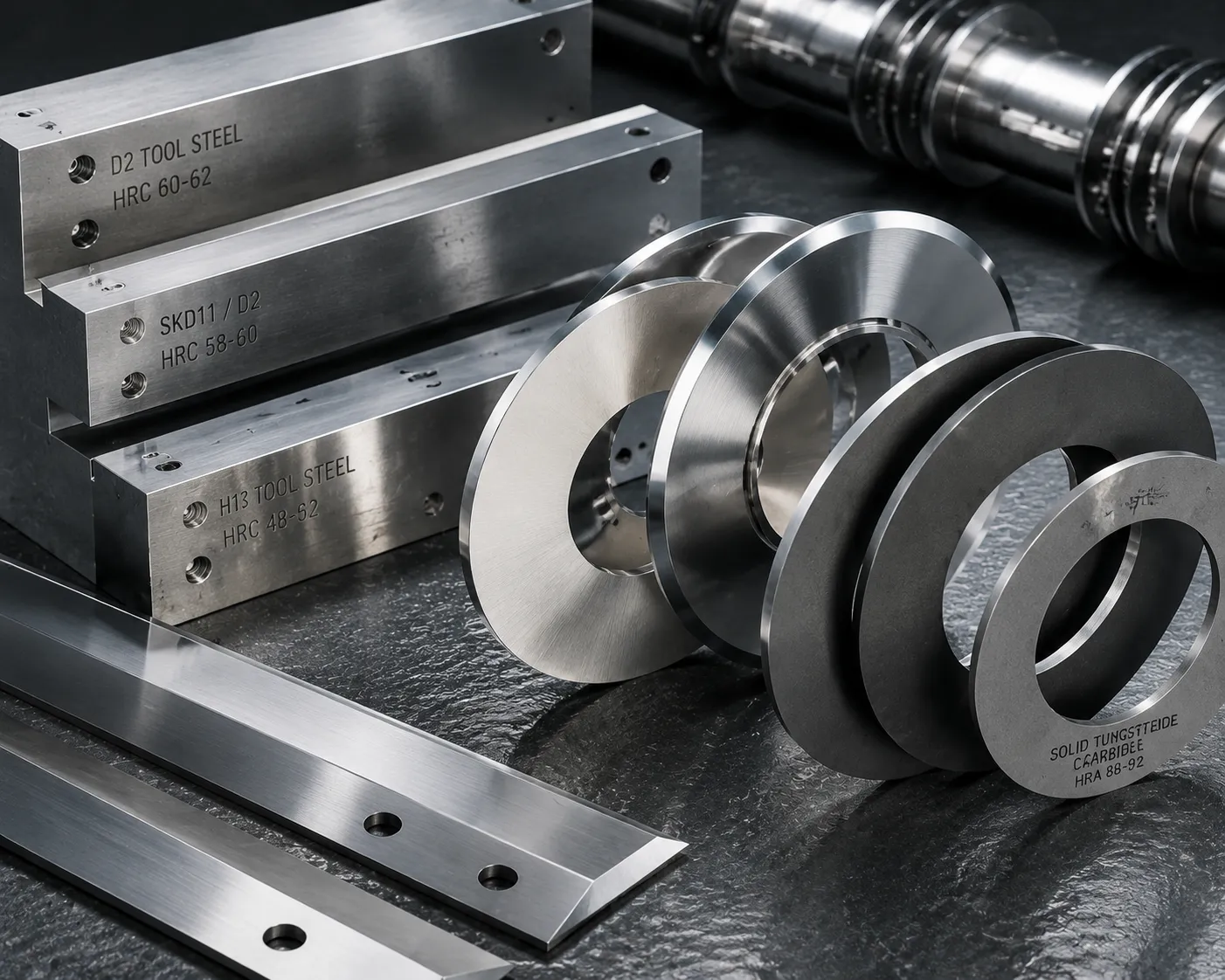
Sharkcutting engineers select high-performance alloys precisely matched to paper caliper, speed, and filler abrasiveness. Sourcing premium high-carbon high-chromium tool steels and fine-grain tungsten carbide for our specialized paper-cutting knives delivers unmatched blade wear resistance under continuous friction.
- 3x to 5x operational lifespan: Delivers significantly longer production runs between sharpening cycles compared to standard tool steel.
- Minimized unscheduled stops: Superior edge retention reduces blade changeovers and overall tooling inventory costs.
- High-impact edge toughness: Advanced cryogenic heat treatment prevents micro-chipping during high-speed web slitting.
Edge Cut Quality & Parallelism: Delivering Clean Cut Edges Every Time
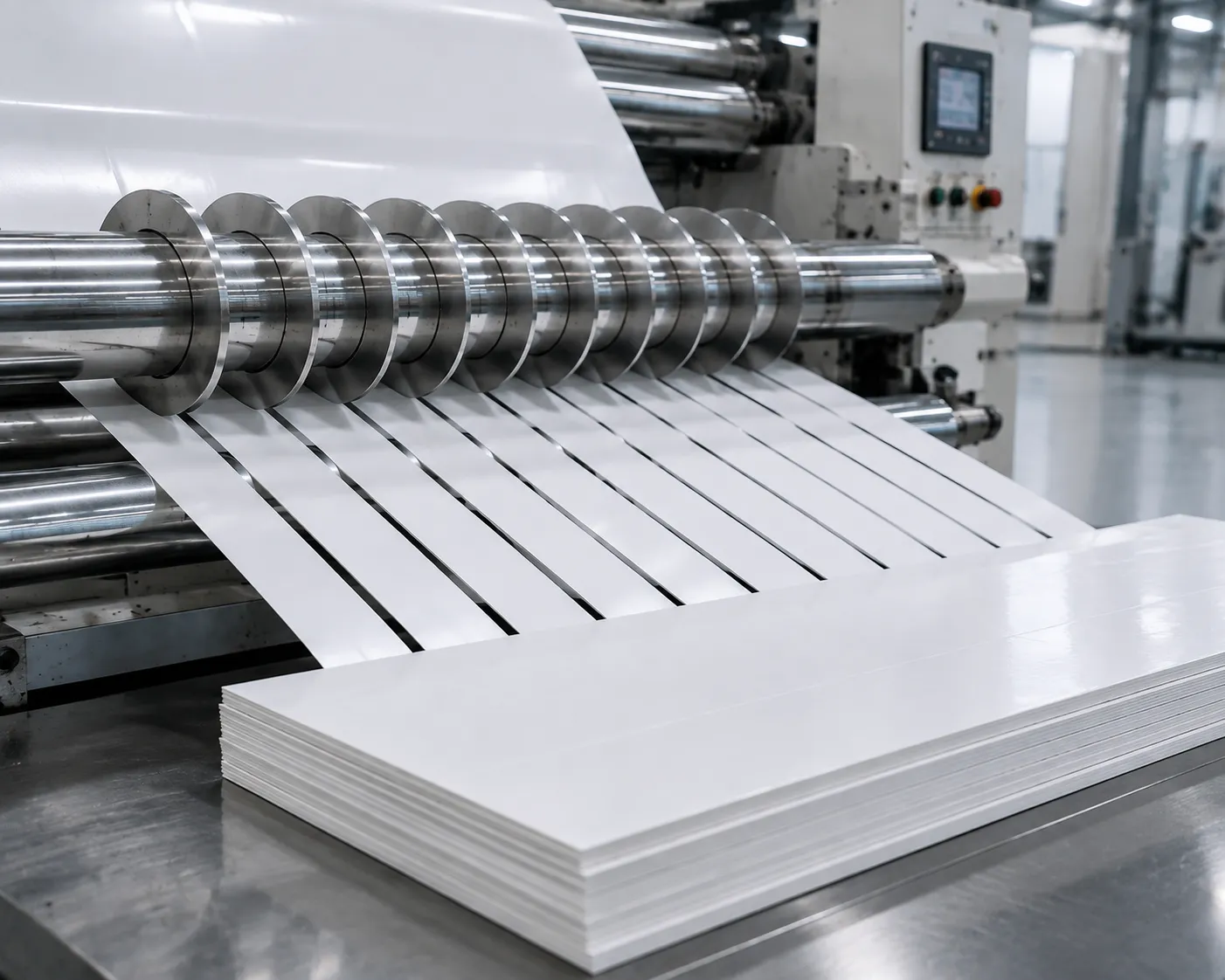
Thickness variations and axial runout on rotary slitter blades cause blade wobble, uneven overlap pressure, and severe edge burring. In downstream printing and packaging systems, rough or rolled edges lead to web breaks, feeder misfeeds, and uneven stack alignment.
Sharkcutting enforces uncompromising machining and grinding tolerances across every paper converting knife. Strict control over thickness tolerance, parallelism, and concentricity guarantees ultra-stable web tracking and exceptionally clean cut edges.
- ±0.002mm manufacturing tolerance: Guarantees precise blade overlap and wobble-free rotation across top and bottom shafts.
- Stable high-speed web tracking: Flawless shear geometry eliminates micro-cracks, edge fraying, and sudden web snaps.
- Burr-free edge finish: Delivers smooth, clean cut edges ready for immediate printing, coating, or packaging.
Technical Comparison: Standard Market Blades vs. Sharkcutting Precision Blades
See how engineered grinding tolerances and advanced metallurgy directly improve paper converting efficiency and blade wear resistance.
| Engineering Parameter | Standard Market Blades | Sharkcutting Precision Blades |
|---|---|---|
| Grinding & Surface Finish | Standard ground finish (Ra 0.4–0.8 µm) | Proprietary mirror finish (Ra < 0.1 µm) |
| Thickness & Parallelism Tolerance | ±0.010mm to ±0.020mm | Ultra-precise ±0.002mm |
| Dust Generation Reduction | Baseline fiber shear dust | Up to 80% lower dust accumulation |
| Operational Tool Lifespan | Standard baseline runtime (1x) | 300% to 500% extended lifecycle |
| Edge Cut Quality Performance | Prone to micro-burrs and edge roll | Consistent, burr-free clean cut edges |
Engineered Metallurgy for High-Performance Paper Converting
Sharkcutting manufactures precision paper converting knives using specialized tool steels, high-speed steel alloys, and fine-grain tungsten carbide to maximize blade wear resistance and edge longevity.
Tool Steel (D2 / SKD-11 / 1.2379)
Cost-effective high-carbon alloy providing reliable durability and balanced toughness for standard paperboard converting.
- Standard paperboard and carton stock
- Uncoated kraft paper rolls
- General-purpose paper slitting
High Speed Steel Knives (HSS / M2 / SKH-51)
Engineered for high-speed slitting knives operations with superior blade wear resistance and toughness under extreme thermal stress.
- Medium to high-speed paper slitting lines
- Heavy-duty shear and guillotine cutoffs
- Multi-ply packaging and tissue converting
Tungsten Carbide Blades (TC / Fine-Grain)
Delivers exceptional blade wear resistance for continuous high-speed converting of highly abrasive papers and coatings.
- Abrasive coated paper processing
- Continuous high-speed web slitting
- High-density specialty paper converting
Metallurgical Specifications & Performance Matrix
Compare physical alloy properties to select the optimal paper converting blades for your equipment.
| Material Grade | Hardness Rating | Blade Wear Resistance | Impact Toughness | Recommended Application |
|---|---|---|---|---|
| Tool Steel (D2 / SKD-11 / 1.2379) | HRC 58–62 | Standard | High | Standard Paper Converting |
| High Speed Steel Knives (HSS M2) | HRC 62–66 | High | Very High | High-Speed Web Slitting |
| Tungsten Carbide Blades (Fine-Grain) | HRC 88–92 | Maximum | Moderate | Abrasive & High-Volume Converting |
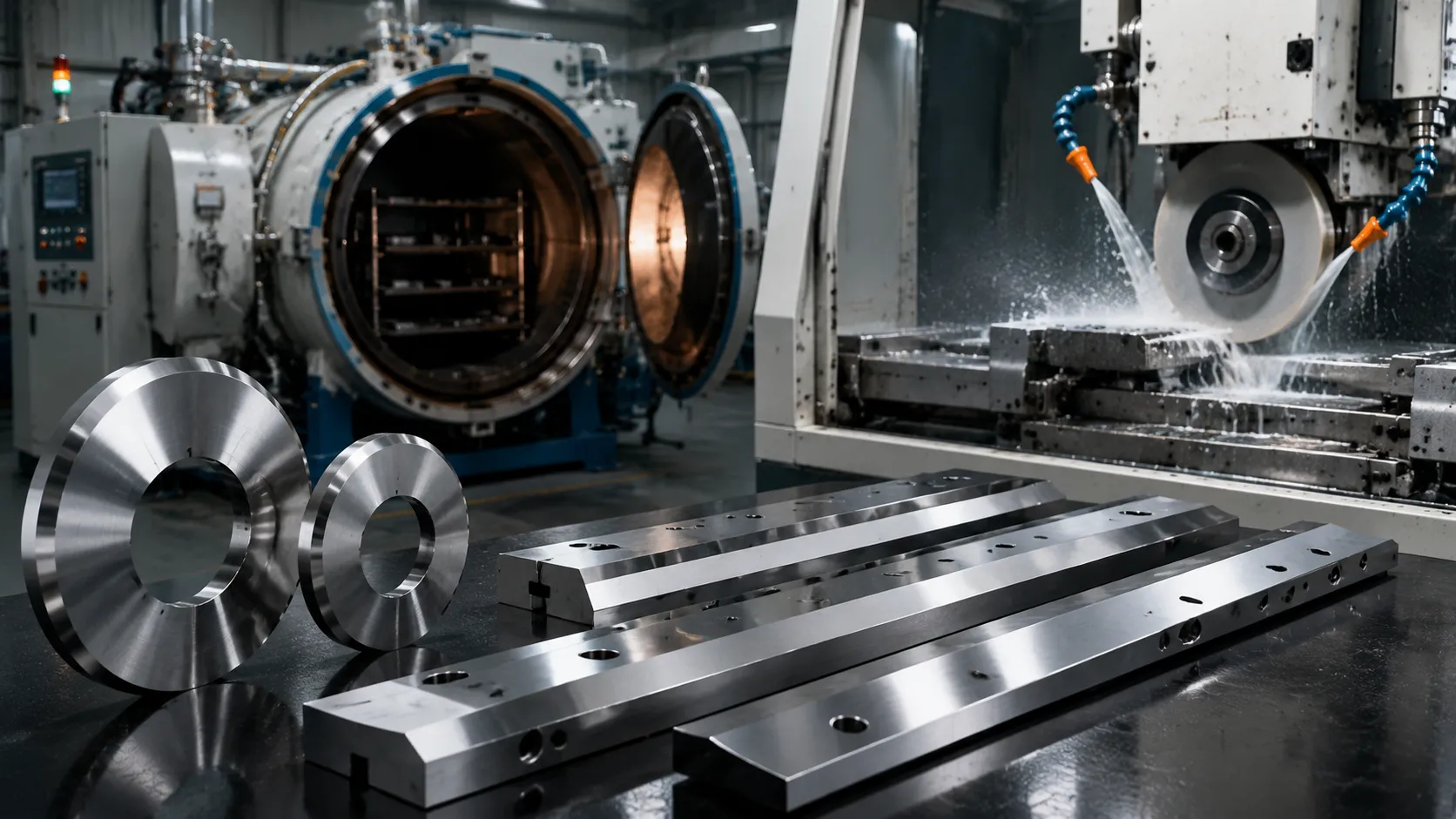
Vacuum Heat Treatment & Mirror-Finish Grinding
Sharkcutting utilizes advanced vacuum heat treatment and multi-axis CNC grinding to deliver precise blade geometry, zero internal stress, and dust-free cutting edges.
Uniform Microstructure
Fine carbide distribution ensures extreme edge stability and prevents micro-chipping during high-speed runs.
Tight Manufacturing Tolerances
Strict control over thickness (±0.002 mm) and concentricity guarantees seamless blade alignment and clean cut edges.
Frequently Asked Questions About Paper Converting Knives
Get expert technical answers on selecting industrial paper cutting blades, establishing paper knife maintenance schedules, minimizing paper dust during high-speed roll slitting, and maximizing total ROI with Sharkcutting engineering solutions.
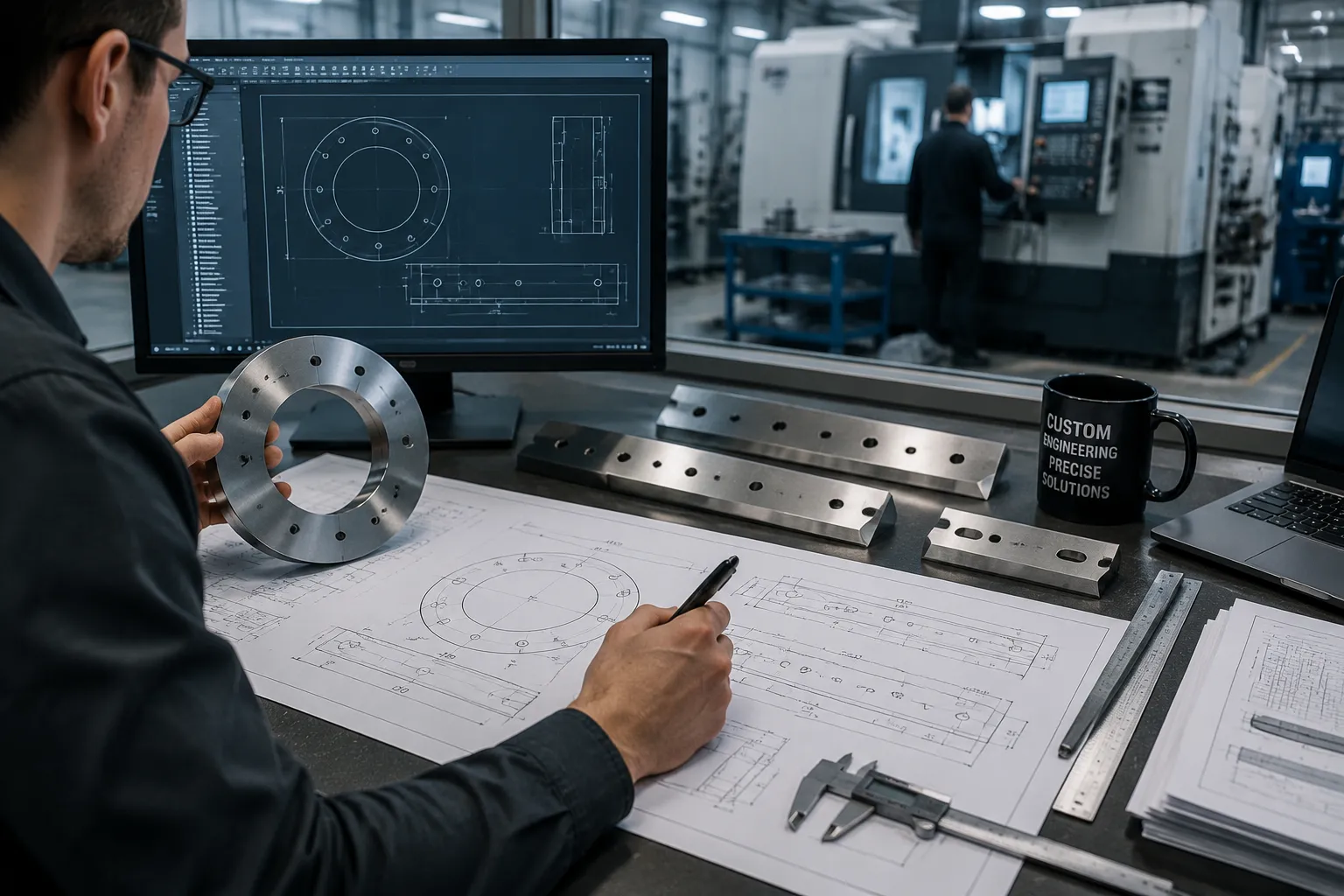
Need Custom Knife Engineering or Drawing Assistance?
Sharkcutting manufactures high-performance circular paper slitter units, shear slitting blades, and custom converting blades engineered to meet strict tolerances. Our technical team works directly with plant managers and OEM engineers to resolve paper dust generation, rapid edge dulling, and blade runout issues.
24-Hour Technical Drawing & Engineering Response
Direct Compatibility with Global OEM Machine Brands
Precision Blade Sharpening Service & Regrinding Support
Strict Tolerances (+/-0.002mm) & ISO 9001 Manufacturing
Consulting Engineer Available
Require immediate advice on tungsten carbide blades vs high speed steel knives? Contact our application team for custom converting blades analysis.
How do I determine the optimal re-sharpening interval for paper converting blades?
Establishing a predictable maintenance schedule for paper converting knives prevents catastrophic web tear-outs, suppresses excessive paper dust contamination, and maximizes complete tool lifespan. Rather than relying solely on fixed calendar intervals, converting operators should base sharpening routines on material abrasiveness, paper basis weight, web speed, and cut edge metrics.
Primary Indicators That Blades Require Re-sharpening:
- Dust Accumulation Spikes: Visual increases in loose paper fiber dust near slitting stations signal that blade edges have rounded, crushing fibers rather than shearing them cleanly.
- Edge Flaking & Burr Formation: Non-parallel sheet edges, fuzzy edge profiles, or roll end discoloration on folding boxboard and corrugated stock.
- Motor Amperage & Tension Shifts: Dulling paper slitting blades increase web drag, triggering a 10% to 20% increase in slitter drive motor loads.
- Cutting Edge Radius Erosion: When blade edge radius exceeds 5 to 8 microns under 50x magnification, shear performance deteriorates rapidly.
Operational Benchmarks: Standard high speed steel knives (HSS M2/SKH-51) typically require regrinding after 150 to 300 operating hours when processing abrasive newsprint or kraft paper. In contrast, fine-grain carbide paper knives maintain pristine cutting performance for 1,500 to 3,000+ hours under identical operating conditions.
Sharkcutting provides a specialized blade sharpening service utilizing multi-axis CNC surface grinders with flood cooling to restore factory bevel angles and mirror surface finishes without disturbing metallurgic heat treatment.
Can Sharkcutting manufacture blades tailored to specific OEM converting machine brands?
Yes. Sharkcutting manufactures custom direct-fit replacement blades and custom paper converting knives for virtually all major global OEM paper converting, slitting, sheeting, and tissue equipment manufacturers.
Compatible Machinery Brands & Systems:
- Web & Roll Slitter Rewinders: Jagenberg, Pasaban, Goebel, Kampf, Atlas, Titano, Dienes, and Dusenbery.
- Precision Sheeters & Cross-Cutters: Bielomatik, E.C.H. Will, MarquipWardUnited, Maxson, and Langston.
- Guillotine Trimmers & Cutters: Polar, Wohlenberg, Lawson, Seybold, and Schneider Senator guillotine paper knives.
- Tissue & Towel Machinery: Fabio Perini, Paper Converting Machine Company (PCMC), Futura, and Bretting.
If original equipment drawings are unavailable, our reverse-engineering team can create precise 2D CAD drawings and 3D models directly from worn physical samples. We routinely produce custom mounting keyways, specialized bevel angles, multi-tooth profiles, and ultra-precise dimensional tolerances (axial and radial runout held within +/-0.002mm).
What mechanical adjustments help minimize paper dust during high-speed slitting?
Excessive airborne fiber dust during high-speed roll slitting is a major contributor to web contamination, printing defects, and premature knife wear. Achieving clean, dust-free paper slitting requires combining razor-sharp knife geometry with strict mechanical calibration across four key parameters:
1. Shear Overlap Depth (Penetration)
Excessive top knife penetration into the bottom female knife crushes the sheet structure rather than shearing it cleanly. Maintain penetration at the minimal depth required for clean scissor action—typically 0.5 mm to 1.0 mm depending on caliper.
2. Blade Cant Angle (Rake Angle)
Incorrect cant angles force top and bottom blades to grind heavily against each other, generating metallic debris and paper dust. Maintain a precise cant angle setting of 0.25° to 0.75°.
3. Side Load Pressure (Spring Tension)
Excessive side force generates severe friction heat, dulling edges prematurely. Calibrate pneumatic knife holders to apply the minimum lateral force needed to cut without web separation.
4. Blade Surface Roughness
Utilize Sharkcutting mirror-polished shear slitting blades (Ra < 0.1 µm). Smooth bevel faces dramatically reduce friction between the moving paper web and tool steel, reducing fiber dust generation by up to 80%.
How do solid carbide circular slitters compare to HSS slitters in total ROI?
While fine-grain tungsten carbide blades carry an initial purchase cost 2.5x to 4x higher than standard High-Speed Steel (HSS) knives, their superior blade wear resistance yields a dramatically lower total cost per ton of converted paper.
| Performance Feature | High Speed Steel (HSS / M2) | Solid Tungsten Carbide (TC) |
|---|---|---|
| Hardness Rating | HRC 62 – 66 | HRC 88 – 92 |
| Operational Wear Life | Baseline (1x) | 5x to 10x Longer Lifespan |
| Abrasive Stock Suitability | Moderate (Kraft, Uncoated) | Outstanding (Thermal, TiO2, Coated) |
| Annual Downtime Savings | Standard Changeover Frequency | Reduces Line Downtime by 70%+ |
In continuous converting operations running above 500 m/min or slitting highly abrasive recycled fibers, thermal paper, or heavily loaded sheet stock, solid tungsten carbide circular slitters pay for themselves within 3 to 6 months purely through reduced maintenance downtime and extended sharpening cycles.
Have an Unlisted Paper Converting Question?
Our application engineers evaluate blade wear patterns, drawing specs, and converting shear setups.
Ready to Optimize Your Paper Cutting Performance?
Contact our application engineers for custom paper cutting knives, converting blade recommendations, CAD drawing evaluation, and precision tooling solutions designed for your production requirements.
24-Hour Response
Engineering evaluation
ISO 9001 Certified
Precision manufacturing
Discuss Your Cutting Application
Share your machine model, blade requirements, or current cutting challenges. Our engineers will recommend the right material, geometry, and tooling solution.
✓ 24-Hour Engineering Response | ISO 9001 Certified Manufacturing