
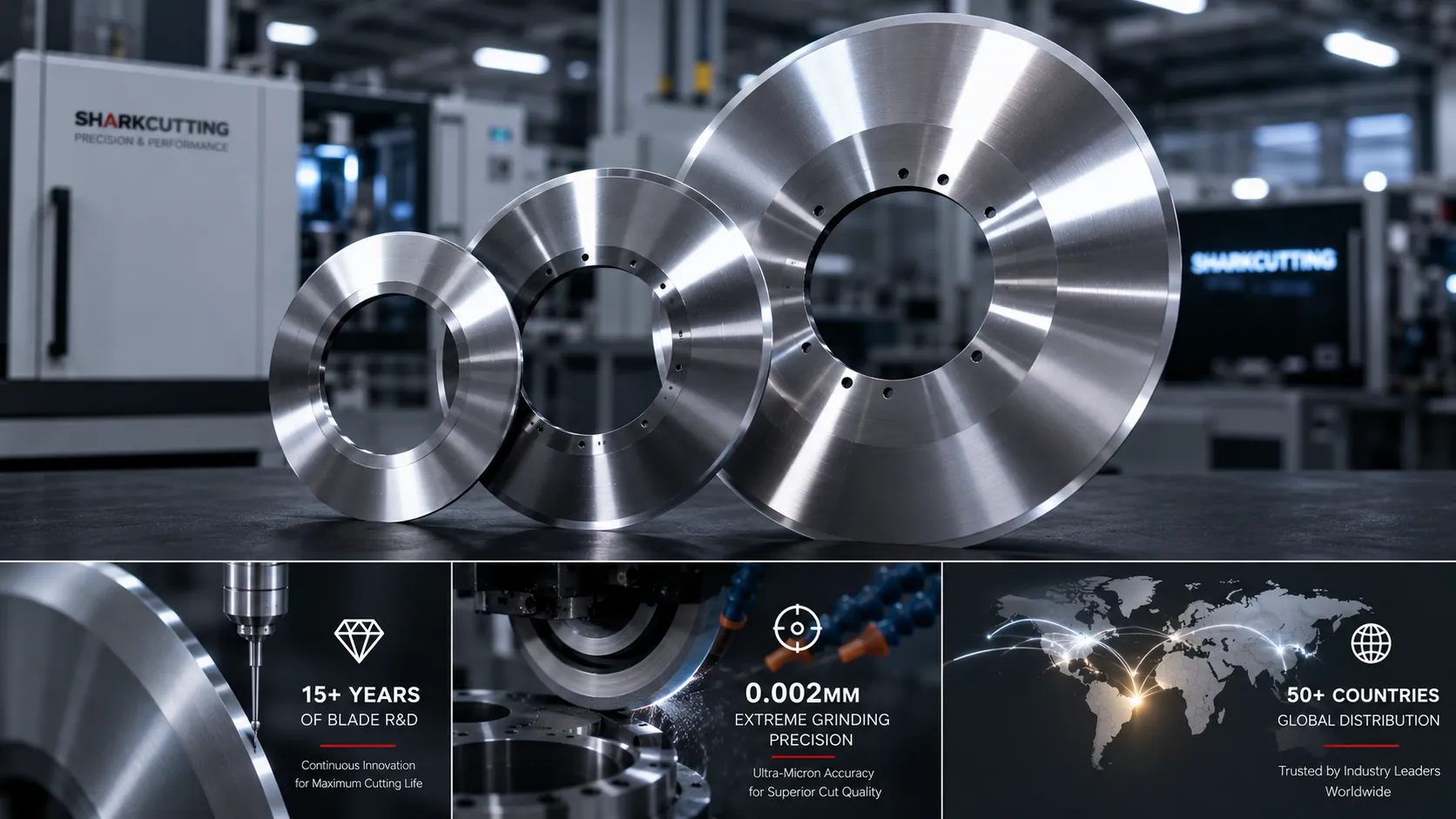
Why Industry Leaders Rely on
Sharkcutting Nonwoven Blades
15+ Years of Blade R&D · 0.002mm Extreme Grinding Precision · 50+ Countries Global Distribution
Precision Nonwoven Cutting
Optimized bevel geometry eliminates fiber pulling and snagging, delivering micro-clean web margins across spunbond and meltblown lines using high-precision circular slitter knives.
Wear-Resistant Shear Knives & Carbide Alloys
Premium micro-grain tungsten carbide and powder metallurgy steels extend continuous service life 3x to 5x for our specialized shear slitting knives under abrasive, high-speed converting conditions.
Dust & Static Accumulation Control
Mirror-polished blade surfaces reduce static cling and minimize airborne micro-particle debris during delicate meltblown and filtration converting with industrial razor slitting knives.
Concentricity & Runout Control
Strict dynamic balancing prevents blade chatter and web tearing across gang slitting shafts, ensuring flawless operational stability at maximum speed.
15+
Years of Industrial Blade Expertise
0.002mm
Ultra-Tight Grinding Precision
50+
Countries Globally Supplied
Advanced Grinding & Quality Control
Rigorous dimensional tolerance and surface profiling inspections for every nonwoven blade we supply.
Tailored Knife Solutions Across All Nonwoven Substrates
Every nonwoven converting line presents distinct mechanical and thermodynamic challenges. From delicate micro-denier spunbond webs to highly abrasive composite mats, standard industrial blades frequently fail under continuous operation—leading to premature dulling, thermal fiber melting, web pinching, and edge tearing. Sharkcutting manufactures specialized nonwoven knives and custom slitting knives tailored to the exact polymer characteristics, basis weight variations, and shearing forces of your processing equipment.
Our industrial blade engineering team combines advanced metallurgical selection with tailored bevel geometries and mirror-polished surface finishes. Whether you require high-speed spunbond cutting blades or precision meltblown slitters, our custom edge configurations deliver clean, burr-free edges, minimal fiber dust generation, and extended operational lifespan across every nonwoven converting application.
Medical & Hygiene Nonwovens
High-precision slitting solutions engineered for baby diapers, feminine care products, adult incontinence items, and leg cuffs—delivering sanitary, dust-free shear cuts and pristine edge sealing during hygiene material converting.
- Sanitary, ultra-clean web margins
- Eliminates airborne fiber lint & dust
- Burr-free edge profiles for soft touch
Filtration & Meltblown Media
Ultra-sharp edge blades designed for N95 and FFP2 respirator filter webs, surgical face mask layers, and HVAC filtration media that eliminate thermal edge bead fusion while protecting sub-micron fiber porosity.
- Prevents thermal edge bead melting
- Preserves media airflow permeability
- Low-friction surface finishes
Industrial & Agricultural Textiles
Heavy-duty, wear-resistant shear slitting knives built for high-density needle-punched geotextiles, agricultural frost covers, and heavy-duty shop towels requiring maximum impact resistance and edge integrity.
- High impact shock resistance
- Resists heavy-denier blade deflection
- Extended service life under continuous strain
Synthetic & Composite Fibers
Engineered tungsten carbide slitters and circular slitter knives optimized for highly abrasive glass fiber mats, carbon fiber nonwovens, aramid sheets, and binder-heavy composite materials.
- Sub-micron tungsten carbide grades
- Resists extreme binder chemical abrasion
- Exceptional hardness & wear resistance
Polymer Behavior, Shear Angles & Converting Parameters
Standard off-the-shelf industrial knives often experience early edge breakdown when cutting modern synthetic webs because they fail to account for polymer thermodynamic reaction under intense shear pressure. Sharkcutting custom-calculates edge chamfers, clearance angles, and micro-polishing steps to match your exact line speeds, web densities, and friction coefficients.
Polymer-Specific Shear Dynamics
- Polypropylene (PP): Prone to localized frictional melting at high line speeds. Mirror-polished knife faces (Ra < 0.1 µm) reduce coefficient of friction, preventing polymer film buildup and heat-induced edge bead formation.
- Polyester (PET): High tensile strength and stiffness require tough M2 HSS or tungsten carbide-inlaid cutting edges with reinforced bevel geometry to withstand continuous fiber impact without micro-chipping.
- Polyethylene (PE) & Rayon: Highly elastic nonwoven webs demand extremely tight radial and axial runout tolerances (≤ 0.002 mm) to prevent web pinching, blade chatter, and ragged slit margins.
Mechanical & Line Speed Tuning
- Basis Weight (GSM) Adjustments: Ultra-light hygiene webs (8–25 GSM) demand razor-sharp primary shear bevels, while thick needle-punched geotextiles (up to 600+ GSM) require sturdy compound bevels for shock absorption.
- Side Pressure & Blade Overlap: Calibrated pneumatic holder pressure and precise upper/lower knife overlap prevent blade edge deformation and reduce airborne fiber dust concentration by over 75%.
- Line Speed Friction Optimization: Converting lines running at high velocities (500+ m/min) benefit from specialized low-friction coatings that dissipate thermal buildup and dramatically extend sharpening intervals.
| Substrate Polymer | Typical Basis Weight | Slitting Line Speed | Recommended Metallurgy | Key Edge Optimization |
|---|---|---|---|---|
| PP Spunbond / Spunlace | 10 – 60 GSM | Up to 500 m/min | M2 / SKH51 High-Speed Steel | Single bevel with mirror-polished face |
| PP Meltblown Filter Media | 15 – 80 GSM | 150 – 300 m/min | Sub-Micron Tungsten Carbide | Low-friction coated compound angle edge |
| PET Needle-Punched Felts | 100 – 600+ GSM | 50 – 200 m/min | D2 / SKD11 or Inlaid Carbide | Double bevel heavy-impact profile |
| Glass Fiber & Composites | 50 – 400 GSM | 100 – 300 m/min | Solid Tungsten Carbide | Extreme wear-resistant chisel bevel |
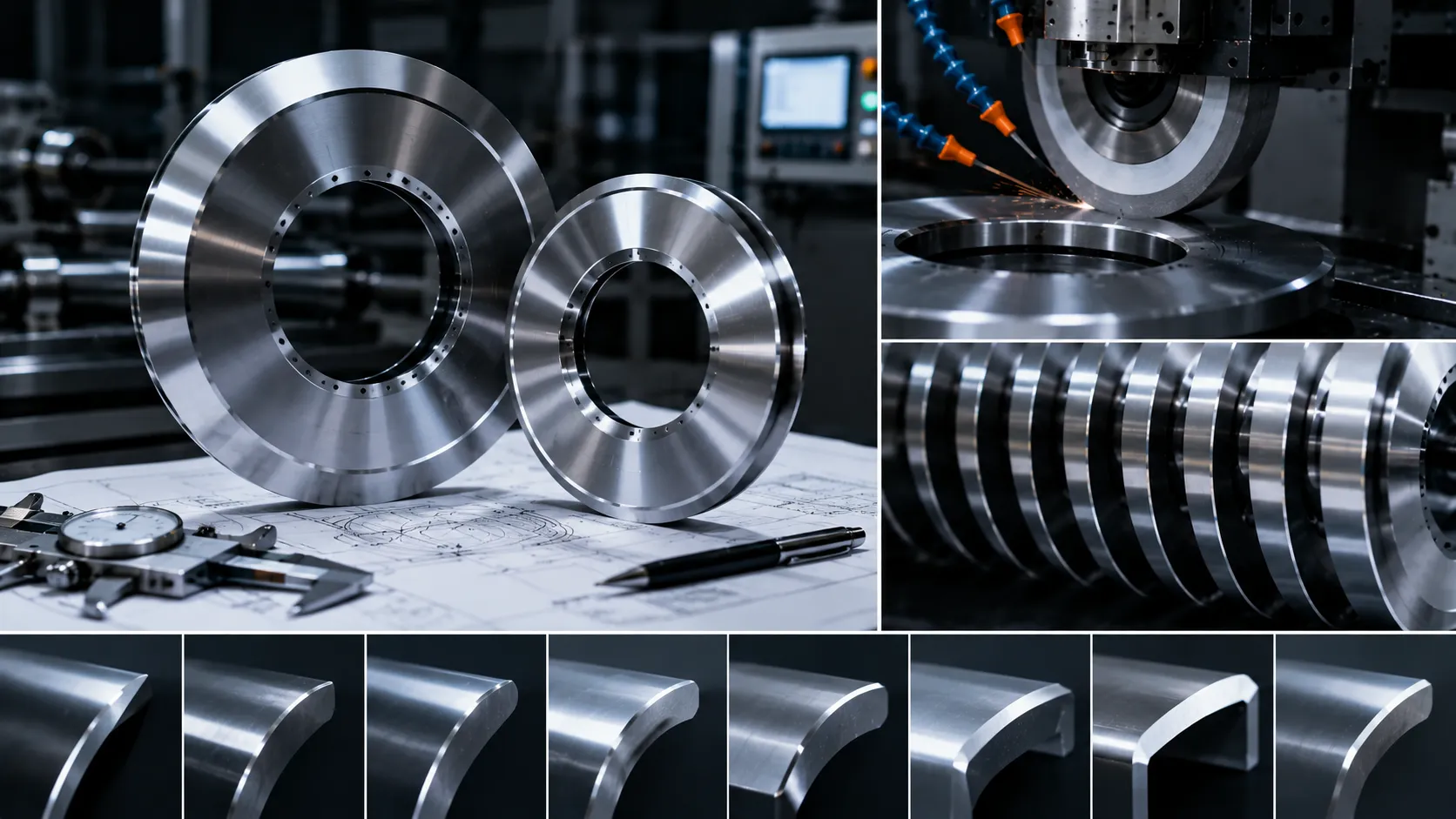
Custom Edge Engineering for Your Converting Lines
Whether you operate high-speed hygiene nonwoven slitting lines, convert sensitive filtration media, or cut heavy industrial geotextiles, Sharkcutting’s application engineers analyze your equipment configuration, web polymer chemistry, and line speed parameters to engineer dedicated nonwoven knives that maximize production yield and eliminate costly line stoppages.
Nonwoven Knife Configurations & Mechanical Series
Engineered industrial blades designed for high-speed nonwoven slitting, precision web conversion, and continuous cross-cutting operations. Explore our full range of industrial slitting knives engineered for demanding manufacturing lines.
Circular Nonwoven Blades
Top and bottom rotary nonwoven slitters engineered for continuous roll slitting, rewinding, and edge trimming. Our high-precision circular slitter knives are available in single, double, and compound bevel profiles.
- Single & Compound Bevel Geometries
- Clean, Burr-Free Edge Control
- Optimized for Spunbond & Meltblown Media
Shear Slitting Knife Sets
Pneumatic holder-compatible upper shear slitting knives and lower anvil rings engineered for high-speed continuous shearing with minimal dust generation.
- Pneumatic Holder Compatible
- Matched Upper Blades & Anvil Rings
- Substantially Reduced Cutting Dust
Rotary & Guillotine Cross-Cut Blades
Heavy-duty rotary fly knives and stationary counter blades manufactured for impact-resistant, high-speed transverse cutting and web chop-off.
- Shock-Resistant Tool Steels
- Precision-Ground Counter Edges
- High-Impact Continuous Shearing
Tailored Machine Knives from Standard Slitters to Custom Cutting Blades
Sharkcutting provides complete custom cutting knives engineering to meet exact converting equipment dimensions and specialized nonwoven substrate requirements.
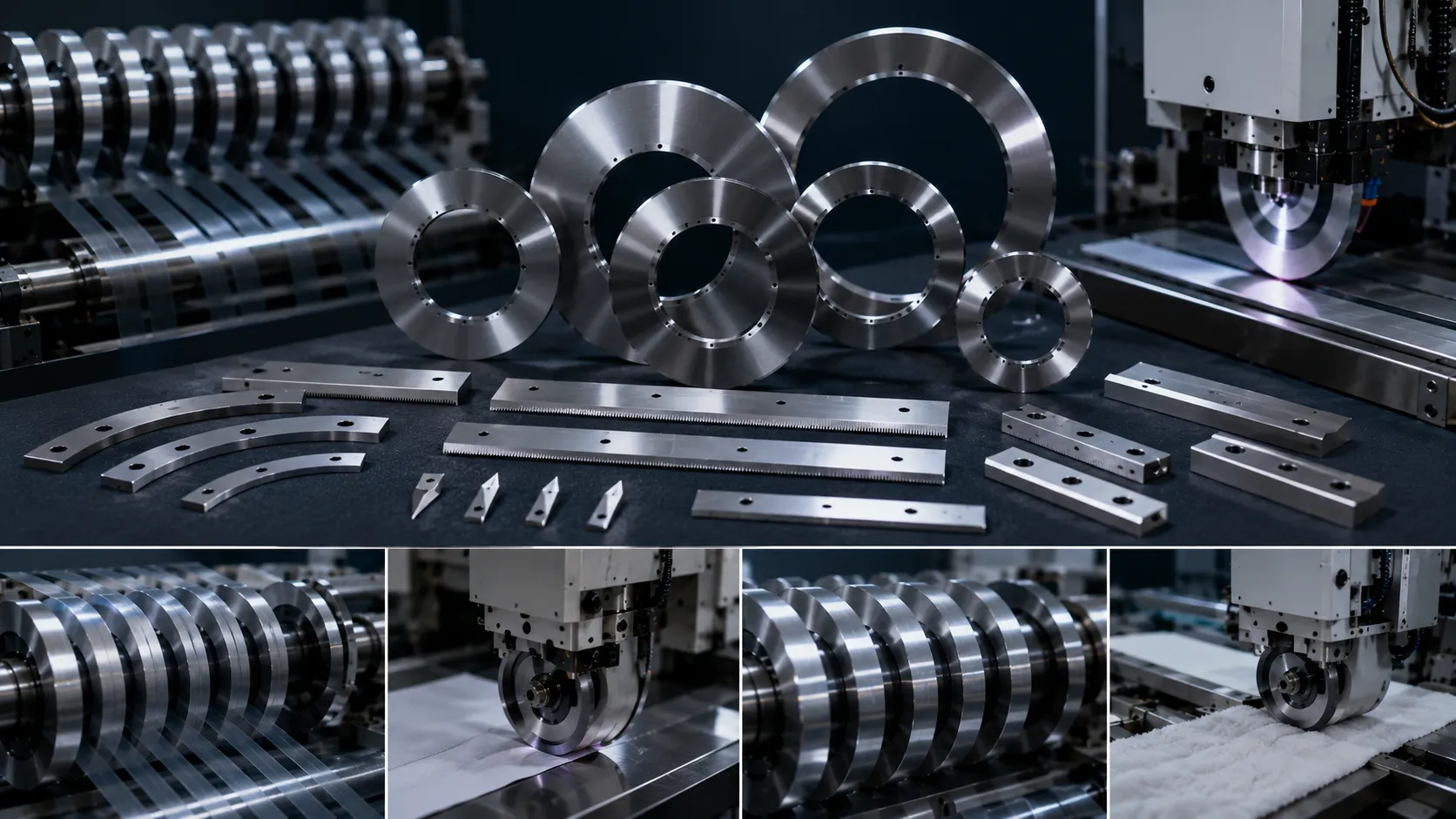
Standard Specification Parameters
Technical manufacturing specifications for standard rotary nonwoven slitters and custom knife configurations.
| Parameter | Standard Specifications | Custom Engineering Options |
|---|---|---|
| Outer Diameter (OD) Range | 20 mm – 500 mm (0.78 in – 19.68 in) | Custom diameters up to 800 mm (31.50 in) |
| Bore Sizes & Keyways | Standard metric & imperial precision bores | Single, double, spline, or threaded keyway configurations |
| Thickness Tolerances | ±0.005 mm (±0.0002 in) ground finish | Matched-set thickness tolerances down to ±0.001 mm |
| Bevel & Chamfer Angles | Single bevel, double bevel, compound angle | Custom radii, micro-chamfers, and specialized tooth profiles |
| Material Selection | D2, M2 High Speed Steel, Stainless Steels | Powder Metallurgy (PM) steels, Carbide-tipped, Solid Carbide |
Request Custom Machine Knife Engineering
Submit your knife specifications, equipment details, or web material samples to Sharkcutting for technical evaluation and direct factory pricing.
Material Metallurgy: Matching Knife Grade to Line Speed and Web Material
Optimizing production uptime, achieving micro-clean edges, and eliminating airborne fiber dust on high-speed nonwoven converting lines requires a precise alignment between blade metallurgy, web density, and mechanical cut geometry. At Sharkcutting, we engineer precision nonwoven slitting knives from premium tool steels, high-speed steels (HSS), and micro-grain tungsten carbide formulations tailored specifically for PP spunbond, meltblown filtration media, needle-punched geotextiles, and abrasive composite webs.
Nonwoven Metallurgy Selection & Performance Matrix
Evaluate key tool steel and carbide grades against web basis weight, material abrasion profiles, and line speeds to identify the optimal nonwoven slitting blade specification.
| Metallurgy Grade | Target Web Substrate | Abrasion Resistance | Impact Toughness | Recommended Line Speed |
|---|---|---|---|---|
| D2 / SKD11 Tool Steel | Low-to-medium GSM PP spunbond, standard hygiene coversheets, soft synthetic carded webs | Moderate | High | Medium (≤ 200 m/min) |
| M2 / SKH51 High-Speed Steel | Fine-denier hygiene substrates, meltblown polypropylene, SMS/SMMS laminates, N95/FFP2 filter media | Superior | Excellent | High (200 – 500 m/min) |
| Tungsten Carbide (Solid or Inlaid) | Abrasive fiberglass mats, heavy needle-punched geotextiles, carbon fiber felts, asphalt membrane webs | Extreme | Moderate | Ultra High (500+ m/min) |
D2 Tool Steel Slitters
Formulated for conventional spunbond converting lines operating at standard line speeds. D2 tool steel delivers exceptional structural toughness, protecting knife edges against accidental web splices or sudden line jolts.
- ✓ High Structural Toughness: Resists edge chipping and micro-fractures during heavy splice passage.
- ✓ Cost-Effective Tooling: Economical capital investment for short-to-medium continuous production.
- ✓ Simplified Resharpening: Easily serviced using standard aluminum oxide or CBN grinding wheels.
M2 High-Speed Steel Knives
Engineered with a dense, fine-grained micro-carbide structure for high-speed hygiene converting and delicate meltblown media slitting. M2 HSS blades retain razor sharpness under continuous high shear friction without thermal edge softening.
- ✓ Thermal Friction Control: Resists heat buildup to eliminate edge melt bonding and polymer drag.
- ✓ Micro-Clean Margins: Prevents fiber pullout, tensile deformation, and edge fraying.
- ✓ Extended Sharpening Life: Delivers up to 3x longer operational life compared to standard D2 steel.
Solid & Inlaid Carbide Slitters
Designed for continuous ultra-high-speed lines and highly abrasive synthetic or inorganic fibers. Solid or brazed tungsten carbide slitters provide extreme volumetric hardness to eliminate rapid edge rounding against glass fiber and dense needle-punched webs.
- ✓ Maximum Abrasion Resistance: Extends run times up to 10x over conventional steel in abrasive lines.
- ✓ Low-Dust Mirror Finish: Polished bevel surfaces (Ra < 0.1 μm) prevent particle accumulation and edge build-up.
- ✓ Superior Re-Grind Capacity: Dense sub-micron grade carbide allows 8 to 12 precise CNC diamond regrinds.
Operational Variables Dictating Blade Sharpening Life and Edge Quality
Selecting the correct knife metallurgy is only the first step. Fine-tuning pneumatic side pressure, web tension differentials, shear overlap depth, and bevel geometry is essential to prevent premature blade dulling and ensure clean, dust-free slit margins.
Pneumatic Holder Pressure
Excessive lateral force increases friction heat and accelerates micro-chipping along the cutting edge. Calibrate pneumatic side-load pressure to the minimum force required to maintain stable shear contact without inducing blade deflection.
Web Tension & Speed Differential
Improper web tension causes lateral web sway and frayed slitting edges. Driving top shear knives 5% to 10% faster than the web line speed creates clean blade penetration and prevents material bunching across varied GSM weights.
Shear Overlap Depth Setting
Maintain top-to-bottom knife radial overlap strictly between 0.5 mm and 1.0 mm. Deep blade overlap increases mechanical shear resistance, generating excessive airborne dust and wearing knife corners prematurely.
Bevel & Chisel Angle Geometry
Match single, double, or compound bevel angles directly to polymer characteristics. Steeper single bevels minimize dust in delicate meltblown PP, while compound bevel angles optimize durability in heavy needle-punched webs.
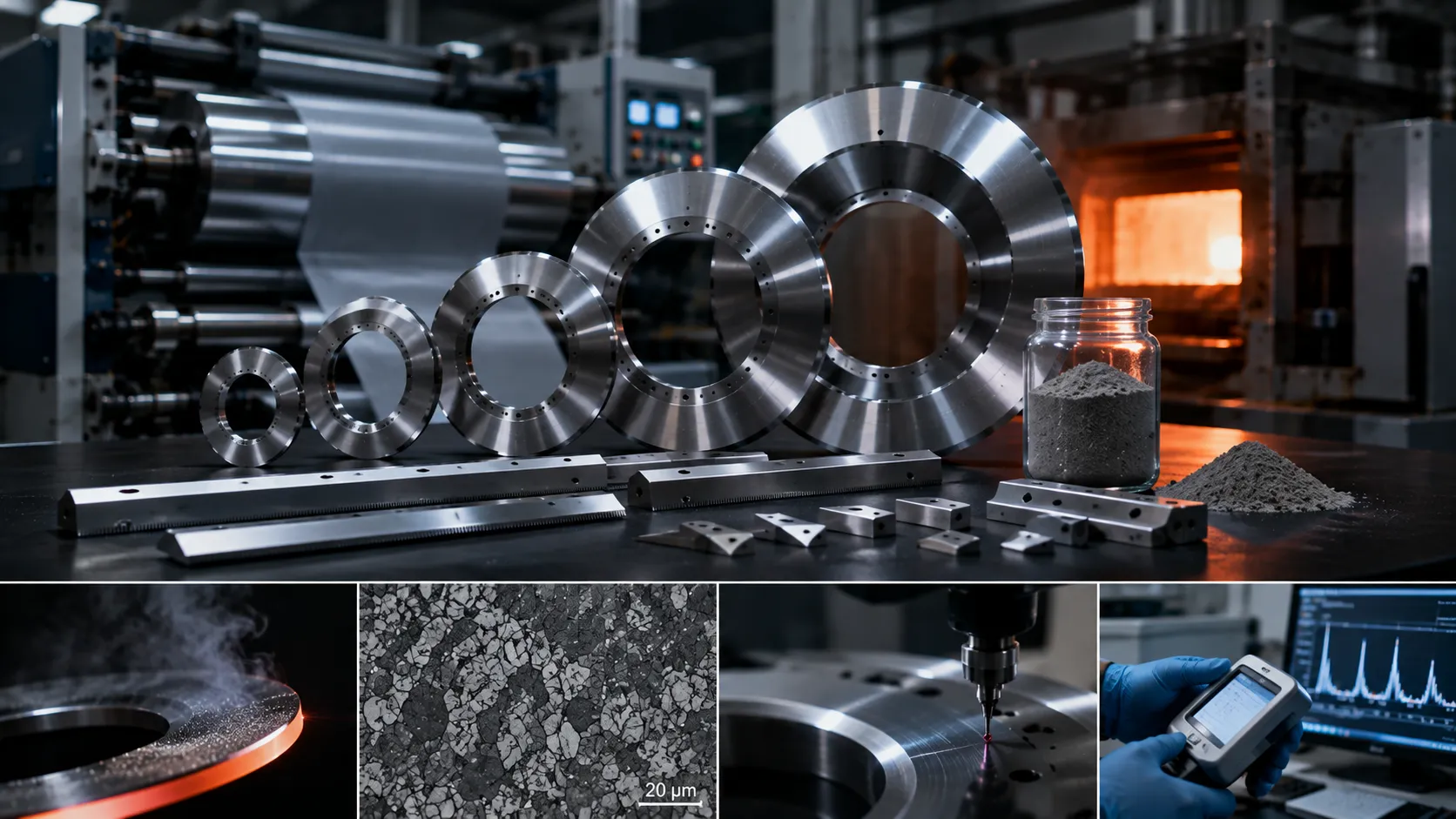
Custom Metallurgical Engineering for High-Speed Nonwoven Lines
Combining deep metallurgical expertise with state-of-the-art CNC diamond wheel grinding capabilities, Sharkcutting manufactures high-precision nonwoven slitting blades held to tight dimensional tolerances within ±0.002 mm. Whether converting delicate hygiene spunbond webs or abrasive structural composite media, our engineering team selects the exact alloy chemistry, bevel geometry, and mirror surface finish to maximize blade sharpening life and deliver flawless, dust-free edges.
Frequently Asked Questions on Nonwoven Slitting & Blade Maintenance
Maintain continuous production line uptime and eliminate web converting defects with practical engineering insights from Sharkcutting technical specialists. Discover how proper side shear calibration, advanced blade metallurgy, and precise mirror polishing deliver a clean cut nonwoven edge, maximize tool longevity, and minimize operational downtime across your slitting knives setups.
What causes web edge fraying or fiber pulling during slitting?
Web edge fraying and fiber pulling occur when slitting blades lose their keen edge, side shear pressure drops below required thresholds, or dynamic axial runout causes knife chattering across the arbor. When converting tough spunbond, needle-punched, or composite nonwovens, incorrect bevel angles bend rather than cleanly shear individual polymer filaments.
Corrective Action
- Adjust knife overlap: Calibrate top and bottom slitter overlap to maintain constant, balanced side shear pressure.
- Control axial runout: Maintain dynamic runout within tight ±0.002 mm tolerances to eliminate blade wobble.
- Upgrade blade alloy: Switch to micro-grain HSS or tungsten carbide to guarantee a clean cut nonwoven edge.
How can thermal melt bonding be prevented when slitting meltblown polypropylene?
Thermal melt bonding occurs when frictional heat builds up along blade side faces during high-speed continuous slitting of meltblown polypropylene and fine-denier hygiene media. As friction elevates localized temperatures past polymer softening points, web edges fuse together, causing edge hardening and destroying web porosity.
Corrective Action
- Mirror polishing: Specify blade faces ground and polished to Ra < 0.1 µm to eliminate surface friction.
- Anti-friction coatings: Apply specialized PVD or anti-stick coatings to suppress polymer drag and thermal buildup.
- Refine bevel geometry: Optimize primary and secondary chisel angles to minimize contact surface area.
How many times can Sharkcutting tungsten carbide knives be reground?
Sharkcutting high-density solid tungsten carbide slitter knives can typically be reground 8 to 12 times throughout their operational lifespan. Utilizing specialized multi-axis CNC diamond wheel grinding equipment, our technical team restores original cutting geometry, bevel angles, and mirror surface finishes at a fraction of replacement cost.
Corrective Action
- Precision CNC regrinding: Use flood-cooled diamond grinding wheels to prevent micro-cracking and thermal stress.
- Concentricity verification: Inspect dynamic balance and bore concentricity after every regrind cycle.
- Proactive maintenance: Integrate structured nonwoven blade maintenance to extend total core lifecycle.
Can Sharkcutting reverse engineer blades from worn samples or CAD drawings?
Yes, our engineering group provides complete reverse engineering services using advanced coordinate measuring machines (CMM) and optical metallographic testing. Whether you submit worn physical sample knives or CAD files in standard formats, Sharkcutting ensures flawless dimensional compatibility with original OEM machine specifications.
Corrective Action
- 3D CAD digitization: Convert physical sample blades into high-precision 3D CAD models.
- Material verification: Analyze alloy chemistry to recommend optimized tool steel or carbide grades.
- Rapid quotation: Receive detailed CAD verification engineering drawings and quotes within 24 hours.
Nonwoven Slitting Troubleshooting & Maintenance Matrix
Quick diagnostic reference for resolving web converting defects and optimizing blade care
| Converting Issue | Root Cause | Corrective Maintenance | Recommended Material |
|---|---|---|---|
| Fraying & Fiber Pulling | Cutting edge dulling or improper side shear overlap pressure | Recalibrate overlap geometry; resharpen edges to precise target bevel angle with high-grade shear slitting knives | M2 High-Speed Steel |
| Thermal Edge Fusion | Frictional heat buildup along blade side faces during high-speed runs | Install mirror-polished blade faces (Ra < 0.1 µm) or apply low-friction PVD coatings | Solid Tungsten Carbide |
| Excessive Airborne Dust | Micro-chipping along cutting edges that crushes rather than shears fibers | Perform precision CNC diamond grinding to achieve significant cutting dust reduction | Micro-Grain Carbide |
| Blade Chatter Marks | Excessive dynamic axial runout or worn shaft keyway tolerances | Re-balance cutter arbor shaft; verify dynamic runout remains within ±0.002 mm | D2 Tool Steel / M2 HSS |
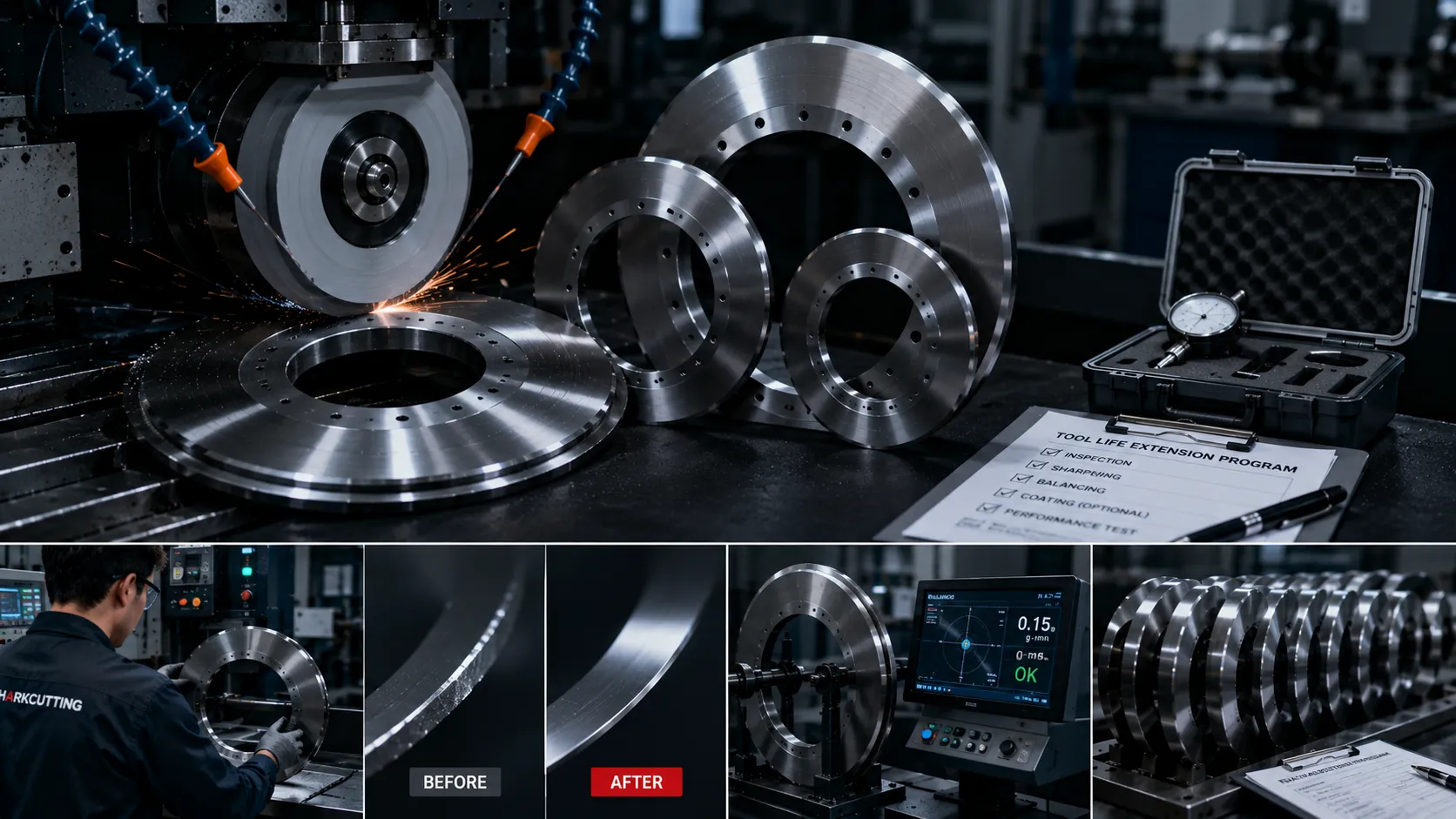
Sharpening Support & Custom Tool Life Extension Programs
Sharkcutting provides global nonwoven converters with complete nonwoven blade maintenance programs designed to maximize web edge quality while minimizing total tooling overhead. Our engineering specialists perform dynamic runout balancing, custom bevel re-profiling on circular slitter knives, and metallographic wear analysis for high-volume converting facilities to guarantee a clean cut nonwoven edge and sustained cutting dust reduction.
Ready to Optimize Your Nonwoven Slitting Operations?
Whether you require high-density tungsten carbide slitters, custom shear assemblies, or expert nonwoven blade maintenance support, Sharkcutting engineers deliver formal quotes and CAD drawing reviews within 24 hours.
Optimize Your Nonwoven Slitting Operations Today
Whether you are replacing worn slitting blades or engineering custom cutting tools for novel technical webs, Sharkcutting engineers provide expert quote responses and drawing reviews within 24 hours.
Partner with a specialized industrial blade manufacturer to eliminate edge burrs, reduce airborne dust, and maximize continuous runtime across your nonwoven processing lines with our precision circular slitter knives and high-durability shear slitting knives.
100% Non-Disclosure
Guaranteed protection for your proprietary drawings and designs.
ISO 9001 Quality
Strict dimensional tolerances and mirror-grind finishing standards.
Express Shipping
Worldwide door-to-door delivery to minimize downtime.
Request a Fast Quote
Receive technical advice and competitive pricing within 24 hours.