
Core Technical Advantages & Blade Specifications
As a premier slitting razor blade manufacturer, learn more about Sharkcutting and how we deliver tungsten carbide razor blades engineered for ultra-low drag, dust-free cutting, and extreme wear life on high-speed converting lines.
±0.001 mm
Thickness Tolerance
Sub-micron edge geometry control
HV 3500
Max Coating Hardness
Advanced PVD TiN and DLC layers
< 0.05 µm
Surface Polish (Ra)
Ultra-mirror ground for low drag
5x
Extended Wear Life
Compared to standard steel blades
Subgrain Carbide Metallurgy
Formulated with submicrograin tungsten carbide substrates to deliver razor-sharp edge retention without chipping under high tension.
- Solid Tungsten Carbide, HSS & Ceramic
- Exceptional fracture toughness ratings
Low-Friction PVD Coatings
Specialized surface coatings prevent static buildup, resin adhesion, and thermal friction during continuous film and foil processing.
- TiN, TiAlN, and DLC coating options
- Low friction coefficient down to 0.10
Mirror Finish Edge Grinding
Automated multi-pass CNC grinding produces burr-free razor bevels that slice cleanly without generating dust or edge fraying.
- Mirror polish surface finish (Ra < 0.05 µm)
- Prevents film stretch and web distortion
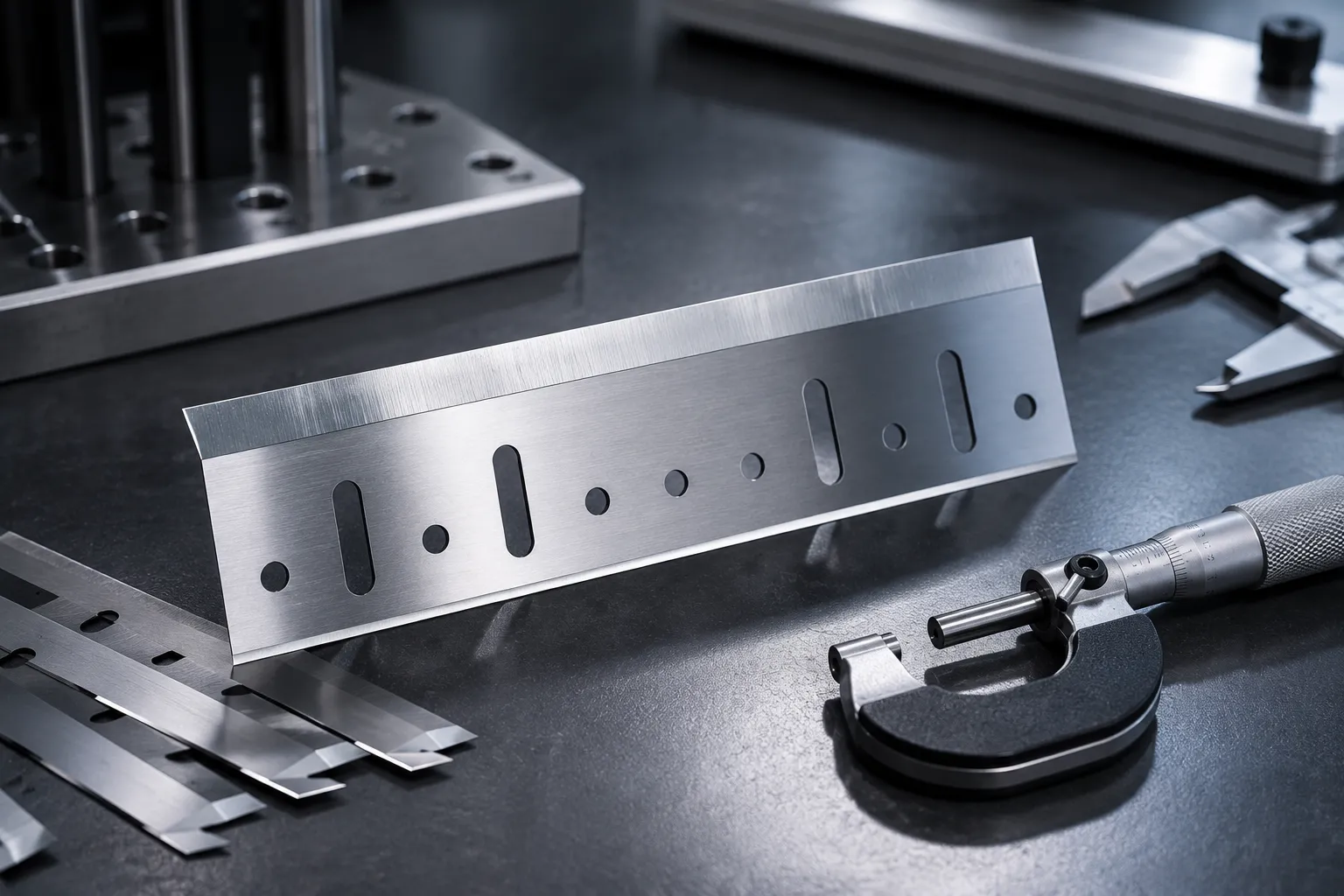
Razor Blade Technical Specifications
Standard production thresholds and material specifications for Sharkcutting razor slitting knives.
| Parameter | Standard Spec | Performance Benefit |
|---|---|---|
| Base Substrate | Solid Tungsten Carbide / HSS / Ceramic | Maximum wear resistance and razor-sharp edge holding |
| Surface Polish (Ra) | ≤ 0.05 µm (Mirror Ground) | Prevents friction drag, film pulling, and static buildup |
| Bevel Angle Options | 12° – 18° Single or Double Bevel | Delivers clean, slitter-dust-free edge profiles |
| Dimensional Tolerance | ±0.001 mm Thickness / ±0.005 mm Width | Ensures exact gap alignment across multi-blade arbors |
| PVD Coating Options | TiN, TiAlN, DLC (Hardness up to HV 3500) | Protects blade face from adhesive and resin sticking |
Need Custom Razor Blade Dimensions or Coatings?
Sharkcutting engineers custom slot configurations, non-standard blade thicknesses, and specialized surface coatings tailored to your converting machinery. Contact our specialists for a quote.
Standard Specifications & Customization Matrix
Explore Sharkcutting standard razor slitting blade dimensions, edge geometries, and customization options engineered for your film, foil, and nonwoven slitting lines.
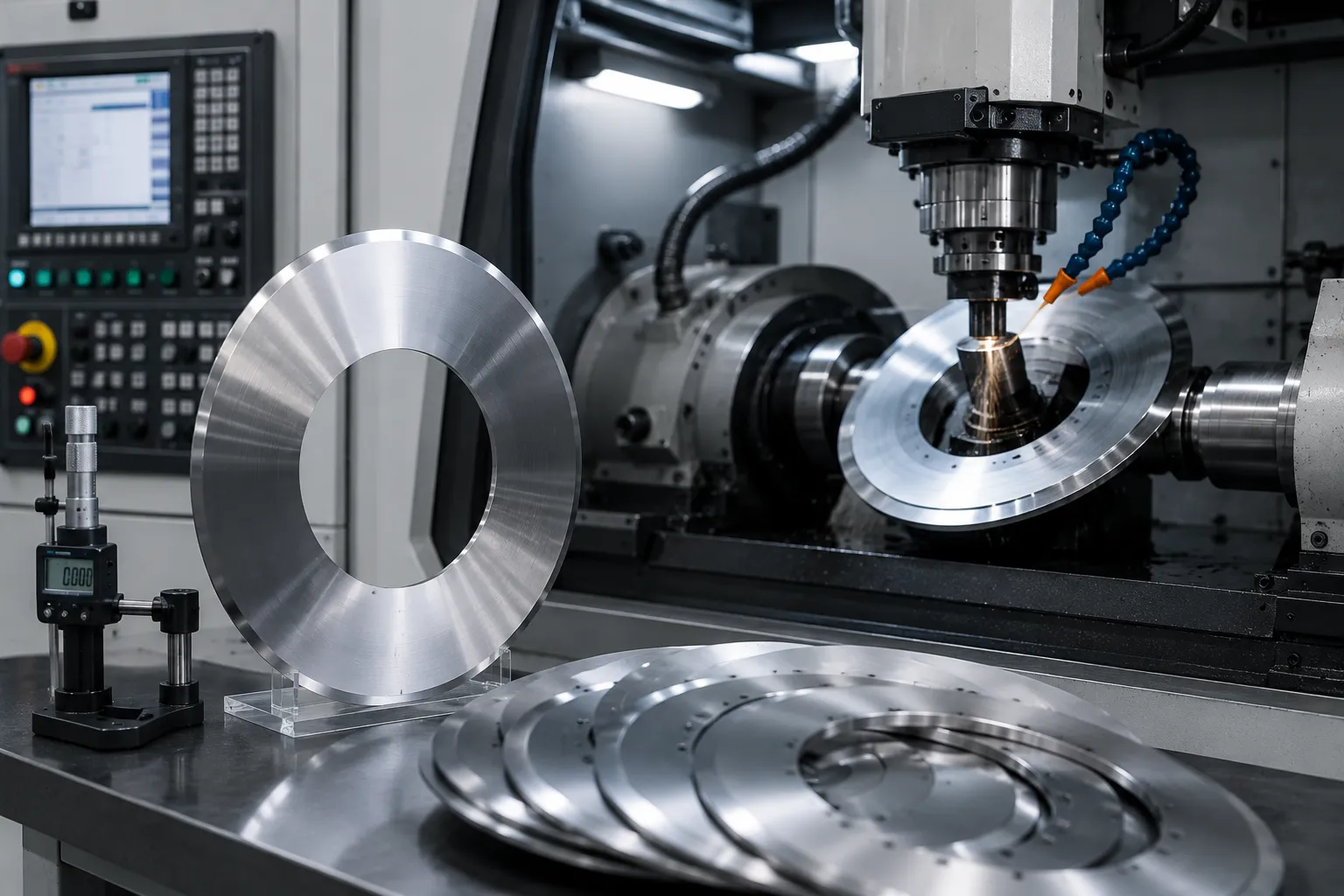
OEM Manufacturing Excellence
We deliver precise blade geometry and razor-sharp edge bevels engineered specifically for high-speed automated film and flexible packaging converting.
Sub-Micron Edge Grinding
Mirror-finish CNC grinding ensures micro-smooth bevels, eliminating burrs, dust, and web drag during high-speed slitting.
High-Purity Metallurgy
Select sub-micron tungsten carbide grades, ceramic, or cobalt HSS to withstand aggressive abrasives like TiO₂-filled films.
Custom Slot & Hole Profiles
We engineer custom mounting holes, 3-hole slots, notches, and blade footprints to fit specialized slitter machinery and knife holders.
Advanced Friction Coatings
Apply TiN, DLC, or non-stick ceramic/PTFE coatings to lower cutting drag, prevent adhesive buildup, and extend wear life.
Razor Slitter Blade Specifications & Custom Matrix
Compare our off-the-shelf standard options for slotted and rectangular razor blades against full custom OEM engineering parameters.
| Technical Parameter | Standard Stock Range | Custom OEM Option | Typical Lead Time |
|---|---|---|---|
| Blade Dimensions (L × W) | 43 × 22 mm, 57 × 19 mm, 60 × 20 mm | Custom lengths up to 250 mm and custom widths | In Stock |
| Blade Thickness | 0.10 mm, 0.15 mm, 0.20 mm, 0.30 mm, 0.50 mm | Ultra-thin 0.08 mm to heavy-duty 1.00 mm (±0.001 mm) | In Stock |
| Core Material Grade | Sub-micron Tungsten Carbide, High-Speed Steel (HSS) | Solid Ceramic (Zirconia), Cermet, PCD, Carbon Steel | 3–5 Days |
| Bevel & Edge Geometry | Double-bevel / Single-bevel (12° to 18° edge angles) | Custom compound bevels, asymmetrical profiles (8°–25°) | 5–7 Days |
| Surface Treatment & Coating | Uncoated Bright Finish, Standard TiN (Gold) Coating | DLC (Diamond-Like Carbon), TiAlN, PTFE Non-Stick | 5–7 Days |
| Mounting Slot / Hole Pattern | Standard 3-Hole, 2-Hole Slotted, Square Notch | Custom pin-hole locations, magnetic slots & custom holder fit | 5–7 Days |
| Branding & Identification | Standard Sharkcutting laser marking & safety box | OEM private label laser etching, QR tracing & custom packaging | 3–5 Days |
Custom Razor Blade Development Process
A structured four-step OEM engineering workflow to deliver precise, high-performance slitting blades.
Requirement Review
Submit your film/foil specifications, slitting machine line speeds, and blade holder dimensions to our application engineers.
Technical CAD Proposal
Our team generates precise CAD models, recommends carbide grades or coatings, and verifies edge bevel tolerances.
Precision CNC Manufacturing
Production utilizes high-precision CNC edge grinding machines and vacuum PVD coating equipment for long wear life.
100% Inspection & Delivery
Every batch undergoes 100% optical magnification checking for edge sharpness and thickness uniformity prior to shipment.
Need Custom Razor Slitting Blade Specifications?
Submit your technical drawings or consult with Sharkcutting blade engineers to optimize your film and foil slitting performance.
Precision Razor Blades Engineered for High-Speed Film & Foil Slitting
Sharkcutting manufactures ultra-sharp, low-drag razor slitting knives designed to eliminate blade drag, edge trim burrs, and dust generation across ultra-thin films, flexible packaging, metallic foils, and technical nonwovens.
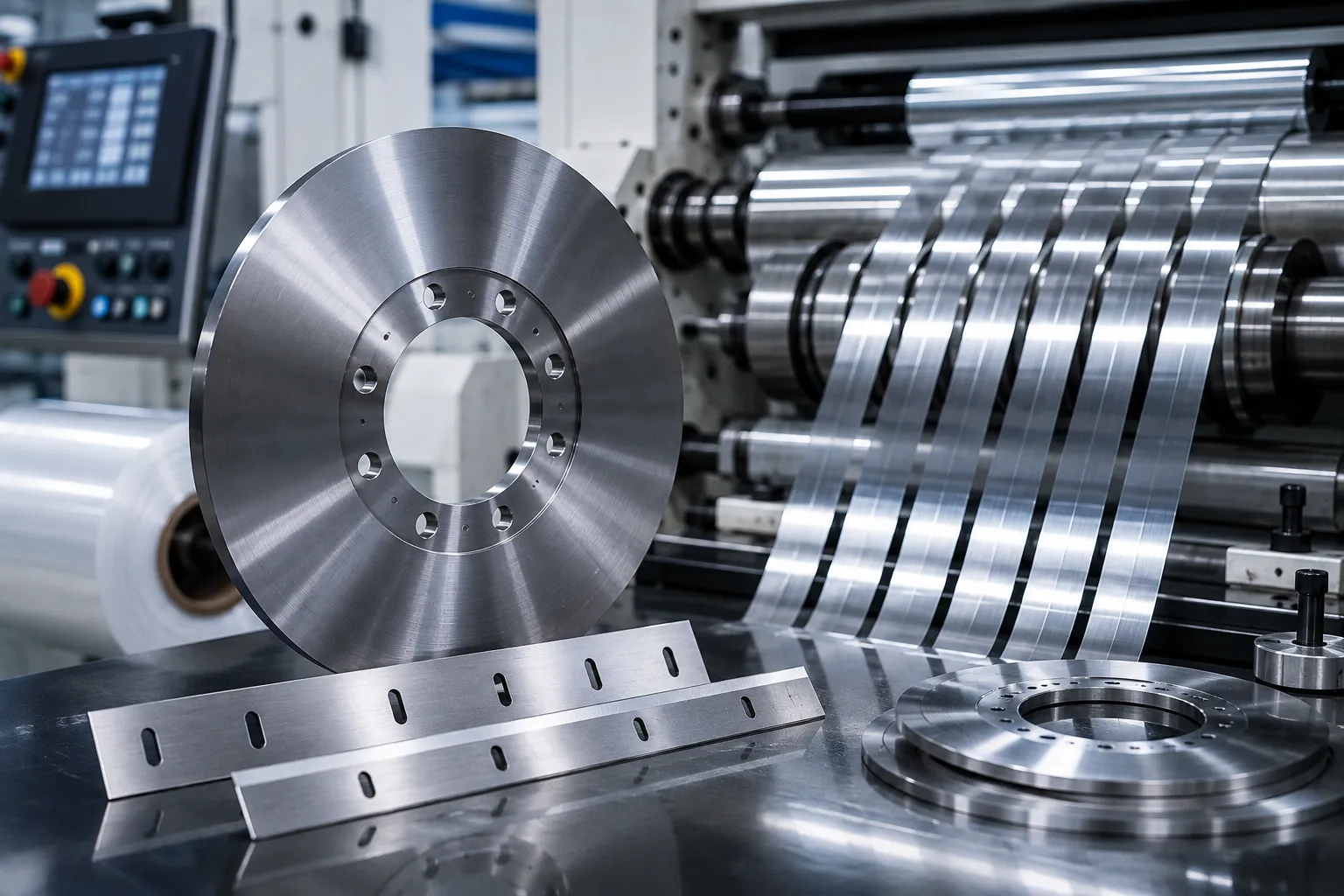
Tested for High-Velocity Converting Lines
Our industrial razor blades undergo mirror-finish edge grinding and strict batch inspection to maintain flawless slitting quality at continuous line speeds.
Plastic Films & Polymers
Ultra-sharp tungsten carbide and ceramic razor blades engineered for advanced film-processing applications involving BOPP, PET, PE, PVC, and CPP films, delivering pristine slit edges without stretching or tailing.
- Eliminates film fraying & dust
- Low-friction TiN & DLC coatings
Metallic Foils & Electrodes
Burr-free razor slitting solutions for ultra-thin aluminum foil, copper foil, and lithium battery electrode material converting operations.
- Prevents metal particles & web snaps
- Mirror-polished cutting bevels
Packaging & Adhesive Tapes
Durable slotted and solid razor blades designed for multi-layer barrier laminates, pressure-sensitive labels, adhesive tapes, and release liners.
- Resists adhesive buildup & drag
- Consistent web tension retention
Nonwovens & Medical Textiles
Extreme-sharpness blades for spunbond, meltblown, hygienic nonwovens, and medical dressings requiring snag-free edge conversion.
- Prevents fiber pulling & edge tearing
- Sub-micron micro-grain tungsten carbide
Substrate Compatibility Matrix
Review recommended razor blade formulations, edge coatings, and slit edge performance by substrate material.
| Substrate Group | Target Applications | Recommended Razor Blade Spec | Compatibility |
|---|---|---|---|
| BOPP, PET & Barrier Films | Flexible food packaging, technical film converting | Solid Tungsten Carbide, TiN Coated, 12°–18° double bevel | Optimal |
| Aluminum & Copper Foils | Battery electrode foil, shielding tapes, foil packaging | Mirror-polished Solid Carbide or Ceramic razor blades | Optimal |
| Adhesive Tapes & Laminates | Label converting, pressure-sensitive tapes | DLC / Non-stick coated 3-hole / slotted razor blades | Optimal |
| Nonwovens & Medical Products | Hygiene products, surgical drapes, microfibers | Sub-micron carbide with mirror-ground cutting edges | High |
Need Custom Razor Blade Geometry for Your Substrate?
Sharkcutting engineers evaluate your line speed, material density, and blade holder setup to engineer perfectly matched razor slitting knives.
Selection Guide: Razor vs. Shear Slitting
Choose the optimal cutting system for your web converting equipment. Sharkcutting delivers precision tooling tailored to your material specs and operational goals.
Razor Slitting Method
The razor slitting method utilizes a stationary blade positioned in open air or a grooved roll. The web substrate is drawn across the ultra-sharp edge for clean, low-resistance slitting.
Lowest Initial Tooling Cost: Simple mounting hardware and economical quick-change replacement blades.
Rapid Line Setup: Fast blade rotation and swapping minimize machinery downtime during web converting operations.
Target Substrates: BOPP, PET, thin plastic films, medical nonwovens, light foils, and flexible laminates.
Key Operational Note
High friction can generate thermal friction at extreme speeds. Best suited for thin films rather than thick paperboard.
Shear Slitting Method
Shear slitting employs dual rotating circular knives (male upper blade and female lower blade) overlapping to create a precise scissor-like cutting action.
Superior Edge Precision: Produces clean, burr-free slit edges on heavy, dense, or rigid substrates.
High Material Versatility: Excels on thick paper, paperboard, heavy metal foils, and multi-layer structures.
Extended Tool Lifespan: Rotary motion distributes wear evenly across circumferential edges for long runs.
Key Operational Note
Requires higher capital outlay and precise cant angle setup. For heavy web slitting, view our shear slitting knives.
Comprehensive Parameter Matrix
Compare technical metrics to determine the right slitting hardware for your conversion machinery.
| Performance Metric | Razor Slitting System | Shear Slitting System |
|---|---|---|
| Cutting Action | Stationary blade slicing through traveling web | Dual rotating circular blades with scissor action |
| Substrate Thickness Range | Ultra-thin to light gauges (< 0.010 in / 0.25 mm) | Medium to heavy gauges (> 0.005 in / 0.12 mm) |
| Capital Investment | Low tooling cost with quick blade swapping | Higher initial investment for circular knives & holders |
| Setup & Cant Angle Alignment | Fast, minimal setup; simple inline positioning | Requires precise axial overlap and cant angle calibration |
| Slitting Dust & Debris | Near zero dust on films; higher debris on fibers | Clean, burr-free edges across papers, foils, & webs |
| Blade Wear & Maintenance | Frequent quick-change swapping; disposable blades | Extended lifespan; resharpenable carbide or HSS rings |
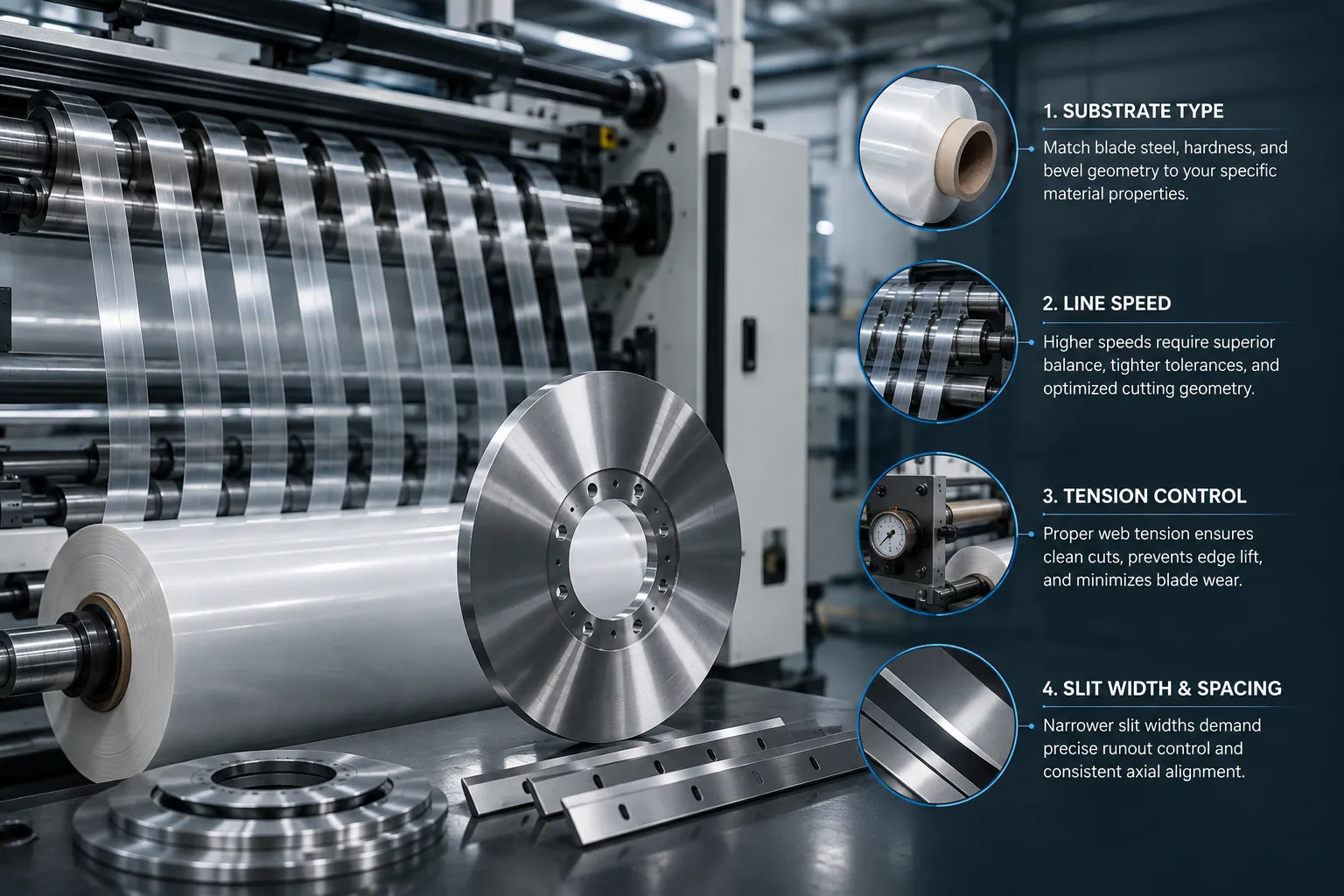
Key Selection Factors for Converting Lines
Selecting the right slitting method directly impacts slitter-rewinder throughput, blade longevity, and edge quality. Consider these four critical parameters before specifying tooling:
1. Material Composition
Soft, flexible polymer films favor razor slitting. Fibrous paperboard and thick laminates require rotary shear cutting.
2. Operating Line Speed
Shear slitting maintains edge stability at high speeds, while coated razor blades lower friction on high-speed film lines.
3. Edge Tolerances
Eliminate roll telescoping, burrs, and slitting dust with engineered blade geometries and tungsten carbide grades.
4. Job Changeover Rate
Quick-change razor blade holders dramatically reduce setup times for short-run custom slitting orders.
Unsure Which Slitting Method Fits Your Web Line?
Our application engineers perform complimentary cut evaluations, blade angle analysis, and tungsten carbide grade matching to optimize your slitting process.
Quality Control & Manufacturing Evidence
Sharkcutting enforces rigorous quality assurance across every manufacturing phase. Discover how high-magnification optical metrology, automated mirror-finish grinding, and verified metallurgical data deliver razor slitting blades with flawless cutting consistency.
Thickness & Edge Tolerance
Sub-micron grinding ensures accurate blade thickness and sharp bevel geometry.
Certified Facilities
Standardized manufacturing protocols guarantee batch-to-batch consistency for precision ground blades.
Mirror Surface Finish
Ultra-smooth polishing reduces cutting drag, friction, and web dust generation.
Material Traceability
Every solid tungsten carbide and HSS blade links directly to raw material heat certificates.
Multi-Stage Precision Manufacturing & Testing
Sharkcutting integrates rigorous testing checkpoints from raw material validation to high-magnification optical inspection, eliminating burrs and stretching in high-speed converting operations.
Spectrometric & Metallurgical Inspection
Raw tungsten carbide and high-speed steel blanks undergo chemical analysis to verify grain micro-structure, density, and hardness.
CNC Mirror-Finish Grinding
Automated multi-axis CNC grinding systems continuously control coolant flow, wheel pressure, and bevel angles for micro-sharp edges.
High-Magnification Optical Metrology
Automated vision systems inspect blade edges at high magnification to detect micro-nicks, slot placement, and exact pinhole centerlines.
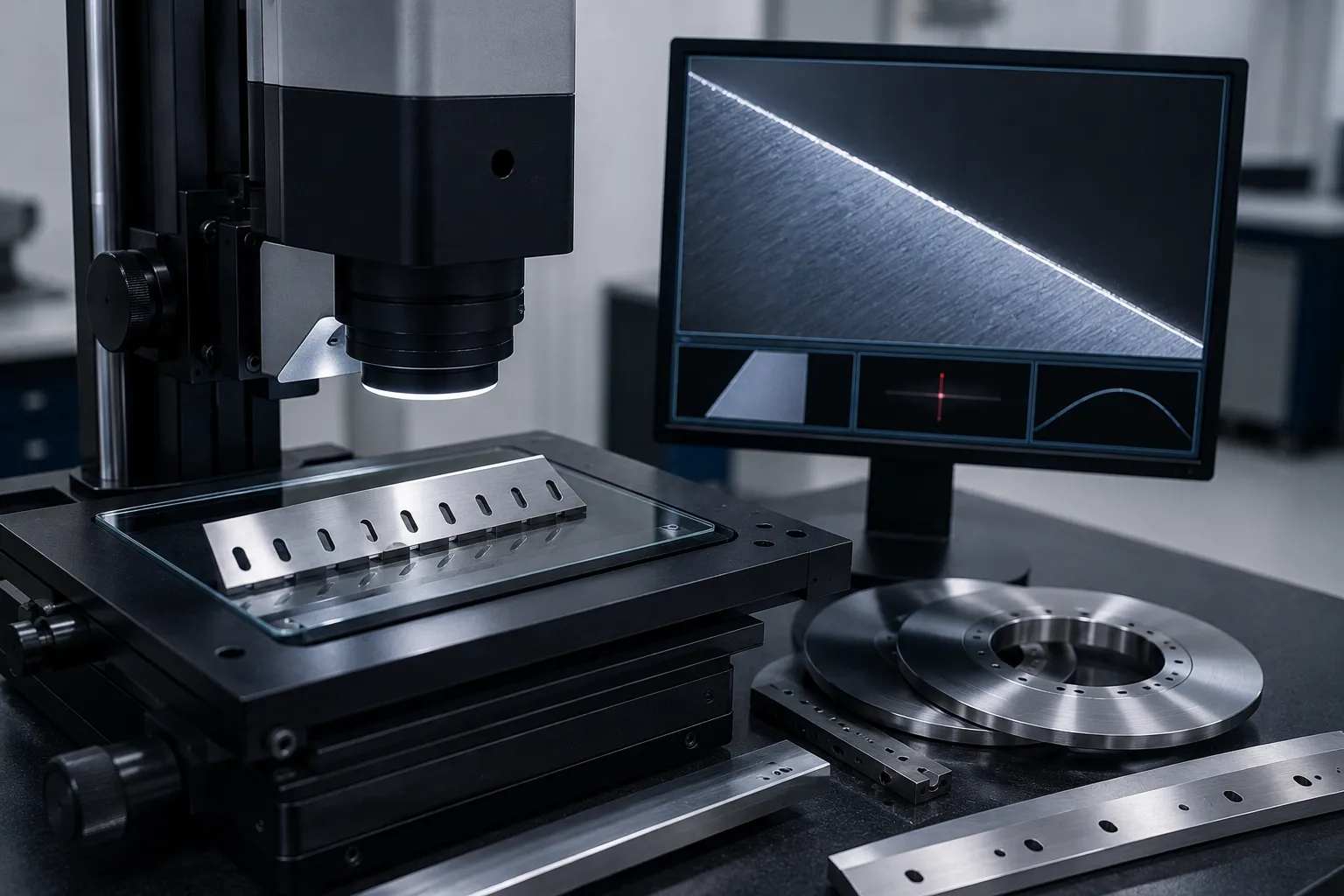
Optical Micro-Edge Profile Inspector
Verifiable Quality Documentation
Every Sharkcutting knife shipment includes comprehensive inspection reports for complete operational compliance.
Raw Material Certificates
Chemical analysis and binder content reports confirming tungsten carbide or tool steel lot purity and strength.
Dimensional Metrology Reports
Laser profiler data confirming blade thickness, edge bevel angles, hole center distance, and surface roughness (Ra).
Hardness & Coating Logs
Vickers hardness testing and TiN/DLC coating adhesion records verifying wear resistance for custom industrial knives.
Request Compliance Reports or Test Blade Samples
Need material mill certificates, inspection documentation, or custom razor blade evaluation for your converting lines? Contact the Sharkcutting engineering team for technical and quality support.
Frequently Asked Questions
Get immediate answers regarding Sharkcutting precision razor blades, carbide grades, custom OEM capabilities, and slitting optimization.
How do I choose between carbon steel, HSS, and solid tungsten carbide razor blades?
Which surface coating is best for highly abrasive films, such as white PE with TiO2?
Can Sharkcutting manufacture custom razor slitting knives to exact CAD specifications?
Are test samples available prior to placing a bulk OEM production order?
How can we maximize razor blade wear life and eliminate edge burrs on film slitting lines?
What are the typical turnaround times for standard stock versus custom OEM blade runs?
Need Slitting Tooling Advice?
Our converting application engineers analyze your web material, evaluate line speeds, and recommend the optimal blade substrate, edge geometry, and coating. Learn more about our manufacturing expertise or contact our technical team for assistance.
Response Guarantee
Within 24 Hours
Engineering Support
Free CAD & Spec Review
Upgrade Your Converting Line with Precision Razor Slitting Blades
Partner with Sharkcutting engineers to eliminate film tearing, reduce friction dust, and buy high-durability razor slitting blades tailored to your exact machinery. Learn more about us and our engineering process, or contact us directly for support.
±0.001mm Tolerances
Mirror-ground carbide and coated edges deliver clean slitting on thin films and foils.
24-Hour Engineering Quote
Fast technical assessment and sample evaluation to maximize converting uptime.
Request Custom Quote & Samples
Submit your razor blade specifications or film cutting needs for expert guidance.