
High-Precision Shear Slitting Knives for Clean, Burr-Free Edges
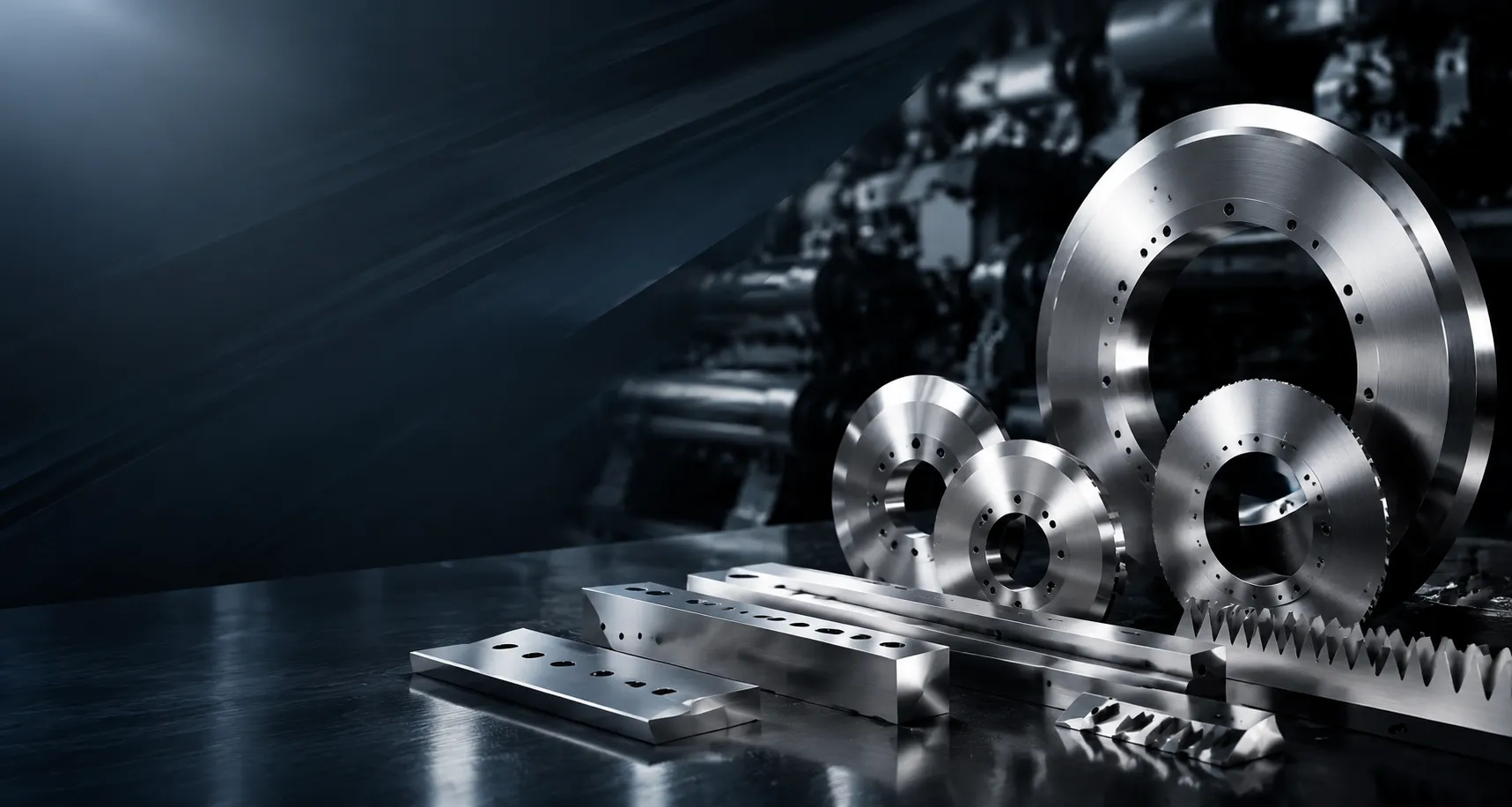
Engineered for high-speed web converting, Shark Cutting manufactures precision top and bottom shear slitting knives (Male & Female Shear Blades) designed to deliver flawless slitting for paper, plastic film, non-woven fabrics, and aluminum foil lines.
Tolerance Control
±0.001 mm Precision
Durability
Extended Wear Life
Edge Finish
Burr-Free Quality
Concentricity
±0.001 mm
Surface Finish
Mirror Ground
Product Specifications and Pairing Matrix
Sharkcutting engineered top shear knives and bottom shear knives deliver unmatched dimensional precision and cutting stability for demanding web converting applications. Achieving optimal slitting performance relies on exact pairing between upper male blades and lower female anvils. Our comprehensive selection of shear slitting knives features custom blade geometries, tight machining tolerances, and advanced metallurgical grades engineered to integrate with both domestic and imported high-speed slitting equipment.
Top Shear Blade Configurations and Male Blade Styles
Male top shear blades act as the primary shearing edge during scissor-cut slitting operations. These blades incorporate precision-ground relief angles and bevel profiles to ensure precise point contact with the lower female anvil. Sharkcutting manufactures male slitter blades and high-performance rotary slitting knives using high-precision CNC grinding machinery, ensuring minimal axial and radial runout during high-speed runs.
- Flanged and Flat Circular Geometries: These precision-engineered circular slitter knives feature custom-designed side clearance angles to eliminate web deflection and lateral vibration under high tension.
- Premium Metallurgy Options: Available in D2 tool steel, M2 high-speed steel, powder metallurgy steel, and solid tungsten carbide inserts.
- Ultra-Mirror Polished Bevels: Surface finish down to Ra 0.1 microns prevents friction, reduces heat generation, and stops resin adhesive buildup.
- Micron-Level Dimensional Tolerances: Thickness and outer diameter tolerances are held within ±0.001 mm to preserve shear angle consistency across all stations.
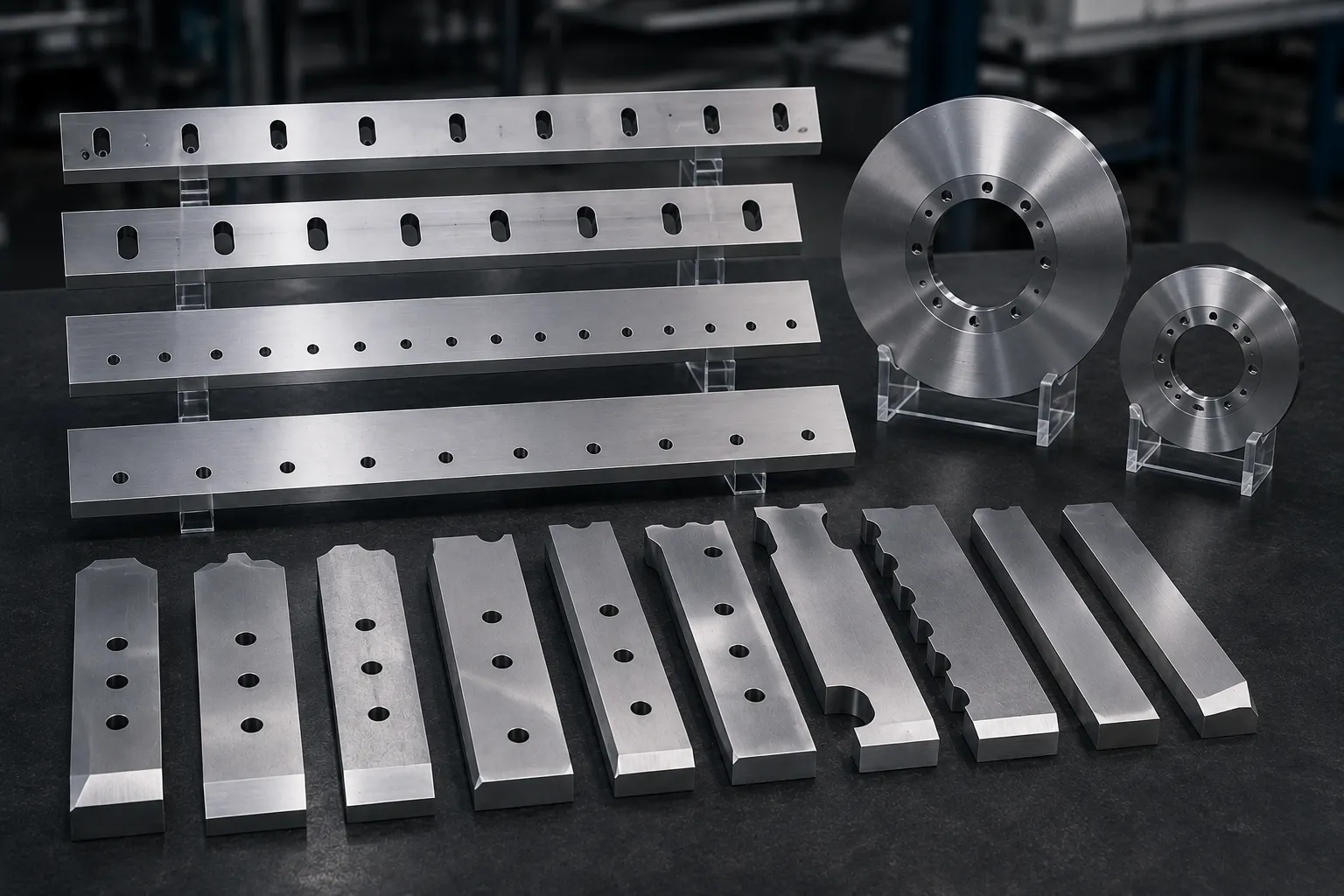
Male Blade Quick Spec
58–65 HRC / 89–92 HRA
±0.001 mm (0.00004 in)
3° to 7° Single/Double
Ultra-Mirror Ground
Material Selection and Steel Grade Standards
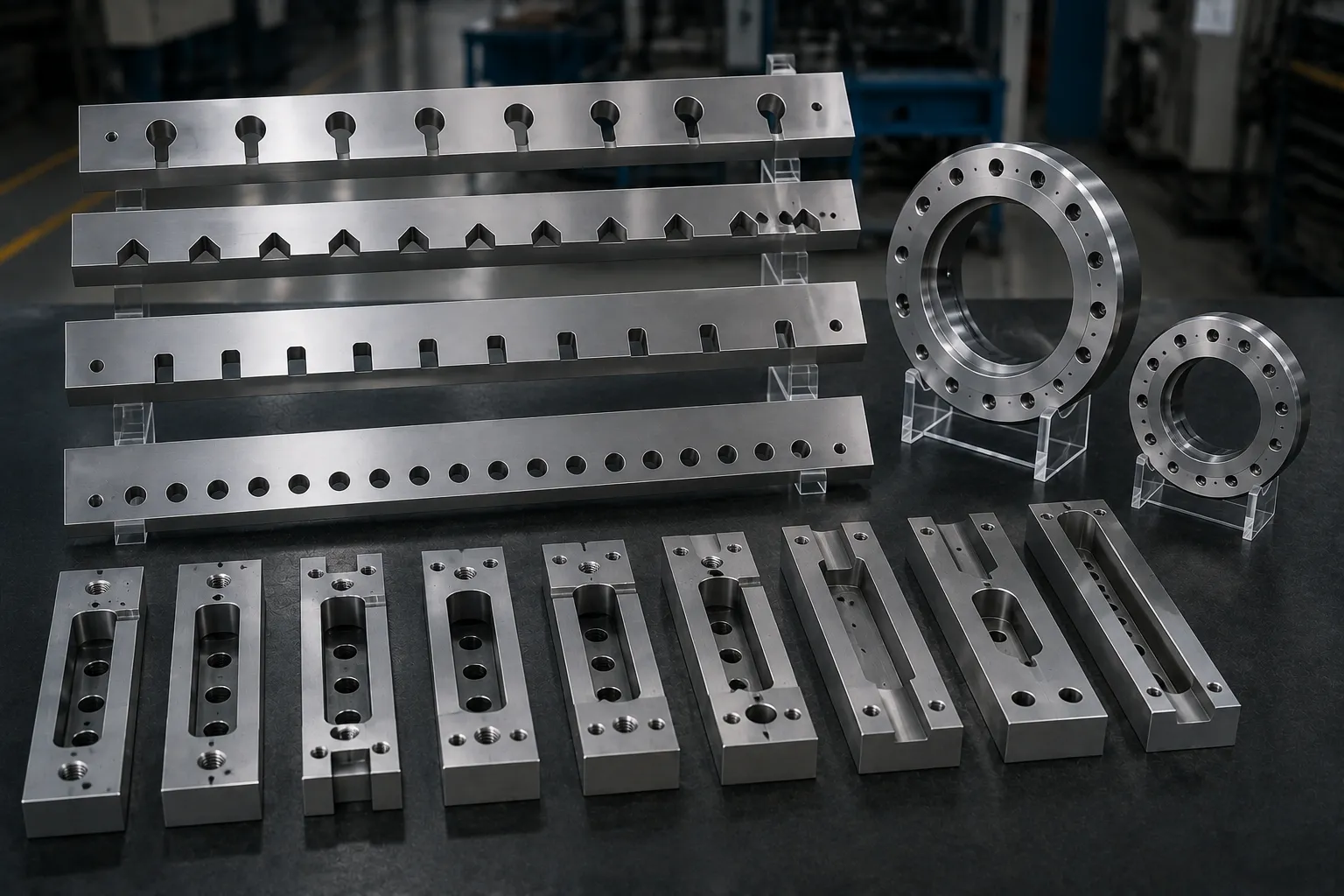
Selecting the correct raw material for top and bottom shear knives directly impacts cutting performance, edge longevity, and maintenance intervals. Sharkcutting utilizes certified premium tool steels and micro-grain tungsten carbide alloys. Every blade undergoes vacuum heat treatment and multi-stage sub-zero cryogenic processing to eliminate internal stress and guarantee long-term dimensional stability.
D2 / SKD-11 Tool Steel
High-carbon, high-chromium air-hardening tool steel offering excellent abrasion resistance and cost efficiency for standard slitting applications.
M2 / SKH-51 HSS
Molybdenum-type high-speed steel combining superior toughness with thermal stability, ideal for high-speed flexible film converting.
Powder Metallurgy Steel
Ultra-homogeneous micro-carbide structure that delivers exceptional wear resistance and edge toughness against micro-chipping under high web tension.
Tungsten Carbide
Sintered tungsten carbide featuring extreme hardness (89–92 HRA) to provide 5x to 10x extended service life when slitting highly abrasive materials.
Technical Specifications for Slitter Tooling
| Specification Parameter | Top Shear Knife (Male) | Bottom Shear Knife (Female) | Manufacturing Tolerance |
|---|---|---|---|
| Outer Diameter Range | 50 mm to 300 mm (2.0" to 12.0") | 60 mm to 350 mm (2.36" to 13.78") | +0.000 / -0.005 mm |
| Inner Bore Diameter | 15 mm to 150 mm | 20 mm to 200 mm | H6 / H7 Precision Shaft Fit |
| Thickness Range | 1.0 mm to 25.0 mm | 10.0 mm to 50.0 mm | ±0.001 mm |
| Hardness Rating | 60 to 65 HRC Steel / 89 to 92 HRA Carbide | 58 to 64 HRC Steel / 88 to 91 HRA Carbide | ±1 HRC Uniformity |
| Axial & Radial Runout | Below 0.002 mm TIR | Below 0.003 mm TIR | 100% Inspection Certified |
| Edge Surface Roughness | Ra 0.1 µm Ultra-Mirror | Ra 0.2 µm Fine Precision Ground | ISO Surface Grade Compliance |
Need Help Selecting the Right Shear Slitting Knives?
Send us your blade dimensions, machine model, substrate, or existing drawings. Shark Cutting engineers will evaluate blade geometry, material grade, hardness, and operating clearance to recommend the right top and bottom shear knife pairing.
Factory-direct engineering support · No obligation
Precision Shear Slitting Dynamics & Core Technical Advantages
High-speed web converting lines demand absolute shearing accuracy. Shark Cutting top male and bottom female shear slitting knives operate on true scissor-cut principles, combining calibrated blade shear angles with precise side cant pressure to deliver clean, burr-free edges across paper, film, foil, and nonwoven materials.
Engineered Scissor-Cut Action
Shear DynamicsUnlike razor slitting that stretches thin webs or score slitting that crushes material fibers against an anvil, scissor-cut slitting relies on a continuous single-point intersection between rotating top male blades and bottom female knives.
Burr-Free Edges & Low Dust Generation
Micro-ground cutting edges on web converting knives perform progressive shear slitting without tearing or pulling fibers, yielding pristine slit roll profiles.
- Eliminates microscopic burrs, edge fraying, and stringing on multi-layer films
- Drastically reduces airborne slitting dust to keep converting machinery clean
Reduced Friction & Thermal Stability
Precision-engineered blade shear angles reduce contact friction at high line speeds, mitigating heat accumulation and protecting heat-sensitive polymers.
- Prevents edge welding or thermal fusion on delicate BOPP, PET, and PE films
- Extends continuous production runs between scheduled blade regrinding cycles
Versatility Across Complex Substrates
Shark Cutting shear blades maintain exact shearing alignment across varying web thicknesses, abrasive coatings, and high-tension material runs.
- Handles paperboards, battery separator films, copper/aluminum foils, and nonwovens
- Preserves structural integrity and layer adhesion in multi-ply web laminates
Slitting Method Performance Comparison
Selecting the right slitting technology directly impacts edge quality, dust levels, and overall knife lifespan. Here is how scissor-cut shear slitting compares against other web converting methods.
| Slitting Method | Cutting Principle | Slit Edge Quality | Dust & Particle Level | Blade Service Life |
|---|---|---|---|---|
| Scissor-Cut Slitting (Shear) | Progressive shear action between male & female blades | Pristine, burr-free & straight | Minimal / Near zero | Maximum (Regrindable) |
| Razor Slitting | Single-point blade penetration through moving web | Susceptible to stretch & edge tear | Moderate to high | Short (Disposable) |
| Score / Crush Slitting | High-pressure radial crushing against hardened anvil | Rough, compressed bevel edge | High particulate level | Moderate |
Key Parameters for Optimal Shear Slitting
Blade Overlap Setting
Optimizing engagement depth between male and female knives prevents edge chipping while ensuring complete web severance.
Blade Shear Angle
Setting the precise cant angle controls the contact shear point, eliminating web dragging, edge curling, and excessive knife wear.
Side Cant Pressure
Maintaining calibrated axial spring or pneumatic side pressure ensures clean shearing force without generating excess frictional heat.
Materials Science and Heat Treatment Engineering
Shark Cutting shear slitting knives are precision-engineered from premium global tool steels and micro-grain tungsten carbide alloys. Every top and bottom blade undergoes computer-controlled vacuum heat treatment and deep cryogenic stress relief to deliver exceptional dimensional stability, superior edge retention, and extended operational lifespan across high-speed web converting lines.
Precision Thermal Processing for Maximum Blade Durability
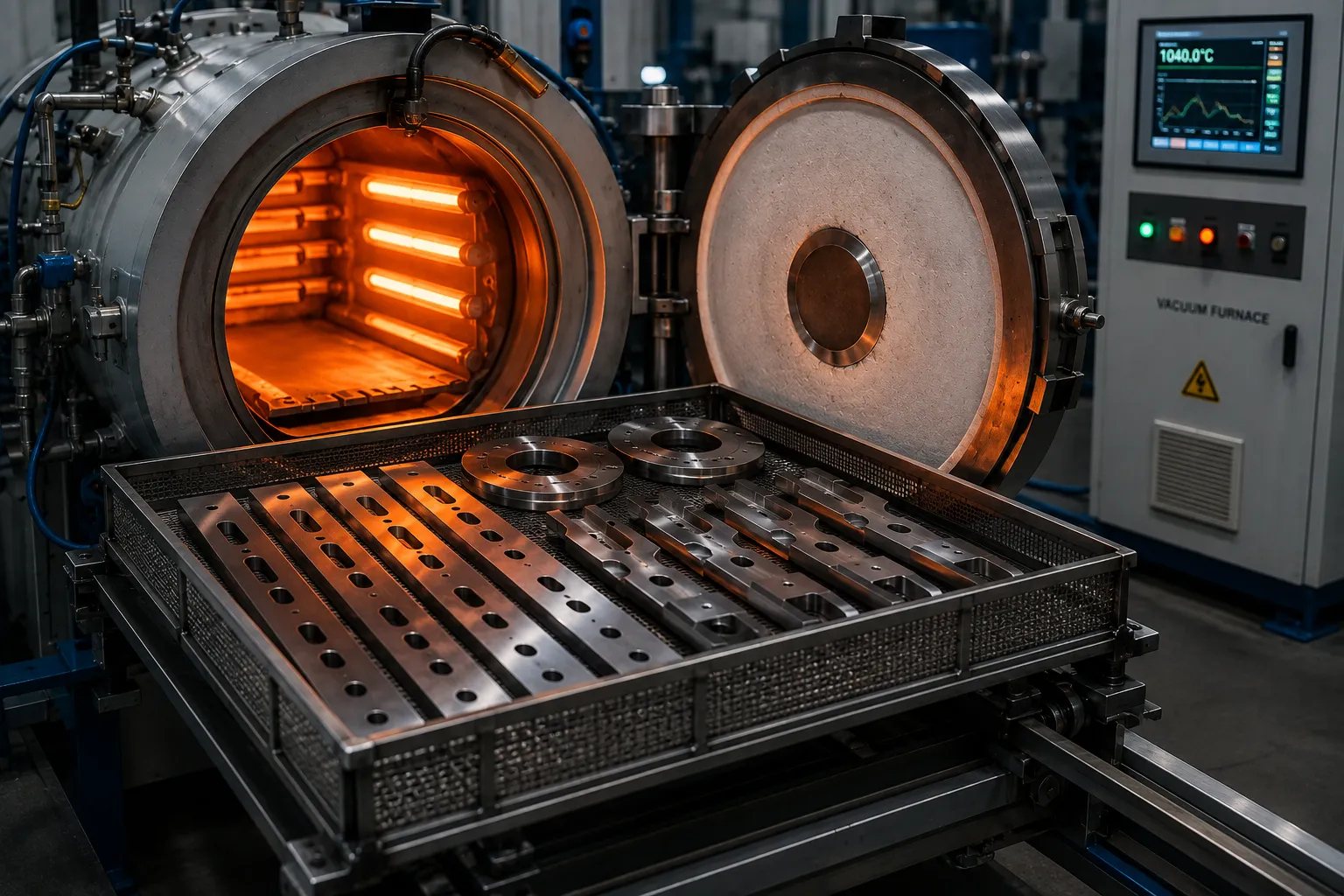
The operational lifespan and cutting precision of high-performance circular slitter knives depend directly on the microstructural grain distribution established during thermal processing. Conventional heat treatment methods often leave residual internal stresses and inconsistent carbide dispersion, leading to unexpected micro-chipping, rapid edge degradation, and costly production downtime.
At Shark Cutting, we utilize multi-stage vacuum heat treatment integrated with sub-zero cryogenic soaking. This advanced metallurgical process converts unstable retained austenite into uniform tempered martensite, locking in extreme wear resistance while eliminating internal stress. The result is a male and female shear slitting blade set engineered to maintain pristine edge geometry and burr-free slitting performance under demanding web tensions.
High-Performance Blade Materials
D2 / SKD11 Tool Steel
An economical high-carbon, high-chromium cold work steel providing exceptional wear resistance and cost efficiency. Ideal for standard paper converting and non-abrasive packaging materials.
Recommended Application Scenarios
M2 / SKH51 High-Speed Steel
Molybdenum high-speed steel engineered for high toughness, red hardness, and fine-edge retention. Excellent for continuous high-speed slitting of flexible packaging films and nonwoven webs.
Recommended Application Scenarios
Micro-Grain Tungsten Carbide
Ultra-hard sintered tungsten carbide delivering extreme abrasion resistance. Increases shear blade operational life by 5x to 10x when slitting highly abrasive substrates or battery foils.
Recommended Application Scenarios
Vacuum Cryogenic Treatment
Automated vacuum hardening coupled with sub-zero liquid nitrogen soaking. Eliminates residual stress to prevent blade distortion, warping, and micro-fractures under high side-pressure slitting.
Recommended Application Scenarios
Material Performance Comparison Overview
Compare core metallurgical parameters, hardness ratings, and wear resistance profiles across our industrial products to determine the ideal material grade for your shear slitting knives and web converting equipment.
| Material Grade | Hardness Rating | Wear Resistance | Toughness Index | Thermal Stability | Ideal Slitting Substrates |
|---|---|---|---|---|---|
| D2 / SKD11 Tool Steel | 58 to 62 HRC | High | Medium-High | Moderate | Paper, kraft stock, corrugated board, general packaging materials |
| M2 / SKH51 High-Speed Steel | 62 to 65 HRC | Very High | High | High | BOPP, PET films, medical nonwovens, high-speed web converting |
| Solid Tungsten Carbide Alloy | 89 to 92 HRA | Extreme | Medium | Very High | Aluminum foil, battery separator film, highly abrasive coatings |
Industry Applications and Slitting Material Guide
High-performance web converting equipment demands shear slitting knives specifically tailored to the physical characteristics and abrasiveness of each substrate. Sharkcutting manufactures precision male and female shear knives engineered for extreme wear resistance, continuous axial runout control, and burr-free slitting performance. Explore our specialized converting blade solutions developed for paper converting, film processing, technical nonwovens, and high-tensile packaging foil applications.
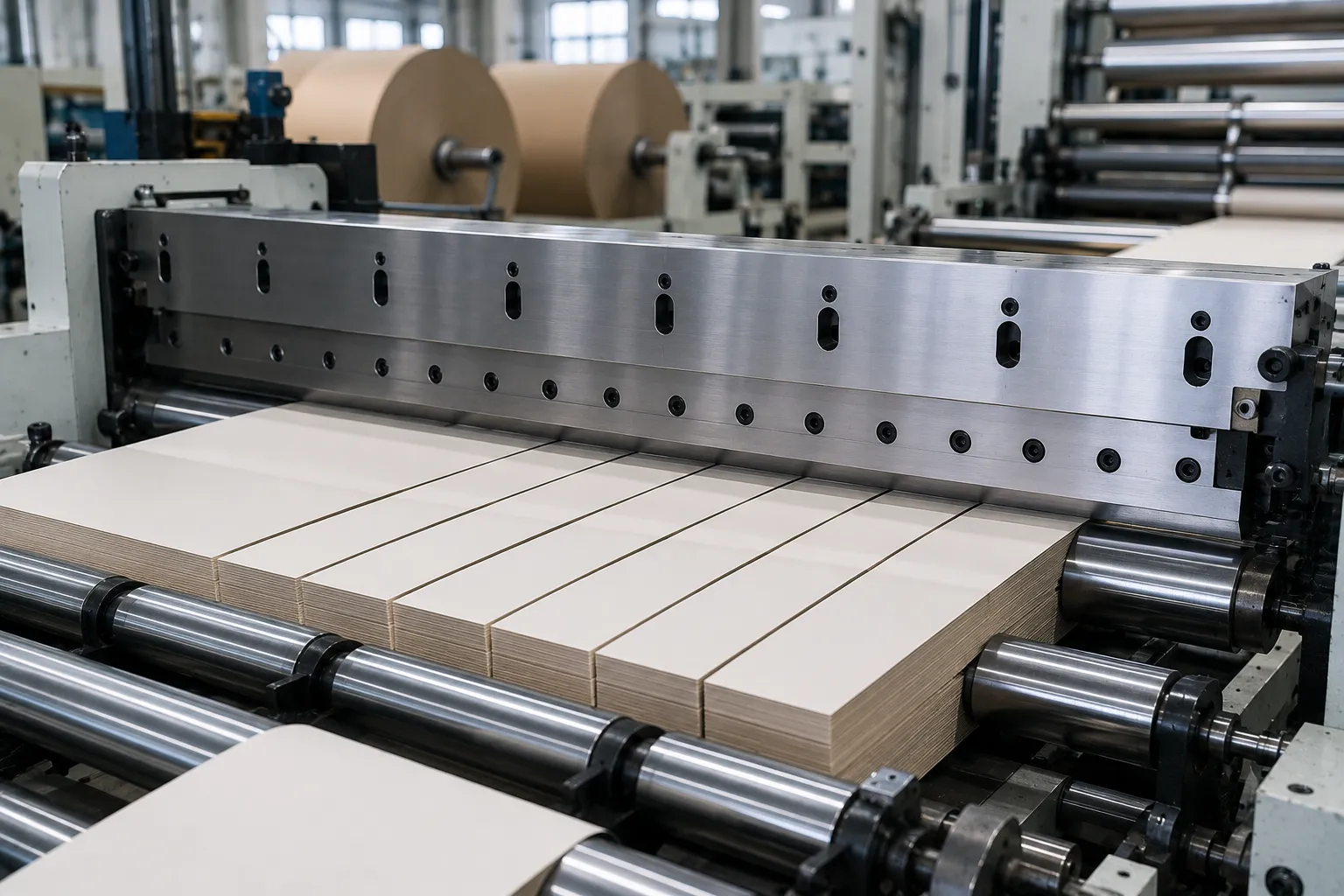
Paper Converting and Board Trimming
High-speed paper converting machinery subjects cutting tools to continuous friction and severe filler abrasion from calcium carbonate and titanium dioxide. Sharkcutting manufactures precision male and female shear slitting knives engineered to prevent edge sloughing, fiber pullout, and airborne paper dust. By utilizing high-vanadium D2 tool steel and M2 high-speed steel, our shear knives maintain sharp cutting geometry and concentricity across high-volume slitting runs.
- Cultural paper, offset printing stock, and release liners
- Heavyweight unbleached kraft paper and linerboard
- Coated folding boxboard and solid bleached sulfate (SBS)
- Multi-ply corrugated board and fluted packaging medium
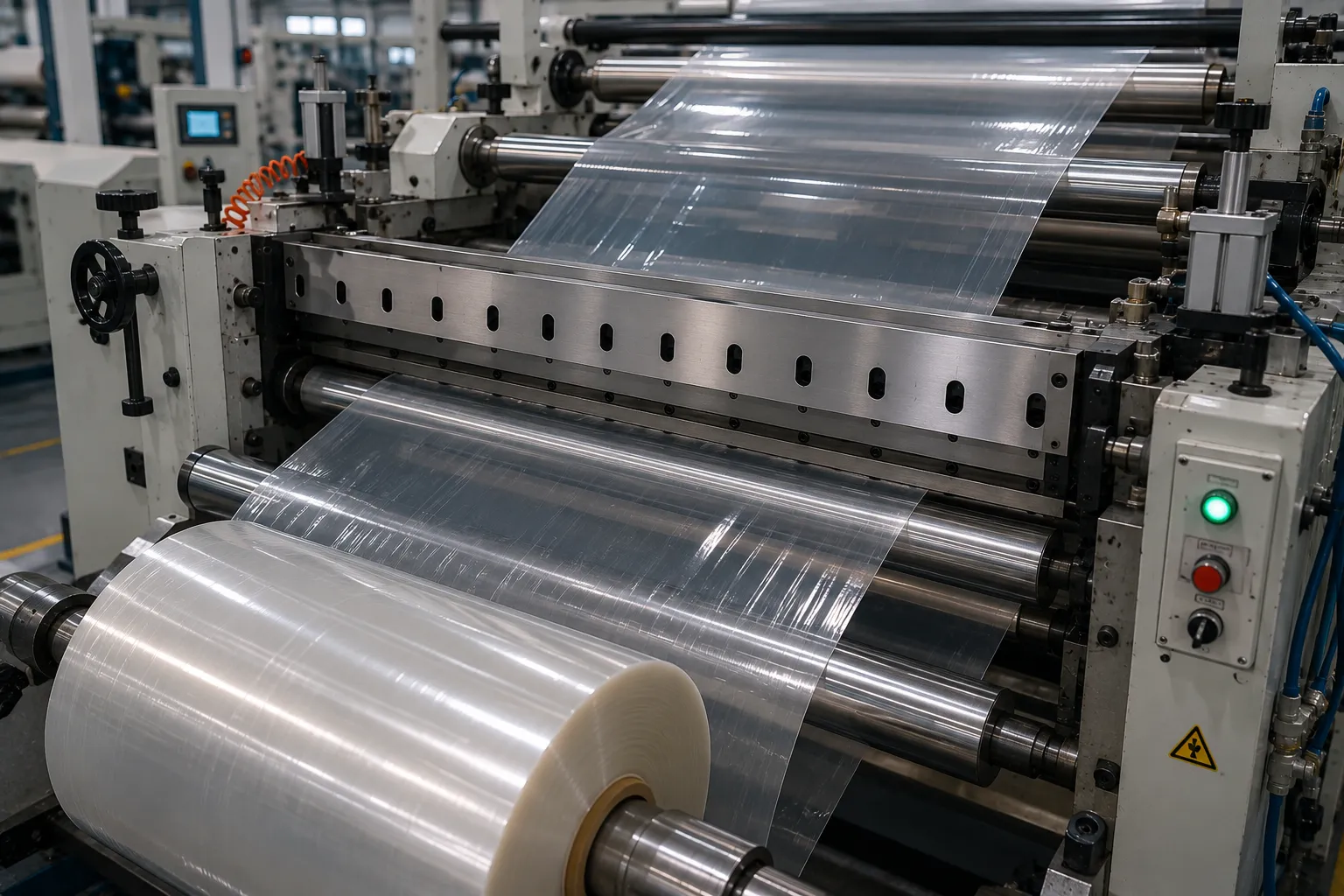
Polymer Film and Sheet Processing
Slitting delicate polymer films without stretching, edge necking, or heat generation demands exact scissor-cut shear slitting mechanics. Sharkcutting top and bottom shear blades deliver dimensional tolerances within ±0.001 mm and mirror-polished edge finishes. Designed specifically for film processing lines handling BOPP, PET, and PE, our converting blade solutions eliminate micro-burrs and edge lip formation, ensuring uniform web tension during high-speed rewinding operations.
- Biaxially oriented polypropylene (BOPP) & CPP films
- Polyethylene terephthalate (PET) flexible packaging films
- Polyethylene (LDPE/LLDPE/HDPE) stretch and shrink films
- Multilayer co-extruded barrier films and EVOH structures
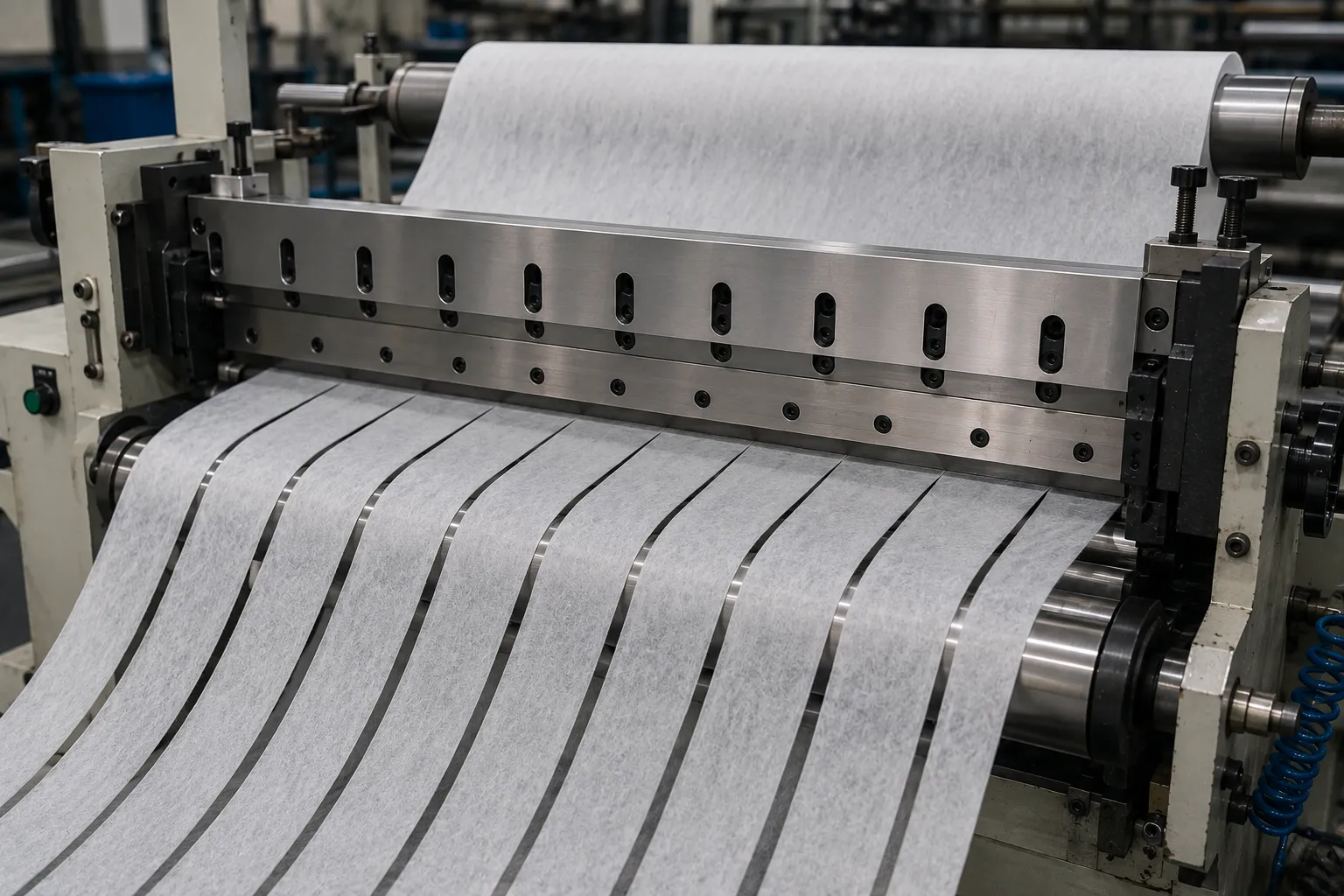
Nonwoven and Textile Shearing
Shearing synthetic nonwoven rolls requires razor-sharp cutting geometry and ultra-smooth blade surfaces to prevent fiber snagging, web crushing, or localized thermal fusing. Sharkcutting nonwoven cutting industrial machine knives are crafted from micro-grain tungsten carbide and M2 HSS to deliver long-lasting edge sharpness on high-speed medical, hygiene, and technical textile slitting lines, maintaining clean fiber separation without melting the web edge.
- Spunbond, meltblown, and SMS polypropylene webs
- Surgical gown fabrics and medical protective nonwovens
- Hygiene topsheets and acquisition distribution layers (ADL)
- Technical filtration media, felt, and needle-punched webs
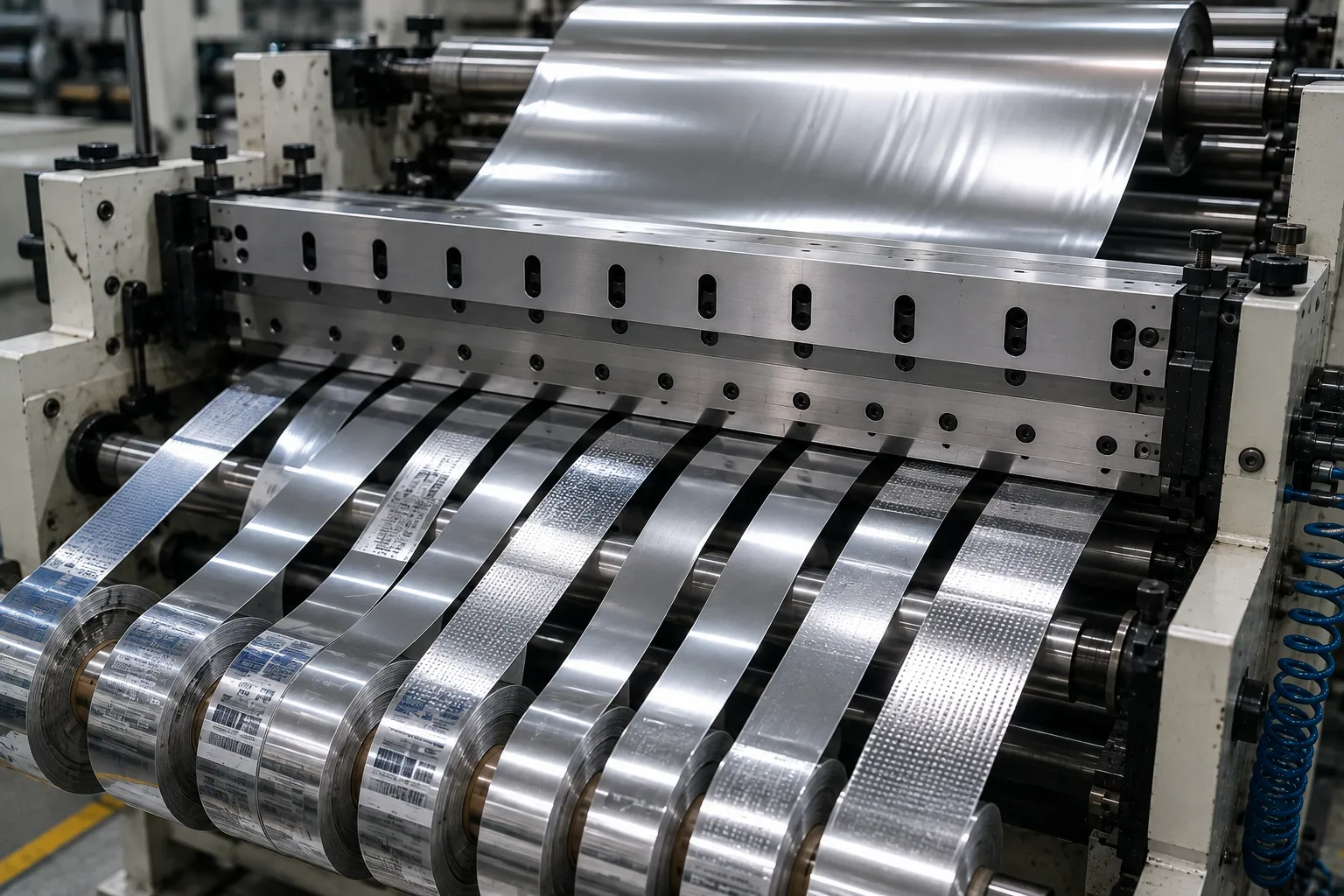
Packaging Foil and Composite Laminates
Aluminum foil and metallic composite structures impose high mechanical stress and surface abrasion on shear slitter blades. Sharkcutting manufactures solid tungsten carbide and cryogenically treated tool steel shear blades engineered specifically for paper film foil shear slitting. Our male and female blade configurations suppress metallic dust, prevent micro-cracking along the slit edge, and deliver burr-free edge quality across flexible packaging and battery foil conversion.
- Dead-soft and hard-temper aluminum packaging foil
- Metallized film substrates and foil-paper laminates
- Pharmaceutical blister barrier foils and pouch stocks
- Lithium battery current collector copper and aluminum foils
Substrate Compatibility and Blade Selection Matrix
Match your web converting material specifications with optimized metallurgical grades and edge geometry recommendations.
| Application Industry | Target Substrates | Recommended Blade Metallurgy | Key Edge Finish Feature |
|---|---|---|---|
| Paper Converting | Kraft Paper, Fine Cultural Stock, Board | D2 (SKD-11) Tool Steel / M2 HSS | Polished Shear Bevel for Dust Reduction |
| Film Processing | BOPP, PET, PE, Stretch & Barrier Films | M2 HSS / Powder Metallurgy Steel | Ultra-fine Mirror Honed Double Bevel |
| Nonwovens & Textiles | Spunbond, Meltblown, Surgical Fabrics | Micro-Grain Tungsten Carbide / M2 HSS | Anti-Fusing Low-Friction Polish |
| Packaging & Foils | Aluminum Foil, Barrier Laminates, Collector Foil | Solid Tungsten Carbide Grades | Precision Micro-Ground Radius Edge |
Customized Engineering for High Speed Converting Lines
Sharkcutting provides custom converting blade solutions for packaging manufacturing, film processing, paper converting, and high-precision foil converting lines worldwide. Our engineering team collaborates directly with plant managers and slitting operators to specify custom male and female shear slitting knife geometries that resolve edge wear, excessive dust generation, and material deformation.
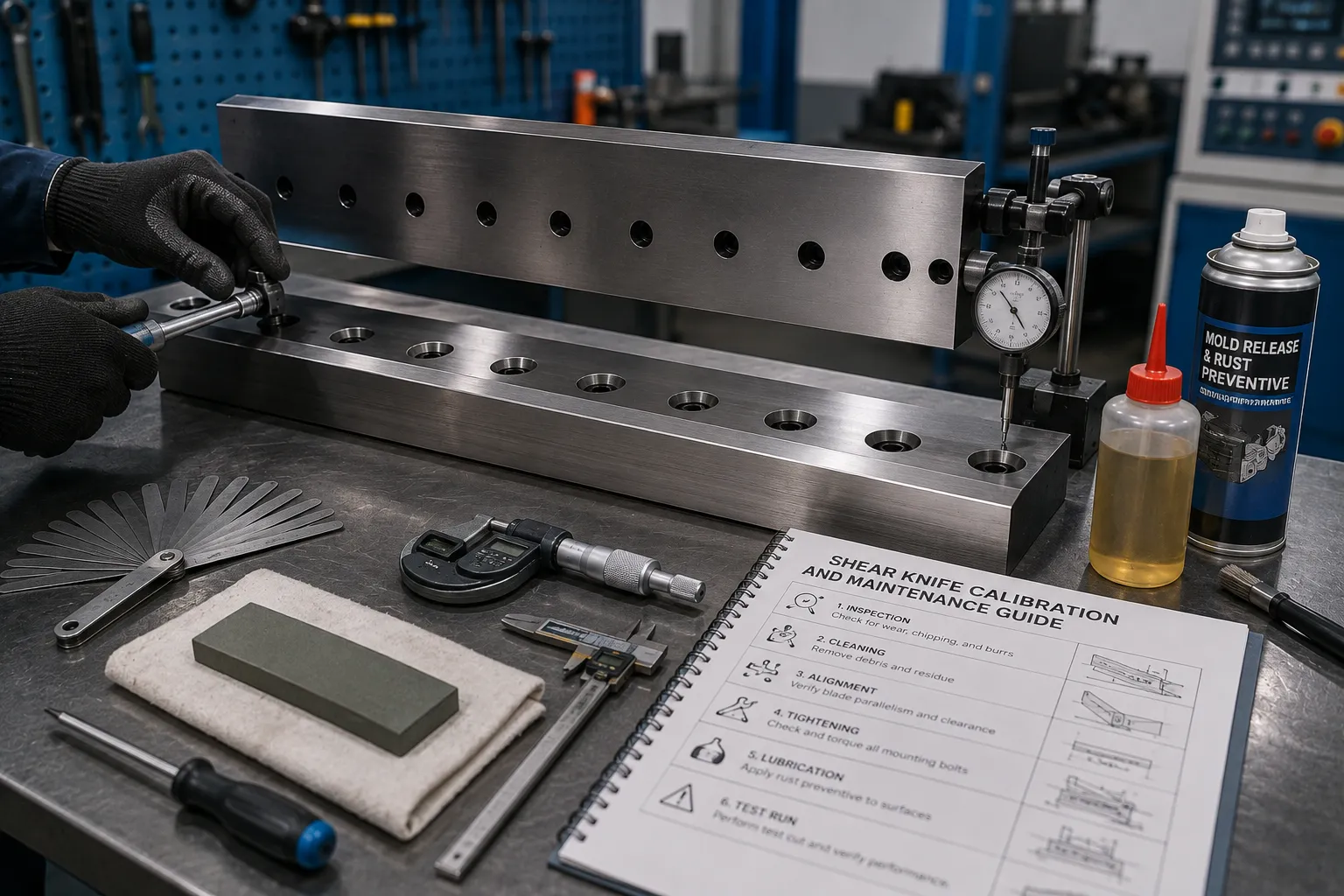
Shear Knife Calibration and Maintenance Guide
Systematic setup procedures, precise angle adjustments, and scheduled regrinding ensure long service life, clean cut edges, and minimal downtime across automated converting lines.
Precision Overlap Setting
Achieving the proper blade overlap setting prevents structural edge chipping, frictional heat buildup, and premature blade wear. Excessive overlap dulls the cutting edge prematurely, while insufficient overlap leaves uncut fibers or stringers along the slit line.
- Thin Film and Foil Applications: Maintain a radial overlap depth between 0.010 in (0.25 mm) and 0.020 in (0.50 mm) for clean, burr-free slitting.
- Paper and Heavy Board Stock: Set a radial overlap depth between 0.025 in (0.63 mm) and 0.040 in (1.00 mm) to handle higher web tensions.
Side Pressure Optimization
Calibrating the lateral contact force between top male blades and bottom female knives ensures a true scissor-cut action. Proper side pressure eliminates slitting burrs and prevents web stretching during continuous processing.
- Pneumatic Blade Holders: Regulate operational air pressure between 15 PSI and 30 PSI based on web tension and material thickness.
- Cant Angle Alignment: Maintain a recommended 0.5° to 1.5° blade shear angle to balance contact pressure and prevent edge chipping.
Concentricity and Runout Inspection
Inspect radial and axial runout using dial indicators during initial installation. Excessive runout creates uneven point loading that damages cutting edges and compromises slit edge consistency.
- Axial Tolerance Limit: Keep lateral wobble within ±0.002 mm (±0.00008 in) for high-speed flexible packaging converting.
- Shaft & Arbor Maintenance: Clean mounting arbors and pneumatic locking rings routinely to preserve axial alignment.
Factory Sharpening Service and Regrinding
Prevent complete edge degradation with planned reconditioning. OEM sharpening service solutions from Shark Cutting restore original bevel angles, mirror surface finishes, and precise geometries to guarantee peak operational efficiency for all high-performance circular slitter knives.
Expert Field Advice
Proactive shear knife maintenance extends blade lifespan by up to 300%. Always verify pneumatic holder pressures and clean mounting surfaces during substrate roll changeovers to prevent accidental lateral shock.
Inspection Routine: Check top male and bottom female shear knives for edge wear after every 48 operating hours.
Edge Cleaning & Care: Use non-corrosive solvents to clear adhesive and coating buildup from film slitting blades.
Troubleshooting Edge Quality
Symptom: Excessive Slit Dust
Cause: Dull knife edge or insufficient side pressure. Re-calibrate lateral force or schedule precision regrinding.
Symptom: Intermittent Edge Burrs
Cause: Shaft runout or incorrect blade overlap setting. Check axial concentricity on the mounting arbor.
Symptom: Premature Edge Chipping
Cause: Excessive pneumatic side force or steep shear angle. Reduce lateral pressure and check holder alignment immediately.
Original Factory Support & Service
Shark Cutting delivers comprehensive technical guidance, factory-precision regrinding, and high-durability knife holder accessories for premium slitting knives to maintain optimal slitting line performance.
Regrinding · Holders · Technical Assistance
Frequently Asked Questions About Shear Slitting Knives
Find authoritative answers regarding shear slitting knife material selection, blade lifespan optimization, custom OEM manufacturing, and slitting methodology comparisons. Shark Cutting provides expert technical guidance across our full range of high-performance slitting knives to maximize converting efficiency, eliminate slitting dust, and deliver clean, burr-free edge quality across high-speed industrial converting lines.
How do I select the right material to maximize shear slitting blade lifespan?
Selecting the optimal metallurgical grade for top and bottom shear knives depends directly on substrate density, line speed, web tension, and abrasive filler content. Matching the proper tool steel or carbide grade to your production environment extends shear slitting blade lifespan and minimizes costly machine downtime.
High-carbon, high-chromium alloy offering exceptional wear resistance. An economical choice for standard paper converting, cardboard, and non-abrasive plastic films.
Exceptional edge toughness under dynamic stress. Ideal for high-speed flexible packaging, dense nonwovens, and high-tension laminate slitting.
Premium ultra-hard grade (HRA 89–92) extending working blade lifespan by 5 to 10 times. Best suited for abrasive battery foil, thin film, and multi-shift continuous production.
Shark Cutting utilizes advanced vacuum heat treatment, sub-zero cryogenic stress relief, and precision mirror-finish edge grinding across our premium industrial machine knives to ensure every blade delivers maximum hardness without micro-chipping.
Can Shark Cutting manufacture custom shear knives according to our OEM drawings or samples?
Yes. Shark Cutting specializes in custom shear knives OEM fabrication tailored to exact machinery specifications, equipment retrofits, and specialized converting requirements. Our engineering facility manufactures custom male and female slitter blades with exceptional dimensional accuracy.
- Drawing & CAD Support: We work directly with vector PDF, STEP, DWG, DXF, and IGES CAD files for rapid engineering evaluation.
- Ultra-Tight Tolerances: Precision grinding holds tolerances within ±0.001 mm for inner bore diameter, outer diameter, thickness, and lateral runout.
- Custom Geometric Styles: Single or double-bevel male top blades, multi-groove female bottom rings, pneumatic locking collars, and custom keyways.
- Reverse Engineering: Send worn physical blade samples to our lab for 3D optical scanning and complete reverse engineering to original OEM specifications.
Every custom knife undergoes rigorous multi-axis optical measurement and dynamic balancing before shipment to guarantee flawless drop-in replacement on domestic and imported slitting machines.
What is the difference between shear slitting versus razor and score slitting?
Understanding shear vs razor slitting mechanics helps converting engineers choose the ideal slitting station setup. Shear slitting utilizes a scissor-like cutting action between overlapping top male and bottom female knives, making it the most versatile and cleanest method for demanding industrial substrates.
| Slitting Method | Working Mechanism | Key Advantages | Recommended Substrates |
|---|---|---|---|
| Shear Slitting | Rotary top male blade overlapping bottom female knife under controlled lateral pressure | Burr-free clean edges, zero slitting dust, low heat buildup, long tool life | Paper, aluminum foil, flexible films, multi-layer laminates, nonwovens |
| Razor Slitting | Stationary or vibrating razor blade penetrating an unsupported web or grooved roll | Low initial tooling cost, quick blade changeovers | Thin unoriented plastic films, lightweight PE, BOPP (using specialized razor slitting knives) |
| Score / Crush Slitting | Hardened radius wheel pressing web against a hardened steel anvil roll | Fast setup times, simple knife holder adjustment | Heavy nonwovens, rubber, pressure-sensitive tape, coarse paper |
Compared to other methods, shear slitting maintains superior web cross-section structural integrity, preventing edge-stretching, fraying, or bead formation at high operating speeds.
What are your standard production lead times and international shipping options?
Shark Cutting maintains a comprehensive stock of standard-sized male top blades, female bottom rings, quick-change locking collars, and precision spacers to enable fast order dispatch.
Dispatched within 24 to 48 hours from order confirmation for immediate replacement needs.
Delivered within 2 to 3 weeks depending on material grade, special coatings, and quantity. Emergency breakdown fast-track options are available.
All international shipments are sealed in anti-corrosion VCI protective packaging, secured in heavy-duty export wooden crates, and shipped via express air freight or ocean freight. Full material test certificates and dimensional inspection reports are included with every delivery.
How do blade overlap settings, side pressure, and sharpening services impact tool performance?
Proper mechanical setup prevents premature blade dulling, edge micro-chipping, and excessive friction heat. Correctly calibrating your blade overlap setting and lateral side pressure guarantees clean cutting action and extends overall blade longevity.
- Blade Overlap Setting: Typically calibrated between 0.5 mm and 1.5 mm depending on material thickness and web stiffness to prevent blade binding.
- Side Pressure Calibration: Adjust pneumatic or spring-loaded side pressure to the minimum force required for clean shearing, reducing edge friction and thermal wear.
- Axial Runout & Concentricity: Maintain shaft runout and bore clearance within 0.002 mm to prevent wobble during high-speed rotation.
- Professional Sharpening Service: Take advantage of Shark Cutting's precision regrinding service, which restores original micro-geometry, bevel angles, and mirror-polished cutting edges.
Utilizing factory CNC regrinding service allows you to safely sharpen blades through multiple lifecycles, maintaining consistent cut quality while dramatically reducing tooling operating costs.
Need Custom Knife Engineering or a Fast OEM Quote?
Leverage Shark Cutting's advanced manufacturing capabilities for rapid response to your global production needs. Send us your technical drawings or equipment parameters for a complimentary engineering review.
Ready to Maximize Your Slitting Line Productivity?
Send us your knife dimensions, equipment specifications, OEM part numbers, or current cutting challenges. Shark Cutting engineers will evaluate your application and recommend the optimal blade geometry, material grade, and tolerance configuration for reliable, burr-free production.
CAD drawings, OEM references and technical specifications accepted.
Precision Manufacturing
Tight dimensional & runout control
24-Hour Technical Response
Fast application & quotation review
Confidential Engineering Review
CAD & OEM specifications supported