
Industrial Knives & High-Precision Cutting Blades
Shark Cutting is a premier industrial blade manufacturer delivering high-durability machine knives, slitting knives, and custom tooling engineered for extreme wear resistance, micro-tolerances, and maximum operational uptime.
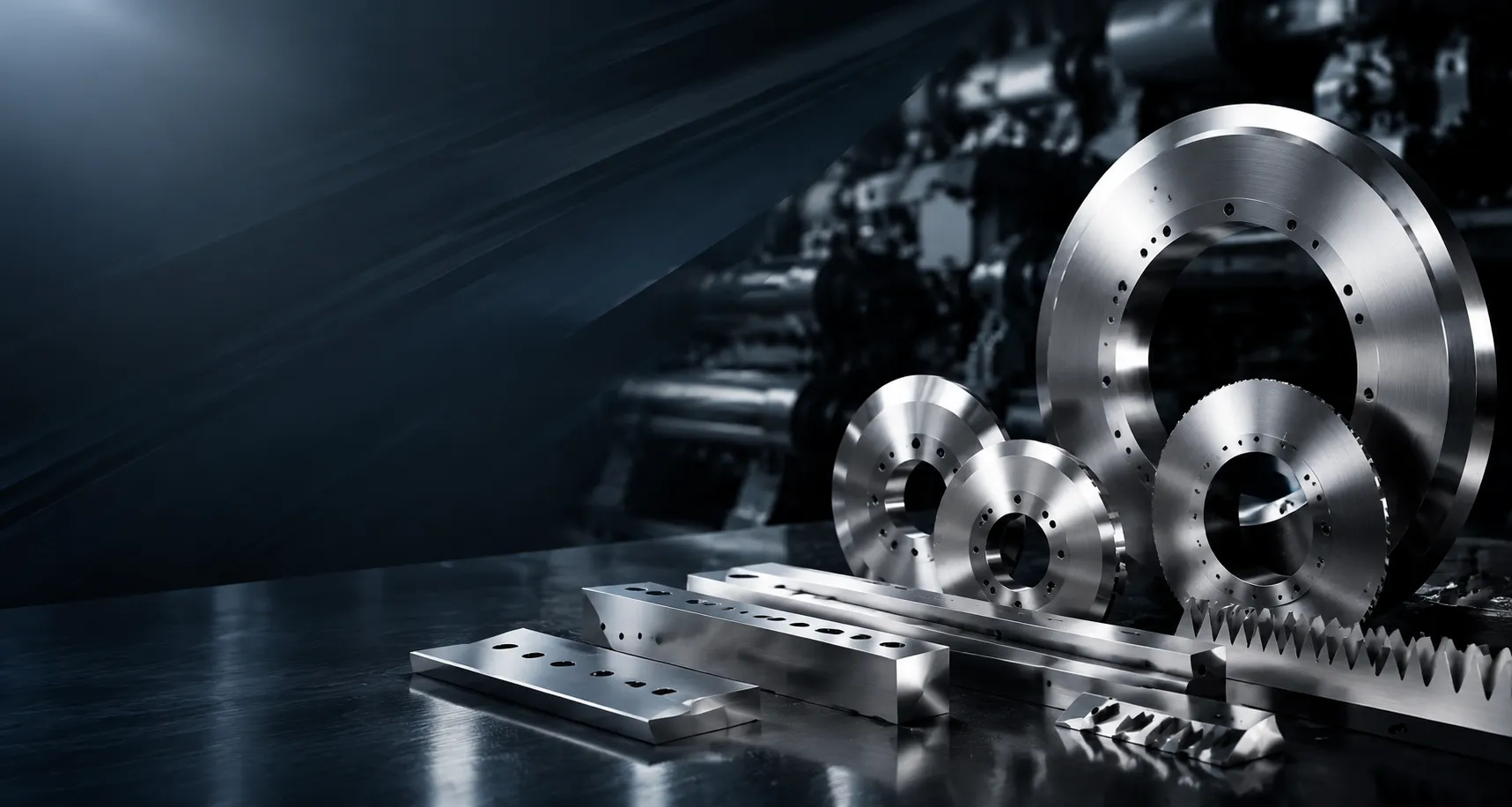
Precision Metallurgy
Vacuum heat treatment and multi-axis CNC grinding for superior edge life
Core Industrial Machine Knives & Cutting Blades
Shark Cutting manufactures high-precision slitting knives, industrial machine knives, recycling blades, and shear blades. Every blade series undergoes fine CNC grinding and vacuum heat treatment processes to deliver superior wear resistance and prolonged operational lifespan.
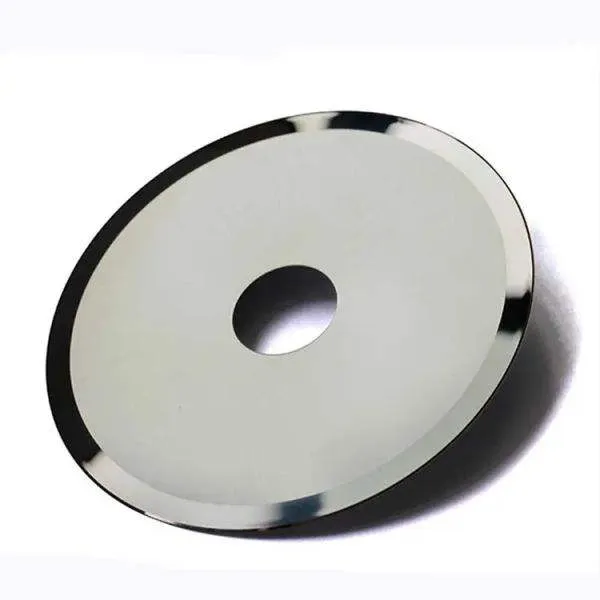
Slitting Knives
Precision slitting knives and circular slitter knives engineered for continuous web converting of paper, foil, film, and flexible packaging materials. We also offer specialized shear slitting knives for multi-layer web setups.
- Paper, foil, film, and non-woven converting
- Ultra-tight dimensional tolerances & mirror finish
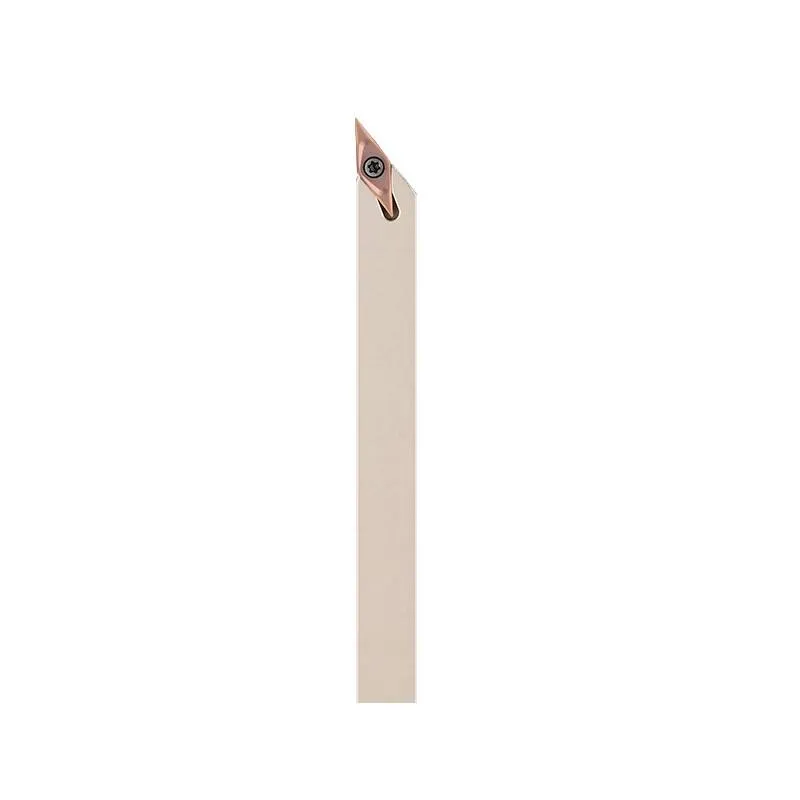
Industrial Machine Knives
Durable straight, dished, and tooth-profile industrial machine knives designed for high-speed packaging machinery, paper converting, and rubber slitting.
- Flexible packaging, tissue, and rubber processing
- Precision-ground bevels for clean cuts and minimal dust
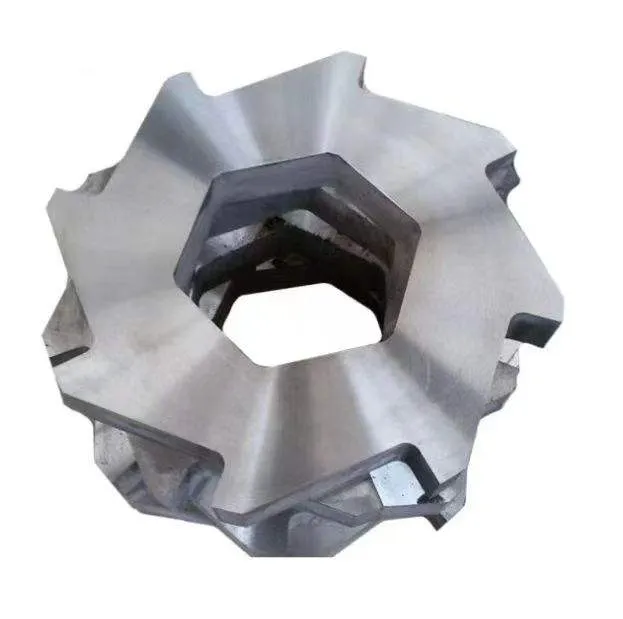
Recycling Blades
Heavy-duty recycling blades including shredder blocks, granulator knives, and pelletizer blades engineered for maximum impact strength and shock resistance.
- Plastics granulation, e-waste processing, and scrap recovery
- High-alloy tool steel for extreme wear resistance
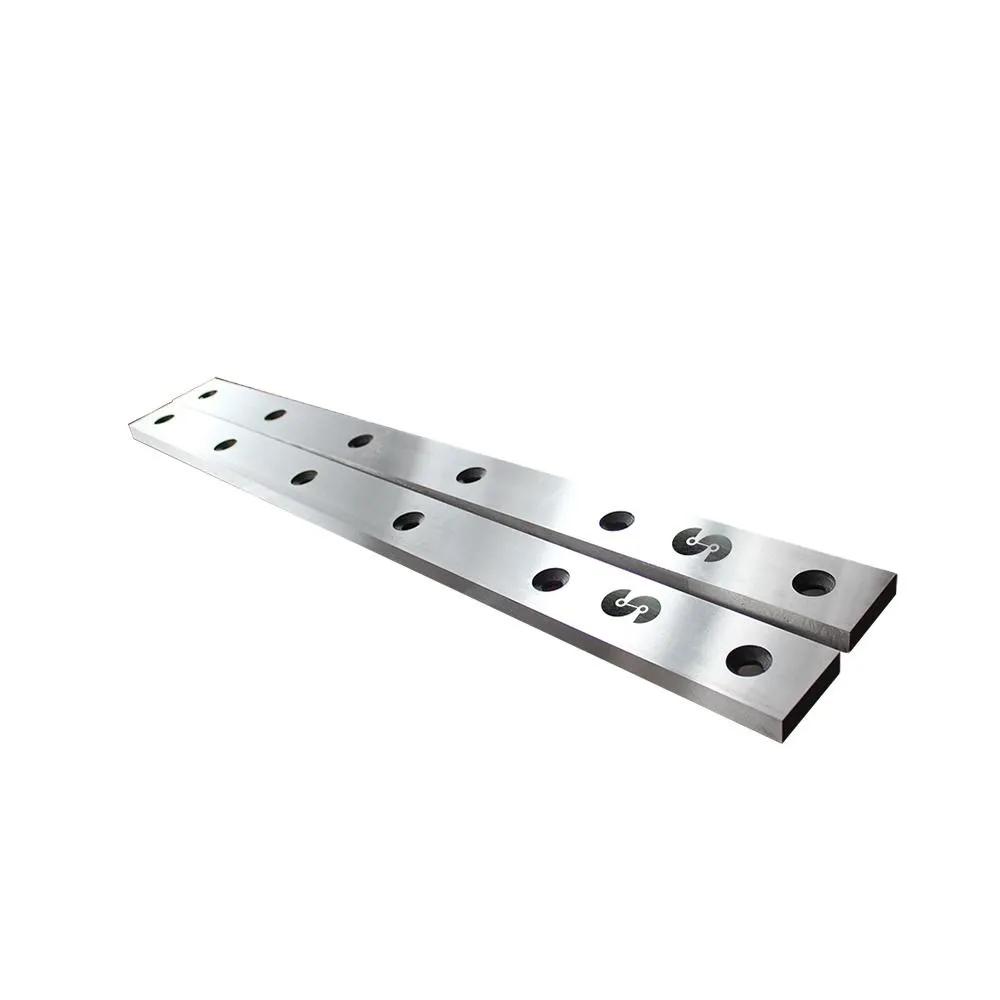
Shear Blades
Industrial shear blades including guillotine shear knives and heavy-duty rotary side trimmers designed to perform under severe mechanical shock loads.
- Structural steel plate, coil slitting, and sheet metal processing
- Deep-hardened reversible edges for double cutting life
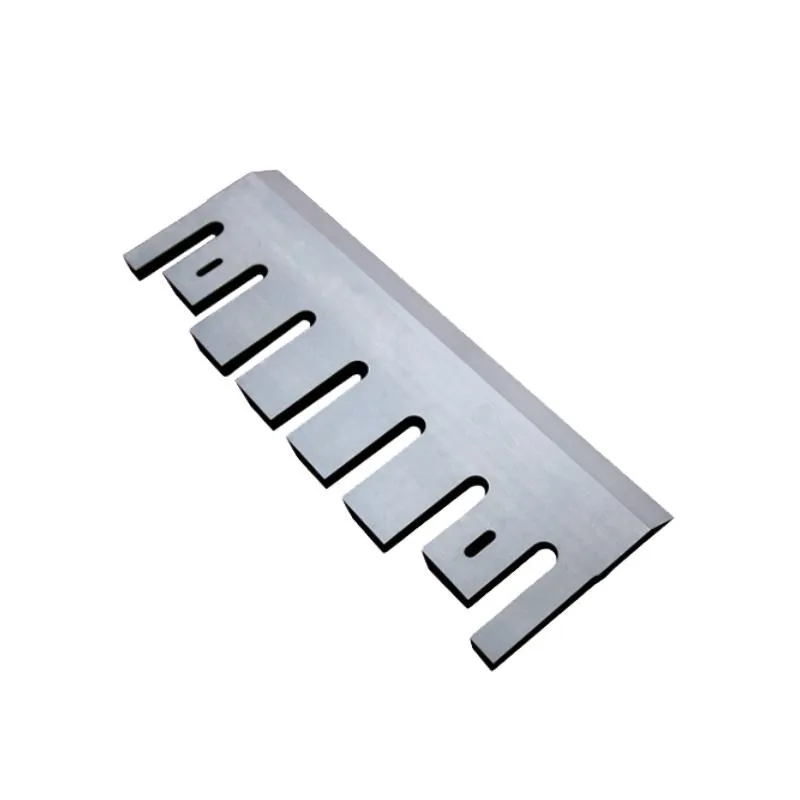
Custom Industrial Knives
Custom industrial knives manufactured to exact OEM engineering drawings, non-standard mechanical geometries, and proprietary alloy specifications.
- Reverse-engineered replacement tooling & OEM machinery
- Custom vacuum heat treating and protective surface coatings
Shark Cutting Technical Assurance
Our five core blade lines feature precision micro-grinding and controlled vacuum heat treatment to guarantee prolonged cutting performance and consistent precision.
Industrial Blade Selection Guide
Matching the correct metallurgy and blade geometry to your converting or cutting machinery is essential for eliminating unscheduled downtime, preventing premature edge micro-chipping, and extending tool operational lifespan. Shark Cutting metallurgists combine advanced material testing with real-world field data to help procurement teams and plant engineers specify precision industrial blade materials optimized for demanding production environments.
Core Selection Parameters
Substrate Physical Properties
Evaluating the hardness, abrasive index, and tensile strength of your material dictates the optimal edge geometry and tool alloy. High-abrasion flexible films require specialized sub-micron carbide slitting knives, while multi-layer corrugated board requires maximum impact shock resistance.
- Abrasivity Assessment: Highly abrasive compounds accelerate cutting edge friction wear.
- Tensile Resistance: Substrate density determines necessary rake angle and blade thickness.
- Chemical Exposure: Informs stainless steel selection or protective anti-corrosion PVD coatings.
Dynamic Operational Velocity
Continuous high-speed slitting lines generate significant friction and thermal stress at the cutting point. Selecting industrial machine knives with superior hot hardness and low thermal expansion prevents micro-cracking and loss of hardness during continuous high-velocity production runs.
- Thermal Dissipation: High-speed steel alloys maintain hardness at elevated operating temperatures.
- Vibration Control: Strict runout tolerances eliminate chatter marks along slitted material edges.
- Lubrication Profile: Tailored metallurgy ensures long life in wet, dry, or lubricated cutting lines.
Wear Resistance versus Toughness
Selecting industrial knives requires balancing material hardness for edge retention against toughness for impact strength. Ultra-hard solid tungsten carbide delivers maximum wear life but demands rigid equipment setups to avoid chipping under heavy mechanical vibration.
- Impact Load Capacity: Heavy recycling shredder knives demand shock-resistant steel grades.
- Edge Sharpness Retention: Premium alloy tool steels maintain razor sharpness through millions of cuts.
- Cost-per-Cut ROI: Optimizing steel grade lowers long-term maintenance and re-grinding expenses.
Blade Material Performance Matrix
Compare mechanical properties, hardness thresholds, and recommended industrial applications across standard tool steel and tungsten carbide grades.
| Material Grade | Hardness Range | Toughness Rating | Wear Resistance | Primary Applications |
|---|---|---|---|---|
| D2 Tool Steel (1.2379) | 58 to 62 HRC | Moderate to High | Good | General paper slitting, heavy shear blades, plastic film converting |
| M2 High Speed Steel (1.3343) | 62 to 66 HRC | Moderate | Very High | High-speed rotary slitting knives, continuous packaging lines, rubber slitting |
| Tungsten Carbide (Micro-Grain) | 88 to 92 HRA | Moderate to Low | Extreme | Carbide slitter blades, razor slitting, abrasive foil and thin film cutting |
| 440C Stainless Steel | 56 to 60 HRC | High | Moderate | Food packaging, sanitary tissue converting, medical-grade film slitting |
| Shock Resistant S7 Steel | 54 to 58 HRC | Exceptional | Moderate | Heavy plastics recycling, granulator blades, scrap metal shear knives |
Application-Specific Blade Matching
Select your processing line requirement below to review tailored blade configurations, ideal bevel geometry, and recommended metallurgical specifications.
High-Speed Film Slitting and Razor Cutting
Flexible packaging processes demand burr-free slitting without dust buildup or edge stretch across thin polymer films, aluminum foils, and laminated barrier films. Sub-micron carbide slitter blades provide exceptionally tight tolerances and razor-sharp cutting edges capable of maintaining stability at line speeds exceeding 800 meters per minute.
Technical Specifications
- • Thickness Tolerance: Precision ground up to ±0.001 mm
- • Surface Finish: Mirror polished Ra 0.05 µm for minimal friction
- • Common Profiles: Circular shear knives, industrial razor slitting knives, dish slitter blades
Performance Advantage
- • Prevents web tear-outs and film edge deformation
- • Delivers up to 20x longer wear life versus standard high-carbon steel
- • Eliminates polymer micro-dust accumulation on slitting shafts
Custom Material Alloy Engineering
When standard tool steel grades do not deliver optimal performance for complex applications or abrasive substrates, Shark Cutting engineers custom-formulate cemented carbide and high-speed steel alloy ratios. By adjusting binder content, grain size, and vacuum heat treatment cycles, we engineer custom industrial knives precisely tailored to your production equipment dynamics.
Flexible Material Ratios
Custom binder fractions and micro-grain carbide formulations.
Microstructure Control
Deep cryogenic tempering for uniform carbide grain distribution.
Thermal Stability Optimization
Specialized alloy blends designed to prevent heat deformation.
Reverse Engineering Support
Bespoke blade design directly from physical worn samples or CAD prints.
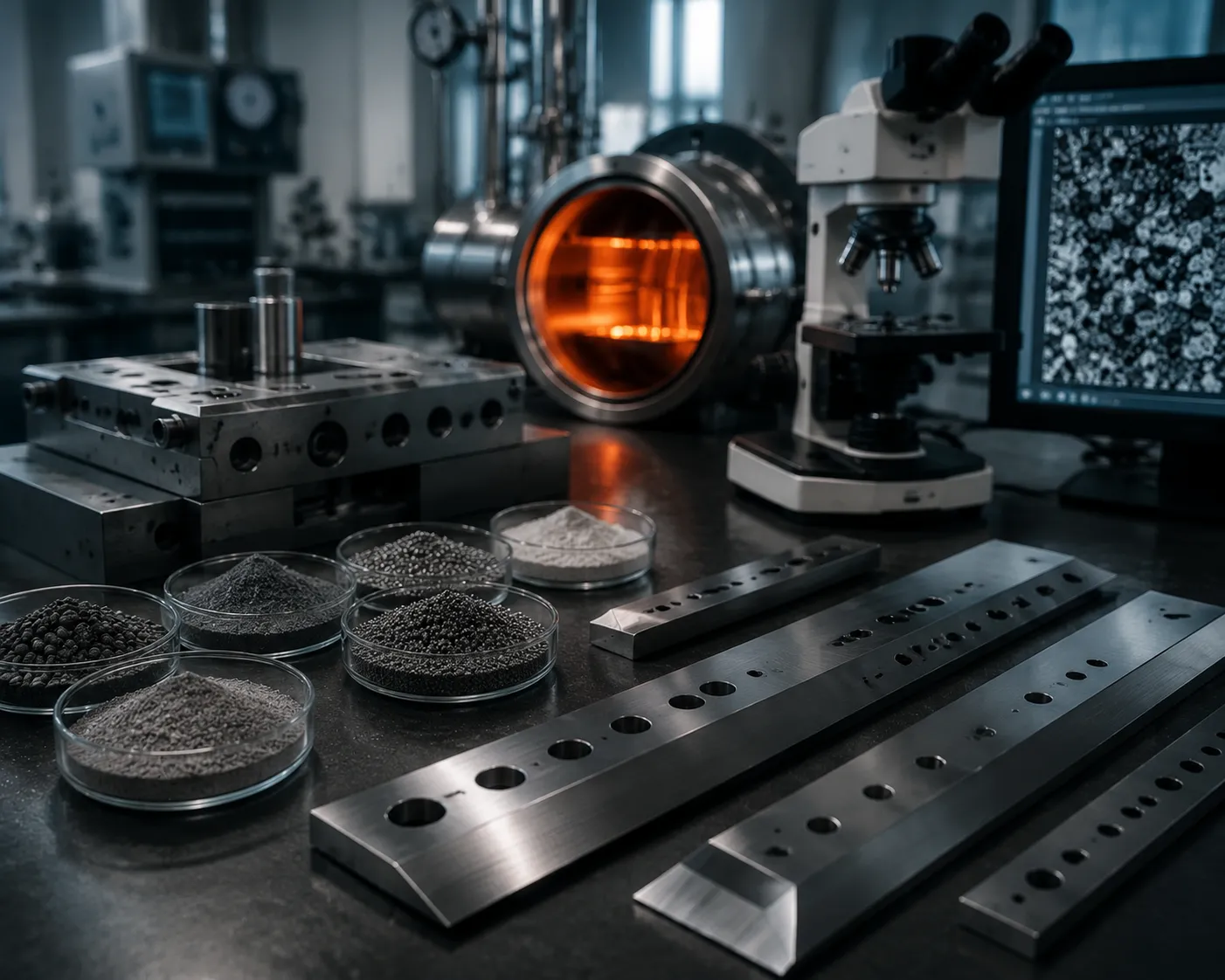
Custom Industrial Knives, Bespoke Blades & OEM Cutting Components
Sharkcutting operates specialized OEM and ODM manufacturing lines dedicated to custom industrial knives and bespoke blades. From initial CAD blueprints to complex geometric profiles, we precision-machine custom cutting components to strict international standard tolerances. Explore our high-precision slitting knives and specialized circular slitter knives designed for demanding industrial operations.
Drawings & Samples
Complete support for custom CAD blueprints and physical sample reverse engineering.
Fast 7-Day Samples
Rapid precision prototyping keeps your custom equipment and machinery projects moving forward.
Flexible Batching
Versatile production capacity for both low-volume specialized orders and full production runs.
4-Step Custom Execution Process
Submit Drawings & Specs
Provide 2D/3D CAD models, detailed specifications, or original physical blade samples.
Material & Tolerance Evaluation
Engineers assess steel grades, edge geometry, heat treatment, and precision requirements.
Precision Sample Machining
Advanced CNC grinding, wire EDM, and heat treatment yield exact prototype blades, including custom shear slitting knives.
Batch Delivery & Quality CMM
Strict CMM dimensional inspection followed by scheduled volume shipments worldwide.
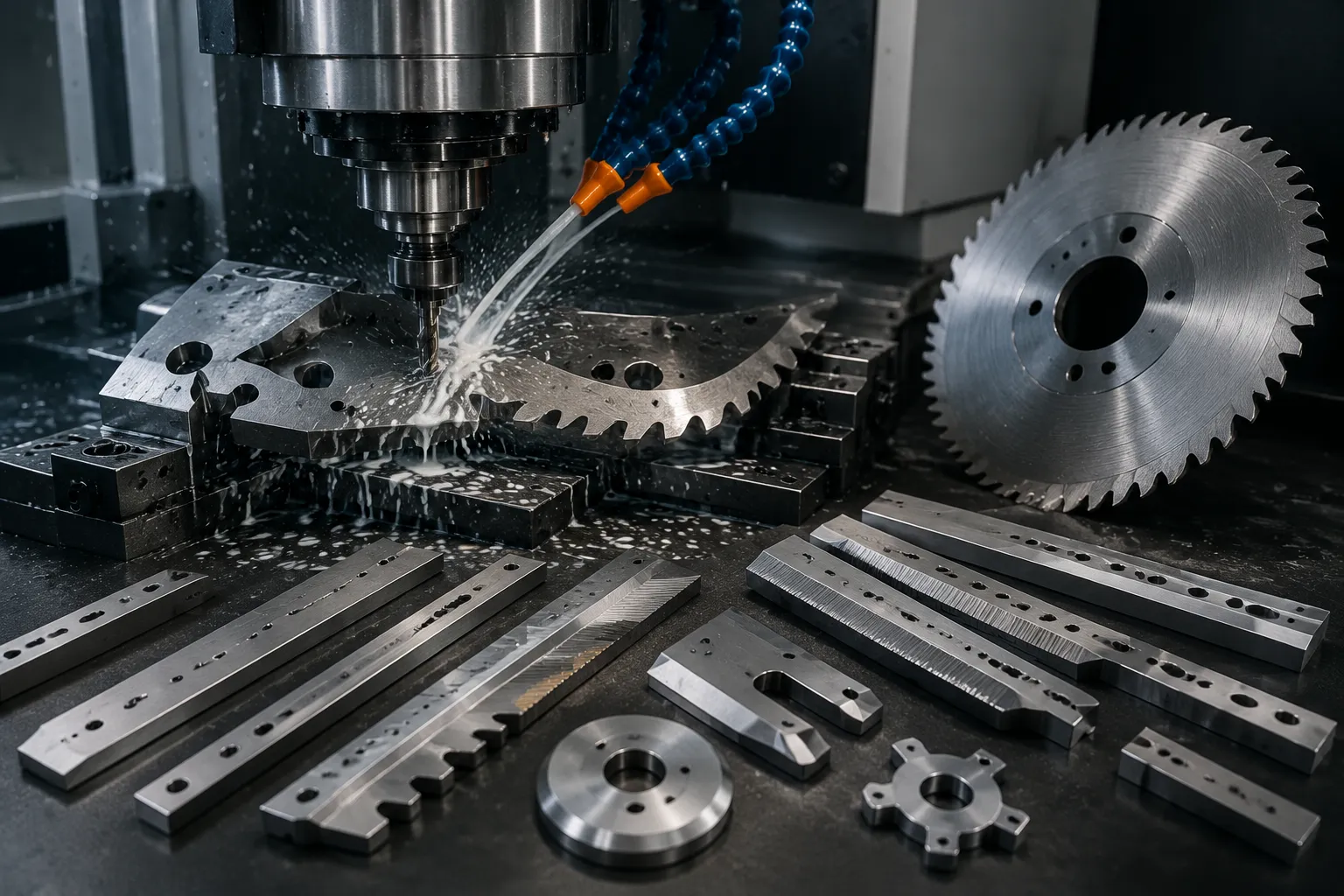
Complex Geometry Machining
High-Speed Steel, Tungsten Carbide & Tool Alloys
Precision Machining and Quality Control Standards
Shark Cutting executes rigorous quality control protocols throughout every stage of industrial blade manufacturing. By uniting certified raw material sourcing, multi-axis CNC precision grinding, advanced vacuum heat treatment, and 100% full-dimensional inspection, we deliver cutting blades with micron-level tolerance accuracy, exceptional edge sharpness, and unmatched wear resistance for continuous industrial operation.
Certified Raw Material Sourcing
We source top-tier tool steels, high-speed steels, and tungsten carbide directly from verified global steel mills. Every shipment undergoes alloy spectroscopy to verify chemical integrity and structural density.
- Alloy grades: D2, M2, SKD11, DC53, CPM, Tungsten Carbide
- Traceability: Full mill test certificates (MTC) archived
- Verification: Spectrometric alloy analysis & flaw testing
Multi-Axis CNC Precision Grinding
State-of-the-art CNC surface, cylindrical, and rotary grinding machinery achieve exact blade geometry and mirror-finish keenness. Precise edge control prevents burrs and material dragging.
- Surface roughness: Down to Ra 0.1 µm mirror finish
- Edge profile: Computer-controlled bevel geometry
- Parallelism: Maintained strictly within ±0.002 mm
Vacuum Blade Heat Treatment
Computer-monitored vacuum heat treatment furnaces ensure complete, uniform hardness distribution across core and cutting edges. Deep cryogenic treatment eliminates micro-cracks and stress.
- Hardness range: Tailored from 58 to 68 HRC
- Atmosphere: High-vacuum inert gas quenching
- Toughness: Sub-zero cryogenic micro-structure refinement
100% Full-Dimensional Inspection
Every production run undergoes rigorous quality assurance utilizing coordinate measuring machines, optical comparators, and surface profilometers to verify all critical engineering specifications.
- Equipment: 3D CMM, optical projectors, digital micrometer
- Verification protocol: 100% edge dimension & runout testing
- Documentation: Full-dimensional inspection sheets provided
Precision Machining Capabilities & Dimensional Standards
Shark Cutting strictly adheres to international B2B precision manufacturing standards across our complete product line of industrial slitting knives, shearing blades, recycling shredder knives, and custom industrial machine cutters. We also offer specialized solutions such as high-performance circular slitter knives and precision shear slitting knives designed to optimize clean material processing.
Every industrial knife shipped from our facility comes backed by comprehensive quality control documentation and dimensional measurement sheets. By maintaining razor-thin tolerances, we safeguard your machinery against excessive vibration, premature blade wear, and costly production downtime.
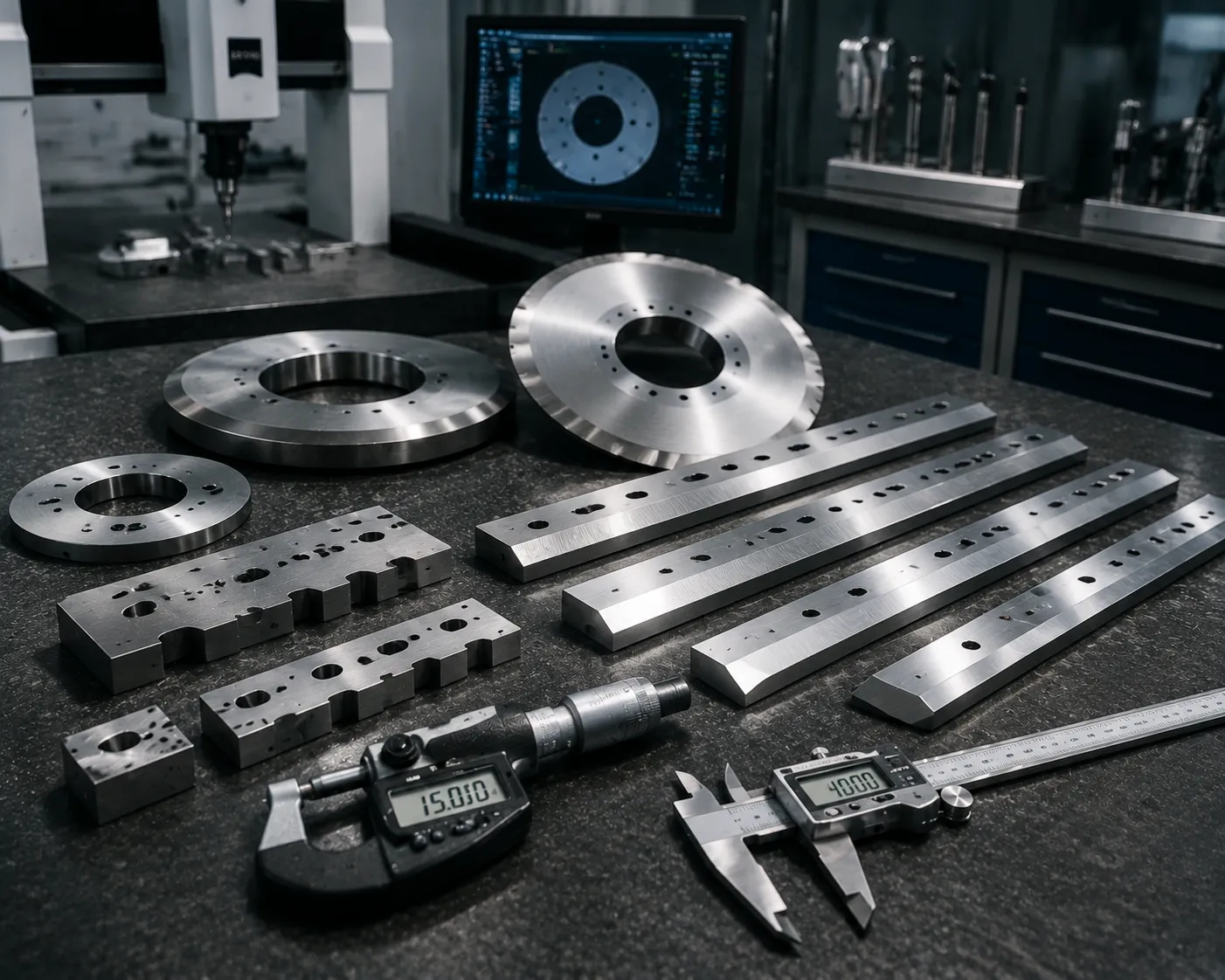
| Inspection Parameter | Standard Machining Tolerance | High-Precision Custom Option | Verification Equipment & Method |
|---|---|---|---|
| Thickness Tolerance | ±0.005 mm | ±0.001 mm | Digital Micrometers & 3D CMM |
| Parallelism and Flatness | 0.005 mm | 0.002 mm | Precision Dial Indicators & Laser Interferometers |
| Surface Finish (Ra) | Ra 0.40 µm | Ra 0.10 µm (Super-Finish Mirror Finish) | Non-Contact Surface Profilometer |
| Hardness Uniformity | ±1.0 HRC | ±0.5 HRC | Digital Rockwell Hardness Tester |
| Concentricity & Radial Runout | 0.010 mm | 0.003 mm | Optical Projection Comparator & Precision Mandrel |
Quality Management Systems & Global Supply Trust
Our industrial knife manufacturing facilities operate under stringent quality management principles to ensure dependable B2B supply, full compliance, and fast international order fulfillment.