
Carbide vs. Steel: Key Physical Benchmarks
Compare critical physical properties—hardness, impact toughness, wear life, and cost—to select the ideal blade material for your industrial machinery.
Hardness & Wear Resistance
Measures surface resistance to extreme wear. Tungsten carbide (89–93 HRA) excels with abrasive films and paper, while tool steel (58–65 HRC) handles general cutting duties.
Impact & Shock Resistance
Measures energy absorption before chipping. Tool steel withstands heavy shock loads, mechanical vibration, and interrupted cuts that could fracture brittle carbide. Learn more about material selection in our guide on how-to-choose-slitting-knives based on toughness.
Edge Retention & Wear Life
Carbide blade wear life outlasts standard D2 or M2 tool steel by up to 50 times in high-speed slitting, drastically reducing downtime and blade sharpening cycles.
Initial Cost vs. Total ROI
Tool steel delivers low upfront costs ideal for short runs or high-impact cutting. Carbide requires higher initial expenditure but maximizes long-term ROI in 24/7 lines.
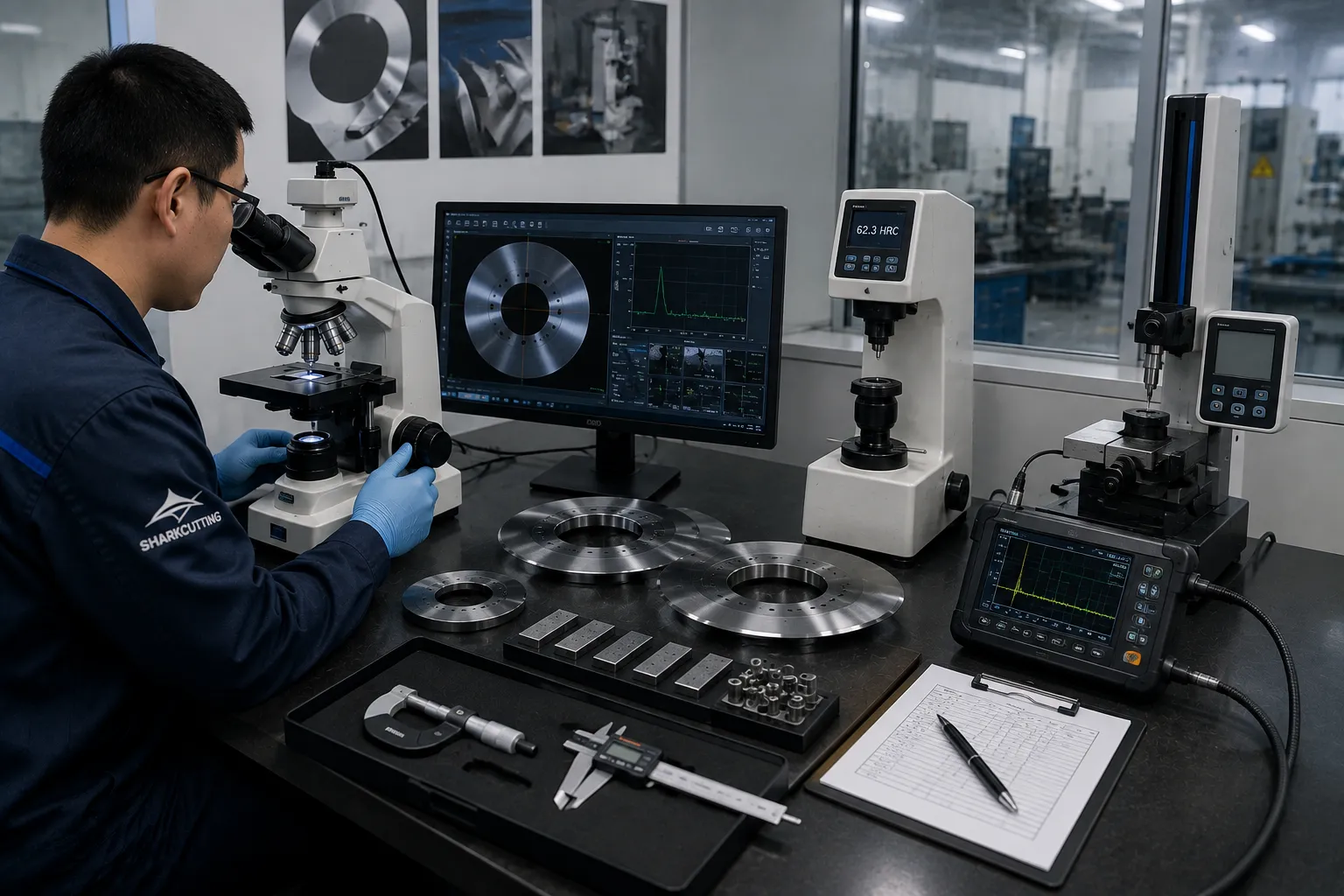
Lab Analysis & Metric Testing
Sharkcutting Quality Verification
Precision-Engineered Materials for Demanding Industrial Cutting
Sharkcutting evaluates exact physical metrics—from micro-hardness to impact resistance—to supply custom tool steel and tungsten carbide blades tailored to your operating conditions.
Wear Life Increase
Up to 50x
Hardness Peak
93 HRA
Downtime Savings
Up to 90%
Carbide vs. Steel Industrial Knives: Technical Parameter Matrix
Selecting the ideal blade material requires a detailed evaluation of microstructural hardness, impact toughness, corrosion resistance, and thermal thresholds. At Sharkcutting, we engineer high-precision industrial knives using premium tungsten carbide and specialized tool steel alloys engineered to optimize packaging converting line efficiency and product quality.
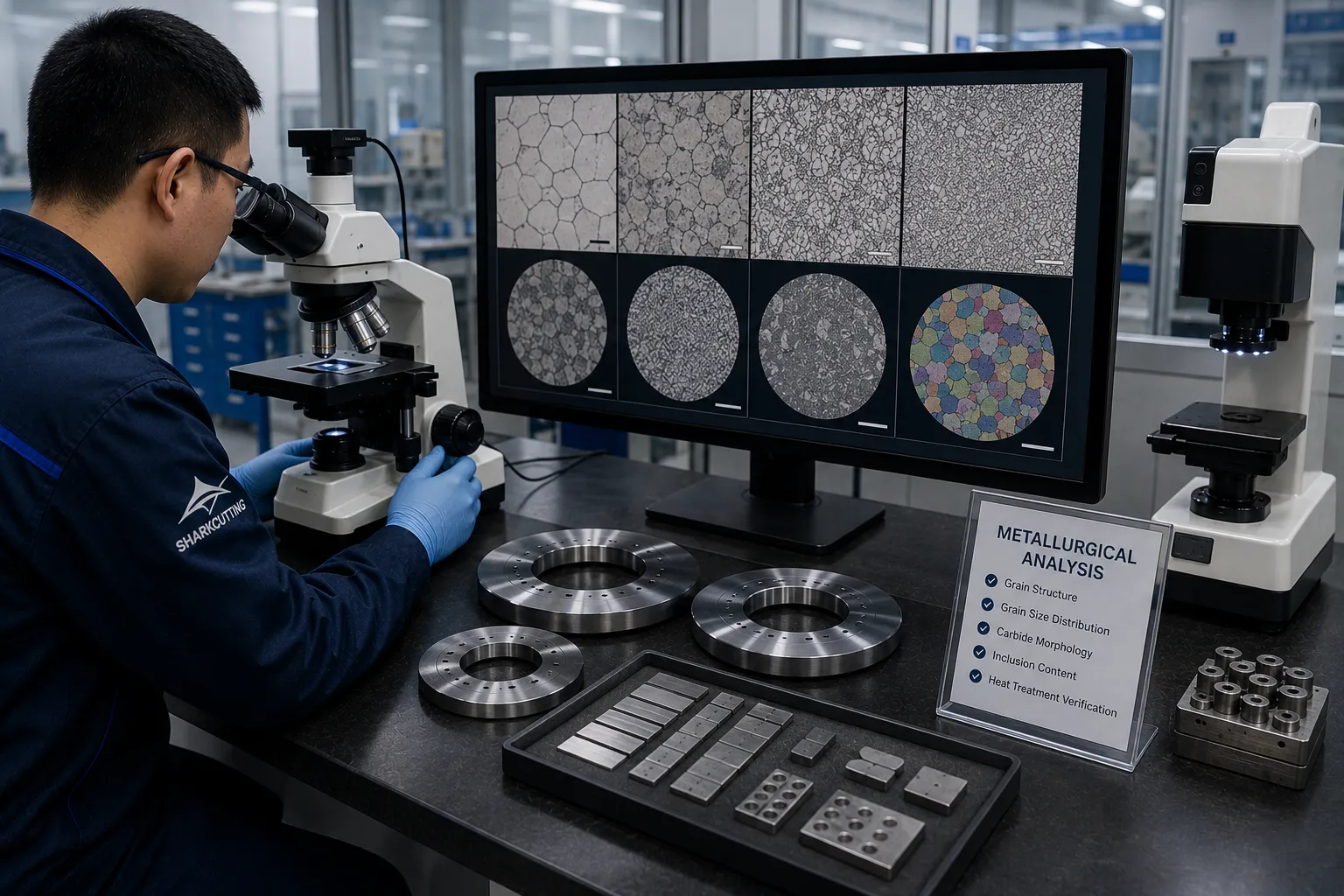
Metallurgical Structure and Grain Distribution
Tungsten carbide features sub-micron carbide grains encapsulated in a ductile metallic cobalt or nickel matrix. This sintered micro-grain structure provides extreme resistance to severe micro-abrasion during high-speed slitting and converting applications.
Industrial tool steel relies on heat-treated martensitic matrix structures reinforced with chromium, vanadium, and molybdenum carbides. Premium grades like D2, M2, and high-vanadium powder metallurgy steels deliver superior flexural yield strength and impact energy absorption to prevent premature chipping under heavy vibration.
- ✓ Carbide Density: HIP-sintered construction eliminates internal porosity for uniform wear along the cutting edge.
- ✓ Steel Toughness: High impact resistance prevents catastrophic fracture during interrupted cutting or heavy shocks.
- ✓ Sharkcutting Quality: Ultrasonic and metallurgical testing guarantees consistent grain refinement across all blade grades.
Side-by-Side Industrial Knife Performance Comparison
| Technical Parameter | Tungsten Carbide Blades | Industrial Tool Steel Blades | Operational Impact |
|---|---|---|---|
| Hardness Scale | 89 to 93 HRA | 58 to 65 HRC | Superior industrial knife hardness retention maximizes continuous cutting consistency. |
| Impact Toughness | Moderate (Requires rigid setup) | High to Exceptional | Tool steel absorbs mechanical shock and dampens line vibration without micro-chipping. |
| Maximum Line Speed | Up to 1,500 m/min | Up to 600 m/min | Carbide maintains keen edge integrity under intense friction and thermal loading. |
| Corrosion Resistance | High (Nickel matrix option) | High (Stainless & coated tool steels) | Tailored metallurgy resists chemical degradation from additives, adhesives, or moisture. |
| Relative Service Life | 10x to 50x Baseline | 1x to 3x Baseline (D2/M2) | Comparing carbide vs D2 steel edge life demonstrates up to 90% reduced blade change downtime. |
| Resharpening Process | Diamond wheel precision grinding | Standard abrasive grinding wheels | Steel allows rapid in-house re-grinding; carbide requires specialized diamond tooling setups. |
Hardness Ranges and Edge Retention Performance
Material hardness is the single biggest factor governing abrasive wear resistance. Operating on the Rockwell A scale, tungsten carbide achieves ratings between 89 and 93 HRA. This extreme density gives industrial knife hardness retention a massive advantage, allowing edges to stay razor-sharp across millions of continuous slitting cycles.
By comparison, premium tool steels (such as D2, M2, and SKD11) register between 58 and 65 HRC on the Rockwell C scale. While steel cannot match tungsten carbide in pure abrasion resistance, evaluating carbide vs D2 steel edge life shows that D2 offers elastic yield and impact resistance that protect against catastrophic breakage when processing contaminated materials or heavy cardboard.
Thermal Stability and High-Speed Production Capabilities
High-speed slitting generates intense friction and localized heating at the blade's cutting edge. Solid tungsten carbide exhibits exceptional red hardness, maintaining structural strength and edge sharpness at continuous operating temperatures exceeding 600°C (1,112°F) without annealing or softening.
Standard tool steels undergo thermal softening if friction heat surpasses their tempering threshold. To bridge this gap, Sharkcutting applies advanced PVD coatings (such as TiN, TiAlN, or DLC) and cryogenic treatments to specialized tool steel blades, reducing friction and extending service life on high-speed packaging machinery.
Application Guidelines for Machine Operators
Matching blade metallurgy to specific operational parameters prevents costly premature failure and yields optimal long-term ROI.
High-Speed Continuous Slitting
Choose tungsten carbide for thin plastic films, abrasive nonwovens, foil laminates, and paper converting on rigid, low-vibration machines.
Heavy Impact and Intermittent Shearing
Choose high-alloy tool steel (D2, M2, CPM) for recycling granulators, heavy rubber shearing, or equipment with measurable spindle runout.
Hybrid Production Needs
Consult Sharkcutting engineers for custom coated tool steel or composite tipped blades to balance initial tooling cost with extended wear life.
Matching Blade Metallurgy to Workpiece Substrates
Selecting the ideal industrial knife material requires aligning blade metallurgy with the specific mechanical and abrasive properties of your workpiece. Operating a high-speed converting line or a heavy-duty recycling granulator demands a precise balance between hardness, wear resistance, and impact toughness. Shark Cutting engineers precision industrial machine knives in both high-alloy tool steels and premium micrograin tungsten carbide to optimize edge retention, eliminate unexpected downtime, and lower total cost of ownership across four core manufacturing sectors.
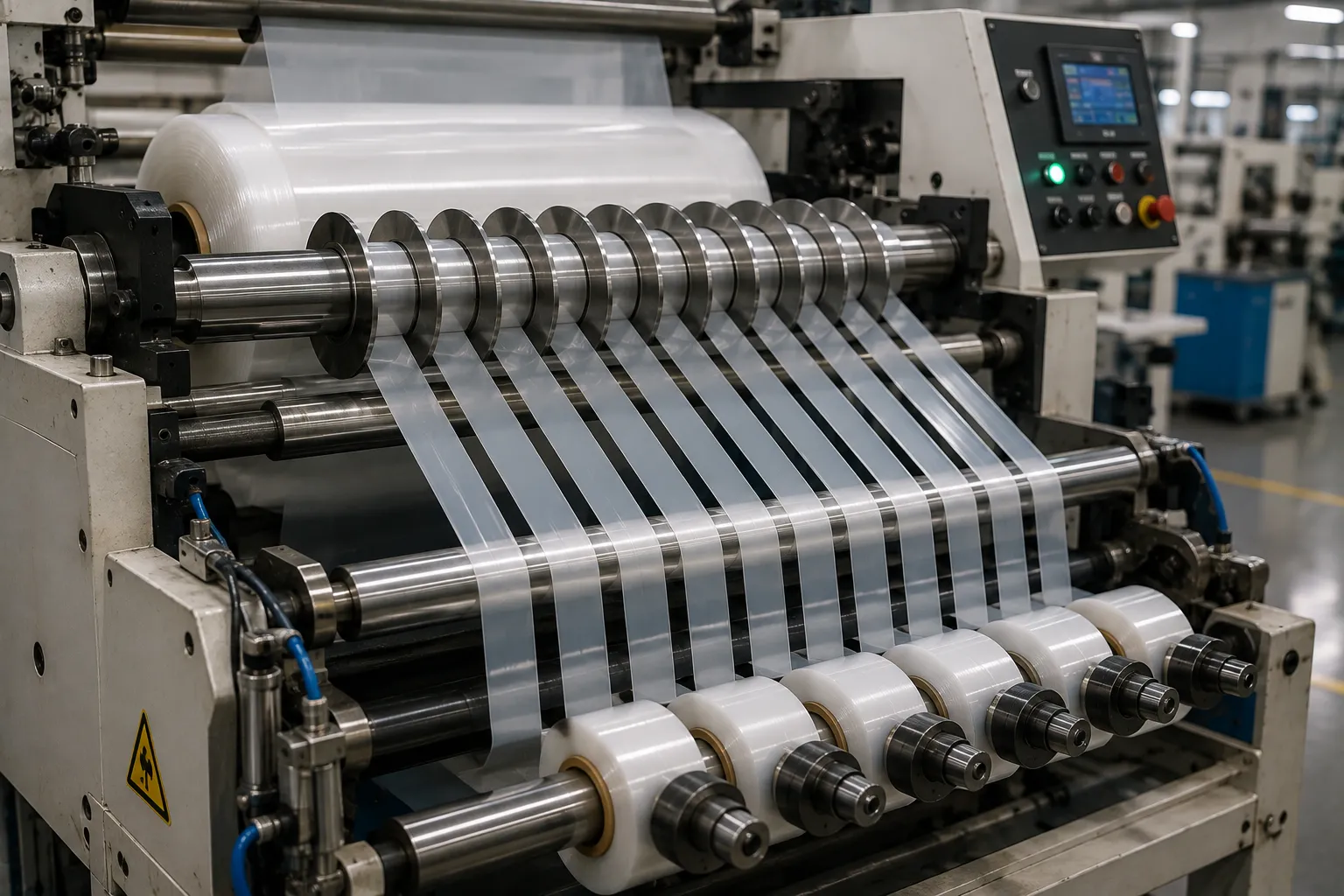
Flexible Packaging Slitting
Converting flexible packaging substrates such as BOPP, PET, metalized films, and multi-layer barrier foils imposes severe friction and abrasive wear at high line speeds. Standard steel blades quickly dull under continuous friction, leading to edge deformation, angel hair dust generation, web tears, and frequent machine stoppages.
Sub-micron tungsten carbide grains deliver up to 50 times longer edge life than standard D2 tool steel razor blades under high friction.
Delivers razor-sharp edge integrity, eliminating film burrs, micro-cracks, and slitting dust for pristine roll winding quality.
- ✓ Optimal Blade Choice: Solid tungsten carbide circular shear knives, top slitters, and precision razor inserts.
- ✓ Primary Key Benefit: Maximizes continuous uptime on 24/7 high-speed slitter rewinders while slashing blade replacement frequency.
Paper Converting & Packaging Operations
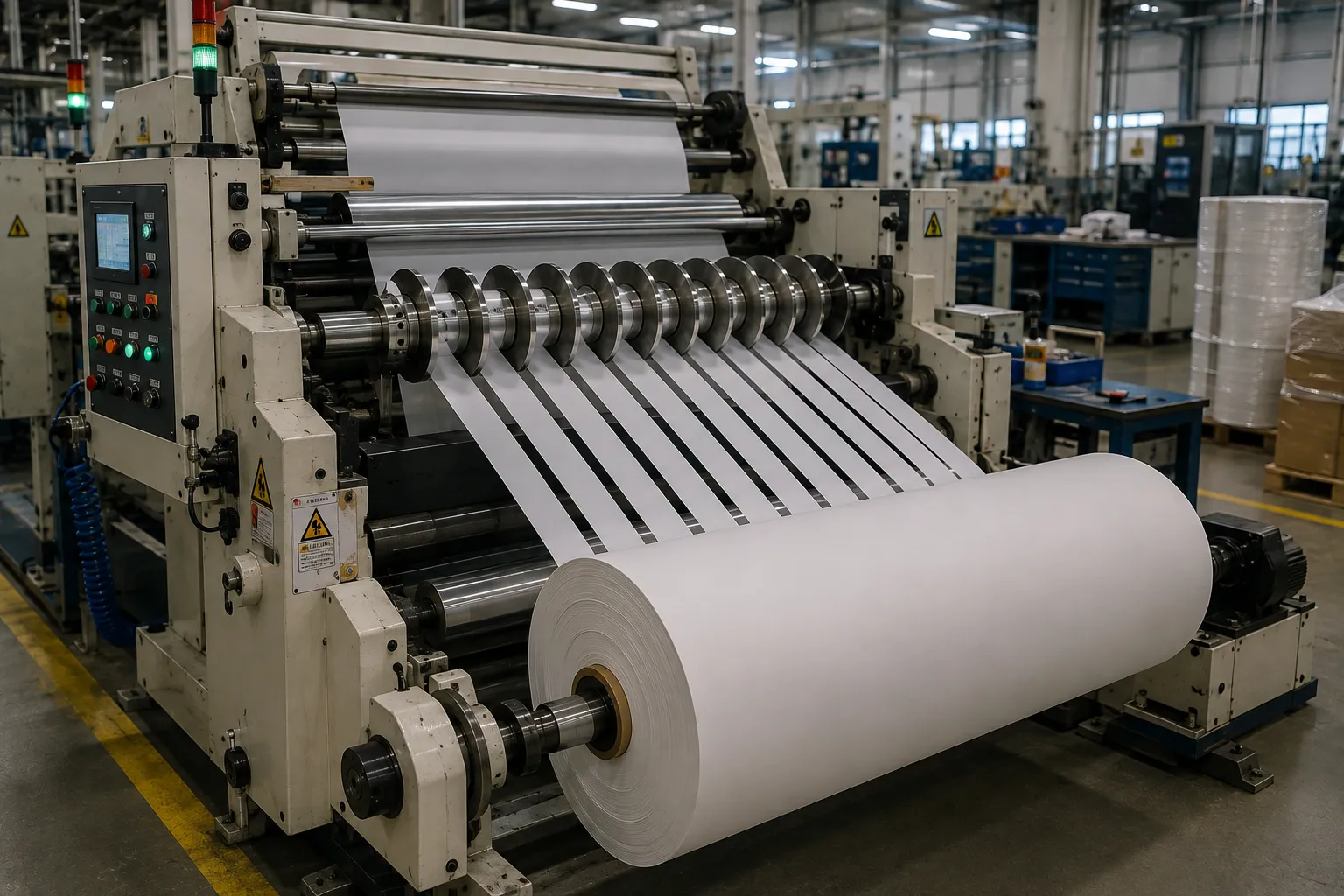
Paper converting lines demand versatile blades capable of handling high-speed sheeting, tissue slitting, carton scoring, and heavy paperboard trimming. While mineral additives like calcium carbonate accelerate abrasive edge wear, high-speed web splices and mechanical vibration introduce severe impact stress that can chip brittle edges.
High-grade D2, M2, and CPM tool steel blades effectively absorb web splice impacts and severe shock loads without chipping.
For dust-free tissue, newsprint, and continuous paper slitting, solid tungsten carbide dish knives offer unrivaled edge sharpness.
- ✓ Optimal Blade Choice: Premium D2 tool steel for heavy sheeters; CPM powder metal steel or solid carbide for continuous slitters.
- ✓ Primary Key Benefit: Shark Cutting's proprietary vacuum heat treatment prevents edge roll-over while significantly extending production runs.
Plastics Recycling & Shredding
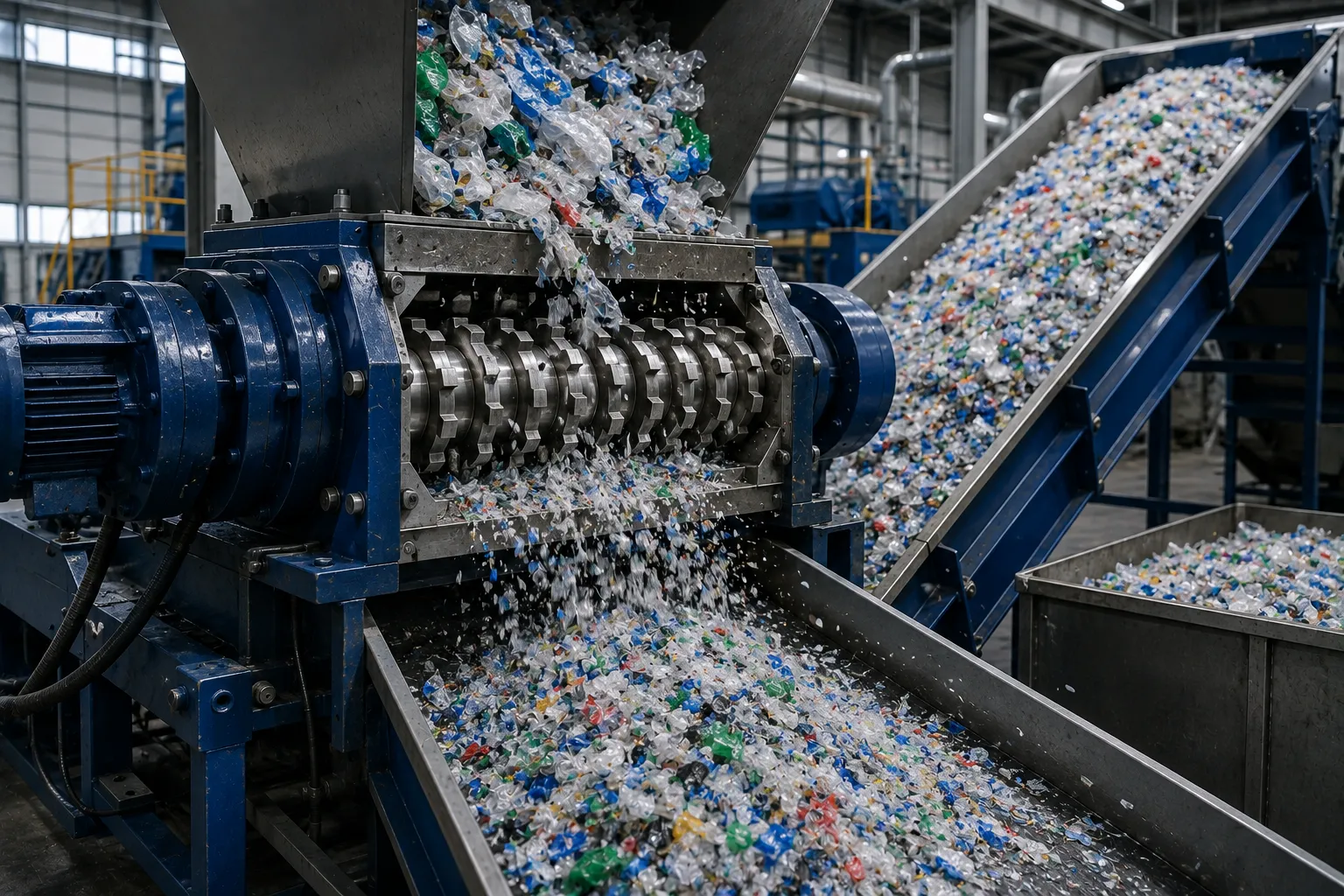
Granulating thick purging blocks, rigid polymer sprues, regrind, and post-consumer PET bottles exposes knives to extreme shock loads, severe torque, and potential tramp metal contamination. In these demanding conditions, solid carbide blades risk catastrophic fracture without proper impact damping.
Engineered A2, S7, and modified D2 shock-resistant alloy steels withstand aggressive impact energy without shattering or micro-fracturing.
Brazed tungsten carbide edge inlays combine rigid steel core toughness with carbide wear resistance for glass-filled abrasive resins.
- ✓ Optimal Blade Choice: Deep-hardened shock-resistant tool steel or carbide-tipped granulator and shredder knives.
- ✓ Primary Key Benefit: Prevents catastrophic rotor and bed blade failure while ensuring high hourly throughput and consistent granulate size.
Rubber & Elastomer Processing
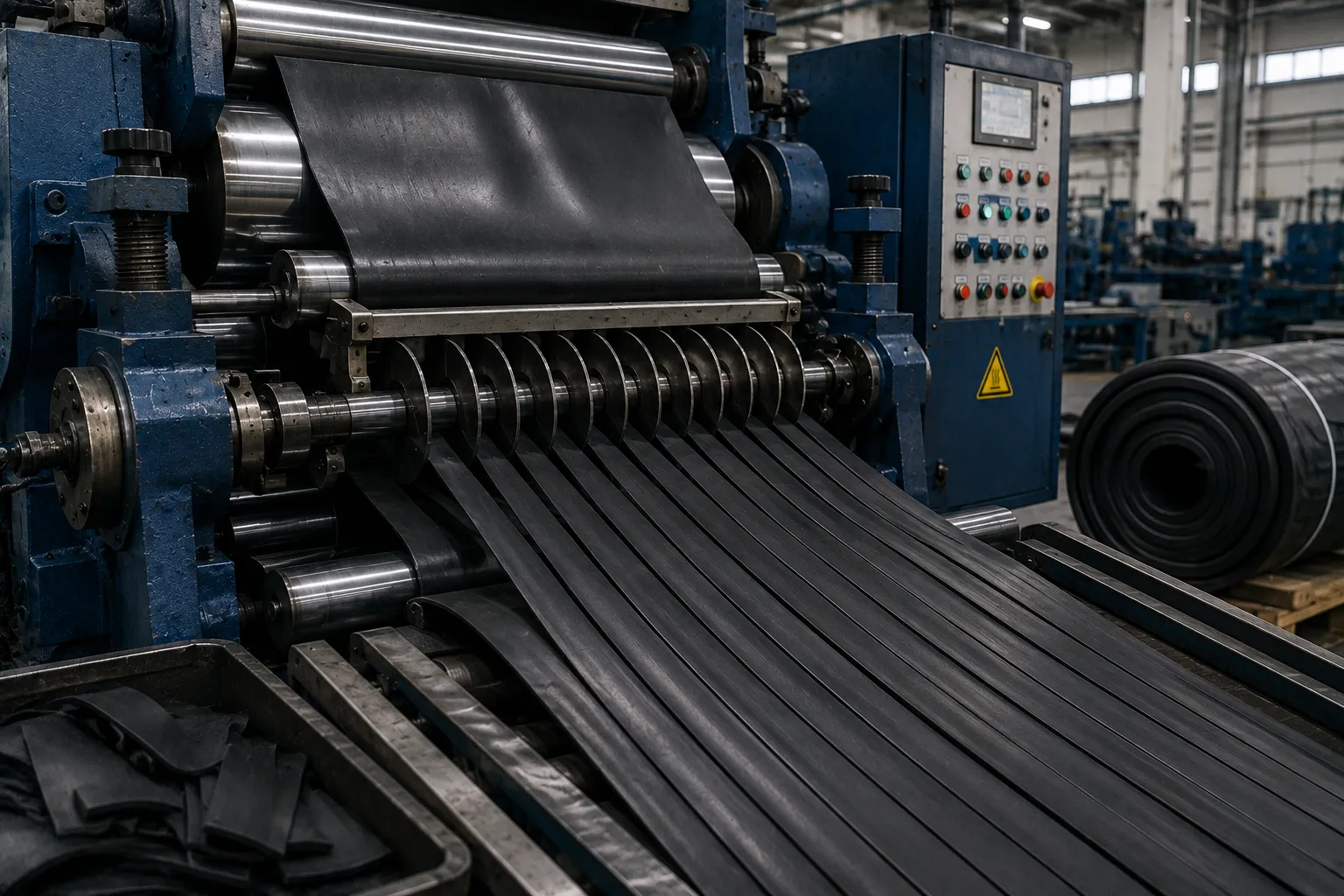
Slitting uncured rubber compounds, tire tread stock, and synthetic elastomers generates intense friction and localized thermal buildup. Highly abrasive fillers such as carbon black and silica rapidly erode standard steel edges, resulting in uneven profile cuts, heavy drag resistance, and poor splice adhesion.
Tungsten carbide retains structural hardness above 600°C (1,112°F), resisting thermal softening and frictional wear during continuous slitting.
Shark Cutting's ultra-fine mirror-ground surfaces minimize sticky compound adhesion, reducing drag and material distortion.
- ✓ Optimal Blade Choice: Mirror-polished solid tungsten carbide circular blades or TiN-coated high-alloy steel knives.
- ✓ Primary Key Benefit: Maintains precise profile tolerances for automotive tire manufacturing, extruded hoses, and rubber gaskets.
Substrate Metallurgy Selection Matrix
Compare mechanical demands, recommended blade material grades, and relative wear life performance across key industrial cutting applications.
| Workpiece Substrate | Primary Cutting Challenge | Recommended Metallurgy | Carbide vs. Steel Edge Life |
|---|---|---|---|
| BOPP, PET, Metalized Films & Foils | High-speed friction, abrasive wear, edge burrs, web tears | Solid Tungsten Carbide | 20x to 50x Steel Life |
| Paperboard, Corrugated & Heavy Sheeting | Splice impacts, mineral filler abrasion, edge chipping | D2 Tool Steel / CPM Powder Steel | 3x to 5x Standard Steel |
| Plastics Granulation & PET Recycling | Severe shock loading, heavy torque, tramp metal impact | A2 / S7 Shock Steel or Carbide Inlay | 2x to 8x Standard Steel |
| Uncured Rubber & Silica-Filled Compounds | Abrasive filler erosion, high frictional heat, material drag | Mirror-Polished Carbide | 15x to 30x Steel Life |
Calculating Total Cost of Ownership and Uptime ROI
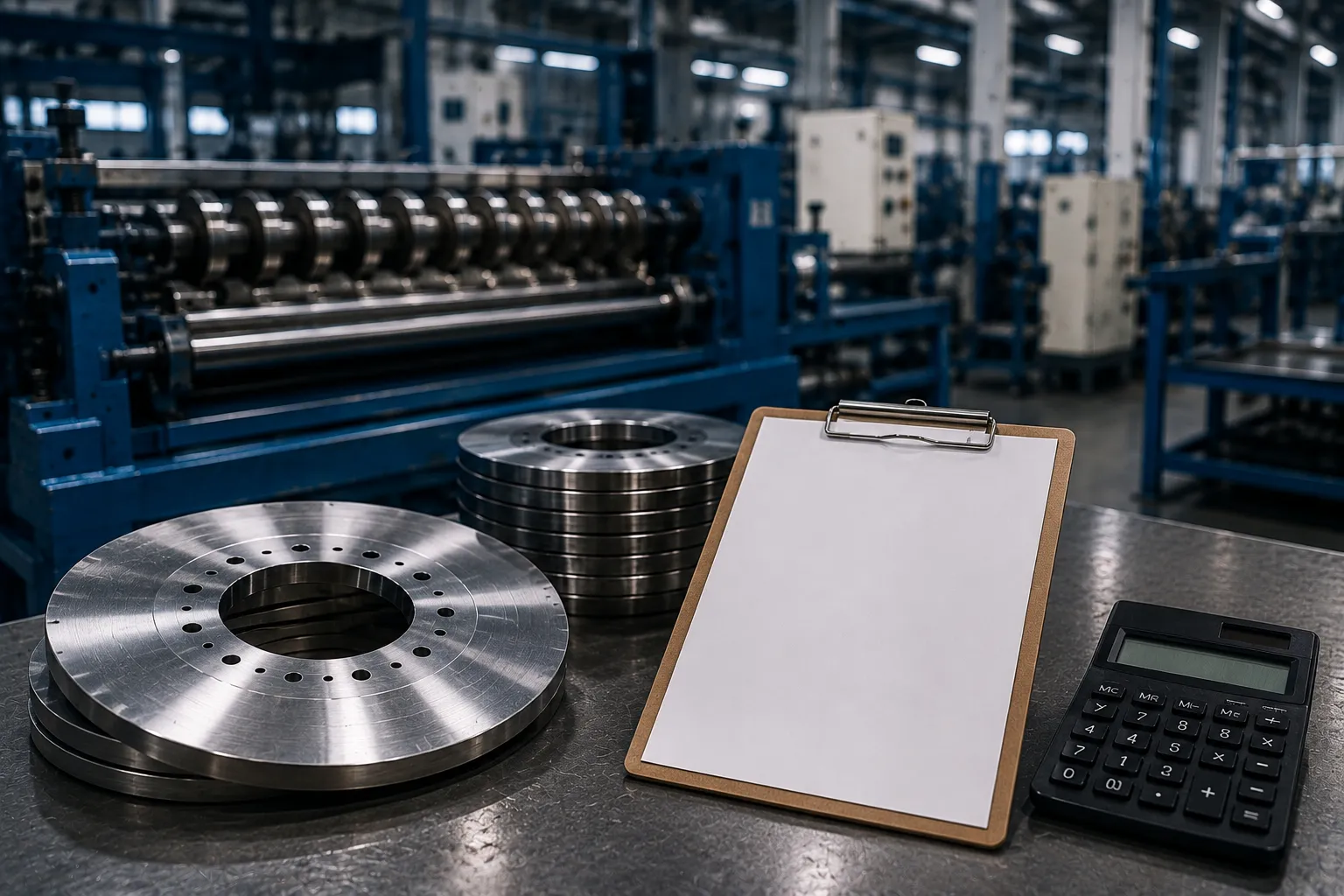
Industrial knife procurement decisions frequently hinge on upfront unit price. Standard tool steel blades offer a lower initial purchase invoice, whereas high-grade solid tungsten carbide blades require a larger upfront investment. However, evaluating cutting tools strictly on sticker price ignores the heavy financial toll of production downtime, changeover labor, resharpening logistics, and material scrap rates. Sharkcutting engineered carbide knife solutions deliver long-term cost efficiency and operational reliability that far surpass initial price differences.
Beyond Initial Unit Price: Understanding Operational Impact
A comprehensive total cost of ownership (TCO) evaluation examines every operational expense across the entire blade lifespan. While conventional tool steel blades provide reliable toughness at an accessible price point, higher wear rates demand frequent machine shutdowns for blade replacements and regrinding. Sharkcutting tungsten carbide blades hold precision cutting edges drastically longer—turning a higher initial material expense into significant long-term ROI.
The True Five-Factor Equation of Industrial Blade Value
- Direct Acquisition Cost: Initial purchase invoice price per unit across tool steel vs. solid tungsten carbide grades.
- Changeover Downtime Losses: Unplanned revenue loss incurred when high-speed converting lines halt for blade replacements.
- Maintenance Labor Overhead: Skilled technician hours dedicated to blade removal, shear clearance adjustments, and slitter recalibration.
- Material Scrap & Quality Yield: Product waste caused by burred edges, film tearing, or slitting deformation as steel edges dull.
- Sharpening & Freight Logistics: Ongoing expenses for diamond-wheel regrinding, round-trip transport, and safety stock inventory buffering.
Financial Matrix: Tool Steel vs. Tungsten Carbide
This financial model compares premium D2 tool steel circular slitting knives against Sharkcutting micro-grain tungsten carbide slitting blades over 2,400 operational line hours.
| Cost Factor | D2 Tool Steel | Sharkcutting Carbide | Financial Impact |
|---|---|---|---|
| Initial Unit Price | $45.00 | $180.00 | 4x initial capital outlay |
| Blade Service Life | 120 hours | 2,400 hours | 20x longer wear life |
| Blade Changes (2,400 hrs) | 20 changeovers | 1 changeover | 95% changeover reduction |
| Downtime Loss ($150/hr) | $3,000 (20 hrs) | $150 (1 hr) | $2,850 direct savings |
| Total Operating Cost | $3,900 | $330 | 91.5% Net TCO Reduction |
Interactive ROI Simulator
Live EstimatorCalculate potential production savings when converting your slitting lines from standard tool steel to Sharkcutting tungsten carbide knives.
OEM Flexible Packaging Slitting Line
A high-speed North American converting facility processing biaxially-oriented polypropylene (BOPP) film suffered constant edge dulling using D2 steel slitters, requiring knife swaps every 72 operational hours. Read our detailed packaging converting line case study to explore how engineered cutting components transformed their performance.
Operating Challenge: Rapid steel blade wear caused micro-burrs and excessive plastic dust, forcing reduced line speeds and frequent roll rejections.
Sharkcutting Solution: Retrofitted slitting stations with Sharkcutting sub-micron tungsten carbide circular blades featuring mirror-polished bevels.
Quantified Results: Blade service life expanded from 3 days to 45 days between sharpenings. Changeover frequency plummeted by 93%, generating $38,400 in net annual savings per production line.
Key Financial Takeaways for Plant Managers and Procurement
Maximize Uptime
Eliminate dozens of scheduled and unscheduled blade changeovers every year to keep high-speed production lines running continuously.
Reduce Material Scrap
Maintain pristine cutting geometry over millions of linear meters, eliminating edge burrs, particulate dust, and costly roll rejections.
Lower Inventory Overhead
Ordering fewer replacement blades dramatically shrinks safety stock requirements and frees up valuable working capital.
Rapid ROI & Payback
Capital investments in carbide knives typically yield a full financial payback within two to three weeks of continuous operation.
Micron-Level Tolerances for Precision Ground Industrial Blades
Shark Cutting enforces rigid manufacturing standards across every stage—from metallurgical selection to final edge honing—guaranteeing exceptional edge retention and flawless slitting accuracy.
Virgin Material Sourcing
We exclusively process 100% virgin sub-micron tungsten carbide powder and high-purity tool steel alloys (D2, M2, SKD11) free from internal voids or recycled scrap.
This guarantees predictable metallurgical density, superior fracture toughness, and consistent edge stability under heavy production loads.
Multi-Axis CNC Grinding
Advanced multi-axis CNC grinders shape razor-sharp knife geometry, custom bevels, and micro-finish cutting edges with minimal thermal stress.
Automated diamond wheel profiling delivers precise dimensional repeatability across high-volume precision machining and OEM manufacturing orders.
Sub-Micron Metrology
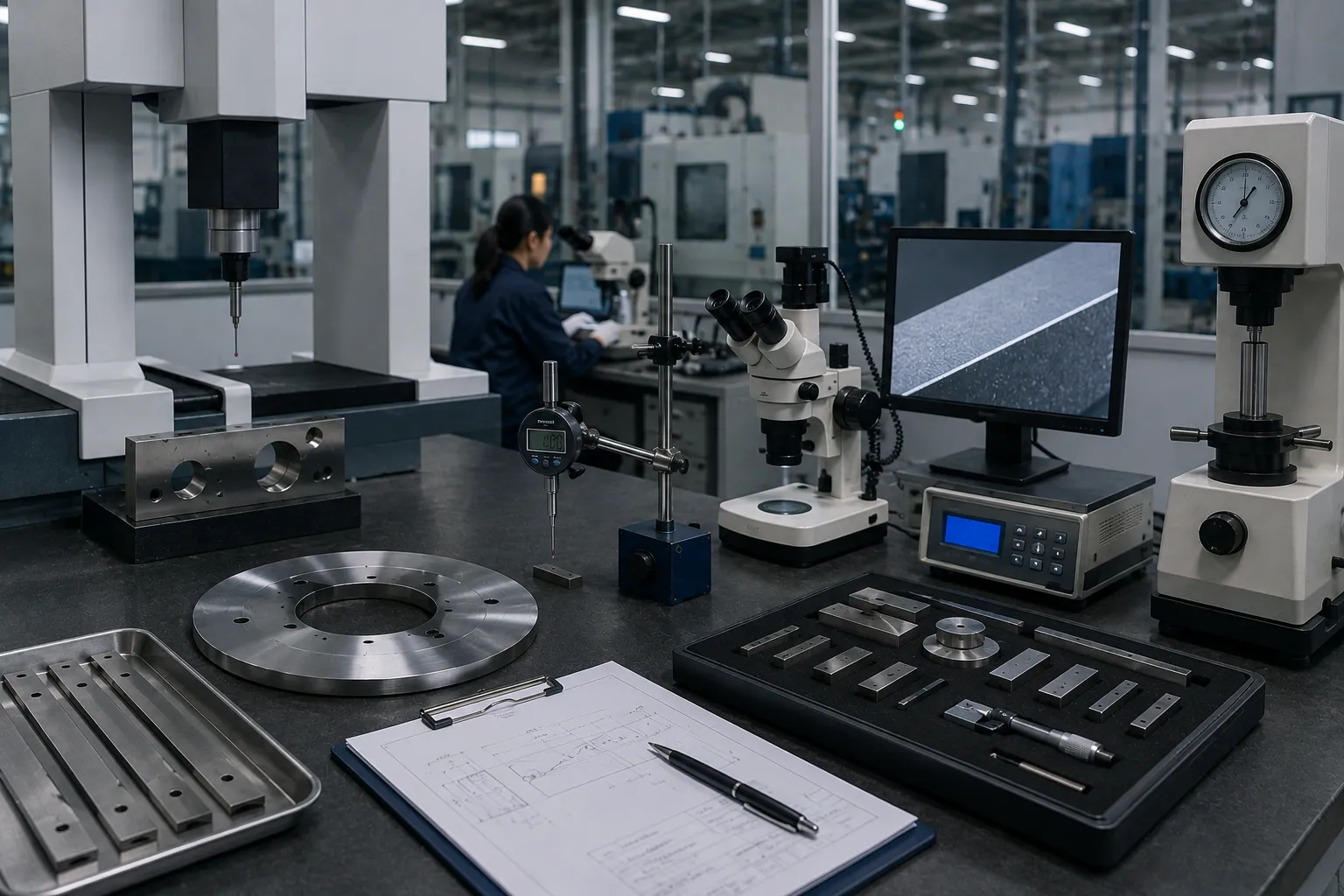
Non-contact optical systems, laser interferometers, and CMM equipment inspect knife thickness, parallel alignment, and edge profile.
Every production lot undergoes rigorous multi-point testing to eliminate microscopic burrs, runout errors, and surface flaws before shipment.
Uncompromising Quality Control for Custom Carbide Knife Manufacturing
At Shark Cutting, tight process control is non-negotiable. Our optical inspection laboratory checks cutter runout, bevel angle alignment, and blade thickness uniformity on every production run to prevent web tearing and costly downtime.
Frequently Asked Questions
Transitioning between alloyed tool steel and solid tungsten carbide blades requires a clear evaluation of machine rigidity, substrate purity, and maintenance infrastructure. Sharkcutting provides technical guidance through this FAQ to help converting and processing engineers maximize cutting uptime and long-term material ROI.
Can solid carbide blades be resharpened economically?
Yes, solid tungsten carbide industrial knives can be resharpened multiple times throughout their operational lifecycle. However, regrinding requires specialized CNC grinding machinery equipped with fine resin-bonded diamond wheels and flood coolant systems to prevent micro thermal stress fractures along the cutting apex.
While the initial regrinding cost for tungsten carbide is approximately 20% to 30% higher than standard D2 or M2 tool steel blades, the extended run time between sharpening intervals yields a vastly lower cost per production hour.
Resharpening Best Practices for Optimal Blade Life
- Controlled Stock Removal: Restrict pass depths (0.005 mm to 0.010 mm) to avoid localized heat build-up and binder leaching.
- Super-Fine Diamond Grit: Utilize 400 to 600 mesh diamond grinding wheels for final edge finishing to eliminate microscopic grinding marks.
- Preventive Reconditioning: Pull blades for grinding before severe edge rounding occurs to minimize total stock removal volume.
Sharkcutting provides factory reconditioning and precision ground industrial blade services that restore original edge geometry, concentricity, and surface finish tolerances.
How do steel vs carbide options perform under high shock loads?
Tungsten carbide features exceptional hardness (HRA 89–93) and compressive strength, but lower flexural toughness than heat-treated tool steel. In high-impact environments, steel vs carbide for packaging knives or shredders involves balancing wear resistance against catastrophic fracture risks.
Heavy plastic recycling, paper shredding with potential tramp staples, thick gauge shearing, or machinery with notable mechanical vibration.
High-speed continuous slitting of clean flexible films, nonwovens, magnetic tape, abrasive paper stocks, and thin metal foils.
When slitting abrasive materials with moderate shock hazards, Sharkcutting manufactures composite steel-body knives with brazed carbide cutting edges. This construction combines the impact absorption of tough tool steel with the wear life of solid tungsten carbide.
How can micro-chipping on delicate carbide edge profiles be avoided?
Micro-chipping on razor-sharp carbide blades occurs when localized shear stress exceeds the grain binder strength. Rather than material failure, premature edge degradation is frequently triggered by unhoned razor geometry subjected to excessive lateral side load or vibration.
Through custom carbide knife manufacturing, Sharkcutting formulates sub-micron carbide powder grades with tailored Cobalt or Nickel binder percentages. We apply engineered edge preparation tailored directly to your material density and web speed.
| Edge Treatment | Typical Application | Primary Benefit |
|---|---|---|
| Controlled Micro Radius (0.005 mm) | Thin plastic film slitting, packaging foils | Prevents apex collapse while retaining ultra-sharp edge quality |
| Engineered K-Land Chamfer | Thick rubber board, composite sheet cutting | Distributes initial shear load across a reinforced bevel section |
| Mirror Polished Flank Finish | Sticky adhesives, laminates, nonwovens | Reduces cutting friction and adhesive accumulation on the blade body |
What mechanical checks are needed before retrofitting to carbide?
Retrofitting converting lines from standard tool steel to solid tungsten carbide is straightforward, but requires precise machinery verification. Carbide possesses a high modulus of elasticity and demands rigid mechanical mounting with minimal dynamic runout.
Before retrofitting your equipment for slitting knife material selection upgrades, evaluate these critical operational parameters:
- Arbor Runout Limits: Verify spindle and arbor axial runout stays within 0.005 mm (0.0002 in). Wobble induces localized side load that causes micro-fractures.
- Torque Control: Use calibrated torque wrenches during mounting. Uneven bolt pressure creates internal flexural stresses across solid carbide rings.
- Bearing Rigidity: Inspect knife holder bearings for axial play to eliminate chatter during high-speed production runs.
Sharkcutting engineers can evaluate your equipment assembly drawings and provide custom adapter sleeves, precision spacers, or modified blade dimensions to facilitate a seamless material upgrade.
Sharkcutting Material Quality Standards
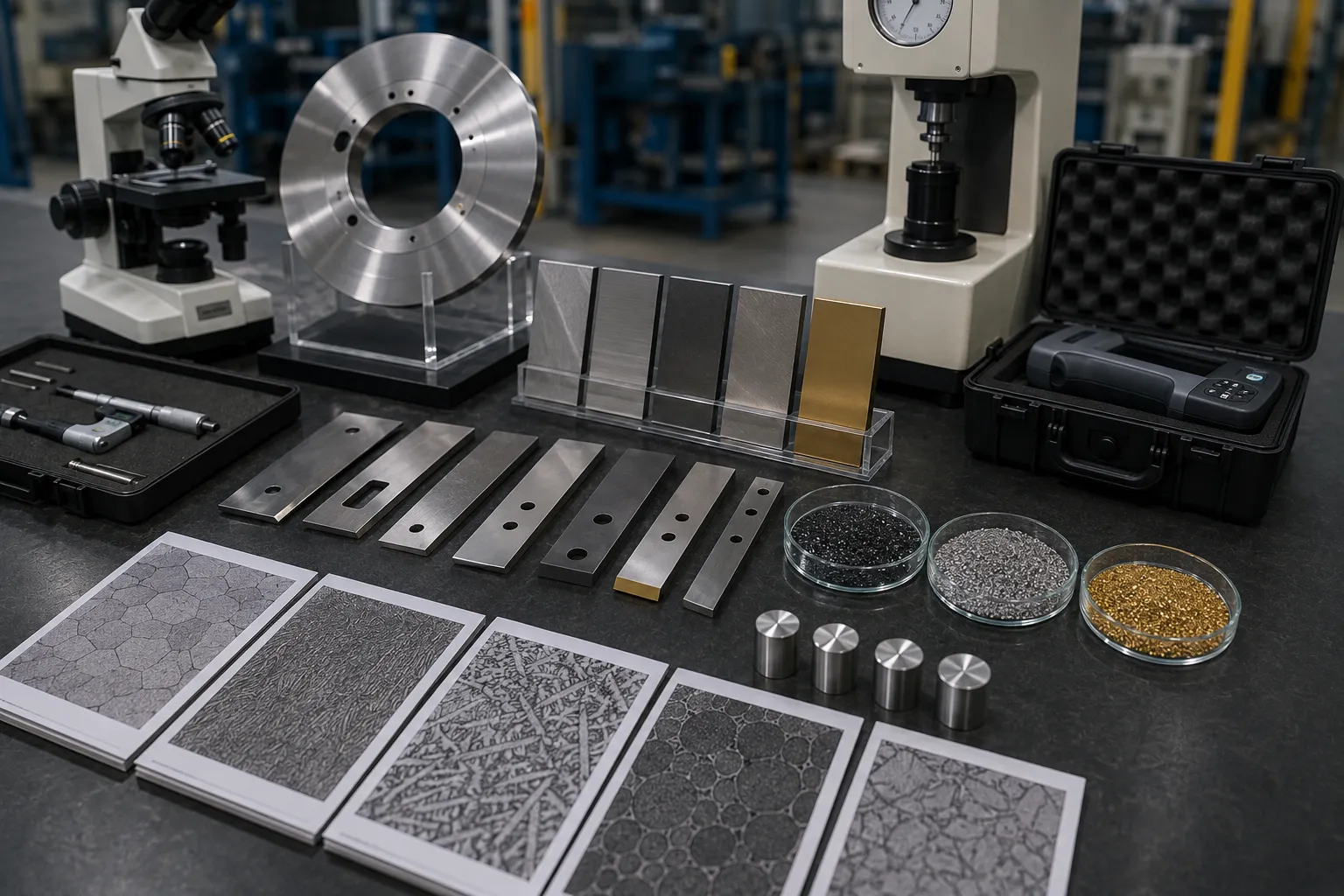
Every precision ground industrial blade manufactured by Sharkcutting undergoes 100% optical projection inspection, grain size validation, and micro-hardness testing prior to delivery.
Material Grade Consultation
Unsure whether D2 tool steel, high-speed steel M2, or solid virgin tungsten carbide fits your specific slitting line?
Consultation Response Time Under 24 Hours