
How to Choose Slitting Knives: Industrial Selection Guide
Select the optimal industrial slitting knives by matching knife geometry, tool steel alloys, and cutting mechanisms to your specific web material and edge quality tolerances.
As a global leader in precision industrial knife manufacturing, Shark Cutting provides actionable engineering guidance backed by decades of ultra-precision grinding and thermal treatment experience.
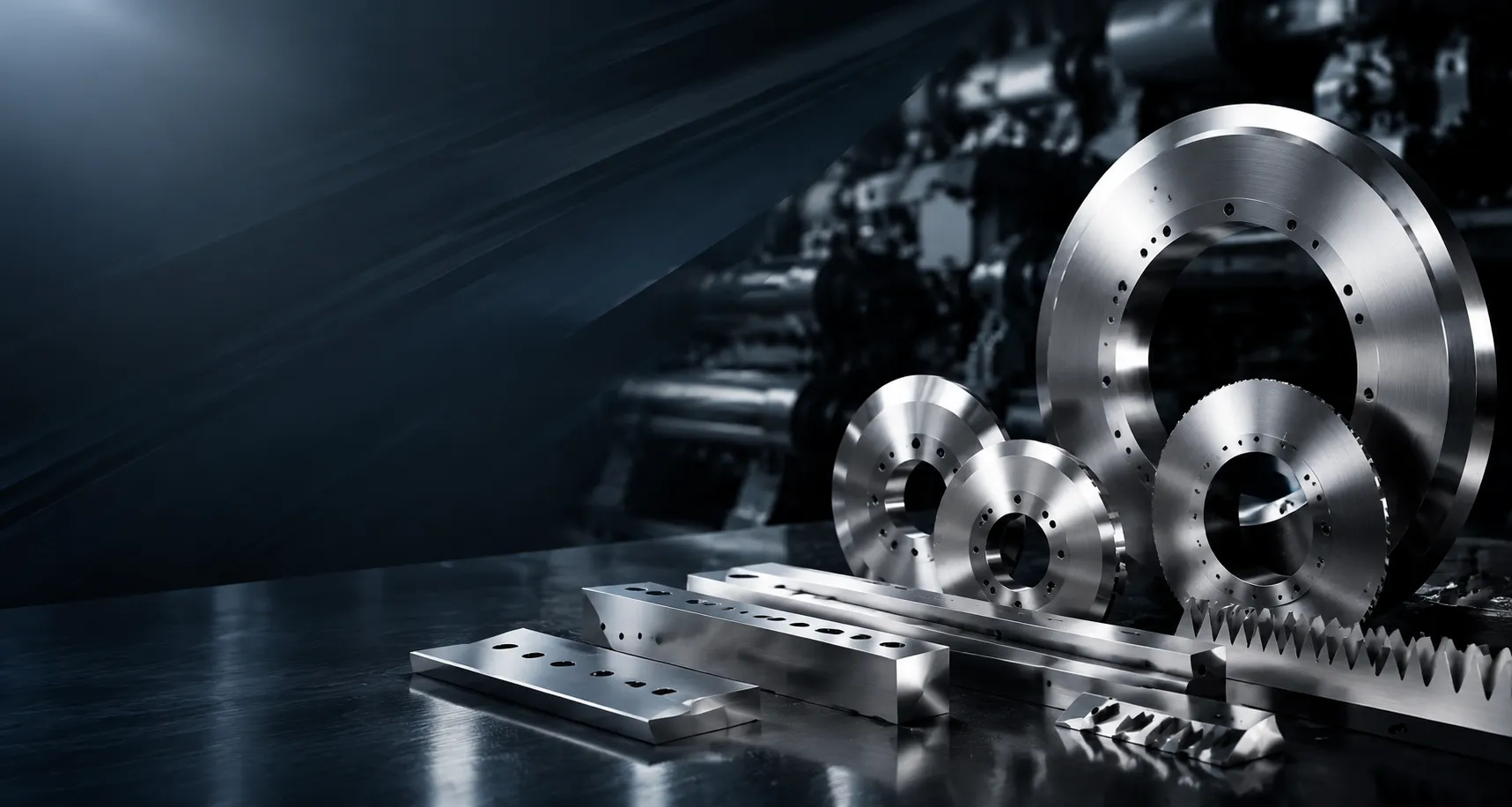
Precision Industrial Blades
Custom-ground circular knives, razor blades, and score slitters engineered for film, paper, foil, and nonwovens.
3 Core Dimensions for Industrial Knife Selection
Selecting the right industrial slitting blade requires evaluating three essential variables: your equipment type and mechanism, the physical properties of your web substrate, and the exact cutting tolerance demanded by your process. Analyzing these knife selection factors before specifying tooling prevents premature blade wear, eliminates costly downtime, and delivers clean, burr-free slitting performance across your production lines.
At Shark Cutting, our application engineers evaluate every custom blade project using this structured three-dimensional matrix. By aligning machine mechanics, web material cutting characteristics, and required cutting tolerance standards, we manufacture precision-ground slitting knives engineered to maximize tool life, edge retention, and operational efficiency for converters worldwide.
Slitting Equipment & Mechanism Type
Your machine mechanism directly determines blade geometry, bevel profiles, and clearance settings. Matching blade design to your specific slitting methodology prevents edge chipping, runout, and premature knife failure.
- Shear Slitting — Upper and lower rotary circular knives operate with precise overlap and lateral clearance. For specialized setups, explore our high-performance shear slitting knives, best for paper, paperboard, thick films, and rigid multi-layer laminates.
- Razor Slitting — Stationary or oscillating razor slitting knives slice flexible webs in air or grooved rolls. Ideal for thin polymer films and soft plastics sensitive to lateral compression.
- Crush / Score Slitting — Pneumatically loaded rotary knives slice against hardened anvil sleeves. Essential for nonwovens, rubber, textiles, and thick abrasive substrates.
Bottleneck check: Always verify machine arbor bore, outer diameter, and side tolerance before ordering to prevent axial wobble and accelerated edge wear.
Web Substrate Physical Properties
Web material cutting dynamics depend on abrasiveness, tensile strength, thickness, and surface coatings. Matching steel grades and bevel angles to material behavior ensures high edge retention and clean slit lines.
- Polymer Films (PET, BOPP, PE) — Flexible but elastic. Requires razor-sharp edges and polished knife faces to eliminate web stretching and burr formation.
- Paper & Packaging Board — Abrasive due to inorganic mineral fillers (calcium carbonate, kaolin). Demands high-speed steel (HSS/M2) or solid carbide for continuous runs.
- Nonwovens & Rubber — Highly abrasive and fibrous structures. Benefits from wear-resistant tool steels (D2/SKD11) or carbide grades engineered for impact resistance.
- Metal Foils (Aluminum, Copper) — Causes work-hardening along the cutting line. Demands fine-grain tungsten carbide blades to maintain micron-level edge sharpness.
Bottleneck check: Identify filler concentrations and coating abrasiveness early. Material friction impacts blade wear far more than web thickness alone.
Cut Quality & Tolerance Requirements
Demanding manufacturing applications mandate strict control over slit edge quality, width consistency, and debris generation. Defining your required cutting tolerance dictates grinding precision and finish quality.
- Burr-Free Slit Edges — Essential for battery separators, medical films, and electronics. Demands tight bevel angle consistency and mirror-finished cutting faces.
- Anti-Stringing & Dust Control — Critical in pressure-sensitive tapes and coated films. Controlled via edge sharpness, relief angles, and non-stick coatings.
- Micron-Level Thickness Tolerance — Required for high-precision narrow slitting. Requires blade thickness parallel within ±0.001 mm and total indicator reading (TIR) under 0.003 mm.
- Slit Edge Parallelism — Ensures uniform roll density and stable rewinding tension. Flatness and axial runout control are vital during precision grinding.
Bottleneck check: Document maximum allowable burr height and slit width limits. These metrics define the exact grinding tolerance class applied to your knives.
Why Aligning All Three Selection Factors Is Essential
Specifying a slitting knife based on machine dimensions alone often leads to disappointing operational performance. A blade that perfectly fits your machine arbor will still experience rapid wear if its metallurgy is ill-suited for abrasive web material cutting. Conversely, specifying an ultra-hard carbide blade without considering machine mechanical tolerances can result in micro-chipping caused by shaft vibration.
Shark Cutting eliminates these compromise risks by taking a holistic engineering approach. By analyzing equipment dynamics, material wear factors, and cutting tolerance specifications simultaneously, we engineer custom slitting knives that deliver maximum tool life, crisp cutting edges, and reliable continuous operation.
How to Apply This Selection Framework in Practice
Start by gathering your slitting machine specifications: arbor diameter, outer diameter range, knife holder type, and maximum line speed. Next, document your web substrate parameters, noting material thickness, tensile characteristics, and any abrasive coatings or inorganic fillers. ly, outline your acceptable defect thresholds for burr height, slit width tolerance, and edge dust generation.
Share these parameters with Shark Cutting's technical team. Our engineers will evaluate your operating conditions and provide a tailored knife specification—including recommended tool steel or carbide grades, bevel geometry, surface treatment, and precise dimensional drawings.
Quick Reference: Selection Matrix Overview
| Selection Dimension | Key Evaluation Variables | Primary Impact on Blade Specification | Common Selection Pitfall |
|---|---|---|---|
| 01 Equipment & Mechanism | Shear / Razor / Crush; arbor size, OD, lateral clearance | Blade geometry, bevel angle, side clearance, overlap depth | Ordering based solely on OD while ignoring arbor fit tolerances |
| 02 Web Substrate | Abrasiveness, tensile strength, coatings, thickness | Tool steel / carbide material grade selection, edge coating | Using standard D2 steel on highly abrasive mineral-filled films |
| 03 Cutting Tolerance | Burr limit, slit width precision, parallelism, TIR runout | Grinding precision class, surface finish spec, inspection criteria | Selecting commercial-grade knives for micro-tolerance applications |
Need Expert Guidance for Your Slitting Line?
Shark Cutting designs and manufactures high-performance slitting knives precision-ground to your exact machinery and material requirements. Submit your technical parameters today, and our technical team will review your application to deliver a custom tool recommendation within 24 hours.
Slitting Methods Comparison
Conducting a thorough slitting method comparison between shear slitting vs razor slitting and crush score mechanisms is vital for optimizing edge quality, tension stability, and long-term blade life.
Shark Cutting Advantage
We offer a complete range of slitting knives from top and bottom shear knives to industrial razors supporting complex knife holder structures.
Shear Slitting Mechanism
Scissor-action cutting using overlapping top dish and bottom female circular blades
Process Principles
Shear slitting utilizes two rotary blades interacting at a precise nip point. The upper dish knife overlaps with a motorized or friction-driven bottom ring knife to generate a progressive scissor-cutting force. This mechanical shear cleanly severs heavy, dense webs while keeping airborne dust and edge burrs down to strict micron levels.
Optimal Substrate Compatibility
- Heavy plastic films, barrier laminates, and aluminum foils
- Coated papers, kraft rolls, and multi-layer paperboards
- Flexible packaging films and technical composite foils
- High-tensile synthetic webs and rigid polymer sheets
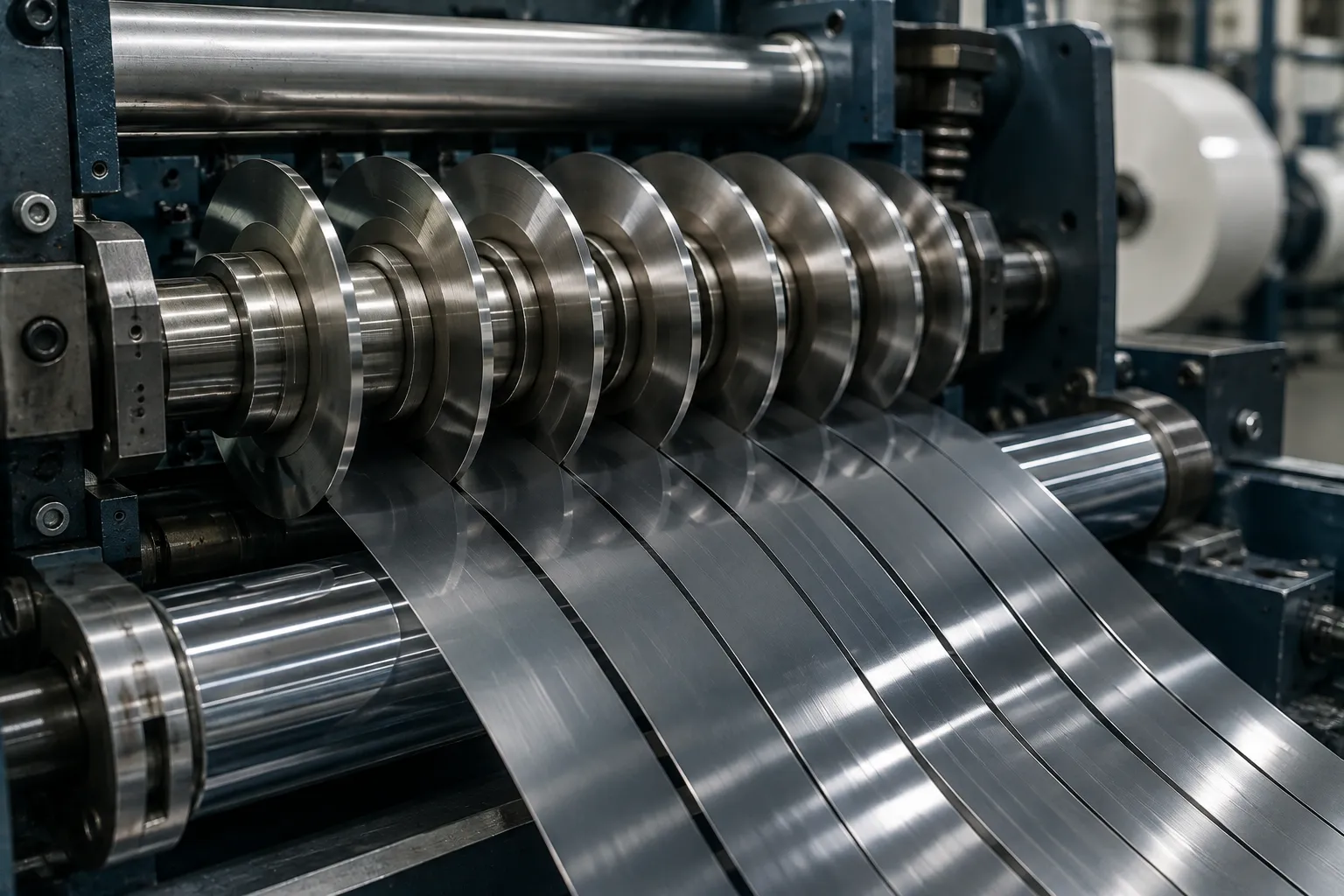
Recommended Circular Slitter Knives
Precision circular slitter knives, tungsten carbide bottom rings, and dish bevel top knives engineered for minimal axial runout and maximum edge retention.
Key Technical Parameters
| Parameter | Recommended Setting | Impact on Edge Quality |
|---|---|---|
| Blade Overlap Depth | 0.015 to 0.035 inches (0.38 - 0.89 mm) | Prevents blade slippage and reduces edge burr formation |
| Shear Clearance | 5 to 10 percent of web thickness | Maintains clean shear line without pinching or tearing material |
| CANT Angle | 0.25 to 0.75 degrees (15′ - 45′) | Ensures consistent single-point contact along the slit edge |
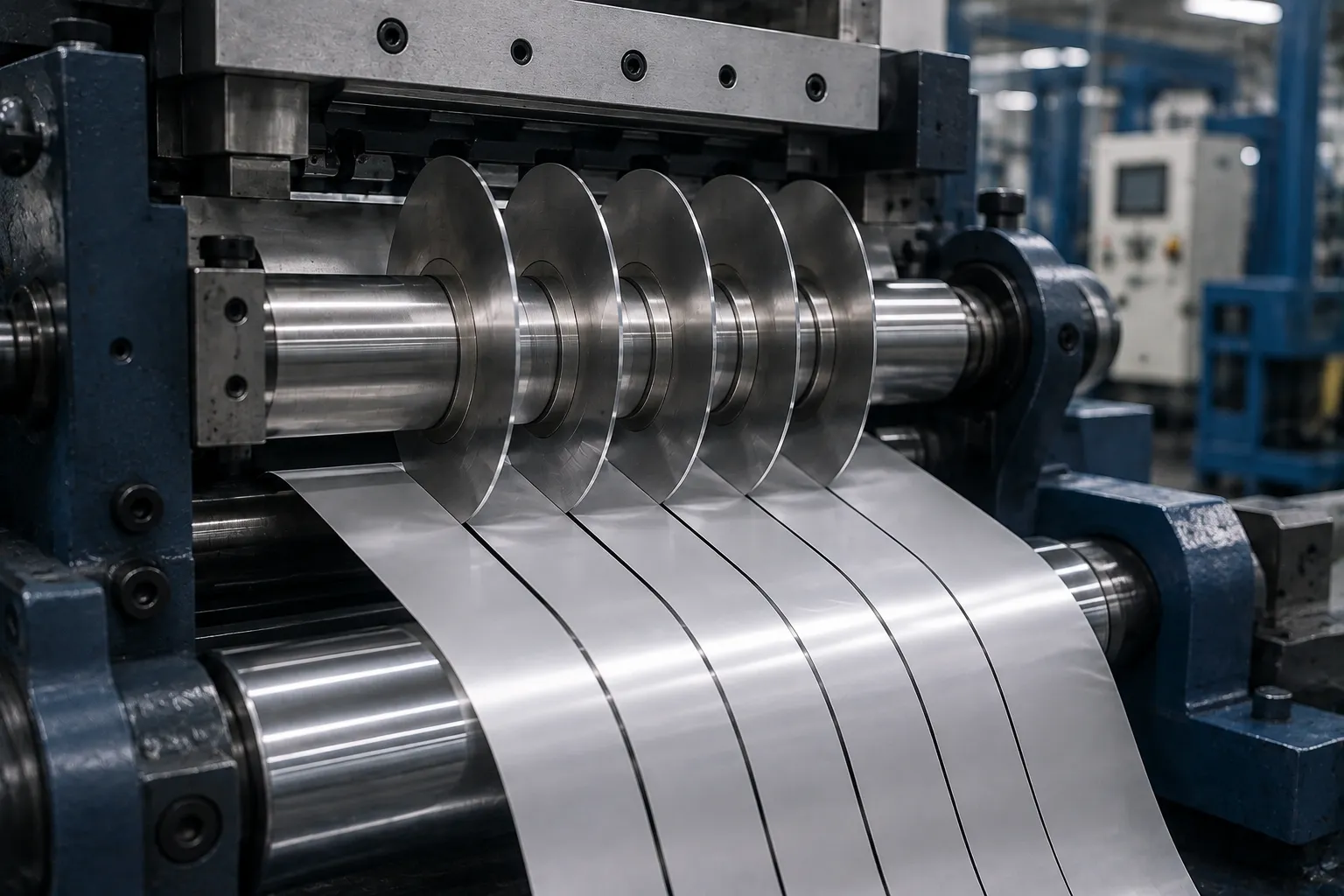
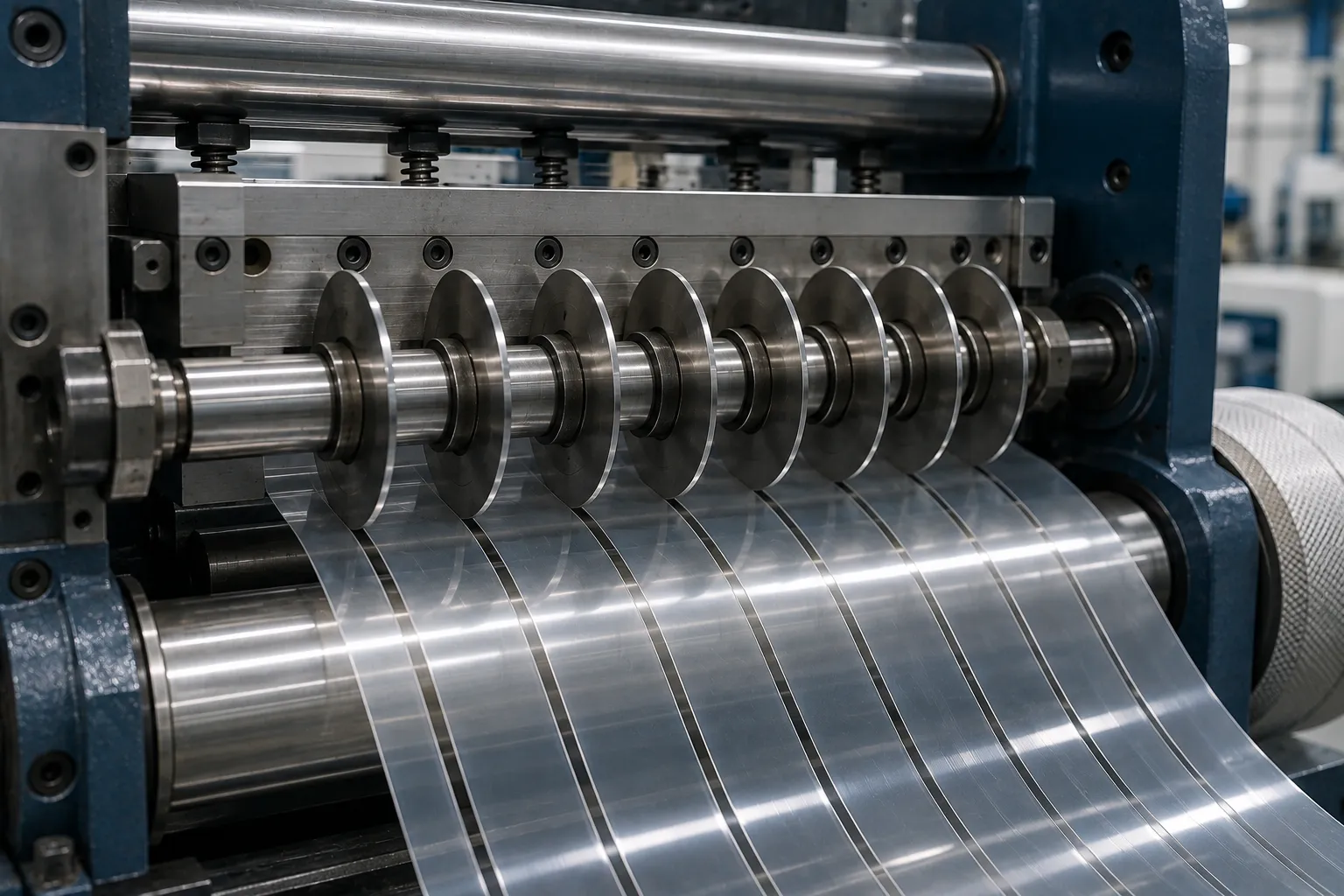
Slitting Knife Material & Hardness Selection Matrix
Selecting the ideal slitting knives and hardness profile directly dictates blade longevity, slit edge quality, and overall operational efficiency. Industrial web converting presents a continuous trade-off between abrasive wear resistance and mechanical shock absorption. Operating softer steel leads to rapid bevel dulling, edge deformation, and micro-burring on converted webs, whereas excessively brittle alloys risk catastrophic chipping under high line tension. At Shark Cutting, we manufacture industrial slitting blades utilizing premium imported tool steels, high-speed steels, and fine-grain tungsten carbide. Paired with specialized multi-stage thermal processing, our knives achieve uniform hardness, minimal internal stress, and superior cutting edge retention across all converting substrates.
| Material Metric | D2 Tool Steel (1.2379) | M2 High-Speed Steel (1.3343) | Premium Tungsten Carbide |
|---|---|---|---|
| Hardness Range | 58 to 62 HRC | 62 to 65 HRC | 88 to 92 HRA (85–90 HRC Eq.) |
| Primary Substrates | General packaging films, paperboard, tissue, light metal foils | High-speed paper slitting, multi-layer laminates, nonwovens | Highly abrasive films, battery separators, ceramic tapes, FPCs |
| Wear Resistance | Moderate to High; reliable for standard converting | High; excellent friction resistance at elevated speeds | Exceptional; extends lifespan up to 50x vs tool steel |
| Impact Toughness | High; resists shock loading and web tension surges | Moderate to High; balanced fatigue resistance | Moderate; requires rigid knife holders & stable setups |
| Edge Retention | Standard sharp retention for regular slitting cycles | Extended sharpness retention during continuous high-speed runs | Maximum edge integrity; eliminates frequent sharpening stops |
| Cost Efficiency Index | Economical initial investment with low grinding costs | Optimal cost-to-performance ratio for demanding lines | Lowest cost per linear meter converted in mass production |
Substrate Adaptation for Industrial Slitting Operations
Different web substrates generate distinct wear mechanisms along the cutting bevel. Flexible film slitting involving silica additives, titanium dioxide pigments, or aluminum oxide coatings introduces intense micro-abrasion. For these highly abrasive synthetic media, carbide vs tool steel slitting blades comparisons consistently favor solid tungsten carbide, which prevents rapid edge rounding and maintains clean shear geometry across extended production runs.
High-speed paper slitting and heavy paperboard converting generate continuous frictional heat and mechanical vibration. M2 High-Speed Steel provides superior red-hardness and mechanical shock resistance, keeping cutting edges sharp without suffering heat-induced softening or fatigue micro-cracking. For general packaging films, tissue paper, and standard converting lines, D2 tool steel remains a cost-effective, dependable choice with excellent dimensional stability.
Heat Treatment Precision and Internal Stress Control
Achieving accurate blade hardness selection requires exact metallurgical controls during tool manufacturing. Every Shark Cutting industrial blade undergoes computer-monitored vacuum heat treatment followed by deep sub-zero cryogenic processing. This advanced thermal cycle transforms retained austenite into stable tempered martensite, generating a uniform carbide structure throughout the tool body.
By controlling carbide grain distribution at the sub-micron level, Shark Cutting delivers uniform hardness from the blade core to the critical shearing bevel. This rigorous stress-relief protocol eliminates internal material stress, preventing premature edge micro-chipping during shear blade engagement and ensuring strict axial runout tolerances on high-speed slitting equipment.
Key Tooling Performance Indicators
Abrasive Wear Resistance
High vanadium and chromium carbide volume fractions resist abrasive web fillers, preventing edge dulling and maintaining bevel geometry.
Dynamic Impact Toughness
Refined metallurgical grain structures absorb heavy shock loads and line tension surges, protecting shear edges against catastrophic chipping.
Edge Retention Integrity
Preserves crisp shearing angles over long campaigns, eliminating slit-edge burrs, web stringing, and airborne slitting dust.
Lifecycle Cost Optimization
Extended operation between regrinding intervals minimizes machinery downtime, lowers maintenance costs, and maximizes return on investment.
Carbide vs. Tool Steel Slitting Blades Analysis
Evaluate tungsten carbide versus high-speed steel performance for your exact slitting machine parameters. Review technical alloy specifications, wear coefficient data, and regrinding guidelines.
Slitting Blade Troubleshooting and Defect Prevention
Evaluating cutting edge quality and monitoring slitting blade wear provide critical operational data to reverse-engineer blade selection. By identifying root causes such as thermal stress, shear clearance misalignments, lateral runout, and substrate friction, engineers can optimize tool geometry, hardness levels, and material grades to eliminate common slitting line defects and cut scrap rates.
Eliminating Edge Burrs and Material Stringing
Edge burrs, frayed slit margins, and polymer stringing indicate incomplete substrate shearing. This defect routinely occurs during high-speed slitting of flexible packaging films, nonwovens, laminated paperboard, and pressure-sensitive adhesive tapes.
Root Cause Analysis
- Suboptimal primary bevel angles causing web deformation prior to shear separation.
- Cutting edge radius breakdown exceeding maximum micro-grain sharpness limits.
- Excessive lateral clearance or incorrect cant angles between top and bottom shear knives.
Bevel Geometry Refinement & Edge Precision Tuning
Resolving burr formation demands precise tuning of cutting edge geometry and mechanical overlap tolerances. Fine-tuning the bevel profile lowers cutting resistance, preventing tensile elongation prior to separation.
- ✓ Optimize Bevel Geometry: Transition from single broad bevels to compound double-bevel or compound radius profiles for clean penetration.
- ✓ Precision Regrinding: Maintain mirror-finish cutting edge radii under sub-micron tolerances to achieve clean shear action without material tearing.
- ✓ Shear Clearance Calibration: Re-align top and bottom knife overlap and side pressure to exact tolerances based on substrate caliper.
Carbide Upgrades and Thermal Friction Control
Combat severe abrasive wear and thermal degradation by migrating to high hot-hardness substrates and low-friction PVD coatings designed for high slitting velocities. Selecting high-performance circular slitter knives ensures long-term operational stability.
- ✓ Substrate Material Upgrade: Replace standard tool steel with fine-grain Tungsten Carbide or M2/M35 High-Speed Steel for enhanced wear resistance.
- ✓ Advanced PVD Coatings: Apply TiAlN, DLC, or anti-friction coatings to lower friction coefficients and reduce thermal transfer.
- ✓ Friction Management: Recalibrate knife overlap depth and setup routines to minimize sliding resistance and dissipate heat efficiently.
Resolving Rapid Blade Wear and Thermal Buildup
Accelerated edge wear and excessive friction-induced heat degrade cut quality, leading to frequent line halts, web dust contamination, and elevated tooling costs. This issue routinely plagues conversion operations handling abrasive films, metallic foils, heavily filled polymers, and abrasive paper stocks.
Root Cause Analysis
- Insufficient hot-hardness in conventional tool steel exposed to sustained high-velocity web friction.
- Abrasive mineral additives (e.g., TiO2, CaCO3) eroding the micro-structure of the cutting edge.
- Excessive blade overlap depth or improper friction drag increasing heat accumulation at the cut zone.
Preventing Shear Knife Chipping and Blade Fracture
Micro-chipping and catastrophic edge fractures on rotary shear slitting knives generate hazardous metal debris, damage slitted roll profiles, and cause unplanned downtime. High-impact slitting lines cutting rigid plastics, battery foils, and heavy paperboard are especially vulnerable.
Root Cause Analysis
- Imbalance between blade hardness and mechanical impact toughness (excessive brittleness).
- High side-thrust forces, axial play, or arbor runout within the shear knife assembly.
- Severe mechanical shock from thick web splices, tape seams, or foreign inclusions passing through the shear point.
Toughness-Balanced Metallurgy & Arbor Rigidity Alignment
Preventing brittle fracture requires choosing tough tool steel matrix formulations, optimizing heat treatment tempering, and eliminating mechanical vibration and runout.
- ✓ Metallurgical Tempering: Adjust vacuum heat treatment and cryogenic tempering to achieve maximum impact toughness without sacrificing wear resistance.
- ✓ Runout & Shaft Calibration: Maintain sub-micron radial and axial runout tolerances across all top and bottom knife shafts and locking collars.
- ✓ Impact-Resistant Alloys: Transition to powder metallurgy steels (e.g., CPM grades) or tough fine-grain carbide grades with tailored binder ratios.
Sharkcutting Engineering Diagnostics and Parameter Tuning
Industrial slitting defects rarely stem from a single factor. Cutting edge performance is governed by the continuous interplay between knife metallurgy, bevel geometry, machine setup, and web substrate behavior. The engineering consulting team at Sharkcutting offers specialized diagnostics, custom bevel re-engineering, and tailored material selections to eliminate slitting line defects, lower scrap rates, and maximize tool longevity.
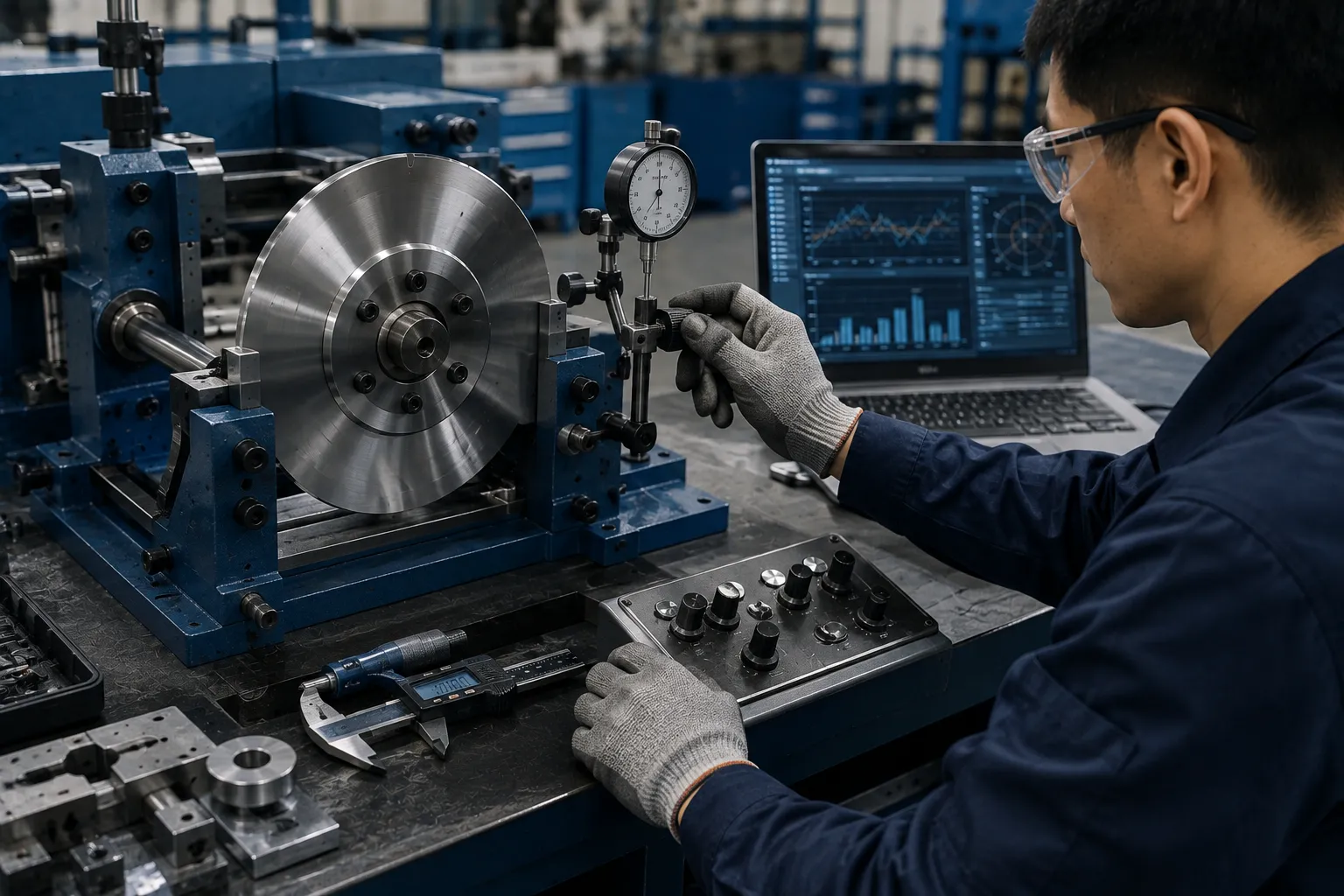
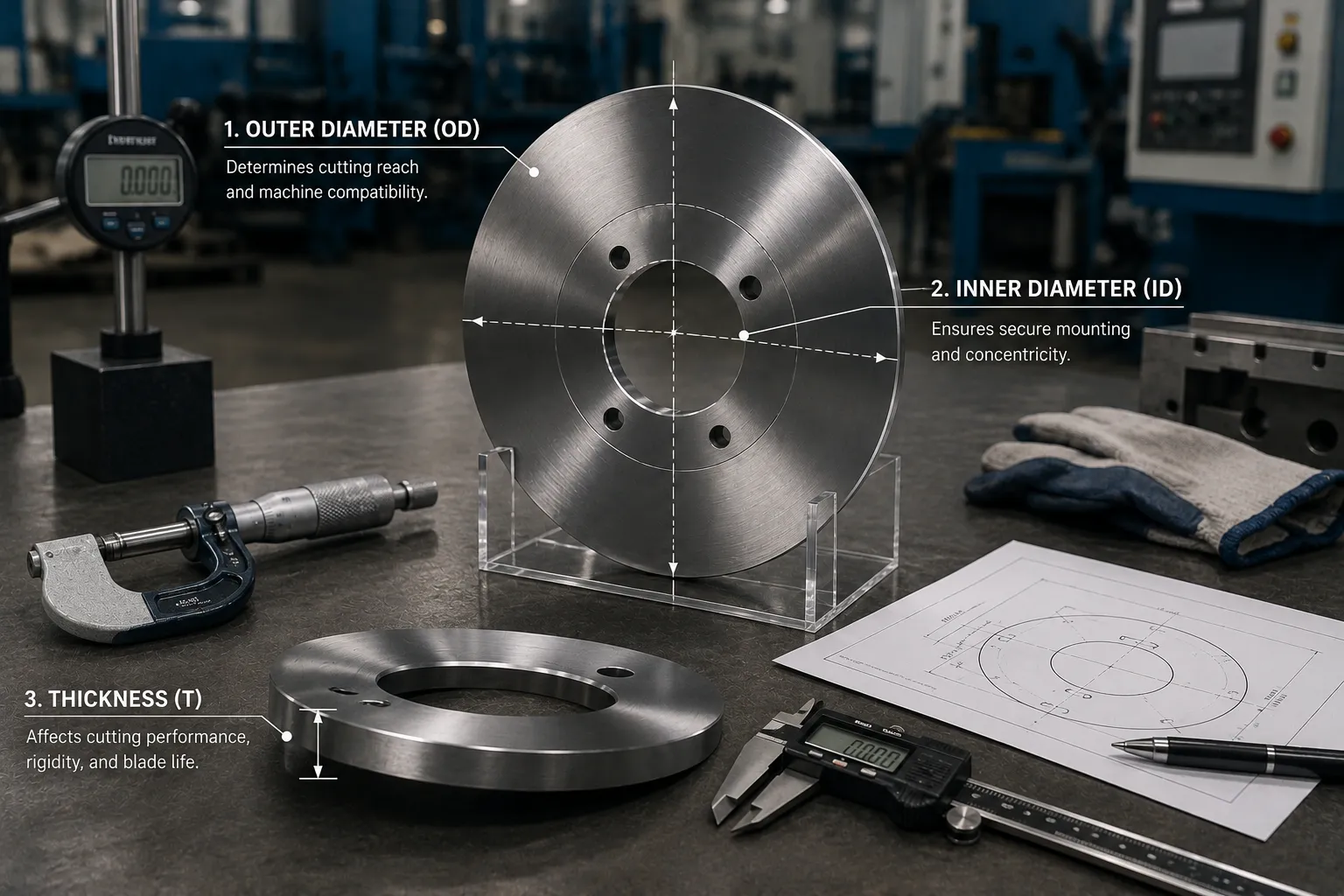
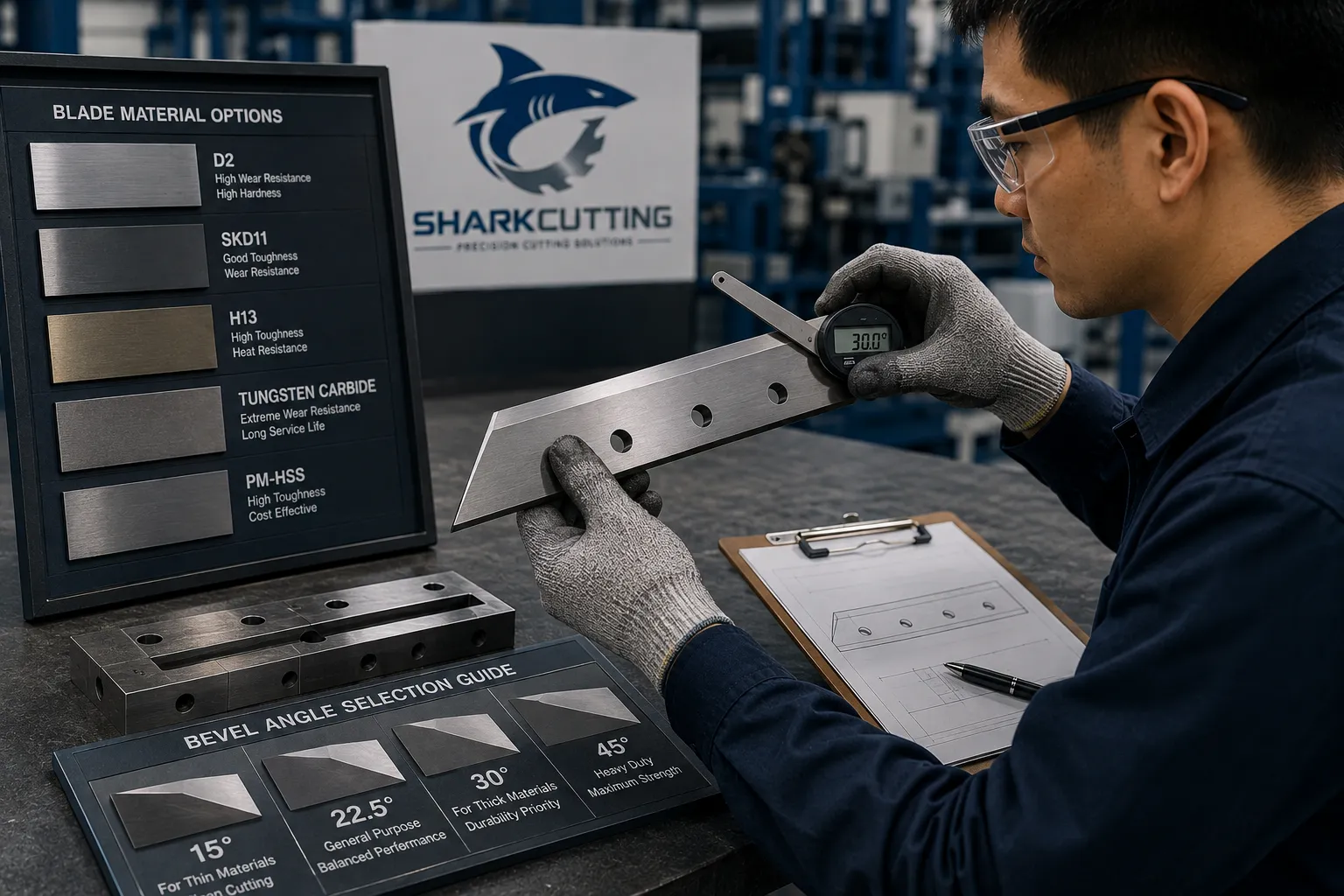
Identify Equipment Type & Holder Dimensions
Establish accurate dimensional baseline measurements. Identifying precise inner diameter, outer diameter, and thickness tolerances prevents shaft runout and ensures tight mounting lock.
Inner Diameter (ID)
Arbor shaft size, keyway dimensions, and expansion ring tolerance specs.
Outer Diameter (OD)
Maximum cutting depth limits, clearance boundaries, and regrind margins.
Blade Thickness
Axial rigidity, side clearance, parallel flatness, and web gap settings.
Holder System
Pneumatic blade holders, mechanical lock collars, or shear slitting heads.
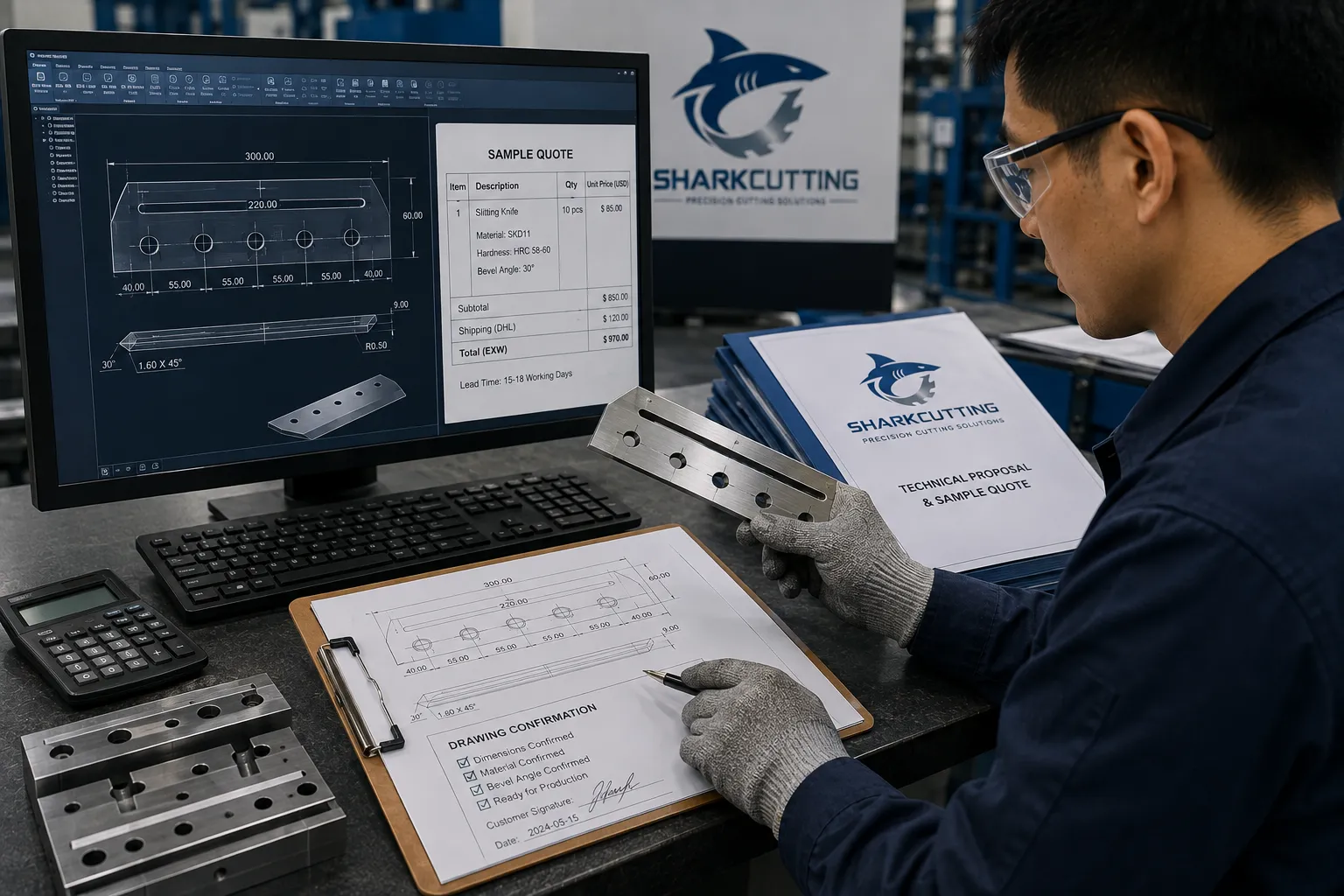
Whether using standard machines or special OEM equipment, our premium slitting knives can be quickly matched or custom manufactured per your exact drawings.
Step 1 Deliverable
Custom sizing profile locked in with exact ID/OD/thickness parameters, ready for mechanical stress and substrate evaluation.
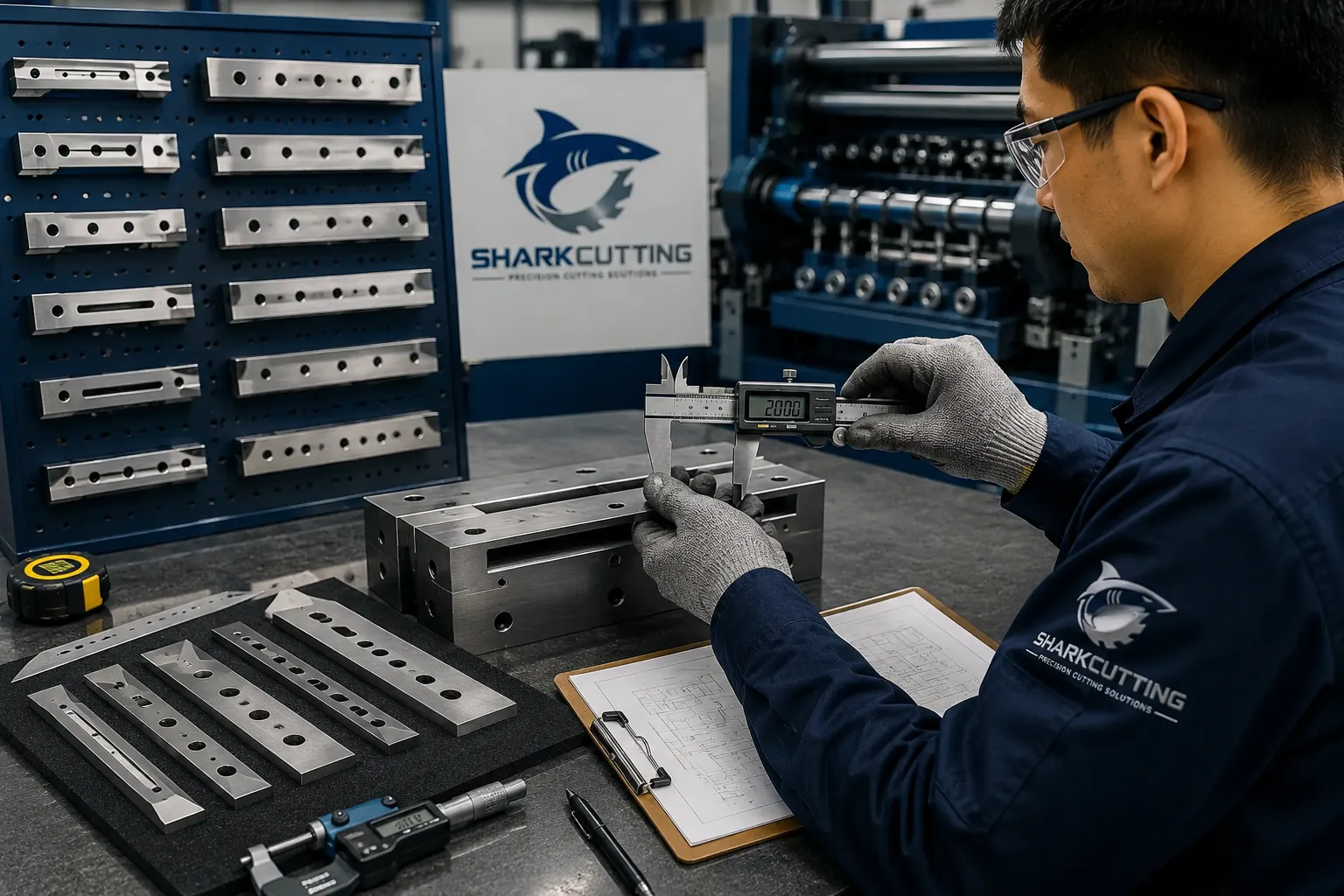
Lock In Your Slitting Blade Parameters
Partner with Sharkcutting for expert technical validation, sample prototype testing, and rapid custom blade manufacturing.
Frequently Asked Questions About Slitting Knife Selection and Maintenance
Get authoritative answers on shear clearance setup, blade sharpening tolerance, regrinding schedules, and custom tool engineering from the technical experts at Sharkcutting.
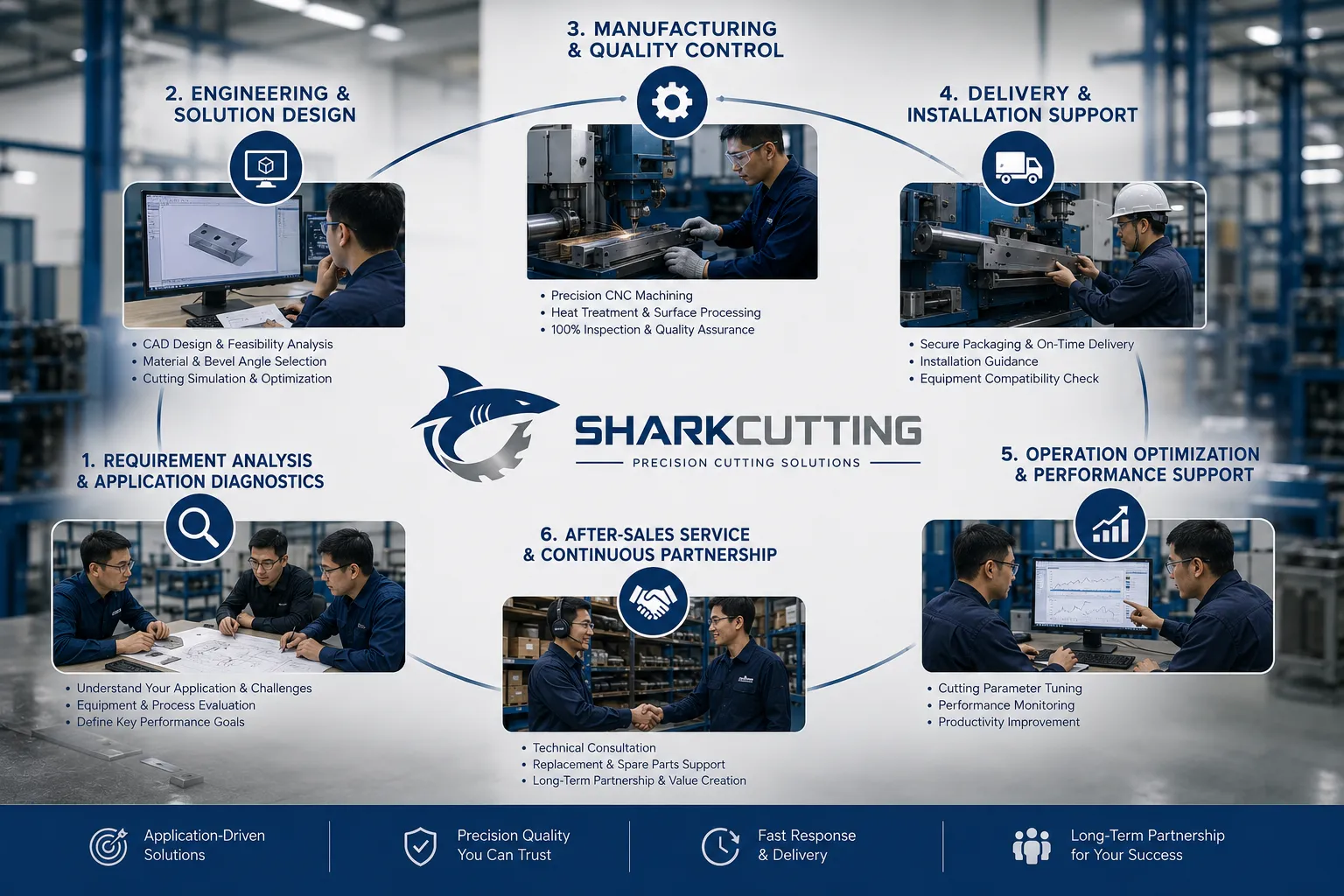
Full Lifecycle Technical Services
Sharkcutting after-sales and technical support covers comprehensive industrial knife services. Our engineers assist you with precise regrinding guidance, shear knife overlap optimization, and specialized custom coating options across our full line of industrial slitting knives.
Determining Top and Bottom Shear Knife Overlap and Clearance Settings
Proper shear slitting performance depends entirely on accurate vertical overlap depth and horizontal clearance. For high-speed applications using premium shear slitting knives, vertical overlap ensures consistent point contact between the top female blade and the bottom male knife, while horizontal clearance prevents side pressure distortion and micro-chipping.
- Vertical Overlap Depth: For standard flexible films, foils, and paper, top and bottom blade overlap typically ranges from 0.5 mm to 1.2 mm. Thicker substrates or heavy-gauge paperboards require greater overlap up to 2.0 mm to prevent the web from riding over the blade edge.
- Lateral Shear Clearance: Set horizontal clearance at approximately 5% to 10% of total material thickness. For example, a 100-micron plastic film requires a lateral gap of 5 to 10 microns.
- Cant Angle Alignment: Maintain a strict cant angle between 0.25° and 0.50° depending on blade rigidity to ensure precise scissor-action cutting without creating excessive friction heat.
Engineering Tip: Insufficient overlap creates edge burrs and stringing, while excessive overlap accelerates lateral knife wear and causes premature blade dulling. Sharkcutting technical advisors provide custom alignment parameters based on your specific slitter rewinder model.
Regrinding Cycle Comparison Between Carbide and High-Speed Steel Circular Knives
Tungsten carbide and High-Speed Steel (HSS M2 or D2 tool steel) exhibit vastly different wear resistance profiles, edge retention capabilities, and regrinding requirements during continuous industrial slitting operations.
Tungsten Carbide Slitter Blades
Offers 10 to 50 times longer wear life between regrinding cycles compared to standard steel. Best suited for high-speed automated lines running abrasive materials like battery separator foils, flexible packaging, and coated films. Requires CNC diamond grinding wheels to restore sub-micron edge geometry.
HSS and D2 Tool Steel Knives
Requires more frequent sharpening cycles but provides higher impact toughness and thermal shock resistance. Ideal for heavy paper conversion, thick nonwovens, and operations with frequent blade changes. Sharpened efficiently using standard CBN grinding equipment.
Sharkcutting full lifecycle support includes re-sharpening services that strictly preserve original OEM bevel angles, concentricity tolerances, and surface smoothness standards down to Ra 0.1 microns.
Reverse Customization Support from Worn Blade Samples and Drawings
Yes, reverse engineering is a core strength of Sharkcutting. When original equipment CAD drawings are unavailable or legacy blade specifications are lost, our engineering lab can manufacture exact replacement slitting blades directly from physical samples or worn tooling.
- 3D CMM Laser Scanning: We capture exact physical dimensions including inner diameter, outer diameter, keyways, pin holes, and bevel profiles.
- Metallurgical Analysis: Our material laboratory analyzes the chemical composition and grain structure of your worn sample to match or upgrade the steel grade.
- Hardness and Stress Verification: We perform Rockwell hardness testing (HRC) to ensure optimal core toughness and outer edge wear balance.
- CAD Blueprint Approval: We issue a complete 2D and 3D technical drawing for customer sign-off prior to CNC grinding and heat treatment.
Surface Coatings and Non-Stick Treatments for High-Tack Substrates
Slitting pressure-sensitive tapes, medical adhesives, protective barrier films, and rubberized materials creates heavy adhesive buildup on blade bevels. This friction leads to web drag, edge deformation, frequent machine stops, and premature wear.
Provides excellent anti-stick release properties for high-tack acrylic and hot-melt adhesive tapes, minimizing blade cleaning downtime.
Titanium Nitride physical vapor deposition increases surface hardness up to 2800 HV, reducing friction coefficient and extending sharpness during high-speed film conversion.
Diamond-Like Carbon delivers extreme hardness combined with extremely low friction, preventing micro-adhesion on specialized optical films and battery separators.
Sharkcutting applies high-precision surface treatments and custom mirror polishing to eliminate material cling and maximize slitter productivity.
Blade Sharpening Tolerance Standards and Lifecycle Maintenance Practices
Maintaining precise geometric tolerances during routine blade maintenance is critical to avoiding slitting defects. Even microscopic axial runout or uneven thickness tolerances cause web wobble, uneven slit widths, and uneven shear pressure distribution.
- Total Indicated Runout (TIR): Radial and axial runout must be controlled within ±0.002 mm to ±0.005 mm for ultra-thin film slitting.
- Parallelism and Flatness: Side face flatness must be maintained within 0.001 mm to prevent wobble at web speeds exceeding 500 meters per minute.
- Demagnetization: All re-ground carbon tool steel and HSS blades must undergo complete demagnetization to prevent metallic micro-dust accumulation along the cut edge.
Sharkcutting provides dedicated grinding fixtures, complete maintenance protocols, and precise regrinding services engineered to maximize total tool lifespan across multiple sharpening cycles.
Ready to Optimize Your Slitting Knife Performance?
Send us your substrate, knife dimensions, machine model, or technical drawings. Shark Cutting engineers will evaluate your application and recommend the optimal blade geometry, material grade, hardness, and tolerance configuration.
24-Hour Response
Fast technical review
Drawing Review
CAD & OEM support
Material Matching
Steel, HSS & carbide
Start Your Engineering Review
Have Your Specifications Ready?
Submit dimensions, CAD drawings, material requirements, or current blade performance issues.
Request Custom Blade Consultation