
Industrial Knife Knowledge Base & Technical Center
Access expert industrial cutting resources, blade material selection guides, and tool maintenance manuals. Shark Cutting provides comprehensive technical documentation for circular slitter knives , shear blades, granulator knives, and custom industrial tooling.
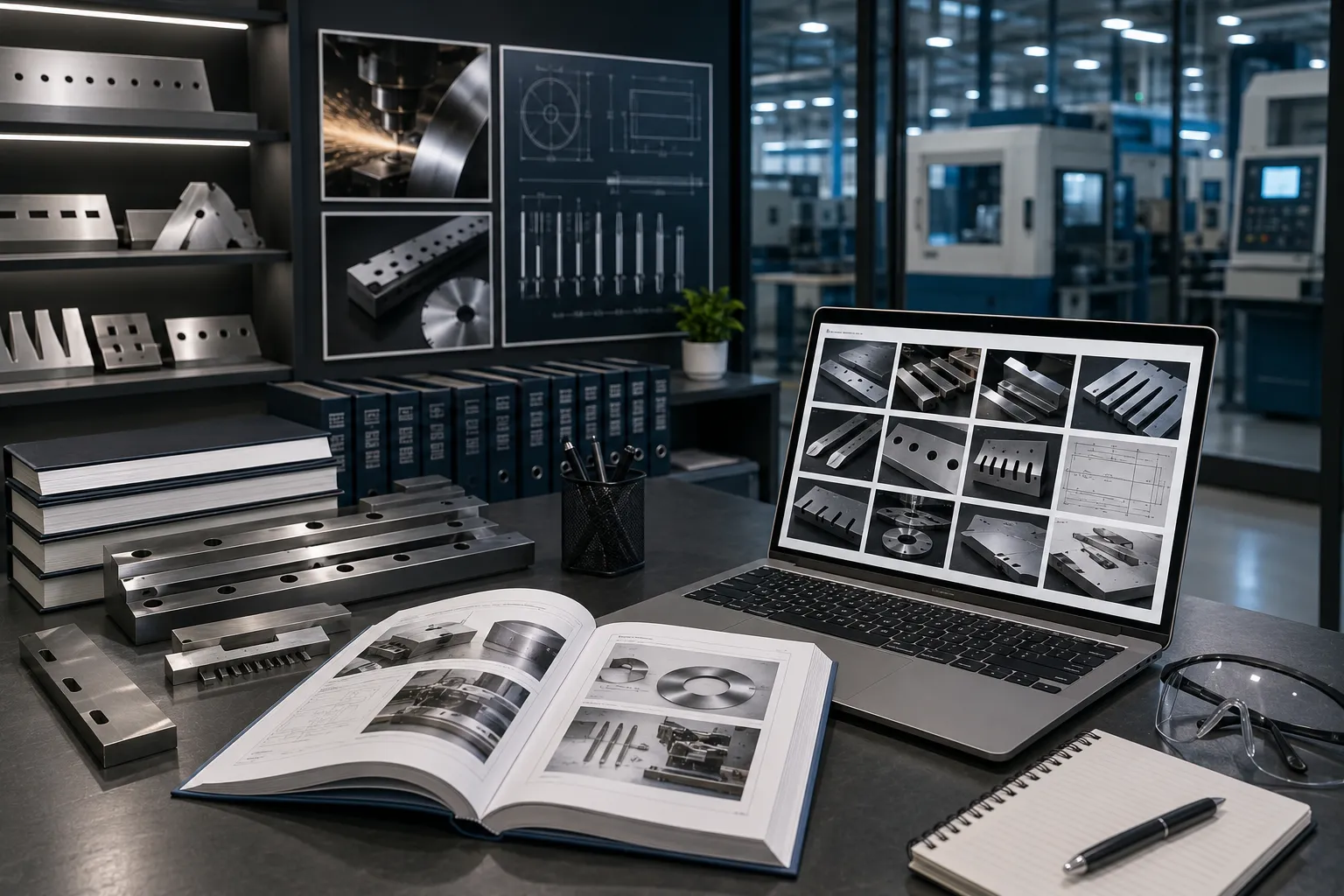
Optimizing shear clearances, blade materials, wear resistance, and dimensional accuracy for continuous high-speed industrial slitting operations.
Core Industrial Knife Knowledge Hubs & Technical Resources
Drawing from decades of precision industrial knife manufacturing and custom engineering expertise, Shark Cutting compiles real-world application data into actionable technical resources. Our core knowledge hubs guide plant operations, conversion engineers, and procurement specialists toward exact material selection, tight tolerance specs, and preventive blade maintenance routines for maximum uptime.
Industrial Knife Selection Guides & Maintenance Protocols
Achieving optimal cutting performance requires matching blade geometry and metallurgy to specific processing conditions. Shark Cutting provides in-depth technical guides covering circular slitter configuration, edge wear diagnostics, and precision regrinding procedures designed to maximize tool life and reduce production scrap.
Featured Engineering & Selection Guides
- Circular Slitter & Shear Blade Selection: Comprehensive breakdowns of shear slitting geometry, single vs. double bevel angles, and overlap settings for high-speed web conversion using premium circular slitter knives.
- Tool Steel & Alloy Grade Comparisons: In-depth evaluations of D2, SKD11, M2 high-speed steel, and tungsten carbide focusing on wear resistance, toughness, and thermal stability.
- Blade Sharpening & Maintenance Manuals: Actionable procedures for regrinding wheel selection, edge honing standards, coolant application, and total indicated runout (TIR) control.
Implementing these engineering protocols minimizes slitting dust, prevents edge burrs, and extends blade life across flexible packaging, film, paper, tissue, non-woven, and recycling applications.
Industrial Knife FAQ & Custom Blade Engineering
Resolve technical, tolerance, and purchasing questions prior to ordering. Shark Cutting delivers transparent insights on custom machine knife manufacturing, dimensional tolerances, reverse engineering capabilities, and batch lead times.
Key Purchasing & Engineering FAQs
- OEM & Custom Knife Engineering: Step-by-step guidance on custom blade development, CAD drawing verification, sample prototyping, and scalable OEM manufacturing for high-performance industrial machine knives.
- Precision Tolerances & Quality Control: Strict dimensional limits covering parallel ground surfaces, flatness tolerances within micrometers, and mirror-finish edge polishes.
- Lead Times & Procurement Logistics: Transparent timelines for standard replacements, emergency re-stocking options, custom tooling cycles, and global shipping standards.
Accurate engineering specifications guarantee 100% interchangeability with original OEM equipment, simplifying knife changeovers and eliminating fitting delays.
Authoritative Engineering Documentation for Industrial Cutting Excellence
Industrial cutting efficiency depends on precise synergy between substrate characteristics, blade metallurgy, heat treatment profiles, and edge geometry. Continuous high-speed slitting operations, heavy-duty plastic recycling granulators, paper converting lines, and metal shears operate under demanding friction, thermal stress, and impact forces. Choosing an improper blade material or incorrect bevel profile accelerates wear, increases machine downtime, and compromises cut edge quality.
Drawing on rigorous manufacturing standards, advanced CNC grinding technology, and extensive field performance testing, Shark Cutting delivers clear technical resources for plant management and mechanical engineers. Our guides help facilities optimize cutting parameters, extend regrind intervals, minimize blade wear, and achieve a lower total cost per cut across all manufacturing operations.
Blade Metallurgy & Materials
Detailed technical evaluations comparing High-Carbon High-Chromium D2 (1.2379), M2 High-Speed Steel, and micro-grain Solid Tungsten Carbide for wear balance.
Dimensional Tolerance Standards
Industry-leading dimensional tolerances covering Total Indicated Runout (TIR), parallel grinding, micro-inch surface finishes, and precise thickness matching.
Preventive Maintenance Protocols
Proactive re-sharpening schedules, optimal abrasive wheel selection, temperature-controlled coolant application, and safe blade handling protocols.
| Knowledge Hub | Core Technical Topics | Target Audience | Key Information Delivered |
|---|---|---|---|
| Selection & Maintenance Guides | Circular slitter geometry, tool steel grade selection, re-sharpening & honing standards | Plant Engineers, Maintenance Supervisors, Machine Operators | Step-by-step maintenance manuals, wear troubleshooting charts, grind allowance criteria |
| Technical & Purchasing FAQ | OEM custom knife engineering, precision tolerances (TIR/flatness), lead times & shipping | Procurement Managers, OEM Equipment Builders, Sourcing Specialists | Drawing validation checklists, tolerance specification guides, order processing timelines |
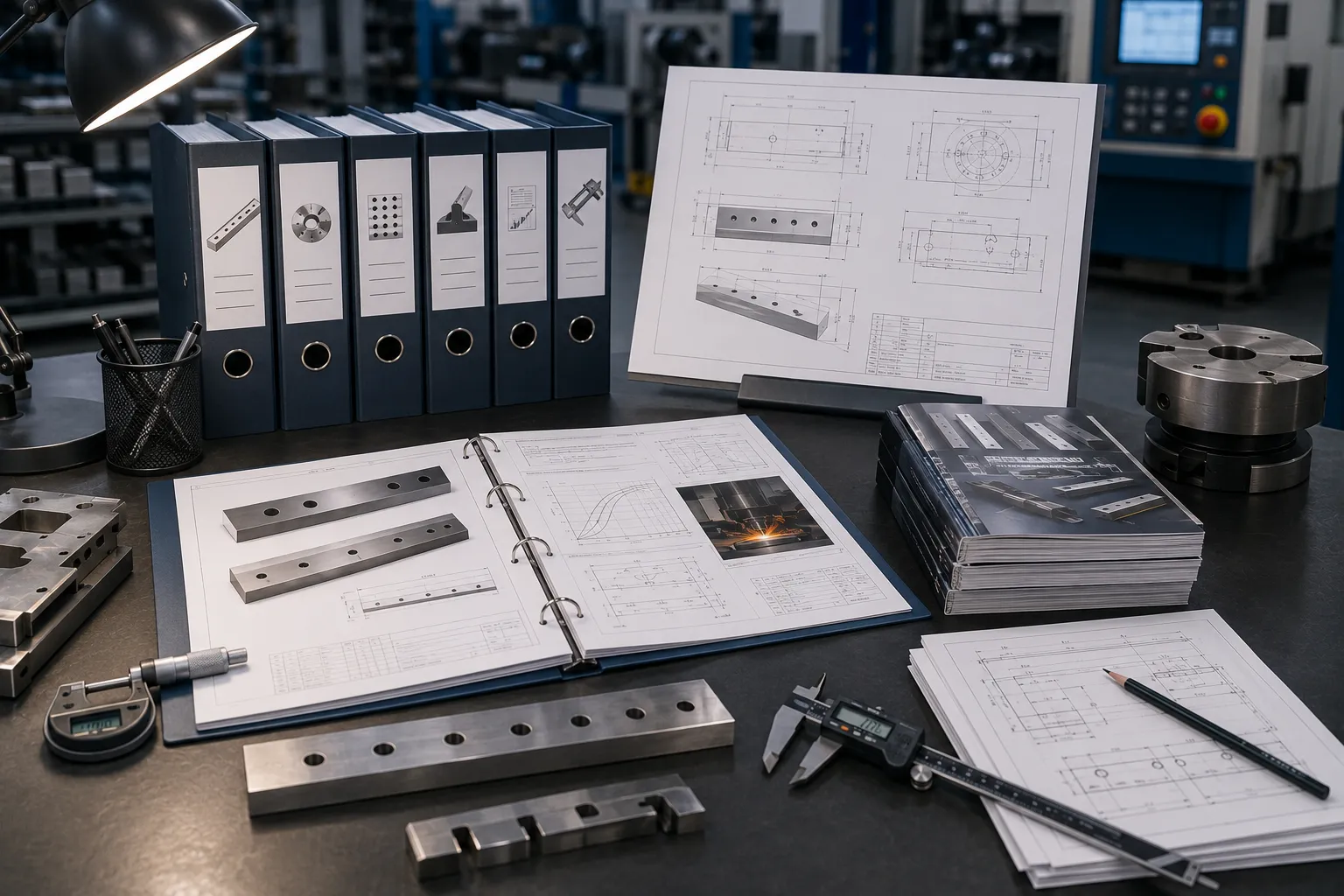
Need Tailored Industrial Blade Guidance or Custom Specifications?
Explore our dedicated resource hubs above or consult directly with Shark Cutting's engineering team for custom blade designs and application recommendations.
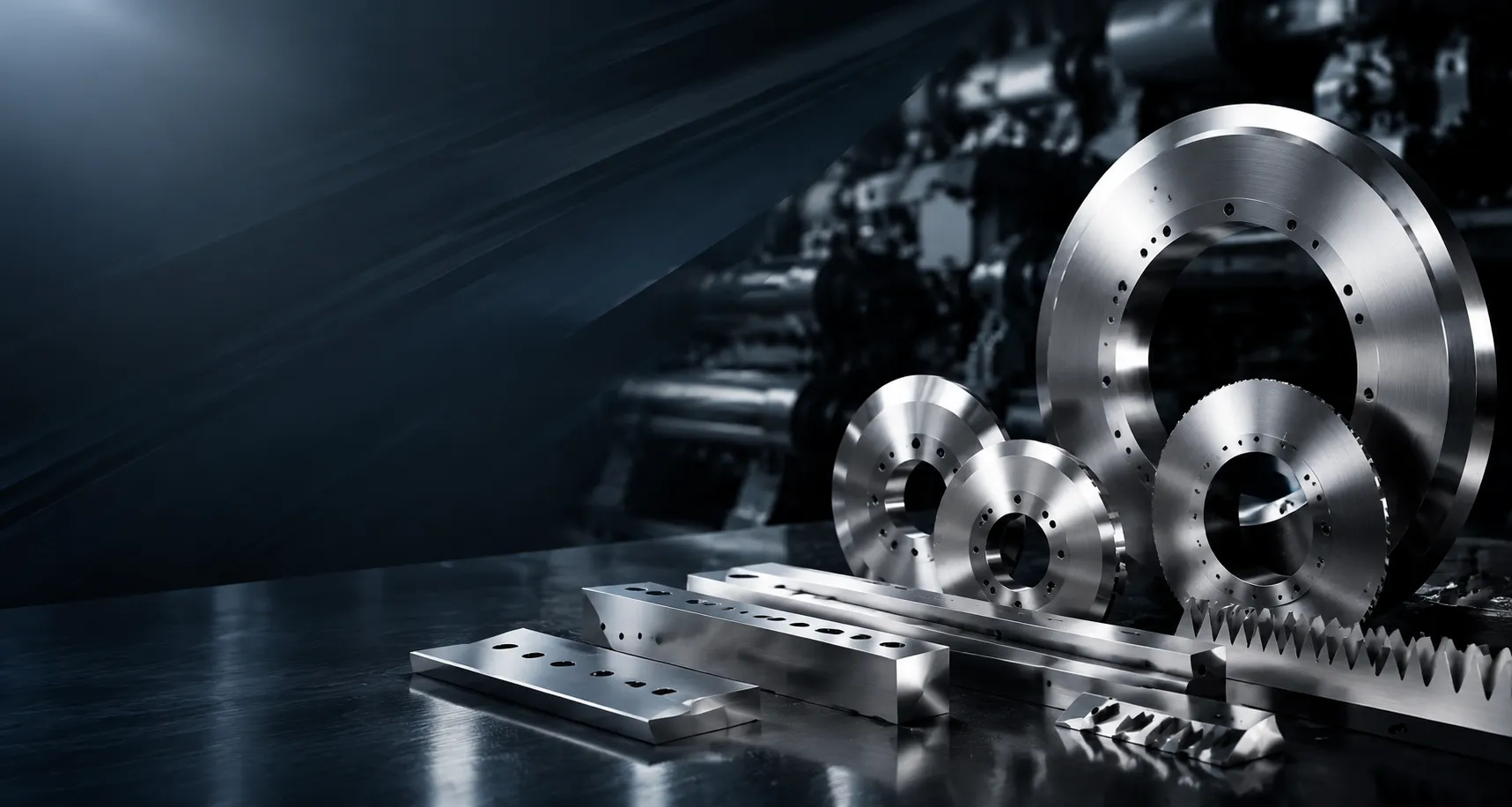
Essential Maintenance Framework for Industrial Blades
Implementing a proactive industrial blade maintenance strategy is critical for maximizing tool longevity, minimizing material scrap, and protecting high-value converting equipment. At Sharkcutting, our engineering team recommends a comprehensive three-phase protocol consisting of systematic optical inspection, precision re-sharpening, and dynamic clearance calibration.
By establishing strict tolerance standards for total indicator runout (TIR), surface finish, and hardness retention, manufacturers can prevent catastrophic blade failure and maintain consistent line speeds across all operational shifts. Continuous monitoring of cutting forces provides early detection of edge dulling, allowing technical teams to re-hone blades before irreversible micro-fracturing or structural fatigue occurs.
- Routine Optical Inspection: Identifying micro-chipping and edge roll before installing blades into active production lines.
- Clearance Recalibration: Fine-tuning horizontal and vertical blade clearances to match varying substrate calipers.
- Controlled Grinding Protocols: Restoring precise bevel geometries using flooded coolant diamond wheel resharpening.
Comprehensive Material Selection Criteria for Heavy-Duty Tooling
Selecting the ideal metallurgical alloy for industrial cutting applications requires balancing wear resistance, impact toughness, thermal stability, and corrosion resistance. High-carbon, high-chromium tool steels such as D2 and SKD11 offer outstanding abrasive wear resistance for general-purpose slitting, shearing, and granulation.
For high-speed paperboard processing or continuous flexible packaging converting, high-speed steels like M2 provide superior red hardness under elevated friction temperatures. For severe abrasive environments or high-precision optical film converting, solid tungsten carbide inserts offer maximum edge longevity and structural stiffness. For heavy-duty applications, utilizing specialized shear slitting knives ensures optimal shear-cut performance. Sharkcutting collaborates directly with plant engineers to analyze mechanical stress profiles and specify custom-tailored blade materials that minimize total cost of ownership.
- High-Carbon Tool Steels: Ideal for high-impact applications requiring shock absorption and flexural resilience.
- High-Speed Steel (HSS) Grades: Engineered for continuous high-friction slitting with exceptional thermal resistance.
- Tungsten Carbide Inserts: Recommended for ultra-high-volume processing of abrasive synthetic substrates.
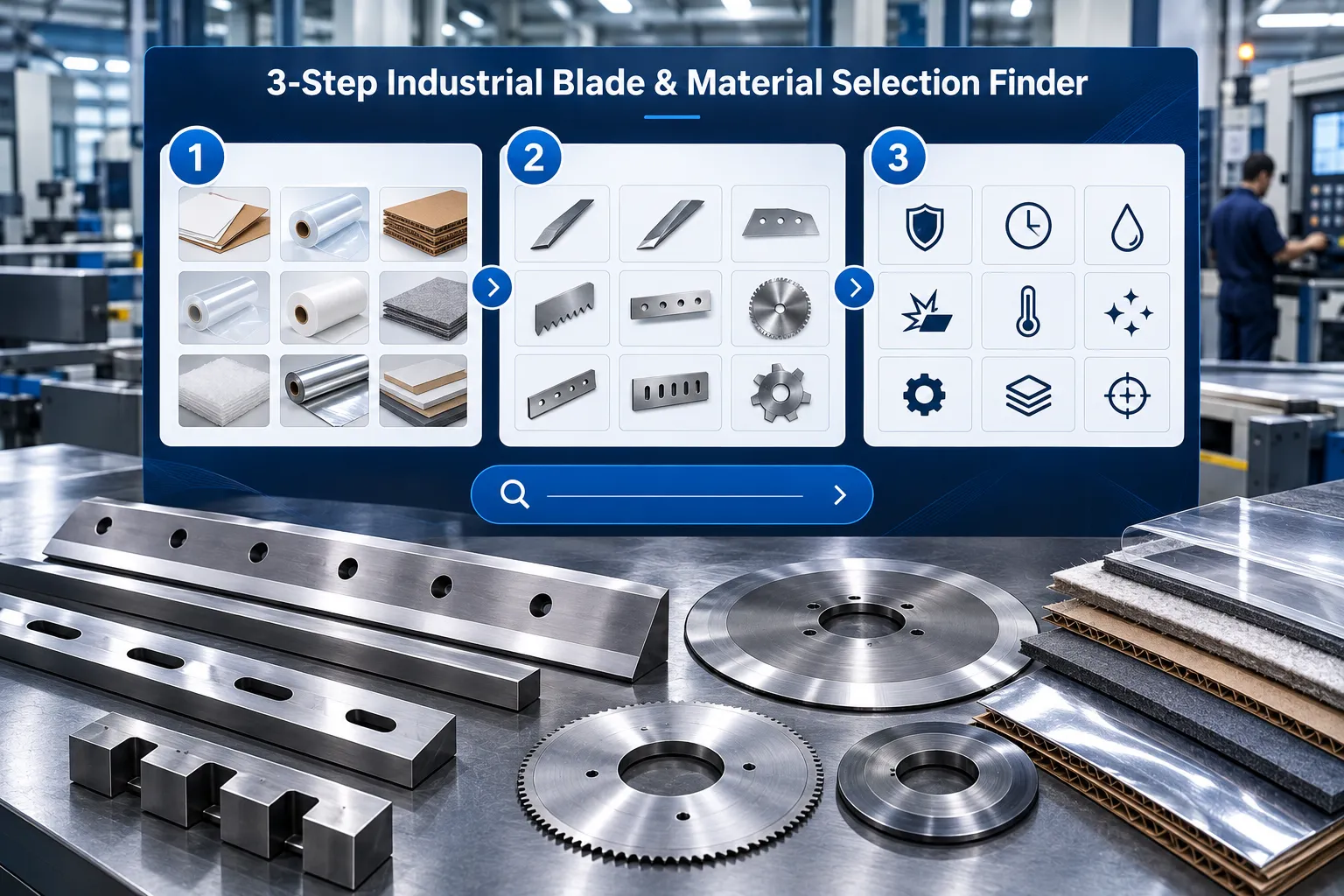
3-Step Industrial Blade & Material Selection Finder
Backed by advanced precision grinding and specialized heat treatment processes, Shark Cutting delivers custom-engineered industrial knives tailored to demanding operational environments. Browse our full line of industrial products or use our interactive selection tool below to align your substrate, cutting method, and performance requirements with the ideal alloy grade and finish.
Sub-Micron Tungsten Carbide
Solid Sub-Micron Tungsten Carbide (WC-Co)
88 - 92 HRA
Ra 0.1 µm Mirror Polish
Delivers up to 10x longer service life compared to standard tool steels, maintaining precise cutting edges during continuous high-speed production.
Vacuum Heat Treatment
Computerized multi-stage thermal processing maximizes core toughness and relieves internal stress for long-term dimensional stability.
Sub-Micron Precision Grinding
Micron-level CNC finish grinding guarantees razor-sharp edges, minimal runout, and clean, burr-free slitting performance across all slitting-knives models.
Custom OEM Geometries
Engineered bevel profiles, dual-angle edges, and custom mounting keyways tailored to exact OEM equipment specifications.
Industrial Knife Procurement and Technical FAQ
Explore detailed technical guidance on material selection, precision machining tolerances, custom manufacturing lead times, and operational maintenance strategies across our entire catalog of products. Shark Cutting provides authoritative answers backed by rigorous ISO quality standards to resolve processing challenges, improve cut precision, and minimize machine downtime.
How do I select the correct tool material based on my substrate?
Selecting the ideal tool steel requires balancing abrasive wear resistance, impact toughness, and edge retention. Matching tool steel grades to specific substrates prevents premature edge dulling, micro-chipping, and material burring during continuous converting operations across our high-performance slitting-knives.
| Material Grade | Hardness | Key Mechanical Characteristics | Recommended Substrates |
|---|---|---|---|
| SKD11 (AISI D2) | 58 - 60 HRC | High carbon/chromium alloy, excellent abrasion resistance, cost-effective performance. | Standard paper grades, cardboard, PET packaging film, flexible laminates. |
| M2 High-Speed Steel | 62 - 65 HRC | Superior red hardness, high toughness under thermal stress, excellent shock absorption. | Abrasive non-wovens, thick aluminum foils, synthetic rubber, multi-layer films. |
| Tungsten Carbide | 88 - 92 HRA | Extreme hardness, maximum resistance to abrasive wear, ultra-long edge service life. | Thin optical PET, lithium battery separator film, mineral-filled polymers. |
For highly abrasive materials like glass-fiber non-wovens or ceramic-coated separator films, Shark Cutting recommends micro-grain tungsten carbide or M2 HSS to maintain keen cutting bevels and eliminate slitting dust over extended production runs.
What is the engineering confirmation and production lead time for custom machine knives?
Shark Cutting operates a structured four-stage manufacturing protocol for custom and non-standard industrial blades. This guarantees exact dimensional tolerances and consistent grain structure prior to full batch production.
- 1Technical Blueprint Review (24 to 48 Hours): Our design engineers audit CAD/CAM files, tolerance callouts, bevel angles, and mounting specs.
- 2DFM & Forging Billets Allocation (1 to 2 Days): Design for Manufacturability sign-off and selection of certified vacuum-degassed tool steel stock.
- 3CNC Machining & Vacuum Heat Treatment (7 to 10 Days): Precision turning, wire EDM, and multi-stage computer-controlled vacuum hardening to eliminate internal stress.
- 4Lap Grinding & CMM Inspection (2 to 3 Days): High-precision mirror surface grinding, bevel honing, and final coordinate measuring machine (CMM) verification.
Standard custom prototype orders typically ship within 2 to 3 weeks following blueprint approval. Expedited manufacturing channels are available for urgent plant breakdown requirements.
How can I extend slitting blade life through angle adjustment and runout tolerance control?
Maximizing circular-slitter-knives operational longevity requires tight control over mechanical shaft alignment, lateral pressure settings, and Total Indicated Runout (TIR). Proper setup parameters dramatically lower friction and minimize edge chipping.
Control Radial and Axial TIR (≤ 0.002 mm)
Excessive runout causes cyclical localized point loading during rotation, creating premature wear spots and micro-fractures. Keep knife arbors and precision spacers clean and distortion-free.
Optimize Cutting Bevel Angles
Incorporate compound double-bevel geometries (e.g., a 45° primary bevel combined with a 60° secondary relief) to minimize mechanical wedging forces when slitting heavy film or paper webs.
- Calibrate Shear Cant Angle: Set the vertical blade overlap between upper and lower slitters to the minimum depth required for clean separation (typically 0.5 mm to 1.0 mm).
- Regulate Side Cant Load: Minimize spring-loaded axial force. Excessive loading generates intense frictional heat that tempers and softens the cutting edge.
- Implement Scheduled Resharpening: Regrind blades before edge rounding exceeds 0.05 mm to remove minimal steel volume and double total blade lifetime cycles.
Does Shark Cutting offer OEM reverse engineering and legacy blade replication?
Yes. Shark Cutting delivers end-to-end reverse engineering services for discontinued, customized, or hard-to-find legacy industrial machine knives. Clients can supply worn blade samples, fragments, or physical templates for full digital reconstruction.
Every reverse-engineered knife comes backed by a 100% fit, form, and function guarantee, meeting or exceeding original equipment manufacturer performance standards.