
Custom Engineering Knives & Technical Consultation
Transform complex cutting requirements into long-lasting precision tooling. Sharkcutting delivers end-to-end technical support—from expert drawing review and assembly tolerance verification to metallurgy selection and non-standard blade design for industrial slitting knives.
Precision Machining and Special Cutting Parts Capabilities
Sharkcutting provides advanced precision machining and custom blade engineering for complex industrial applications. Beyond standard OEM manufacturing, our engineering team performs thorough FEA structural evaluations, custom metallurgical selection, and high-precision grinding technology to produce durable special cutting parts engineered for demanding shear and slitting environments.
Advanced CAD/CAM Drawing Review
Every custom blade engineering project starts with a detailed evaluation of CAD and 3D STEP files. Our engineers analyze cutting-edge geometry, stress relief zones, and material deformation limits under continuous shear load to resolve structural vulnerabilities prior to production.
- Cutting Edge Geometry: Optimization of primary, secondary, and micro-bevel angles tailored to specific material shear loads.
- Stress Relief Engineering: Strategic filleting and notch radius optimization to prevent stress concentration and cracking.
- Deformation Resistance: Finite element stress modeling under high-velocity continuous cutting and thermal expansion forces.
Assembly and Fitment Checks
Verifying mechanical assembly and dimensional accuracy ensures seamless integration with automated production machinery. We execute rigorous fitment checks for packaging lines, paper converting machinery, and film slitting equipment to eliminate spindle runout and maintain perfect axial alignment.
- Dimensional Accuracy: Critical machining dimensions held strictly to tolerances as tight as ±0.002 mm.
- Arbor and Housing Fitment: Precision bore sizing with zero-clearance matching for continuous dynamic stability.
- Multi-Blade Alignment: Parallelism verification across multi-blade slitting shafts and precision spacer sets.
Metallurgy and Heat Treatment Optimization
Selecting the correct alloy composition is essential for extending tool life and maximizing wear resistance. Sharkcutting formulates engineered heat treatment profiles for high-speed steels, solid tungsten carbide, and bi-metal special cutting parts matched to your raw material matrix.
- Substrate Selection: High-speed steels (M2, M35, ASP 2025), D2 tool steel, and fine-grain tungsten carbide grades.
- Vacuum Heat Treatment: Computer-controlled thermal cycles that balance core toughness with edge wear resistance.
- Sub-Zero Cryogenic Processing: Deep cryogenic treatment that transforms retained austenite into stable martensite.
Ultra-Precision Grinding and Surface Finishing
Leveraging multi-axis CNC grinding technology, we produce ultra-smooth surface finishes down to Ra 0.2 or mirror-polished Ra 0.05. Superior surface refinement reduces friction, prevents polymer or adhesive buildup on special cutting parts, and dramatically extends service intervals.
- Superfinishing Grinding: Multi-axis CNC creep-feed grinding technology producing razor-sharp, burr-free edge profiles.
- Micro-Honed Edge Profiles: Custom edge preparation radii formulated specifically for thin films, foils, or heavy rubber.
- Anti-Friction Surface Treatments: Optional TiN, TiAlN, DLC, or Teflon anti-stick surface coatings.
Engineering Specifications and Tolerance Thresholds
Sharkcutting's advanced precision machining procedures are developed to overcome high-wear and high-shear production bottlenecks. By rigorously controlling metallurgy, heat treatment parameters, and grinding technology tolerances, we manufacture non-standard special cutting parts engineered to outperform standard OEM replacement components.
Whether your production lines handle high-speed flexible film slitting with custom shear slitting knives, abrasive plastic recycling, or high-volume packaging converting using specialized circular slitter knives, our technical team guarantees exact dimensional accuracy, mechanical fitment, and long-term operational durability.
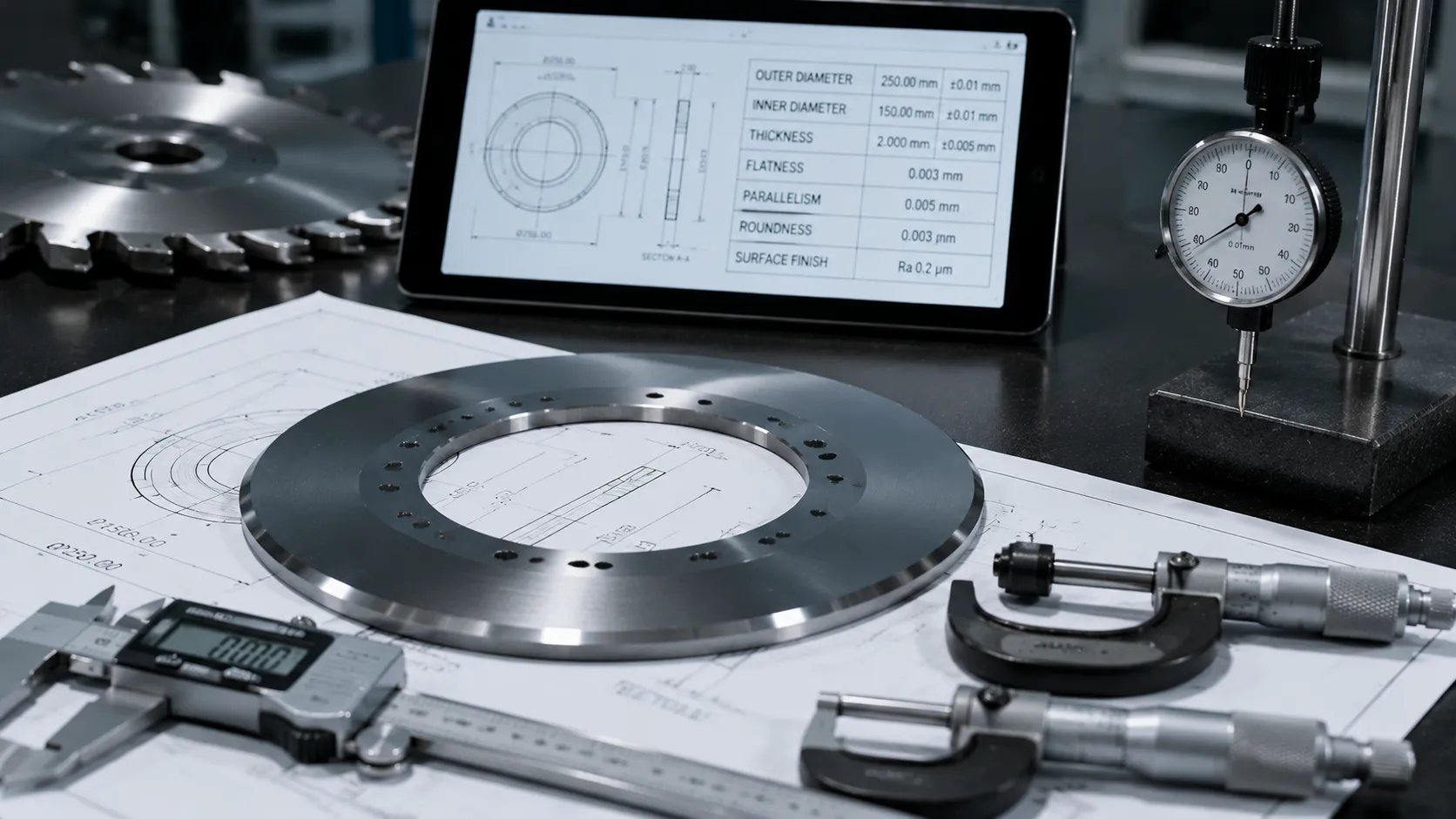
| Capability Parameter | Technical Standard | Tolerance Threshold | Industrial Application Focus |
|---|---|---|---|
| Dimensional Accuracy | Multi-Axis CNC Precision Machining | ±0.002 mm | High-speed slitting arbors and custom gang-blade assemblies |
| Surface Roughness | CNC Grinding Technology & Lapping | Ra 0.2 to Ra 0.05 | Thin packaging film, foil converting, and nonwoven slitting |
| Hardness Control | Vacuum Heat Treatment & Cryogenics | HRC 58 to HRC 68 | Abrasive plastic recycling and heavy shear machinery |
| Parallelism and Runout | Optical CMM & Dynamic Runout Inspection | ≤ 0.003 mm across full span | Rotary tissue converting and precision shear units |
4-Step Workflow for Customized Cutting Solutions
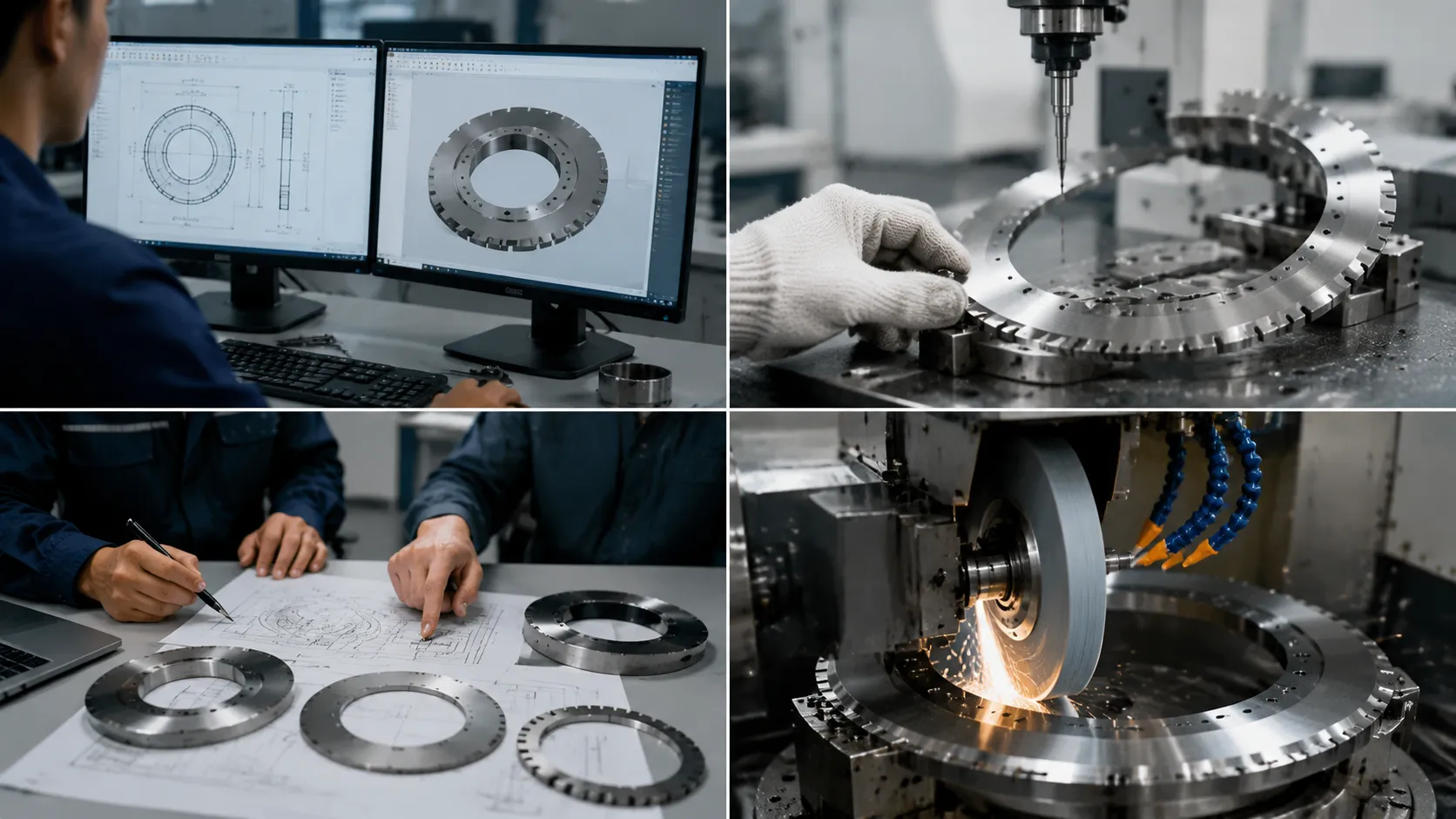
From CAD intake to pre-shipment sign-off, Shark Cutting delivers rigorous drawing review workflows and precise fitment checks to guarantee flawless operational performance across our entire line of industrial machine knives.
CAD Drawing Review Workflow
Submit native DWG, STEP, DXF, or PDF files. Our engineering team conducts a detailed drawing review workflow to evaluate edge geometry and dimensional tolerances.
- ✓ Native multi-format CAD ingestion
- ✓ Geometrical stress point analysis
- ✓ 24-hour technical feedback
Fitment Checks & Substrate Evaluation
Engineers perform comprehensive fitment checks against OEM machine housings while matching tool steel grades to target substrates, ensuring seamless integration for high-performance film cutting knives and specialized nonwoven knives.
- ✓ Housing & arbor clearance verification
- ✓ Application-specific alloy matching
- ✓ Prevention of on-site retrofitting delays
DFM Optimization & Transparent Quoting
Our Design for Manufacturability (DFM) assessment optimizes production pathways to extend tool life, paired with transparent commercial quotes.
- ✓ DFM & DFA structural refinement
- ✓ Itemized cost & material options
- ✓ Guaranteed lead times & milestones
Precision Production & QA Sign-Off
Every customized cutting solution is manufactured under strict heat treatment parameters and CNC grinding standards, backed by complete inspection reports.
- ✓ Controlled vacuum heat treatment
- ✓ Sub-micron surface finish grinding
- ✓ Full dimensional QA sign-off
Ready to eliminate assembly risks and maximize tooling longevity? Submit your CAD drawings today for a comprehensive engineering assessment within 24 hours.
Submit Your DrawingsMaterial Selection and Industrial Application Matrix
Selecting the optimal metallurgical composition is critical for maximizing cutting tool longevity, reducing machine downtime, and eliminating edge burrs during continuous converting operations. Sharkcutting manufactures high-performance shear slitting knives alongside custom industrial knives using high-quality steel and carbide material options engineered to withstand intense friction, mechanical shock, and thermal expansion across diverse manufacturing environments.
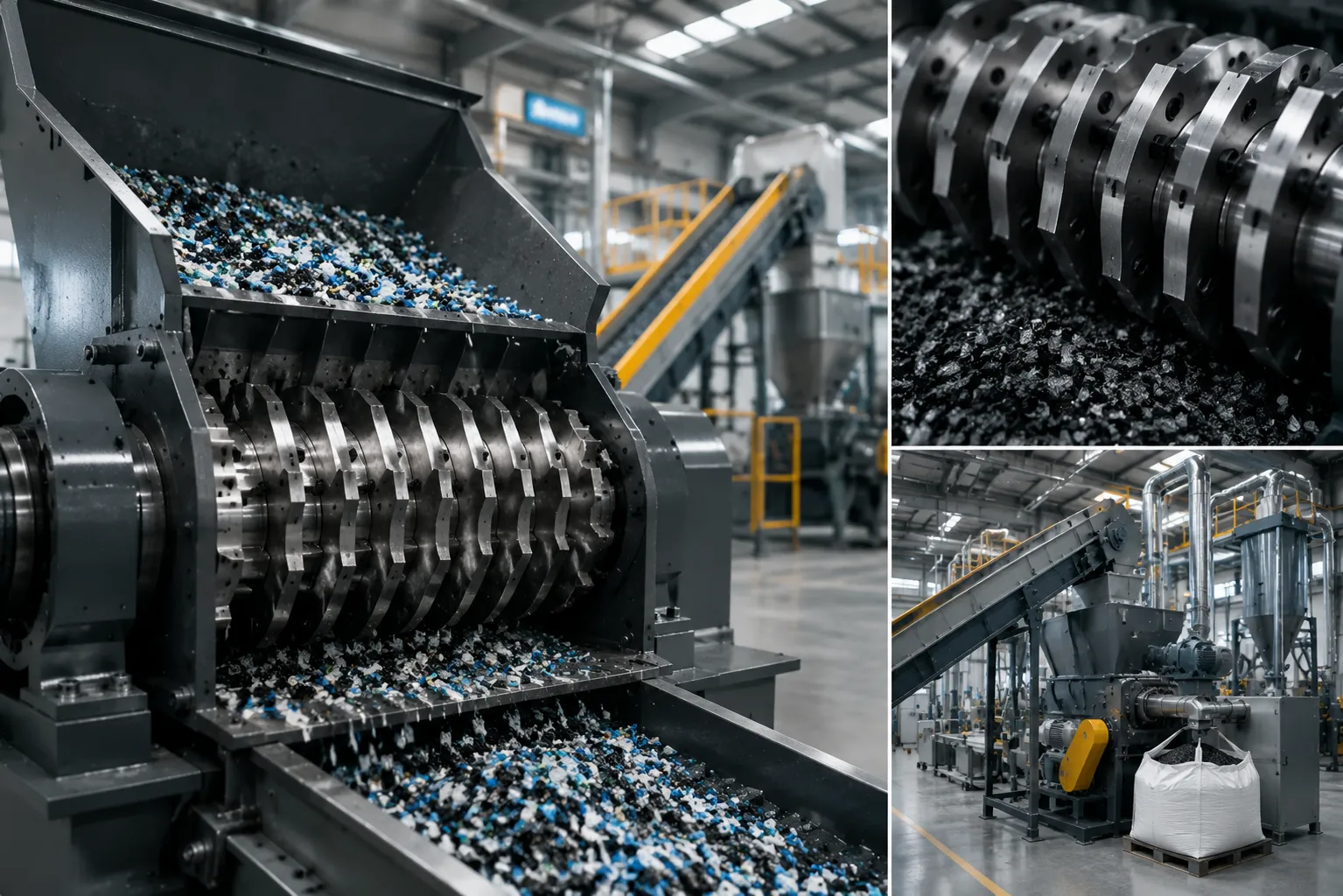
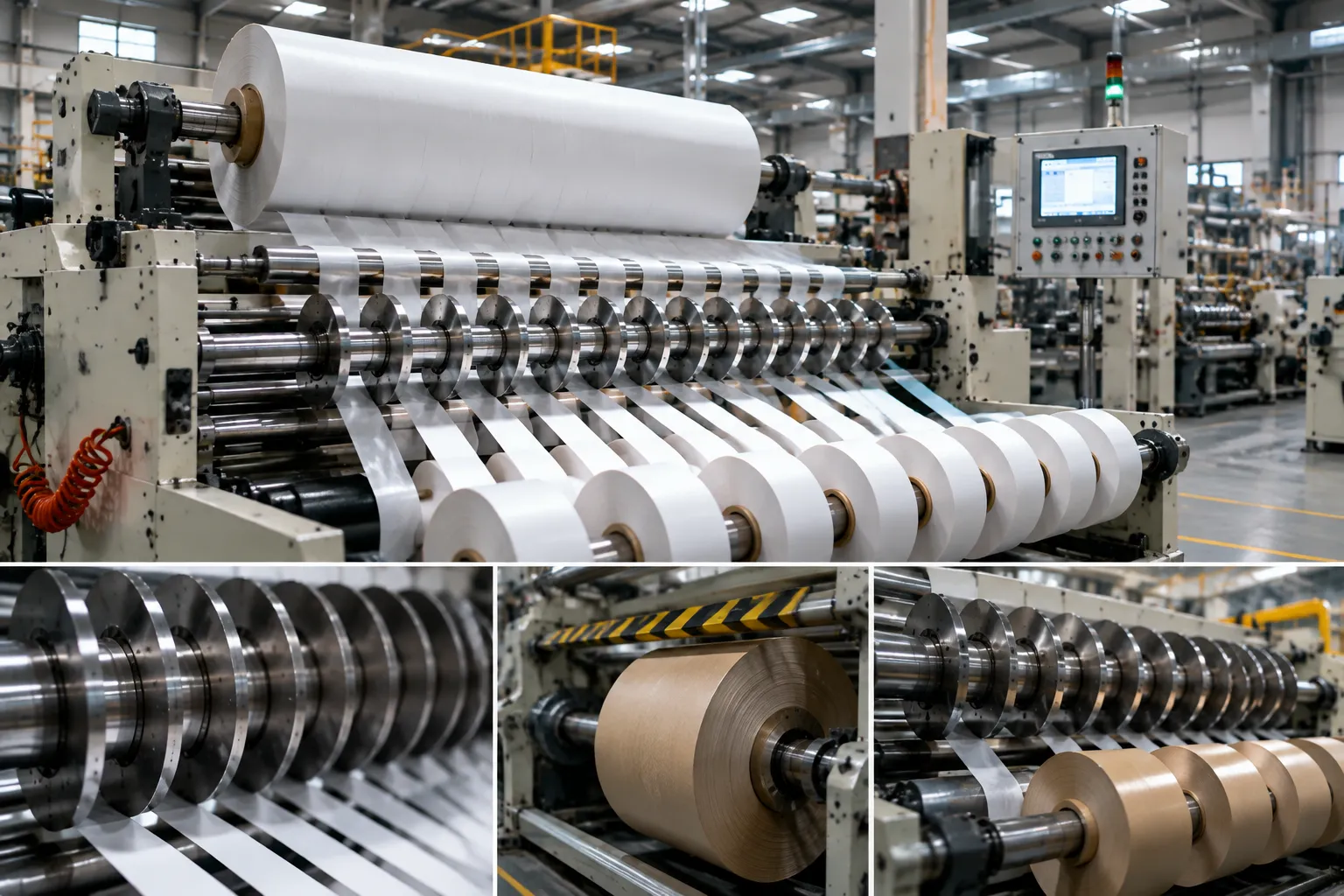
Film Processing and Nonwoven Cutting Solutions
Slitting ultra-thin polymers, flexible packaging films, and delicate nonwoven webs requires extreme cutting edge sharpness, low surface roughness, and specialized anti-stick surface treatments. Microscopic edge defects can cause film stretching, web tears, or severe static accumulation.
Sub-Micron Tungsten Carbide, M2 High Speed Steel
Mirror Polish Ra 0.1, TiN, DLC Anti-Stick Coatings
- ✓ Zero-Burr Edge Geometry: Ultra-sharp bevel angles prevent film drag and micro-tear defects during high-velocity converting.
- ✓ Corrosion Resistance: Specialized stainless and coated alloys withstand chemical additives present in synthetic film extrusion.
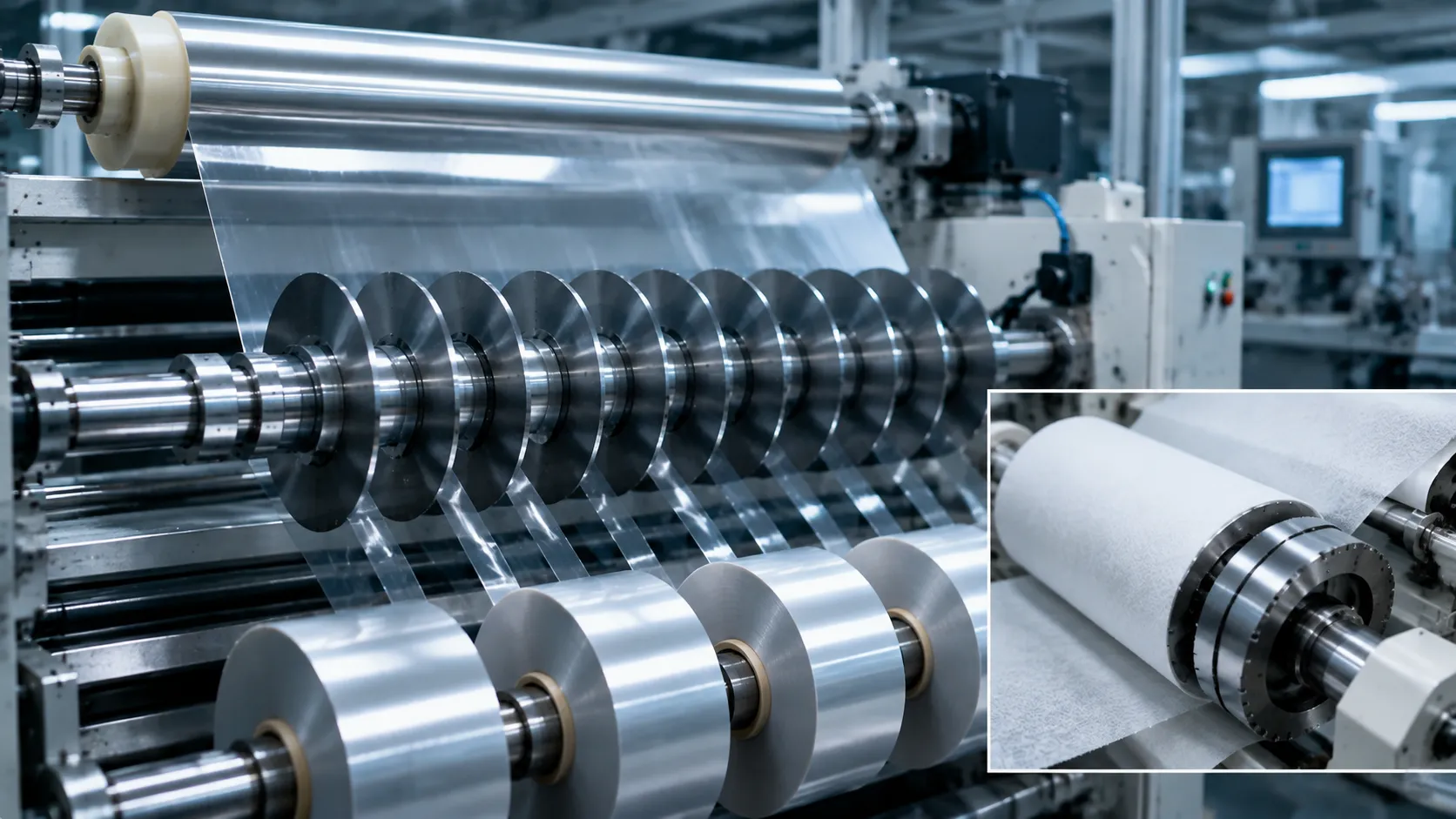
Technical Material Property Matrix
Compare mechanical properties across our primary high-quality steel and carbide material options to evaluate hardness, impact resistance, and target application compatibility.
| Material Category | Common Grades | Hardness Range | Impact Toughness | Abrasion Resistance | Primary Industrial Media |
|---|---|---|---|---|---|
| Cold Work Tool Steel | AISI D2, A2, O1 | 58 - 62 HRC | Moderate | High | Paper converting, cardboard, general shear slitting |
| High Speed Steel | AISI M2, M35, M42 | 62 - 66 HRC | High | Very High | High-speed packaging lines, thin film slitting, foil cutting |
| Powder Metallurgy Steel | CPM 10V, ASP 23 | 60 - 64 HRC | Very High | Exceptional | Abrasive synthetic fibers, heavy rubber, continuous paper shearing |
| Solid Tungsten Carbide | Sub-Micron WC/Co | 75 - 82 HRC | Moderate Low | Ultimate | Nonwoven sanitary media, magnetic tape, abrasive film converting |
Substrate Mechanics and Shearing Forces
Matching custom industrial knives to target materials requires analyzing shear stress, blade bevel angles, and lateral deflection forces. Softer web materials require razor-sharp keen angles, whereas abrasive regrinds require reinforced blade backings to absorb mechanical impact without edge fracture.
Thermal Dissipation and Coating Technology
Friction generated at high line speeds can soften cutting edges and degrade temper. Sharkcutting utilizes advanced physical vapor deposition coatings, including Titanium Nitride and Diamond-Like Carbon, to minimize surface friction coefficient, reduce heat transfer, and prevent material adhesion.
Cryogenic Heat Treatment and Metallurgy
Our precision machining process incorporates controlled computer-guided vacuum heat treatment and deep cryogenic freezing. This multi-stage thermal process transforms retained austenite into stable martensite, maximizing dimensional stability, micro-wear resistance, and edge retention.
Unsure of the Right Material Grade for Your Application
Selecting between high-quality steel and advanced carbide material options requires careful evaluation of machine line speed, blade RPM, media abrasiveness, and shearing tolerances. Sharkcutting engineers perform full drawing reviews and metallurgical consultations to recommend the exact blade specification for your machinery.
Application Engineering Cases in Custom Industrial Cutting
Sharkcutting collaborates directly with plant managers, process engineers, and procurement specialists to resolve persistent operational bottlenecks across high-speed film processing, flexible packaging manufacturing, plastic recycling, and heavy rubber processing lines. Through systematic drawing review procedures, custom engineering knives development, micro-honing, and substrate metallurgy optimization, our technical team converts high-frequency blade failures into sustained long-term operational efficiency. Explore our high-precision slitting knives designed to optimize cutting productivity. Below are documented engineering case studies demonstrating custom cutting blade optimization across high-demand industrial environments.
High-Speed Film Processing Slitting Blades
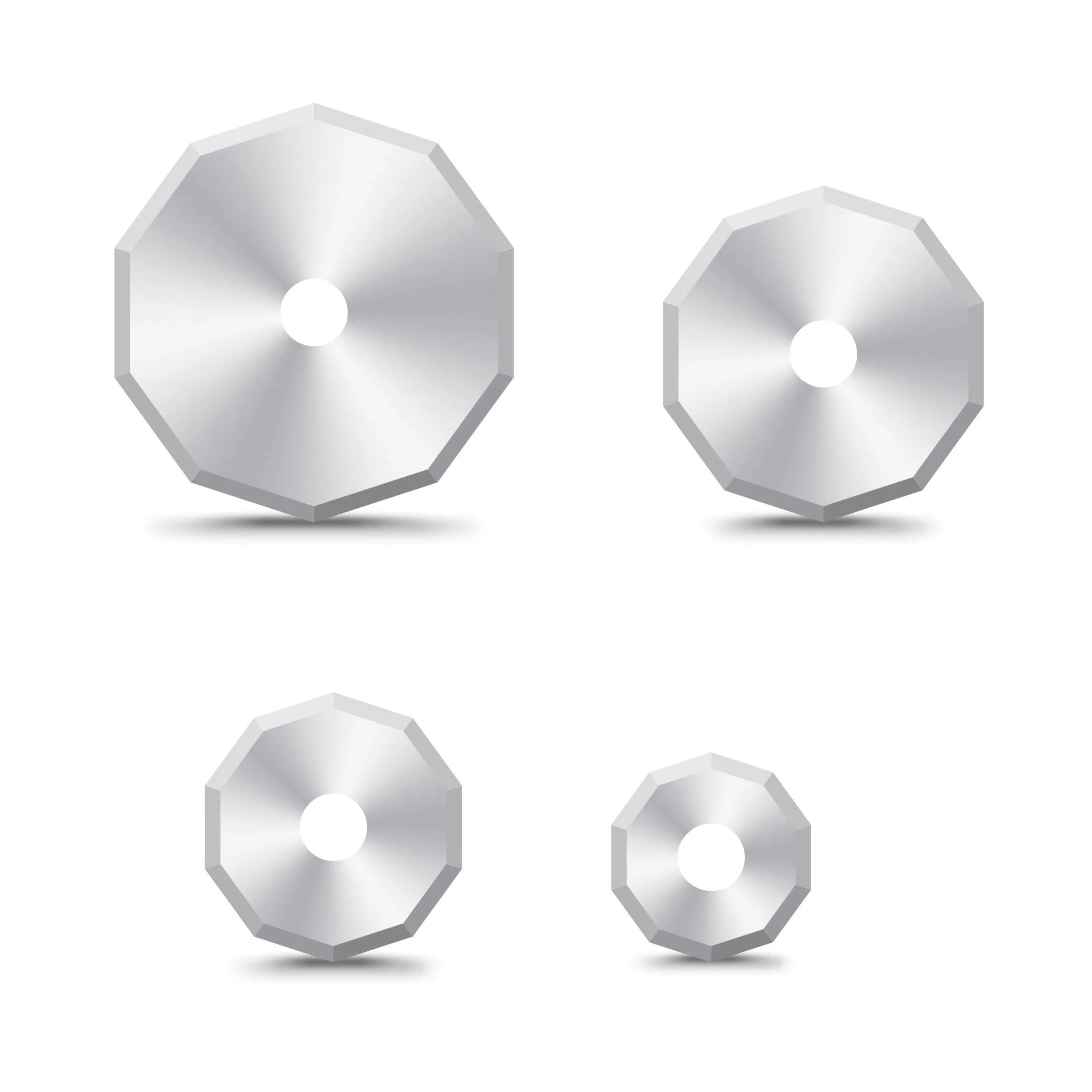
A high-volume continuous film processing plant experienced ongoing web tears, edge burrs, and severe frictional heat while slitting thin polyolefin packaging films. Standard off-the-shelf slitting knives caused localized thermal film melting, creating excessive fine dust contamination and frequent emergency production line shutdowns. Upgrading to specialized razor slitting knives effectively eliminated film drag and prevented material stretching.
Engineering Intervention and Metallurgy Selection
- • Double Bevel Geometry: Re-engineered cutting profile to a specialized asymmetric double bevel with polished micro-honed radii to minimize web drag and prevent material stretching.
- • Substrate and Edge Finish: Manufactured blades from sub-micron tungsten carbide super-finished down to an Ra 0.15 surface roughness to prevent polymer buildup and galling.
- • Thermal Resistance Conditioning: Applied an ultra-thin physical vapor deposition (PVD) coating to drastically reduce frictional heat transfer into delicate plastic films.
Target Applications: Film processing, flexible packaging manufacturing, nonwoven web slitting, multi-layer technical laminates.
Heavy-Duty Plastic Recycling Shredder Knives
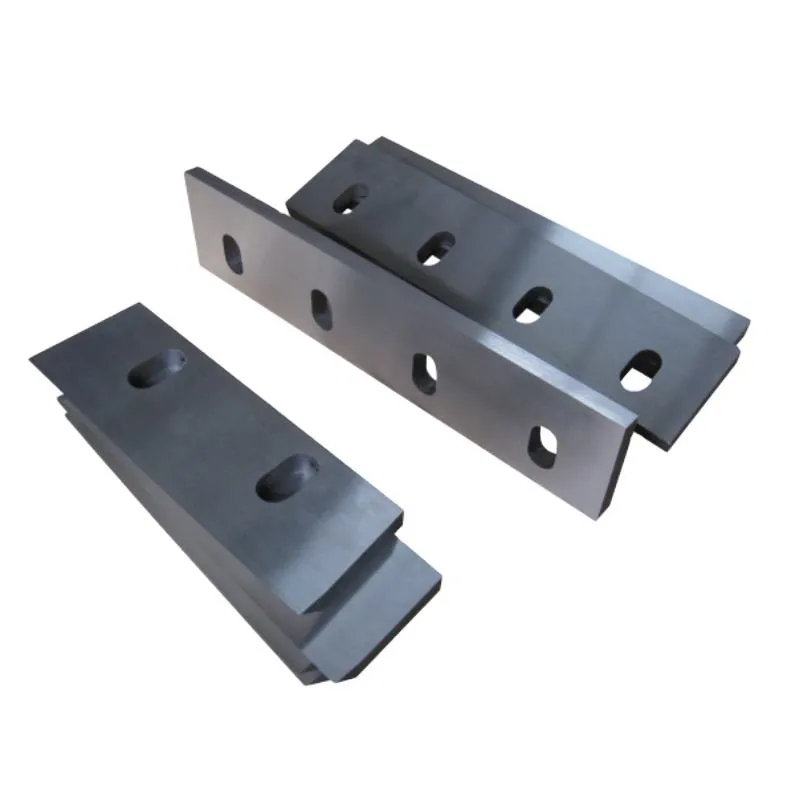
A commercial plastic recycling facility suffered from premature blade chipping, edge deformation, and catastrophic tooth breakage during high-impact granulation of contaminated post-consumer rigid plastics and thick rubber processing scrap.
Engineering Intervention and Metallurgy Selection
- • Impact Toughness Optimization: Replaced baseline tool steel with deep-tempered, shock-resistant modified alloy steel engineered to absorb extreme mechanical impact.
- • Stress Relief Profile: Redesigned cutter tooth profiles with generous fillet radii along high-stress transition zones to eliminate stress concentration points across the cutting edge.
- • Precision Fitment Checks: Precision-ground mounting seats to ±0.002mm tolerances, preventing rotor vibration and blade seating shift under severe shock loads.
Target Applications: Plastic recycling, rubber processing, heavy industrial granulation, contaminated regrind shredding.
Precision Packaging Manufacturing Cutters
An automated pouch packaging manufacturing line encountered persistent miscuts, incomplete film parting, and accelerated wear on high-frequency heat-sealing cut-off stations. Standard OEM blades failed to maintain keen edge profiles under elevated operating temperatures. For heavy-duty continuous slitting applications, implementing engineered shear slitting knives provides optimal resistance against thermal wear.
Engineering Intervention and Metallurgy Selection
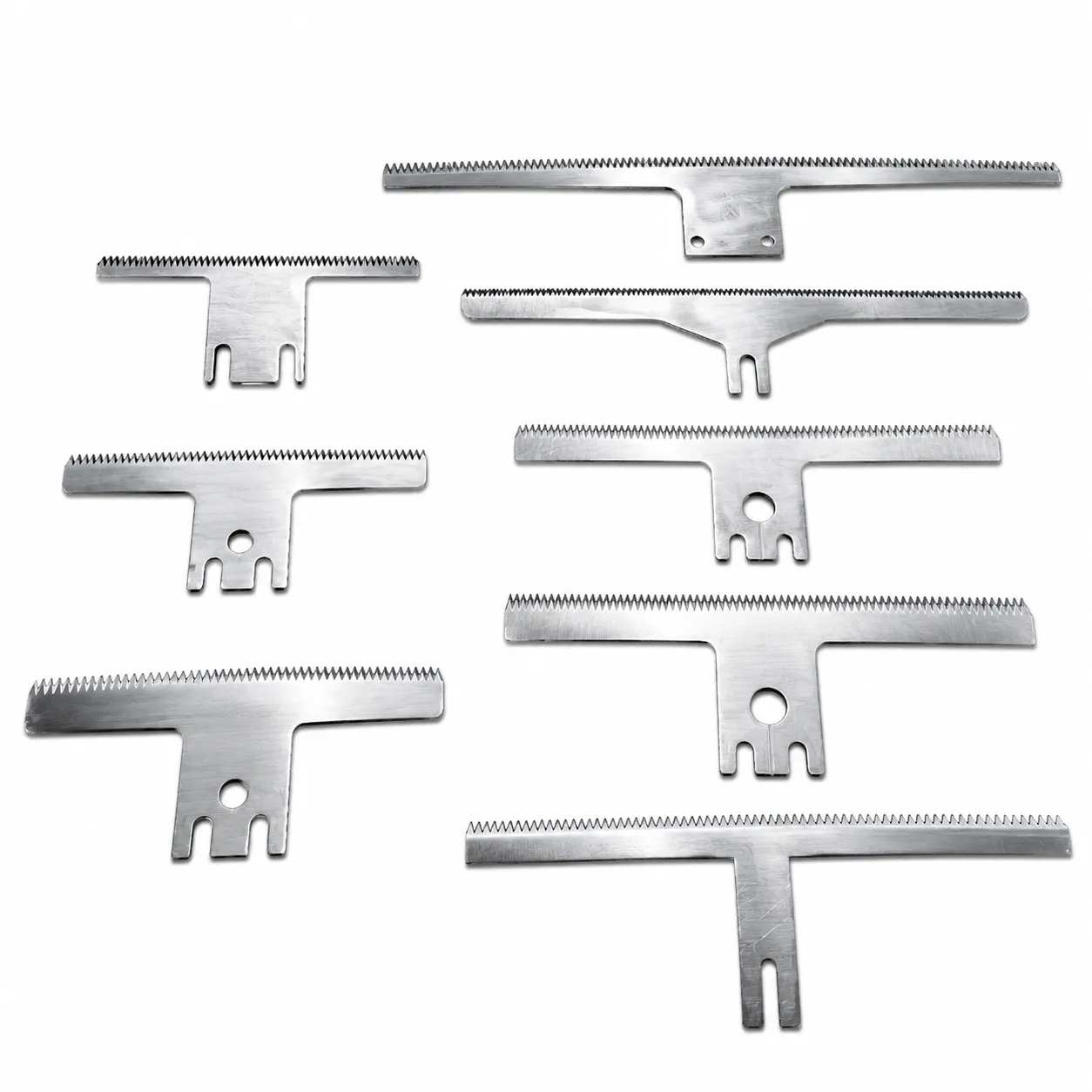
- • Custom Serration Geometry: Precision wire-EDM machined custom serrated teeth with asymmetric rake angles to maximize shear action on flexible barrier foils.
- • High Temperature Metallurgy: Formulated PM-HSS high-speed powder steel retaining HRC 64–66 hardness under continuous elevated sealing temperatures.
- • Zero Clearance Alignment: Surface-ground mounting faces to eliminate axial runout and blade chatter during rapid multi-stroke pouch conversion cycles.
Target Applications: Packaging manufacturing, automated pouch converting lines, pharmaceutical foil sealing, continuous paper slitting.
Cross-Industry Engineering Capabilities
Sharkcutting optimizes specialized industrial blades based on exact plant operating conditions, including shear velocity, thermal exposure, substrate resistance, and material friction coefficients. Below is an overview of custom blade engineering focus areas across primary manufacturing sectors.
| Industrial Application | Key Failure Challenge | Custom Material Option | Machining Tolerance | Primary Engineering Benefit |
|---|---|---|---|---|
| Film Processing | Dust generation, edge burrs, thermal film melting | Solid Carbide, PM-HSS, PVD Coatings | ±0.001mm | Burr-free razor slitting at speeds exceeding 800 m/min |
| Plastic Recycling | Impact chipping, severe abrasive regrind wear | Shock-Resistant Alloy, Carbide Inlays | ±0.005mm | 3x to 5x extended regrind lifespans in heavy granulation |
| Packaging Manufacturing | Inconsistent seal cuts, rapid tooth dulling | Cryo-Treated D2 Tool Steel, High-Speed Steel | ±0.002mm | Zero snagging on continuous high-temperature sealing lines |
| Rubber Processing | Friction buildup, knife gumming, edge drag | Micro-Polished HSS, Anti-Stick Finishes | ±0.003mm | Friction-free, clean shearing of thick elastomeric sheets |
Facing Complex Industrial Cutting Challenges?
Sharkcutting engineers perform technical consultation, drawing review, dimensional fitment checks, and metallurgy analysis to eliminate premature blade failure on high-capacity lines.
Technical FAQ: Custom Machine Knives Fitment, Drawing Formats & Technical Consultation
Transitioning complex custom cutting concepts into high-performance industrial tooling requires exact engineering parameters, strict tolerance control, and transparent technical protocols. Sharkcutting addresses essential engineering, legal, and operational questions to streamline your custom machine knives procurement and optimize production reliability.
Custom Blade Engineering & Consultation Parameters
Below is a quick-reference guide detailing our operational capabilities, tolerance thresholds, accepted digital drawing formats, and legal security protocols for engineering reviews.
| Evaluation Criteria | Standard Specifications | Advanced Customization Thresholds |
|---|---|---|
| Dimensional Tolerances | ±0.005 mm standard precision grinding | ±0.002 mm ultra-precision optical profile grinding |
| Accepted Drawing Formats | 2D vector formats (DWG, DXF, vector PDF) | 3D solid models (STEP, IGES, SLDPRT, Parasolid X_T) |
| Sample Scanning Capabilities | Contact probing via Coordinate Measuring Machine (CMM) | 3D non-contact laser optical scanning & profilometry |
| IP & Data Security | Bilateral Non-Disclosure Agreement (NDA) | AES-256 encrypted, role-access air-gapped asset storage |
| Technical Consultation SLA | 24-hour drawing review & DFM feasibility report | Same-day expedited technical consultation for line breakdowns |
Can engineering evaluations be performed if we only have a physical worn blade sample and no CAD files?
Reverse Engineering Legacy & Worn Machine Knives Without CAD Files
Yes. Plant managers frequently face situations where original equipment manufacturer (OEM) drawings are unavailable, lost, or proprietary. Sharkcutting operates an advanced metrology laboratory capable of complete reverse engineering directly from physical blade specimens.
- Coordinate Measuring Machine (CMM) Inspection: We utilize high-precision multi-axis CMM systems to capture exact mounting geometry, bolt circle configurations, arbor bore diameters, and keyway tolerances.
- Optical Edge Profile Reconstruction: Using non-contact laser optical profilometers, our engineers reconstruct pristine edge profiles, bevel angles, and land widths by calculating and offsetting operational wear patterns.
- Metallurgical Alloy Identification: Non-destructive X-ray fluorescence (XRF) spectroscopy and optical emission spectrometry determine the exact chemical composition, grain structure, and core hardness (HRC) requirements.
Once diagnostic measurements are compiled, Sharkcutting generates complete 2D CAD drawings and 3D solid models for client engineering approval prior to production.
How is fitment precision and runout stability guaranteed on high-speed machinery?
Ensuring High-Speed Fitment Precision, Bore Alignment, and Dynamic Runout Control
High-speed slitting, converting, and rotary shear operations demand strict axial and radial runout control to eliminate mechanical chatter, prevent premature edge chipping, and guarantee clean material separation across extended production runs using specialized shear-slitting-knives.
Axial & Radial Runout Tolerances
Maintained within ±0.002 mm across knife diameters up to 600 mm, preventing dynamic deflection, burr formation, and side-play under heavy shear loads.
Dynamic Balancing Standards
Precision balanced up to ISO 1940 Grade G2.5 for operating speeds exceeding 1,500 meters per minute, eliminating high-frequency shaft vibration.
Sharkcutting performs 100% arbor fitment inspections using master shaft gauges matched to your OEM equipment specifications. Every production batch is delivered with certified optical inspection records verifying bore concentricity, parallelism, and surface finish.
How are proprietary CAD drawings and IP protected during consultation?
Intellectual Property Protection Protocols and NDA Workflows
Protecting proprietary cutter geometry, specialized edge profiles, and custom machine tooling designs is essential for maintaining your competitive advantage. Sharkcutting enforces strict security workflows across all digital and physical assets.
- Bilateral Non-Disclosure Agreements (NDAs): We execute formal legal NDAs prior to receiving proprietary drawings, guaranteeing complete confidentiality for custom knife dimensions and manufacturing specifications.
- Encrypted Asset Management: CAD files and technical documentation are maintained on isolated, encrypted servers using strict role-based access protocols to prevent unauthorized viewing or distribution.
- Secure Digital File Transfer: Our engineering portal uses SSL encryption with AES-256 bit protocols for secure uploading and end-to-end data transmission.
Is there a fee for initial drawing reviews and technical consultations?
Complimentary Technical Consultation and Design for Manufacturability (DFM) Assessment
No. Initial CAD drawing reviews, Design for Manufacturability (DFM) assessments, and substrate metallurgy recommendations conducted by Sharkcutting application engineers are 100% complimentary.
Our complimentary technical intake process includes:
- Structural Feasibility & Stress Analysis: Comprehensive evaluation of bevel geometry, mounting hole locations, and stress-relief radii to prevent micro-cracking and premature fatigue under operational loads.
- Substrate Metallurgy Optimization: Recommending optimal tool steel, high-speed steel (HSS), tungsten carbide, or specialized alloy grades based on your specific cutting medium and machine speeds.
- Detailed Commercial & Lead-Time Proposal: Providing itemized quotations within 24 hours, featuring transparent volume-tiered pricing, prototype options, and expedited production pathways.
What CAD drawing formats are preferred for technical consultation?
Accepted CAD Drawing Formats and Essential Technical Specifications
To streamline technical reviews and expedite production timelines, Sharkcutting accepts native and neutral 2D and 3D CAD formats from all standard engineering software platforms.
Recommended CAD File Formats
- 3D Solid Models: STEP (.step, .stp), IGES (.igs), SolidWorks (.sldprt), Parasolid (.x_t)
- 2D Engineering Drawings: AutoCAD DWG (.dwg), DXF (.dxf), Vector PDF (.pdf)
Key Technical Parameters to Include
- Outer diameter, inner bore dimension, keyway profiles, and critical thickness tolerances
- Primary bevel angle, secondary land angle, and cutting edge radius or micro-hone specs
- Target cutting substrate details (e.g., BOPP film, recycled HDPE, nonwoven fabric, rubber, corrugated paper)
- Preferred core hardness range in Rockwell C (HRC) if pre-determined
How does material selection impact industrial blade life in aggressive cutting environments?
Substrate Metallurgy Selection, Heat Treatment, and Hardness Optimization
Industrial blade longevity directly depends on matching microstructural toughness, red hardness, and wear resistance to the mechanical properties of your targeted substrate. Choosing an improper alloy leads to rapid edge degradation, thermal deformation, or sudden chipping.
Sharkcutting application engineers analyze mechanical friction, line speed, impact force, and chemical exposure to recommend ideal substrate materials for precision circular-slitter-knives:
- High-Speed Steel (M2, M35 HSS): Delivers outstanding red hardness and wear resistance for high-speed film slitting and packaging lines operating up to 62–65 HRC.
- Solid Tungsten Carbide: Offers extreme abrasion resistance for highly abrasive rubber granulation, composite shearing, and continuous foil converting—extending operational life up to 10x over standard steels.
- D2 Premium Tool Steel: High-carbon, high-chromium alloy engineered for deep hardenability and high impact resistance in paper converting, plastic recycling, and heavy slitting.
- Advanced PVD & DLC Surface Coatings: Titanium Nitride (TiN), Titanium Aluminum Nitride (TiAlN), or Diamond-Like Carbon (DLC) coatings applied to reduce friction coefficients, prevent material adhesion, and extend service life.
Need Direct Technical Advice For Your Machine Knife Drawing?
Our specialized tooling engineers are standing by to review your custom blade specifications, perform assembly fitment checks, and suggest optimal alloy grades for your exact machine setup.
Ready to Optimize Your Industrial Cutting Performance?
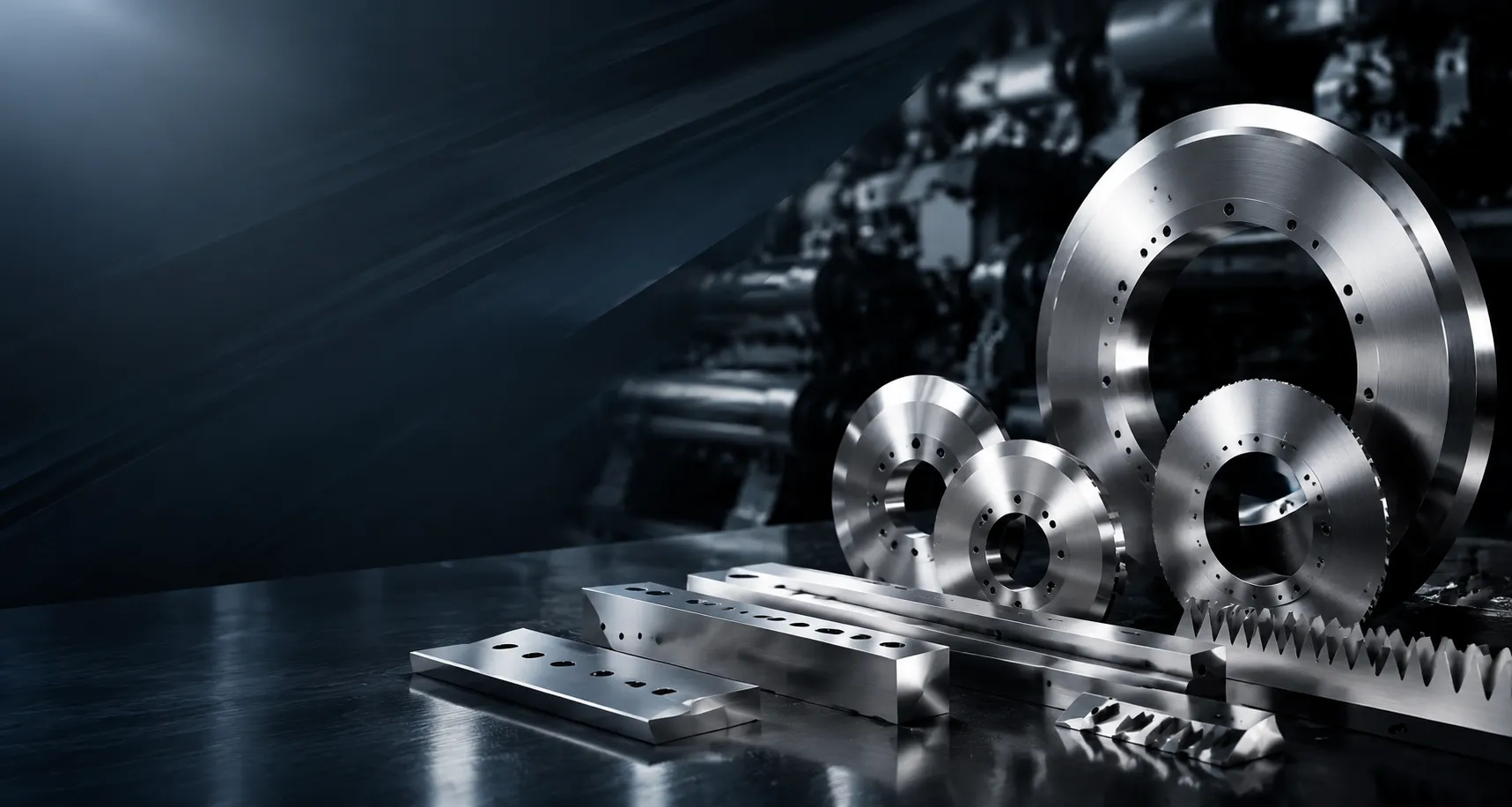
Share your cutting requirements, drawings, or application details with Sharkcutting engineers. Our team provides professional material selection, edge geometry optimization, and custom blade solutions for demanding industrial applications.
Technical evaluation for custom blade requirements
Steel, carbide and coating recommendation
Solutions for complex cutting challenges