
High-Precision Textile Cutting Blades & Slitting Knives
Custom industrial blade solutions engineered to prevent fabric fraying, withstand wear, and process woven fabrics, synthetic fibers, and technical textiles with complete accuracy.
Leveraging advanced precision manufacturing and ultra-mirror grinding capabilities, Shark Cutting provides global textile producers with durable, high-performance slitting blades designed for uninterrupted production.
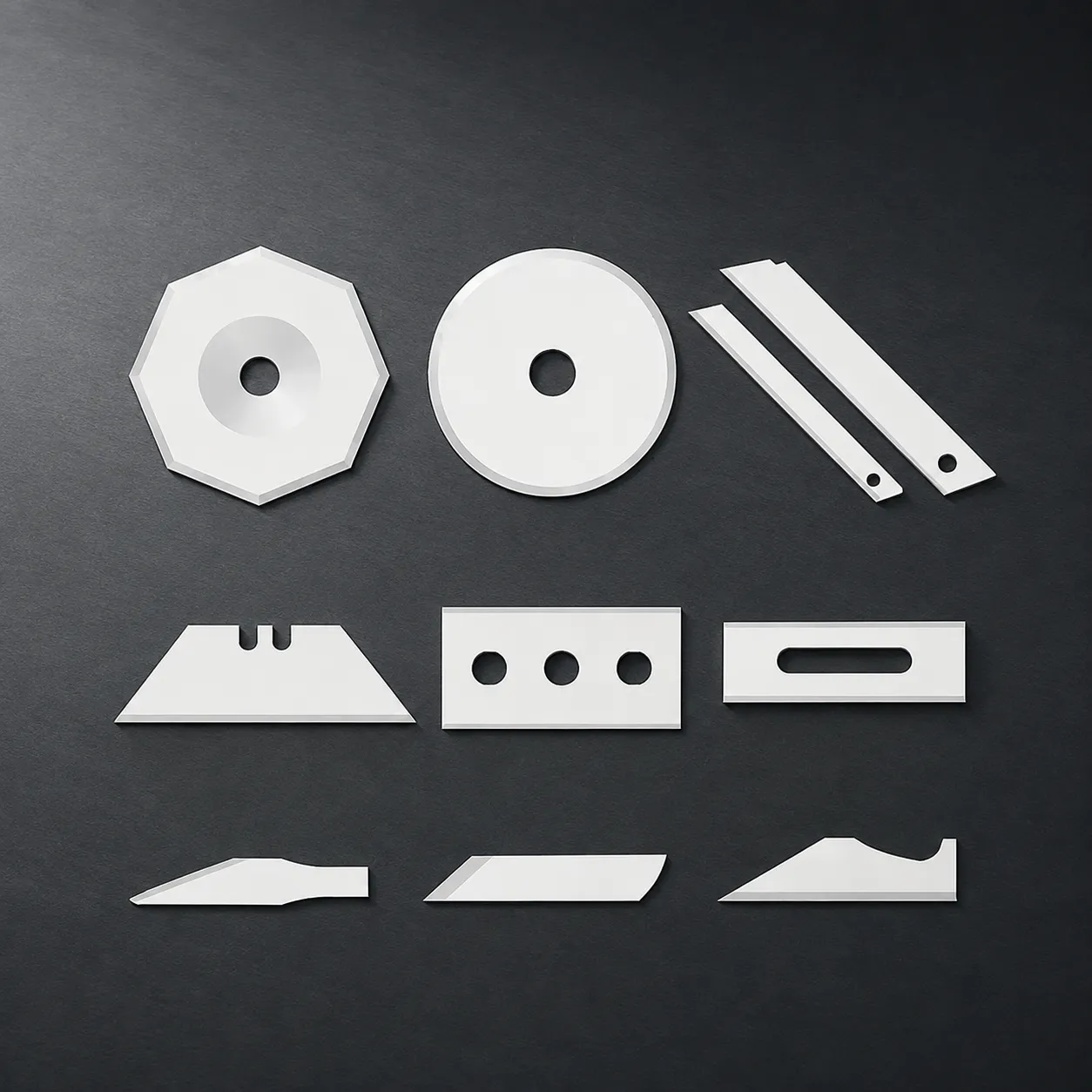
Textile Slitting Pain Points & How High-Performance Blades Solve Them
Fabric fraying prevention, fiber cutting durability, and precise fit for non-standard machinery are essential to maintaining high production yields. Shark Cutting engineers high-performance textile blades designed to resolve edge unraveling, rapid abrasive wear, and thermal fiber bonding—reducing changeover downtime by up to 40% while ensuring immaculate cut precision across every production run.
Fabric Slitting Edge Fraying and Unraveling
Conventional blades create micro-tears along fabric edges, leading to unraveling in woven and knitted textiles. This results in costly scrap, frequent rework, and compromised downstream quality.
Ultra-small edge radius combined with micron-level grinding produces a mirror-finish cutting edge. Every blade undergoes strict optical inspection to ensure burr-free shearing, serving as a reliable foundation for effective fabric fraying prevention across all textile types.
Rapid Wear from High-Tenacity Synthetic Fibers
Abrasive materials like nylon 66, polyester, and aramid rapidly dull standard tool steel knives, forcing frequent machine stops and driving up blade replacement costs.
Premium tungsten carbide and M2 high-speed steel formulations deliver superior hardness and wear resistance. Shark Cutting matches blade metallurgy directly to fiber density and speed, maximizing fiber cutting durability and extending edge lifespan significantly.
Blade Heat Buildup and Fiber Bonding at High Speeds
Continuous high-speed slitting generates intense friction. Melted synthetic resin adheres to the blade edge, resulting in irregular cuts, fabric staining, and premature blade failure.
Low-friction edge geometries and anti-adhesion coatings (such as TiN/TiAlN) prevent molten fiber accumulation and accelerate heat dissipation. This maintains clean cutting performance during long, continuous high-speed runs.
Difficult Tool Matching for Non-Standard Slitting Equipment
Specialized, imported, or legacy textile slitting machines often require custom dimensions that off-the-shelf knife suppliers cannot provide, leading to poor fits, vibration, and cut instability.
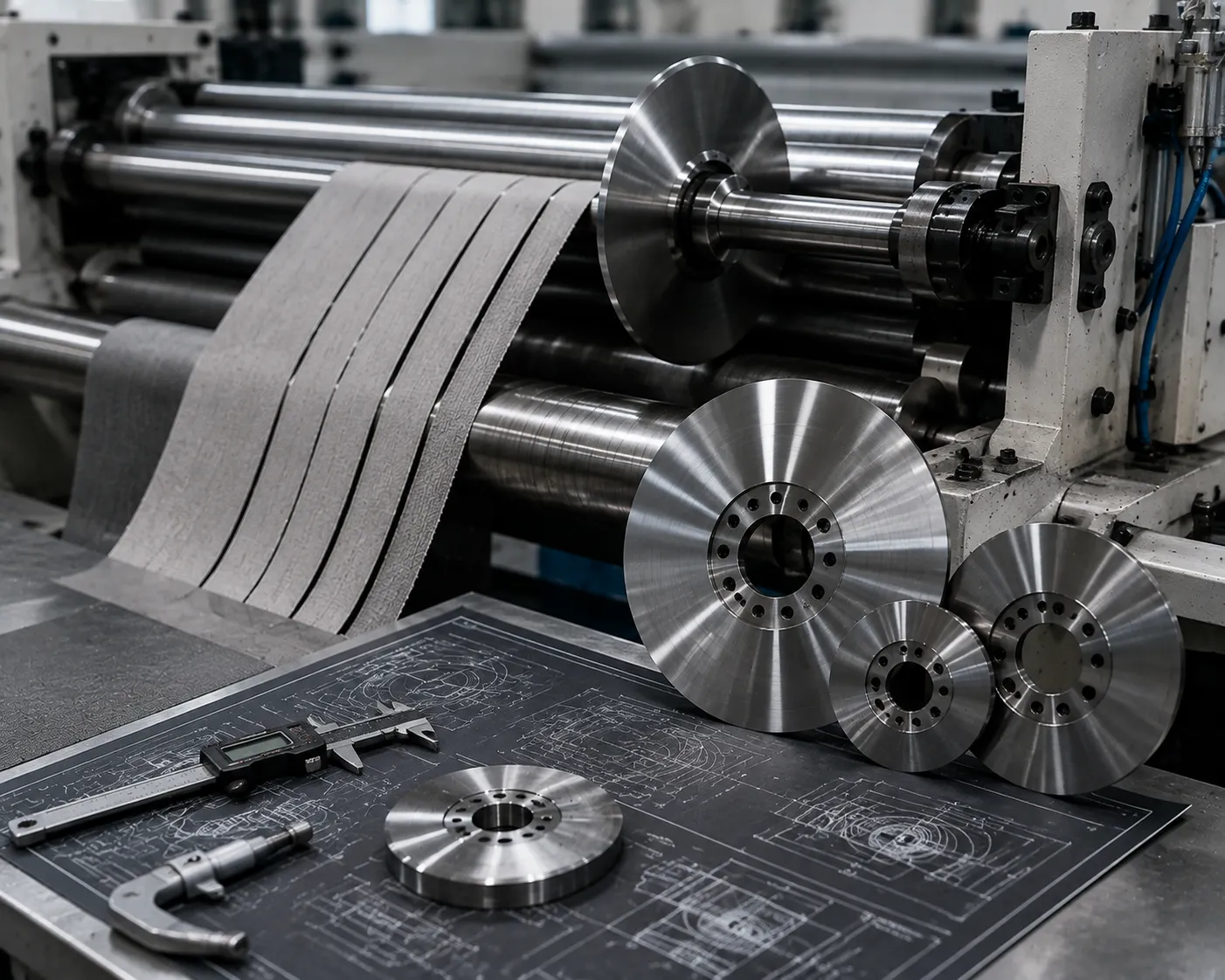
Comprehensive OEM/ODM customized engineering based on technical drawings or physical samples. Shark Cutting holds tight manufacturing tolerances down to ±0.002 mm, ensuring flawless drop-in alignment with any slitting assembly.
Why Textile Slitting Demands Specialized High-Performance Textile Blades
Textile cutting is one of the most demanding processes in modern industrial production. Unlike flexible packaging films or uniform paper rolls, textile substrates range from soft knitted cotton to ultra-abrasive aramid weaves, glass fiber composites, and nonwoven synthetics. Using generic or standardized cutting tools on specialized fabric lines leads to edge distortion, fraying, and rapid tool degradation. Achieving optimal edge clarity requires high-performance textile blades engineered specifically for the mechanical properties of each material. Explore our complete catalog of industrial products to find tailored tooling solutions.
Proper fabric fraying prevention is not merely a cosmetic requirement; it directly impacts structural integrity and material yield. Frayed edges on woven or synthetic materials cause alignment errors during automated sewing, lamination failure, and customer rejections. By applying micro-precision CNC grinding to establish ultra-fine blade edge radii, Shark Cutting ensures every cut is sharp, clean, and free of loose threads, substantially reducing raw material waste.
Furthermore, prioritizing fiber cutting durability is vital for high-volume textile operations. Abrasive synthetic yarns quickly wear down conventional carbon steel tools, forcing maintenance teams into frequent blade changes that stall productive throughput. Shark Cutting utilizes advanced tungsten carbide, M2 high-speed steel, and specialized alloy formulations that retain sharp cutting edges even under continuous heavy-duty shearing, maximizing equipment uptime and reducing long-term replacement expenses.
Thermal management is another key factor in continuous slitting operations. At elevated line speeds, friction between the blade bevel and synthetic fibers generates localized heat. Without suitable surface treatments, thermoplastic polymers soften and stick to the blade edge. Shark Cutting incorporates specialized anti-adhesion and low-friction surface coatings, ensuring consistent heat dissipation and maintaining smooth cutting action throughout extended operational shifts.
Custom engineering capabilities bridge the gap between specialized machinery requirements and reliable tooling supply. Whether operating high-speed rotary slitting systems, shear slitting knives, or crush-cut equipment, Shark Cutting provides custom-machined industrial slitting knives manufactured to exact drawing specifications, ensuring perfect mechanical fit, reduced machine vibration, and extended service life.
Material Performance Comparison for Textile Slitting Blades
| Blade Material | Hardness (HRC / HRA) | Wear Resistance | Recommended Textile Applications |
|---|---|---|---|
| Premium Tool Steel (D2 / Cold Work Steel) | 58–62 HRC | High | Natural woven fabrics, cotton, linen, light synthetics |
| M2 High-Speed Steel (HSS) | 62–65 HRC | Very High | Nylon, polyester blends, high-speed continuous slitting |
| Tungsten Carbide | 70–75 HRA | Exceptional | Glass fiber, carbon fiber, heavy technical textiles, nonwovens |
| Coated HSS (TiN / TiAlN Coating) | 63–66 HRC | Very High + Anti-Adhesion | High-speed thermoplastic fiber processing, adhesive-backed textiles |
Key Benefits of Shark Cutting Textile Slitting Blades
- Burr-free, clean edge quality across full roll widths — mirror-finish grinding maintains uniform cutting force across every meter of material.
- Lower total operating costs — enhanced wear resistance extends service intervals, delivering tangible cost savings within initial production quarters.
- Drop-in dimensional compatibility — strict tolerance control guarantees precise fitment without requiring machine modifications or manual adjustments.
- Scalable supply for global manufacturers — reliable supply capacity covering prototype sampling, batch trials, and high-volume OEM orders.
- Comprehensive engineering support — technical guidance on material selection, edge bevel angles, and re-sharpening procedures to optimize tooling lifespan.
Through rigorous dimensional accuracy and full-process quality control, Shark Cutting provides reliable industrial cutting solutions that eliminate fiber adhesion, edge damage, and unnecessary downtime for textile manufacturers worldwide.
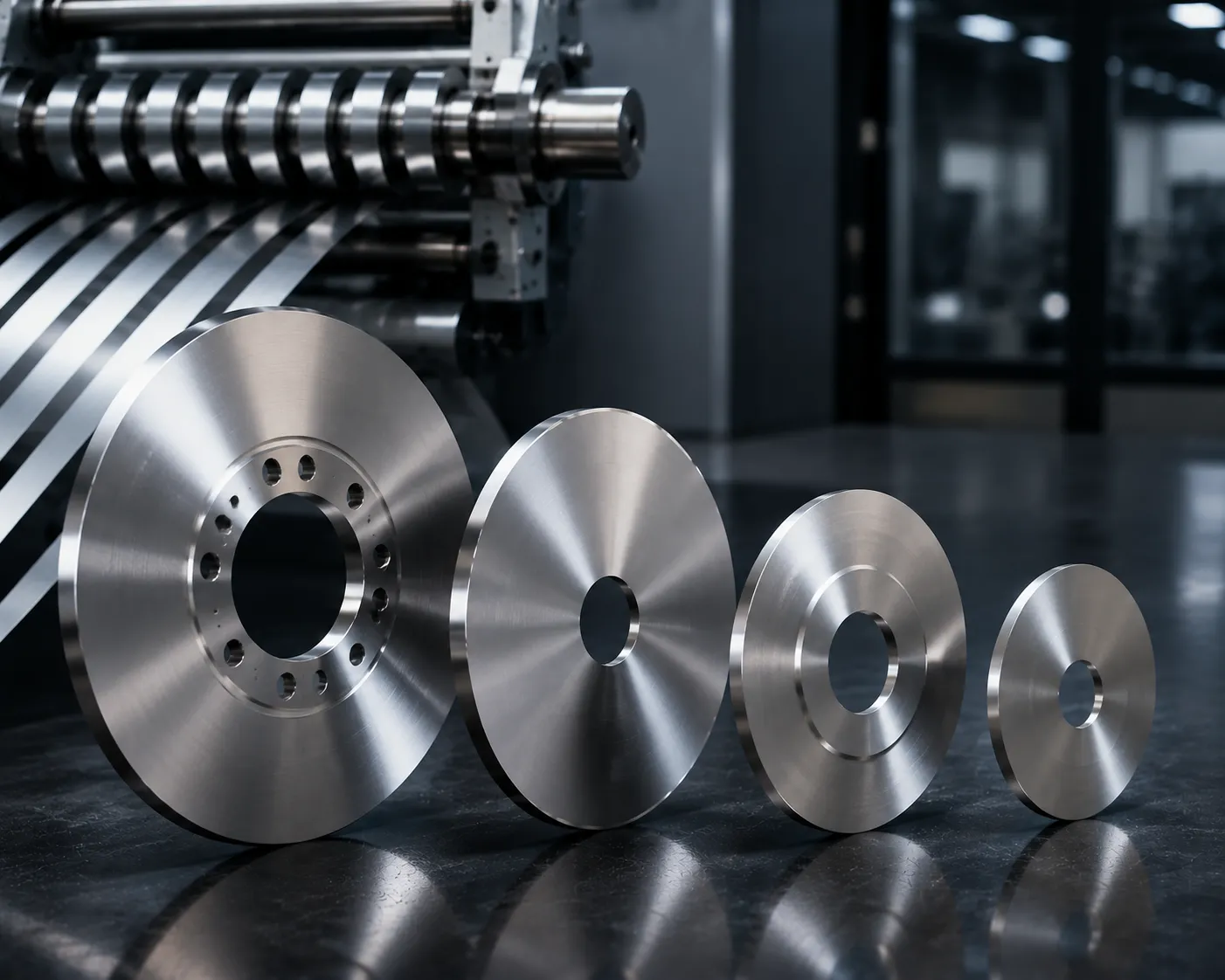
Precision Circular Slitting Blade Engineering
Custom-engineered circular slitting knives manufactured for demanding textile converting applications requiring exceptional accuracy, clean cutting edges, and extended service life.
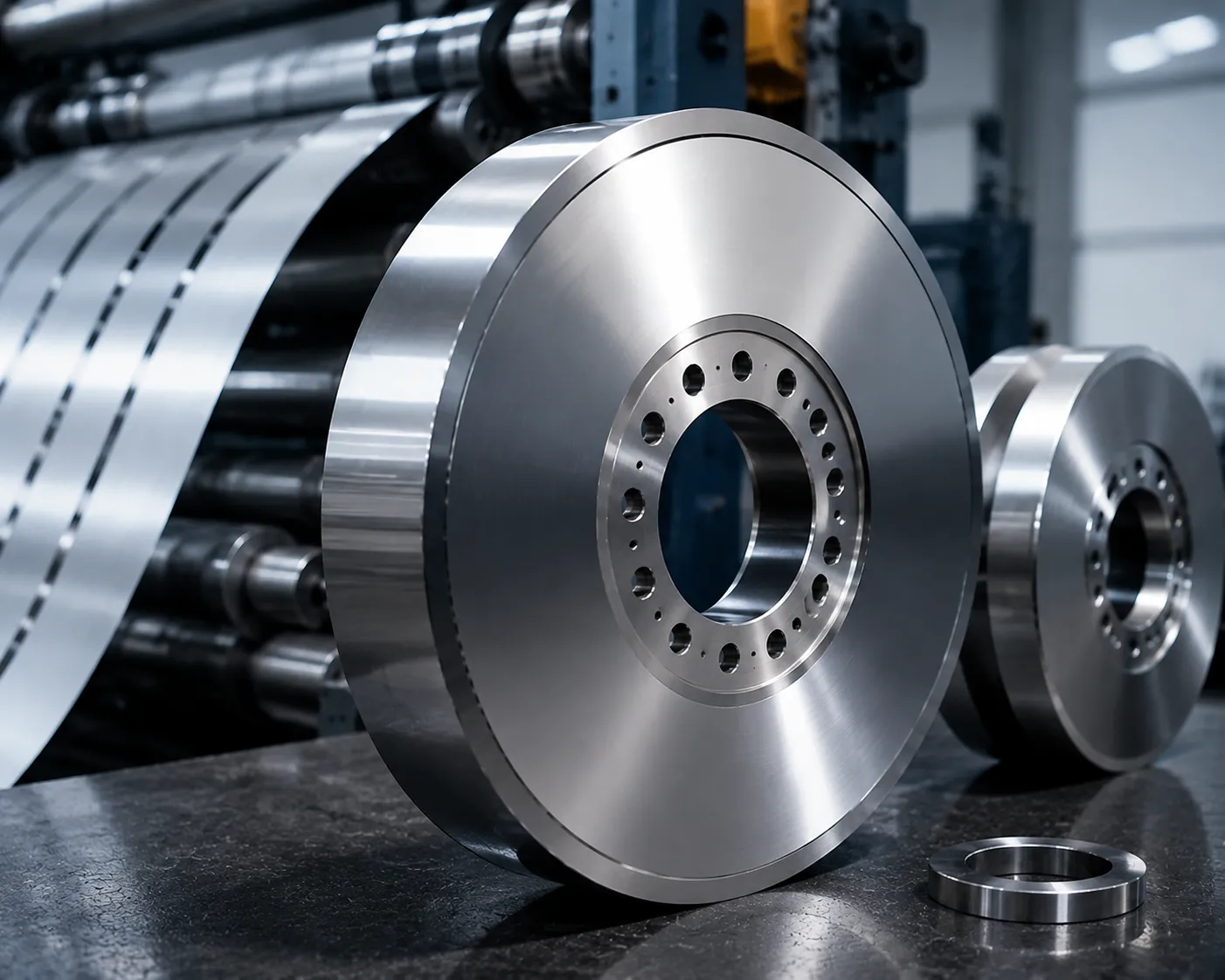
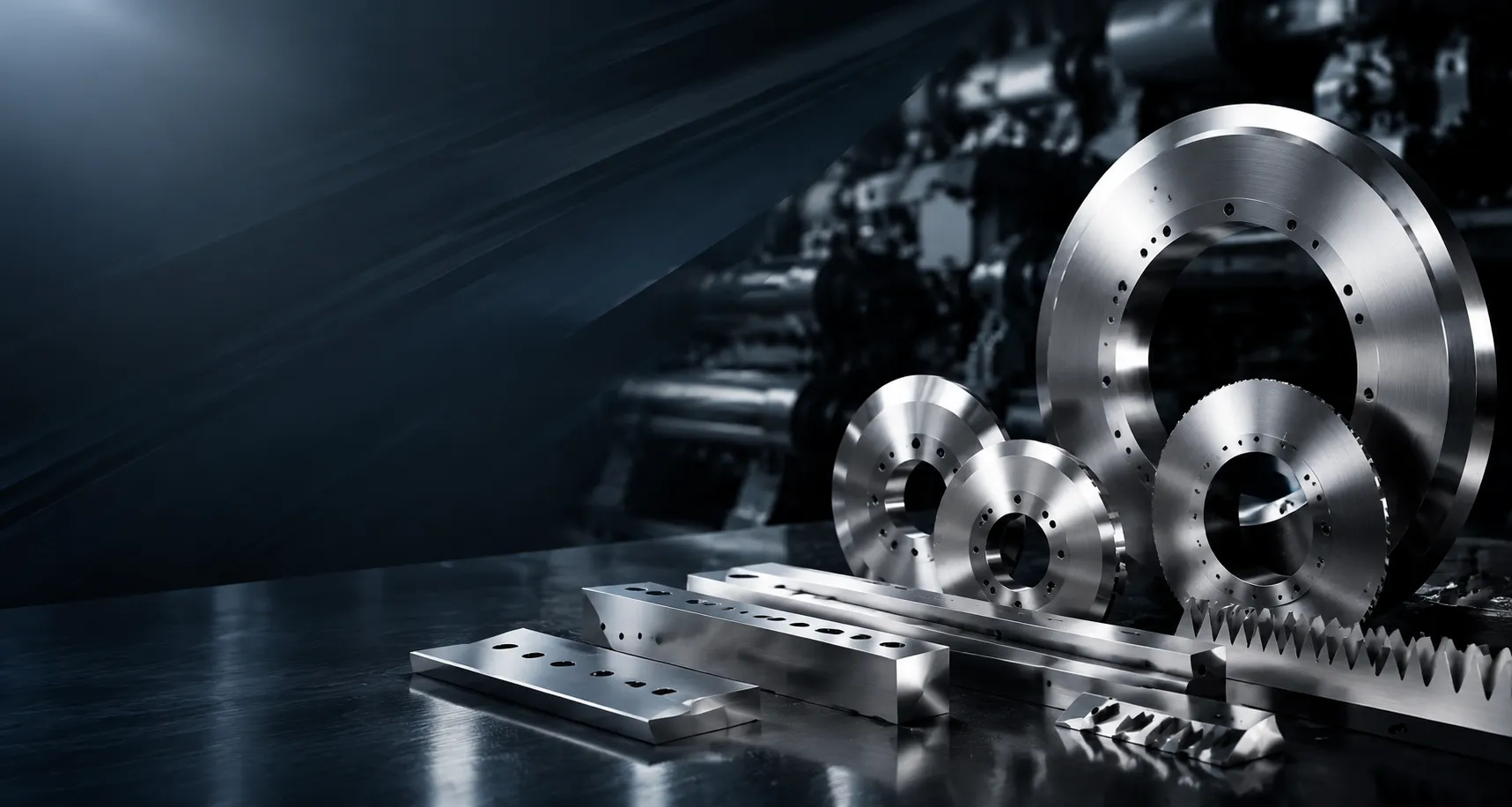
Carbide Heavy Roll Slitting Blade
Engineered for high-volume technical textile converting lines demanding minimal edge fraying.
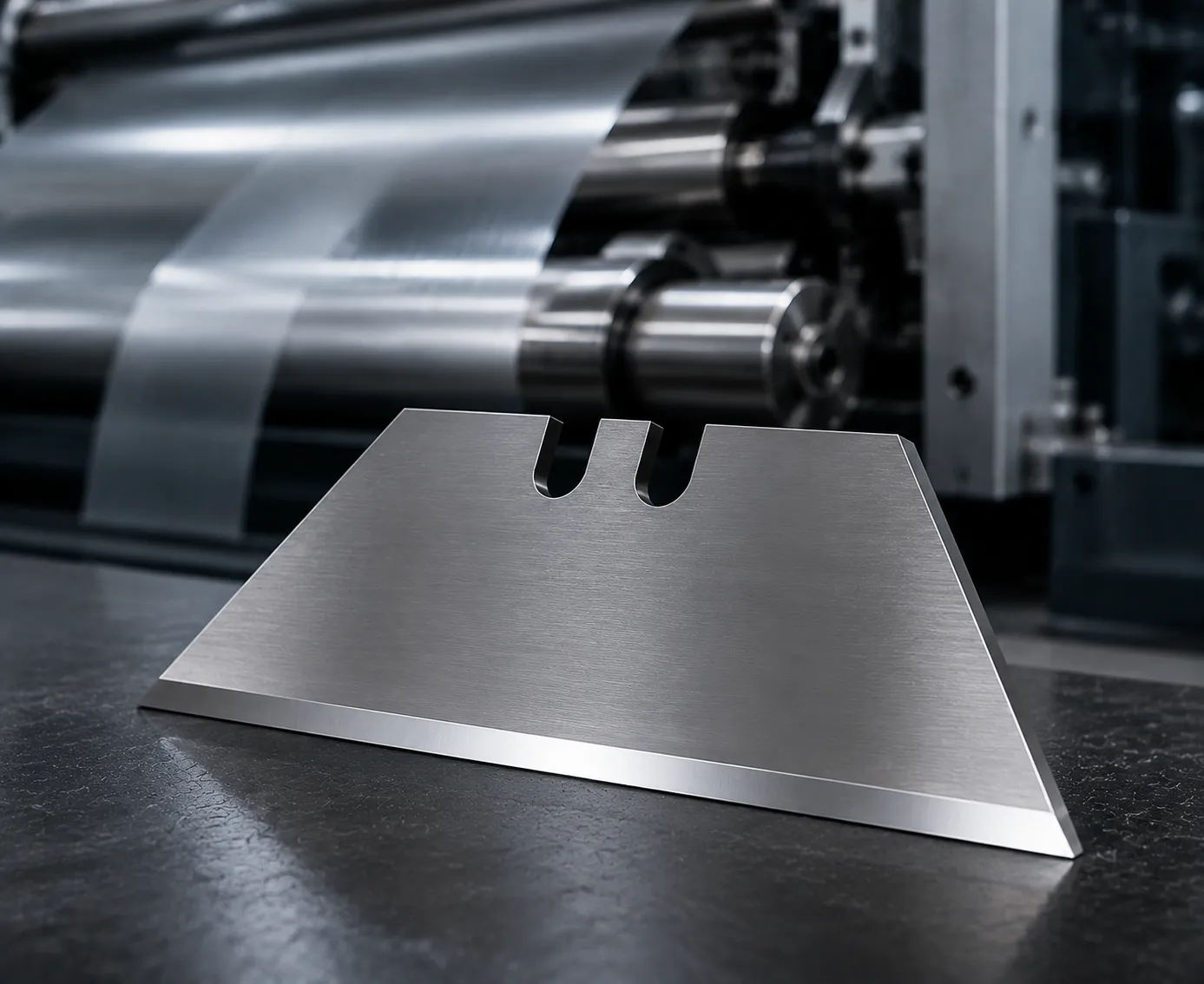
Seamless Edge Trimming Blade
Delivers crisp, continuous salvage trimming on continuous synthetic fabric rolls.
Need Custom Blade Dimensions or Alloy Specs?
Sharkcutting provides custom OEM blade engineering to match your specific textile slitting machinery and industrial products.
Precision Slitting Solutions Across Specialized Textile Sub-Sectors
Different textile substrates demand specific cutting mechanics. From delicate natural knits to highly abrasive synthetic polymers and rigid structural composites, Sharkcutting manufactures specialized industrial blades engineered to eliminate edge fraying, prevent heat bonding, and maximize operational uptime.
Woven & Knitted Fabric Slitting: Fraying & Unraveling Prevention
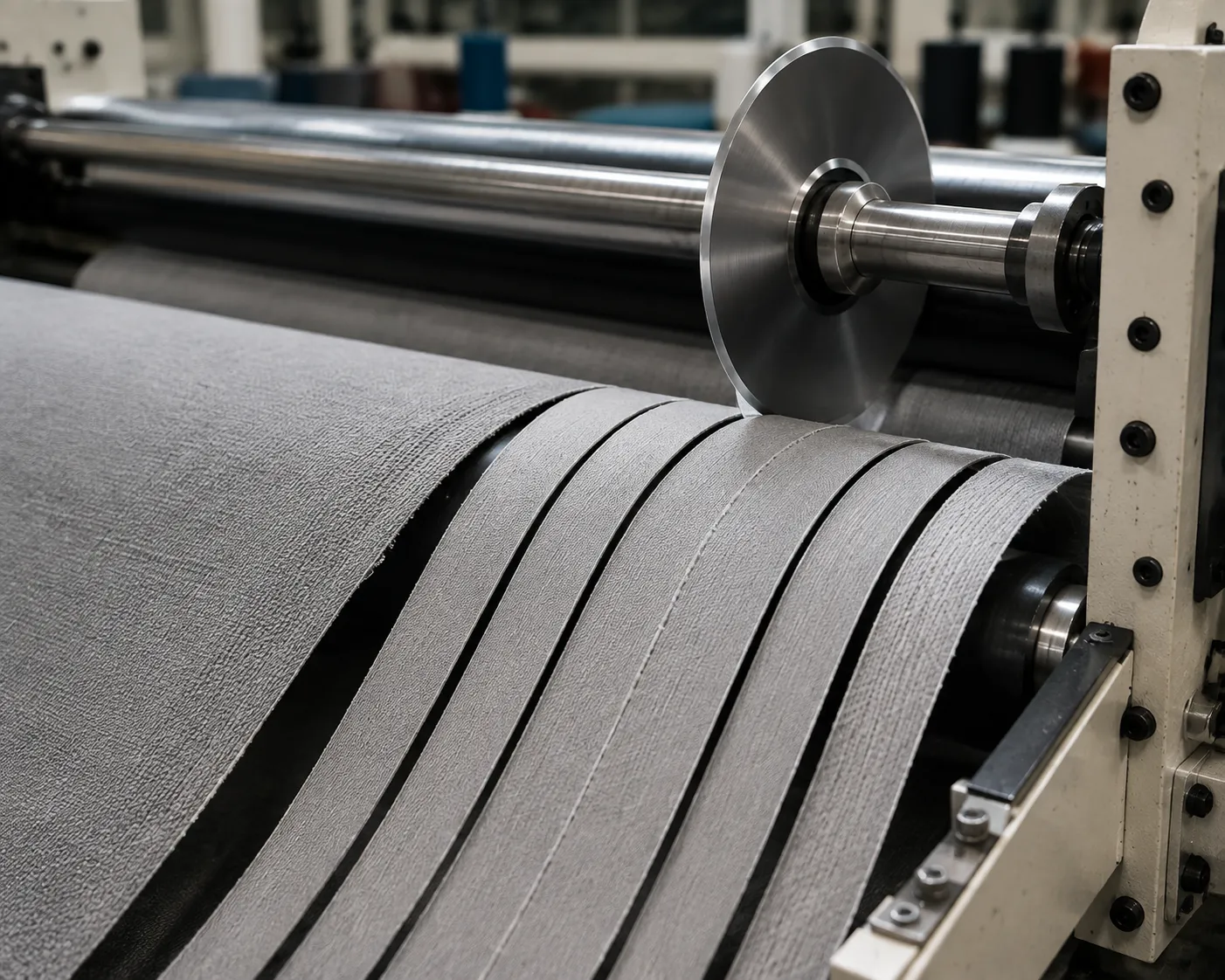
Continuous slitting of apparel fabrics like cotton, denim, linen, and delicate jersey knits requires exceptionally crisp edge definition. Standard industrial blades can drag individual yarns, causing frayed selvages, fiber unraveling, and micro-tears that compromise downstream stitching and product appearance.
For high-efficiency woven fabric cutting and automated knit processing, Sharkcutting produces precision slitting knives crafted with ultra-fine edge radiuses and mirror-polished bevels. Our engineered blade geometry cleanly separates yarn structures without pulling threads, minimizing lint buildup and eliminating costly manual edge trimming.
- Micro-mirror edge finish: Eliminates yarn drag and prevents pulled threads on delicate natural and elastic knits.
- Burr-free slitting profile: Maintains smooth, sealed selvages for seamless roll winding and high-speed handling.
- High-speed line compatibility: Delivers consistent cut quality across automated web slitter-rewinders and cutting tables.
Synthetic Fiber Processing: High-Wear Slitting Solutions
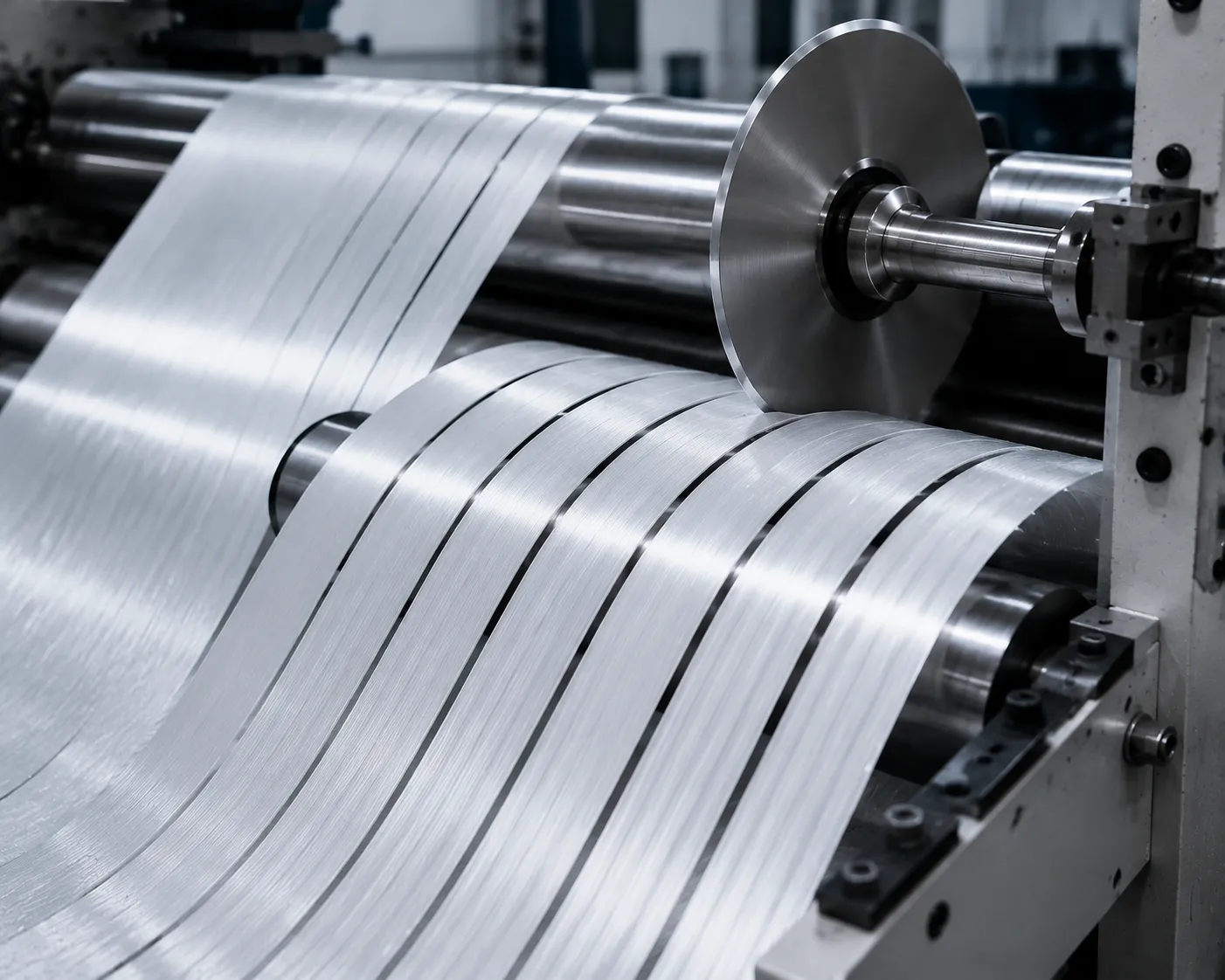
Slitting synthetic polymers like polyester, nylon, polypropylene, and acrylic presents severe abrasive challenges. Additives such as titanium dioxide rapidly dull standard tool steel, while continuous friction generates localized heat that can melt fibers and adhere polymer residue to the cutting edge.
To master challenging synthetic fiber processing, Sharkcutting supplies solid micro-grain tungsten carbide fabric slitters and premium M2/D2 high-speed steel blades. Enhanced with low-friction PVD coatings, our cutting tools significantly reduce thermal friction and deliver up to three times longer wear life compared to conventional blades.
- Micro-grain tungsten carbide: Resists extreme abrasive wear caused by dulling additives in synthetic filaments.
- Low-friction PVD coatings: Prevents heat build-up and suppresses polymer adhesion during continuous high-speed runs.
- Tight dimensional tolerances: Ensures stable lateral blade alignment in multi-knife shear gang assemblies.
Technical Textiles & Composites: High-Strength Shear Performance
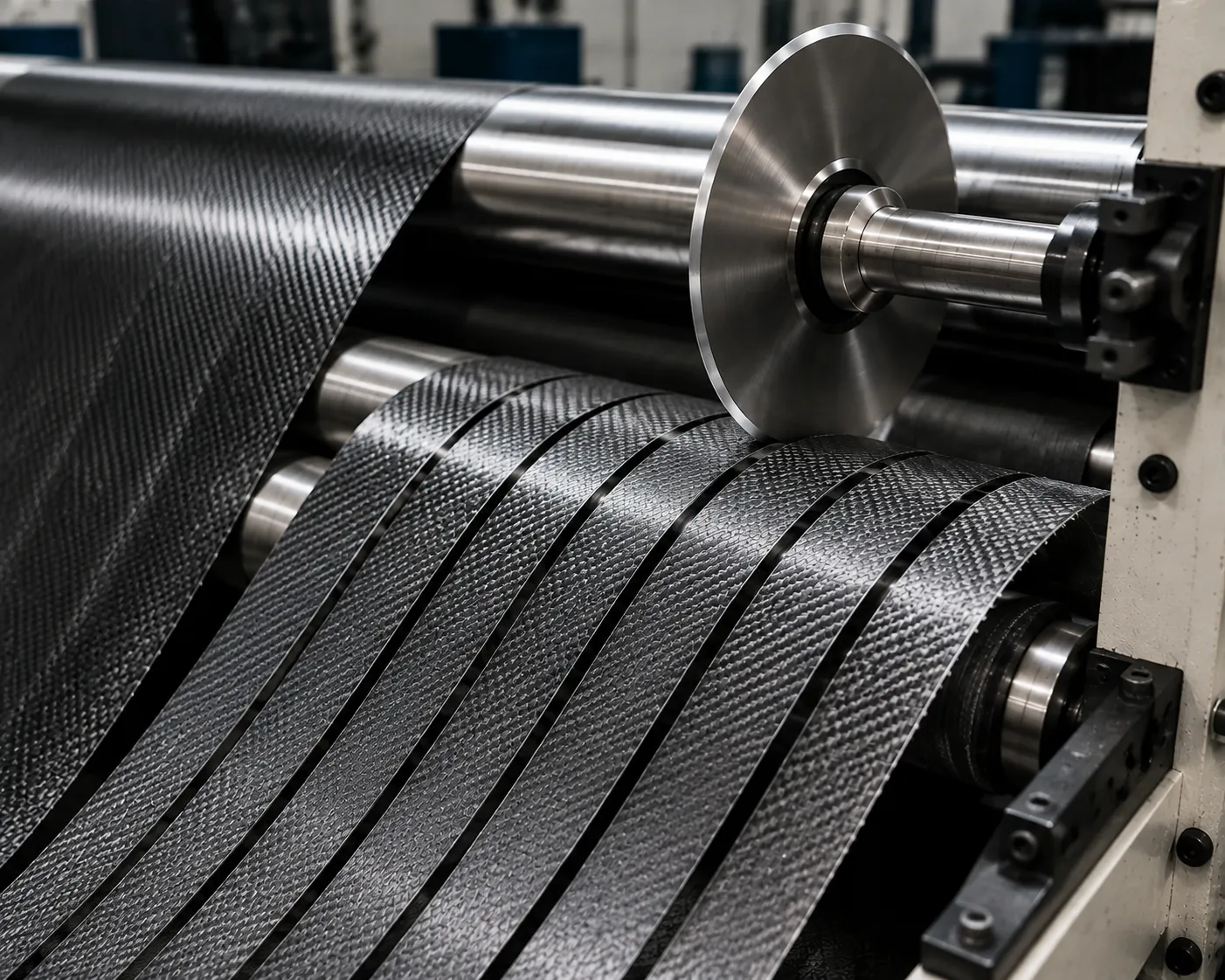
Industrial fabrics—such as carbon fiber weaves, fiberglass mats, Kevlar aramid, PVC-coated geotextiles, and multi-layer automotive composites—require high shear force. Standard blades often suffer from premature edge chipping, blade deflection, or substrate delamination along the cut edge.
Sharkcutting produces heavy-duty technical textile blades engineered from shock-resistant tool steels and ultra-dense carbide grades. Featuring reinforced bevel geometries, our circular slitter knives and shear knives cleanly cut high-tensile fibers without edge chipping or ply separation.
- Shock-resistant alloy steel: Absorbs high impact shear stress when parting glass, carbon, and aramid fibers.
- Optimized bevel angles: Custom-ground specifically for heavy coated fabrics, rubberized belts, and tough composites.
- Clean edge shear: Prevents composite ply separation and maintains accurate cross-sectional dimensions.
Need Custom Blade Geometry for Non-Standard Equipment?
Sharkcutting provides tailored OEM/ODM blade solutions aligned with your equipment specifications, slitting speeds, and substrate properties. Our engineering team evaluates your process variables to deliver optimized knife metallurgy and customized edge profiles.
Material Selection & Precision Manufacturing Process for Industrial Textile Knives
Relying on advanced precision mechanical processing and grinding technology, Sharkcutting selects high-quality steel alloys and tungsten carbides to ensure total blade stability under demanding production conditions. Our end-to-end manufacturing process converts premium metallurgical materials into ultra-durable custom textile knives, helping global fabric producers achieve clean edge cuts, minimize machine downtime, and optimize overall slitting performance across our entire line of industrial products.
Micron-level tolerance guarantees precise shaft alignment, eliminating vibration during high-speed slitting.
Ultra-mirror edge polishing reduces cutting friction, preventing fiber fraying and material buildup.
100% single-piece CMM dimensional inspection and dynamic balancing prior to dispatch.
Longer operational lifespan compared to conventional steel tooling, drastically reducing replacement costs.
Premium Material Selection
Engineered Tool Steels & Tungsten Alloys
Selecting the ideal raw material is foundational to blade durability and cut quality. We engineer custom textile knives from a diverse portfolio of tool steels and carbide grades specifically selected for specialized slitting-knives to match your fabric slitting environment.
High-carbon, high-chromium steel engineered for exceptional toughness, high compressive strength, and excellent wear resistance in general fabric cutting.
Premium M2 and cobalt-alloy high-speed steel blades maintain sharp cutting edges under high operational temperatures and continuous rotary tension.
Engineered with sub-micron grain tungsten carbide, our carbide fabric slitter delivers extreme hardness and maximum resistance against highly abrasive synthetic strands.
Specialized thin-film PVD coatings and non-stick treatments reduce surface friction, preventing resin build-up and thermal adhesion on synthetic fabrics.
4-Step Precision Machining Workflow
From Raw Metallurgy to Finished Edge
Our state-of-the-art production facility utilizes computer-controlled manufacturing processes to eliminate internal stresses, ensure thermal stability, and achieve pristine blade geometry for our high-precision circular-slitter-knives.
Precision CNC Blank Machining
High-speed CNC turning and milling centers process raw alloy blanks to exact tolerances, creating true concentricity and flawless mounting faces.
Vacuum Heat Treatment & Cryogenic Quenching
Computer-monitored vacuum furnace hardening followed by sub-zero cryogenic treatment transforms internal grain structure, removing residual stress for uniform hardness.
Ultra-Mirror Edge Polish & Micro-Grinding
Multi-axis CNC grinding systems perform ultra-fine edge grinding to achieve Ra 0.1 µm surface smoothness, guaranteeing burr-free cuts without thread unraveling.
Dynamic Balance & 100% CMM Inspection
Every finished knife undergoes rigorous coordinate measuring machine (CMM) testing and dynamic balance calibration to prevent high-speed arbor vibration.
Tailored Engineering for Non-Standard Textile Slitting Equipment
Whether your slitting machinery requires custom bevel angles, non-standard keyways, double-hollow ground edges, or specific surface treatments, Sharkcutting translates your technical drawings into high-performance cutting solutions.
- Custom Bevel Angle Geometries
- Tight Runout Control ≤ 0.005mm
- OEM Drawing Confidentiality (NDA)
- Batch-to-Batch Consistency
Frequently Asked Questions on Textile Cutting Blades & OEM Customization
Selecting the correct tool alloy, edge geometry, custom knife OEM manufacturing process, and maintenance protocol is essential for eliminating edge fraying and maximizing uptime on high-speed fabric slitting machinery. Below, Shark Cutting technical specialists answer key procurement and engineering questions to help you specify high-performance blades for your textile manufacturing facility.
Need Custom Technical Assistance?
Shark Cutting provides comprehensive engineering support—from initial fiber friction analysis and CAD drawing consultation to post-sales blade sharpening for textiles.
Utilizing state-of-the-art CNC grinding facilities and strict quality assurance, Shark Cutting supports global textile manufacturers with precise material selection, tight tolerance control, and expert resharpening guidance.
How do I choose the right blade material for specific textile materials such as high-strength nylon?
Material selection depends on the abrasiveness, tensile strength, thermal sensitivity, and weave structure of your fabric. For general woven, knitted, and non-woven textiles, high-speed steel blades like M2 or D2 tool steel offer excellent edge toughness and impact resistance at economical price points.
However, when processing tough synthetic fibers—such as high-tenacity nylon, polyester, Kevlar, or abrasive glass-fiber technical textiles—standard steel edges degrade quickly due to intense frictional wear. For these high-wear applications, Shark Cutting recommends precision micro-grain carbide fabric slitter knives. Solid tungsten carbide delivers 5 to 10 times longer wear resistance than standard steel tooling.
- M2 / D2 High-Speed Steel Blades: Ideal for standard woven fabrics, cotton knits, and non-abrasive synthetic materials requiring high impact strength.
- Carbide Fabric Slitter Knives: Recommended for abrasive synthetic fibers, high-density nylon, Kevlar, and technical composite fabrics.
- Low-Friction PVD Coatings: TiN, TiAlN, or DLC coatings reduce surface friction, prevent synthetic fiber melting, and enhance overall textile blade lifespan during high-speed rotary cutting.
Do you support custom knife OEM manufacturing based on existing textile equipment drawings?
Yes. Shark Cutting specializes in full-service custom knife OEM fabrication tailored to OEM machinery specifications, custom rotary slitting knives, and specialized shear slitting setups.
Clients can supply CAD files (STEP, DXF, DWG, PDF) or send physical sample blades directly to our engineering lab for reverse engineering and material analysis. Our CNC grinding and wire-EDM facilities maintain tight dimensional tolerances down to ±0.002 mm (0.00008 in), ensuring precise arbor bore concentricity, keyway alignment, and bevel profile accuracy.
We routinely sign formal Non-Disclosure Agreements (NDAs) before reviewing proprietary drawings to protect your intellectual property and specialized equipment designs.
What is the average service life of textile slitting blades, and how can edge life be extended?
The average textile blade lifespan varies according to fiber density, machine operating speed, shear engagement tension, and alloy composition. Unoptimized or low-grade blades often dull within hours on abrasive synthetic lines, leading to frayed edges, fiber pulling, and excessive dust accumulation.
Shark Cutting blades feature double-vacuum heat treatment and ultra-fine mirror edge polishing (Ra 0.1 µm). This micro-smooth finish minimizes surface friction and micro-chipping, extending operational run-time by up to 300% compared to standard commercial blades.
- Implement standardized protocols for blade sharpening for textiles, removing minimal material to preserve original bevel angles and hardness.
- Maintain accurate shear angle alignment and mechanical side pressure on circular slitter knives to prevent premature edge rolled-over burrs.
- Establish routine blade cleaning schedules to remove synthetic resin and adhesive buildup that causes friction-induced heat.
Can sample trials or small-batch trial runs be provided prior to full-volume procurement?
Yes. We encourage pre-production testing to evaluate cut-edge quality, edge retention, and fiber fraying prevention on your actual slitting equipment before placing volume orders.
Shark Cutting provides prototype sample batches and small-volume trial runs. During field testing, our engineering team works closely with your production staff to monitor edge wear patterns, cutting temperatures, and slit edge cleanliness under actual production speeds.
Based on trial performance data, we fine-tune edge geometry, bevel angles, or surface coatings to ensure your full production order delivers optimum efficiency and blade durability.
What are your delivery lead times and technical support response times for international customers?
Standard catalog fabric cutting blades and popular circular slitter sizes are maintained in stock for immediate shipment within 24 to 48 hours.
For custom knife OEM orders or specialized tungsten carbide fabric slitters, production lead times generally range between 2 to 4 weeks depending on material availability, heat treatment specifications, and coating requirements. Fast-track production scheduling is available for urgent machine breakdown scenarios.
Our technical engineering department guarantees a response within 24 hours for all global inquiries, providing rapid assistance with material selection, drawing reviews, and troubleshooting fabric edge defects.