
High-Performance Nonwoven Cutting Knives & Precision Slitting Solutions
Engineered for spunbond, meltblown, thermal bonded, and spunlace production lines—delivering zero-burr, low-dust, and high-speed slitting knives performance.
As a professional industrial knife manufacturer, Shark Cutting provides high-precision industrial slitting blades and custom cutting solutions for nonwoven producers worldwide.
30%
Extended Blade Wear Life
±0.002mm
Ultra-Precision Machining Tolerance
24-Hour
Rapid Custom Engineering Response
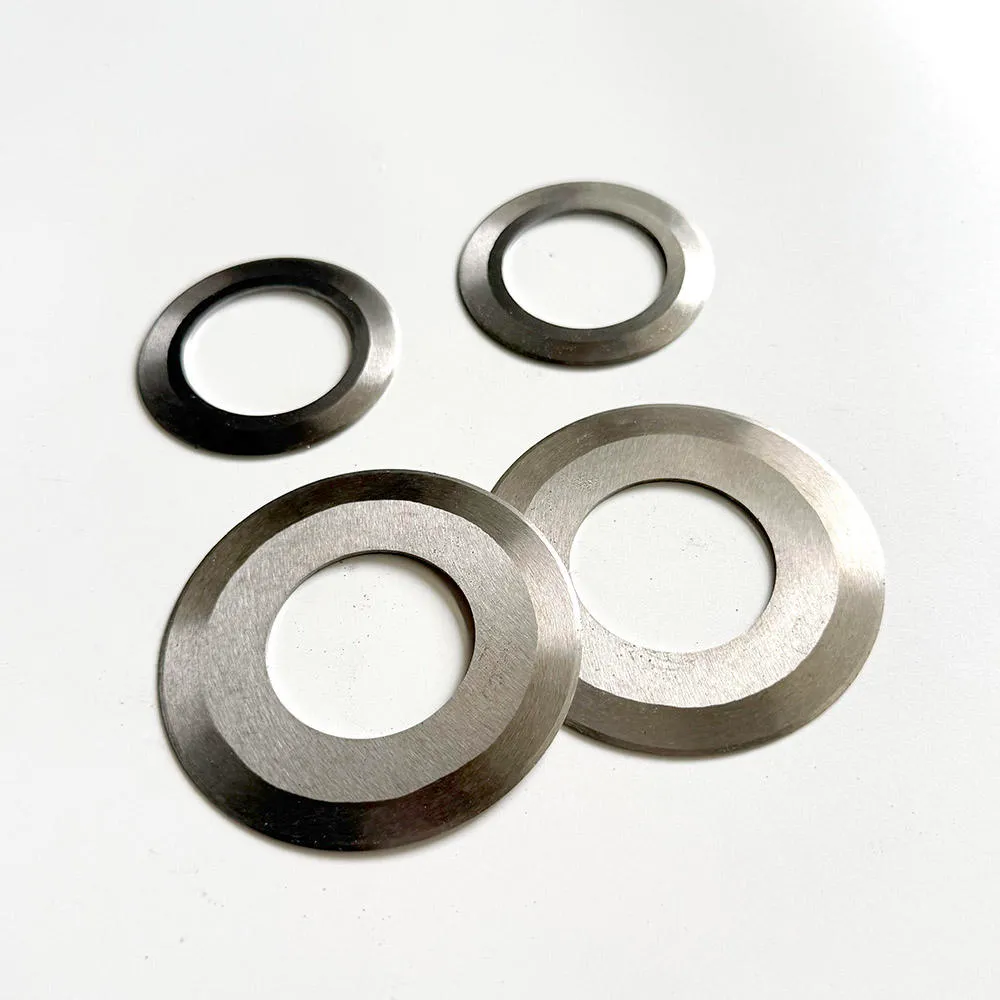
Slitting Solutions Engineered for Nonwoven Manufacturing Applications
Modern nonwoven converting lines operate at high line speeds where fiber composition, web density, and bonding methods dictate strict slitting parameters. Drawing on decades of specialized industrial knife manufacturing, Shark Cutting provides precision-engineered slitting knives designed for spunbond, meltblown, spunlace, needle-punched, and laminated nonwoven lines. Our custom knife geometry and high-grade alloy formulations ensure clean edge cutting, minimal fiber dust, and maximum operational runtime across demanding global converting applications.
Whether processing ultra-fine microfibers for filtration or heavy abrasive composites for civil engineering, matching blade steel, bevel angle, and surface finish to web specifications prevents thermal edge glazing, web compaction, and premature blade dulling across all primary nonwoven manufacturing processes.
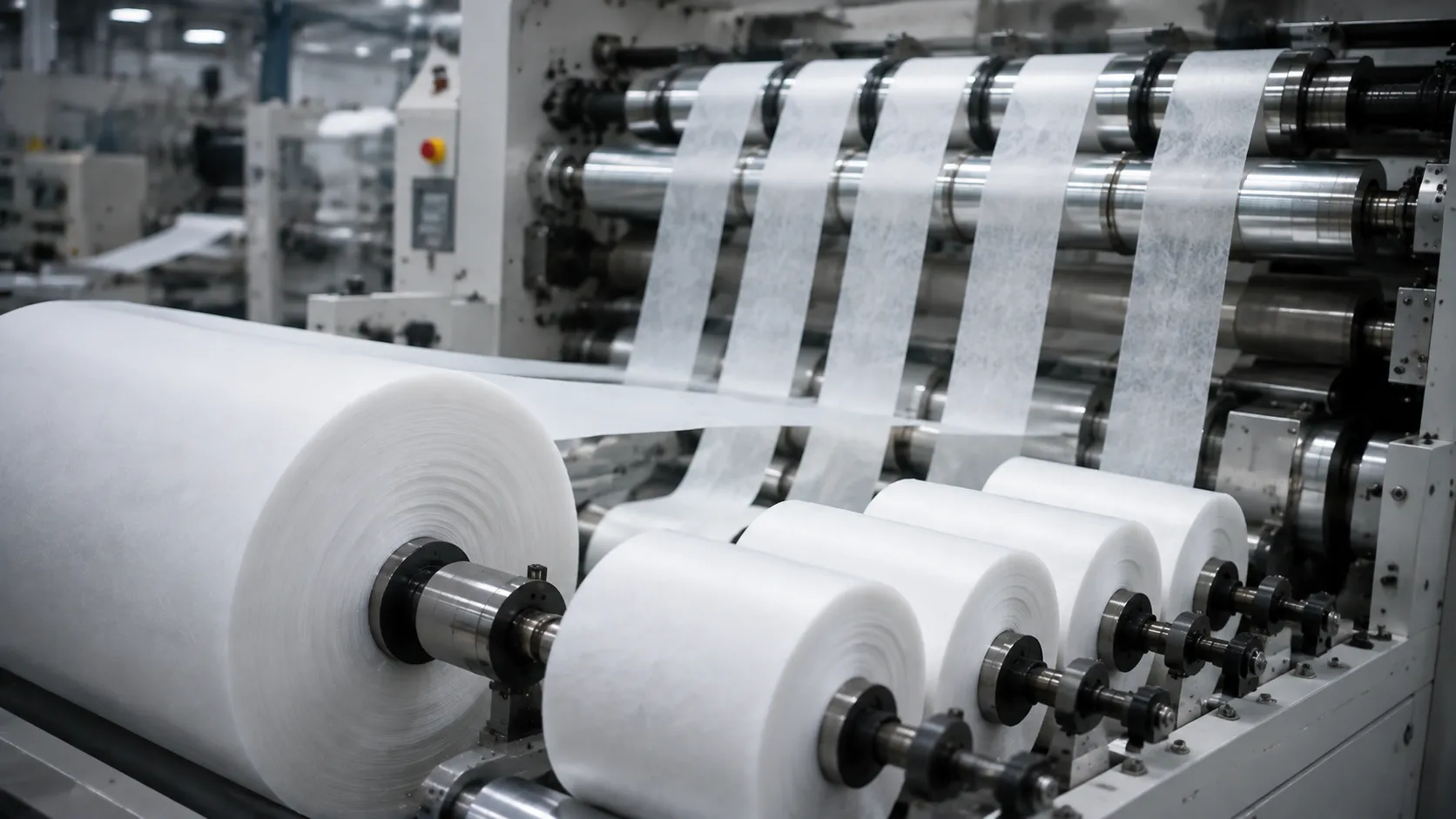
Spunbond and Meltblown Slitting
Spunbond meltblown slitting involves ultra-thin, heat-sensitive polypropylene and polyester microfibers running at high web speeds. Standard slitting tools generate friction heat that causes filament pulling, melted edge beads, and thermal glazing. Shark Cutting delivers ultra-smooth shear slitting knives and circular slitter knives with specialized bevel geometry and polished faces, ensuring burr-free edge quality and zero fiber fusion during high-speed continuous rewinding.
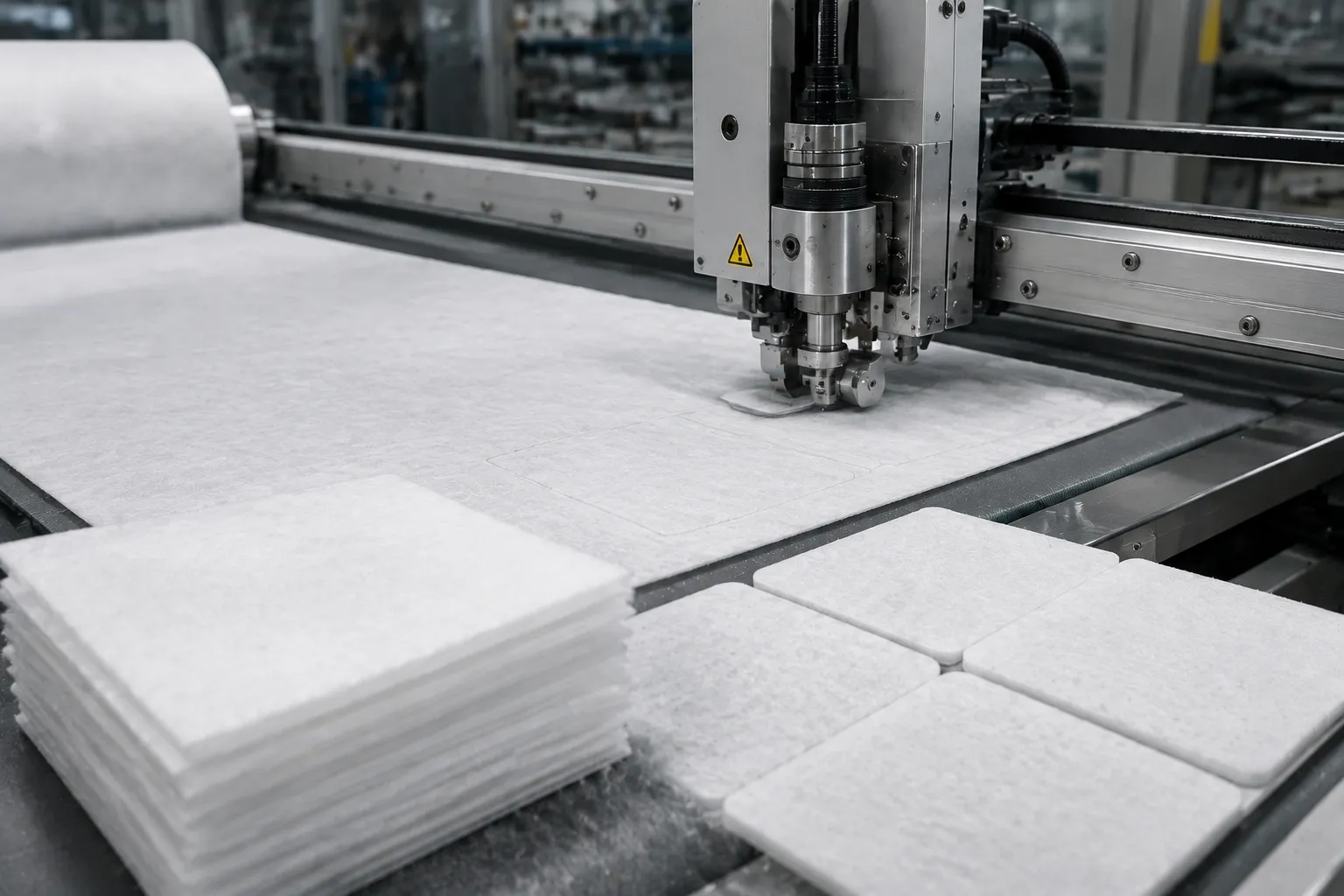
Spunlace and Air-Laid Fabric Cutting
Hydroentangled spunlace and lofty air-laid materials present unique slitting challenges due to their compressible, fibrous structure and chemical binders. Dull or misaligned knives crush web bulk, leading to uneven roll profiles and excessive fiber shedding. Shark Cutting produces wear-resistant alloy shear knives with precision-ground razor edges that deliver a clean scissor-action cut, preserving material loft, softness, and structural uniformity.
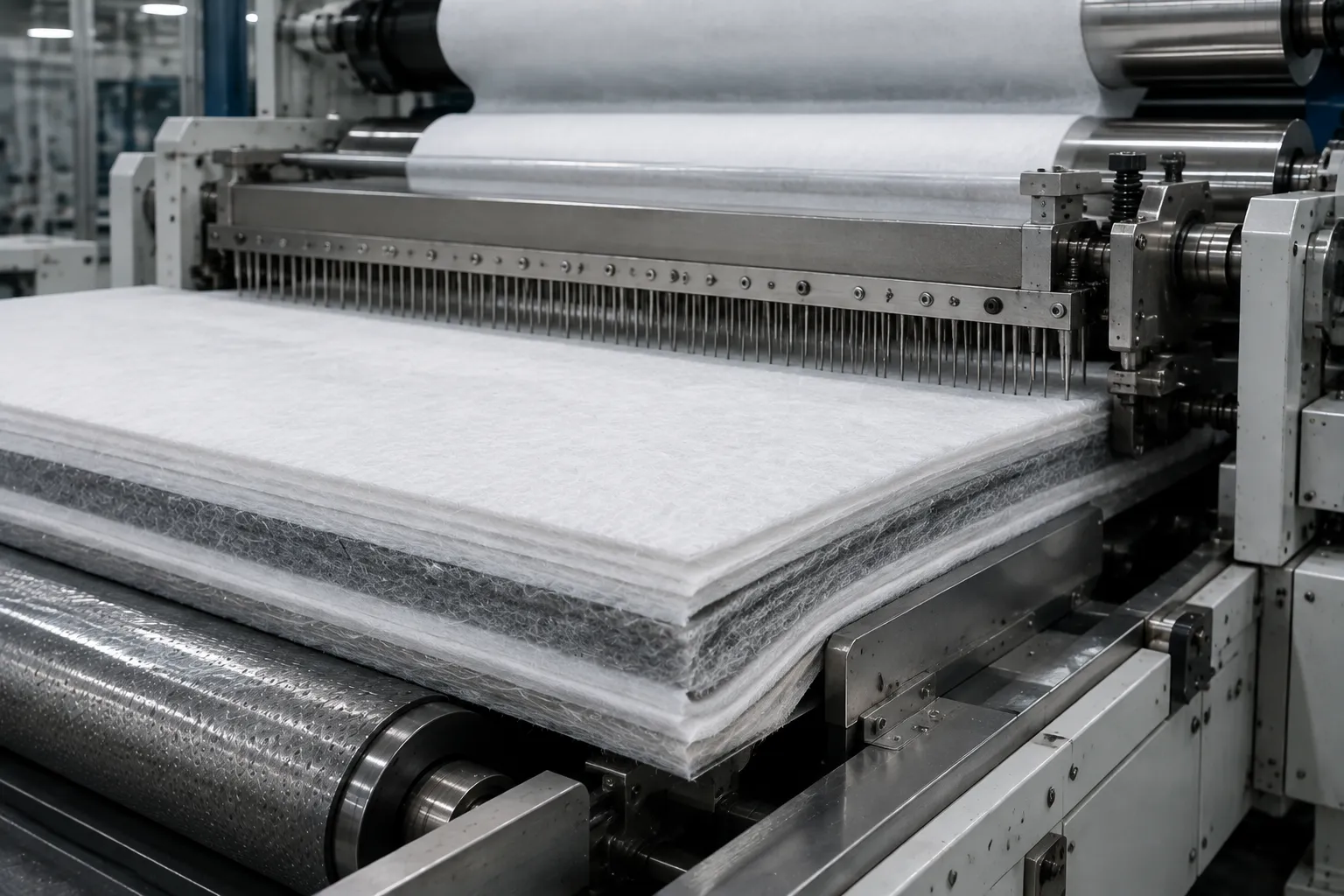
Needle-Punched and Laminated Nonwovens
Slitting heavy geotextiles, automotive needle-punched felt, and multi-layer film-fabric laminates imposes extreme mechanical stress and rapid abrasive wear on industrial blades. Standard carbon steel knives chip or dull quickly, forcing frequent machine downtime. Shark Cutting manufactures heavy-duty tungsten carbide and powder metallurgy blades engineered to handle high impact, tough fiber backings, and sticky adhesive interlayers without edge breakdown.
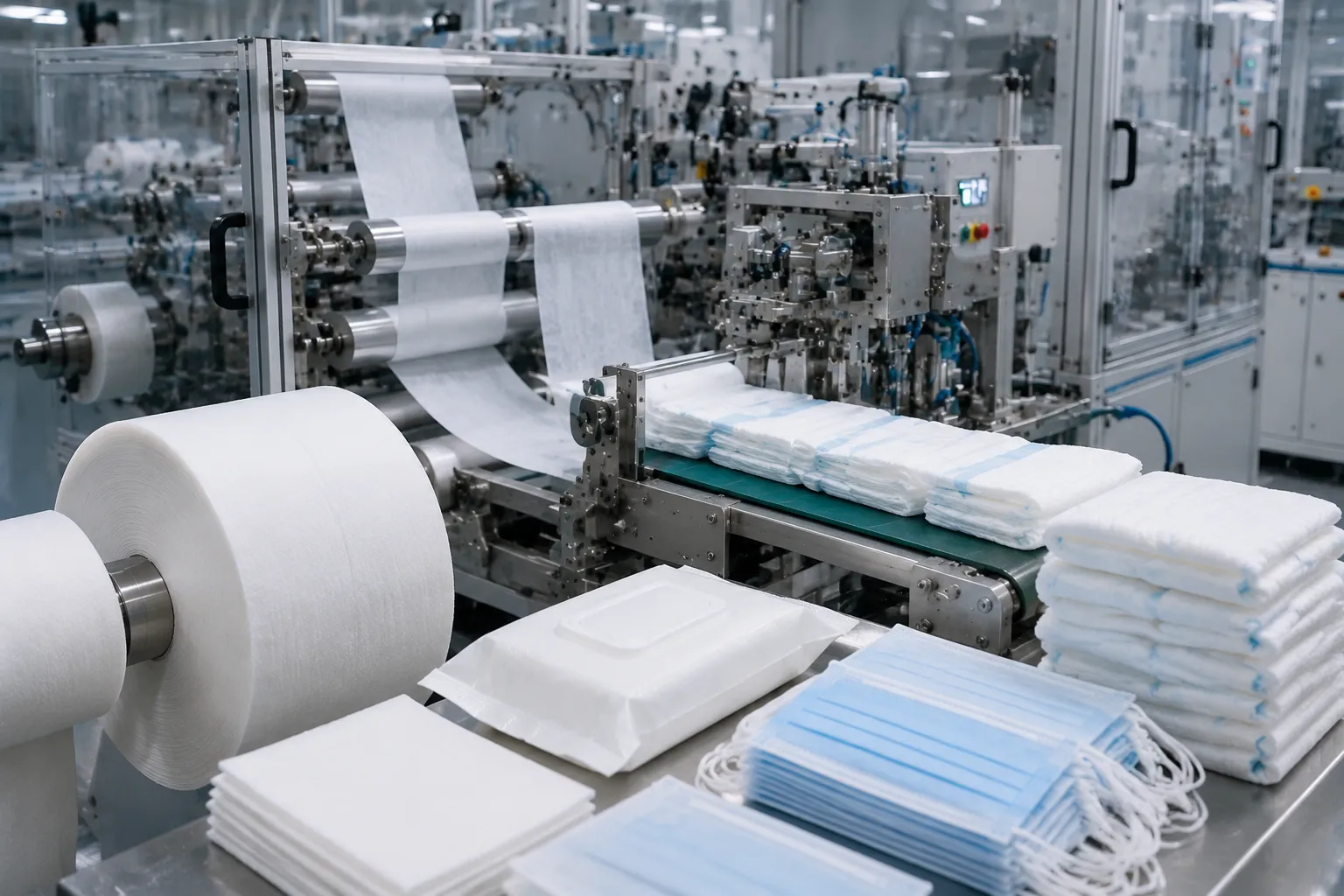
Medical and Hygiene Goods Converting
Converting nonwovens for surgical gowns, face masks, baby diapers, and feminine care products demands clean edge cutting that meets strict cleanroom and hygienic safety standards. Airborne fiber debris (dusting) and sticky hot-melt adhesives can cause seam failure and machine fouling. Shark Cutting supplies ultra-mirror-finished, anti-stick coated slitting blades that minimize particle generation and resist glue accumulation during continuous high-speed production.
Process Specification and Tooling Selection Guide
Matching knife metallurgy, bevel profile, and edge finish to your specific nonwoven process directly improves web edge quality, reduces dust, and extends blade service life. Review our technical recommendations across primary nonwoven manufacturing applications.
| Process Category | Typical Material Substrates | Primary Slitting Challenge | Recommended Tool Steel / Alloy | Target Surface Roughness (Ra) |
|---|---|---|---|---|
| Spunbond / Meltblown | Polypropylene (PP), Polyester (PET) microfibers | Thermal edge glazing, filament pulling, micro-burrs | Sub-Micron Tungsten Carbide / M2 High-Speed Steel | Ra ≤ 0.1 μm |
| Spunlace / Air-Laid | Viscose, Cotton blends, Fluff pulp webs | Web compaction, loss of loft, rapid binder abrasion | High-Vanadium D2 Alloy / M35 High-Speed Steel | Ra ≤ 0.2 μm |
| Needle-Punched / Laminated | Geotextiles, Felt, Film-fabric polymer laminates | Severe abrasive wear, high mechanical impact, delamination | Tungsten Carbide (10% Co) / Powder Metallurgy ASP | Ra ≤ 0.2 μm |
| Medical & Hygiene | Hydrophobic/Hydrophilic nonwovens, Elastic laminates | Fiber dust generation, hot-melt adhesive sticking | Solid Carbide with DLC / Teflon Anti-Stick Coating | Ra ≤ 0.05 μm |
Specialized Slitting Blade Series for Nonwoven Lines
The Shark Cutting blade matrix features precision-engineered geometric edge profiles designed to match major OEM and custom slitting machines. Explore specialized configurations designed to ensure burr-free cuts, reduce web dust, and maintain dimensional stability across continuous production runs. View our complete catalog of industrial products for specialized converting systems.
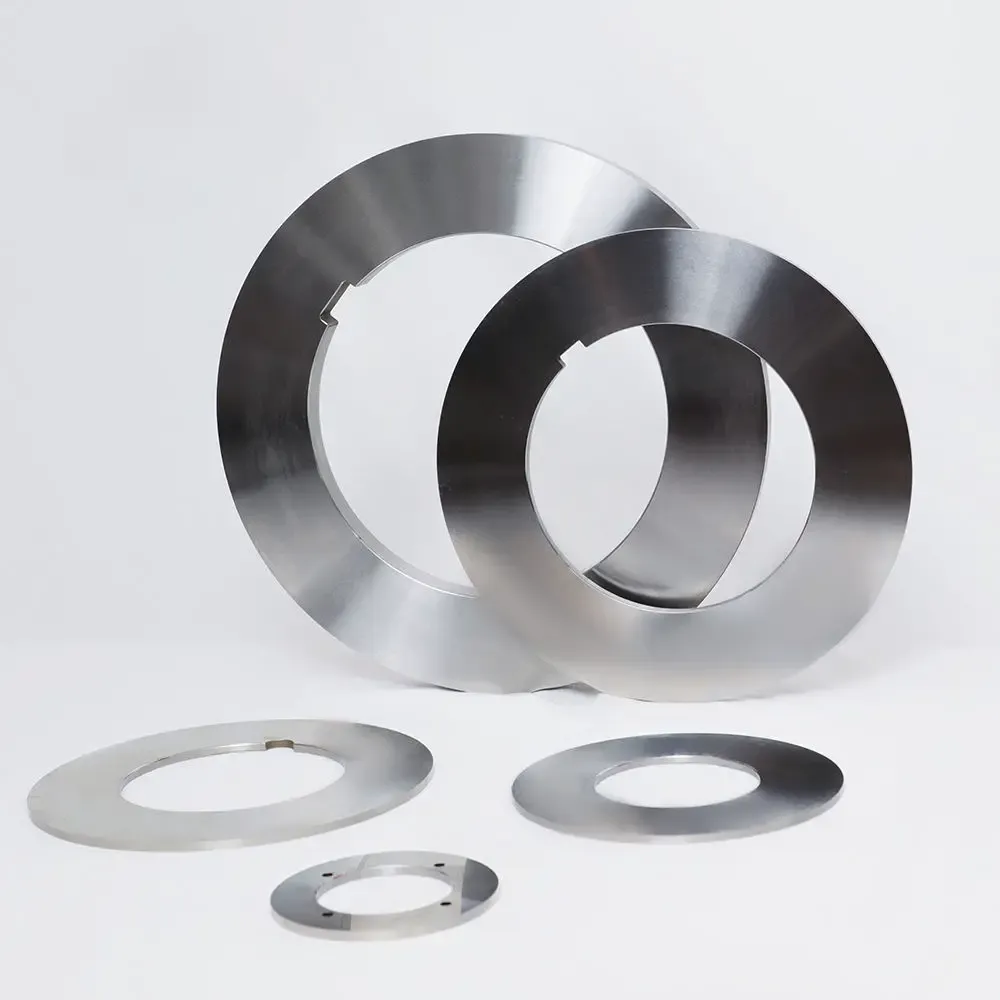
Circular Shear Slitter Knives
Engineered with high-precision male and female circular slitter knives for synchronized cutting, producing burr-free edges on spunbond, meltblown, and spunlace materials at elevated line speeds.
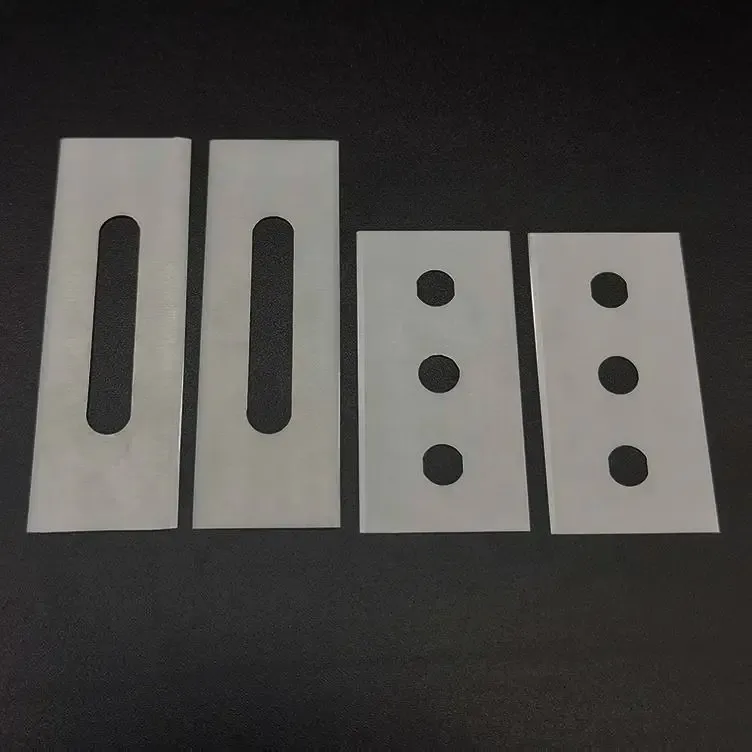
Razor Slitting Blades
Ultra-thin, high-hardness razor slitting knives optimized for low-friction, high-precision slitting on delicate microfibers and thin nonwoven webs without fiber pulling or thermal melting.
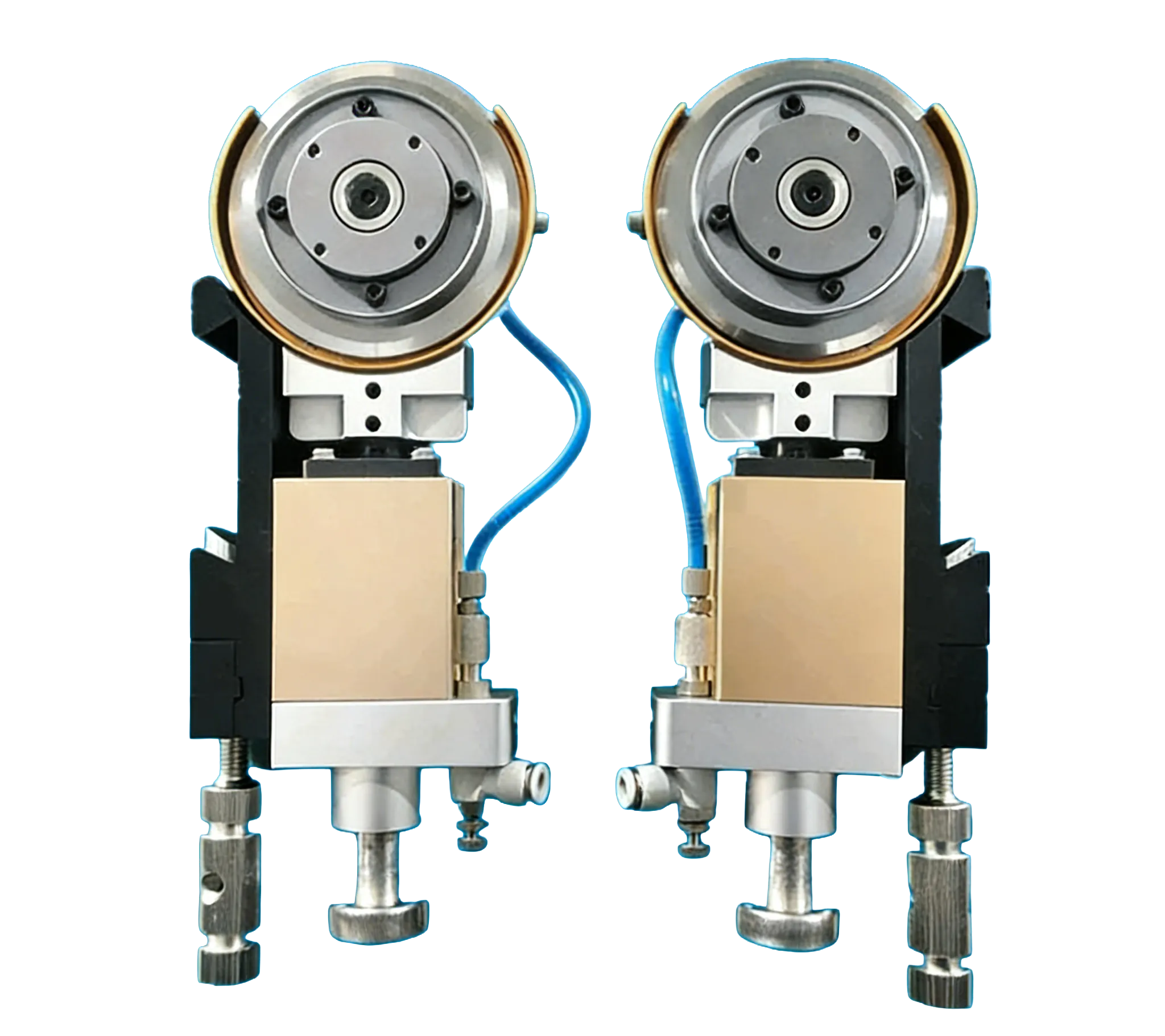
Pneumatic Knife Holders & Assembly
Delivers controlled side-pressure and vibration damping to maximize the service life of shear slitting knives for nonwoven converting equipment while preventing edge degradation.
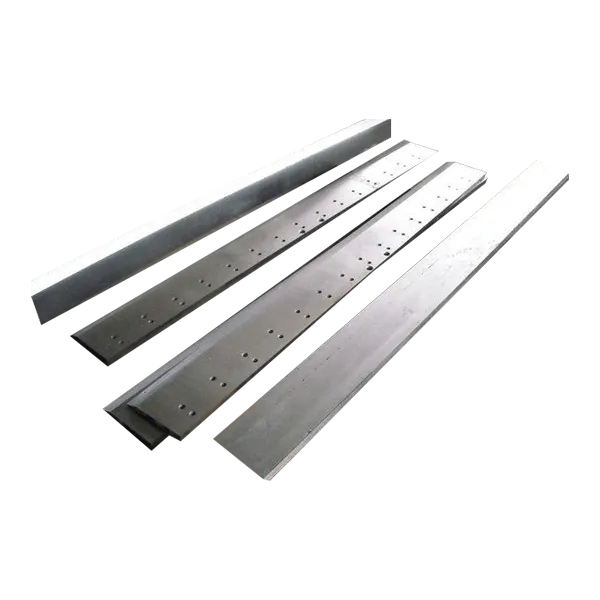
Custom Guillotine & Cross-Cutting Blades
Heavy-duty cross-cutting blades and custom guillotine tooling built for roll-end shearing, web separation, and specialty die-cutting on high-loft and needle-punched fabrics.
Need Custom Tooling Specifications for Your Production Line?
Shark Cutting provides custom blade geometry engineering based on technical drawings or material samples to match any domestic or international nonwoven line setup.
Superior Material Engineering and Precision Grinding Technology
High-speed nonwoven slitting demands unmatched mechanical stability, thermal resilience, and minimal friction. At Sharkcutting, we strictly control every step from premium steel procurement to CNC mirror edge finishing. By combining specialized wear-resistant blade materials with advanced vacuum cryogenic hardening, our industrial machine knives maintain structural integrity, deliver zero-burr edge quality, and significantly extend operational lifespan on active production lines.
Premium Wear-Resistant Alloy Selection
Matching blade metallurgy to specific synthetic fibers prevents premature edge wear, micro-chipping, and costly downtime. We formulate premium wear-resistant blade materials specifically engineered for abrasive webs, delicate spunlace, and dense multi-layer composites.
- ✓ Tungsten Carbide Nonwoven Blades: Ultra-fine grain structure delivering maximum wear resistance and continuous edge retention for high-speed spunbond and meltblown lines.
- ✓ Powder Metallurgy Steel: Outstanding fracture toughness paired with exceptional wear resistance to eliminate edge chipping under variable web tension.
- ✓ D2 and SKD11 Tool Steel: High-chromium alloy steels engineered to provide dependable, cost-effective cutting performance across standard converting operations.
- ✓ High Speed Steel (HSS): Superior shock resistance and thermal stability designed for heavy needle-punched fabrics, thick felts, and abrasive composites.
Advanced Thermal and Surface Engineering
Specialized heat treatment eliminates internal mechanical stress and optimizes carbide distribution. Combined with low-friction surface coatings, our slitting knives minimize glue buildup and lower heat generation during continuous high-speed converting. For continuous converting of synthetic webs and thin flexible substrates, explore our specialized razor slitting knives for high-precision edge processing.
Vacuum Cryogenic Hardening
Deep sub-zero cooling transforms retained austenite into ultra-stable martensite, maximizing surface hardness and dimensional stability.
TiCN and PTFE Anti-Stick Coatings
Titanium Carbonitride and Teflon treatments lower friction coefficients, reduce cutting temperatures, and prevent web adhesive bonding.
Micron Tolerance Control and Mirror Finish
Eliminating web dust, melted edges, and fiber pullouts requires extreme geometric accuracy. Through automated CNC precision knife grinding, we achieve surface finishes up to Ra 0.1, eliminating microscopic grooves that trap polymer particulates and degrade cut edges.
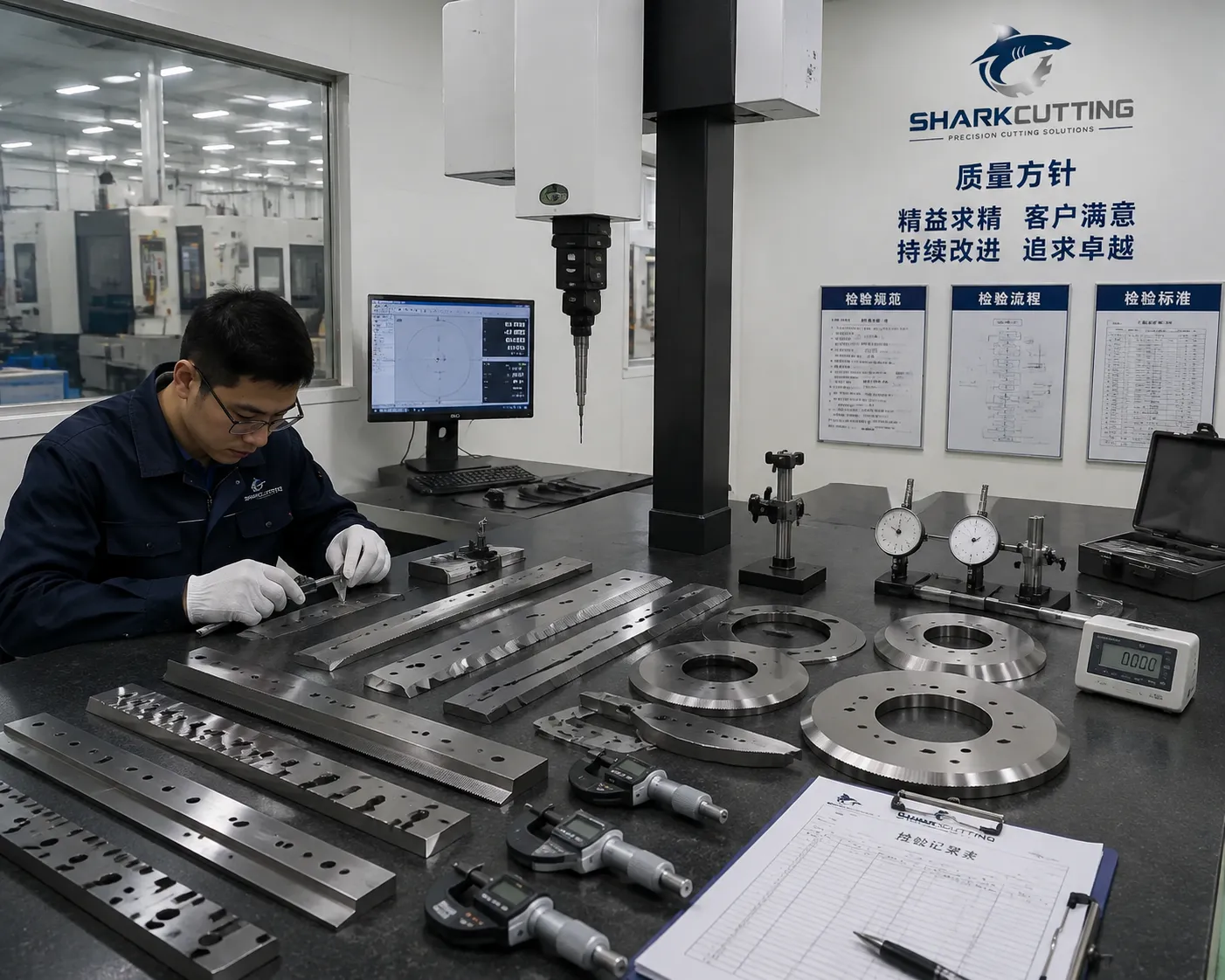
Quality Assurance Facility
100% inspection protocol guaranteeing zero-defect tool delivery
Material Selection Comparison Guide
Evaluate wear resistance, toughness balance, and operational cost efficiency across our primary blade alloys. In addition to nonwovens, we engineer specialized tooling such as paper cutting knives for diverse converting applications.
Tungsten Carbide Grade
Engineered specifically for continuous tungsten carbide nonwoven blades in high-speed meltblown and spunbond slitting where maximum wear life is required.
Powder Metallurgy Steel
Ideal balance for variable webs, spunlace fabrics, and abrasive composite layers requiring high edge stability under tension fluctuations.
D2 and SKD11 Tool Steel
Standard workhorse steel offering high cost-efficiency and reliable sharpness for medium-speed converting and general slitting operations.
High Speed Steel HSS
Exceptional impact resistance designed for thick needle-punched webs, geotextiles, and heavy shear slitting setups.
Uncompromising Quality Assurance
Every shipment from Sharkcutting undergoes strict optical inspection and surface roughness testing. We guarantee consistent metallurgy and sub-micron edge precision on every single knife delivered to your production line.
Solving Common Nonwoven Slitting Issues for Clean Edge Cutting
Nonwoven web converting requires absolute precision across varying line speeds, fabric weights, and fiber compositions. Issues like blade misalignments, improper shear angles, and incorrect tool steel selection lead to excessive fiber dust, burred edges, and frequent line stops. At Shark Cutting, our technical team provides dedicated nonwoven slitting troubleshooting and application support to optimize your cut parameters, deliver clean edge cutting using high-performance slitting knives, and maximize blade wear resistance.
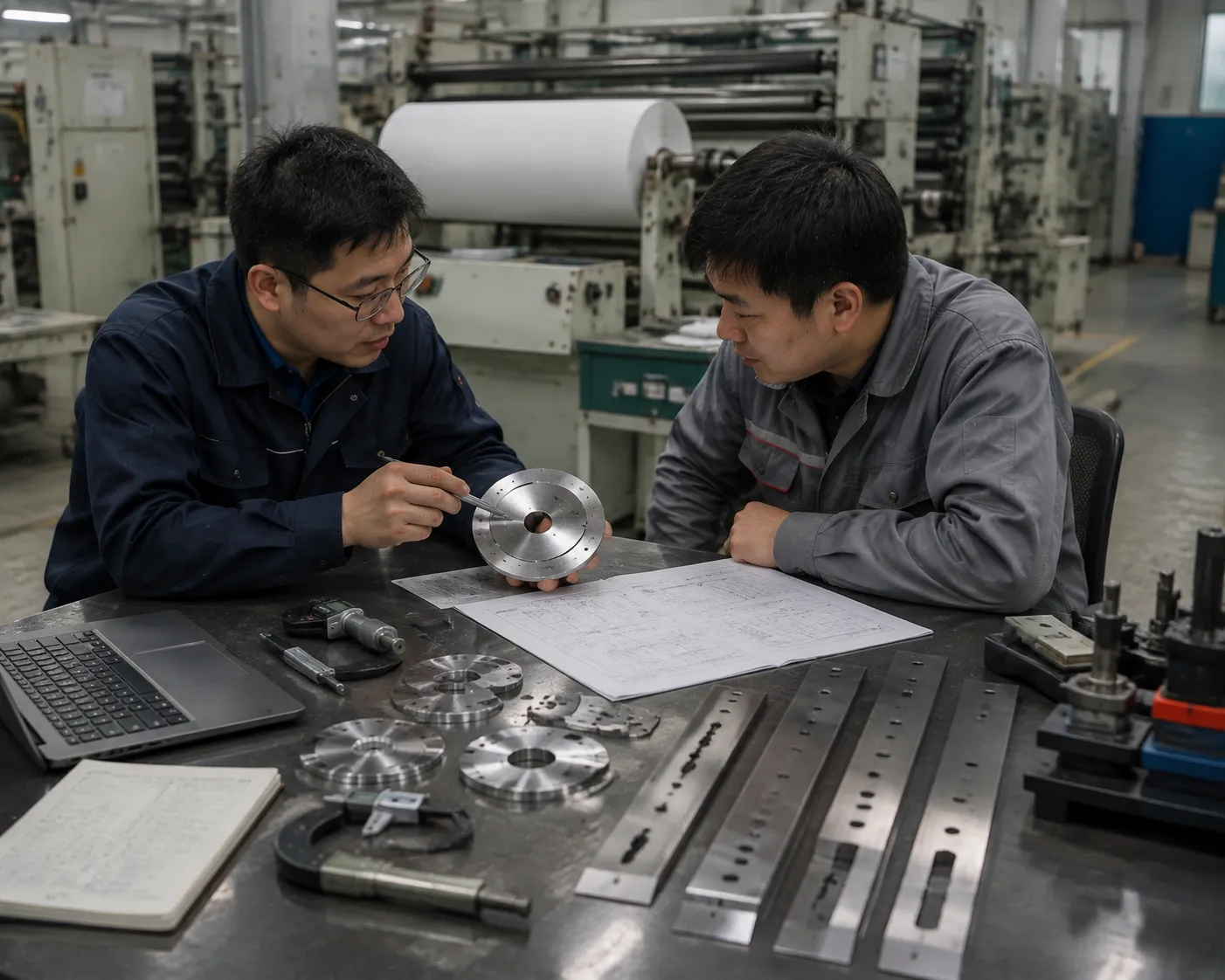
Expert Technical Consultation
Struggling with inconsistent cut edges, fiber fuzzing, or rapid blade dulling on your converting line? Get expert nonwoven slitting troubleshooting support from Shark Cutting application specialists.
On-site parameter and shear angle evaluation for high-speed converting lines
Microscopic blade wear-pattern analysis and failure diagnostics
Custom tungsten carbide matching and anti-stick coating selection
01 Eliminating Severe Edge Burrs and Fiber Wire Drawing
Eliminating Severe Edge Burrs and Fiber Wire Drawing
Slitting continuous synthetic fibers like spunbond polypropylene, meltblown, or thermal-bonded media often causes friction heat that stretches filaments prior to cutting. This thermal and mechanical strain manifests as jagged edge burrs, frayed threads, and melted wire-drawing along roll borders.
Engineered Troubleshooting Solution
- • Edge Angle Optimization: Transitioning from standard symmetrical bevels to engineered asymmetric micro-bevel profiles designed for clean edge cutting without heat generation.
- • Sub-Micron Tungsten Carbide: Utilizing fine-grain carbide grades maintains edge sharpness under high tension, delivering consistent cuts across multi-ply webs.
- • Precision Shear Overlap Calibration: Re-aligning upper and lower circular blade overlap depth to eliminate web pinching and fiber dragging. Replacing worn tooling with premium shear slitting knives ensures optimal shear geometry and clean separation.
Target Outcome: Smooth, clean edge cutting with zero melted filaments and complete elimination of post-slitting manual trim operations.
02 Controlling Fiber Dust and Lint in High-Speed Slitting
Controlling Fiber Dust and Lint in High-Speed Slitting
High-speed spunlace, meltblown, and air-laid converting lines running above 400 m/min generate airborne particulate and lint when blade edges tear fibers instead of shearing them cleanly. Excess dust contaminates converting machinery, threatens hygiene compliance, and forces frequent filter replacements.
Engineered Troubleshooting Solution
- • Ra 0.1 Mirror Polishing: Super-finish mirror grinding on blade bevel faces reduces drag, preventing micro-fracturing of web fibers.
- • Pneumatic Holder Pressure Fine-Tuning: Precise pneumatic side-pressure control suppresses blade chatter, stabilizing the cut point during high-speed operation.
- • Dynamic Runout Control: Manufacturing slitting blades to strict runout tolerances (< 0.002mm) eliminates blade wobble and friction heating.
Target Outcome: Up to 85% reduction in airborne fiber dust and cleaner roll profile edges for medical and hygiene converters.
03 Preventing Adhesive and Hot-Melt Residue Accumulation
Preventing Adhesive and Hot-Melt Residue Accumulation
Multi-layer laminated nonwovens, elastic hygiene structures, and adhesive-bonded sheets transfer hot-melt glues and binders directly onto cutting knife faces. Residue accumulation increases friction, causing web jams and requiring frequent line downtime for manual blade cleaning.
Engineered Troubleshooting Solution
- • Teflon Anti-Stick Coatings: Non-stick fluoropolymer surface treatments lower surface tension, preventing glue and polymer bonding on steel flanks.
- • Diamond-Like Carbon (DLC) Coating: High-hardness PVD coatings deliver an ultra-low friction coefficient with high scratch resistance against tacky polymers.
- • Heat-Dissipating Bevel Geometries: Relief-ground bevel profiles lower contact zone temperatures to stop binder softening.
Target Outcome: Extended uninterrupted continuous operation without adhesive buildup, increasing runtime between cleanings by up to 3x.
04 Enhancing Blade Wear Resistance for Abrasive Nonwovens
Enhancing Blade Wear Resistance for Abrasive Nonwovens
Slitting abrasive webs like needle-punched geotextiles, fiberglass mats, or mineral-filled nonwovens causes rapid edge dulling and chipping when using standard D2 alloy steel. Frequent blade replacement drastically reduces overall equipment effectiveness (OEE).
Engineered Troubleshooting Solution
- • Powder Metallurgy Tool Steels: Uniform carbide distribution provides superior toughness and unmatched blade wear resistance compared to standard tool steel.
- • High-Cobalt Carbide Upgrades: Micro-grain carbide formulations withstand continuous impact loads when slitting heavy needle-punched media.
- • Deep Cryogenic Treatment: Sub-zero thermal processing relieves internal micro-stresses to boost impact resilience and edge holding capability.
Target Outcome: Up to 300% extension in blade operating lifespan between regrinds, lowering total tooling cost of ownership.
Free Sample Testing and Slitting Analysis
Send your nonwoven fabric rolls or problematic edge cut samples to the Shark Cutting laboratory. Our metallurgy and application engineers will run trial cuts, inspect edge quality under electron magnification, and provide a comprehensive diagnostic report free of charge.
4 Steps to Customize Your Nonwoven Slitting Blades
As a trusted nonwoven cutting knife manufacturer, Sharkcutting delivers end-to-end custom tool production tailored to your exact machinery specs and operational requirements, including high-performance slitting knives.
Drawing & Specs Evaluation
Send us your physical samples, CAD drawings, or operational requirements for a detailed evaluation by our industrial knife OEM engineers.
Material & Geometry Selection
Data-backed material selection and geometric edge recommendations engineered specifically for clean, dust-free nonwoven slitting, including options for circular slitter knives.
Sample Trial & Slitting Test
Rigorous prototype fabrication and trial cutting to verify edge quality using high-precision shear slitting knives, blade wear resistance, and high-speed stability.
Batch Production & Global Delivery
Scalable precision manufacturing backed by ISO9001 quality control, worldwide shipping, and dedicated post-sales technical support.
Ready to Improve Your Nonwoven Slitting Efficiency & Edge Cut Quality?
With global supply capabilities and complete technical support, Sharkcutting is your dependable custom blade solutions partner.
24-Hour Quotations: Fast, detailed pricing feedback on all custom knife specs.
CAD/PDF Support: Upload your drawings directly for immediate engineering evaluation.
Industrial Knife OEM: Precision-engineered cutting solutions built to your machine tolerances.